
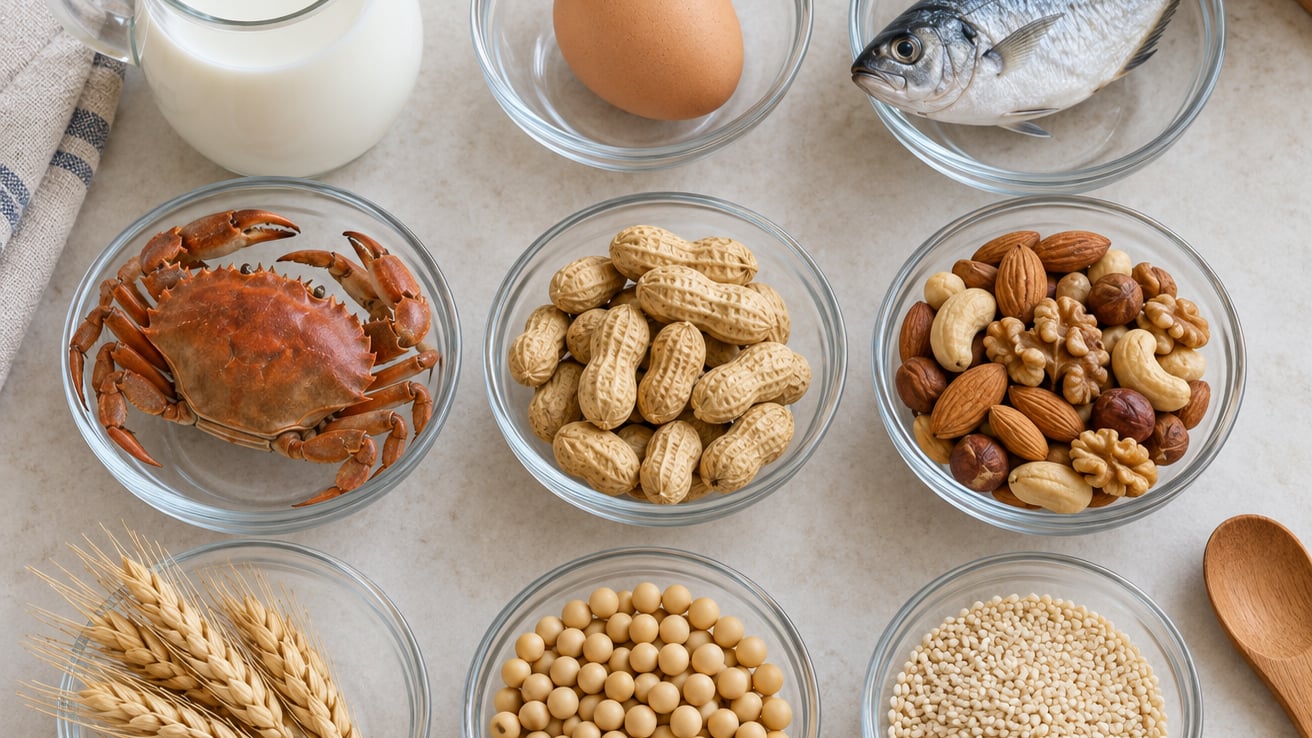
The top 9 food allergens explained simply: they are milk, eggs, fish, crustacean shellfish, tree nuts, peanuts, wheat, soybeans and sesame. In the United States these nine must be declared by name on packaged food labels, and together they cause the large majority of food allergic reactions. Here is what each one looks like in a real kitchen and what to do about it.
If your child reacts to food, or you are starting solids and wondering what to watch for, this is a good place to start. Nothing here replaces advice from your own doctor.
Table of Contents
- Top 9 Food Allergens Explained at a Glance
- What Is a Food Allergy?
- What Are the Nine Major Food Allergens?
- What Does “Top 9 Food Allergens Explained” Mean for Different Families?
- How Do Food Allergens Get Into Common Foods?
- How Can Caregivers Identify Allergens on Food Labels?
- What Reactions Can Food Allergies Cause?
- How Do You Prevent Cross-Contact at Home and Away?
- What Should You Do If a Child Has a Suspected Reaction?
- How Are Food Allergies Different From Food Intolerances?
- Frequently Asked Questions
- Are eggs and chicken both major food allergens?
- What are the 9 most common food allergies in children?
- Does a food label that does not list an allergen guarantee it is safe?
- What does may contain or a cross-contact warning mean?
- Is sesame the only allergen added to the US list of major food allergens?
- How can a family restaurant a safe meal for a child with allergies?
- Conclusion
Top 9 Food Allergens Explained at a Glance
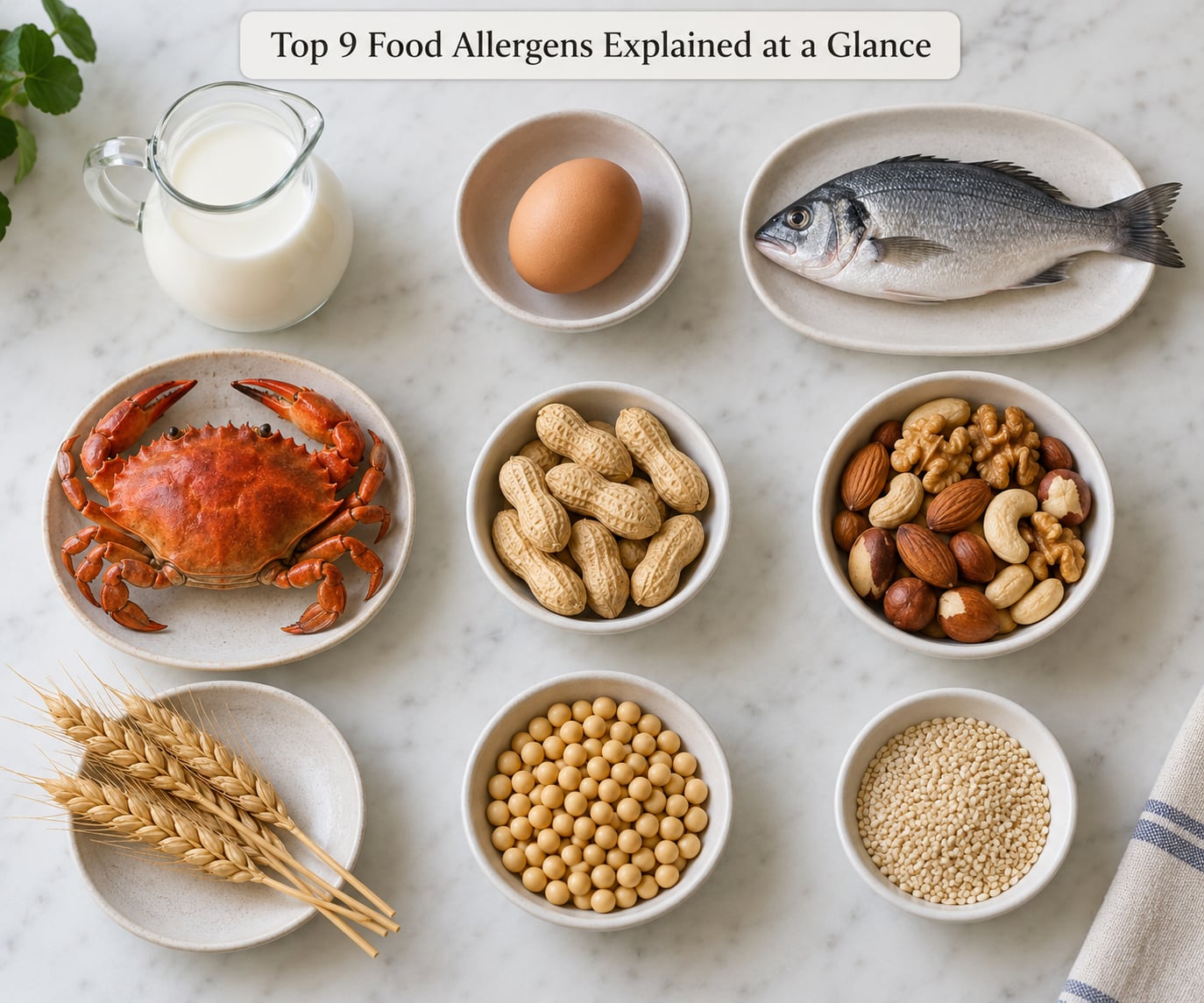
The nine allergens below are the ones the US Food and Drug Administration requires manufacturers to label. Sesame joined the list on January 1, 2023, under the FASTER Act, after advocacy groups pushed for its inclusion.
| Allergen | Familiar sources | Other names you may see on a label | Possible symptoms |
|---|---|---|---|
| Milk | Cheese, yogurt, ice cream, butter, formula | Casein, caseinate, whey, lactose, milk solids, ghee | Hives, swelling, vomiting, wheezing |
| Eggs | Mayonnaise, baked goods, pasta, meringue, egg white | Albumen, ovalbumin, egg yolk, ovomucin, lysozyme | Hives, swelling, vomiting, wheezing |
| Fish | Salmon, tuna, cod, pollock, fish sauce, anchovy paste | Fish, anchovy, surimi, some seasoning blends | Hives, swelling, vomiting, wheezing |
| Crustacean shellfish | Shrimp, crab, lobster, crawfish, stock, imitation crab | Shrimp, crab, lobster, crayfish, langoustine | Hives, swelling, vomiting, wheezing |
| Tree nuts | Almonds, cashews, walnuts, pecans, pistachios, nut butters | Specific nut name required; marzipan, praline, nut extract | Hives, swelling, vomiting, wheezing |
| Peanuts | Peanut butter, oil, flour, chili, candy, fryer oil | Peanut, groundnut, arachis oil, mono and diglycerides in some uses | Hives, swelling, vomiting, wheezing |
| Wheat | Bread, pasta, cereal, soy sauce, flour tortillas, gravy | Wheat, semolina, durum, farina, spelt, malt, vital wheat gluten | Hives, swelling, vomiting, wheezing |
| Soybeans | Tofu, tempeh, miso, edamame, soy milk, tamari | Soy, soybean, soybean oil, soy protein isolate, textured vegetable protein | Hives, swelling, vomiting, wheezing |
| Sesame | Sesame oil, tahini, hummus, bread rolls, spice blends | Sesame, sesame seed, sesame flour, benne, gingelly, tahini | Hives, swelling, vomiting, wheezing |
One practical reason to memorize the list: if a reaction happens away from home, the nine names narrow the search fast. Milk, peanuts, wheat and shellfish are the ones that turn up most often in emergency visits in children, while sesame has grown quickly among adults.
What Is a Food Allergy?
A food allergy is an immune reaction to a food protein. Your immune system treats that protein as something harmful, makes antibodies against it, and the next time the food arrives it responds. That is why a first exposure may cause nothing at all and the second one causes hives.
That immune step is what separates an allergy from a stomachache after too much pizza. An intolerance involves digestion, not immune defense, and it usually shows up as bloating, gas or pain rather than swelling or breathing trouble.
Reactions range from a few itchy spots that fade in an hour to anaphylaxis, a rapid and severe reaction affecting breathing or circulation. Most reactions start within minutes to a couple of hours, though some patterns show up hours later. Any difficulty breathing, throat tightness, faintness or a reaction spreading quickly needs emergency help right away.
What Are the Nine Major Food Allergens?
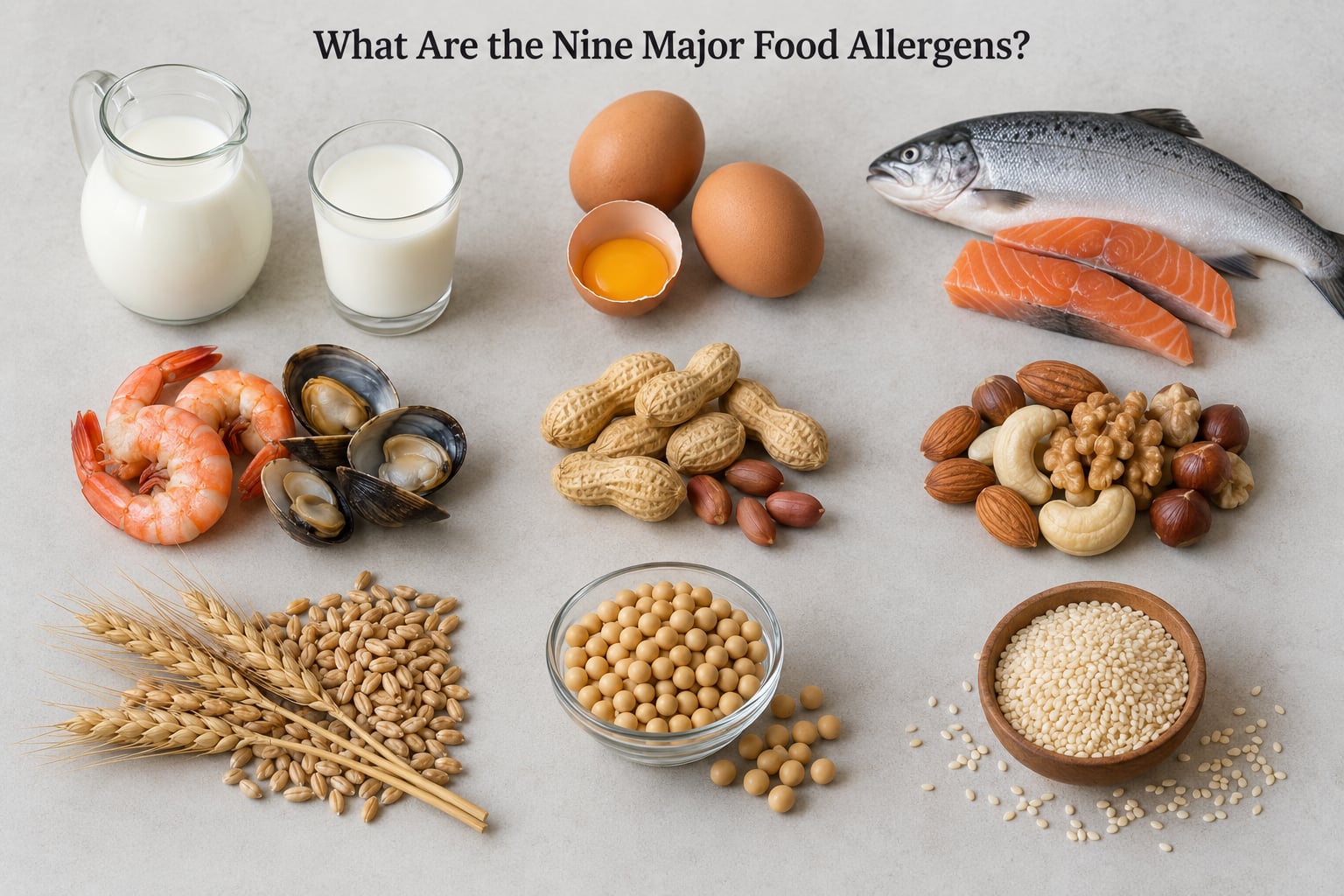
Milk. The most common food allergy in babies, and it is not the same as lactose intolerance. Casein and whey sit in a huge share of packaged foods: sports drinks, protein bars, powdered drink mixes, some breads and many lunch meats. Deli slicers are a common cross-contact spot for both bread and lunch meat.
Eggs. Egg white and yolk are listed separately in most ingredient lists, but many baked goods mix both. Look for albumin, and check marshmallows, custard, mayonnaise, salad dressings and some pancake mixes. Cooked egg is fine for many people but not for all, so treat any egg as the same allergen until a clinician says otherwise.
Fish. This means finned fish such as salmon, tuna, cod and halibout, not shellfish. Fish sauce, anchovy paste, Worcestershire sauce, Caesar dressing and some salad dressings can hide it. Restaurants and shared fryers are a real risk, since fish is often prepared close to other foods.
Crustacean shellfish. Shrimp, crab, lobster and crawfish are labeled individually, so you have to look for each one. Stock cubes, chowders, gumbo, shrimp paste and imitation crab made from surimi all count. Heat does not destroy the allergen protein, so a cooked shrimp is no safer than a raw one.
Tree nuts. Almond, cashew, walnut, pecan, pistachio, hazelnut, brazil nut, macadamia and praline are all named separately on labels because they are not interchangeable for allergic people. Watch for marzipan, praline paste, nutella-style spreads and natural flavorings that may derive from nuts.
Peanuts. Peanut is a legume, not a tree nut, and most people who react to one tolerate the other, though some do not. Peanut oil, peanut flour, chili seasoning blends and fryer oil are common hidden sources. That cross-contact detail matters in restaurants, where fryer oil gets reused.
Wheat. Beyond bread and pasta, wheat shows up in soy sauce, teriyaki glaze, gravy, flour tortillas, croutons, some hot dogs, malt drinks and cosmetics. Rice flour and oat products are also frequently made on shared wheat equipment, so the label wording matters.
Soybeans. Tofu, tempeh, edamame, miso, soy milk, protein powder, soy nuts and vegetable oil are straightforward. Textured vegetable protein and soy flour hide in sauces, meats and snack foods, and some people who tolerate soy food react to soy oil and soy protein isolate.
Sesame. Sesame oil, tahini, hummus, halva, bakery seed coatings and spice blends are the obvious ones. It also hides in fillings, sauces and some breads. Since sesame became a major allergen, it must be declared by name, which made life considerably easier for sesame-allergic families.
What Does “Top 9 Food Allergens Explained” Mean for Different Families?
Major allergens are the nine with a federal labeling rule. Roughly 90 percent of reported food reactions trace back to them, which is why labels focus there.
Some other allergens, including mustard, celery and lupin, are still handled through voluntary guidelines rather than a binding rule, so they may appear with less detail. Peanuts and tree nuts get their own rows because people react very differently to different nuts. And allergies to any food outside this list are entirely real, they just carry no labeling guarantee at all.
How Do Food Allergens Get Into Common Foods?
Some appearances are obvious. Most are not, and that is where label reading earns its keep. Allergy families on forums talk a lot about the second kind.
Expected ingredients are the easy case. A cheese sauce lists milk. The harder cases are shared processing, where a factory runs cookies and milk chocolate on the same line, and where a voluntary statement such as “made in a facility that processes peanuts” appears. That phrase is not a warning that the product contains peanuts. It means nobody can promise it never touched shared equipment.
Flavorings are another hiding place. Natural flavoring, vegetable protein and modified food starch can derive from wheat, milk, soy or egg, and the ingredient list may not name the source. Seasoning blends, marinades, gravies and salad dressings do the same thing.
Bakery and deli are separate problems. Egg wash on a bun, a peanut butter in a grinder that also grinds almond, or a slicer used for both bread and cheese can all transfer allergens without them appearing in the ingredient list.
Restaurants have no label rule at all. Cooked foods, fryer oil, a shared scoop for ice cream, and a kitchen that grinds sauces on a blender are all realistic exposure routes. Cosmetics count too, so check lip balm and lotion for nut oils if your child reacts on contact.
How Can Caregivers Identify Allergens on Food Labels?
Read the ingredient list first, every time, even on a product you have bought for months. Manufacturers change recipes and shared lines without much notice.
Work down the list in order and ask four questions. Does any allergen name appear in any form? Do the words natural flavoring, vegetable protein, modified food starch or spice blend appear? Is there a contains statement? Is there a shared-facility or may contain warning at the end?
A contains statement is the clearest signal a label can give. “Contains milk and wheat” tells you those proteins are in the product. Its absence does not tell you the product is free of them, because the statement is optional in most cases even when milk or wheat are present as ingredients. The ingredient list, not the warning, is where the truth lives.
Caregivers describe reading labels as “taking forever” in allergy communities, and the workaround is a two-part system. Keep a plain safe food list for your own child, then scan a second list of hidden names for everyone else’s products.
What Reactions Can Food Allergies Cause?
Symptoms fall into groups. Skin reactions show up as hives, redness, itching, eczema flare or swelling of the lips, tongue or face. Gut symptoms include vomiting, cramps, diarrhea and, in some babies, a delayed pattern of repeated vomiting hours after eating a single food. Breathing symptoms are the urgent ones: cough, wheeze, throat tightness or noisy breathing.
Two reactions behave differently enough that parents should know their names. Anaphylaxis is rapid and severe, often involving several body systems at once, and needs emergency help. Food protein-induced enterocolitis syndrome, usually called FPIES, shows up in infants as repeated vomiting one to four hours after a single food, sometimes with pale or floppy behavior, and it is often mistaken for a stomach bug.
Why symptoms vary: the amount eaten, the form of the food, exercise, illness, and whether the person is already reacting to something else all play a part. Someone who has only ever had a few hives on one occasion can have a much worse reaction to that same food later. If you are not sure how someone reacts, a doctor or registered dietitian can help you think it through.
Any trouble breathing, throat swelling, faintness, or a reaction that is clearly worsening needs a call to emergency services now. Do not wait to see if it settles.
How Do You Prevent Cross-Contact at Home and Away?
At home, decide how strict your kitchen needs to be. A dedicated toaster, cutting board and frying pan remove whole categories of risk for the allergens your child actually reacts to. Wash hands and wash surfaces between cooking steps, and keep allergen-free foods stored and prepared before everything else rather than alongside it.
Shopping is where families catch surprises. Read at the shelf, not in the cart. Check bakery items, deli meat, tortillas, sauces and spice blends, which are common carriers in households that otherwise shop whole foods. Buying from a store that labels for allergens can save real time for some families.
School needs a written plan everyone can read, and it should name the specific foods your child reacts to rather than a vague allergy list. How to write a food allergy action plan for school walks through the details, and how to talk to a teacher about food allergies covers the conversation with classroom staff and the school nurse.
Restaurants work best when you ask before you order rather than after. Explain the allergy by name, ask whether fryer oil or a grill is shared, and keep it simple at parties by bringing a dish you control.
Travel adds its own layer: language cards for the allergen names you need, checking aisle snacks rather than trusting them, and packing safe snacks for the whole trip. EpiPens stay in hand luggage, never in a checked bag.
Cross-contact prevention works best when everyone in the household understands it. Grandparents, babysitters and other adults who feed your child need the same short version you give the school.
What Should You Do If a Child Has a Suspected Reaction?
Stop the exposure first. Remove the food, and note the time, the amount eaten and what symptoms appeared. That record is the most useful thing you can hand a clinician later.
Call emergency services immediately for breathing difficulty, throat swelling, faintness, or a reaction spreading across the body. Follow the emergency steps in the allergy action plan your clinician wrote, including prescribed auto-injector use, and never delay emergency help to see whether symptoms settle.
A doctor, usually an allergist, should write that plan. It names the allergens, lists the symptoms to watch, and gives clear instructions and emergency contacts so a teacher or a panicked relative knows exactly what to do.
How Are Food Allergies Different From Food Intolerances?
The distinction matters because one is an immune emergency and the other is a digestive annoyance. Comparing them side by side makes it clearer.
Food allergy. Immune-mediated, often fast, can affect skin, gut and breathing, and a small amount can trigger a serious reaction. Treatment centers on avoidance, emergency planning and clinician-supervised management.
Food intolerance. Involves digesting something the body cannot process well, such as lactose or gluten. Symptoms are usually digestive, appear after larger amounts, and there is no risk of anaphylaxis. Lactose intolerance and milk allergy are the pair most people confuse, and they are opposites: one means the stomach lacks an enzyme, the other means the immune system attacks the protein.
Food sensitivity. A broader, non-medical word for symptoms a person notices after eating a food but cannot explain, and that no validated test confirms. Terms like gluten sensitivity and lactose sensitivity fall here.
Persistent symptoms deserve a conversation with a doctor or registered dietitian rather than a guessed diagnosis. Removing foods one at a time is the common way families get here, and expanding a safe list again is often more useful than cutting further. How to expand a limited food list step by step covers that process.
Frequently Asked Questions
Are eggs and chicken both major food allergens?
Egg is one of the nine major food allergens. Chicken is not. The confusion usually comes from labeling terms like chicken broth or chicken fat appearing in soups, stocks and gravy, which are often thickened with milk, butter or wheat. A person with an egg allergy can generally eat chicken; a person with a milk allergy may still react to the stock. If you are unsure how someone responds to a specific product, ask a doctor or pharmacist to read the label with you.
What are the 9 most common food allergies in children?
The same nine apply to children: milk, eggs, fish, crustacean shellfish, tree nuts, peanuts, wheat, soybeans and sesame. Milk is the most common in babies, and most children outgrow it, while peanut, tree nut and shellfish allergies are more likely to persist into adulthood. The nine account for the large majority of childhood food allergic reactions, which is why pediatric guidance focuses on them. A pediatrician or allergist can tell you where your child falls.
Does a food label that does not list an allergen guarantee it is safe?
No. Absence of an allergen from an ingredient list does not guarantee safety, because cross-contact during manufacturing is not fully controlled or always declared. It also does not mean the product is unsafe for everyone, since only some people react. Contains statements are voluntary in most cases, and shared-equipment wording is often vague. If a product matters for a diagnosed allergy, a doctor or registered dietitian can help you judge the specific risk and decide whether to avoid it.
What does may contain or a cross-contact warning mean?
It is a precautionary statement, meaning the manufacturer cannot guarantee the allergen is absent, usually because equipment or a facility is shared. It is not a declaration that the product contains that allergen. For most people it is useful context rather than a prohibition, but people with a confirmed severe allergy should decide with their clinician how much weight to give it. Treat the warning seriously if the reaction history includes anaphylaxis, and ask the manufacturer directly when the wording is unclear.
Is sesame the only allergen added to the US list of major food allergens?
Yes, sesame is the ninth and most recently added major allergen. It joined the list on January 1, 2023 under the FASTER Act, which also set a two-year phaseout period for products without a sesame label. Before then, sesame could appear without being named, which made it unusually hard to avoid. Allergens such as mustard, celery and lupin remain under voluntary guidance rather than a binding federal labeling rule, so check those with a doctor if you suspect a reaction.
How can a family restaurant a safe meal for a child with allergies?
Call ahead where you can, name the specific allergen rather than saying my child is picky, and ask about fryer oil, shared grills, flour dust and whether the kitchen can make the dish simple and separate. At home, keep one pan, one board and one utensil set that are used only for allergen-free food. Bring your own safe dish to gatherings. Cross-contact prevention works best when the adults preparing the meal were told in advance rather than at the door.
Conclusion
Milk, eggs, fish, crustacean shellfish, tree nuts, peanuts, wheat, soybeans and sesame: those nine are the ones US labels have to name, and they cover the great majority of food allergic reactions. Learning where each one hides takes far less time than most families expect, usually a single afternoon with the ingredient lists from your own pantry.
Your first step is not a food elimination experiment. It is a conversation with your child’s doctor or a registered dietitian about which allergens actually matter, and about getting a written allergy action plan in place before anything happens at school or a party. Everything else, the safe food list, the separate pan, the teacher conversation, builds on that one page.