If you have searched for anti inflammatory foods for kids, you probably want a short list you can actually cook on a Wednesday night, not a lecture about cytokines. These 12 picks are ordinary supermarket foods that fit into an overall balanced eating pattern, with a serving idea for each one and honest notes on allergies and texture.
Nothing here treats a medical condition or replaces a doctor’s advice. Most children do well with a varied diet built around whole foods, and small changes matter more than a perfect week. Pick two things from this list that your child already tolerates, then add one more.
Table of Contents
- Anti Inflammatory Foods for Kids at a Glance
- 1. Fatty Fish Such as Salmon
- 2. Blueberries and Other Berries
- 3. Avocado
- 4. Leafy Greens
- 5. Broccoli
- 6. Chickpeas and Lentils
- 7. Nuts and Nut Butters
- 8. Olive Oil
- 9. Sweet Potatoes
- 10. Whole Grains
- Anti inflammatory foods for kids when gluten is a problem
- 11. Ginger and Turmeric
- 12. Dark Chocolate
- Frequently Asked Questions
- What reduces inflammation in kids?
- Is turmeric safe for kids?
- Are bananas anti-inflammatory?
- What foods do picky eaters usually reject?
- What are some good foods for a healthy diet for children?
- When should a parent call the pediatrician about inflammation?
- What to Do First This Week
Anti Inflammatory Foods for Kids at a Glance
The table below covers the usual nutrients in each food, a kid-friendly format, and the practical caveat worth knowing before you buy.
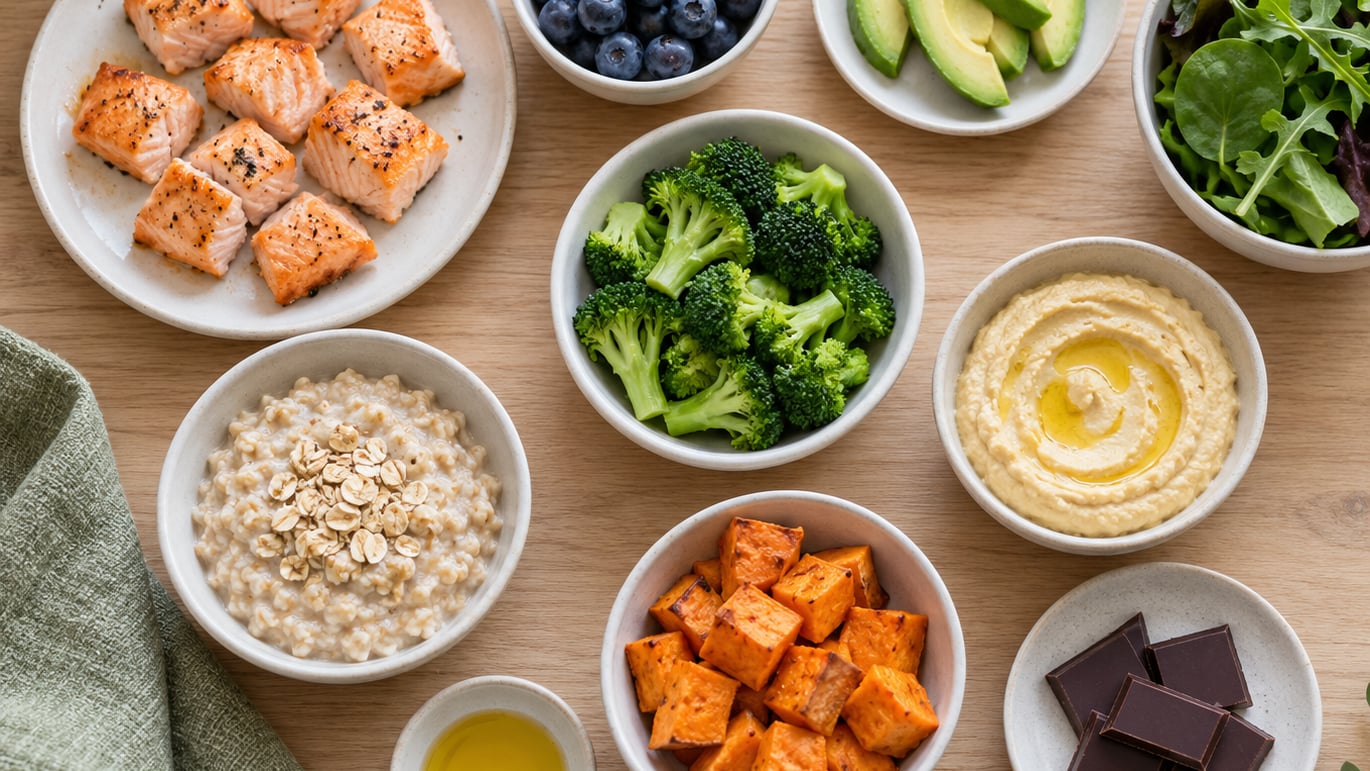
| Food | Usual nutrients | Kid-friendly serving | Allergy or texture note |
|---|---|---|---|
| Salmon | Omega-3 fats (EPA and DHA), protein | Baked salmon bites, salmon patties, flaked into rice | Fish allergy; check for bones, flake carefully for young kids |
| Blueberries | Fiber, vitamin C, anthocyanins | Fresh, frozen, blended into yogurt | Some kids reject the skins; blended versions go further |
| Avocado | Monounsaturated fat, fiber | Mashed on toast, in wraps, smoothies | Choking hazard under age 1 in whole slices; watch latex-fruit syndrome |
| Leafy greens | Vitamin K, folate, fiber, carotenoids | Smoothies, eggs, pasta sauce, blended soups | Texture is the barrier more than flavor for many kids |
| Broccoli | Fiber, vitamin C, vitamin K | Lightly steamed florets, pasta, rice bowls | Cook until soft; raw florets are a common rejection |
| Chickpeas and lentils | Plant protein, fiber, folate, iron | Mashed, blended into soup, hummus with veg | Wind and gas can bother younger kids; introduce slowly |
| Nuts and nut butters | Unsaturated fats, vitamin E, magnesium | Thinned nut butter, blended into smoothies | Whole nuts are a choking risk under age 5; nut allergy is common |
| Olive oil | Monounsaturated fat, polyphenols | Dressings, drizzled vegetables, roasting | Calorie-dense, so measure rather than free-pour for toddlers |
| Sweet potatoes | Beta-carotene, fiber, potassium | Roasted cubes, mashed, pancakes, smoothies | Very sweet, which helps acceptance; mash for younger eaters |
| Whole grains | Dietary fiber, B vitamins, magnesium | Oats, brown rice, whole-wheat pasta | Check labels if gluten-free is medically required |
| Ginger and turmeric | Curcumin and gingerols | Rice, soup, roasted veg, smoothies | Go easy, both are strong tasting; supplements are not for kids |
| Dark chocolate | Flavanols, small amount of iron | One or two squares, grated into yogurt | Caffeine, added sugar, choking and allergy cautions apply |
1. Fatty Fish Such as Salmon
Salmon is the most direct source of the omega-3 fatty acids EPA and DHA, which are part of how the body resolves an inflammatory response. For children, oily fish is one of the foods most often recommended in mainstream pediatric nutrition guidance.
Bake it at 400°F until the internal temperature reaches 145°F and it flakes easily. Cut into bite-size pieces, or mash it into a patty with a little egg and panko so it reads as a new food rather than a fish dish. Flaked salmon folded into rice or stirred through mashed potato also works well for kids who like the texture but not the look.
Watch the bones. If your child dislikes fish entirely, salmon patties and salmon cakes are usually the first format that gets accepted. For families avoiding fish, sunflower butter and ground flaxseed cover some of the same ground, though neither is a one-for-one swap.
2. Blueberries and Other Berries
Berries carry anthocyanins, the pigment behind their color, along with fiber and vitamin C. Strawberries, raspberries, blackberries and cherries fit the same category and are often easier to source year round in frozen form.
Frozen berries work as well as fresh for smoothies and baked goods, and they cost less. If your child is suspicious of the skins in blueberries, blend them into yogurt or a smoothie, or stir them into oatmeal where the texture disappears. Berry yogurt bark made with plain yogurt is a hit with most four-year-olds.
One caution: whole berries are round and can be a choking risk for younger toddlers, so mash or cut them lengthwise until your child is past that stage.
3. Avocado
Avocado is a kid-friendly source of monounsaturated fat plus fiber, and it is one of the easiest swaps for butter or cheese on toast. It also carries potassium and folate, which matters more for picky kids than most parents expect.
Mash it with a squeeze of lemon and spread it on whole-grain toast, roll it into a wrap with shredded chicken and sliced cucumber, or blend half an avocado into a banana smoothie where nobody can see it. Soft ripe slices work for older preschoolers once they are cut thin.
Avocado is a common allergen, and pediatric guidance treats it as a potential latex-fruit cross-reactor. Introduce it early and in small amounts, and mention it to your doctor if your child already reacts to bananas or kiwi.
4. Leafy Greens
Spinach, kale, romaine and arugula bring vitamin K, folate, carotenoids and fiber into the plate. The gap between what is healthy and what gets eaten is wide here, so greens rarely succeed as a side dish on their own.
Put a handful of spinach in a banana smoothie, chop kale finely into pasta sauce or meatballs, fold baby spinach into scrambled eggs, or blend it into a soup the color of a milkshake. Start small and increase. For kids who reject food on sight or feel rather than taste, why food texture matters more than taste for some kids goes into the sensory side in more detail.
Raw kale and salad leaves are a rough texture for many young children. Cooked and blended greens sidestep that entirely.

5. Broccoli
Broccoli supplies fiber, vitamin C and vitamin K in a vegetable most kids tolerate once it is not raw and not overcooked. It also pairs well with a small amount of healthy fat, which helps with absorption of fat-soluble nutrients.
Steam the florets until just tender and serve them with a mild yogurt or cheese dip. Chopped broccoli mixed into pasta, rice bowls and stir-fries disappears well, and broccoli cheddar soup is a reliable seller. Small, tree-shaped florets often work better than a whole head on the plate.
If broccoli is the only vegetable your child reliably eats, build the rest of the plate around it rather than fighting for variety on one meal.
6. Chickpeas and Lentils
Legumes are a cheap, shelf-stable source of plant protein, fiber, folate and iron. Lentils also bring polyphenols that show up in most lists of plant foods with anti-inflammatory activity.
Blend red lentils into a familiar tomato sauce until the texture is completely smooth. Mash chickpeas onto toast, serve hummus with cucumber and carrot sticks, or add red lentils to a soup the family already eats. Over time, small amounts mixed into a dish they already like is the approach most parents report working.
Beans and lentils can cause gas and stomach discomfort in younger children. Introduce them in small portions and give it a few days before increasing.
7. Nuts and Nut Butters
Nuts and nut butters supply unsaturated fats, vitamin E and magnesium, and they are one of the fastest swaps for a packaged snack. Peanut butter on apple slices, almonds folded into oatmeal and walnuts chopped into yogurt all work without any recipe.
Whole nuts are a choking risk for children under five, so use nut butter or a smooth seed butter instead. Thin nut butter with a little warm water or yogurt so it spreads easily, and never serve a spoonful straight from the jar at the high chair. If your child has a nut allergy, sunflower seed butter is the standard substitute, though it is not a complete nut replacement nutritionally.
8. Olive Oil
Extra virgin olive oil is the main fat in Mediterranean-style eating patterns, which are among the most studied dietary patterns in the literature. It contributes monounsaturated fat and polyphenols, and it replaces butter and heavier oils in most cooking.
Use it in a dressing mixed with lemon and honey for vegetables, drizzle it over roasted sweet potato or broccoli before they go in the oven, or swap it in for butter in baking. Because it is calorie-dense, measure it for toddlers and preschoolers rather than pouring freely, and keep it away from a hot pan since it burns easily.
9. Sweet Potatoes
Sweet potatoes contribute beta-carotene, which the body converts to vitamin A, along with fiber and potassium. They are also naturally sweet, which is a real advantage with young children who reject savory vegetables.
Roast cubes with olive oil until the edges caramelize, mash them into a lighter version of mashed potatoes, blend a cooked one into a breakfast smoothie, or grate it into pancakes and muffins. Wedges cut thin bake into something that approximates a fry without being one.
Avoid glugging butter and brown sugar into them. The vegetable is doing enough work on its own.

10. Whole Grains
Oats, brown rice, quinoa, barley and whole-wheat pasta add dietary fiber, B vitamins and magnesium. Fiber is central to gut health, and the gut microbiome is where a large share of immune signaling begins.
Steel-cut or old-fashioned oats with berries and a spoon of nut butter make a five-minute breakfast. Quinoa cooks in fifteen minutes and swaps directly for rice. If your family avoids gluten for any reason, our gluten-free dinner ideas kids actually eat has practical versions of these staples.
Anti inflammatory foods for kids when gluten is a problem
If gluten is restricted for medical reasons, work with your doctor or a registered dietitian rather than cutting it on your own. Elimination without guidance is how some families end up with a child eating ten foods instead of thirty, and celiac disease needs testing, not guessing. For families eating gluten freely, whole grains are a straightforward swap from white bread and white rice.
11. Ginger and Turmeric
Turmeric contains curcumin, and ginger contains gingerols, both studied for their effects on inflammatory pathways. In food amounts they are mild and generally well tolerated, but they are strongly flavored, so they work best in savory dishes where other spices are already in play.
Add a pinch of turmeric and ginger to rice, soup, roasted vegetables or a smoothie. A small amount of ground black pepper alongside turmeric is a common pairing, since black pepper improves curcumin absorption. Cinnamon and gentle warm spices get similar treatment in oatmeal and baked goods.
Keep to food amounts and skip supplements unless a clinician recommends them for a specific reason. Concentrated turmeric supplements are a separate question from cooking with the spice, and parents should ask a doctor before giving them to a child.
12. Dark Chocolate
High-cacao dark chocolate contains flavanols and a small amount of iron, and in modest portions it fits into an otherwise balanced pattern. I would frame it as an occasional treat rather than a health food, because that is what the evidence supports.
One or two squares after dinner, or a teaspoon grated into plain yogurt so a larger volume feels generous, keeps the portion realistic. Choose a bar with a high cacao percentage and a short ingredient list.
It still contains caffeine, added sugar and, for some children, milk, soy or tree nut allergens. It is also a choking risk for young children, and a square the size of a small child’s fist is plenty.
Frequently Asked Questions
What reduces inflammation in kids?
An overall pattern built around fiber, omega-3 fats, colorful vegetables and fruit, whole grains and minimally processed foods supports the immune system and the gut lining, where much immune signaling starts. Cutting back on added sugar, ultra-processed snacks and processed meats matters just as much. For most children, this is general healthy eating rather than a treatment for a specific condition.
Is turmeric safe for kids?
Culinary amounts of turmeric are generally considered safe for children and show up in rice, soups and roasted vegetables. It is a strong flavor, so start with a small pinch and build up. Concentrated turmeric or curcumin supplements are a different question and should only be given on a clinician’s advice. A pinch of black pepper alongside turmeric improves absorption.
Are bananas anti-inflammatory?
Bananas are a nutritious everyday fruit with fiber, potassium and vitamin B6, and they do not cause inflammation. They are not usually listed among the most potent sources of anti-inflammatory compounds, though, since berries, leafy greens and oily fish carry higher levels of anthocyanins and omega-3 fats. A banana is still a fine swap for a packaged snack.
What foods do picky eaters usually reject?
Texture drives most rejections. Raw vegetables, mixed textures, visible leafy greens, anything unfamiliar-looking, and foods with an unexpected color get refused far more often than the flavor itself. Children also tend to reject the category first. Cooking vegetables until soft, blending them smooth, and serving tiny portions alongside a familiar food works better than a new food on its own.
What are some good foods for a healthy diet for children?
A varied pattern beats any single superfood: fruit and vegetables across multiple colors, whole grains, beans and other protein sources including fish, eggs and poultry, plain dairy or fortified alternatives if they are tolerated, and unsaturated fats such as olive oil and nut or seed butters. Adequate sleep, movement and water matter as much as any single ingredient on the list.
When should a parent call the pediatrician about inflammation?
If your child has ongoing stomach pain, unexplained fatigue, frequent illness, skin flares, poor sleep or mood changes that worry you, mention it at a routine visit rather than trying to fix it with food alone. Symptoms that are severe, sudden or worsening need prompt attention. Your pediatrician can assess whether anything medical is going on and refer you to a pediatric registered dietitian if needed.
What to Do First This Week
Start with the one food your child already eats and is not suspicious of. Swap white bread for whole grain, add berries to the cereal you already buy, or put salmon in a patty instead of a fillet. Small, boring changes that survive a busy week beat a plan that lasts two days.
Keep offering without pressure, and talk to your pediatrician or a registered dietitian if your child has an allergy, eczema, ADHD, autism, digestive symptoms or an autoimmune condition. Anti inflammatory foods for kids are best understood as one part of ordinary healthy eating, not a treatment for anything. Last reviewed October 2026.