
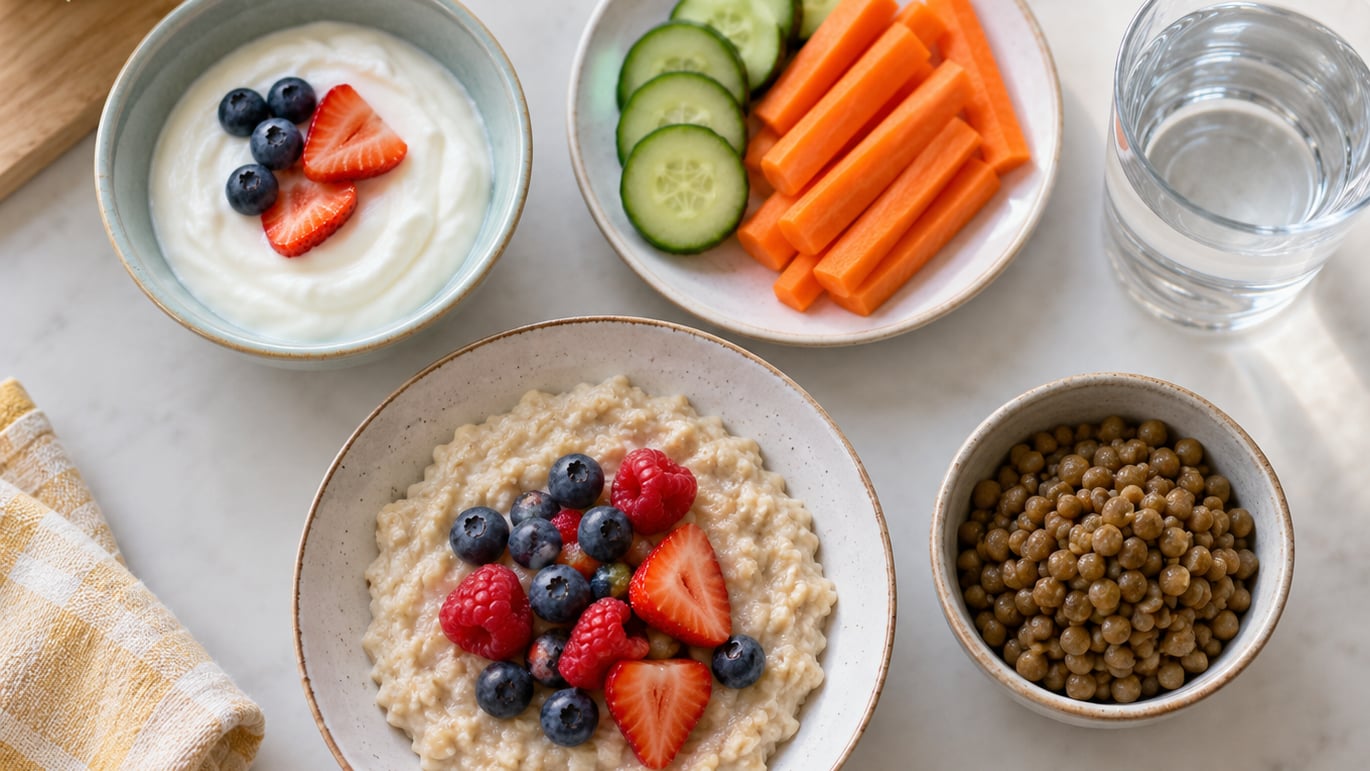
Gut health for kids is mostly about digestion, immunity, and how a child feels day to day, and the habits that support it are ordinary ones: regular meals, enough fluid, a varied diet when the child can manage one, and a pediatrician’s call when symptoms stick around. Nothing about it needs a shelf full of supplements.
This is general information written for parents, not a diagnosis or a plan for your child. I’m not a pediatrician or a dietitian, and nothing here replaces advice from your child’s own care team. I’ve read the pediatric and nutrition guidance closely so you get the useful parts without the hype.
Table of Contents
- What Gut Health for Kids Actually Means
- What Does a Healthy Gut Do for Children?
- What Are the Common Signs of a Gut Health Problem?
- What Should Parents Do First?
- How Can Diet Support a Child’s Gut Health?
- Gut Health for Kids: Which Foods Are Most Helpful?
- Are Probiotics and Prebiotics Worth Trying for Kids?
- Do Gluten-Free or Casein-Free Diets Improve Gut Health?
- How to Plan a Safe Transition With Your Child’s Care Team
- Can Antibiotics, Pain Relievers, and Other Medicines Affect the Gut?
- What Do Parents Need to Know About Testing and Gut Health Claims?
- How Do You Support Gut Health in a Child with Autism or Sensory Needs?
- When Should Parents Call a Pediatrician?
- How Can a Pediatrician or Registered Dietitian Help?
- Frequently Asked Questions
- How do I know if my child has gut health problems?
- What foods help a child’s gut stay healthy?
- Can probiotics help children with constipation?
- Is a microbiome test worth doing for a child?
- When does a child’s digestive symptom need medical attention?
- A Simple Place to Start
What Gut Health for Kids Actually Means

A child’s gut health is the state of the trillions of bacteria, viruses, and fungi living in their digestive tract. When those microbes are diverse and balanced, digestion, immunity, mood, and growth tend to work better.
The gut microbiome is the collective name for that community. It is not a fixed list. Two healthy children carry different strains, and the mix shifts with age, illness, medicines, and what they eat.
A few terms come up constantly in marketing and in research papers, so it helps to have plain definitions:
- Microbiome — the community of organisms living in the digestive tract.
- Dysbiosis — an imbalance in that community. It is a description, not a diagnosis on its own.
- Prebiotic — a type of fibre that specific gut bacteria use as food.
- Probiotic — live microorganisms added to food or a supplement with the aim of adding to that community.
- Postbiotic — a substance the bacteria produce during fermentation, studied for immune effects.
- Gut-brain axis — the two-way communication linking the digestive system and the brain, largely through the vagus nerve and chemical signalling.
- GOS and FOS — galacto-oligosaccharides and fructo-oligosaccharides, two of the better-studied prebiotic fibres. Both occur naturally in foods.
- CFU count — colony-forming units, the label term for how many living organisms a probiotic product claims to contain.
Dysbiosis is a real research term, but it is not a diagnosis you get from a home test. Anything promising to diagnose or reverse it from a sample at home deserves a slow look.
What Does a Healthy Gut Do for Children?
Four jobs come up most often in the research.
Digestion and absorption. The gut breaks food down and absorbs nutrients, including iron, calcium, and vitamin B12, which is why persistent symptoms sometimes show up as low energy or a faltering growth curve.
Immune defence. A large share of the immune system sits in and around the gut, and mucus forms a physical first line of defence. This is the origin of the idea that immunity starts in the gut, which is true in a broad sense and often exaggerated in advertising.
Growth. When a child regularly has pain, reflux, loose stools, or constipation, eating enough becomes hard, and a short period of reduced intake can matter more than any supplement.
The gut-brain connection. Gut microbes make neurotransmitters and influence brain chemistry, and signals travel both ways. Small studies have linked gut patterns with mood, anxiety, and attention in children, and researchers are clear that correlation is not cause. No one should tell you a probiotic treats ADHD.
Everything in that list is still being studied in children specifically. Most adult findings do not transfer cleanly, and much of what circulates online is drawn from adult or animal research.
What Are the Common Signs of a Gut Health Problem?
Symptoms are clues, not verdicts. The same tummy ache can come from constipation, food intolerance, stress, or a virus the body is already clearing.
| Area | What parents often notice | When to raise it |
|---|---|---|
| Pain | Tummy aches, often around the navel, sometimes waking the child at night | Recurring, or limiting play, school, or sleep |
| Bowels | Constipation, hard or painful stools, loose stools, bloating, mucus in stool | Any change that lasts more than a couple of weeks |
| Appetite | Refusing previously accepted foods, grazing, very full after small meals | When the accepted food list keeps shrinking |
| Growth | Slow weight gain, a flattening growth curve, ongoing fatigue or pallor | Any concern about weight or height — see the pediatrician |
| Sleep | Waking with pain, restless sleep, difficulty settling | When bedtime has become a nightly battle |
| Skin and other | Eczema flare-ups, recurrent infections, bloating after meals | When it comes and goes with diet or illness |
| Food tolerance | New reactions to previously fine foods | Promptly, because reactions can escalate |
If symptoms come and go with no clear pattern, a two-week written record of what the child ate, what happened, and when is often more useful than memory. It also gives the pediatrician something concrete to work with.
What Should Parents Do First?
Before changing anything, work through this list. It costs nothing and it rules out most of what parents worry about.
- Track it. Note stools, pain, foods, medicines, and sleep for two weeks.
- Review recent changes. A new medicine, a recent course of antibiotics, a new childcare setting, or a recent diet change all matter.
- Keep food safety tight. Refrigerate perishable food within two hours, and use a food thermometer rather than guessing.
- Protect hydration. Water is the first thing, offered regularly across the day.
- Keep routines stable. Consistent meal and sleep times help more than most parents expect.
- Book a visit if it persists. Two weeks of daily symptoms, or any symptom that worries you, is a reasonable threshold.
None of this is medical advice, and none of it needs equipment beyond a notebook.
How Can Diet Support a Child’s Gut Health?
Fibre is the lever most families can actually pull, and most children eat less than the recommended amount. General guidance for age two and up is around 22 to 25 grams a day, with younger toddlers lower than that. Increase gradually, because a sudden jump causes gas and bloating and gets blamed on the food rather than the change.
Fluid matters as much as fibre. A child who is constipated usually needs more water before more fibre, and more fibre without more water can make things worse.
Fermented foods bring live cultures along with them. Yogurt with live and active cultures, kefir, miso, and sauerkraut are common choices, though these are unpasteurised or cultured items — check the label, and ask a pediatrician before giving them to a young infant or a child with an immune condition.
Texture decides what actually gets eaten. A child who refuses a whole apple will often eat applesauce, and that is a normal adaptation, not a failure. Sensory response to texture often matters far more than flavour, and there is more on that in why food texture matters more than taste for some kids.
Food safety basics apply to everything above. Cook poultry to 165°F (74°C), ground meat to 160°F (71°C), and whole cuts of meat and fish to 145°F (63°C). Refrigerate perishables within two hours, and use them within three to four days or freeze them.
For children with allergies, coeliac disease, autism, or disability-related feeding difficulty, the general advice needs adapting rather than abandoning. Working with a registered dietitian keeps the gut goal and the nutritional goal in the same conversation, which is what prevents a restricted diet from narrowing further.
Gut Health for Kids: Which Foods Are Most Helpful?

| Food | What it offers | Kid-friendly form |
|---|---|---|
| Oats | Fibre plus some GOS and FOS | Oatmeal, overnight oats, oat flour in pancakes |
| Lentils and beans | Prebiotic fibre, iron, protein | Blended into sauces, soups, and mashed dips |
| Bananas | Fibre and resistant starch, gentler when green | Sliced, mashed, or frozen as chunks |
| Yogurt with live cultures | Live microbes and protein | Plain, or mixed into oatmeal |
| Kefir | A wide range of live cultures | Smoothed into smoothies or porridge |
| Miso | Live cultures from fermentation | Mixed into broths, soups, and marinades |
| Flax and chia seeds | Soluble fibre and omega-3 fats | Ground fine and stirred into anything |
| Whole grains | Fibre and variety | Brown rice, whole-wheat pasta, wholegrain bread |
| Leafy greens | Fibre and folate | Chopped finely into sauces and omelettes |
| Sourdough bread | Fermented grains, easier on some stomachs | Toast, cut into finger-sized pieces |
No single food heals a gut, and the table above is not a shopping list. Individual tolerance varies more than the internet suggests, and for many children the realistic goal is adding two or three of these foods without taking anything away.
Are Probiotics and Prebiotics Worth Trying for Kids?
Sometimes, for a defined problem, under clinical guidance. The honest summary is that probiotic research in children is condition-specific: some strains have modest evidence for reducing the duration of certain childhood diarrhoea episodes, particularly alongside antibiotics, and the evidence is weak or absent for most everyday complaints.
Prebiotics are simpler, because they are just fibre. Foods containing GOS and FOS, such as oats, onions, garlic, asparagus, and legumes, are safe for most children and do not require a product.
If you are considering a supplement, read the label for three things: the full strain name, such as Lactobacillus rhamnosus GG or Bifidobacterium lactis, the CFU count at the end of the shelf life rather than at manufacture, and whether the storage instructions make sense for your kitchen. A product listing only a genus is telling you very little.
There are good reasons to hold off without guidance. Products are not standardised, supplements interact with some medicines, and delaying evaluation of a real condition while trying a bottle of powder can cost months.
Do Gluten-Free or Casein-Free Diets Improve Gut Health?
For a child with coeliac disease, gluten removal is medically required, and that is not a gut-health trend. Outside a confirmed diagnosis, evidence for these diets improving general gut health is weak, and guidelines do not recommend them for children with unexplained abdominal pain.
The cost is real. Both diets remove nutrients, cost more at the grocery store, and add social friction at school and parties. Children on long-term restricted diets need growth and nutrient monitoring, which is the part families most often forget.
Forum threads on restrictive feeding make the same point from the other direction: parents repeatedly describe the accepted food list narrowing over time, which is the failure mode that matters most.
How to Plan a Safe Transition With Your Child’s Care Team
If a diet change is being considered, do it with a registered dietitian involved from the first conversation, not after. Agree on what is being excluded and for how long, keep a growth and symptom record, and build a reintroduction plan before you start, so the diet has an exit as well as an entrance. A child who is thriving on a medically necessary restricted diet is a different situation from a child whose family is testing one out of frustration.
If you are already in the first weeks of a gluten-free, casein-free diet, what to expect in the first month covers the practical side of that transition.
Can Antibiotics, Pain Relievers, and Other Medicines Affect the Gut?
Yes, generally speaking. Antibiotics can reduce the range of microbes present, which is why diarrhoea is a common side effect and why gut symptoms often appear during or after a course. Anti-diarrhoeal medicines, iron supplements, and anti-inflammatory painkillers can also affect bowel movements or cause tummy pain in some children.
This is a reason to be careful, not a reason to stop anything. Children should receive only products and doses a clinician has recommended, and the same applies to anything borrowed from an adult’s cabinet. A doctor or pharmacist can answer questions about a specific child’s specific medicine, including timing around meals and what side effects to expect.
What Do Parents Need to Know About Testing and Gut Health Claims?
Stool tests for infection, blood tests for coeliac disease, and breath tests for lactose or fructose intolerance each answer a specific medical question. They are ordered for a reason and read by someone who knows how to interpret them.
Commercial microbiome and wellness panels are a different category. A sample sent to a company without a clinical indication rarely changes what a doctor would do next, and the terminology in those reports is often borrowed from research without the corresponding evidence.
Food allergy testing panels sold direct to consumers have a poor track record for diagnosis. A positive result on a broad panel does not mean the child cannot eat that food, and eliminating foods on that basis can cause harm.
Here are the phrases that should make you put a page down: promises to cure, detox, clean, repair, or restore in a set number of days; claims that one product works for every symptom; testimonials instead of named strains and studies; and pressure to buy a multi-month bundle before any assessment. If a claim sounds too tidy for a human body, it usually is.
How Do You Support Gut Health in a Child with Autism or Sensory Needs?
Start with the same foundations and fewer variables. Constipation is very common in autistic children and is often missed when the child cannot easily describe pain, so treat bowel routine as a routine to be actively tracked rather than something mentioned in passing. Our guide to managing constipation in autistic kids goes into the practical steps.
Visual schedules and predictable mealtimes help. Reducing sensory load at the table often matters more than any single food change, and a calm meal environment supports the routine your child is actually relying on.
Keep variety gradual. Adding one new item at a time, using a safe version of a food first, and never removing an accepted food without a clear clinical reason is the safest way to widen a restricted diet. Reflux-like symptoms, sleep disruption, and self-injurious behaviour that correlates with gut symptoms deserve a pediatric assessment rather than a dietary experiment.
Reflux-like symptoms, food refusal that is getting worse, or any drop in growth should be flagged rather than managed at home indefinitely.
When Should Parents Call a Pediatrician?
These are the ones I would not wait on:
- Blood in the stool, or black, tarry stools
- Vomiting that is repeated or contains blood or green material
- Signs of dehydration — very few wet diapers or nappies, a dry mouth, no tears, a sunken soft spot on a baby
- Severe belly pain, or a child in obvious distress
- A child under three months old with a rectal temperature of 100.4°F (38°C) or higher
- Any child who seems to be getting worse rather than better
Book a routine appointment, without urgency, for recurrent tummy aches that keep happening across weeks, constipation or loose stools that have lasted more than a couple of weeks, a steady drop in appetite, any concern about growth, or gut symptoms that are interfering with sleep, school, or home life. Trust your read on your own child. If something feels wrong to you, that is enough reason to ask.
How Can a Pediatrician or Registered Dietitian Help?
A pediatrician assesses growth, examines the child, rules out medical causes, and decides whether testing or a referral is needed. A gastroenterologist handles conditions such as coeliac disease, inflammatory bowel disease, and severe or persistent symptoms. A registered dietitian plans food and monitors nutrients and growth, which matters most when a diet is restricted.
Ask any of them for advice that fits your family’s food, culture, budget, and routine, and for it written down. Parents who feel dismissed tend to go quiet and lose months that could have been spent tracking symptoms.
Frequently Asked Questions
How do I know if my child has gut health problems?
Look for patterns rather than single days: recurring tummy aches, constipation or loose stools that last more than two weeks, a shrinking list of accepted foods, bloating after meals, or any drop in appetite or growth. Write it down for two weeks and take the record to a pediatrician. Symptoms on their own cannot tell you what is causing them, only that something deserves a closer look.
What foods help a child’s gut stay healthy?
Fibre is the food group that matters most. Oats, lentils, beans, bananas, leafy greens, whole grains, and seeds all feed beneficial gut bacteria, and fermented foods such as yogurt with live cultures, kefir, and miso add live microbes. Build fibre up slowly, keep fluids up alongside it, and remember that what a child will actually eat matters more than what is theoretically ideal.
Can probiotics help children with constipation?
The evidence for treating constipation with probiotics in children is mixed, and most guideline groups do not recommend them as a routine approach. Constipation management usually starts with fluids, dietary fibre, toilet routines, and activity, with medical treatment sometimes added. If your child is constipated often or seems uncomfortable, ask a pediatrician before buying a supplement.
Is a microbiome test worth doing for a child?
Usually not. Direct-to-consumer microbiome panels do not reliably tell you anything that changes what a doctor would do, and their results are hard to interpret clinically. Stool tests for infection and breath tests for intolerances can be useful when ordered for a specific question. If your child has ongoing symptoms, a pediatric assessment is a far better use of your time and money.
When does a child’s digestive symptom need medical attention?
Get medical help right away for blood in the stool, repeated vomiting, signs of dehydration, severe pain, a fever of 100.4°F or higher in an infant under three months, or a child who is clearly deteriorating. Book a routine visit for recurring aches, bowel changes lasting more than two weeks, reduced appetite, or any worry about growth. Pediatricians would rather hear early and often.
A Simple Place to Start
Write down what is happening and what your child currently eats and drinks, for two weeks. That record is the single most useful thing you can bring to a pediatric appointment, and it costs nothing.
Then work on the unglamorous basics: a bit more fibre, more fluid, regular meal and sleep times, and food the child genuinely eats. Skip supplements that promise a cure and skip diets that remove foods for no clinical reason. If symptoms persist, recur, or start to interfere with sleep, school, or daily life, that is not a parenting problem to solve at home — it is a call to make.