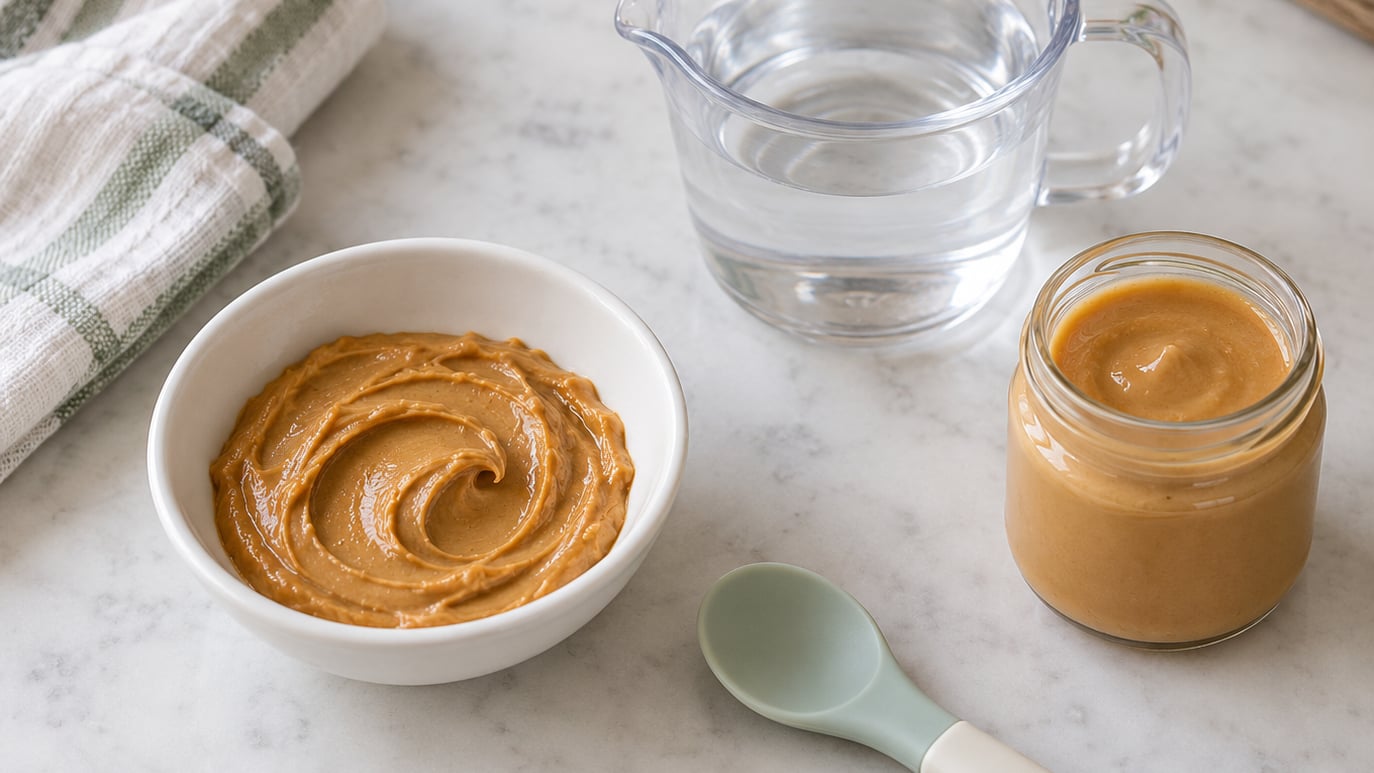
To introduce peanuts to a baby, start around 6 months for most babies, using about 2 teaspoons of smooth peanut butter thinned with 2 to 3 teaspoons of warm water, breast milk or formula. Never give whole peanuts or thick globs of peanut butter. Wait 10 minutes between spoonfuls and stay with your baby for at least 2 hours afterward.
Emergency: If your baby has trouble breathing, throat or tongue swelling, or collapses after peanut, use prescribed epinephrine according to the child’s emergency plan and call 911 right away.
If someone told you to hold off on peanut until age three, that advice is out of date. Major bodies including the NIAID, the ACAAI, Food Allergy Canada and ASCIA now recommend introducing peanut early, in a safe form, once a baby is ready for complementary foods — and babies with eczema or an existing egg allergy need a plan from their pediatrician rather than a home trial.
Most parents only need about ten minutes of prep and a quiet afternoon. The hard part is usually the paperwork of worrying, not the spoonful itself.
Table of Contents
- What You Need
- Step-by-Step: How to Introduce Peanuts to a Baby
- Confirm That Your Baby Is Ready
- Ask the Pediatrician About High-Risk Babies
- Choose an Age-Appropriate Peanut Form
- Prepare One Small, Simple Test Feeding
- Offer It and Watch Closely
- Keep Introducing It Safely
- Know When to Get Emergency Help
- Common Mistakes
- Frequently Asked Questions
- When should I introduce peanuts to a baby with severe eczema?
- Can I give my baby peanut butter, whole peanuts, or peanut powder?
- How long should I watch my baby after the first peanut feeding?
- What should I do if my baby has hives or swelling after eating peanut?
- Does one reaction-free feeding mean my baby is not allergic to peanuts?
- Should I use a home allergy test before offering peanut?
- Conclusion
What You Need
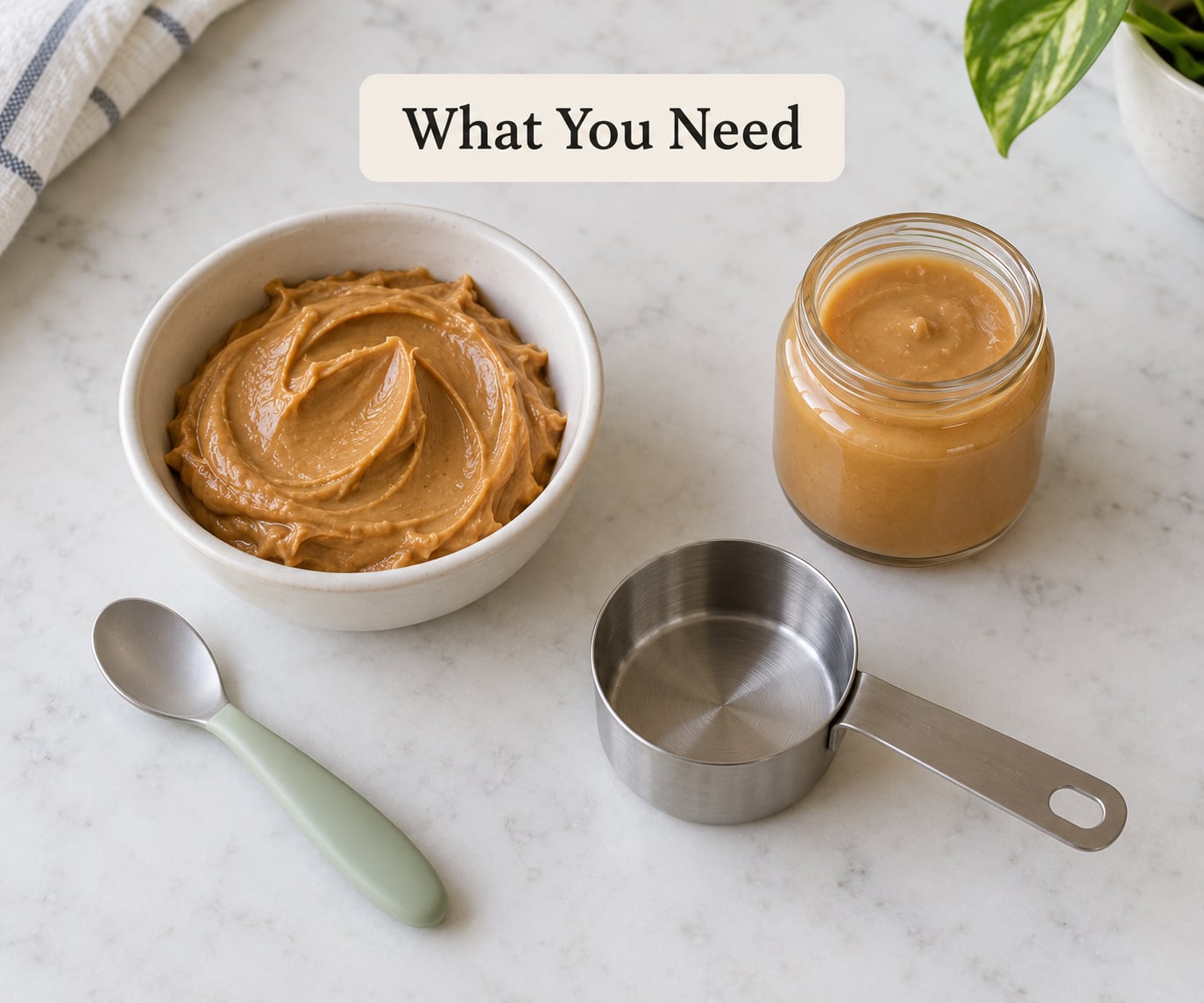
You need five things, and only one of them is a food product. Everything else is about timing, supervision and knowing when to stop.
- Current guidance. The NIAID addendum guidelines, the LEAP trial results, and the CDC, ACAAI, USDA and AAP material your pediatrician works from. Guidance here reflects what was current as of 2026; check with your own clinician if you have read something older.
- A pediatrician’s input if your baby has severe eczema, a known egg allergy, a previous reaction to peanut or another food, or a family history that concerns you. Those babies may need evaluation before their first spoonful.
- A smooth peanut product. Smooth peanut butter thinned with warm water, breast milk or formula, or smooth peanut powder blended into a puree your baby already tolerates. Read the label for added sugar, salt, honey and other major allergens.
- A safe feeding space. A high chair or your lap, upright, somewhere you can pause the feeding and put the baby down if you need to. Not a car seat, not while walking, not during a nap.
- The baby’s usual milk and foods. Breast milk or infant formula still leads the diet, and you’ll build the peanut food from something already tolerated. There is no single portion size that suits every baby, so let your clinician size the dose if you are unsure.
Step-by-Step: How to Introduce Peanuts to a Baby
Confirm That Your Baby Is Ready
Most babies without risk factors are ready for peanut around six months, when they sit upright with support, show interest in food, and can swallow thicker textures rather than simply spitting. Babies under four months should not be given peanut at all, and medically at-risk babies may need an earlier evaluation instead of a trial at home.
Delay or change the plan if your baby is ill, running a fever, teething heavily, or already reacting to a different food. A sick baby produces an unreliable test and an unfair read on the peanut.
Ask the Pediatrician About High-Risk Babies
Call the doctor before you start if your baby has severe eczema, a persistent egg allergy, a previous reaction to peanut or another food, or a family history that worries you. The doctor may recommend a specific introduction plan, a supervised feeding, or an allergist evaluation first.
Skin-prick testing or blood testing can give useful information, but they are not a substitute for professional advice about how to introduce the food. A negative test is not permission to skip the appointment, and a positive one means the plan changes entirely.
Choose an Age-Appropriate Peanut Form
Use only a smooth preparation your baby can handle safely. The forms most commonly described in current guidance are thinned smooth peanut butter, smooth peanut powder mixed into a familiar puree, and smooth peanut-containing baby foods.
Never give whole peanuts or peanut pieces, and never give a thick glob of peanut butter straight from the jar — those are choking hazards, and guidance places them off-limits well past the first year. Skip anything with added salt, sugar or honey, and check for other major allergens on the label.
Prepare One Small, Simple Test Feeding
Thin about 2 teaspoons of smooth peanut butter with 2 to 3 teaspoons of a familiar warm liquid — water, breast milk or formula — until it flows easily off the spoon. Let it cool to a safe temperature before it goes anywhere near your baby. The texture test matters more than the exact number: if it sits in a thick lump, thin it more.
Mixing smooth peanut powder into an already tolerated puree is the gentler version of the same test. Use a clean utensil, keep the rest of that meal simple, and avoid presenting the first exposure as dessert. Feed the baby upright and alert, never sleepy and never while fussy.
Offer It and Watch Closely
Give one small spoonful, wait about 10 minutes, and then give another. Most reactions show up quickly, which is why the waiting period matters. Stay with your baby the whole time, continue breast milk or formula as usual, and do not leave the room.
Signs that need prompt attention include hives, swelling, repeated vomiting, an unusual cough, wheezing, difficulty breathing, a pale or bluish color, or sudden lethargy. A reaction can be subtle, so watch the skin as well as breathing.
One note that calms a lot of parents: redness around the mouth right after a first feed is usually contact irritation from the spoon and the food, not an allergy. Contact dermatitis fades quickly once the skin is washed. Stop and get advice instead if you see hives spreading across the body, swelling of the face or lips, or any breathing symptom.
Keep Introducing It Safely
A single exposure is not a complete test, and early introduction works best when it is repeated. Current guidance commonly points to something like twice a week, continued for months, though frequency and quantity should follow your child’s clinician and the most current public health advice for your area.
Write down what you gave, the date, the preparation and any symptoms. Keep offering other developmentally appropriate foods alongside it, and never pressure a baby to eat or use peanut as a medical treatment without professional advice. If your baby swallows a tiny amount and spat most of it out, note it and ask your clinician whether the introduction counted.
Know When to Get Emergency Help
Stop feeding and get emergency help immediately for difficulty breathing, throat or tongue swelling, faintness, collapse, or a reaction that is getting worse quickly. Use prescribed epinephrine according to the child’s emergency plan and call 911. Antihistamines do not replace emergency treatment.
Even when breathing seems fine, call the pediatrician promptly after hives, swelling or repeated vomiting following a new food. A reaction can progress in stages, and a second episode is a reason to be more careful, not less.
Common Mistakes
Most problems with peanut introduction come from a handful of repeat errors. Here they are, with the fix next to each one.
- Starting too early, before readiness. Wait for the readiness signs, and never give peanut before four months.
- Skipping the doctor for a high-risk baby. Severe eczema or an egg allergy means a call first, not a guess.
- Using whole peanuts or thick nut butter. Thin it until it flows, or use peanut powder in a puree.
- Testing several new foods in one sitting. One new food at a time keeps the cause obvious if something goes wrong.
- Introducing peanut during an illness. Wait until your baby is well and behaving normally.
- Treating one reaction-free feeding as a guarantee. It is one data point, not a cleared allergy test.
- Relying on a home allergy test. Some are inaccurate and none replaces clinical judgment.
- Waiting out breathing or swelling symptoms. That is the moment to act, not to watch.
A few habits cover most of the rest: prepare the food in advance, feed upright, check labels each time rather than trusting memory, keep a written log, and message the pediatrician’s office the same day if anything about the feeding worried you. Relatives who want to wait, or who keep offering peanut-containing snacks, are best handled with one clear sentence: the baby’s doctor gave a plan, here it is, and here is what you can do instead. If you are still unsure about anything, that is a good reason to call the office rather than a bad one.
Frequently Asked Questions
When should I introduce peanuts to a baby with severe eczema?
Book an appointment with your pediatrician before the first spoonful, and ask whether an allergist evaluation or a supervised feeding makes sense. Severe eczema and a persistent egg allergy put a baby in the higher-risk group, and current guidance treats those infants differently from low-risk babies. Start at the age your clinician specifies rather than at home on your own. Do not delay indefinitely while waiting for an appointment, either, because the prevention window is finite.
Can I give my baby peanut butter, whole peanuts, or peanut powder?
Thinned smooth peanut butter and smooth peanut powder are the two forms most commonly described in current guidance. Whole peanuts and peanut pieces are choking hazards and are not recommended for young children. Thick globs of peanut butter straight from the jar are also off-limits, because they stick to the palate and can block an airway. Whatever you choose should be smooth, free of added sugar, salt and honey, and thin enough to flow off a spoon.
How long should I watch my baby after the first peanut feeding?
Stay with your baby for at least two hours afterward, because most reactions appear quickly, often within minutes. Give the first spoonful, wait about ten minutes, then a second, and keep watching throughout. Choose a daytime feeding soon after waking so your baby is alert rather than sleepy and you are not rushed. If any symptom shows up after your two-hour window, still call the pediatrician rather than assuming it is unrelated.
What should I do if my baby has hives or swelling after eating peanut?
Stop the feeding and contact your pediatrician the same day for hives, swelling, or repeated vomiting, even when breathing seems normal. For difficulty breathing, throat or tongue swelling, faintness, collapse, or a rapidly worsening reaction, use prescribed epinephrine according to the child’s emergency plan and call 911 immediately. Antihistamines do not replace emergency treatment. Do not give peanut again until a clinician has assessed what happened.
Does one reaction-free feeding mean my baby is not allergic to peanuts?
No. One calm feeding is one data point, not a diagnosis, and some babies react on later exposures rather than the first. Reaction-free feeding is also only meaningful if your baby swallowed a meaningful amount and it was repeated over the following weeks. Redness around the mouth on a first feed is usually contact irritation rather than allergy, which is a separate thing from immunity. If you have doubts, keep a log and ask your pediatrician.
Should I use a home allergy test before offering peanut?
No. Home test kits are not a substitute for clinical evaluation, and results can be misleading in either direction, which is dangerous in both. If your baby has risk factors, the useful step is a conversation with your pediatrician or allergist, who can decide whether skin-prick testing, blood testing or a supervised feeding is appropriate. Many babies do not need testing at all before an ordinary home introduction following current guidance.
Conclusion
Start by checking two things: your baby’s age and readiness signs, and whether eczema, an egg allergy or a family history means you need the pediatrician first rather than a home trial. If the answer is go ahead, choose one smooth, age-appropriate peanut preparation, thin it so it flows off the spoon, and feed it in the morning when your baby is alert and you have two free hours.
Watch the skin and the breathing, keep the rest of that first meal simple, and write down what happened. Then keep offering peanut on a regular schedule your clinician agrees with, because one calm spoonful proves very little on its own. This article is general information and does not replace advice for your own child; pediatric guidance on peanut introduction has changed over time and continues to be reviewed.
Sources worth reading directly: NIAID addendum guidelines for peanut introduction, the LEAP trial, the ACAAI and FoodAllergy.org, Food Allergy Canada, ASCIA infant feeding position statements, and current USDA and CDC infant feeding guidance.