Most children are already eating enough protein, and the fix for the ones who are not is rarely a new food on a new plate. The way to get kids to eat more protein is to raise the amount of a protein they already tolerate, then blend or mix a second one into a familiar meal, without pressure, one variable at a time. Give it two to three weeks, not one dinner.
I know how loud the worry gets at 5pm. A parent on r/toddlers described the exact version of this I hear on my own kitchen floor: an 18-month-old who happily eats yogurt and refuses string cheese, and whose snacks default to fruit and raw carrot. Nothing about that is a failure of cooking. It is a texture and routine problem, and those move when you change one thing at a time.
Table of Contents
- What You Need
- Step-by-Step: How to Get Kids to Eat More Protein
- 1. Start With What Your Child Already Eats
- 2. Pair Accepted Foods With Protein
- 3. Add Protein Through Familiar Meals
- 4. Use Texture and Appearance Strategies
- 5. Offer Choices Without Pressure
- 6. Make Protein Easy to Reach
- 7. Track Progress Without Restriction
- Common Mistakes
- When Protein Intake May Need Professional Support
- Frequently Asked Questions
- How can I get my child to eat more protein without forcing?
- Which foods are easiest ways to add protein to a child’s meals?
- How much protein does a child need each day?
- What if my child only accepts a few protein foods?
- Should I use smoothies, supplements, or protein powders for my child?
- Conclusion
What You Need
You do not need equipment, a blender you do not own, or a new grocery list. You need five decisions, and you can make all of them today.
- Your accepted list. Write down every protein your child eats without argument right now, no matter how small. Two bites of egg, a spoon of Greek yogurt, one strip of cheese, whatever counts.
- One or two new candidates. Pick from the same family as what already works. If plain yogurt is fine, full-fat cottage cheese is a shorter jump than steak.
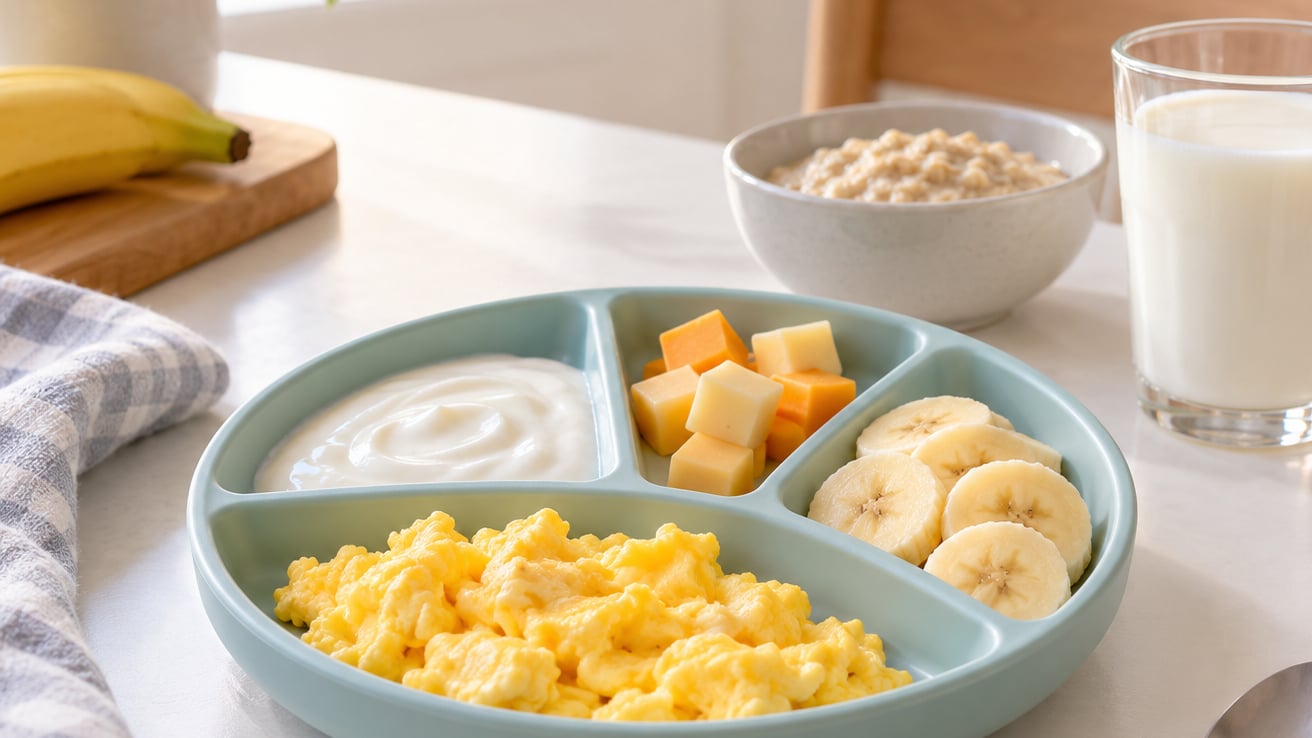
- A child-safe serving setup. A divided plate, a small cup, or a side bowl lets a child push one thing away without pushing away the whole meal.
- Known texture and temperature preferences. Smooth or lumpy. Wet or dry. Room temperature or cold. Texture is the real decision variable far more often than taste.
- A realistic goal. One new food accepted over a month is a good month. A new food on the table without a meltdown is a win too.
Step-by-Step: How to Get Kids to Eat More Protein
1. Start With What Your Child Already Eats
Before you introduce anything, count what is already landing. Most families underestimate badly. A single cup of milk or plain yogurt runs about 8 grams of protein, so a toddler’s entire daily target can be met by a glass of milk and a slice of cheese.
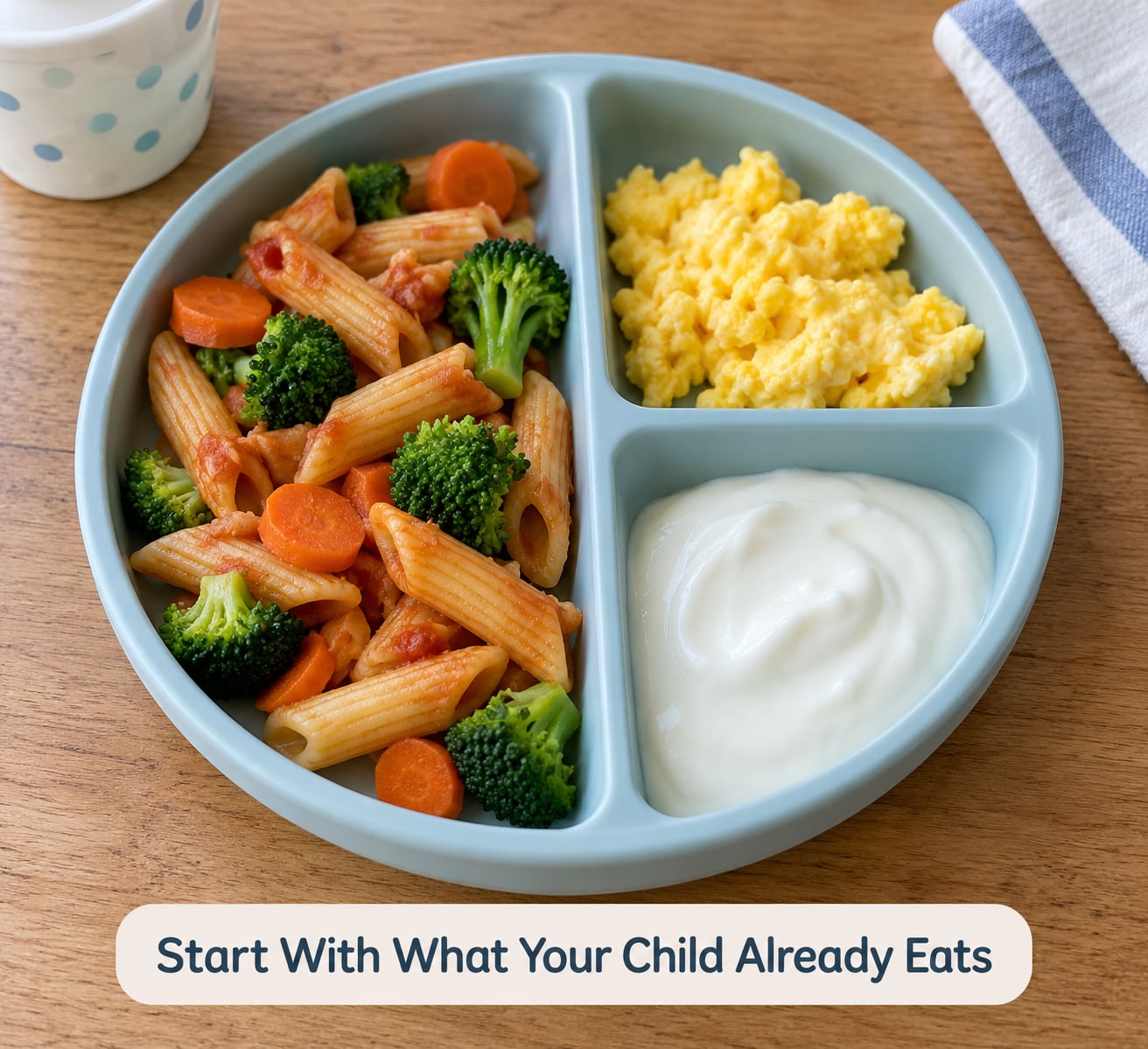
Instead of adding a new food, add more of the accepted one. Two spoonfuls of yogurt becomes four. Half a slice of cheese becomes a whole slice cut into sticks. The goal here is how to get kids to eat more protein using zero new textures.
You will know it worked when the total across a day moves up without a single new item appearing.
2. Pair Accepted Foods With Protein
Pairing is the lowest-pressure way to add protein. Put a small amount of the new protein right next to, or on top of, something your child reliably eats, and let them eat only the safe part if that is what happens today.
An r/autism parent reported their child taking to soft tofu blended into pizza sauce and protein powder stirred into pancakes, because the new food arrived attached to a familiar one rather than as its own event. That is the whole idea. The pairing does the work, not the ingredient.
Keep the portion small on purpose. A teaspoon of cottage cheese beside familiar pasta reads as a garnish. Half a cup reads as a demand. Start smaller than feels useful.
3. Add Protein Through Familiar Meals
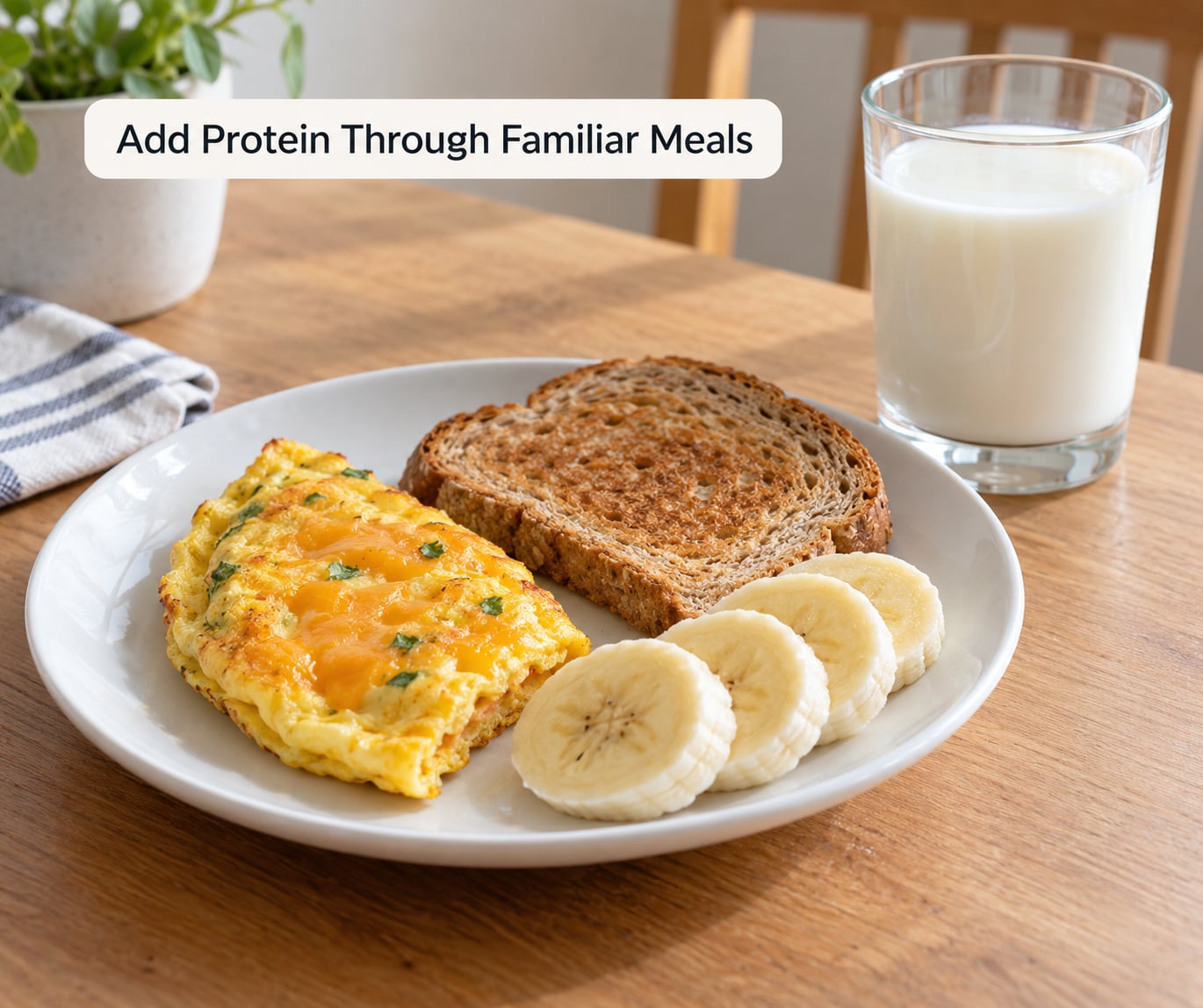
The easiest win is a substitution rather than an addition. Your child eats the same meal, just with one ingredient changed, so nothing gets bigger and the routine stays intact.
- Blended cottage cheese into a familiar pasta sauce, cooked into it so no lumps show.
- Greek yogurt or ricotta into pancake, waffle or muffin batter, which is nearly undetectable once baked.
- Nut butter, sunflower seed butter or hemp hearts stirred into oatmeal or overnight oats.
- Finely ground chicken or turkey folded into meatballs or meatloaf with the usual seasonings.
- Grated cheese stirred into rice, or a cheese stick cut into a familiar sandwich.
- Chickpeas or edamame mixed into a rice dish, which also adds colour and texture variety.
Two of these are easy wins for families already navigating dietary restrictions. If dairy or gluten is out, look at how to start a gluten-free casein-free diet for kids for the substitution side, and gluten-free dinner ideas kids actually eat tonight for meals that hold up at the table.
4. Use Texture and Appearance Strategies
When a child accepts yogurt but rejects string cheese, the problem is almost never flavour. It is smooth against chunky. Sort the protein options by texture and start where your child already lives.
- Smooth and creamy: Greek yogurt, blended cottage cheese, silken tofu, hummus, nut butter thinned with a little oil or milk.
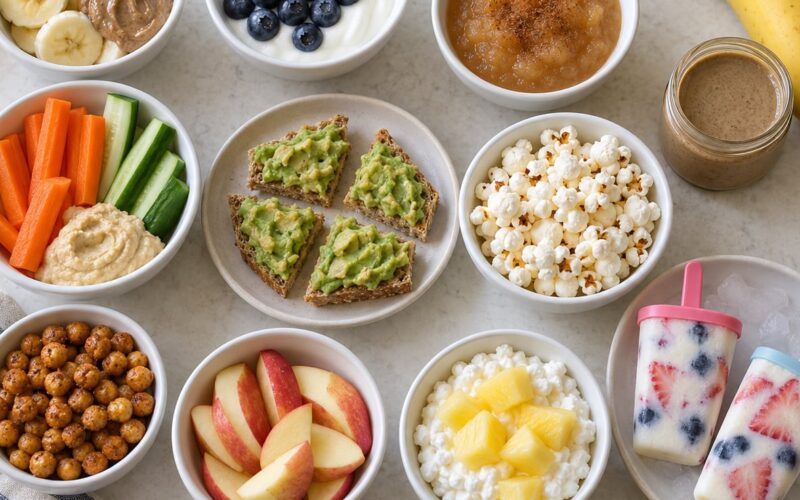
- Finger food: cheese sticks, rolled deli turkey, steamed edamame, cucumber slices with hummus, breadsticks with nut or seed butter.
- Crisp: roasted chickpeas, pork rinds, crackers with cheese, toasted seeds for older children who chew well.
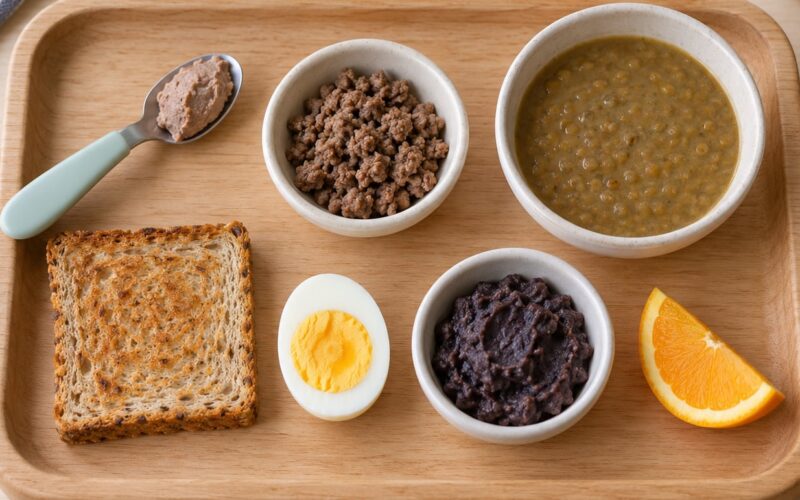
- No-cook and neutral: canned tuna, cold deli slices, marinated tofu cubes, a hard-boiled egg cut in half.
Appearance matters as much as texture. Keeping the new food separate from the rest of the plate, or hiding it entirely inside a sauce, are two opposite moves. Some children need to see it; some children can only accept it if they cannot. Try one, not both in the same meal.
Be honest about the timeline. A new food commonly needs 8 to 15 separate calm exposures before it is eaten willingly, and many children need more. Pressure does not shorten that number, and repeated refusal is not a sign you did the technique wrong.
Texture is the reason some families land on why food texture matters more than taste for some kids, which is worth reading if the same food is eaten in one form and refused in another.
5. Offer Choices Without Pressure
Choice is the difference between a question and a negotiation. Offer two acceptable protein options and let your child pick. Both options need to be ones you are genuinely happy to serve, or the choice becomes a trick and trust breaks.
“Yogurt or eggs?” is a question. “You need some protein before you can have the car” is a bargain, and it teaches your child that food is the currency that buys something.
The framework feeding therapists use is called division of responsibility. You decide what is served, when it is served and where it happens. Your child decides whether to eat it and how much. Hold your side firmly and leave theirs alone, and meals get calmer surprisingly fast.
Model eating it yourself without commentary. No praise for a single bite, no disappointment at a refusal, no announcing the food is good for you. Neutral is the target.
6. Make Protein Easy to Reach
Consistency does more for intake than any single clever recipe. Batch on a Sunday and the weekday version takes under five minutes.
- Boil a batch of eggs, refrigerate them in their shells, and offer halves or sliced rounds.
- Portion nut butter or seed butter into small cups so it is a grab-and-go snack rather than a spread job.
- Freeze mini muffins, energy bites or smoothie cubes in a silicone tray and pull out one or two at a time.
- Keep single-serve yogurt, cheese sticks, roasted chickpeas and seed packets at eye level in the fridge, not in the back on a high shelf.
- Stock shelf-stable options for the lunchbox: sunflower seed butter packets, roasted edamame, tuna pouches, nut-free protein bars, seed crackers with cheese.
Keep a school-safe list of two or three options your child actually eats, because the lunchbox is a different environment from home. If the school bans nuts, plan for sunflower seed butter, pumpkin seeds, hemp hearts or pea protein instead of improvising each morning.
On safety, cook to the USDA minimum internal temperatures: 165 F for eggs and poultry, 160 F for ground meat, and 145 F for whole cuts and fish. Cool anything left out within two hours, and refrigerate leftovers within three to four days. Follow your child’s allergy plan over anything on this page.
7. Track Progress Without Restriction
Keep notes for two to three weeks, but write down acceptance rather than quantities. Circle the days your child ate the food without complaint. That is the metric that moves.
Also note appetite, energy, bowel patterns and sleep, because those show up long before a plate does. If energy is steadier and the 3pm crash softens, the change is working even if the numbers are not going up.
Think of the plate as a learning environment rather than a nutrition test. Your child is collecting information about a new food, and the first several reactions tell you almost nothing about whether they will eat it next month.
Common Mistakes
Forcing or clean-your-plate rules. This is the most damaging response, and it is the fastest route to a child who sits down and shuts down at meals. Correction: you serve, they decide. Keep portions modest and stop the meal when the comfortable food is done.
Bargaining for dessert or screen time. Short-term compliance is easy to buy and expensive to keep, because the ask grows. Correction: dessert and screens stay off the table entirely, on good days and bad ones alike.
Rewarding every bite. Rewards for eating train the child that food is a job, not a choice, and they fade fast. Correction: neutral responses, always, and attention to something else they did enjoy.
Introducing five foods at once. A full plate of unfamiliar items is an ambush. Correction: one new protein per week, alongside a meal that already works.
Hiding ingredients somewhere unsafe. Hiding an allergen in a food a child already loves can be genuinely dangerous, and blended nuts, whole nuts and hard seeds carry choking risk for younger children. Correction: only disguise ingredients the child already eats safely, in portions safe for their age, and never hide an allergen unless your child’s allergist has told you to.
Treating one refusal as failure. A single no is data, not a verdict. Correction: return the food calmly, unchanged, at the next meal, and count exposures rather than wins.
When Protein Intake May Need Professional Support
Appetite changes week to week in nearly every child, and a low-protein day is not the same as a problem. What matters is a pattern over weeks, especially alongside weight change.
Talk to your pediatrician or a registered dietitian if you notice several of these together: stalled or falling weight on the growth chart, a child who seems constantly tired or unusually floppy, thinning hair, frequent infections or slow-healing cuts, unexplained bruising, bowel changes like ongoing constipation or loose stool, or a diet so narrow that whole food groups are missing.
The same applies when eating has become painful or frightening, when mealtimes involve gagging or vomiting, or when a restricted diet is driven by a diagnosis, an allergy, or sensory distress that is getting worse rather than better. A referral to a pediatric feeding therapist is the usual next step, and many do phone or telehealth consults before anyone sits down at a table with your child.
This article is general information, not medical advice, and it does not replace a conversation with your own clinician, who knows your child’s history and growth chart.
Frequently Asked Questions
How can I get my child to eat more protein without forcing?
Increase what already works before adding anything new: double the portion of a protein your child reliably eats, then attach a small serving of a new protein to a familiar meal. Keep portions modest, stay neutral about each bite, and let your child decide whether and how much to eat. Return the same food calmly at the next meal, since a new food commonly needs 8 to 15 calm exposures before it is accepted.
Which foods are easiest ways to add protein to a child’s meals?
The easiest protein foods are the ones closest to something already accepted. Blended cottage cheese into pasta sauce, Greek yogurt or ricotta into pancake and muffin batter, nut or seed butter into oatmeal, and finely ground chicken into meatballs all work because the new ingredient disappears into a familiar dish. For a full list of easy high protein foods for picky eaters, start with what your child already eats without complaint.
How much protein does a child need each day?
Recommended daily amounts from the national guidelines are about 13 grams for ages 1 to 3, 19 grams for ages 4 to 8, and 34 grams for ages 9 to 13. A cup of milk or plain yogurt is roughly 8 grams, so a toddler’s whole daily target can be met by a glass of milk plus a slice of cheese. Most children without a restricted diet already meet the target on a normal day.
What if my child only accepts a few protein foods?
Work with the short list rather than fighting it. Add grams rather than items: a second spoonful of yogurt, an extra slice of cheese, a whole egg instead of half. Then use food chaining, offering a very small amount of a new food touching an accepted one for a week or two before adding any of it to the portion actually eaten. If the accepted list is shrinking, tell your pediatrician.
Should I use smoothies, supplements, or protein powders for my child?
For most children, food is enough, and a supplement is rarely needed. A smoothie works as a vehicle rather than a shortcut, since blending in Greek yogurt or nut butter is one of the easier ways to add protein to a meal. Protein powders concentrate a nutrient most kids do not need extra of, and a child on a restricted diet deserves a dietitian’s advice before starting one. Check with your pediatrician first.
Conclusion
The version of this that works is the quiet one. Pick the protein your child already accepts and make the portion bigger. Add a teaspoon of something new beside it. Change one variable in a meal they already like, and leave the rest of the plate exactly as it was.
Then give it a month, keep the pressure off, and talk to your pediatrician if growth, energy or bowel habits start to change. One food accepted this season is a good outcome.