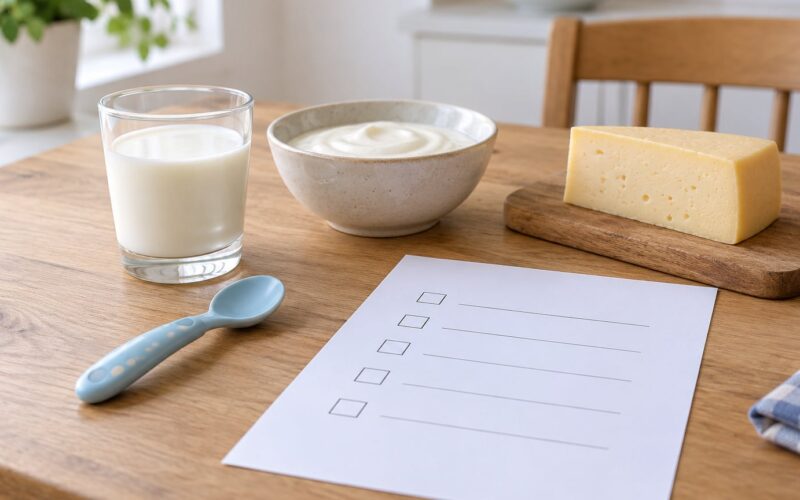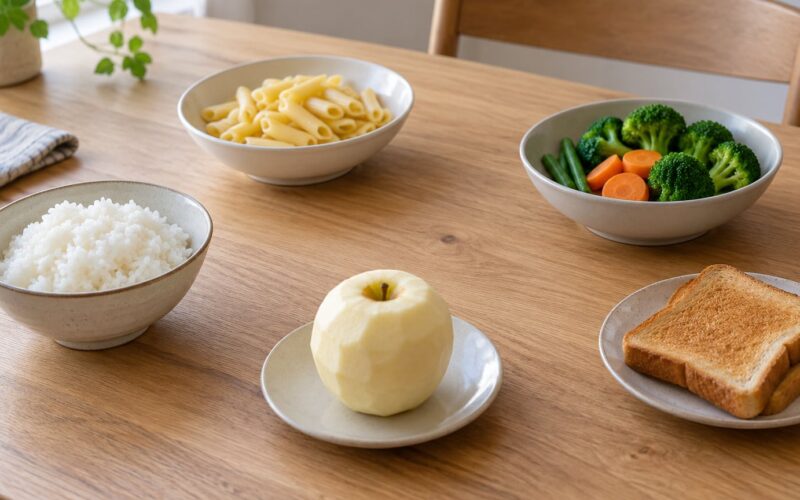

To introduce common allergens to babies, you feed one single allergen at a time in a small age-appropriate amount, watch your baby closely for two hours afterward, and keep that food in the diet two or three times a week. Start around the time your baby is developmentally ready for solids, usually near six months, and never before four months.
Doing this early and doing it regularly is the one thing parents can do that has been shown in large studies to reduce the odds of a food allergy forming later. It is also the thing parents are most nervous about, which is why a written plan matters more than anything else.
This guide is general information for US parents. Your own baby’s timing, health history and any existing conditions belong with your own pediatrician, and any sign of a serious reaction is an emergency, not a question to wait out.
Table of Contents
- What You Need
- Step-by-Step
- Step 1: Confirm readiness and discuss timing with your pediatrician
- Step 2: Choose one allergen and prepare a small amount
- Step 3: Introduce egg safely
- Step 4: Introduce peanut safely
- Step 5: Introduce milk and wheat
- Step 6: Introduce soy, fish, and shellfish
- Step 7: Introduce sesame and tree nuts
- Step 8: Watch and record the response
- Common Mistakes to Avoid
- Frequently Asked Questions
- When should I start introducing common allergens to my baby?
- What is the 3 day rule for introducing solids?
- How do I introduce sesame to my baby?
- Is 9 months too late to introduce peanut butter?
- Should my baby get allergy testing before starting allergens?
- How do I introduce allergens when my baby has eczema?
- A Simple Starting Plan
What You Need

Everything here is cheap and most of it is already in your kitchen. The point of a setup is that on the day itself you are not improvising.
- A plan you discussed with your pediatrician. Ask about timing, your baby’s eczema or family history, and whether any allergen should come first or be supervised in an office.
- A reaction log. A notebook or phone note per food: date, time, exact amount, what your baby ate, and anything you saw. Later, an allergist will ask you for exactly this.
- Single-ingredient foods. Plain cooked egg, smooth peanut butter thinned with warm water, full-fat plain yogurt, hummus, tofu, well-cooked deboned fish. Nothing blended with sugar, salt or another new food.
- Prep tools. A small bowl, a baby spoon, a fine mesh strainer or blender for smooth textures, and separate utensils if anyone in the house has an allergy.
- A half-measured teaspoon for starting portions, so “small amount” means the same thing every time.
- A calm daytime window. Morning feedings work well for most families. Not bedtime, not right after a nap, not when anyone is rushing out the door.
Two things to have on hand that parents often forget: clean water for thinning pastes, and hand soap, since soap and water is the most reliable way to remove peanut and egg protein from hands and surfaces.
Step-by-Step
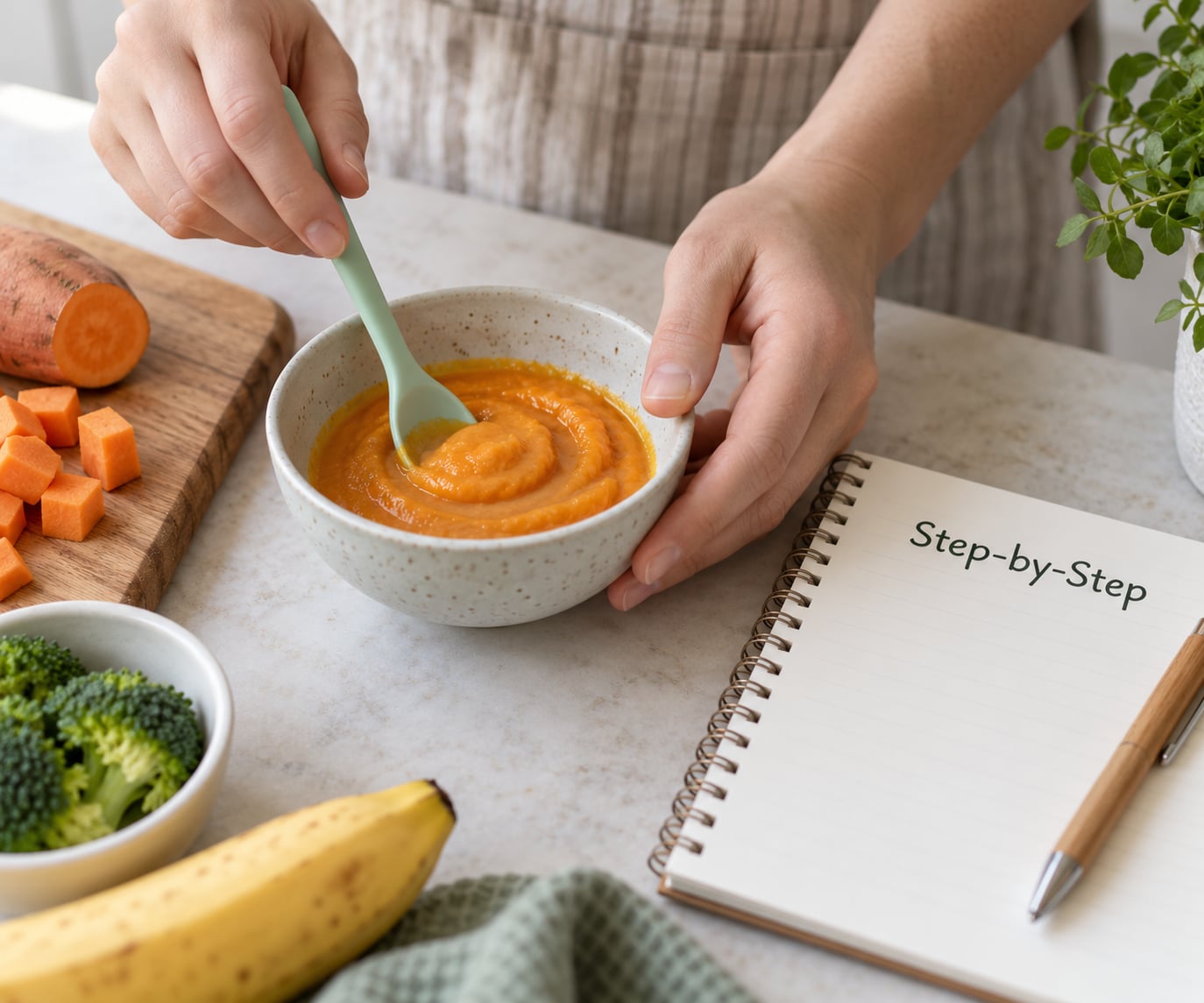
Step 1: Confirm readiness and discuss timing with your pediatrician
Solids usually begin somewhere between four and six months, but age alone is not the signal. Readiness is developmental, and pediatric guidance describes the same cluster of signs: good head and neck control, sitting upright with support, interest in what other people are eating, bringing objects to the mouth, and a reflex that pushes food back out rather than swallowing it.
Bring two questions to that appointment. How long after starting solids should the first allergen come, and does your baby’s history change the order? Mild to moderate eczema, an existing food allergy, or a close family history of allergy are all reasons to start sooner rather than later, and to do it with guidance rather than alone.
Step 2: Choose one allergen and prepare a small amount
Pick a morning when nothing else new is happening. Prepare the allergen in a form your baby can actually handle at their stage, then put a small amount on the spoon or offer a small piece, once, without anything else new in the same meal.
| Allergen | Starting form | Notes |
|---|---|---|
| Egg | Well-cooked, mashed | Fully cooked, no runny or raw texture; add no salt |
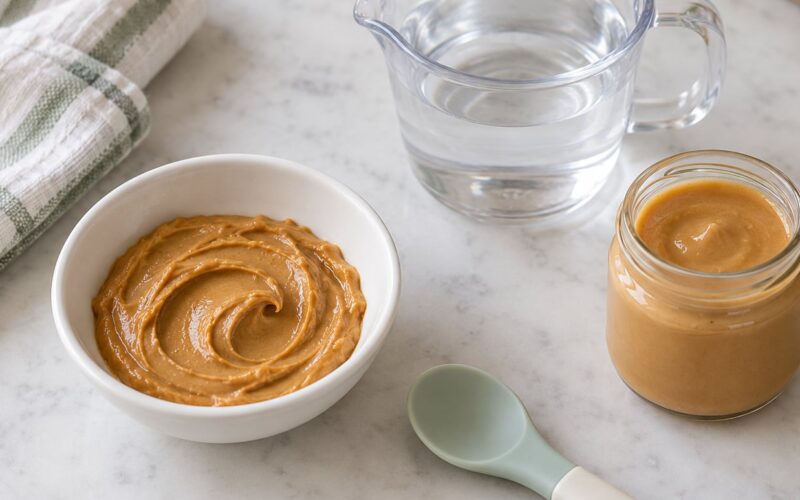
| Peanut | Smooth butter thinned with warm water or breast milk | Never whole nuts, never thick or chunky spoonfuls |
| Milk | Pasteurized yogurt or soft cheese | As a food, not as a drink, before 12 months |
| Wheat | Soft cooked pasta, cream of wheat, wheat cereal | Cooked until very soft |
| Soy | Soft tofu or smooth soy yogurt | Plain, unsweetened |
| Fish | Well-cooked, deboned, flaked | Check carefully for bones |
| Shellfish | Well-cooked, peeled, mashed shrimp or crab | Usually offered later, around 6 months or after |
| Tree nuts | Thinned nut butter or finely ground nut in another food | Whole nuts are a choking risk at every age under 5 |
| Sesame | Tahini thinned with water, or hummus | One of the nine US major allergens since 2023 |
These nine are the major food allergens the US Food and Drug Administration requires to be labeled. Sesame joined that list on January 1, 2023, and it is the one most families forget.
Step 3: Introduce egg safely
Hard-boiled egg, cooked until firm and mashed with a little breast milk or water, is the usual first choice because the protein is well cooked and easy to smooth out. Scrambled egg works too.
Offer one small spoonful and keep it in view. Do not rub raw egg on the baby’s lips or skin as a test, and do not offer a raw or jammy egg at any point. Skin testing that way is not a valid check, and it can sensitize rather than protect.
Step 4: Introduce peanut safely
Peanut gets its own section because it is the most researched and the most misunderstood. Thin about two teaspoons of smooth peanut butter with warm water or breast milk until it drips off the spoon, or stir peanut powder into a food your baby already eats.
What matters most is timing. Trials in high-risk infants showed that introducing peanut in the window from four to eleven months reduced peanut allergy by roughly 81 percent at age five compared with waiting. That is why the guidance is early, not late.
Skip whole peanuts, chunky nut butter and spoonfuls of thick paste at every age. All three are choking hazards. If your baby has eczema or a family history of allergy, ask your pediatrician about the right starting point, and ask whether an office or clinic-supervised introduction makes sense.
Step 5: Introduce milk and wheat
Dairy as a food is different from dairy as a drink. Plain full-fat yogurt, cottage cheese or soft melted cheese are appropriate once your baby is ready for solids. Cow’s milk as a primary drink stays off the table until after 12 months, and honey stays off until after 12 months as well, because of botulism risk.
For wheat, offer something soft and well cooked: a short piece of pasta, cream of wheat, or an iron-fortified wheat cereal mixed with breast milk or formula. Whole grains and refined products are both fine at this stage; the texture is what needs to match your baby’s ability.
If your baby reacts to one dairy food but tolerates another, that is often lactose intolerance rather than a milk allergy, and the two are handled very differently. Your pediatrician can help you tell them apart.
Step 6: Introduce soy, fish, and shellfish
Soft tofu blended smooth, or plain unsweetened soy yogurt, is an easy first soy form. Highly processed soy products are worth skipping during introduction, since they bring salt and additives into the picture when you want one clear variable.
For fish, cook it fully, check for bones twice, and flake it. Then wait before moving to shellfish, so that if something does happen you know what caused it. Shrimp, crab and lobster are well cooked, peeled and mashed.
One more thing to watch: a mild red rash around the mouth that shows up within minutes is often a contact reaction to a raw or undercooked protein on the skin, not an allergy. It settles when the food stops touching the skin. Widespread hives across the body, swelling of the lips or face, or any breathing change is a different situation and needs prompt medical help.
Step 7: Introduce sesame and tree nuts
Sesame goes in as tahini thinned with water until it is loose, or a thin swipe of hummus on a soft piece of food. Both work well, and both sit comfortably in the same category as the nut butters.
Tree nuts follow the same rule as peanut: thinned nut butter, finely ground nuts mixed into a familiar food, or a smooth spread thinned with water. Whole almonds, cashews and walnuts stay off the menu entirely until a child is well past five, because they are one of the most common choking foods in that age group.
Introduce peanut and tree nuts on separate days, even though they come from related plants. If your baby reacts to one, you want to know which one.
Step 8: Watch and record the response
Stay with your baby and watch for about two hours after the first taste. That window covers the vast majority of immediate reactions. Then keep watching through the rest of the day and night, because some reactions are delayed.
Write it down while it’s fresh. The date and time of the feeding, the exact form and roughly how much, what you saw and how quickly it appeared, and whether anything changed in the following 24 hours.
For most families, moving to the next allergen after two or three days without a reaction is reasonable. Once a food is tolerated, keep offering it two or three times a week, because tolerance fades when a food disappears from the diet.
| What you see | When it shows up | What to do |
|---|---|---|
| Mild rash or a few hives, baby otherwise well | Within minutes to a couple of hours | Note it, watch closely, and tell your pediatrician before that food again |
| Redness or small bumps only around the mouth | Within minutes, fades quickly | Often a skin contact reaction rather than an allergy; mention it, keep the food off the skin |
| Repeated forceful vomiting, pale or gray color, floppy or very sleepy | One to four hours later | Stop the food, contact your pediatrician urgently; this pattern can signal FPIES |
| Widespread hives, swelling of face or lips, repetitive cough, wheeze, trouble breathing, pale or floppy | Minutes to hours | Use prescribed epinephrine if you have it and call emergency services immediately |
A baby’s first reaction is hard to read calmly. Deciding in advance who you call and keeping the pediatrician’s after-hours number on the fridge is the part that pays off.
Common Mistakes to Avoid
Delaying allergens because a baby is not eating much else yet. Babies do not have to be enthusiastic eaters to be ready for allergens. Appetite for purees is not the readiness signal.
Introducing several new foods in one sitting. It feels efficient. It also means that if something happens, you have no idea which food did it.
Using “small amount” without a number. Half a teaspoon of a single allergen, thinned, is a starting point you can repeat.
Relying on how the baby looks. Plenty of babies have had an allergic reaction and seem completely fine an hour later. Observation is not a test.
Skipping cross-contact steps. Soap and water on hands, a separate spoon, and a wiped-down high chair tray take under a minute. If a sibling has a serious allergy, ask how your household manages shared surfaces.
Dropping a food after one good week. A food eaten only during introduction is a food that falls out of tolerance. Two or three times a week keeps it in.
Letting anxiety set the schedule. Most parents waiting to “be sure” end up waiting longer than any guideline suggests. Talking it through with the pediatrician beforehand is what makes the day itself manageable.
Frequently Asked Questions
When should I start introducing common allergens to my baby?
Most babies are ready between four and six months, with the first allergenic foods usually offered around six months once solids are established. Start sooner rather than later when your baby has eczema, an existing food allergy or a strong family history, and discuss it with your pediatrician first. Do not delay past 12 months without advice, because tolerance develops during that window.
What is the 3 day rule for introducing solids?
The three day rule means offering one new food for a few days before moving to the next. It is a reasonable tradition, not a medical requirement, and it was designed for watching readiness and digestion rather than allergies. For allergens, what matters more is one food at a time, two hours of observation, and waiting about two or three days before the next new food so a reaction is easy to trace.
How do I introduce sesame to my baby?
Use tahini thinned with warm water until it is loose enough to drip off a spoon, or a thin swipe of hummus on a soft piece of food your baby already handles. Start with about half a teaspoon, watch for two hours, and avoid salt and added sweeteners. Sesame has been one of the nine major US food allergens since January 2023, so it is worth including rather than skipping.
Is 9 months too late to introduce peanut butter?
It is later than ideal but not a missed opportunity. Trials in high-risk infants showed large benefit from introducing peanut between four and eleven months, so the earlier the better for risk reduction. At nine months, offer smooth peanut butter thinned with warm water or breast milk, skip whole nuts and thick spoonfuls, and tell your pediatrician about eczema or family history so they can weigh whether to add extra supervision.
Should my baby get allergy testing before starting allergens?
Routine screening before introduction is generally not advised, because a positive skin or blood test does not always predict a real reaction and can lead to unnecessary restriction. Testing becomes useful when there is a clear reaction during introduction, when eczema is severe, or when there is a strong family history. Ask your pediatrician whether your baby fits any of those and what they would recommend.
How do I introduce allergens when my baby has eczema?
Eczema is a risk factor, not a reason to delay. Babies with eczema benefit from early introduction just as much, and many pediatricians suggest starting closer to four to six months or adding supervision. Keep skin moisturized, do not rub food on the face or skin as a test, and note any eczema flare separately from a reaction so the two are not confused.
A Simple Starting Plan
Pick a week, book the pediatrician conversation, and ask about timing and your own risk factors. That single appointment is what turns how to introduce common allergens to babies from a worry into a checklist.
Then prepare one age-appropriate allergen in a form your baby can swallow safely, offer about half a teaspoon at a morning feed, and stay close for two hours with the reaction log open. Keep that food coming two or three times a week once it is tolerated.
Nothing about the first feed has to be perfect. The point is that your baby gets an early, repeated, well-recorded exposure to the food, and that you know exactly who to call before the day starts.