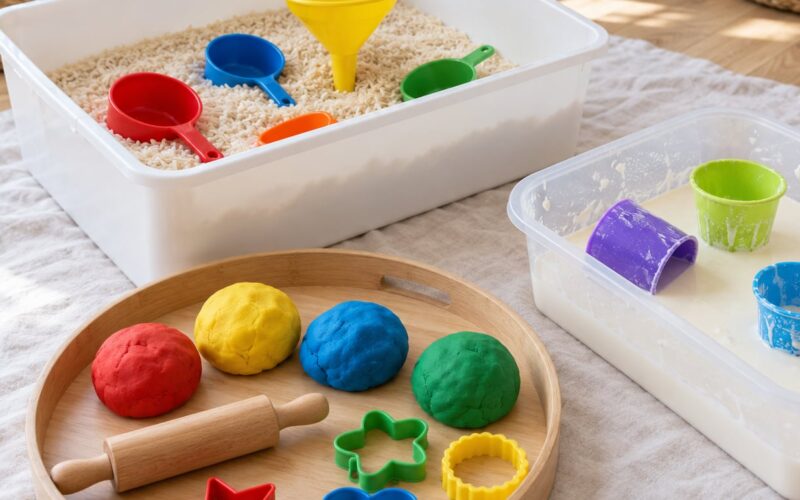
A sensory bin is a shallow tray, tub or box filled with a base material like rice, pasta, beans, water or cloud dough, plus scoops, funnels and a few small toys, so a toddler can scoop, pour, sort and pretend-play with their hands while the mess stays in one place. You do not need to buy anything to build one, and every idea below works with things already in your kitchen cupboard.
These sensory bin ideas for toddlers are written for caregivers of roughly 12 to 36 months, including parents of autistic and sensory-sensitive toddlers who need controlled, predictable tactile input. If you are short on time or energy, pick the one idea that matches what you already have and skip the rest.
Everything here is educational guidance, not medical advice. If your child has a diagnosed sensory processing difference, allergies or a swallowing condition, talk with their pediatrician or occupational therapist before choosing fillers.
Table of Contents
- Sensory Bin Ideas for Toddlers at a Glance
- Sensory bin ideas for toddlers by age: the short version
- 1. Classic Dry Rice Sensory Bin
- 2. Water Bead Sensory Bin
- 3. Shaving Cream Texture Bin
- 4. Kinetic Sand Bin
- 5. Pasta and Pouring Station
- 6. Bean or Lentil Tasting and Scooping Bin
- 7. Frozen Ice Cube Play Tray
- 8. Sensory Bin for Babies and New Walkers
- 9. Sand and Seashell Exploration Bin
- 10. Cotton and Fabric Texture Bin
- 11. Farm Animal and Vehicle Play Bin
- 12. Personalized Calming Sensory Bin
- Frequently Asked Questions
- What age is appropriate for sensory bin play?
- Are sensory bins safe for toddlers who put things in their mouths?
- What materials should I avoid in a toddler sensory bin?
- How can I make sensory bins more accessible for an autistic child?
- How do I clean a sensory bin after play?
- When should I ask an occupational therapist about sensory play?
- How to Choose and Use Sensory Bins Safely
Sensory Bin Ideas for Toddlers at a Glance
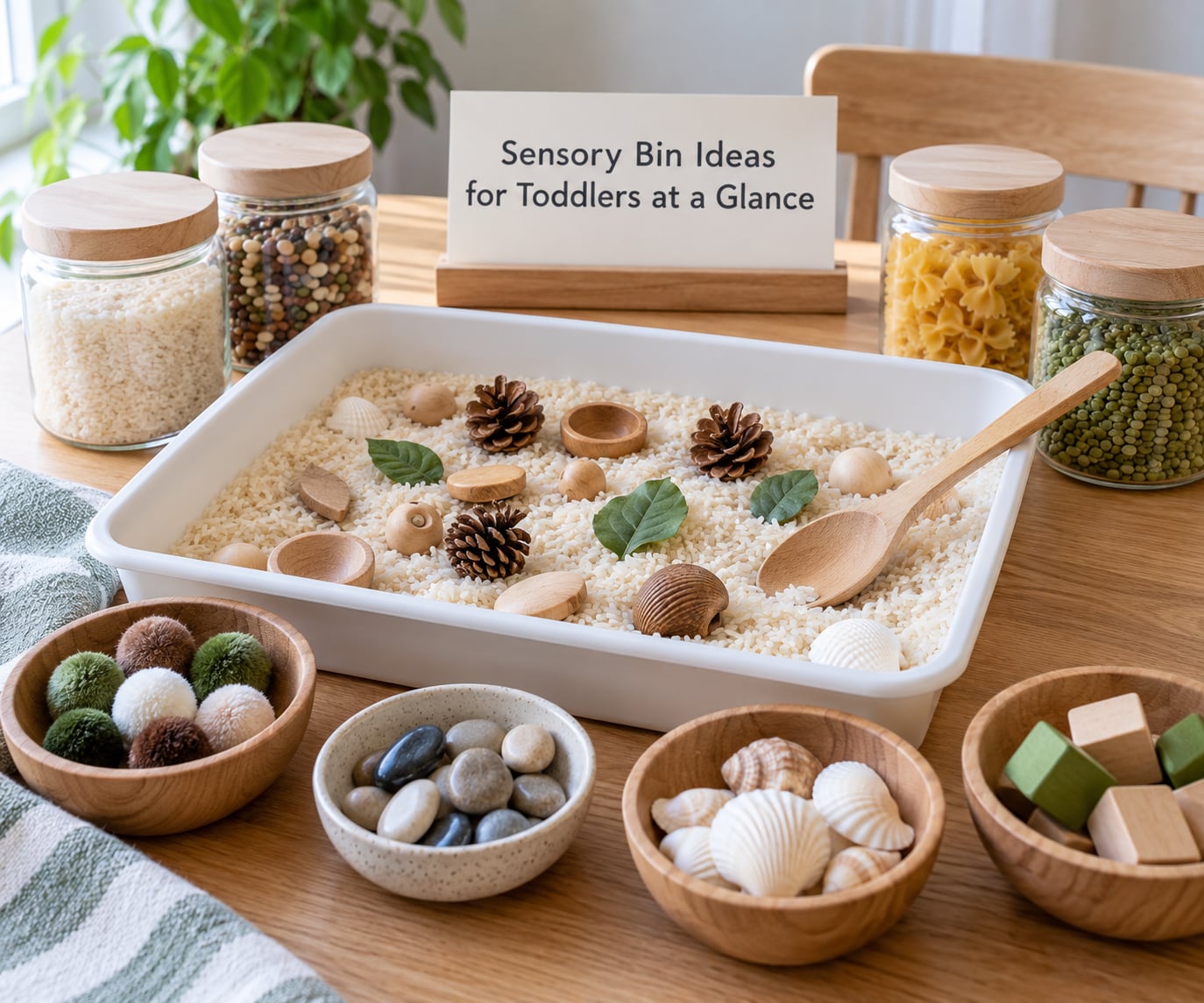
Use this table to match a bin to your child’s age, your tolerance for mess and the amount of clean-up you can realistically handle on a Tuesday evening. The safety column is the one to read first.
| Bin idea | Main materials | Sensory benefit | Best age | Key safety note |
|---|---|---|---|---|
| Dry rice bin | Rice, scoops, funnels, cups | Scooping, pouring, sifting | 2 years and up | Constant hands-on supervision; vacuum-cleaner size filler |
| Water bead bin | Water beads, water, tray | Cool, slick, slow-moving input | 3 years and up | Not for toddlers who still mouth objects; drain and dry fully |
| Shaving cream bin | Shaving cream, small toys, tray | Soft, foamy, spreadable texture | 2 years and up | Check ingredients for allergies; not for eating |
| Kinetic sand bin | Kinetic sand, moulds, tools | Proprioceptive squeeze and release | 2 years and up | Choose non-toxic product; no mouth contact |
| Pasta station | Large dry pasta, funnels, colander | Sorting by colour and size | 18 months and up | Select shapes too big to swallow; dry pasta is choking-prone |
| Bean and lentil bin | Dried pulses, cups, scoops | Tactile sorting, dry pouring | 3 years and up | Play only, never a tasting activity for toddlers |
| Ice cube tray play | Ice, large tools, tray | Temperature change, slow melt | 18 months and up | No loose small ice pieces; nothing breakable |
| Baby floor tray | Large soft objects, fabric squares | Safe reaching and grasping | 9 to 15 months | No small parts; within arm’s reach of an adult |
| Sand and shell bin | Clean play sand, large shells, bucket | Dry digging, sorting by size | 2 years and up | Check shells for sharp edges; keep sand out of eyes |
| Cotton and fabric bin | Washable fabric, scarves, batting | Texture comparison, draping | 18 months and up | No loose batting, strings or buttons |
| Farm and vehicle bin | Large washable toys, soft base | Pretend play, categorising | 18 months and up | Check every toy for detachable small parts |
| Calming bin | Divider tray, weighted fabric, muted colours | Low-stimulation regulation | Any age | Offer it, never force participation |
Sensory bin ideas for toddlers by age: the short version
At 9 to 15 months, keep everything large, soft and floor-level. At 18 to 24 months, add scoops, funnels and sorting. From age three, small dry fillers, water beads and beans open up as options.
1. Classic Dry Rice Sensory Bin
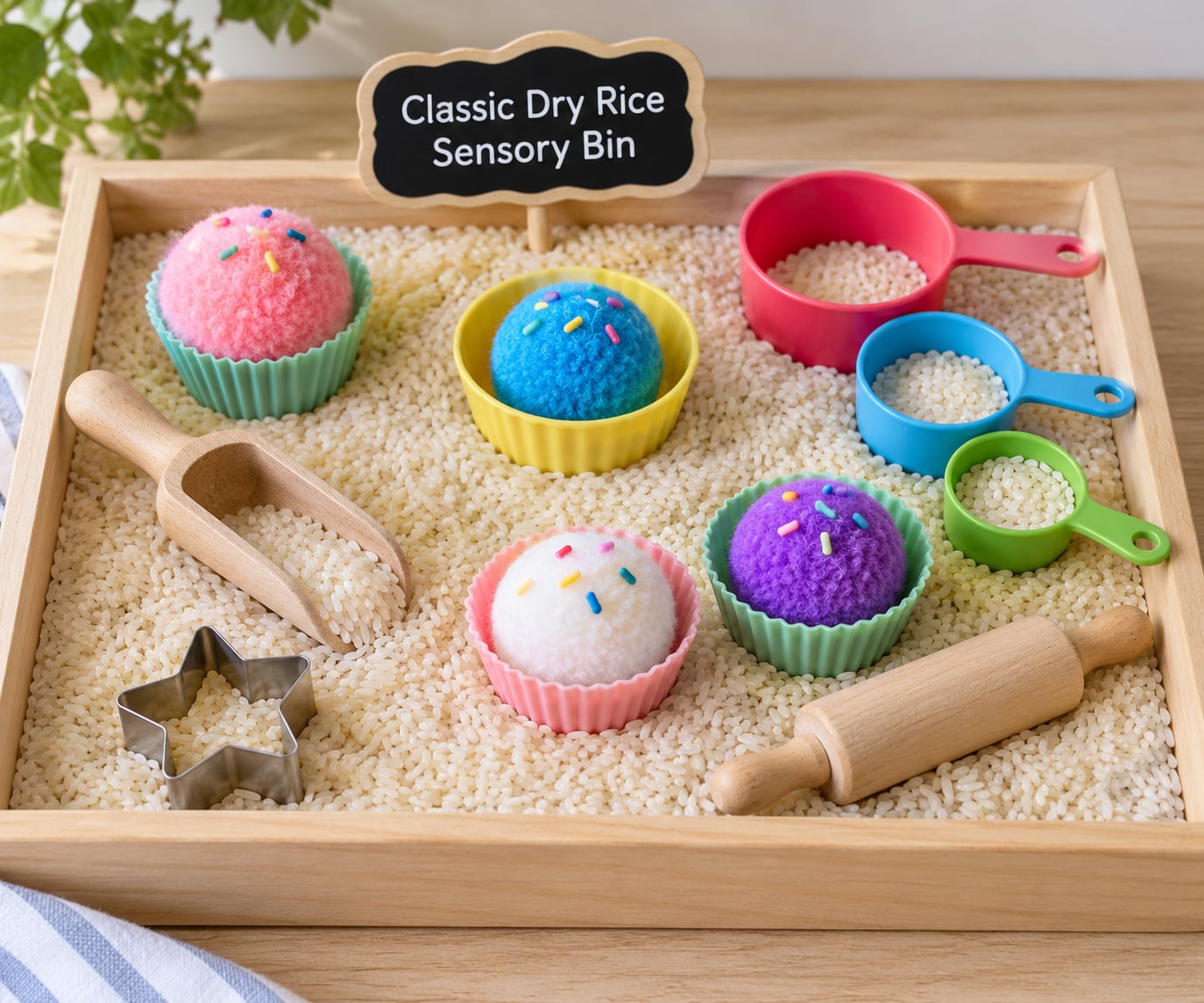
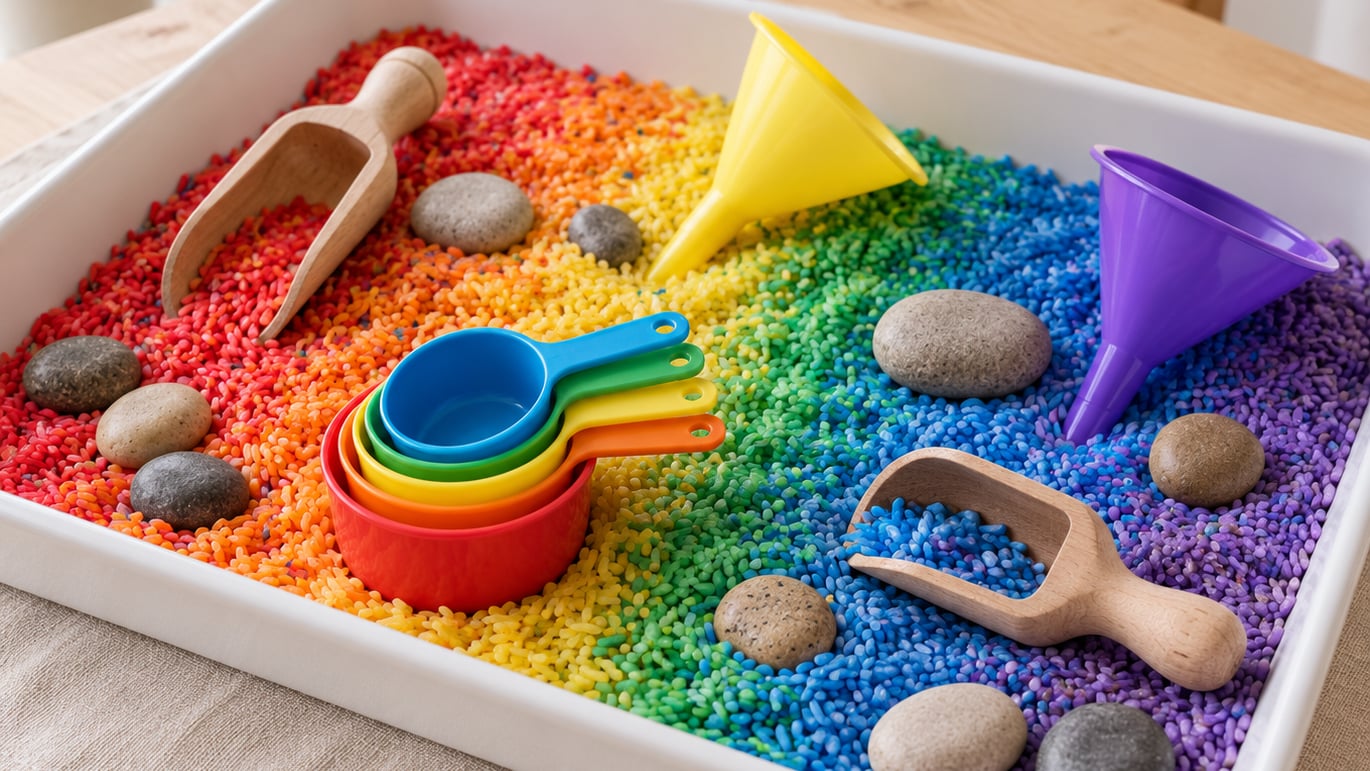
A rice bin is the version most parents mean when they say sensory bin, and it is the one children tend to play with longest. Pour, dig, fill and hide are the mechanics that keep them going.
You need a shallow tray with a rim, two or three cups of dry white rice, small funnels, plastic scoops, a few large pom-poms and a couple of big toy cars or plastic animals to bury.
- Spread the rice two to three inches deep and set the tray on a towel or sheet.
- Hide the large objects in the rice and let your toddler find them.
- Add funnels and cups for filling, emptying and toppling.
Rice is a vacuum-size filler: tiny grains, picked up by the vacuum rather than by hand, which is the single most useful thing to know if cleanup is your weak spot. For children who still mouth small items, swap in large pasta, packing peanuts or smooth pebbles instead, and stay close.
2. Water Bead Sensory Bin
Water beads swell in water, feel cool and slick, and move slowly enough for a toddler to scoop and sort. That slow movement is genuinely calming, which is why many parents reach for them after a hard afternoon.
Pour hydrated beads into a shallow tray, add a small scoop, a plastic cup and a few smooth shells, and keep the tray on a towel. Skip the coloured beads if you want less staining, since the dye transfers to hands and surfaces.
Only use this bin with a child who reliably keeps objects out of their mouth. Water beads expand inside the body if swallowed, so treat any mouthing as a stop signal, and drain and dry the tray fully afterwards rather than storing them wet.
3. Shaving Cream Texture Bin
Shaving cream gives you a soft, spreadable base that hides and reveals small toys. It rinses away with warm water, which makes it one of the tidier wet options.
Squirt a layer into a tray, add four or five small washable toys, and let your toddler stir, scoop with a spatula and bury things under the foam. A plastic knife works well for spreading and drawing shapes in the surface.
Read the ingredient label first if your child has allergies or eczema, since some formulas contain fragrance. This is play, not food, and shaving cream is not for tasting.
4. Kinetic Sand Bin
Kinetic sand holds its shape when squeezed, which gives a toddler the heavy, deep pressure input that hand-squeezing does for adults. It keeps the interest going much longer than loose dry fillers.
Put two cups of kinetic sand in a lined tub with a small shovel, a rolling pin, a handful of plastic biscuit cutters and a couple of toy animals. Children build roads, cut shapes and bury the animals, then dig them out.
Choose a non-toxic product and one your child can safely handle with a spoon’s amount of saliva. Kinetic sand is sticky, so keep it off carpets and out of hair, and expect a damp cloth rather than a dry brush for clean-up.
5. Pasta and Pouring Station
A dry pasta station is the easiest bin to build from a cupboard and the one that survives a busy household. Pick large shapes such as rigatoni, penne or casarecce for 18 to 24 months, and elbow macaroni or fusilli once your child is three.
Fill a deep tub with pasta and add funnels, a colander, measuring cups, a ladle and a wide-mouth jar for filling and emptying. Scoop, pour, sift and sort by colour or by size.
Dry pasta is a choking hazard for toddlers, so match the shape to your child’s stage and keep the whole setup within arm’s reach. This is also the easiest filler to pick up one piece at a time, which is why it works so well in a living room.
6. Bean or Lentil Tasting and Scooping Bin
Dried beans and lentils give a dry, rattle-y texture that is different from rice or pasta, and the sound and feel of them keep sorting and scooping interesting for older toddlers.
Set out split peas or dried beans with sorting cups, small tongs and a muffin tin, where each cup becomes a category. Scoop, sort by size, and hide large wooden beads underneath to dig out.
To be clear about the name: this is a sensory bin, not a tasting activity. Whole dried pulses are a choking risk for toddlers and there is no eating component here, so keep it entirely out of reach of a hungry child. Check your family’s dietary restrictions too, since beans are common allergens.
7. Frozen Ice Cube Play Tray
Ice adds temperature change to the same scoop-and-pour mechanic your toddler already enjoys. Melting is slow enough to hold attention and it cleans itself up, so it suits families who avoid dry fillers entirely.
Set a baking tray or shallow tub on a towel, add eight to ten large ice cubes made with a splash of food colouring, and offer large plastic tools, a small jug and a colander. Let them stack the cubes, slide them and watch them shrink.
Skip small loose ice pieces that can be mouthed, and skip glass or breakable containers. Set the tray outdoors or in the bathtub on warmer days, since the meltwater needs somewhere to go.
8. Sensory Bin for Babies and New Walkers
Babies and new walkers do not need fillers. They need a handful of large, textured objects within reach on a tray, and an adult sitting close enough to swap one object at a time.
Choose fabric squares, a washable scarf, a large wooden spoon, a silicone cup, a chunky textured ball and a crinkly bag. Set them on a tray on the floor and let your baby bat, grip, mouth and drop each one safely.
Constant hands-on supervision applies here more than anywhere else, since mouthing is the main activity at this age. Everything should be large enough not to swallow, washable, and soft enough that nothing sharp survives the chewing. For more on building a full-day plan around this kind of input, read about how to build a sensory diet for your child.
9. Sand and Seashell Exploration Bin
Sand is the sensory bin filler most children ask for by name, and it supports digging, scooping and sorting by size in a way that rice cannot. A shallow layer in a tub keeps it indoors and contained.
Add a small shovel, a bucket, a spray bottle of water and a handful of large shells, then let your toddler dig, cover, sift and pour. Outdoor sandpits work just as well on warm days.
Check every shell for sharp or broken edges before it goes in, and keep your child’s face out of the sand pit, which is how most sand injuries happen. Line the tub with a plastic sheet and let the sand dry before sweeping it up; wet sand is far harder to clean than dry.
10. Cotton and Fabric Texture Bin
A fabric bin is the low-mess answer for toddlers who refuse anything wet or grainy. It is also the cheapest version on this list, since it starts with scraps you already own.
Fill a shallow tray with washable fabric squares, an old scarf, a sock, a piece of corduroy and a cotton tea towel, and add a clothes peg and a wooden spoon. Let them drape, scrunch, peg and spoon the pieces in and out of containers.
Leave out loose cotton batting, string, ribbon ties and buttons, all of which are choking or entanglement hazards. Skip anything with fringes long enough to wrap around a finger.
11. Farm Animal and Vehicle Play Bin
Once a toddler has mastered scooping, a themed bin adds language and story to the same tray. A farm bin is a good first theme because the vocabulary is concrete and everyday.
Use a soft base such as a folded blanket, large washable plastic animals, a small shovel, a tin cup for feed and a few blank cards for drawing on. Set the animals in the soft base and let your toddler scoop, feed, sort and build.
Check each toy for detachable parts before it goes anywhere near a toddler, and skip vehicles with small removable wheels. Paper cards are fine; laminated ones clean up faster and survive being licked, which they will be.
12. Personalized Calming Sensory Bin
Not every child needs more input. Some need less, and for those a calming bin works better than any busy one on this list.
Use a tray with a divider so two or three textures sit side by side rather than mixed: a weighted or thick fabric square, a smooth wooden board and a piece of faux fur, all in muted colours with one quiet tool such as a wooden bowl or a single scoop. Add two or three familiar objects your child already finds restful.
Offer the bin, then let them choose whether to use it. Do not place a child’s hands in it, and do not ask them to finish anything. Keep the number of textures small and change them only when your child’s response tells you to, then revisit how to make a calm down corner at home if the bin becomes part of a wider routine.
Frequently Asked Questions
What age is appropriate for sensory bin play?
Sensory play can start as soon as your baby is content on a floor mat, usually around 9 months, with large soft objects. Scooping and pouring bins suit most children from 18 months. Small dry fillers, beans and water beads only make sense from about age three, once mouthing has largely stopped.
Are sensory bins safe for toddlers who put things in their mouths?
Only with adult supervision within arm’s reach the whole time. Choose fillers that are too large to swallow, such as large pasta, smooth pebbles, packing peanuts, fabric squares and soft blocks. Skip whole dried pulses, water beads, small beads and loose cotton batting, which are the most common choking risks in sensory bins.
What materials should I avoid in a toddler sensory bin?
Avoid water beads, whole dried beans and lentils, small beads, buttons, loose cotton batting, string and anything with a long fringe. Skip scented play dough and fragranced shaving cream if your child has allergies or eczema, and skip coloured water beads if staining matters more than colour.
How can I make sensory bins more accessible for an autistic child?
Start with a predictable setup your child has met before, and add one new texture at a time rather than a full swap. Many autistic children prefer contained wet play, digging play or foam soap over anything that scatters. Keep a calming bin with two or three predictable textures available as a regulation tool alongside the busy one.
How do I clean a sensory bin after play?
Choose fillers that are either pick-up size, like large pasta or smooth pebbles, or vacuum size, like rice, sand or oatmeal, and you will rarely need a full clean. Wipe the tray, let dry fillers dry before sweeping, and keep a damp cloth within reach for everything else.
When should I ask an occupational therapist about sensory play?
Ask if your child avoids textures entirely, distresses around messy or wet play, loses skills they had, or if you are unsure whether a sensory activity is helping or making things harder. An occupational therapist can also tell you which kinds of input your child actually seeks. This is guidance, not a diagnosis.
How to Choose and Use Sensory Bins Safely
Before you fill anything, check five things.
- Match the filler size to the child’s stage. If a piece fits comfortably through a toilet paper roll, it is too small for a toddler’s bin.
- Stay within arm’s reach. Every bin on this list assumes an adult sitting close, not an adult in the next room.
- Pick your clean-up rule in advance. Pick-up size or vacuum size, and you will not resent the bin at the end of the day.
- Introduce one idea at a time. A second new texture on the same afternoon usually ends with the lid back on.
- Stop when the interest stops. Most children move through a two to four week window per filler, and that is normal.
Start with a pasta station or a fabric bin this week. Both are cheap, both clean up with a cloth, and both work from 18 months onward. Once that one is going well, add a wet or digging bin and see how your child responds.
Once the bin is going smoothly, you can widen the play beyond the tray. Building gross motor skills indoors pairs well with sensory work, since both give a toddler a way to use the energy a busy bin creates.