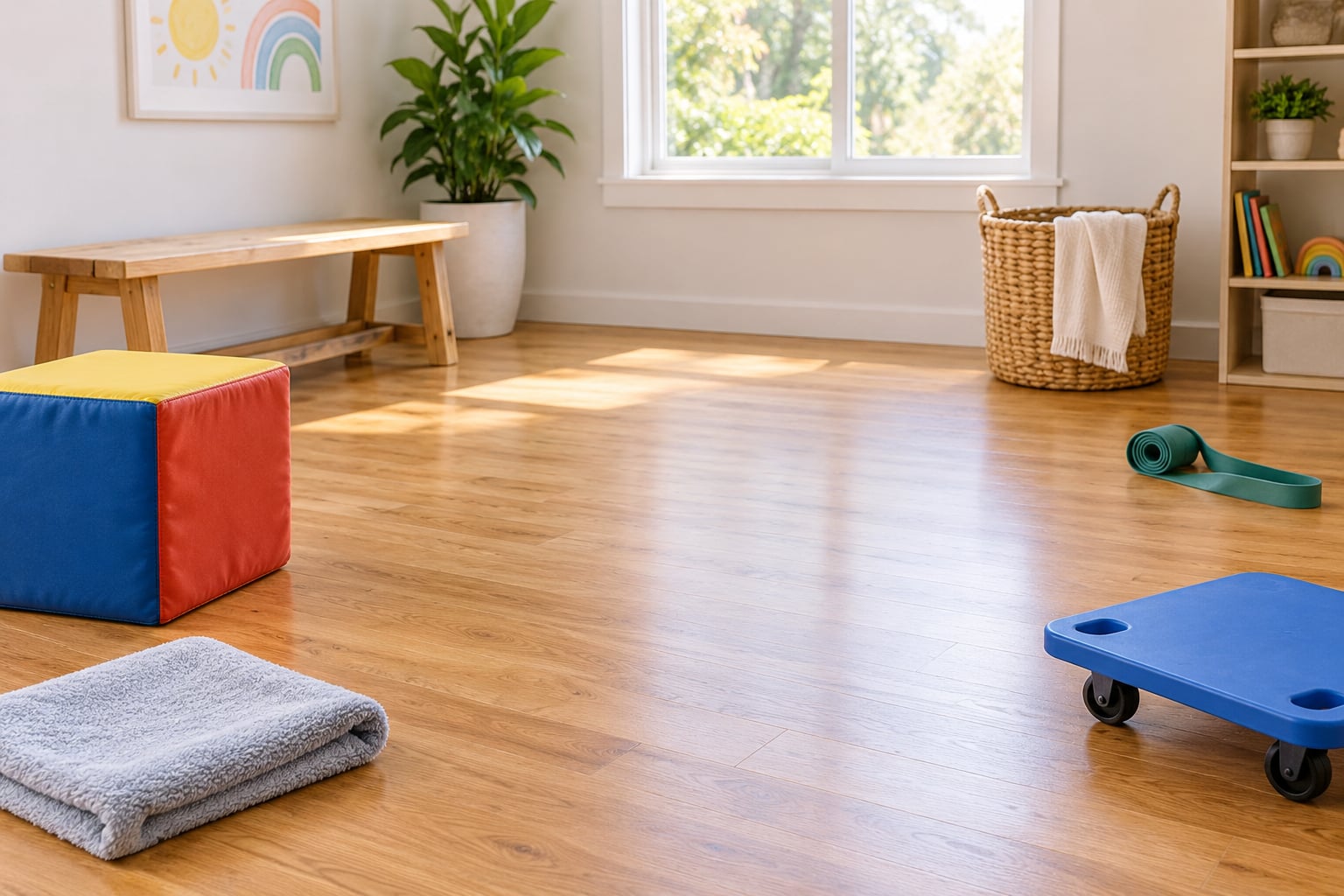
Heavy work activities for kids are movements that ask a child to push, pull, lift, carry, or resist something, and they need almost no equipment beyond a clear floor and a willing body. The muscle and joint effort behind them delivers proprioceptive input, which is why five minutes of bear crawling can settle a child who could not sit through a single page of a story.
I use these with my own kids and with children who have sensory processing differences, and the best part is how ordinary they are. A basket of laundry, a sheet on the floor, a stroller down the sidewalk. Nothing here requires a therapy setting, and every one of them can be made easier or harder in about five seconds. If you want the wider menu first, my 10 easy proprioceptive activities for kids at home pairs well with this list.
Table of Contents
- Heavy Work Activities for Kids at a Glance
- 1. Animal Walks
- How do you adapt animal walks for a child who cannot bear weight on their hands?
- 2. Push and Pull Resistance
- 3. Wall Push-Ups
- 4. Carrying Heavy Objects
- 5. Weighted Animal Laps
- 6. Towel or Sheet Pulling
- 7. Scooter Board Play
- 8. Climbing and Ladder Play
- 9. Pushing a Stroller
- 10. Pouring and Scooping
- 11. Crab Kicks and Bridge Games
- 12. Heavy Household Jobs
- Frequently Asked Questions
- What age can children start heavy work activities?
- How long should a child do heavy work activities each day?
- Are heavy work activities good for autistic children?
- What heavy work activities can I do in a small apartment?
- How do I know if an activity is too hard for my child?
- Conclusion
Heavy Work Activities for Kids at a Glance
Every activity below lists the body system it works, what you need, where it works best, and one adaptation. The last column matters most: the same movement can be a regulation tool for one child and an overload for the next, so the adjustment is part of the activity, not an afterthought.
| Activity | Body system | Materials | Where it works | Simple adaptation |
|---|---|---|---|---|
| 1. Animal walks | Arms, shoulders, core | Floor space, one cushion | Indoors or outdoors | Crawl on forearms, or press palms into a wall |
| 2. Push and pull | Upper body, back | Laundry basket, towel, band | Hallway or room | Slide a towel on a slippery floor for less load |
| 3. Wall push-ups | Arms, shoulders, trunk | A clear wall | Anywhere | Seated wall presses with hands on a towel |
| 4. Carrying loads | Legs, back, grip | Soft blocks, grocery bags | Indoors, parking lot | Handles on a small tote, lighter items |
| 5. Weighted animal laps | Trunk, deep pressure | A lap, one blanket | Quiet room | Skip the blanket and keep the movement only |
| 6. Towel or sheet pulling | Core, arms, cooperation | Large towel or sheet | Open floor, two adults | Pull a rolled towel instead of a bedsheet |
| 7. Scooter board play | Core, vestibular system | Scooter board, blanket | Hard-floor hallway | Move the child by the feet, or sit them upright |
| 8. Climbing and ladders | Legs, feet, grip, trunk | Playground, cushions | Outdoors or playroom | Floor-level climbing frame or crawl tunnel |
| 9. Pushing a stroller | Legs, shoulders, core | Stroller, wagon, cart | Sidewalk, hallway | Push it empty first, add weight slowly |
| 10. Pouring and scooping | Hands, wrists, eyes | Dry beans, scoops, bowls | Tray or bath | Use a small cup with a wide rim |
| 11. Crab kicks and bridges | Whole body, hips, arms | Mat, two chairs | Playroom or gym | Elevate feet on a chair for less load |
| 12. Household jobs | Whole body, sequencing | Real cleaning supplies | Home | Give one step of the job at a time |
1. Animal Walks
Animal walks are the most reliable heavy work activity I know, because the movement is the point rather than the goal. A bear crawl, crab walk, frog jump, or penguin waddle loads the arms, shoulders, and core while the child has to plan where the body goes, which is proprioception at work.
A toddler might manage three bear crawls across a living room before needing a rest. An older child can add a lion walk, an inchworm, or a crab walk with a stuffed animal balanced on the belly.
How do you adapt animal walks for a child who cannot bear weight on their hands?
Many children with low muscle tone, joint hypermobility, or wrist pain cannot take weight through their palms, and pushing them to try is not the answer. Crawl on the forearms instead, do a commando crawl on the belly, or keep the hands on a wall while the feet walk on the floor. Rolling on a mat like a hot dog gives the same deep pressure benefit without any hand loading at all.
2. Push and Pull Resistance
Pushing and pulling is graded resistance, and grading is the whole craft. A child can start by pushing an empty cardboard box down a hallway, then add books or a water bottle, then move on to a full laundry basket or a resistance band anchored low.
Pulling works the back of the body, which most children never get enough of. A towel pulled out from under a seated child, a wagon dragged slowly across grass, or a broom held by both hands while an adult applies a gentle pull all count as heavy work.
To reduce the load, move the object onto a slippery surface with a towel underneath, use a lighter object, or have the adult push back instead of the child pulling. Watch for pinch points at door frames, and check resistance bands for cracks before every use because a frayed band snaps back at the face.
3. Wall Push-Ups
Wall push-ups give a child a manageable amount of arm work when the floor versions are too much. The hands stay on a wall, the body stays in one straight line, and the child gets proprioceptive feedback through the shoulders and trunk with almost no fall risk.
I like them before homework, because it gives a fidgety child two minutes of honest muscle work before the hard thinking starts. The form matters: hands at shoulder height, body straight, elbows bending back rather than flaring out to the sides.
For children who cannot stand and press, seated wall presses with the hands on a towel work well. So does lying on the stomach pressing into a wall while the legs stay on the floor. My guide to transitions between activities has a wall push version that works well as a between-activity reset.
4. Carrying Heavy Objects
Carrying is the heavy work activity families already do and children rarely get invited into. Groceries from the car, a basket of towels from the laundry room, a small stack of soft blocks from the closet, a watering can from the tap.
The mechanics are the lesson: hold the load close to the body, use two hands, bend at the knees rather than the waist, and turn with the feet. Children copy what they see, so carrying together is worth more than watching.
When grip or balance is the limit, put handles on a small tote or let a child push a load in a wagon instead. Cut the weight in half rather than shortening the distance. A child with weak grip can still carry a small, light load in a handled container, and the proprioceptive input is identical.
5. Weighted Animal Laps
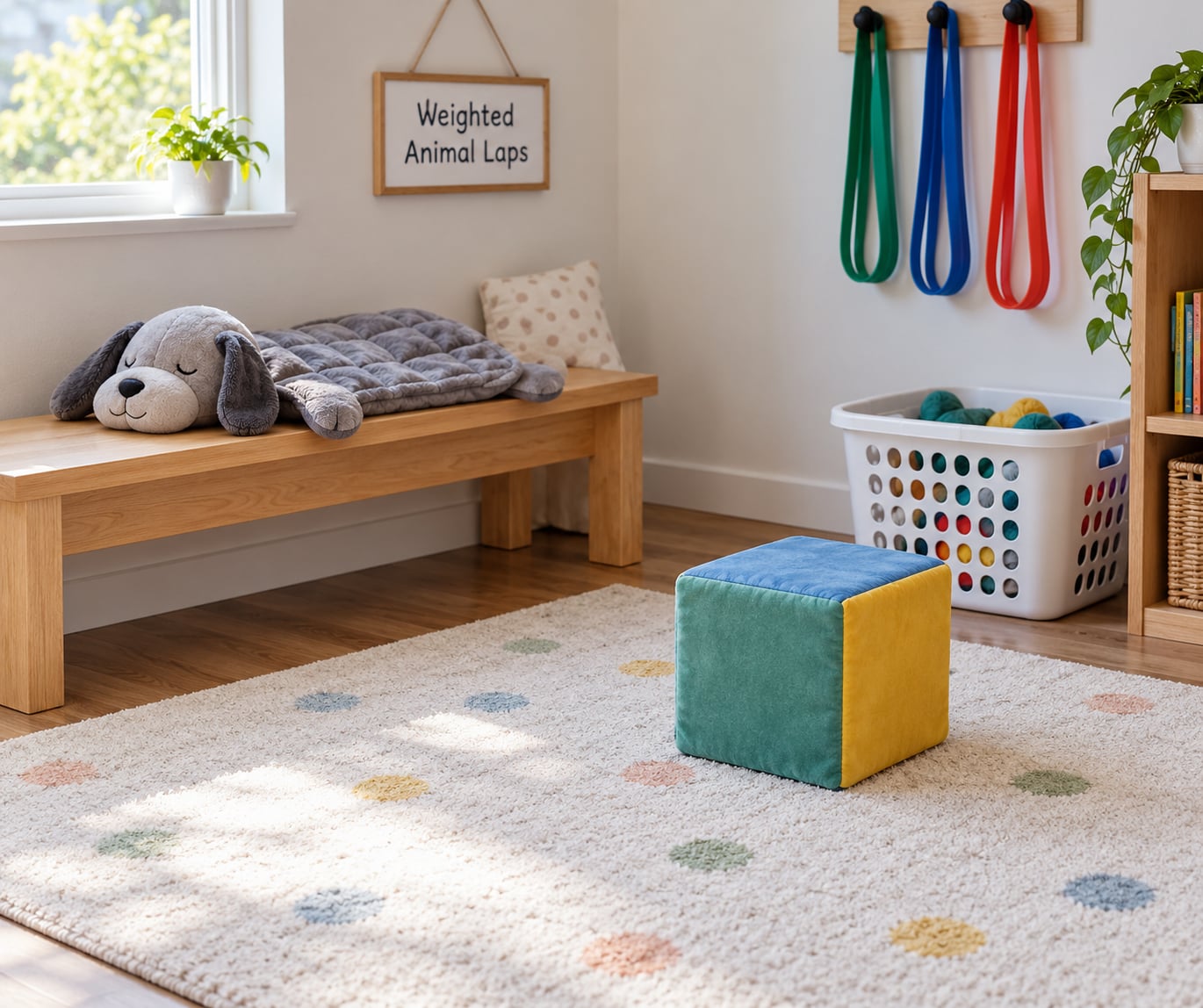
A weighted animal lap is a short, calm movement where a child lies across a parent’s lap, usually while the adult rocks slowly side to side. It is often used at the end of the day, and it is a movement activity first and a pressure activity second.
Keep the pressure light and consistent, and keep moving. Laying still and still gets uncomfortable for many children, and the rocking is what makes it tolerable for longer.
Getting in and out is usually the hard part. Practise the shape of it on a quiet day, count down together, and let the child choose the moment to leave. Weighted blankets and weighted stuffed animals are a separate question: the research on them is limited, they are not a treatment for sleep or anxiety, and if you try one, check the weight, the stitching, and the fit first.
6. Towel or Sheet Pulling
Two people, one towel, and a laugh. Lying on your front holding a towel while an adult pulls you forward, or sitting and dragging each other across a bedsheet, loads the trunk, arms, and back muscles and demands coordination at the same time.
It works especially well as cooperative play for siblings, because neither person can win alone. Add a small load in the middle of the towel, like a soft ball, and the core has to work harder to keep it steady.
Safety matters more here than anywhere else on this list. Use a towel or sheet, never a scarf or rope, and never wrap it around the neck or head. An adult should hold one end firmly and release it on the agreed word so nobody yanks a small child’s arm out of the socket.
7. Scooter Board Play
Lying, sitting, or kneeling on a scooter board while an adult moves a blanket or a rug underneath gives a child trunk control and vestibular input at the same time. The child has to hold still enough to be moved and alert enough to enjoy it, which is the exact skill many school tasks demand.
Use a hard floor with no thresholds and no stairs, clear the route first, and start slowly. Most children like facing forward, but some settle far better facing away from the direction of travel, so let them choose. If the lying position triggers distress, seat the child upright and pull the blanket from behind.
Keep each ride short, about a minute or two, and stop while it is still fun. The classic mistake is doing too much in one go and turning a regulating activity into something the child dreads.
8. Climbing and Ladder Play
Weight-bearing through the legs and feet, gripping, and the steady postural work of holding on are exactly what a climbing frame, a low wall route, a rock wall, or a playground ladder delivers. If a child can find a route to the top of anything, they are getting heavy work without noticing.
Build a floor mountain out of cushions and a sturdy low bench for indoors. Keep the landing zone soft, keep shoes off, and stay within arm’s reach for a toddler and within sight for a climbing eight-year-old.
Some children cannot tolerate height at all, and that is worth respecting rather than pushing through. Substitute a crawl tunnel, a low frame they can get under, a foam pit, or a soft obstacle course that never rises above their knees. A child with a genuine fear of heights can still get every proprioceptive benefit from floor-level play.
9. Pushing a Stroller
Pushing an empty stroller is one of the easiest heavy work activities to build into a normal day, because a walk is already happening. Add a small load and the legs, shoulders, and core all have to work, and the child gets to be useful while doing it.
A wagon, a grocery cart at the store, or a wheeled play cart at school all work the same way. Stay on flat sidewalks, engage the brake before loading, and put the weight low and toward the front of the basket so the child is not pushing a top-heavy load.
Teens sometimes find this more acceptable than a game, which is a fair trade. A high schooler who will not crawl will happily push a full grocery cart down an aisle.
10. Pouring and Scooping
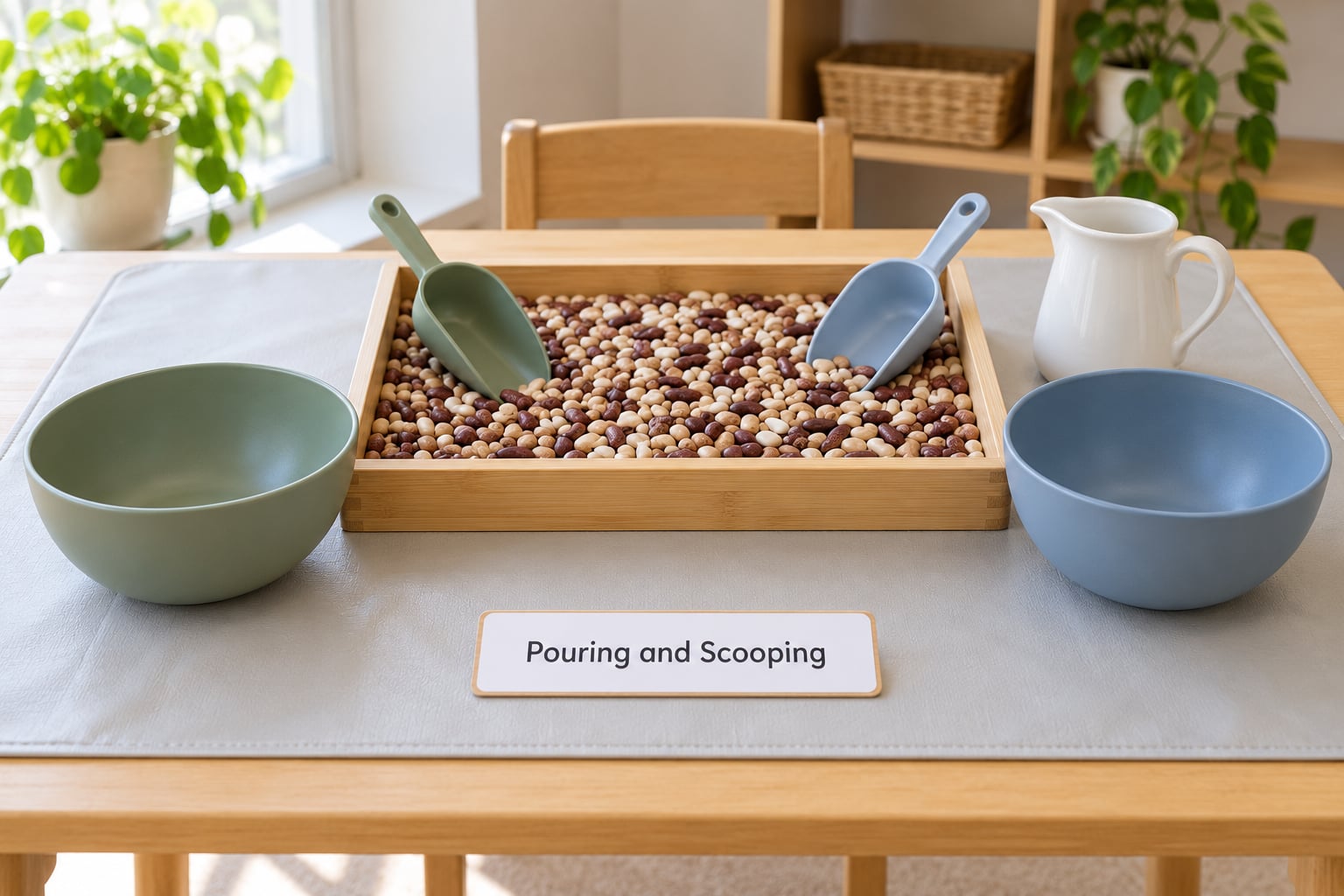
Pouring and scooping is hand heavy work: sustained resistance through the fingers, wrists, and forearms, plus hand-eye coordination and bilateral movement when one hand holds the container and the other works the scoop.
Dry beans, large dry pasta, beads, or water all work. A washable mat, a shallow tray, and a small pitcher turn a spilled bag of rice into a ten-minute game instead of an argument. For a sensory avoider, start with water, which leaves no residue and no sound.
Two precautions. Check items before the activity starts: nothing small enough to swallow, nothing sharp, and nothing that is a choking risk for a younger sibling in the room. And teach the pour before it starts, because a demonstration on a small amount is much faster than a lecture on a full bowl.
For children who mouth objects or need graded oral input, my oral sensory activities guide covers the chewing and mouthing side of the same sensory system.
11. Crab Kicks and Bridge Games
Lifting the hips and walking on hands and feet loads the entire body in one move, and the effort goes straight through the trunk, shoulders, and hips. Crab kicks while holding a plush toy on the belly adds balance on top, which is where the real organizing happens.
These are hard activities, so most children manage a handful of reps and need a rest. Ten quality bridges beat fifty rushed ones, and stopping while the child still wants more is the safest way to keep it enjoyable.
For low muscle tone, elevate the feet onto a chair so the body is angled and the load is lighter. A towel under the shoulders makes a low bridge easier to hold. Children with limited mobility can do a seated push through straightened arms, or a partner hand stand at the wall, and still get the compression and pressure input.
12. Heavy Household Jobs
The most reliable heavy work is a real job that the household needed done anyway. Carrying groceries in, wiping the table, hanging laundry, watering plants, moving a bag of soft items from one room to the next.
Adult jobs get rejected because the whole thing is too much. The fix is to break a job into parts a child can finish: carry the empty basket, then carry the full basket; sort the socks, then carry the pile to the drawer. Each part ends in a visible result, which is what keeps a child willing to do the next one.
Start at an easy resistance level and let the child raise the difficulty. A job that is too hard teaches a child that jobs are not for them.
Frequently Asked Questions
What age can children start heavy work activities?
Children can start from the moment they can move, and the first heavy work is simply floor play. A one-year-old pushing a push toy or pulling a cloth across the floor is doing heavy work. Toddlers enjoy carrying cups, crawling, and lifting. From three upward you can add pushing loads, climbing, and scooping games, and the same principle holds all the way into the teen years.
How long should a child do heavy work activities each day?
Short and frequent works better than one long session. Most children do well with five to ten minutes a few times a day, and you will see the effect in the hour that follows rather than for the rest of the day. Watch the child rather than the clock. A flat affect, wiggling, or repeated requests to leave are signs to stop and try something easier.
Are heavy work activities good for autistic children?
Yes, for many autistic children, and it is a common recommendation from occupational therapists. Muscle and joint effort gives predictable proprioceptive input without the unpredictability of a busy playground. Some autistic children are heavy work seekers and others avoid deep pressure, so start light and watch the response. If resistance is consistently refused, try movement without pressure first.
What heavy work activities can I do in a small apartment?
Most of them need a floor rather than a large room. Animal walks along a hallway, wall push-ups, pushing a laundry basket across the floor, a towel pull between two adults, and a cushion mountain in a corner all work in a small space. A balcony or hallway is better than a carpeted playroom, because harder floors make pushing and crawling easier.
How do I know if an activity is too hard for my child?
Watch the form. Knees buckling, a collapsing trunk, a flat expression, or repeated attempts to escape the activity all point to too much resistance. A child who asks for more is under-challenged. Start lighter than you think you need, and build up over several sessions, because children tend to want the harder version before their bodies are ready for it.
Conclusion
Pick one activity your child already tolerates, start at the easy end, and watch what happens. Animal walks or wall push-ups are usually the safest first choices because there is nothing to buy and nothing to break.
Adjust the challenge rather than insisting on finishing. A shorter version of an activity a child enjoys will do more for self-regulation than a full session that ends in resistance, and if something is not working, ask a pediatric occupational therapist about a plan built around your child’s body and your daily routine.