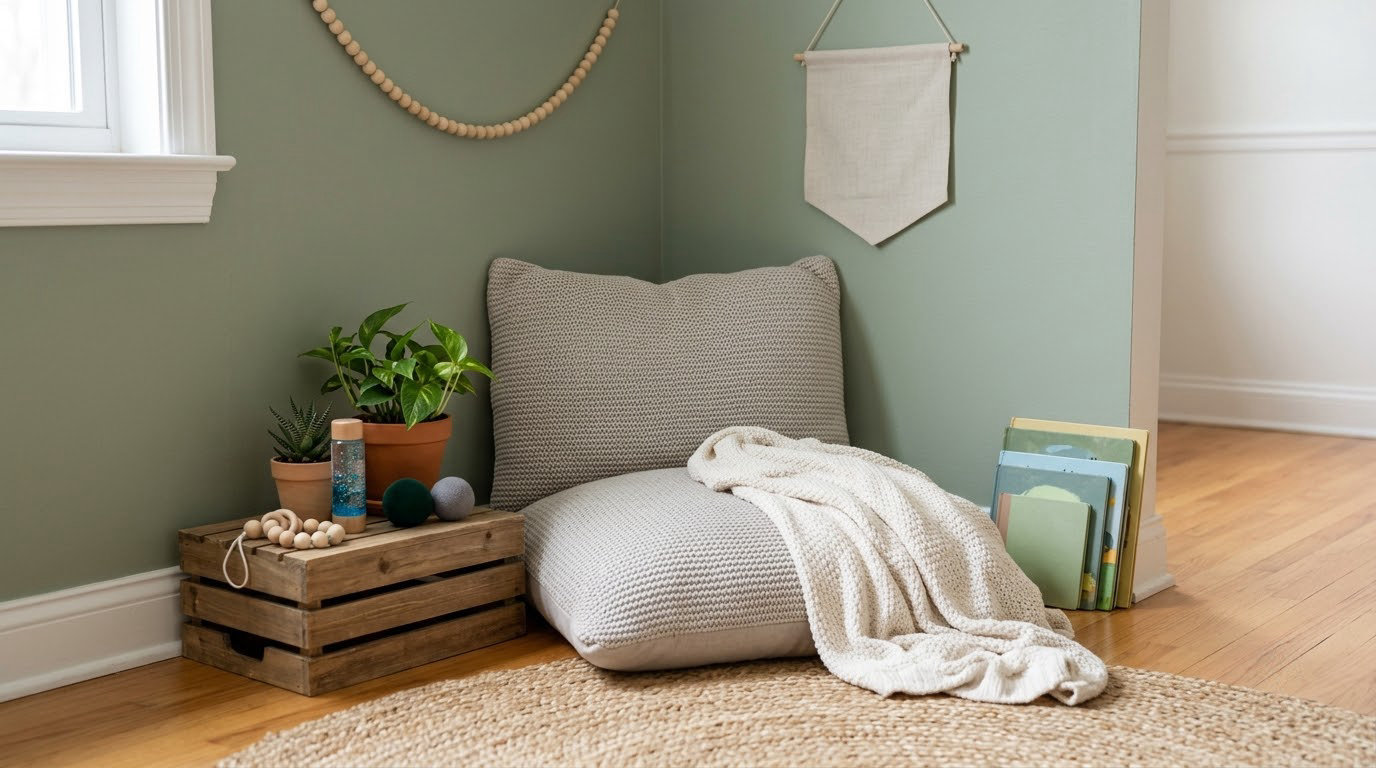
A calm down corner is a small, low-stimulation space at home — a corner, a nook, or a portable basket — stocked with soft seating, sensory tools and visual supports so a child can go there to reset when big feelings hit. It is a choice and a comfort, never a punishment or a time-out.
This guide walks through how to make a calm down corner at home in five steps, what to put in it, what to keep out of it, and what to do when nobody is using it. Most families build one in an afternoon using things they already own.
Table of Contents
What You Need
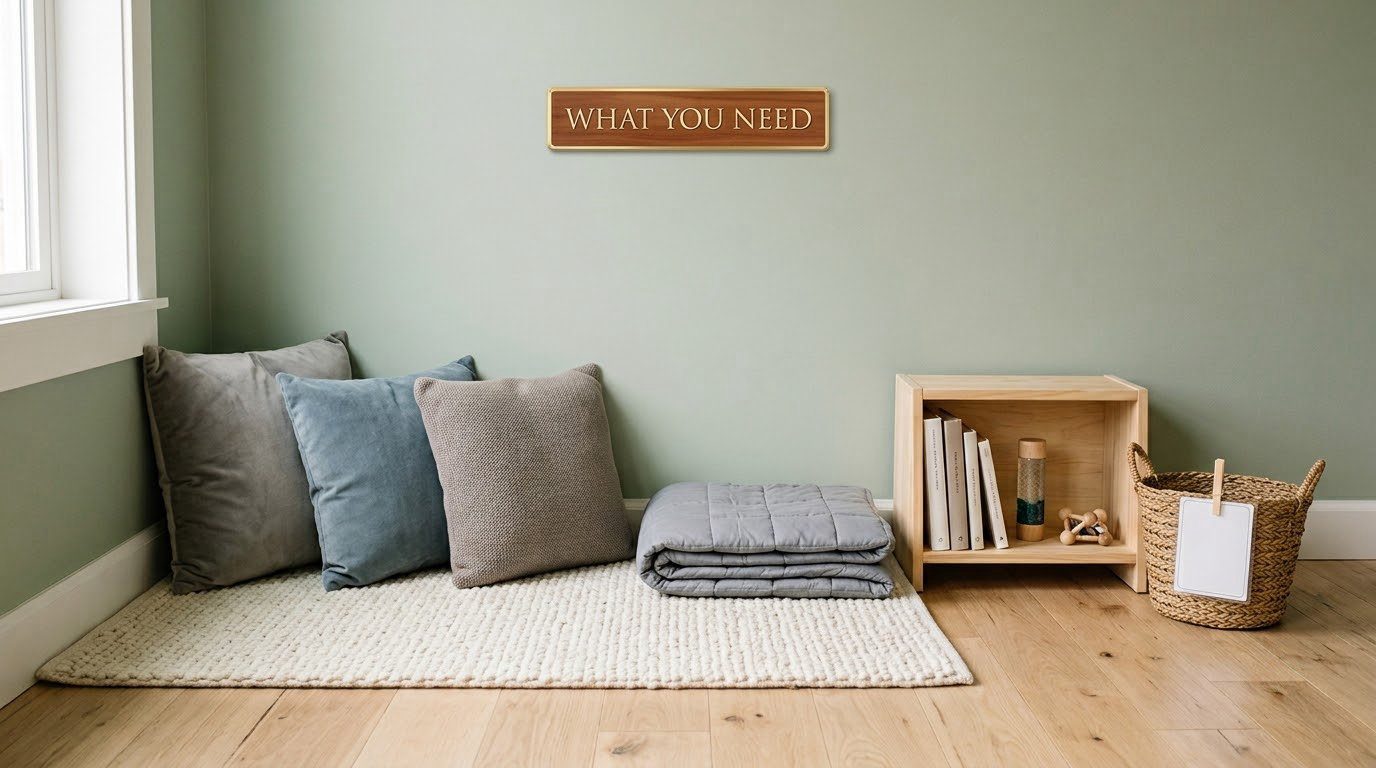
You need surprisingly little. A corner of about three feet by three feet is enough, and most of the work is removing things rather than adding them.
Space and soft surfaces
A foam mat, a small area rug, two or three floor cushions or a bean bag. Anything that can be sat or curled on for five minutes works, including a folded blanket on the floor of a closet.
Sensory items
Three or four fidgets, a squishy ball, a sensory bottle made from a jar of water and glitter, noise-reducing headphones, or a soft weighted blanket. Match the tool to the need: a child who seeks heavy input tends to reach for weight and pressure, while a child who avoids touch does better with visual and auditory tools.
Visual supports
An emotion chart or feelings wheel, a breathing card with a simple picture, and a visual timer or sand timer. These are the pieces most families skip, and they are often the ones that do the most work, because they let a child name the feeling and start the reset before it escalates.
Storage and safety
A low basket or one shelf keeps the items contained so the corner does not become a toy dumping ground. Keep it in a spot you can see from a seated position, avoid cords and blind cords nearby, and skip anything with small parts if a sibling under three shares the room.
Nothing on this list requires specialist equipment. Weighted products and any sensory tool used for a specific diagnosis should go in after a conversation with your child’s pediatrician or occupational therapist.
How to Make a Calm Down Corner at Home
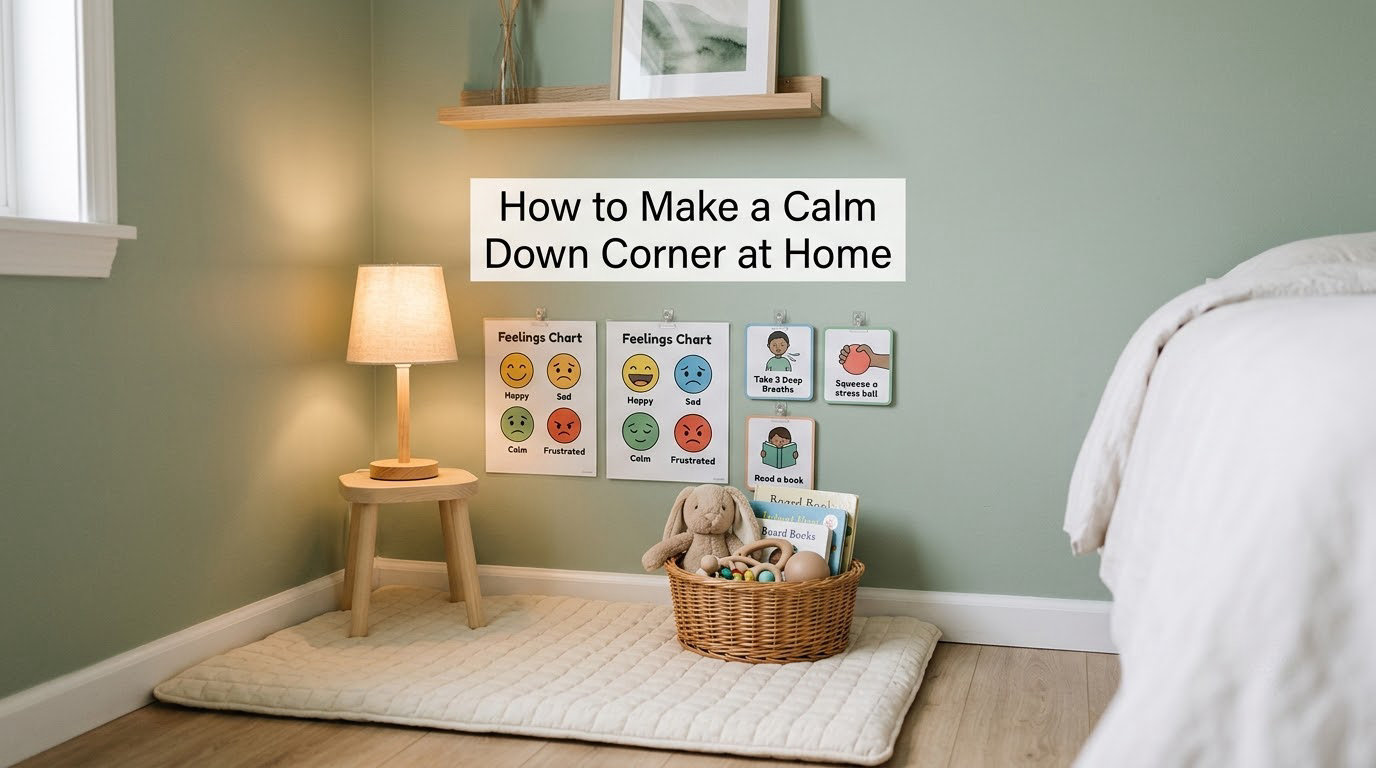
The short answer: pick the least stimulating spot you can find, reduce what the child sees and hears there, add soft seating plus two or three sensory tools and one visual support, then practise using it while everyone is calm.
Children who get overwhelmed — toddlers having tantrums, kids with sensory sensitivities, ADHD or autism, and tweens after a hard school day — all benefit from the same idea. A predictable spot with lower sensory load lets a nervous system settle before a full meltdown starts. The adult usually needs it as much as the child does, which is why co-regulation matters more here than any particular toy.
Where to put a calm down corner at home
Choose the quietest corner of the room your child already spends time in, usually a bedroom or playroom. You want low foot traffic, no television in view, and a door or wall that gives a little privacy. Most of the time that means the corner furthest from the kitchen and the front door.
What to leave out of it
Leave out screens, loud toys, anything used as a consequence, and anything the child has to earn. A corner that only appears when someone is upset stops feeling like a comfort and starts feeling like a punishment, which is the fastest way to kill the whole idea.
Step-by-Step: Build a Space That Helps Your Child Reset
Step 1: Choose a Quiet, Predictable Location for a Calm Down Corner at Home
Walk the house with your child and point out two candidate spots. Pick the one with less noise, softer light and fewer people passing through. If you are in a small apartment with no spare wall, a portable calm down basket that lives in a closet and travels between rooms works better than a fixed spot, because availability matters more than square footage.
Other small-space options that come up constantly: under a loft or bunk bed, behind the couch, a curtained closet nook, or a corner of the child’s own bed with a canopy tent. Families on r/specialed describe a pillow-and-gate setup in the corner of a playroom with a clear one-child-at-a-time boundary as the version that survived real life.
Step 2: Reduce Light, Sound, and Visual Clutter
Swap overhead lighting for a lamp with a dimmer or a warm bulb. Put a rug or curtain on the wall behind the seat to soften reflection, add a rug underfoot, and pull down a poster or two if the wall is busy. If noise is the trigger, a white noise machine or noise-reducing headphones solve most of it.
Keep the surface count low. Two to three decorative items is plenty, because every extra object is one more thing the nervous system has to sort through when it is already tired.
Step 3: Add Comfort and Sensory Supports
Layer soft seating: a mat, a cushion or two, and something to hold. Then add sensory supports in small number — a fidget basket, a weighted lap pad, a squishy toy, headphones. Families report that weighted items, noise-reducing headphones and one designated chair are the lowest-effort combination with the biggest effect.
Two cautions. Check with your child’s pediatrician or occupational therapist before adding weight, and never place a weighted item on a sleeping toddler. And watch the child’s actual behaviour: a tool that gets pushed aside after a minute is not the right tool for that child, so swap it rather than insisting.
Step 4: Add Choice, Routine, and Independent Play
Offer a small, closed set of choices rather than everything. A visual schedule card that shows the steps of taking a break, a breathing card, a journal and crayons, a timer and one quiet activity book are enough for a preschooler. Older kids tend to want reading, headphones and a charger lamp; teens usually accept a corner rebranded as a reset space.
Teach the routine with exact words, practised on a good day: “Do you want the bean bag or the cushions?”, “You are heading to your calm down corner. I will be right here on the couch.”, “Time is up — come back and we will talk about it.” Practising while calm is repeatedly described as the thing that makes or breaks this idea.
Step 5: Test and Refine the Space
Give it two weeks before judging it. Watch for signs it helps: the child goes there voluntarily, comes back calmer, returns to play on their own. Watch for signs it is too stimulating: they avoid it, or they settle in and then escalate, which usually means the space or the tool is the problem.
Rotate fidgets every few weeks and put one back. If the corner turns into a play fort or a place to hide from chores, reset it together in ten minutes rather than throwing it out. Call a pediatrician or occupational therapist if the feelings are intense, constant, or affecting eating, sleep or school.
Common Mistakes
Making it too stimulating. A corner with a hanging swing, a busy rug and eight toys can raise the stimulation level instead of lowering it. Fix: three sensory items, maximum, plus a mat.
Using it as a time-out. The moment a child thinks the corner is punishment, they will resist it and so will you. Fix: it is always available, never earned, and never taken away.
Adding too many items. Choice feels good on paper and overwhelming in practice for a tired child. Fix: a basket with a lid keeps the visible count at four or five.
Overlooking safety. Loose cords, blind cords, unstable floor lamps and choking hazards are easy to miss when you are focused on the design. Fix: a ten-minute sweep before the child uses it alone.
Expecting it to work overnight. Self-regulation is a learned skill, and the corner is practice space. Fix: introduce it during a calm week, not after a bad one, and expect the first two weeks to be novelty.
Forgetting the adult. The person running the show is often the most dysregulated person in the room. Fix: make the corner available to everyone, with no explanation required.
Frequently Asked Questions
How can I create a calming corner at home?
Pick the quietest corner of your child’s bedroom or playroom, add a mat or rug with two soft cushions, put three sensory tools and one visual support such as an emotion chart in a low basket, dim the light, and remove screens and toys from sight. Then practise using it together on a calm day before anyone needs it.
What materials are good for a calm down corner?
Soft surfaces work best: a foam mat, area rug, floor cushions or a bean bag. Add fidgets, a sensory bottle, noise-reducing headphones or a soft weighted lap pad, plus visual supports like an emotion chart, a breathing card and a sand timer. Household items such as a shower curtain, a pillow fort or a closet nook are genuinely enough to start.
What are the rules for a calming corner?
Five rules keep it working. It is always available to anyone, including adults. It is never used as a consequence, and nothing is taken away for using it. Keep two to three sensory items out at a time and rotate the rest. Keep it screen-free. And keep the same spot every time so it becomes predictable.
Where should I put a calm down corner in my house?
Choose the lowest-traffic corner of a room your child already uses, away from the kitchen, the television and the front door. Good light, soft light and partial privacy matter. In a small apartment, a portable calm down basket that moves between rooms often works better than a fixed space.
Is a calm down corner good for kids with autism?
A calm down corner can support a child with autism by lowering sensory load in a predictable, familiar place and giving them control over when they reset. Pair it with a visual schedule so the routine is visible, and speak with an occupational therapist before adding weighted items or specific sensory tools, since individual sensory profiles vary widely.
How do I keep a calm down corner from becoming a punishment?
Never send a child there as a consequence and never remove something because they went there. Keep it available during good moments too, and let anyone use it without asking. If the corner feels like punishment, the fix is to stop using the word break with it and simply say the space is theirs whenever they want it.
Conclusion
Start with three things: the quietest spot you can find, one or two supports rather than ten, and an introduction while everyone is calm. Everything else — the canopy tent, the name sign, the shelf of books, the corner that finally looks cute enough that the child chooses it on their own — can wait until the basic version is being used.
Give it a couple of weeks, watch what actually happens, and adjust with your child. That is how to make a calm down corner at home that works in your household rather than on a list.