The fastest way to reduce dust for a child with allergies is to start in the bedroom and work outward: encase the mattress, box spring and pillow, wash bedding weekly in hot water, hold indoor humidity between 30% and 50%, then dust damp from top to bottom. Most of the gain comes from the bed, not from expensive machines. Once the setup is done, the routine costs about two hours a week.
House dust is a mixture of skin flakes, textile fibres, pollen, mould spores and insect particles. The part that sets off an allergic reaction is usually the faeces of dust mites, microscopic creatures that live and breed in bedding, mattresses, carpets and upholstery. The mite itself rarely causes the problem. It is the allergen protein in its droppings that does, and those droppings lift into the air the moment bedding is shaken or a soft toy is squeezed.
That is also why symptoms cluster at night. A child can breathe in more mite allergen during ten hours in bed than in a whole day elsewhere in the house. Airborne dust is real but minor next to settled dust living in fabric, so cleaning in the right order matters more than cleaning more often.
Table of Contents
- What You Need
- Step-by-Step
- Start With the Child’s Bedroom and Bed
- Target Dust-Trapping Surfaces Throughout the Home
- Improve Ventilation and Filter the Air
- Keep Dust From Returning
- Check Whether the Routine Is Working
- Common Mistakes
- Safety and Maintenance Tips
- Frequently Asked Questions
- How often should I dust and vacuum a child’s room for allergies?
- What cleaning products are best for reducing dust around a child with allergies?
- Do HEPA air purifiers reduce dust and allergens in a child’s bedroom?
- How do I know if dust mites are triggering my child’s symptoms?
- Should I use essential oils or scented cleaners to improve the room?
- When should I take my child to a doctor about allergy symptoms?
- Start With the Bedroom
What You Need
None of this requires a dedicated allergy room or a big budget. You need the same kit most homes already have, plus two or three inexpensive additions.
- A vacuum with a sealed system or a HEPA filter. A canister or upright that traps fine particles beats a cheap bagless model that exhausts them back into the room.
- Allergen-impermeable covers for the mattress, box spring and pillow. These are tightly woven or plastic membranes that stop mites and their droppings from getting in and staying in.
- Microfibre cloths and a spray bottle. Dust travels when it is dry. Damp cloths keep it stuck to the cloth instead of in the air.
- Fragrance-free, dye-free laundry detergent. Scented products add airborne compounds to a room your child sleeps in eight hours a night.
- A cheap hygrometer to read indoor humidity, plus whatever you already use to control it, such as air conditioning or a dehumidifier.
- A HEPA air cleaner if the room is small enough to size correctly. This one is optional and helps last, not first.
A spray bottle of water and a stack of microfibre cloths will do most of the daily work. If money is tight, buy the encasements first and skip the purifier until the bed is handled.
Step-by-Step
Work through this in order. Each step only works properly if the one before it is already in place, and the first three do the heavy lifting.
Start With the Child’s Bedroom and Bed
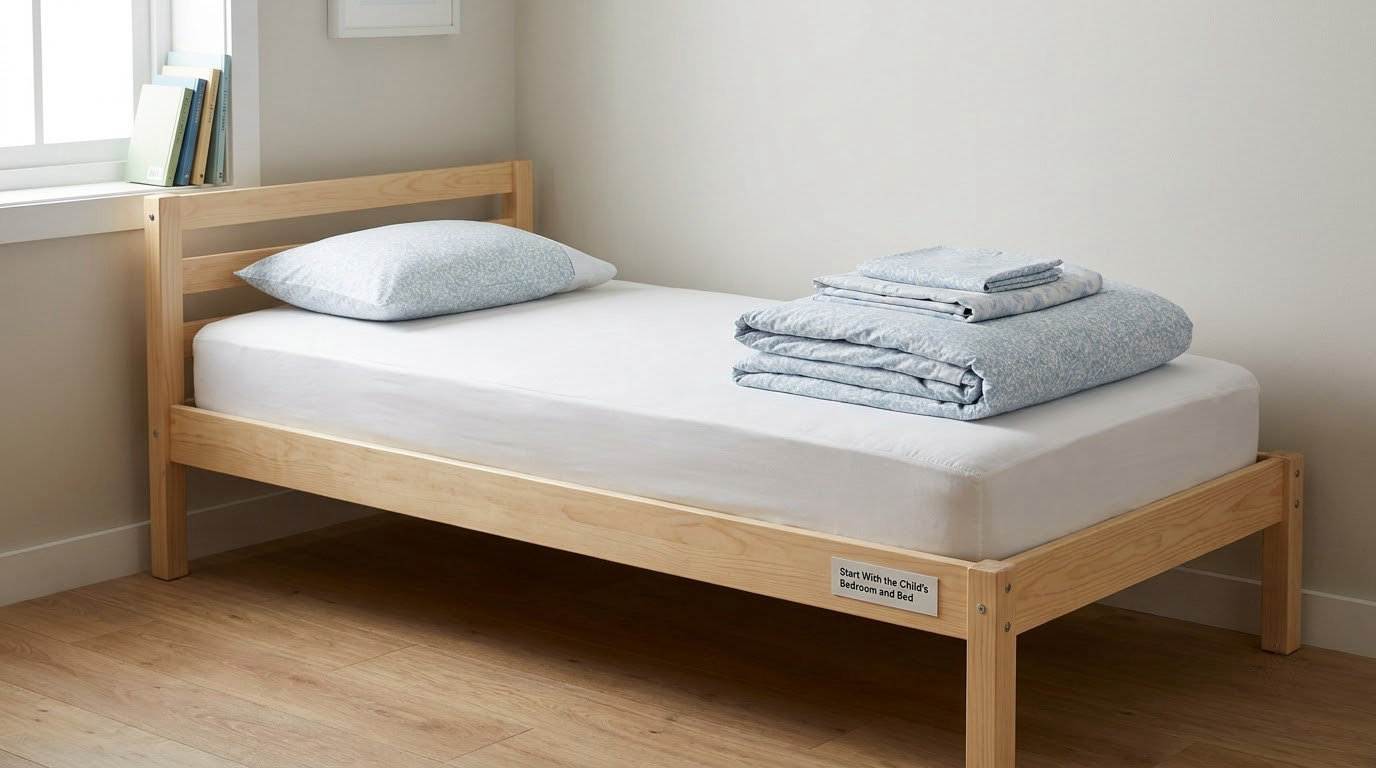
Move the child to another room or out of the house while you work. Take off all bedding, including the duvet cover and any quilt, and wash it on the hottest cycle your fabrics tolerate. Allergy guidelines point to 60C (140F), but most home dryers do not reach that, so run the cycle as hot as the care label allows and dry the load completely on the warmest setting. Heat and time together do more than temperature alone.
Encase the mattress, the box spring and the pillow. All three, not just the mattress. A bare box spring or an uncovered pillow keeps a large reservoir of allergen right where your child’s face sits, and it is the most commonly skipped step. Covers also make the weekly wash easy, because the bedding goes on and comes off without ever touching the mattress surface.
Wash the bedding every seven days, and twice weekly during a flare or in humid months. Dry outdoors on a sunny day when you can; UV and dry air kill mites in fabric better than the dryer alone.
Hold the bedroom between 30% and 50% relative humidity. Mites thrive above roughly 50%, so air conditioning or a dehumidifier set around 45% makes the bed a hostile place for them. Run it through the sleeping hours rather than all day to keep the noise down.
Then clean the bed itself. Strip the sheets, vacuum the mattress surface in slow overlapping passes, vacuum the frame and the floor around the bed, and damp-wipe the headboard and any bedside table. Doing it in that order means you are not vacuuming a floor you already cleaned.
Target Dust-Trapping Surfaces Throughout the Home
Dust settles in the same places every time: low furniture, windowsills, radiators, blinds, ledges, curtain rails, the underside of shelves, upholstered chairs and the top of cupboards where nobody looks. Bedding and carpets hold far more allergen than a shelf, but these surfaces are easy wins and they take two minutes.
Damp-wipe from the ceiling down. Start high, because anything you dislodge falls onto surfaces you have not done yet. Use a separate cloth for the kitchen and bathroom, and launder the dust cloths on their own cycle after use.
On carpets and rugs, vacuum slowly with a brush head and pay attention to edges where dust bakes in along the tape. If you can live without a large rug in the bedroom, removing it helps. If you cannot, that is fine. Vacuuming consistently buys most of what removing it would.
Soft toys need their own routine. Washable ones go in the hot cycle with the bedding. The rest go into a sealed bag in the freezer overnight, then dry them out completely in the sun. It kills mites without taking a much-loved object away from the child.
Improve Ventilation and Filter the Air
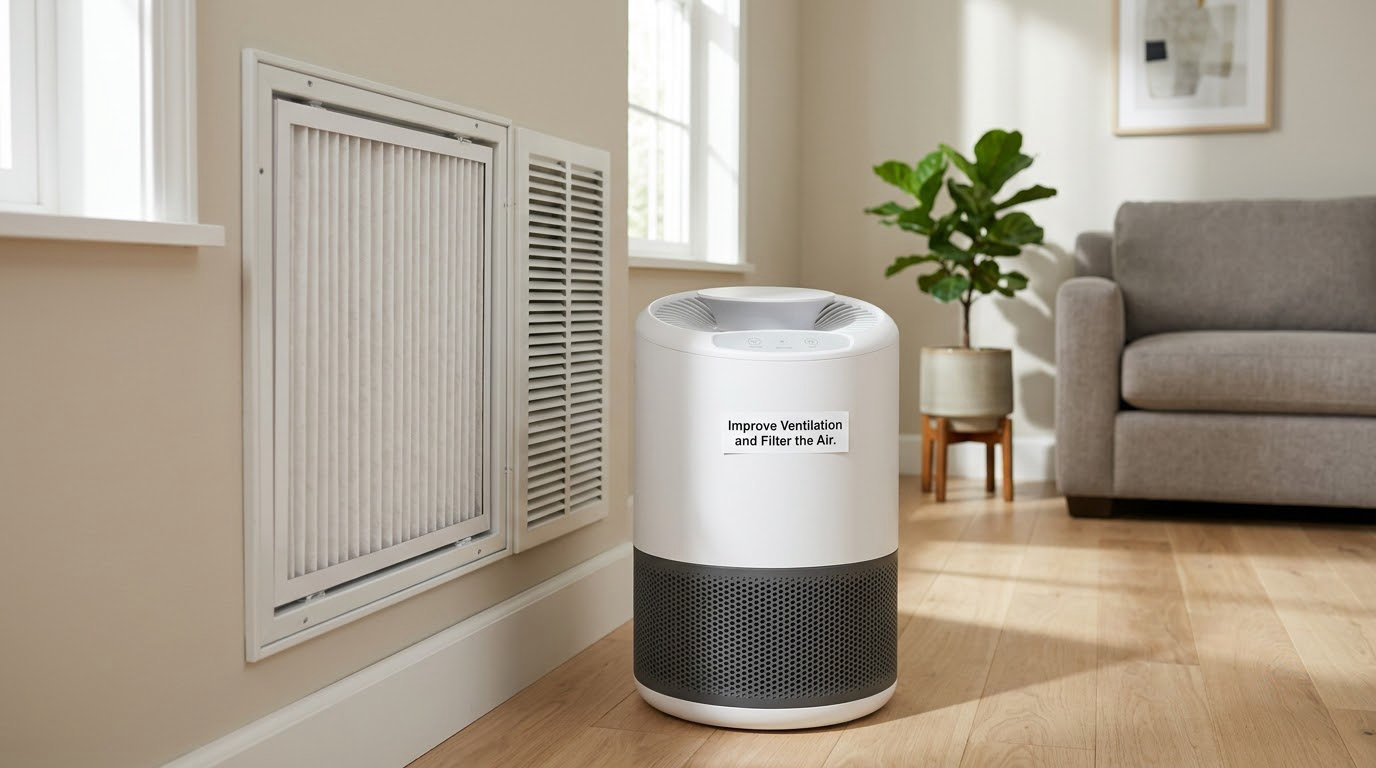
Use the heating and cooling system the way it was designed. Set it to recirculate rather than draw in outside air when the outdoor air is worse, close the windows on high-pollen or smoky days, and run the system long enough to move the air through. Open a window briefly on clear cool days instead of leaving a cracked window that pulls in outside dust.
Change the furnace or air handler filter on the interval the manufacturer states, and check whether yours is the higher-efficiency pleated type. A clogged filter reduces airflow and leaves the system doing less of the filtering you are counting on.
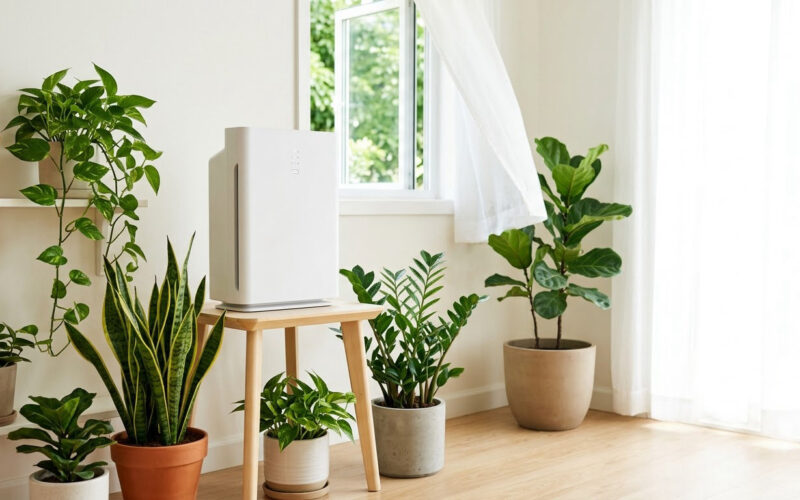
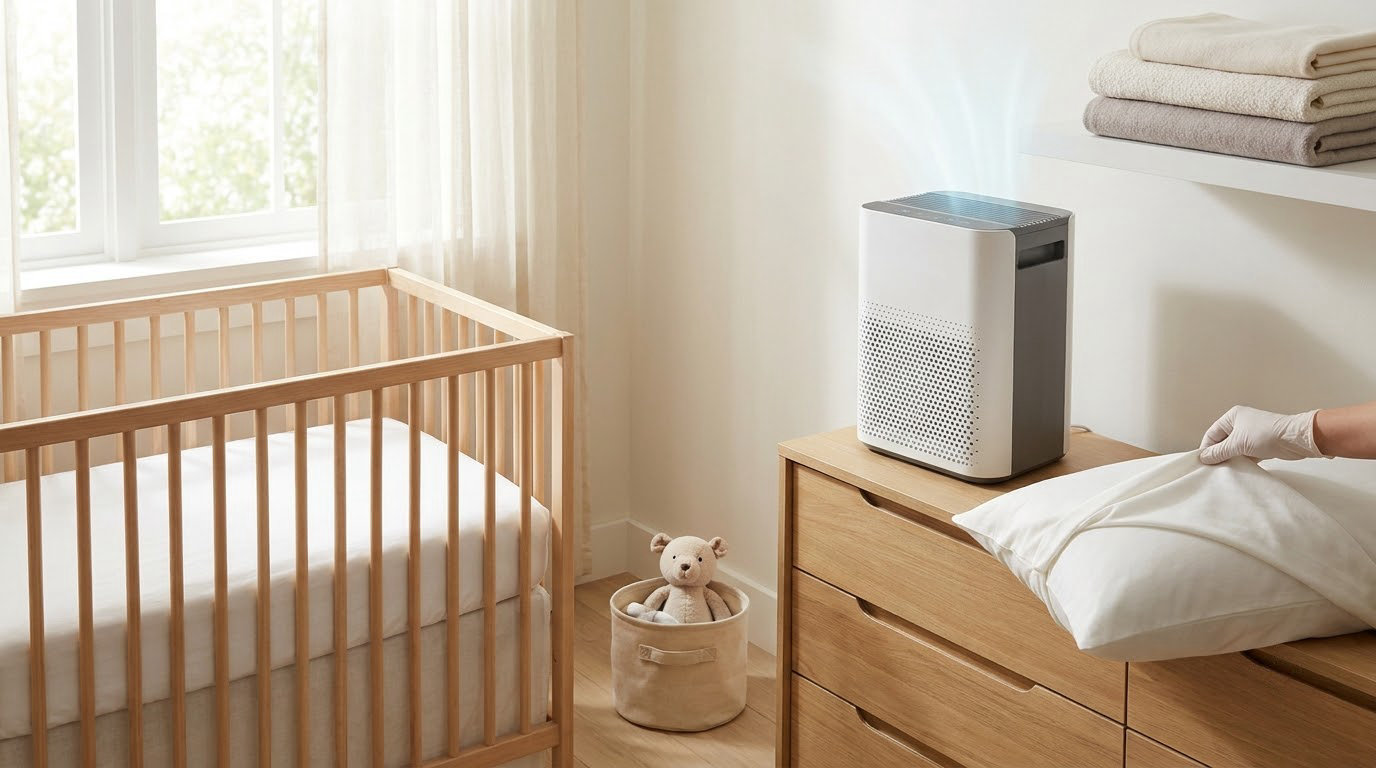
A portable HEPA air cleaner captures what is already airborne, including mite allergen particles stirred up by movement. It does nothing about mites living inside the mattress or the carpet, so treat it as support. Size it so the clean air delivery rate suits the room, run it continuously with the door mostly shut, and change the filter when the light says to.
Keep Dust From Returning
Small daily habits carry the routine further than any single piece of equipment.
- Shoes off at the door, on a washable mat, so grit never reaches the bedroom floor.
- Fewer furry dust collectors. Washable weighted blankets work better than open bins of loose soft toys.
- Closed lidded storage for anything that lives on a shelf, rather than open baskets.
- Curtains and blinds over carpet if you are choosing; wash curtains on the hot cycle.
- Mattress and pillow covers checked monthly for tears or gaps at the seams.
- Humidity checked at the same time each day until you know your home’s pattern.
Stagger the work. Daily: make the bed, wipe the headboard, put shoes away. Twice a week: vacuum the bedroom. Weekly: hot wash bedding, dust damp top to bottom, check the filters. Families who do it this way keep going. Families who try to do it all on Sunday do not.
Check Whether the Routine Is Working
Keep a simple log for three or four weeks: nightly symptoms, whether the bed was made and the room vacuumed, and how visible dust looks on a windowsill. Symptoms often lag a few days behind exposure, so a single bad night rarely means the plan failed. Judge the trend over a month, not the night.
Expect gradual improvement over six to eight weeks after encasing the mattress and starting the weekly wash. Faster changes usually mean you are noticing the flare for a different reason, such as a cold or a change in weather.
Common Mistakes
Most of what I see go wrong comes down to seven habits. Each one has a simple correction.
- Dry sweeping and dry dusting. This is the most common error and it puts the allergen into the air where the child is breathing. Damp the surface first, or use a damp cloth, and never sweep bare floors.
- Dusting before vacuuming. You settle the dislodged dust straight back onto clean surfaces. Reverse it: surfaces, then floor, then vacuum the dust off anything you moved.
- Cleaning hard while the child is in the room. Take them out first, close the door, and give the room an hour to settle with the window open before you bring them back.
- Fragranced and essential-oil products. Lavender and eucalyptus add volatile compounds to a room your child occupies all night. Unscented products are the default, not the compromise.
- Encasing the mattress only. The box spring and pillow hold as much allergen as the mattress does. Cover all three or the exercise is mostly wasted.
- Forgetting filters. A saturated HVAC filter or a purifier filter past its life quietly stops filtering. Calendar the replacement; write it on the child’s bedroom door if that is the note you actually see.
- Expecting overnight results. The old bedding reservoir takes weeks to work through. Give the routine two months before you judge it, and keep going even when the child has a bad week from something else.
Safety and Maintenance Tips
Ventilate while you clean and follow the label on whatever product you use. Never mix cleaning products, and keep any product within reach of a young child locked away rather than in an open caddy on the floor of the bedroom.
Check the vacuum filter and the vacuum bag or canister on the same schedule as the bedding. If the machine smells musty or has started to blow harder, the filter is full and the airflow has dropped.
Keep humidity in the 30% to 50% band year-round. Too low and dry air irritates airways and eczema; too high and you trade a dust problem for a mould problem, which is a swap rather than a fix.
If your child has sensory sensitivities or is autistic, change the cleaning routine in small, predictable pieces. Announce the same day, the same time, do one surface in a fixed order, and let them hold the cloth if they want a job in it. A single predictable pass every week beats a deep clean that becomes the thing they dread.
Talk to a pediatrician or allergist before spending money on anything beyond the basics. Seek medical care if your child wheezes, wakes at night short of breath, needs reliever medication, or if eczema spreads or weeps, and get urgent help for difficulty breathing or ribs pulling in with each breath. If six to eight weeks of consistent routine changes nothing, that is the moment to ask about testing and a written plan rather than cleaning harder.
Frequently Asked Questions
How often should I dust and vacuum a child’s room for allergies?
For a child with a confirmed dust mite allergy, vacuum the bedroom floor and mattress two or three times a week and damp-wipe surfaces weekly. More often adds little, because settled dust resuspends and resettles within hours. During a flare, an extra pass is worth it. Keep the order consistent every time: surfaces first, floor last, always damp.
What cleaning products are best for reducing dust around a child with allergies?
Fragrance-free, dye-free detergent and a plain unscented surface cleaner are the safest defaults, and most of the work is physical rather than chemical. A damp microfibre cloth and a sealed or HEPA vacuum do the heavy lifting. Skip essential oils, fragranced laundry additives and aerosol sprays, which add airborne compounds to a room your child breathes in overnight.
Do HEPA air purifiers reduce dust and allergens in a child’s bedroom?
A true HEPA unit captures airborne particles circulating in the room, including mite allergen particles stirred up by movement. It does nothing for the mites living inside your mattress, pillow or carpet, so treat it as a support measure rather than a fix. Size the unit to the room, run it with the door mostly closed, and change filters on schedule.
How do I know if dust mites are triggering my child’s symptoms?
Clues include a stuffy nose, sneezing, itchy watery eyes and a night-time cough that clears once the child leaves the room, plus symptoms worse in bed in the morning than later in the day. Eczema flaring alongside those signs strengthens the pattern. Only a clinician can confirm the cause, usually through skin prick or blood testing.
Should I use essential oils or scented cleaners to improve the room?
No. Fragrance and volatile oils are among the most common room triggers and can make rhinitis and eczema symptoms worse, particularly in children who already wheeze at night. Airing the room and using unscented products gives you the same fresh smell without the exposure. If your child reacts strongly to a smell, treat it as a trigger and remove it.
When should I take my child to a doctor about allergy symptoms?
Book an appointment if symptoms disrupt sleep most nights, if your child wheezes or coughs after exercise, or if eczema spreads or weeps. Seek urgent care for difficulty breathing or ribs pulling in with each breath. If a consistent routine has run six to eight weeks with no change, that is also a good reason to ask for allergy testing and a written plan.
Start With the Bedroom
Pick one weekend. Strip and hot-wash all the bedding, encase the mattress, box spring and pillow, then vacuum the mattress and the floor around the bed while the child is elsewhere. Set the bedroom to a steady 45% humidity. After that, keep the same weekly rhythm: bedding in the wash, room vacuumed twice, surfaces damp-wiped top to bottom, filters on the calendar.
Give it six to eight weeks before you judge it, and extend the routine to the rest of the house only once the bedroom feels normal. Nobody gets a dust-free home, and the families who last longest are the ones who stopped trying to have one.
This is general information about reducing indoor allergens in 2026. Your child’s triggers may be dust, or they may be pet dander, mould, smoke or pollen, and only a clinician can tell you which. Talk to your pediatrician or an allergist before changing anything medical.