To clean without harsh fragrances, swap fragranced products for genuinely fragrance-free or unscented ones, then use three plain agents that do the work themselves: white vinegar for grease and hard water, baking soda for odor and light grime, and an unscented enzymatic cleaner for laundry and carpet. A room takes about 20 minutes, and the whole routine costs less than a month of scented products.
If a scented cleaner sets off a headache, a cough, or a full sensory shutdown within minutes of use, the problem is rarely the dirt. It is the fragrance blend, which is a proprietary mix of chemicals the label never itemizes. Once you know what those hidden names are and what actually removes grime, the whole job gets easier.
Our household made the switch one product at a time over about three months, and the biggest surprise was how little fragrance was doing. Most of what we called a clean smell was simply the absence of dust, grease, and stale air.
Table of Contents
- What You Need
- Step-by-Step: How to Clean Without Harsh Fragrances
- Prepare the Room and Choose Fragrance-Free Products
- Dust Without Adding a Strong Scent
- Wash Surfaces With Simple, Low-Fragile Solutions
- Clean Floors Without Perfume
- Handle Fabrics and Other Household Items
- Common Mistakes
- Frequently Asked Questions
- What does fragrance-free mean on a cleaning product label?
- What is the best way to remove odors without scented cleaners?
- Are baking soda and vinegar suitable fragrance-free cleaning options?
- How can I clean laundry when scented products bother my child?
- Does fragrance-free cleaning protect children with allergies or asthma?
- When should I ask a pediatrician about a cleaning routine?
- Conclusion
What You Need
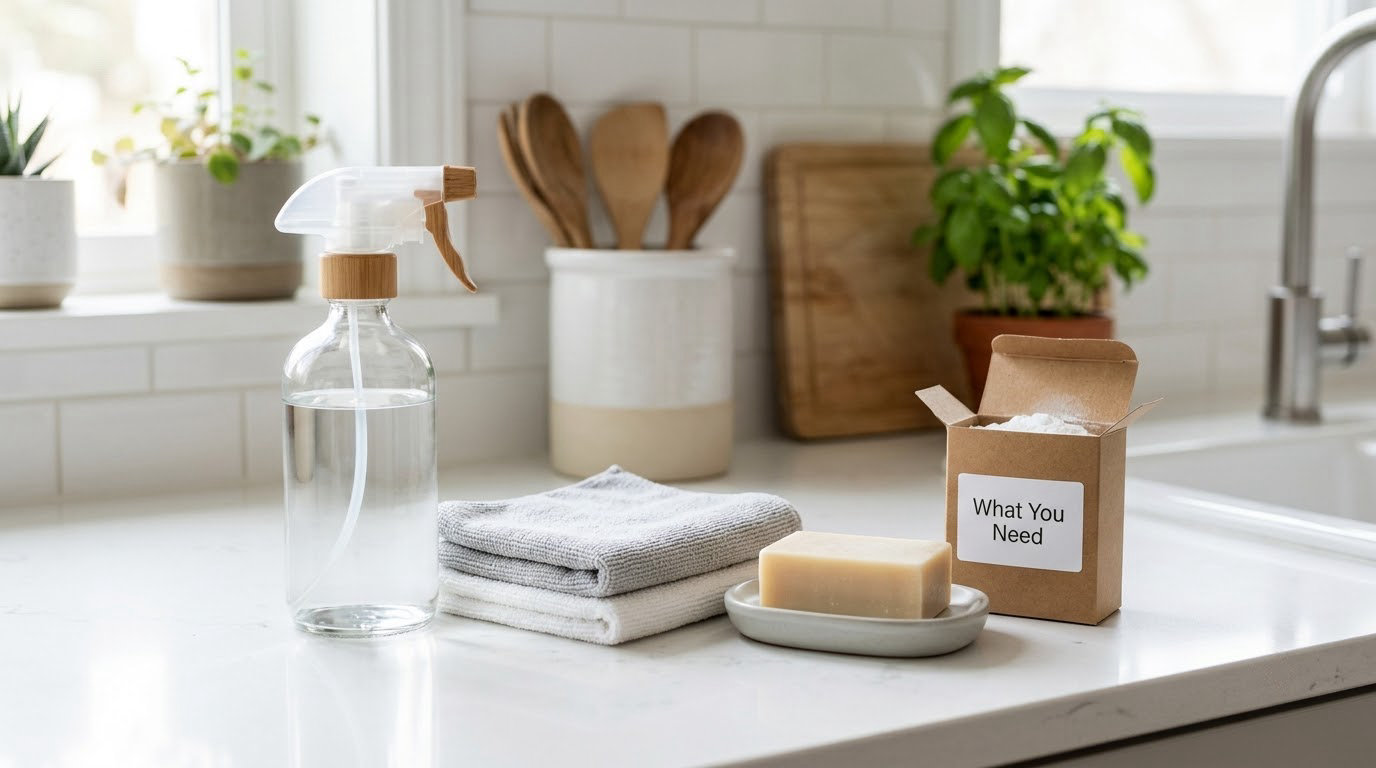
Gather these before you start, and the rest of the guide becomes simple assembly rather than a scavenger hunt each time.
- An unscented all-purpose cleaner for everyday surfaces. Look for fragrance-free or unscented on the front, not just the back.
- Plain unscented soap such as castile soap or baby shampoo. It makes a cheap, effective surface wash when diluted in water.
- White vinegar for glass, counters, drains, and hard water film.
- Baking soda for odor, light soil, and gentle scrubbing.
- An unscented enzymatic cleaner for laundry, carpet, and pet accidents. Enzymes digest the organic matter that causes the smell in the first place.
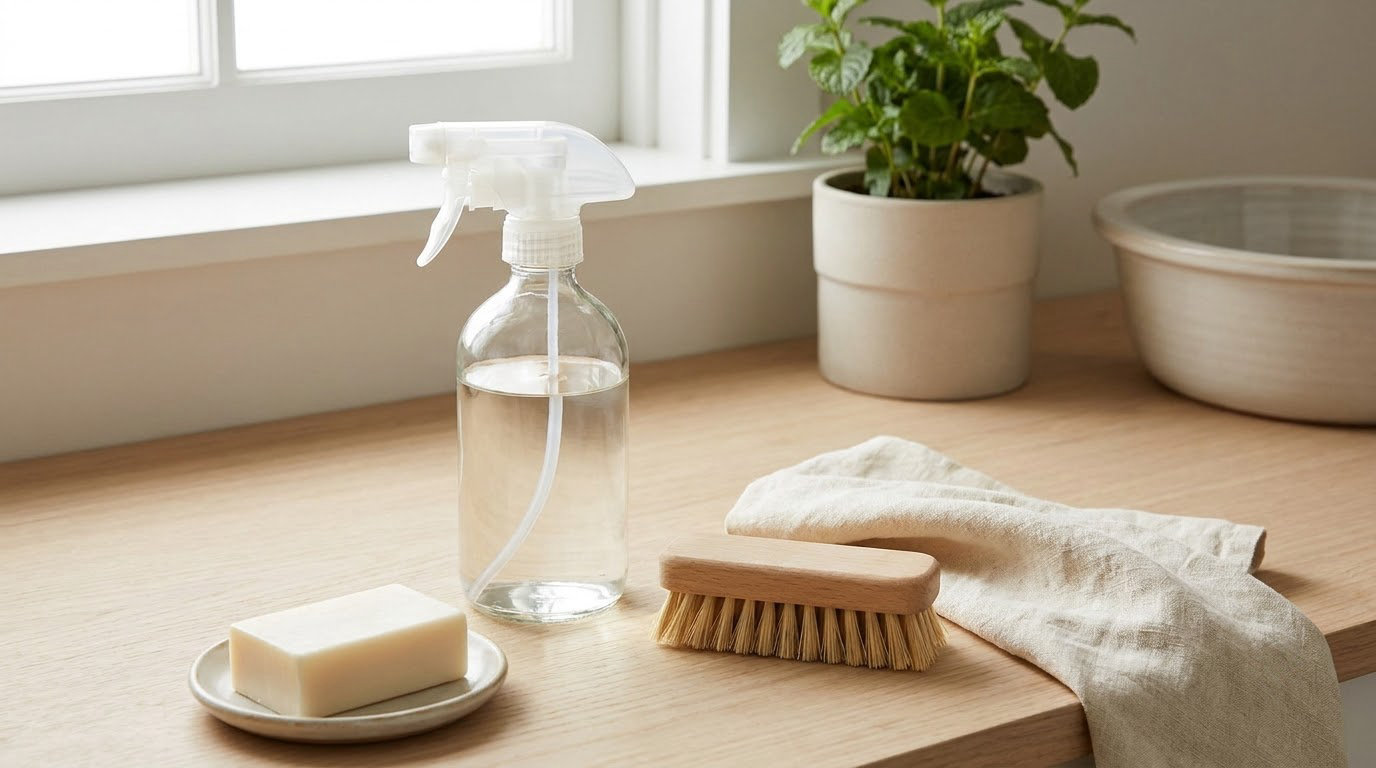
- Microfiber cloths, a glass spray bottle, and a small brush for grout and edges.
Keep one sponge for the bathroom and a separate one for the kitchen. Shared sponges cross-contaminate, and a bathroom sponge that has absorbed scented cleaner will re-release that smell for weeks.
Step-by-Step: How to Clean Without Harsh Fragrances
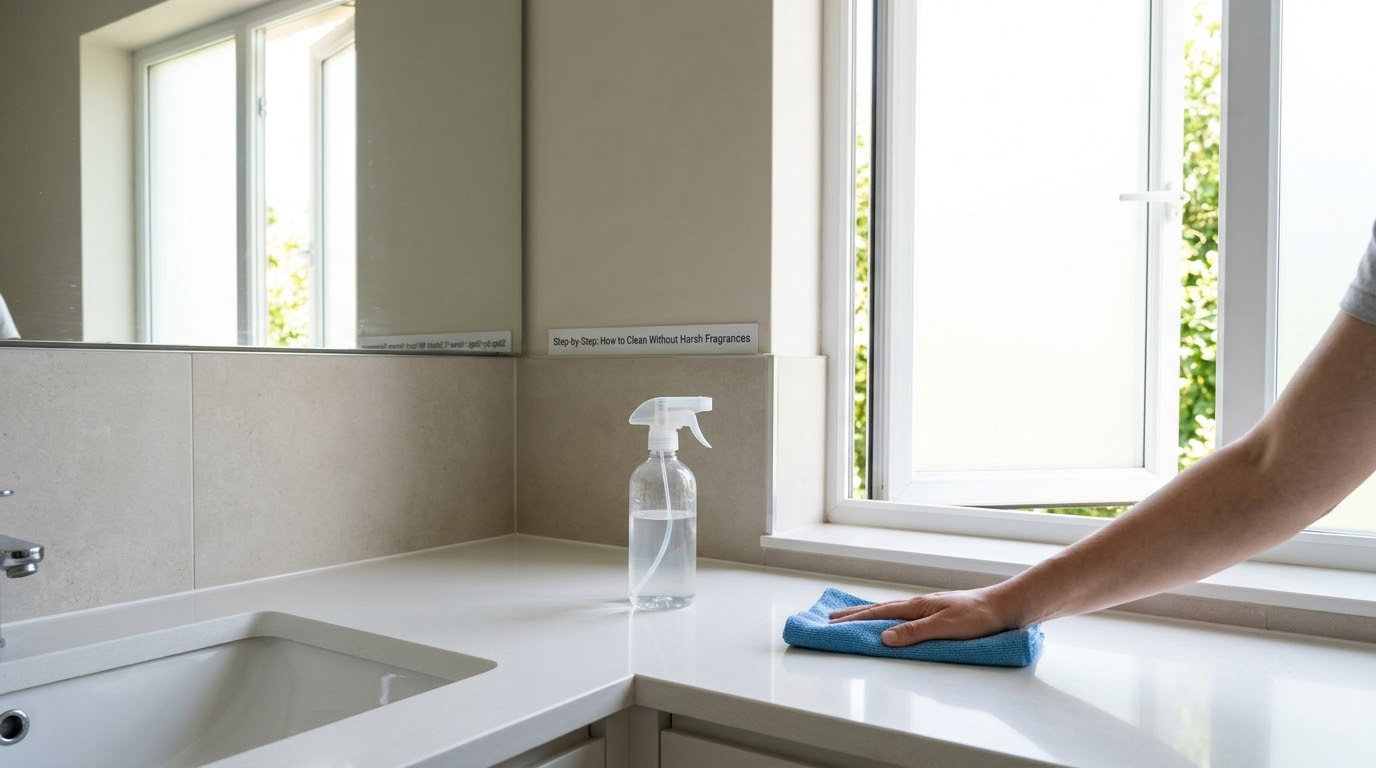
Prepare the Room and Choose Fragrance-Free Products
Open the window first, then read the ingredient list rather than trusting the front of the bottle. Fragrance-free means no scent chemicals were added; unscented can still mean a masking fragrance is present, which defeats the purpose for a sensitive household. Hypoallergenic is a separate marketing claim that says nothing about fragrance at all.
Use each product only in the dilution and manner printed on the label, and never combine two cleaners unless the label explicitly permits it. Vinegar mixed with bleach produces toxic gas, and baking soda mixed with vinegar wastes both ingredients by neutralizing them into salt water.
Dust Without Adding a Strong Scent
Damp a microfiber cloth with plain water and wipe from high to low, working in one direction so you spread dust instead of chasing it. For vents, lamp shades, and ledges, a barely damp cloth catches what a dry duster pushes into the air and then respreads onto the bed.
For floors, vacuum before you mop, and use a vacuum with a HEPA filter if anyone in the house has allergies. Dry sweeping a floor just lifts fine particles, and the first breeze afterward sets them drifting back onto everything you just cleaned.
Wash Surfaces With Simple, Low-Fragile Solutions
Dilute a small amount of unscented soap in warm water, apply to a cloth rather than the surface, and wipe counters, sink surrounds, appliance exteriors, and switch plates. Rinse with a second damp cloth so no residue stays to attract later dust.
For glass, mirrors, and tile, a solution of one part white vinegar to two parts water in a spray bottle handles most marks. Spray the cloth rather than the glass so liquid never runs into grout or reaches an edge.
Give wet surfaces a dry pass with a clean microfiber cloth. Streaks come from water drying on its own, not from the cleaner you used.
Clean Floors Without Perfume
Match the product to the floor. Hard surfaces such as tile, vinyl, and laminate take a diluted vinegar solution fine, while sealed wood and natural stone need a pH-neutral unscented cleaner, because acid dulls the finish over time.
Mop with a flat microfiber mop rather than a string mop, which pushes dirt into a film at the edges. Change the water when it turns grey, and rinse hardwood with a barely damp mop only.
Spot-clean spills immediately with a blot and a small amount of diluted soap. Waiting until a stain dries means scrubbing longer, and scrubbing is what wears the finish.
Handle Fabrics and Other Household Items
Washable items go in the machine with an unscented, dye-free detergent, and skip fabric softener and dryer sheets entirely, since both deposit a coating that keeps releasing scent for months. Vinegar in the rinse helps strip what has already built up in the fabric.
Test any cleaner on a hidden seam or underside first, especially on finished wood, leather, painted furniture, and anything sealed with wax. Baking soda is a mild abrasive, so it can scratch glossy or coated surfaces if you scrub hard.
For carpets and upholstery, an unscented enzymatic cleaner beats vinegar on organic stains such as pet accidents and food, because the enzymes break the material down instead of masking the odor. Keep a child or pet out of the room until the area is dry, and follow the label’s drying time.
Common Mistakes
Assuming fragrance-free means hypoallergenic. It does not. Fragrance-free removes scent ingredients and says nothing about dyes, preservatives, or the person’s individual sensitivity to something else on the label.
Mixing cleaners to make a stronger solution. Bleach with vinegar or with ammonia is genuinely dangerous, and baking soda plus vinegar simply produces salt water. Use one product at a time.
Leaving scented laundry products in the rotation. Fabric softener and dryer sheets fragrance every wash and coat towels, bedding, and clothing that then scent everything in the wardrobe. This is one of the last things families switch out, and it is often the one that matters most.
Cleaning over dust and grime. Wiping a damp cloth across a dusty counter turns the dust into a thin film that bonds to the surface. Dust first with a damp cloth, always.
Cleaning without ventilation. Fragrance-free products still release some airborne compounds, and closed windows let them settle into curtains, carpets, and upholstery. Open a window before you start and again while surfaces are still wet.
Reaching for essential oils to make a room smell nice. They are still fragrance, and many people with sensory sensitivities react to them specifically because the scent is strong. If a room needs to smell fresh, ventilation and a dry home do more than any oil.
Expecting the change to be instant. Residue from scented products lingers in fabrics, carpets, and stored items, and it takes months to clear fully. Keep the routine going even when you cannot smell the improvement yet.
Frequently Asked Questions
What does fragrance-free mean on a cleaning product label?
It means no fragrance or perfume was added to the product. Unscented is different: the product may contain a masking fragrance that neutralizes the smell of the base ingredients. Hypoallergenic makes no fragrance claim at all. For a sensitive household, look for fragrance-free on the front of the label and check the ingredient list for words like fragrance, parfum, or essential oil.
What is the best way to remove odors without scented cleaners?
Ventilate first, then remove the source rather than covering it. Wash fabrics with unscented detergent and a vinegar rinse, mop hard floors with a fresh diluted vinegar solution, and empty bins and drains. Baking soda absorbs lingering odor in a fridge or carpet if you leave it sitting for an hour before vacuuming. Air the room afterward so moisture dries out.
Are baking soda and vinegar suitable fragrance-free cleaning options?
Both are useful, with limits. Vinegar cuts grease, dissolves hard water film, and smells sharp for about fifteen minutes before fading. Baking soda neutralizes odor and gives light abrasion, but it can scratch glossy or sealed surfaces. Neither one is suitable for natural stone, sealed wood, or bleach, and never mix the two, since they neutralize each other.
How can I clean laundry when scented products bother my child?
Use an unscented, dye-free detergent and skip fabric softener, dryer sheets, and scented starch, since those coatings keep releasing scent. Wash bed linens and towels on an extra rinse, and add one cup of white vinegar to the rinse water to strip built-up residue. Cleaning the washing machine drum and the door seal with a vinegar solution removes the smell the next load would otherwise absorb.
Does fragrance-free cleaning protect children with allergies or asthma?
It reduces exposure to airborne scent chemicals, which are a common trigger for headaches, coughing, and asthma symptoms in sensitive people, and children spend more time on floors where residue collects. It is a reasonable precaution, not a treatment. Keep products out of reach during use, never mix cleaners, and follow each label’s directions and ventilation guidance.
When should I ask a pediatrician about a cleaning routine?
Ask if your child reacts to everyday cleaning, has asthma that worsens indoors, shows skin irritation after chores or laundry, or has a diagnosed condition such as multiple chemical sensitivity. Bring the ingredient lists of the products in use, since patterns are easier to spot with them side by side. A pediatrician can also refer you to an allergist or occupational therapist who works with sensory sensitivities.
Conclusion
Pick one product, check that it says fragrance-free rather than only unscented, and clean a single room with it. Open the window, damp your cloth, work from high to low, and give it the week to see how the air feels afterward rather than how it smells.
Then repeat that room for a fortnight before touching anything else. Learning how to clean without harsh fragrances is mostly about consistency and ventilation, not about finding a magic ingredient, and the house settles into it within a season.