
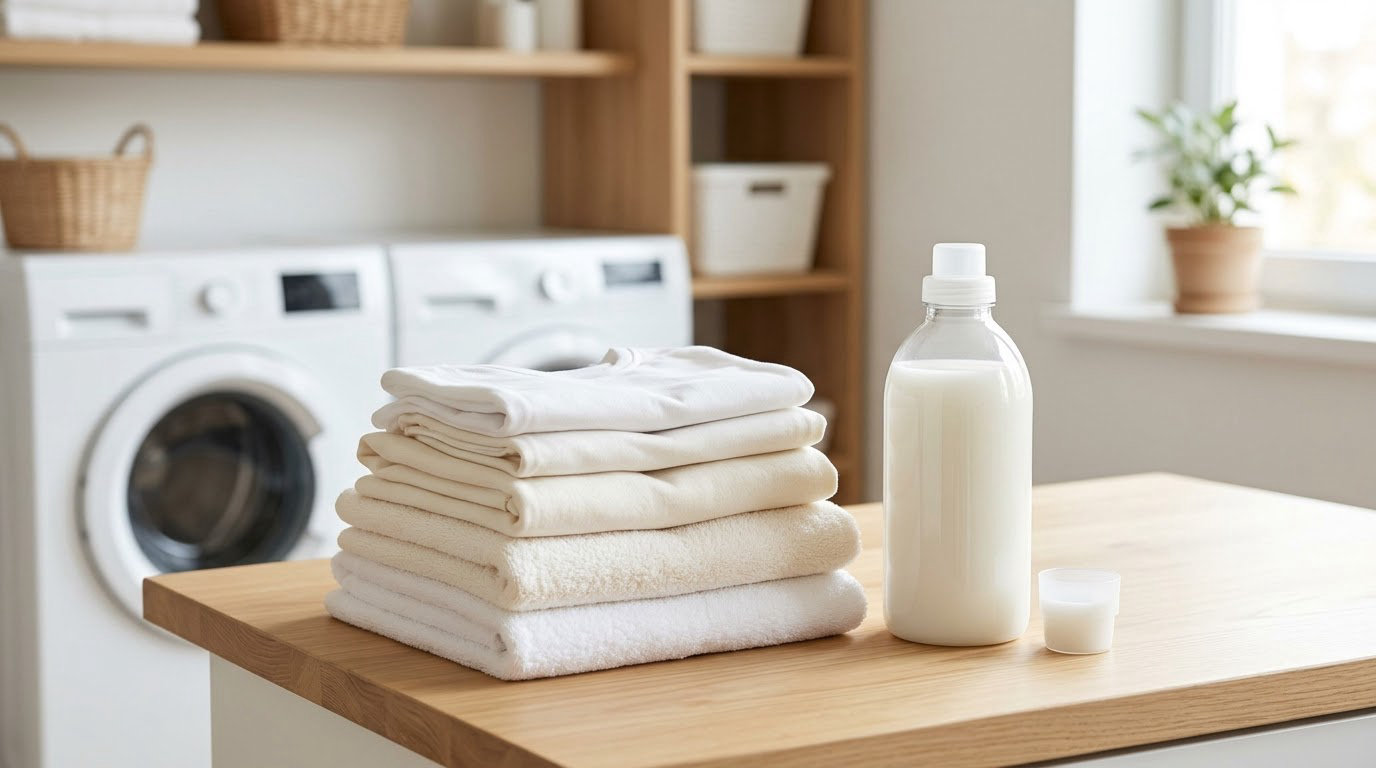
Washing clothes for sensitive skin comes down to four things: a fragrance-free, dye-free detergent, cool to lukewarm water, a gentle cycle with an extra rinse, and no fabric softener or dryer sheets. Those four changes remove most of what triggers itching and redness, and they take about the same time as a normal load. You do not need special clothing or a special routine, just a different set of settings and products.
The reason this matters is that sensitive skin usually has a weakened skin barrier, so anything left in the fabric keeps rubbing against it for hours. Laundry products are among the most common everyday triggers of contact dermatitis, eczema flare-ups and that endless unexplained itch. Reducing what stays in the fibers is usually the fastest change a person can make.
Table of Contents
- What You Need
- Step-by-Step
- Step 1: Sort Clothes by Fabric and Care Label
- How to Wash Clothes for Sensitive Skin Without Special Products
- Step 2: Choose a Gentle, Fragrance-Free Laundry Product
- Step 3: Wash Clothes in Lukewarm Water
- Step 4: Rinse Thoroughly and Air-Dry When Possible
- How to Strip Fragrance and Softener From Clothes You Already Own
- How to Adjust the Routine for Eczema, Contact Dermatitis and Baby Skin
- Common Mistakes
- Frequently Asked Questions
- What is the safest laundry detergent to use for sensitive skin?
- How do I stop my clothes from being itchy?
- What does a laundry detergent allergy rash look like?
- How long does it take for a laundry detergent rash to go away?
- Can fabric softener and dryer sheets cause a rash?
- Should I wash new clothes before wearing them?
What You Need
You do not need a special wardrobe or a new appliance. You need a milder detergent and a few small habits, most of which are free.
- Fragrance-free, dye-free detergent. Liquid or powder, whichever rinses clean in your machine. Read the label, not just the front of the bottle.
- The dose measure that came with the detergent. Most people use roughly twice what they need, and the extra is what leaves residue.
- A mesh laundry bag for delicates, sleepwear with rough seams, and anything beaded or embellished.
- Baking soda and white vinegar for the rescue protocol if clothes already carry softener or fragrance.
- A drying rack or a clean spot on the floor so you can skip the dryer when the care label allows it.
- A soft-bristled brush for loosening dried-on residue from a garment before it goes in.
If you use a shared laundry room or laundromat, add a large mesh bag and unscented dryer balls to that list. Machines carry residue from other people’s loads, and a bag is a cheap barrier between that and your skin.
Step-by-Step
This is the sequence I would follow for a normal week of laundry. It takes about 15 minutes of setup and the same machine time as always.
Step 1: Sort Clothes by Fabric and Care Label
Pull out anything dry clean only, anything with a “do not wash” symbol, and anything you would be upset to shrink. Those come out of the machine entirely. Delicates, underwear, sleepwear and anything that sits against damaged or eczema-prone skin go in their own load, separate from towels and bedding, so the whole load gets the gentle treatment.
Heavily soiled items like work uniforms and gym clothes also deserve their own load. Washing them together with your soft t-shirts means you either under-wash the dirty stuff or over-wash everything else.
Then read the care labels, at least for the items that go against skin. A lot of people assume a normal cycle is fine and find out otherwise three wash cycles later. Follow the label on water temperature and cycle whenever the label and this routine disagree.
How to Wash Clothes for Sensitive Skin Without Special Products
New clothes are the most common trigger people never see coming. Factories finish garments with dyes, sizing agents, resins and preservatives that rinse off mostly in the first wash, and skin that is already reactive reacts to them on first wear. Wash every new item, especially new underwear, sleepwear and anything for a baby, before it touches skin.
My method is simple: put new dark or strong-colored clothes in the machine by themselves on a cool, gentle cycle with a small dose of the fragrance-free detergent and an extra rinse. Turn them inside out first if they have a printed graphic or an applique, and add half a cup of white vinegar to the rinse water for the first wash only.
Step 2: Choose a Gentle, Fragrance-Free Laundry Product
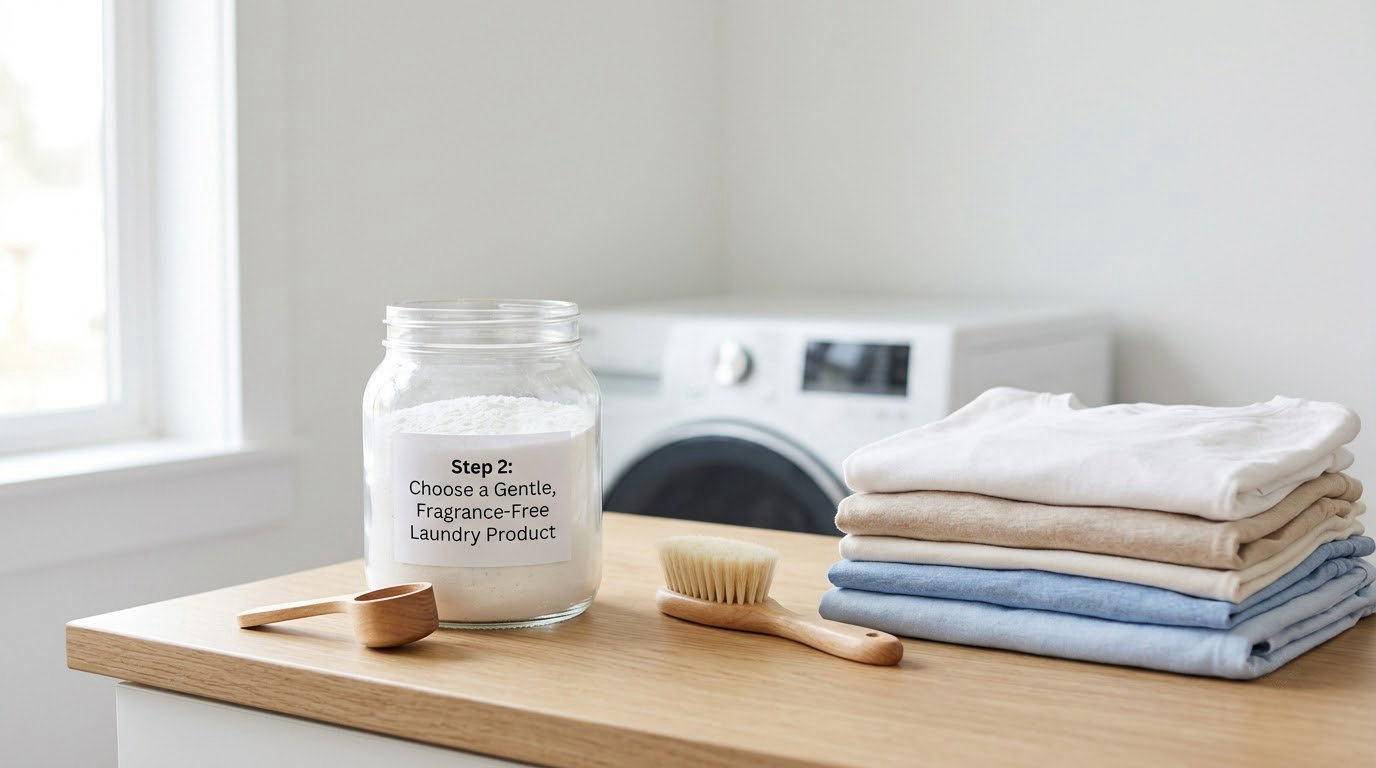
The label tells you more than the marketing does. “Gentle,” “sensitive” and “hypoallergenic” are advertising words with no regulated meaning in laundry detergent, and plenty of people have reacted to a product that carried one of them. What you want on the ingredient panel is fragrance-free, dye-free, and a formula that rinses out completely.
Four tells to check:
- Fragrance-free, not “lightly scented” or “clean scent.” Fragrance is often listed as parfum or fragrance, and sometimes the label is vague on purpose.
- No dyes or optical brighteners. Brighteners deposit a bluish-white coating on fabric to make it look cleaner. They never come out.
- Fewer harsh enzymes. Protease and amylase enzymes break down protein and starch stains, and they are common triggers on reactive skin.
- pH-neutral if it is stated. Skin sits close to neutral, and a high-pH formula leaves fabric feeling rough rather than soft.
If a product carries a third-party mark rather than a self-declared claim, that tells you more. The National Eczema Association Seal of Acceptance and the National Psoriasis Foundation Seal of Recognition both mean the product met criteria set with clinicians, and dermatologist-tested or SkinSAFE labeling means a dermatologist reviewed it. Those marks do not guarantee zero reactions, but they are a firmer signal than a front-of-bottle promise.
One thing worth saying plainly: greener is not automatically gentler. Plant-based and eco formulas often lean on essential oils, and citrus, lavender and eucalyptus are among the most common contact allergens. An Australian parent in one parent forum made the same point from the other direction, noting that mainstream detergents rinse out fine unless there is a specific allergy issue. Read the panel, not the bottle color.
Then measure carefully. Use the dose for a full load, less for a small one, and expect to use about half of what you currently use. Users in cleaning forums describe the double rinse as the single habit that changed everything for them, and under-dosing is what makes that rinse worth doing.
Step 3: Wash Clothes in Lukewarm Water
Cool to lukewarm water, roughly 60 to 80 degrees Fahrenheit, is the working range. Cool water preserves fabric finishes and reduces the risk of dye bleed, and it avoids setting protein-based stains.
Very hot water is the setting to avoid. It strips oils from the skin surface, it can set protein stains like blood or sweat, and it drives fragrance and softener residue deeper into fibers rather than out of them. The one exception is bedding for dust-mite control, where hot water is a legitimate medical choice for eczema.
Choose a gentle or delicate cycle, or a longer normal cycle with a cold setting, so the load has time to move through the water enough to rinse clean. Wash items inside out when they have a printed graphic, a rough inside seam or a lining. The inside surface is the one against skin, so that is the surface worth protecting.
Step 4: Rinse Thoroughly and Air-Dry When Possible
The extra rinse is the step that does the most work. On many machines it is a button labeled extra rinse, sanitary, or sensitive, and it adds a full fill and drain cycle after the main one. If your machine does not have one, pressing pause and running the cycle again partway through works about as well.
You will know the rinse worked if the garment smells like nothing at all rather than like faint laundry scent, and if it feels soft without the waxy slick of softener. Clothes that smell fine can still itch, because fragrance molecules stay in the fiber after the water is gone. No smell is the goal.
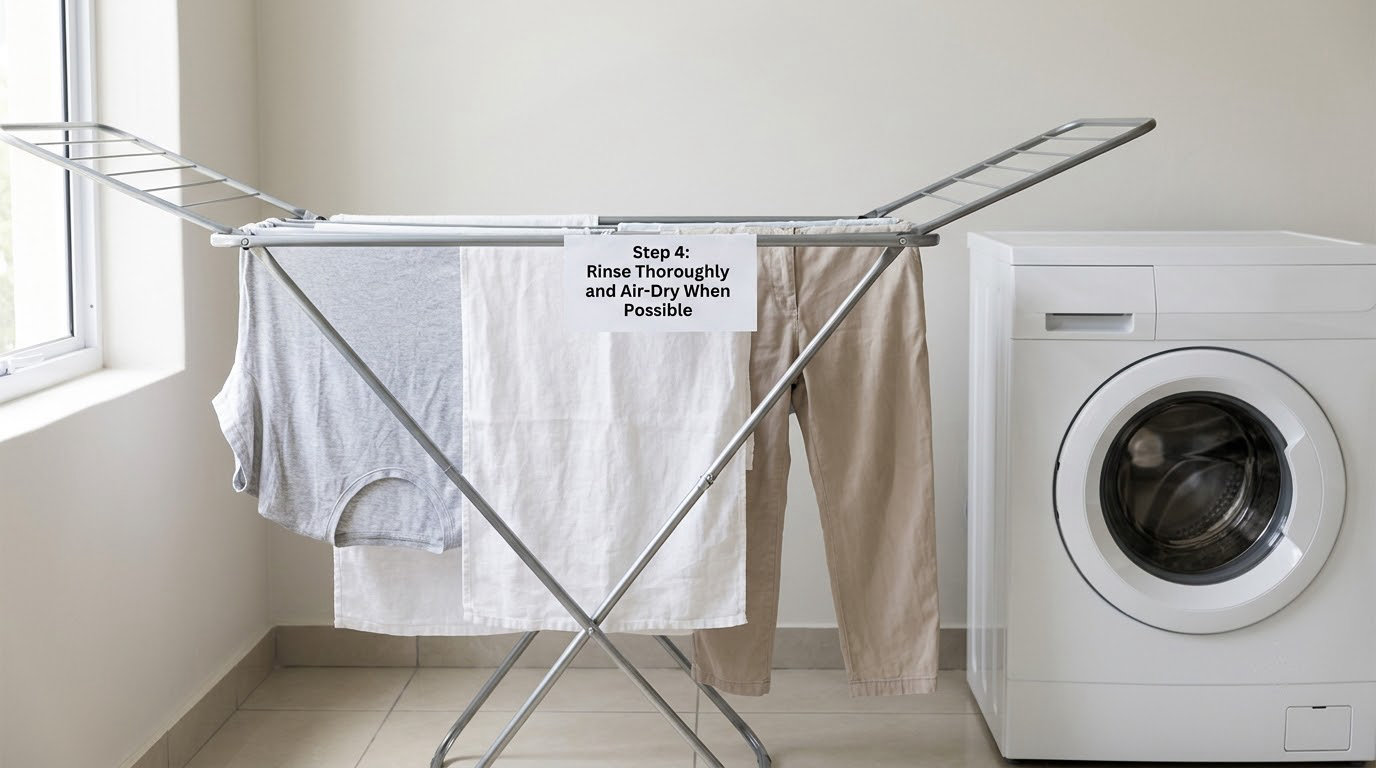
For drying, air drying flat or on a rack is the gentlest option. When the label allows the dryer, use the lowest heat, take items out while they are still slightly damp and let them finish on a rack, and clean the lint filter regularly. Heat sets any residue that survived the rinse. Skip dryer sheets and fabric softener entirely, since both deposit a scented waxy coating that then sits on skin all day; unscented wool dryer balls do the same job of reducing static without adding anything.
How to Strip Fragrance and Softener From Clothes You Already Own
This is the question that comes up most, usually right after someone realizes what was in their last load. The highest-ranked thread on the subject is a forum full of people who have already made that mistake.
Run a soak, not a normal wash. Fill a basin or bathtub with cool water, add a cup of white vinegar, and submerge the affected clothing for an hour or two. Then wash the load as described above with the correct small dose of fragrance-free detergent, cool water and two rinses. Skip the dryer and air dry, because heat sets softener wax into fibers.
For a load that is already badly coated, the advice in one survival-skills forum thread was to hand wash the garments that sit against skin in a bucket with soap and vinegar. For a badly affected towel or hoodie, another pass through the machine with a cup of baking soda in the drum can deodorize what vinegar has stripped. Expect one full cycle to improve things and two or three to clear a heavy buildup.
How to Adjust the Routine for Eczema, Contact Dermatitis and Baby Skin
The base routine above is a solid default. A few situations need a different setting:
- Eczema and atopic dermatitis. Keep the routine as described and add a second rinse on everything that touches skin. For bedding, wash weekly and use hot water where the label allows, since dust mites are a known trigger.
- Contact dermatitis from a suspected allergen. Every scented product in the house is suspect, including body wash, shampoo, lotion and dryer sheets, not just the detergent. Change them all at once or you will not know which one is causing it.
- Psoriasis. The same gentle settings apply, and getting skin barrier function back with a good moisturizer matters as much as the laundry.
- Baby and toddler laundry. Wash everything new before first wear, expect a small number of new rashes to be detergent reactions, and pair the fragrance-free detergent with fragrance-free skin products. Parents on baby forums report the combination of an unscented detergent, an extra rinse and dryer balls instead of softener is what finally worked for their child’s skin.
- Sensory-sensitive skin. For autistic children and adults, the same unscented products matter, and so do the textures and the routine itself. Tagless or cut-out tags, turning seams inside out, and a predictable order to the steps all reduce the reasons a load gets refused. One parent on r/evilautism described pairing fragrance-free detergent with fragrance-free everything else in the house for exactly this reason.
- Shared machines and laundromats. Wash your clothes in a closed bag, run an extra rinse regardless of what the machine offers, and air dry when you can, since a dryer is the easiest way to pick up someone else’s softener.
Common Mistakes
Using more detergent than the load needs. This is the most common mistake and the most likely to keep residue in the fabric. More suds means more cleaner, not more clean. Half the dose you use now, plus an extra rinse, is more effective for reactive skin.
Switching to hot water to kill the itch. Heat is not a treatment. It strips skin oils, sets protein stains and drives fragrance deeper into fibers. Drop to cool or lukewarm and let the extra rinse do the work.
Washing new clothes with your old ones. New garments shed dyes, sizing and finishing chemicals that then spread through the whole load. Wash new items separately first, before anyone wears them.
Skipping the care label. Delicates, wool and synthetics need a gentler cycle than a t-shirt. A label that says cold and gentle is telling you the truth.
Storing laundry folded while it is still damp. A warm, damp pile is a good place for mildew smell, and a scented fabric that has not fully dried keeps its fragrance concentrated. Dry fully before folding, and clean the lint filter so dryer heat and residue do not build up.
Keeping softener and dryer sheets on the shelf. They are the most commonly used irritant that nobody suspects, because they smell like the cleanest thing in the house. Replace them with unscented dryer balls, and run the next load with extra rinses.
Frequently Asked Questions
What is the safest laundry detergent to use for sensitive skin?
The safest choice is a fragrance-free, dye-free detergent with no optical brighteners, used at the correct dose in cool water with an extra rinse. Look for third-party marks such as the National Eczema Association Seal of Acceptance rather than self-declared words like gentle or hypoallergenic, which are not regulated. No detergent is safe for every person, so patch test and change one product at a time.
How do I stop my clothes from being itchy?
Stop the softener and dryer sheets first, then wash the affected load cool with a fragrance-free detergent at half your usual dose and two full rinses. Air dry instead of using heat, which sets any remaining residue. If clothes still smell faintly rather than smelling like nothing, soak them in a basin of cool water with a cup of white vinegar for an hour before re-washing.
What does a laundry detergent allergy rash look like?
Contact dermatitis from laundry usually shows up as itchy, red, dry or bumpy patches on the areas that touch clothing, such as the waist, back, neckline, armpits and upper thighs. It can also appear where a waistband or elastic sits. The pattern often matches where the fabric rubbed hardest, which is a useful clue. See a dermatologist for anything spreading, oozing or not improving.
How long does it take for a laundry detergent rash to go away?
Once you stop the offending product and rinse the clothes, mild irritation usually calms within one to two weeks. Itching often improves within a few days of that, while redness can linger longer because the skin barrier takes time to recover. Keep moisturizing, and book a dermatologist appointment if there is no improvement after two to three weeks or the rash spreads.
Can fabric softener and dryer sheets cause a rash?
Yes, and they are among the most common culprits because most people never consider them. Both deposit a scented, waxy coating onto fabric that then stays in contact with skin all day, and many formulas contain fragrance and preservatives. Skip both entirely, use unscented dryer balls for static, and run your next load with an extra rinse to clear what is already in the clothes.
Should I wash new clothes before wearing them?
Yes, and it matters most for new underwear, sleepwear, baby items and anything worn over broken or eczema-prone skin. New garments carry dyes, sizing agents and finishing resins that mostly rinse out in the first wash but can trigger a reaction on first wear. Wash new items separately on a cool, gentle cycle with a small dose of fragrance-free detergent and an extra rinse.
Start with the softener and the water temperature, since those two changes cost nothing and settle the question fastest. Once a load has washed cool with a fragrance-free detergent and two rinses, and nothing has been added to the dryer, you will know within a few days whether your skin was reacting to the laundry or to something else. If it was not, a dermatologist can help you work out what was.