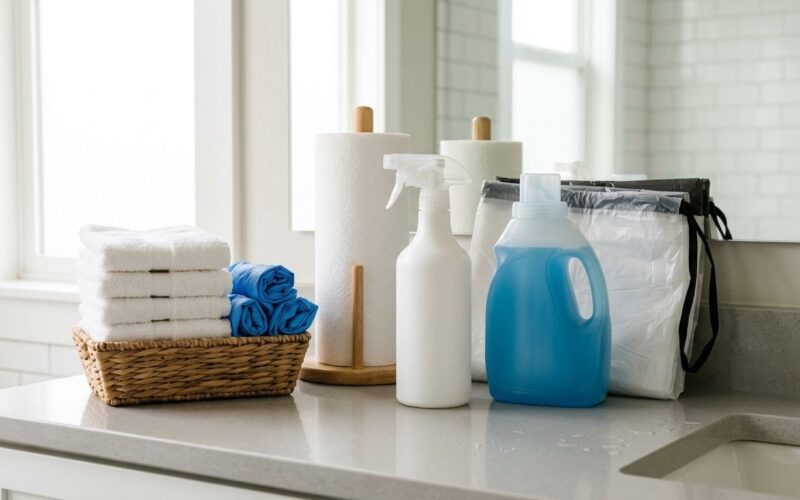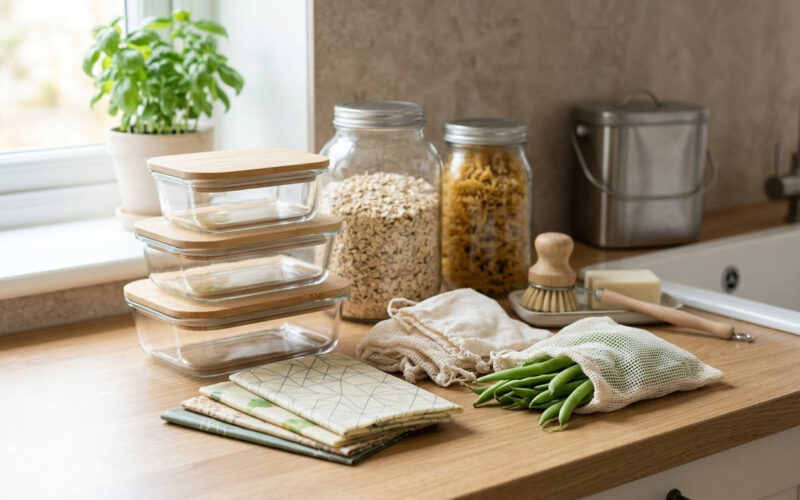
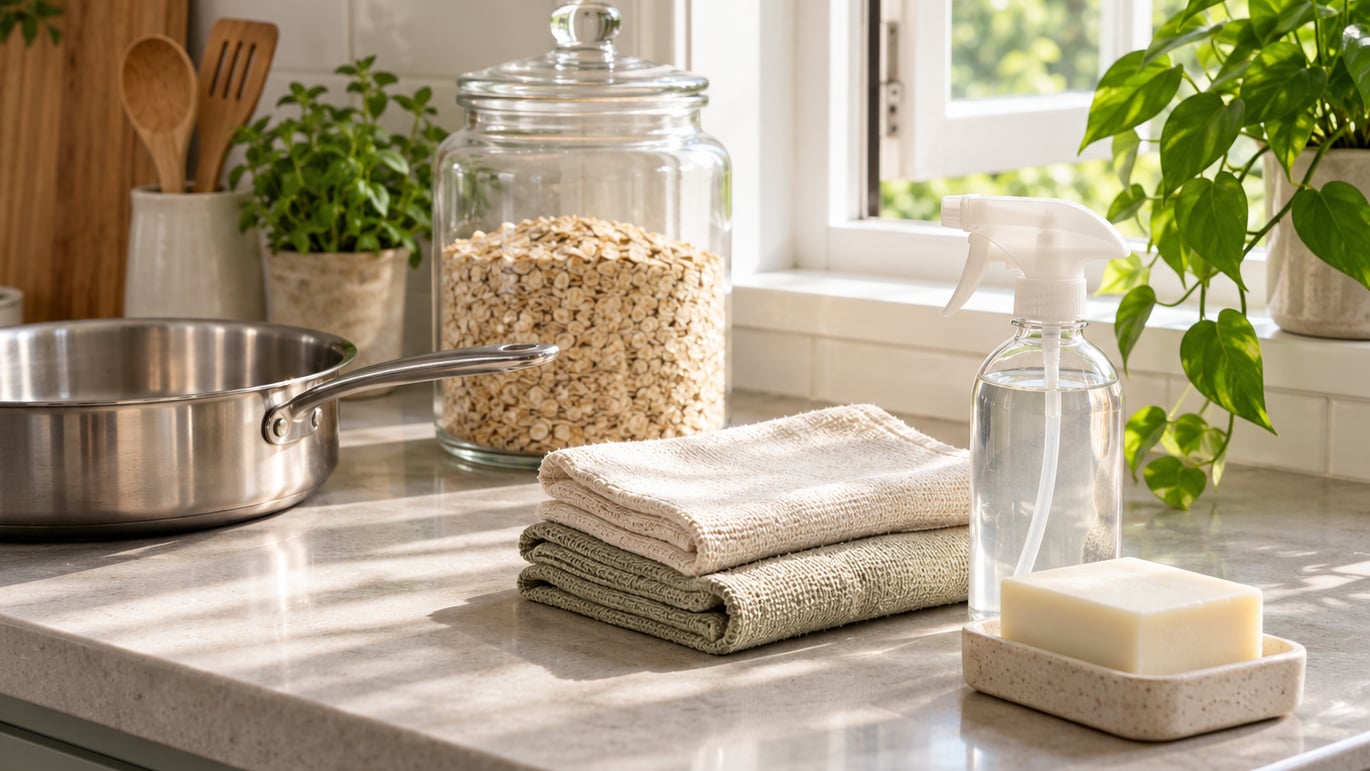
Low tox swaps for beginners are simply everyday products you exchange one at a time, so your family touches fewer synthetic chemicals in a normal week. Most people start with fragrance, cookware, plastic food storage, and laundry scent, because those are the items handled most often. You do not need a new house, a big budget, or a purge day to start. One swap, one room, one week.
There is a lot of noise around this topic, and most of it arrives at the same moment: you read one article claiming your shower curtain is dangerous, then another saying your air purifier is a waste of money. Both can be true. Low tox living is a gradient, not a pass or fail test.
What follows is the version I wish someone had handed me before I started, built around ten swaps that actually change daily exposure instead of ten swaps that mostly reorganize a pantry.
Table of Contents
- Low Tox Swaps for Beginners at a Glance
- 1. Switch Your Everyday Cleaner
- How to read a cleaner label when you swap
- 2. Replace Fragranced Laundry Products
- 3. Choose Safer Cookware for Everyday Meals
- 4. Store Food Without Relying on Plastic Containers
- 5. Make the Laundry and Cleaning Routine Fragrance-Free
- 6. Simplify Personal Care Products
- 7. Improve Indoor Air Without Buying a Purifier First
- 8. Replace Scented Candles and Home Fragrances
- 9. Choose Lower-Risk Pest-Control Strategies
- 10. Make One Room Your Low-Tox Starting Point
- Frequently Asked Questions
- What are some easy non-toxic swaps I can make?
- What is the most effective non-toxic cleaner that actually works?
- What brands are actually non-toxic?
- How do I make my home non-toxic?
- Is non-toxic living expensive?
- Are non-toxic home products worth it?
- Start With One Small, Safe Change
Low Tox Swaps for Beginners at a Glance
| Swap | Usual habit replaced | Starter alternative | Begin here | Effort |
|---|---|---|---|---|
| Everyday cleaner | Fragranced spray under the sink | Fragrance-free concentrate refill plus a cloth | Kitchen | Low |
| Laundry scent | Scented detergent and dryer sheets | Unscented detergent, air-dry where practical | Laundry room | Low |
| Cookware | Worn nonstick pan | Stainless steel or cast iron you already own | Kitchen | Medium |
| Food storage | Scratched plastic tubs and bags | Glass or stainless containers | Kitchen | Medium |
| Fragrance-free routine | Scent carried room to room | One unscented product per room, plus airflow | Bathroom | Low |
| Personal care | Layered scented products | Fewer, fragrance-free basics | Bathroom | Low |
| Indoor air | Odor masked with more scent | Ventilation, source control, dusting | Bedroom | Low |
| Home fragrance | Candles and diffusers | Fresh air, unscented wax, simple decor | Living room | Low |
| Pest control | Routine spray treatments | Prevention, sealed entry points, traps | Whole home | Medium |
| One-room plan | All-or-nothing overhaul | Seven days, one room, small budget | Entryway | Low |
If you only do three things this month, do the cleaner, the dryer sheets, and one plastic container swap. Those three touch skin, air, and food, which is where most daily exposure happens anyway.
1. Switch Your Everyday Cleaner
The single biggest change for most families is the product under the sink. Conventional sprays and wipes often carry synthetic fragrance, and fragrance is the one ingredient family that shows up in nearly every category, from degreasers to laundry boosters.
You have three practical routes. Buy a fragrance-free or unscented cleaner from a brand that lists its full ingredients. Switch to a concentrate you dilute in a reused spray bottle, which cuts packaging and usually costs less per use. Or use tools plus simple ingredients, which is what a lot of parents in the low-tox parenting forums land on: vinegar and water for most surfaces, baking soda for scrubbing, and a washable microfiber or cotton cloth for the wipe-down.
How to read a cleaner label when you swap
Turn the bottle around and read the ingredient list rather than the front panel. Five checks help: look for the word fragrance or parfum, which legally can cover dozens of separate chemicals; note whether the product says nothing about fragrance either way; check for dyes that have no purpose beyond color; check whether the container is refillable; and confirm the label gives directions for use and disposal rather than vague marketing.
Two habits matter more than brand names. Never mix cleaning products, even ones you trust, and always open a window. Ventilation is free, it takes ten seconds, and it does more for air quality than most products you can buy.
Change one thing at a time. Swapping the bathroom cleaner on a Sunday and noticing the grout actually comes clean tells you far more than reading a label.
2. Replace Fragranced Laundry Products
Laundry is quietly the most fragrance-heavy room in a home, because scent is added at three separate points. Detergent, fabric softener, and dryer sheets each layer their own aroma onto the same load of clothing.
Start by dropping the dryer sheets, since they are purely optional and exist to add scent. Then move to unscented or fragrance-free detergent, and treat any laundry product already on your shelves as a “use it up” item rather than a trash item. Forum regulars consistently say finishing what you own beats binning a half-used bottle, both financially and in terms of actually sticking with the change.
Air-drying does more than skip the dryer. It removes the scent source entirely for that load, and for families dealing with eczema or a chemical sensitivity, unscented fabric that has not been through a scented dryer is often the thing that finally makes sleep better.
Patch test before you commit. Rub a small amount of the new detergent on the inside of a forearm, leave it for 24 hours, and repeat that on a small swatch of the child’s clothing if you are switching what goes against their skin. A family member tolerating a product is not evidence that a baby or an eczema-prone child will.
3. Choose Safer Cookware for Everyday Meals
Cookware advice gets presented as a verdict on materials, which is misleading. A well-maintained stainless steel pot is a low-tox workhorse; an old nonstick pan flaking into your eggs is a different situation entirely. Condition and care history matter as much as what the pan is made of.
Think about when replacement actually makes sense. The surface is flaking, peeling, or visibly scratched. The coating no longer releases food, which means the nonstick layer has worn down. Or the handle is loose, which is a safety issue before it is a chemistry issue.
Before you buy anything, read the manufacturer’s care instructions, because most coating complaints come from overheating, empty-pan cooking, or metal utensils, and all three are avoidable. Set the stovetop to medium heat, use wood or silicone tools, and let a pan cool before washing it. A pan maintained correctly can last a decade or more.
Budget route: use what you already have. Stainless steel that is a little stained still works. Cast iron that has been reseasoned is worth more than a new pan you will not use. Only buy when the condition genuinely fails.
The same logic runs through your pantry. Baking is another high-heat contact point, and if you are adapting recipes at the same time, how to replace eggs in baking covers the substitutions that matter for texture.
4. Store Food Without Relying on Plastic Containers
Plastic food storage is where a gradual plan beats a total ban. Every family I have seen attempt a full purge ends up buying takeaway containers again by week three, because plastic is genuinely convenient.
Set a simple rule instead. Replace containers that are scratched, cracked, warped, or discolored, and stop buying plastic for the two things you use daily. Keep using the rest until they wear out. That approach changes your household’s plastic exposure over two years instead of forcing a reset you will abandon.
Glass containers with screw lids and stainless steel are the workhorse replacements, and both tolerate heat better than plastic for foods that go from fridge to table. For transport, silicone bags or stainless jars with clip lids cover the lunchbox problem without disposables.
A few real-world food safety reminders matter more than the container material. Cool hot food before you seal it in a container. Refrigerate perishables within two hours, and check leftovers within three to four days. Transfer food to a clean surface rather than cutting it inside a worn container. If you use a plastic container, check the bottom for a recycling symbol and replace it once the plastic looks cloudy or dull.
5. Make the Laundry and Cleaning Routine Fragrance-Free
The reason fragrance-free living feels hard is that people try to change every product in a single week. Room by room works better, because you can finish one room, live with it, and notice whether you actually prefer it.
Laundry room: finish your scented products, then buy unscented detergent and drop the softener and dryer sheets. Bathroom: replace the scented soap, the scented toilet cleaner, and any air freshener sitting on the cistern. Entryway: this is where outdoor coats, muddy shoes, and wet umbrellas collect scent. A washable mat and a basket handle most of it without any product at all.
Spotting hidden fragrance takes ten seconds. On any label, look for fragrance, parfum, or aroma. If the front panel says lavender, vanilla, or fresh linen and the back lists none of those plant names, the scent came from a blend you cannot see.
When a room feels flat without scent, improve the room rather than refill the scent. Wash the textiles, open a window, run a fan, and let it be plain for a week. Most people stop noticing the absence within days.
6. Simplify Personal Care Products
Personal care is where fragrance load gets heaviest, because products are used on skin daily and often layered: soap, lotion, deodorant, shampoo, and a scented body spray over the top.
The lowest-effort swap is removal. Cutting the number of products applied after a shower does more than swapping three of them. What remains should be fragrance-free, dye-free, and short enough to read on the label.
Deodorant is the category people ask about most, because natural versions fail often. Expect a two-week adjustment period with baking soda or mineral-based formulas, and keep a backup for the days you need it. Oral care is a separate question: brushing with fluoride toothpaste is standard dental guidance, so talk to your dentist before switching, especially for a child.
Patch test everything new, one product at a time, so if a reaction happens you know exactly which product caused it. Skip anything making a medical or skin-treatment claim, since that is a clinician’s job, not a shopping decision. Persistent itching, rashes, or swelling are worth a doctor or dermatologist appointment, and they can order patch testing that is far more precise than guessing at home.
7. Improve Indoor Air Without Buying a Purifier First
People often reach for a large air cleaner first, which is the most expensive and least effective starting point. Air quality problems usually start with a source, not with the air itself.
Work through the sources in order. Identify the trigger: cigarette smoke or vaping, candles or incense, strong cleaning scent, pet dander, excess humidity from long showers and drying laundry indoors, or a slow dryer vent. Fix the source and a surprising number of problems shrink.
Then do the boring things that genuinely help. Run a range hood when cooking. Open two windows on opposite sides of a home for a few minutes. Dust with a damp cloth on a weekly rhythm, because dust is a carrier rather than the culprit. Run the bathroom exhaust fan during and for a while after a shower. Keep humidity in a reasonable range with a cheap hygrometer and a dehumidifier only if you need one.
Only then consider a device. Match it to the room and the actual problem: a HEPA-style unit for fine particles and dander, activated carbon for odors and gases. Keep filters on a schedule, because a clogged filter is a decoration. And if rentals or budgets are tight, note that low tox swaps for renters are mostly free: open windows, a fan, and removing the scented product in the corner.
8. Replace Scented Candles and Home Fragrances
Reed diffusers, potpourri, scented candles, wax melts, and aerosol air fresheners add scent continuously, without your consent or a stop button. That is the main argument for dropping them, and it holds regardless of how a specific brand markets itself.
Replacements are boring and effective. Unscented candles in a plain wax, a small jar of dried stems or eucalyptus, a bowl of citrus peel refreshed weekly, or nothing at all with a window open. If you enjoy a scent, a single unscented-base candle lit briefly after cooking reads very differently from a diffuser running all day.
Fire safety first: keep anything burning away from curtains and kids’ reach, trim wicks, use a stable holder, and never leave a candle unattended. Ventilation still applies, and dousing scent with scent is not ventilation.
One honest caveat: an unscented home is not automatically better for everyone. Some people genuinely find a completely neutral house harder to feel comfortable in. If that is you, keep one fragrance point instead of none, just choose one and use it sparingly.
9. Choose Lower-Risk Pest-Control Strategies
Pest control is where low-tox beginners most often take an unnecessary risk, because visible evidence of insects creates real urgency. Prevention handles most of it without spraying anything.
Work from the basics. Store food in sealed containers rather than open bags. Take out rubbish regularly and rinse containers before recycling. Vacuum crumbs, especially under appliances, and clean under the sink. Wipe down entry points and seal gaps around pipes, baseboards, doors, and window frames. Fix a dripping tap, because standing water attracts pests faster than anything you can buy. Set traps in the areas you actually see signs of activity, and check them on a schedule.
With any product you do use, read the label for the active ingredient, where it can be applied, how long before surfaces are dry, and what to do if someone swallows it. Keep every pesticide locked away, out of sight and out of reach of children and pets, and never transfer it into an unlabeled food or drink container. That last point causes more accidental exposures than anything else in a home.
Know the line. If you see structural damage, you are dealing with termites or rodents you cannot trap, or a persistent infestation that keeps coming back, call a licensed professional. Repeatedly applying the same product to the same surface is a strong sign you have hit that line.
10. Make One Room Your Low-Tox Starting Point
Aim at the entryway for your first week. It is small, you use it constantly, it mixes outdoor scent with indoor air, and it needs almost no money to improve.
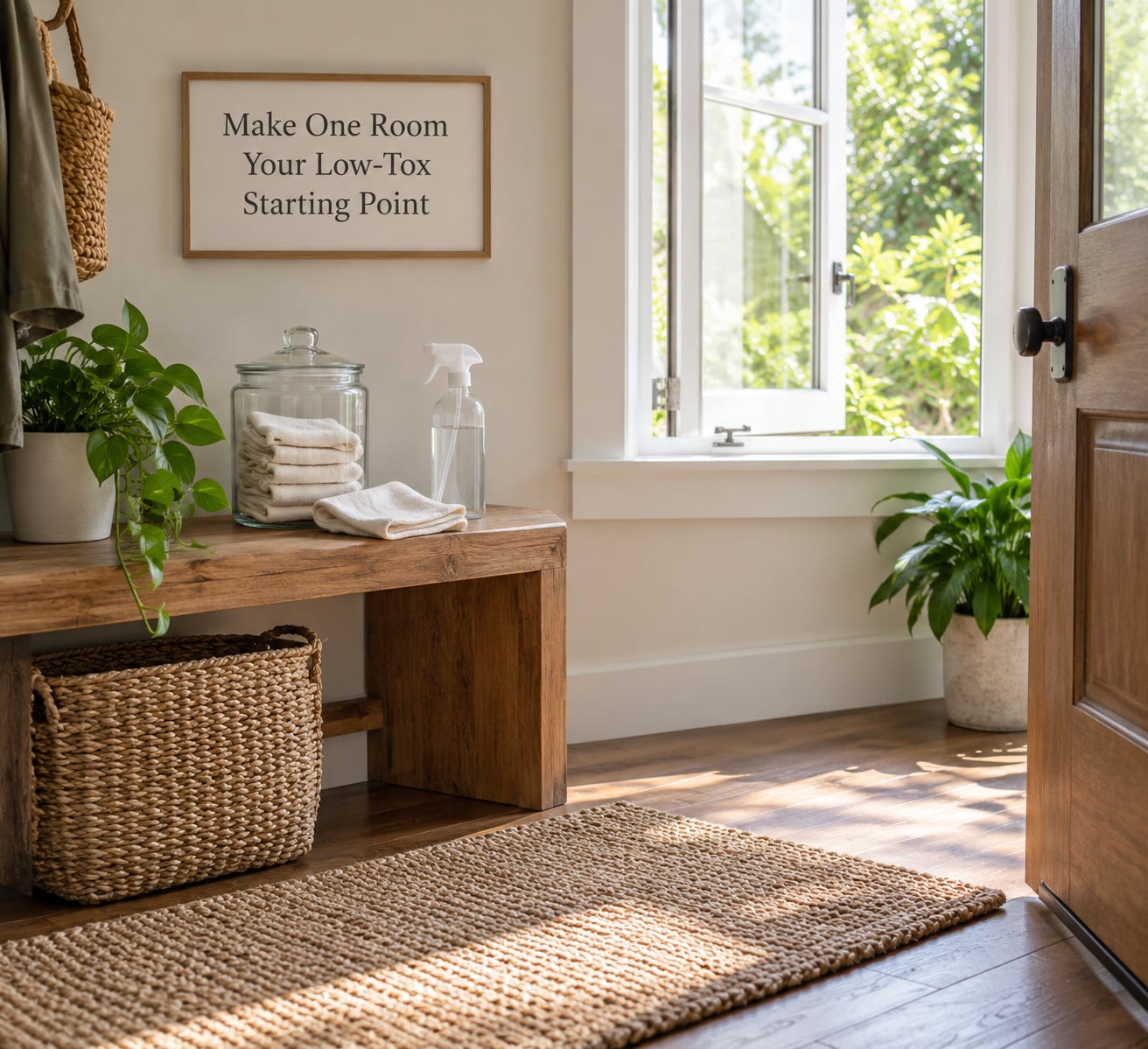
Here is the seven-day version. On day one, empty the closet corner and remove anything scented. Day two, gather the products you already own: a glass jar for a cleaning tablet or a small vinegar bottle, a stack of washable cloths, a hand broom. Day three, wash the mat, the doormat, and any reusable bags. Day four, swap the air freshener for a small unscented candle or a jar of dried stems. Day five, move shoes to a closed bin and wipe the shelves. Day six, vacuum or sweep under the bench. Day seven, open the window for ten minutes and decide what stays.
Keep the supply list short, because short is what makes it repeatable: one refillable spray bottle, a glass jar, three or four cloths, a washable mat, and one unscented product.
Check the same five things at the end of the week. Is the room still clean enough for daily life? Did anything cost more than you planned? Do you still notice the products, or did you stop seeing them? Is anything harder than before? Could you keep this up with no motivation on a Tuesday? If the honest answer is no, simplify that part rather than abandoning the swap.
Frequently Asked Questions
What are some easy non-toxic swaps I can make?
The easiest swaps are the ones that take one purchase and no new habit: drop dryer sheets, move to an unscented laundry detergent, replace one scented bathroom product, and swap a scratched plastic container for glass. None of these require a different routine. People in low-tox parenting communities say sequencing matters most, doing one swap until it feels normal before starting the next.
What is the most effective non-toxic cleaner that actually works?
For most surfaces, plain vinegar diluted in water with a washable cloth handles the job, and baking soda covers scrubbing. Castile soap is the option for surfaces where vinegar smell lingers or where you want grease cutting. The key is technique and time, not a premium brand: warm water, a proper scrub, and thirty seconds of contact. Always open a window, and never mix products.
What brands are actually non-toxic?
There is no regulatory definition of non-toxic in cleaning or personal care, so treat the word as marketing until proven otherwise. Look for brands that publish a full ingredient list rather than a marketing summary, offer refills, and have third-party certifications with a named certifying body you can look up. A short, readable ingredient list is a better signal than a long claim on the front of a bottle.
How do I make my home non-toxic?
Work room by room and one product at a time, starting where exposure is highest: food storage, cookware, cleaning, and personal care. Read ingredient lists on the back of every bottle, replace items that are worn or nearly empty rather than tossing full ones, and open a window while you clean. Aim for a routine you will still be following in six months rather than a perfect month.
Is non-toxic living expensive?
Not necessarily. Concentrates you dilute, refills, washable cloths, glass and stainless containers you already own, air-drying, and using each product until it is finished all lower the cost. The real expense comes from replacing good equipment with premium duplicates and from throwing away products that still had life left in them.
Are non-toxic home products worth it?
The ones that replace frequent contact points tend to be worth it: unscented laundry and cleaning products, better cookware when a pan has worn out, and food storage you use daily. The ones that matter less are novelty items used once a month. Judge each swap by how often your family touches it rather than by how alarming the label on the internet sounds.
Start With One Small, Safe Change
Pick one product or one room before you close this page. Set a seven-day trial, and at the end of it ask two questions: does the routine still work, and would I have minded if I had never started? If the answer to the second one is yes, you found a swap worth keeping.
Then add another one, and another. Low tox swaps for beginners are not a single dramatic decision, they are a habit of noticing what your family touches every day and choosing better where it is cheap to do so. That is how a home changes without anyone in it feeling overwhelmed.