Dairy-free cheese sauce takes three pantry staples and about ten minutes: a thickener such as flour or cornstarch, nutritional yeast for the savory cheese flavor, and unsweetened plant milk or water. Whisk them together, simmer gently until the sauce coats a spoon, and season it to taste. That is the whole basic method, and everything after it is adjustment.
I make this sauce roughly once a week in our house, which is a household that avoids dairy, gluten and nuts at the same table. The stovetop version below is the one I reach for first because it needs one pot and a whisk, and the leftovers reheat into nachos, broccoli, pasta and loaded fries all week. Read the whole thing once, then pick the base that fits the allergies in your kitchen.
Table of Contents
- What You Need
- What each ingredient actually does
- Step-by-Step: How to Make Dairy-Free Cheese Sauce
- Step 1: Choose Your Dairy-Free Cheese Base
- Step 2: Warm the Plant Milk and Aromatics
- Step 3: Blend or Whisk in the Cheese Flavor
- Step 4: Thicken the Sauce Without Dairy
- Step 5: Finish and Serve the Cheese Sauce
- Common Mistakes and How to Fix Them
- Frequently Asked Questions
- What can I substitute for milk in cheese sauce?
- Can you make dairy free cheese sauce without nutritional yeast?
- Why is my dairy free cheese sauce grainy?
- How do I thicken dairy free cheese sauce?
- How do I melt dairy free cheese without it splitting?
- How long does dairy free cheese sauce keep, and can I freeze it?
- Conclusion
What You Need
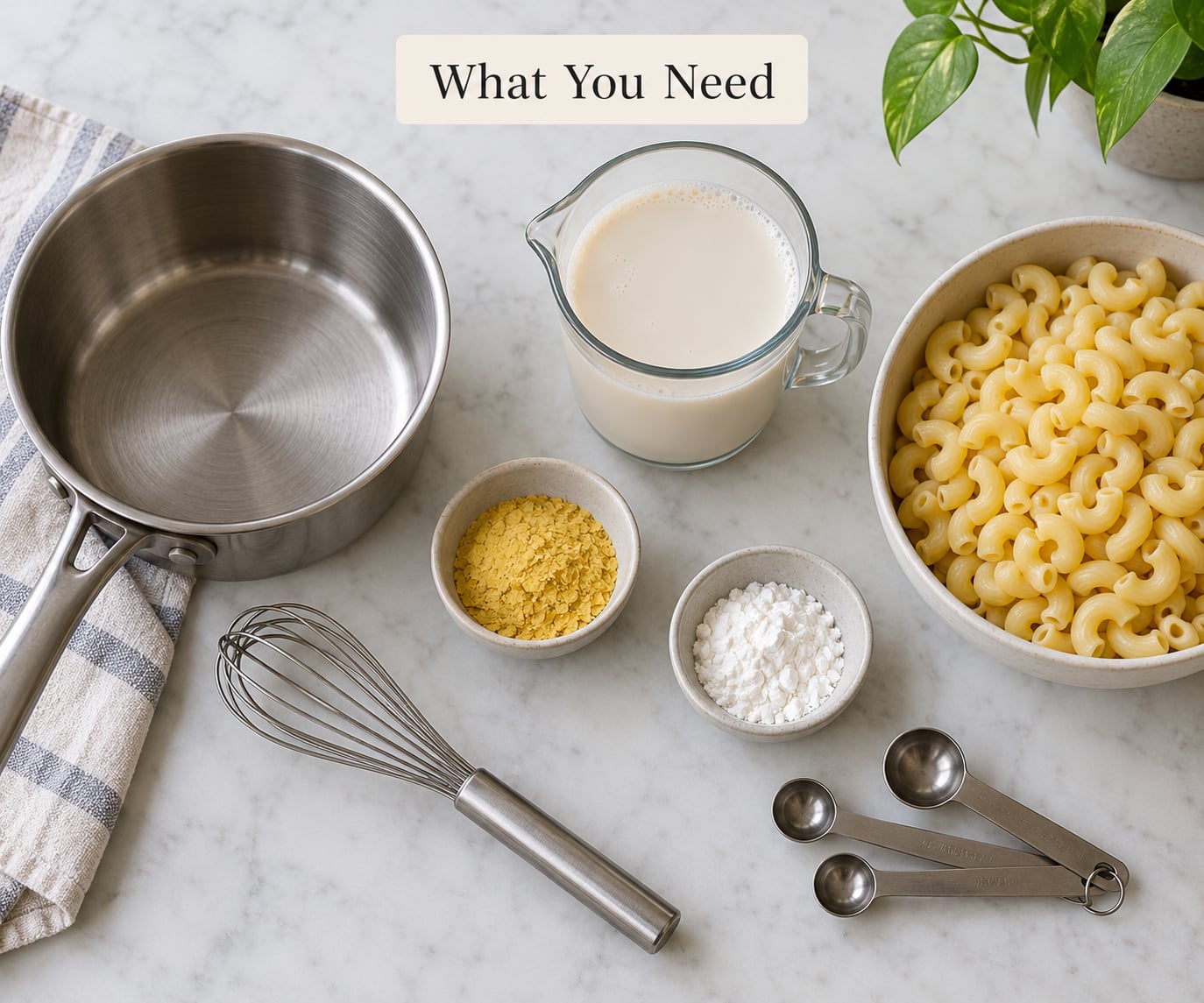
Equipment is short. You need a saucepan, a whisk or fork, a measuring cup and something to strain or serve with. A blender earns its keep only if you are making the cashew or seed base, and even that works in a regular blender as long as you give it more time and expect a slightly coarser texture. A food processor does the same job; a high-speed blender just gets you there faster and smoother.
The ingredient list is deliberately flexible. Here is the core set for the stovetop method in one cup of milk, roughly enough for half a pound of pasta:
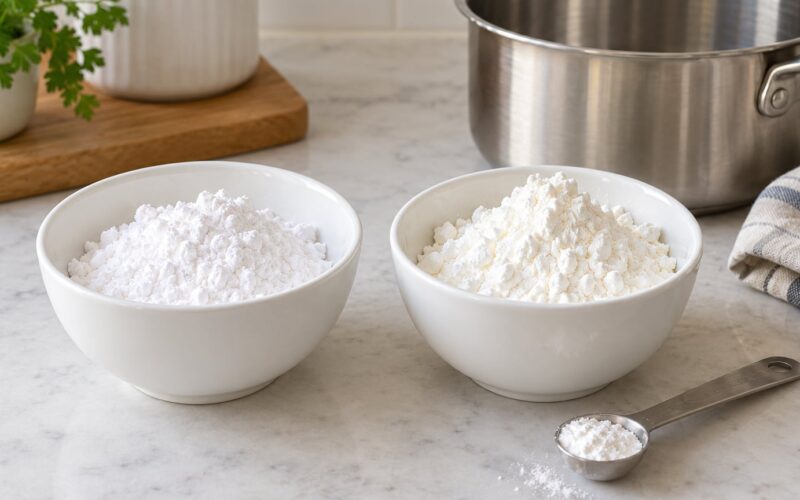
- 2 tablespoons all-purpose flour (about 16 g), or 3 tablespoons cornstarch (about 24 g)
- 1 cup unsweetened plant milk (240 ml), oat or soy both work well, or water for a nut-free and soy-free version
- 3 tablespoons nutritional yeast (about 15 g), plus more to taste
- 1 tablespoon neutral oil (about 14 ml), such as grapeseed, canola or light olive oil
- 1 teaspoon apple cider vinegar or fresh lemon juice
- 1 teaspoon Dijon mustard or ground mustard powder
- 1/2 teaspoon garlic powder, 1/2 teaspoon onion powder, 3/4 teaspoon fine salt
- Black pepper, and smoked paprika or chili powder if you want heat
Nutritional yeast is the ingredient people skip when they do not like the flavor, and skipping it is the single biggest reason a homemade sauce tastes flat and vaguely mushroomy. It is deactivated, heat-treated baker’s yeast, usually fortified with B vitamins including B12, sold as flakes or as a finer powder. Flakes look more like grated cheese and do not dissolve as completely, which some people prefer texturally. Powder disperses cleanly into a smooth sauce. If yeast is a problem for your household, the troubleshooting section covers how to push cheesiness without it.
What each ingredient actually does
| Ingredient | Job it does | Easy swaps |
|---|---|---|
| Flour or starch | Thickens. Flour gives a slightly heavier body and holds flavor, starch gives a cleaner shine and coats more smoothly | Cornstarch, tapioca starch, arrowroot, potato starch, or a gluten-free 1-to-1 flour blend |
| Plant milk | The liquid that carries everything, with a little extra richness from the fat in oat or soy milk | Unsweetened soy, oat or almond milk, or plain water for a soy-free and nut-free sauce |
| Nutritional yeast | The savory, nutty cheese flavor and a hit of umami | Miso, white bean purée, roasted garlic, extra salt and a little more mustard |
| Oil or plant butter | Richness and a glossy finish; it also slows the sauce from tightening as it cools | Neutral oil, melted vegan butter, or leave it out for an oil-free version |
| Acid | Brightness. Without it the sauce tastes flat no matter how much salt you add | Apple cider vinegar, fresh lemon juice, rice vinegar, or distilled vinegar |
| Mustard | Depth and a little emulsifying help that keeps the sauce from separating | Dijon, spicy brown mustard, or ground mustard powder. Avoid sweet yellow mustard, it is too mild and sugary |
| Turmeric, optional | Color, not flavor. A pinch turns a pale sauce golden-orange | Skip it, or use a small amount of smoked paprika for color plus warmth |
Labels matter more here than in almost any other recipe. Plant milks vary enormously, and some contain milk protein, casein or whey even when they advertise as dairy-free, so check for milk, casein, whey and sodium alginate if you are avoiding all of them. Starches are sometimes blended with wheat, which matters if gluten is a concern, and nutritional yeast is a yeast product, which matters for anyone avoiding yeast. Baking with these same milks? Our guide to dairy-free substitutes for milk in baking goes into how each one behaves in heat and browning.
Step-by-Step: How to Make Dairy-Free Cheese Sauce
Step 1: Choose Your Dairy-Free Cheese Base
Three bases cover almost every household. A stovetop white-sauce base, sometimes called a roux-less sauce because you whisk the thickener in liquid instead of cooking it into fat first, takes ten minutes and needs no blender. A blended base of cashews, or potatoes and carrots, gives the silkiest texture of the three and costs more. A seed or white bean base is the allergy-safe option when nuts, soy and gluten all need to stay out of the kitchen.
Choose the stovetop base for weeknight pasta, nachos and anything you want ready in under fifteen minutes. Choose the blended base when the dish is the main event, such as mac and cheese or a baked potato, because the texture is noticeably silkier. Choose the seed or bean base when cross-contact risk is the reason you are cooking dairy-free at all, since a saucepan, a whisk and a handful of pantry ingredients carry almost no risk of bringing nuts into the dish.
Whisk the dry ingredients first, before any liquid goes in. Flour, starch, nutritional yeast, salt, garlic powder and onion powder combined in the cold pan means nothing sits on the bottom to scorch and nothing clumps. You will notice the difference within the first thirty seconds of heating.
Step 2: Warm the Plant Milk and Aromatics
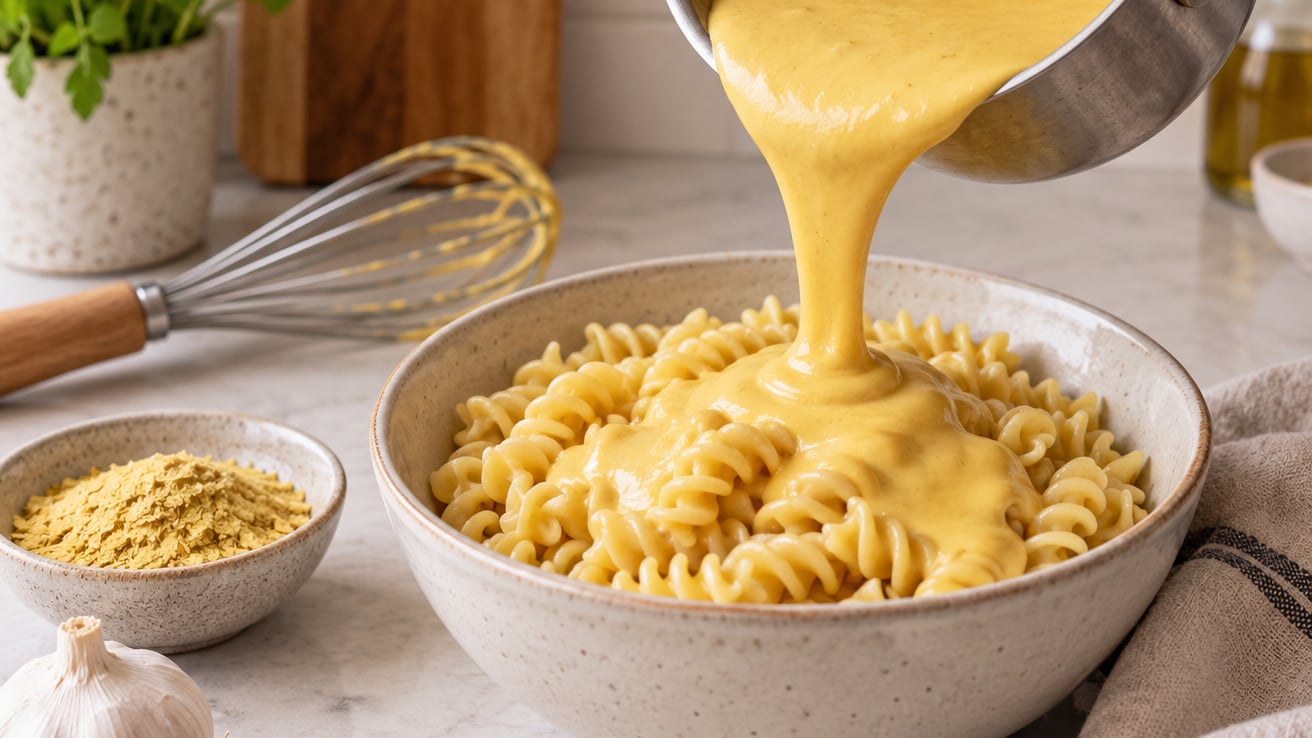
Pour the milk or water into the dry mixture and whisk until every white pocket of flour is gone. Set it over medium-low heat and keep whisking, slowly, as it warms. You do not want a hard boil, which is where dairy-free sauces most often go wrong: the starch breaks down, the sauce turns loose and slick, and the flavor flattens all at once.
Use a pinch of warmth as your cue rather than a clock. The surface will just start to show small bubbles around the edge of the pan, roughly 160 to 180°F, and the sauce will have thickened enough to leave a faint trail when the whisk lifts. From a cold start on medium-low that usually takes four to six minutes. If you can see steam pouring off the surface, turn the heat down.
Add the Dijon mustard and the vinegar or lemon juice now, while the sauce is still warm and thin. Mustard needs heat to bloom and lose its raw edge, and the acid disperses better before the sauce thickens around it. Add garlic powder and onion powder at this point too for the same reason, and hold back the paprika and chili powder until the end so they keep their color.
Step 3: Blend or Whisk in the Cheese Flavor
Nutritional yeast goes in gradually. Add a third of it now, whisk it fully into the warm base, then taste before adding more. Yeast added all at once tends to sit in dry pockets and taste dusty in spots rather than dissolving evenly, which is one of the main reasons readers tell me their sauce tastes powdery.
Judge seasoning here, while the sauce can still loosen. It should taste a little sharper and a little more intense than you want it to eat like, because thickening concentrates flavor. If it is flat, the answer is usually acid rather than more salt. A quarter teaspoon more vinegar or lemon, stirred in off the heat, does more than a quarter teaspoon more salt.
If you are making the blended base instead, the sequence is different and worth learning because the result is much creamier. Soak a quarter cup of raw cashews in hot water for 20 minutes, or in cold water overnight. Simmer a cup of diced potatoes and a quarter cup of carrots for 12 to 15 minutes until a knife slides in with no resistance. Drain, then blend the cashews and vegetables with a third cup of water, the nutritional yeast, the oil and the seasonings for a full minute, scraping down twice. The vegetables are there for body and sweetness, not flavor, which is why carrot gets paired with them so often. For a nut-free version, swap the cashews for boiled sunflower seeds and add 2 tablespoons of tapioca starch for stretch.
For the melted version, if you already have a block or bag of dairy-free cheese, skip all of this. Shred 8 ounces, put it in a low skillet with 3 to 4 tablespoons of unsweetened plant milk and 1 teaspoon cornstarch, and stir over low heat until it turns glossy and pourable. Do not boil it and do not crank the heat, because plant-based cheese proteins tighten when they get hot and then the sauce seizes into strands. Low heat, patience and a splash of extra milk are the whole technique.
Step 4: Thicken the Sauce Without Dairy
Dairy-free sauce thickens with starch rather than with protein, so it responds to heat, whisking and time instead of to temperature alone. Keep the burner on medium-low and keep the whisk moving for another two to three minutes after the first bubbles appear. Test by dragging a clean finger across the back of the spoon held sideways. If it leaves a clear line that stays put, the sauce is done. If the line fills back in, it needs another minute.
If it is still loose, stir in a slurry rather than loose starch. Mix 1 tablespoon of cornstarch or tapioca starch with 2 tablespoons of cold water, pour it in, and whisk for a full minute before you judge it again. Cornstarch thickens into a glossy sauce that drapes; tapioca starch thickens more subtly and is the one that stretches when it cools, which is why it is the better choice for mac and cheese and pizza. Cornstarch will not stretch, no matter how long you cook it, and that is the trade-off most people hit without knowing it happened.
Thickening by reduction works too. Raise the heat a notch and keep simmering for another three to five minutes, stirring often, and the sauce will tighten as water evaporates. It thickens noticeably more as it cools, so pull it off the heat while it still looks a fraction looser than you want.
Step 5: Finish and Serve the Cheese Sauce
Off the heat, stir in the oil or melted vegan butter, a final pinch of salt and any paprika, chili powder or sriracha. Taste again now that it has thickened, and add acid if it tastes heavy. For kids, hold back the paprika and the heat entirely and add a quarter teaspoon turmeric for the golden color that makes sauce look like cheese rather than like a pale vegetable puree.
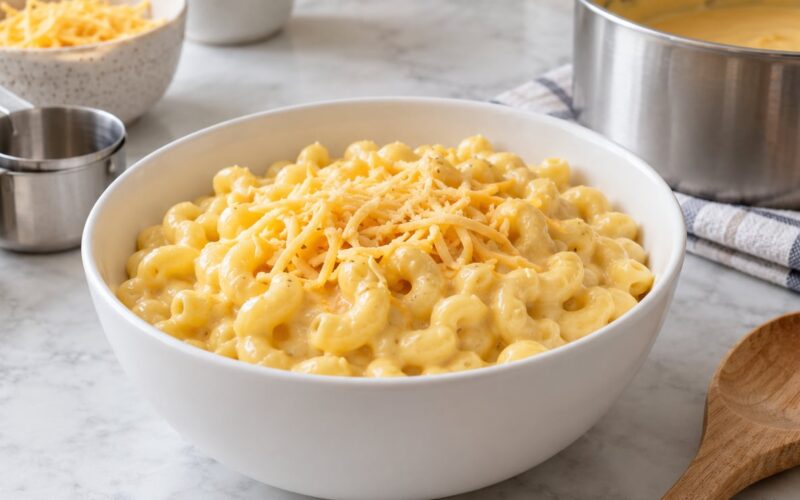
Serve it warm over pasta, spooned onto roasted broccoli and cauliflower, drizzled on a baked potato, or as a dip for tortilla chips. If you are packing it for school, a small screw-top container holds it well and a handful of crackers or crudites makes it a real lunchbox meal. More ideas for packed lunches that work in allergy-aware kitchens are in our dairy-free lunchbox ideas for school.
Refrigerate leftovers in a sealed container for up to three to four days, and use them within that window. Freeze in an ice cube tray or a small container for up to three months, then reheat a cube at a time. Reheating on the stovetop with a splash of water or plant milk, stirring constantly over low heat, brings it back to pourable. The microwave works, but stir halfway through, because starch-thickened sauce heats unevenly and gets hot at the edges before the middle loosens.
Common Mistakes and How to Fix Them
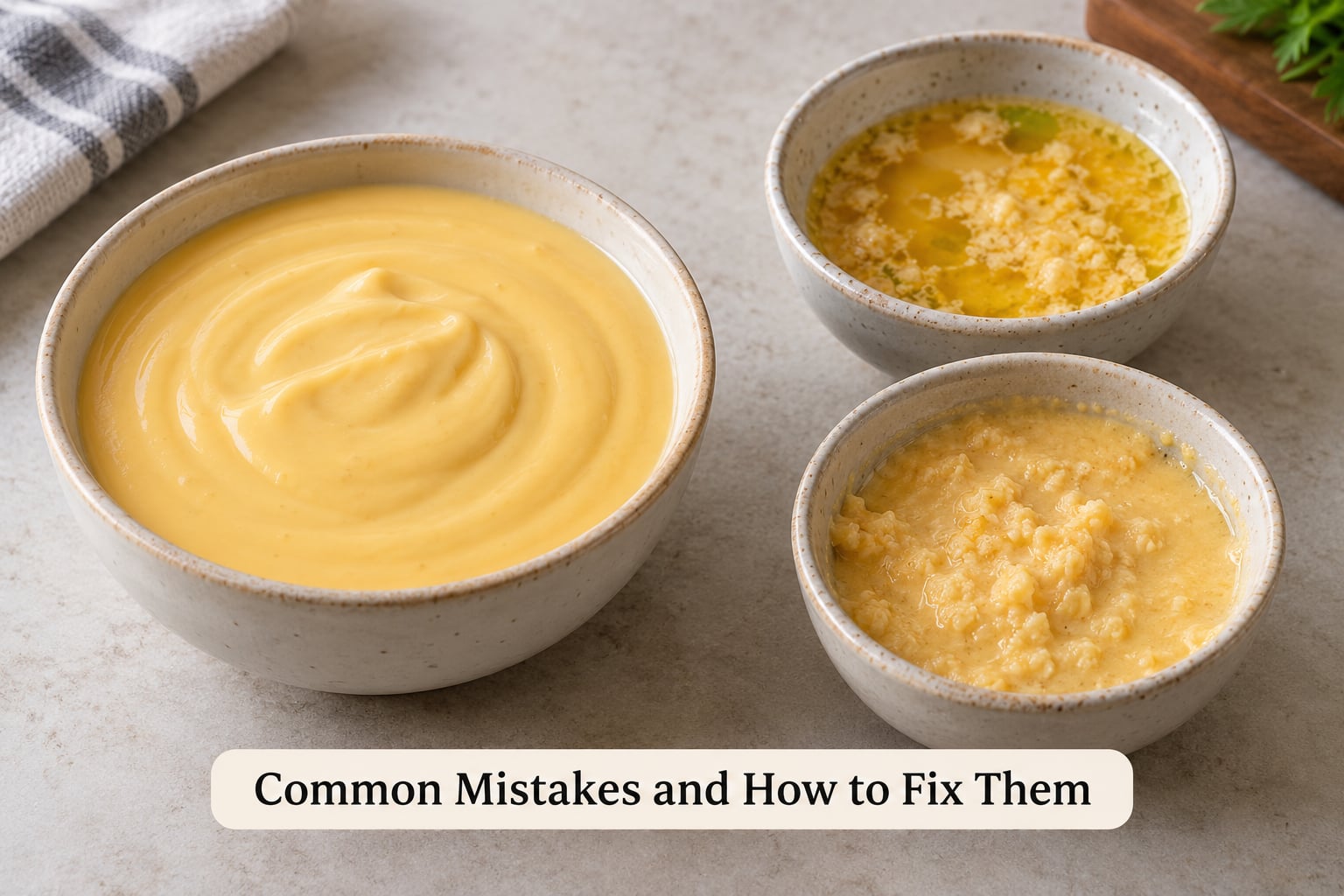
Almost every failed dairy-free cheese sauce is one of six things. Each has a specific cause, and each has a fix you can apply mid-cook rather than throwing the pan out.
| What went wrong | Why it happened | How to fix it |
|---|---|---|
| Grainy or gritty texture | Cold liquid hit hot starch, or the blender did not fully break down cashews or seeds. A regular blender and a food processor both leave grit behind | Whisk constantly from the moment the liquid goes in, and never let the mixture sit still while it heats. For blended sauces, run the blender a full extra minute and add another splash of liquid |
| Sauce split or curdled | The pan got too hot. Plant proteins and starches tighten and separate at high heat, and a rolling boil breaks the emulsion that was holding the oil in place | Take it off the heat, whisk in 2 to 3 tablespoons of cold water or plant milk, then return it to low heat and whisk gently until it comes together |
| Too thin, sauce runs off the pasta | Not enough starch, or it was never given enough time after the first bubbles appeared | Add a cornstarch or tapioca slurry, 1 tablespoon starch to 2 tablespoons cold water, and whisk for a full minute before testing again |
| Too thick, glues to the pasta | Reduced too long, or thickened with starch and then cooled in the pan | Loosen with warm water or plant milk a tablespoon at a time, stirring between each, and keep it off the heat while you do it |
| Oily separation on top | The fat was added after the sauce thickened, so it never emulsified into it | Whisk the oil in during the last minute over low heat rather than after removing the pan. A spoonful of cold water whisked in vigorously also pulls the oil back down |
| Tastes flat or faintly mushroomy | Not enough acid, not enough salt, or too much nutritional yeast added at once | Add a quarter teaspoon of vinegar or lemon juice and a pinch of salt before adding more yeast. For yeast-free cheesiness, use a teaspoon of white miso, a tablespoon of white bean purée, or roasted garlic |
A few habits move the needle more than any single trick. Reserve pasta water and use it to loosen the sauce in the pan, since the starch in it helps the sauce cling. Short pasta shapes hold more sauce than long ones. Taste with the sauce hot, because dairy-free sauce tastes blander cold than it will once the pasta cools it down slightly.
Stacking dietary restrictions is where most published recipes fall apart, because they each assume exactly one allergy. If your household needs several exclusions at once, work from the all-purpose formula rather than from a nut-free recipe with a nut-based swap, and check every ingredient label including the oil and the stock-style seasonings. If you are managing more than one restriction for a child, our walkthrough on how to start a gluten-free, casein-free diet for kids covers how to keep the whole kitchen on the same page. If sesame is also on the list, skip tahini as a nut substitute; it is ground sesame and belongs on its own line of the label.
Frequently Asked Questions
What can I substitute for milk in cheese sauce?
Unsweetened oat, soy or almond milk all work, in the same one-cup quantity. Oat milk gives the richest result because of its natural fat, soy milk is the closest in protein to dairy, and almond milk is thinner, so you may want a teaspoon extra starch. Plain water works too and is the safest choice in a kitchen avoiding nuts and soy. Avoid sweetened varieties and check for milk protein or casein on dairy-free milks.
Can you make dairy free cheese sauce without nutritional yeast?
Yes, though you trade cheese flavor for body. A teaspoon of white miso, a tablespoon of white bean purée, or two cloves of roasted garlic blended in give a savory depth that reads as cheese without the yeast taste. Keep the vinegar, the Dijon and the salt, because those three are what make a yeast-free sauce taste seasoned instead of merely thick. Add turmeric for the golden color.
Why is my dairy free cheese sauce grainy?
Two causes account for nearly all of it. Either the cold liquid hit hot starch in the pan and formed lumps that never dissolved, or a regular blender left part of the cashews or sunflower seeds unbroken. Whisking constantly from the second the liquid hits the pan prevents the first. For the second, blend a full extra minute, scrape down the sides twice, and add a splash more liquid if the mixture is too thick to move.
How do I thicken dairy free cheese sauce?
Stir a slurry of 1 tablespoon cornstarch or tapioca starch with 2 tablespoons of cold water into the sauce, then whisk over low heat for a full minute before you judge it. Loose starch dusted straight into the pan creates lumps. If you would rather not add more thickener, simmer the sauce for another three to five minutes and let water evaporate, keeping the spoon moving so nothing catches on the bottom.
How do I melt dairy free cheese without it splitting?
Shred the cheese and melt it slowly in a low skillet with three to four tablespoons of unsweetened plant milk and a teaspoon of cornstarch. Keep the heat low and stir often until it turns glossy and pourable. Plant-based cheese proteins tighten sharply when overheated, so a boil turns the sauce into rubbery strands that will not come back. Take the pan off the heat a moment early, since it keeps softening as it sits.
How long does dairy free cheese sauce keep, and can I freeze it?
A finished dairy-free cheese sauce keeps in a sealed container in the refrigerator for three to four days. Freeze it in an ice cube tray or a small container for up to three months, then warm one or two cubes as needed. Reheat on the stovetop with a splash of water or plant milk, stirring constantly over low heat. Thawed sauce usually needs that extra liquid, because the starch thickens as it cools.
Conclusion
Start with the plain version: unsweetened plant milk and a thickener whisked together cold, warmed over medium-low with constant whisking, then nutritional yeast, mustard and a little acid added gradually. Season it more aggressively than feels right at the stove, because the sauce tastes brighter once it thickens and cools.
From there, adjust to your kitchen. Swap plant milk for water if soy and nuts are both out, use a gluten-free 1-to-1 blend if wheat is too, reach for miso instead of yeast if yeast is the problem, and add turmeric if the color matters more than the heat. Once you have a version your family actually asks for, make it twice the batch and freeze half in cubes.