Stomach bug germs such as norovirus can stay infectious on hard surfaces for days to weeks, and research has found them surviving longer than 70 days on stainless steel and plastic. To clean your house after a stomach virus, you remove the mess with disposable materials, wash every touched surface with soapy water, then disinfect it with a bleach solution or an EPA-registered product that specifically claims it kills norovirus.
The whole job takes a few focused hours if you work in the right order. Most of the effort goes into surfaces nobody thinks about: the toilet lid, the light switch by the bed, the fridge handle, the phone.
This guide covers viral gastroenteritis, often called the stomach flu or stomach bug. It is unrelated to influenza, which is a respiratory illness, and it is different from a stomach virus in infants such as rotavirus, which spreads even more easily through diaper changes.
Table of Contents
- What You Need
- The DIY bleach solution and its contact time
- Step-by-Step: How to Clean Your House After a Stomach Virus
- 1. Remove Visible Vomit or Diarrhea
- 2. Clean and Disinfect Surfaces
- 3. Wash Laundry and Soft Materials
- 4. Finish Floors, Bathroom, and Airflow
- Common Mistakes
- Frequently Asked Questions
- Does vinegar kill the stomach virus?
- What should I clean first after someone has vomiting or diarrhea?
- Should I wash dishes used by a sick person separately?
- How long should I air out a room after a stomach virus?
- Can I use bleach to clean after a stomach virus?
- When should I seek medical advice after a stomach virus?
What You Need
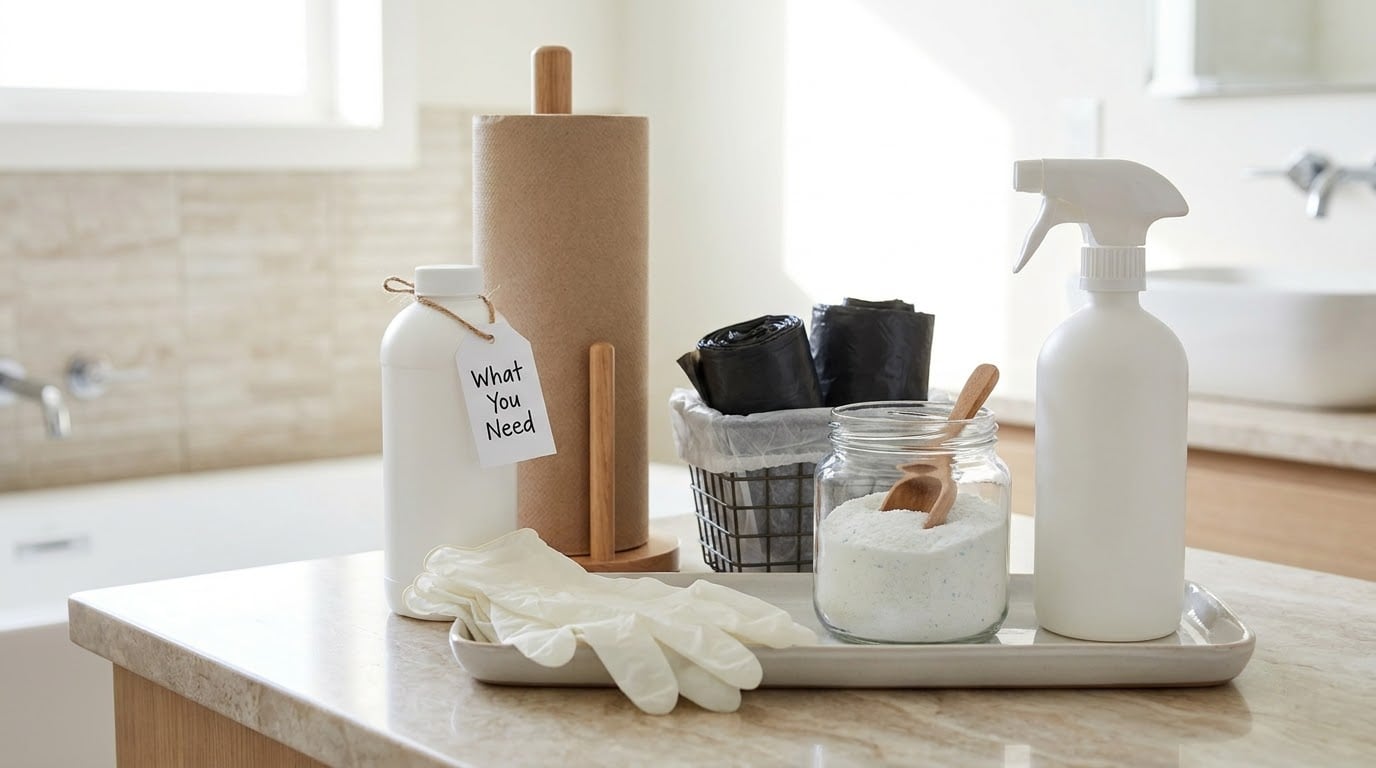
Gather everything before you touch the mess. Halfway through a cleanup, hunting for gloves is how people end up cleaning with bare hands.
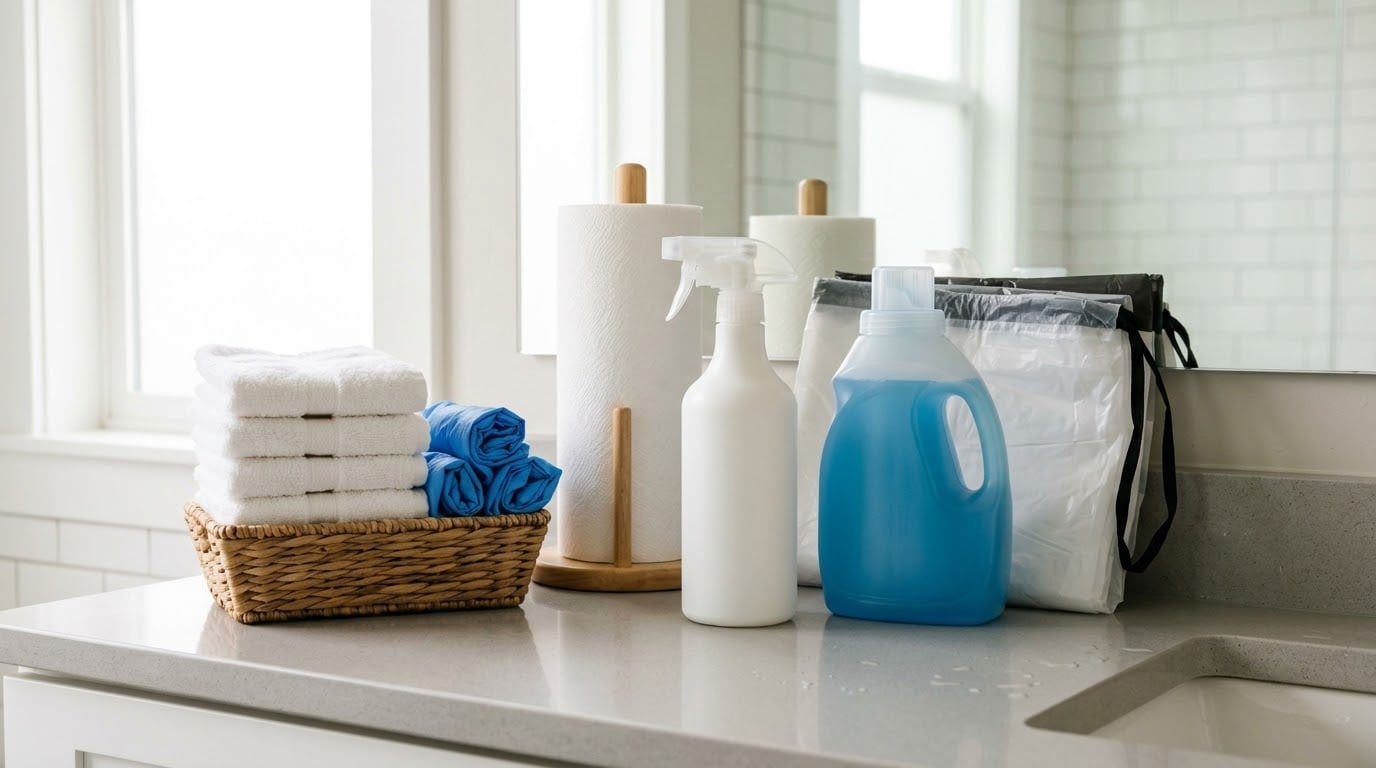
- Disposable gloves and a few pairs to change mid-job
- Paper towels and disposable cloths for soaking up mess, plus a plastic bag or two for the soiled towels
- Lined trash bags tied shut, with hand ties inside
- Regular dish soap and warm water for the first wash of every surface
- Unscented, non-gel chlorine bleach for the DIY solution, or an EPA-registered disinfectant whose label lists norovirus
- A spray bottle and a second cloth kept separate for disinfecting
- Laundry detergent, a hamper liner, and a laundry bag for soiled bedding
- Old towels or rags you are willing to throw away afterward
If someone is vomiting, a mask and an apron or old shirt you do not mind ruining go on the list too. Nobody has ever regretted wearing a shirt they were going to replace.
If fragrances are a trigger in your house, choose unscented products from the start. Our guide to cleaning without harsh fragrances covers which labels to check before you buy.
The DIY bleach solution and its contact time
Mix about 5 tablespoons of unscented, non-gel household bleach into a gallon of cool water, and adjust down for smaller amounts. Wet the cleaned surface with it and leave it visibly wet for the full contact time on the label, usually 5 to 10 minutes, then rinse food-contact surfaces or let everything air dry.
Two warnings matter here. Never mix bleach with vinegar, ammonia, or any other cleaner, and keep the solution out of reach of children. If a surface is visibly soiled, disinfecting it first does nothing; wash first, disinfect second.
Step-by-Step: How to Clean Your House After a Stomach Virus
Work clean to dirty and top to bottom. Start in the bedroom and living areas, finish in the bathroom, and do the laundry last so you are not carrying contamination around on your hands. Room by room takes longer than one pass over everything, but it keeps you from recontaminating a finished room. If your household tends to spread germs beyond illness, our one-room detox method follows the same order.
1. Remove Visible Vomit or Diarrhea
Put on gloves and protective clothing before anything else. Blot from the outside edge inward with paper towels rather than scrubbing, and drop each sheet straight into a lined bag.
Bag it and tie it off. Do not shake a rug, do not plunge a toilet with vomit in it, and do not use a rag you plan to keep. Vomit is highly acidic and can corrode plumbing, so plunging risks a second mess.
Wash your hands with soap and water for at least 20 seconds, take off the gloves, and wash again before touching anything clean.
2. Clean and Disinfect Surfaces
Wash every contaminated surface with soapy water first, then dry it, then disinfect. This two-stage order is the single most skipped step in most home cleanups.
Work through the high-touch list, moving room by room and top to bottom.
| Surface | Why it matters | How to clean it |
|---|---|---|
| Toilet seat, lid, flush handle, base | Highest viral load in the house | Soapy wash first, then bleach solution on the handle, lid and seat for the full contact time |
| Sink and faucet handles | Touched with unwashed hands | Wash, disinfect, leave wet, dry |
| Door knobs and cabinet pulls | Touched every time the room is entered | Disinfect with a soaked cloth, not a dry wipe |
| Light switches and thermostat | Touched by everyone, cleaned rarely | Disinfect, avoid spraying directly into the fixture |
| Phones, remotes, tablets, laptops | Held close to the face and passed around | Wipe with a disinfectant wipe safe for screens, change the phone case |
| Fridge and microwave handles | Touched right before eating | Disinfect, then rinse food-contact surfaces with water |
| Bathroom doorknob and towel hook | High traffic after every illness | Disinfect and launder the hand towel |
| Bedside table and the spot by the bed | Where the sick person ate and vomited | Wash and disinfect, then disinfect the top of the bedside table twice |
| Car seats, high chair trays, toys | Children put their mouths on all of them | Wash with soapy water, disinfect, rinse anything a child mouths |
| Trash can and the pedal | Contact with every soiled towel | Empty, wash the can, disinfect the lid and pedal |
When you are done in a room, move on and do not come back until it has dried. Drying is part of the process, not an extra step you can skip.
3. Wash Laundry and Soft Materials
Bag soiled bedding, towels, and clothes where they sit and put them straight into the machine. Do not shake them out, since that sends droplets into the air.
Check the care label, then use the hottest water the fabric allows with your normal detergent. Dry on high heat until completely dry, or air dry in sunlight on a line that nobody brushes past.
For carpet, couch cushions, and a mattress, vacuum or lift the solids first, blot with cool water and a clean towel, then use a steam cleaner if you have one. Check upholstery tags first, since steam can shrink some fabrics.
Dishwasher-safe dishes, cups, and bottles can go through a full dishwasher cycle. Wipe down the dishwasher door and handle afterward, since hands and utensils touch it constantly.
4. Finish Floors, Bathroom, and Airflow
Mop last, with a fresh mop head or cloth, using a cleaner that carries a norovirus claim or the bleach solution. Wash the mop head in the laundry afterwards, not by hand in the sink.
Give the bathroom a full pass: tub or shower, toilet base, floor, and any bath toys. Replace the toothbrush only if it was sitting in a splash zone; otherwise, a disinfected handle is enough.
Open windows and run a fan to move air through the room, especially if vomit happened in a small space. Ventilation helps clear particles and dampness, though it is not a substitute for cleaning.
Hand washing is the protection that matters most. Soap and water with a 20-second scrub beats hand sanitizer for norovirus, and it is worth setting up a bottle at the sink where the sick person was staying.
Common Mistakes
- Mixing cleaners. Bleach plus vinegar makes a toxic gas, and bleach plus ammonia is worse. One cleaner at a time, and read the label.
- Disinfecting before cleaning. Spraying a disinfectant onto a soiled surface binds the contamination to the surface and lets it survive.
- Forgetting to wash hands between steps. Gloves protect you only until you touch a phone or a railing with them on.
- Shaking out bedding or rugs. That aerosolizes the mess you were trying to contain. Bag it, wash it, or leave it alone.
- Trusting vinegar, baking soda, or hand sanitizer alone. These are the default instincts on a low-tox cleaning path, and none of them reliably kills norovirus on a surface.
- Assuming every wipe is a disinfectant. Many standard wipes carry no EPA norovirus claim. Read the label, and check whether the product you are holding contains bleach at all rather than going by the familiar brand name.
- Skipping the toilet lid, handles, and phones. These are where people get reinfected during the following week.
- Rushing the contact time. Wiping and moving on in thirty seconds does almost nothing. Keep the surface wet for the full time on the label.
Two habits prevent the cycle from restarting. Keep one bathroom as the sick-room bathroom for as long as symptoms are active, and stop sharing cups, utensils, and towels entirely until 48 hours after symptoms stop, which is how long people stay contagious after they feel better.
Frequently Asked Questions
Does vinegar kill the stomach virus?
No. White vinegar is acidic, and norovirus is unusually resistant to it, so vinegar alone does not reliably kill the virus on a surface. Vinegar is fine for general bathroom cleaning afterward, but for anything vomit or diarrhea touched you need a bleach solution or an EPA-registered disinfectant that lists a norovirus claim on the label. Hydrogen peroxide products with that claim also work.
What should I clean first after someone has vomiting or diarrhea?
Start with the mess itself, not the farthest room. Put on gloves, contain the visible waste with paper towels, bag it, and wash your hands. Then work clean to dirty: bedroom and living areas, kitchen and food-contact surfaces, laundry, and the bathroom last. Cleaning the bathroom last keeps your gloves and mop head from carrying contamination into the rooms you already finished.
Should I wash dishes used by a sick person separately?
You do not need a separate hand wash, but you do need a full cycle. Dishwasher-safe dishes, cups, and bottles go through a complete dishwasher cycle with detergent on the hottest setting the items allow. Hand-wash them in hot soapy water for a full minute if they are not dishwasher safe. Wipe the dishwasher handle and door afterward, since that is where the contamination transfers back to your clean dishes.
How long should I air out a room after a stomach virus?
An hour or two with windows open and a fan running is plenty, and it is most useful right after you have cleaned, so the room dries out and any lingering particles move out. Ventilation is a helpful extra step rather than the main cleanup, because the virus spreads far more by contact and by hand-to-mouth transfer than through the air. If anyone still has symptoms, keep the room aired out and designate it as the sick room.
Can I use bleach to clean after a stomach virus?
Yes. A solution of about 5 tablespoons of unscented, non-gel household bleach per gallon of cool water, left visibly wet on a cleaned surface for the full contact time on the label, is the standard recommendation from public health guidance. Never mix bleach with vinegar, ammonia, or other cleaners, and store the solution away from children. If bleach is not workable for you, use an EPA-registered product whose label specifically lists norovirus.
When should I seek medical advice after a stomach virus?
Contact a doctor or pediatrician if symptoms last more than about three days, if you cannot keep fluids down, or if you see signs of dehydration such as very little urine, a dry mouth, dizziness, or no tears when a child cries. Get medical help promptly for bloody stool, severe abdominal pain, high fever, or if the affected person is an infant, pregnant, older, or immunocompromised. Cleaning the house never replaces treating a person who is getting worse.
Start at the toilet and work backwards to the bedroom. Gloves on, paper towels on the mess, bag it, wash soapy water first, then disinfect with a bleach solution or an EPA-registered norovirus product and leave it wet for the full contact time. Laundry last, no shaking. Keep washing with soap and water, and stay separate from cups and towels until 48 hours after symptoms stop.
This is general cleaning guidance from public health sources, not medical advice. If the sick person is not improving or shows signs of dehydration, talk to a doctor or pediatrician instead of cleaning harder.