Learning how to bake with coconut flour comes down to one rule: it is never a one-for-one swap for all-purpose flour. For every 1 cup of all-purpose flour, use 1/4 to 1/3 cup of coconut flour, add an extra egg, and add roughly the same amount of extra liquid. Get those three things right and the rest is ordinary baking.
That rule matters because coconut flour behaves nothing like wheat flour. It is milled from dried, defatted coconut meat, so it carries no gluten to build a network and a fiber content that drinks up liquid like a sponge. Bakers describe it as thirsty, clumpy and structure-less. Left alone, it produces a dense brick or a crumb that dusts apart in your hands.
Updated for 2026. Everything below applies to a home oven, not commercial equipment.
Key rules for coconut flour baking:
- Replace all-purpose flour at roughly 1/4 to 1/3 cup coconut flour per 1 cup of the flour called for.
- Add 1 extra egg for every 1/4 cup of coconut flour you use.
- Add an equal amount of extra liquid, or a moist add-in like applesauce, pumpkin or mashed banana.
- Rest the batter 5 to 10 minutes so the flour finishes hydrating.
- Sift or whisk the flour first to break up the lumps that cause pockets and raw spots.
- Start from a recipe written for coconut flour rather than converting a favorite from scratch.
Table of Contents
- What You Need to Bake with Coconut Flour
- Step-by-Step: How to Bake with Coconut Flour
- 1. Choose a Recipe That Says Coconut Flour
- 2. Measure the Flour Correctly
- 3. Add the Right Binder
- 4. Combine Wet and Dry Ingredients Gently
- 5. Rest the Batter
- 6. Bake and Check Doneness
- 7. Cool, Slice, and Store
- Common Mistakes and How to Fix Them
- Frequently Asked Questions
- Can I use coconut flour in any recipe?
- How much coconut flour should I use for each cup of flour?
- Why does my coconut flour baked goods crumble?
- Do I need to add an egg or binder to coconut flour?
- Can I use parchment paper instead of greasing the pan?
- How do I keep coconut flour muffins from being dry?
- Conclusion
What You Need to Bake with Coconut Flour
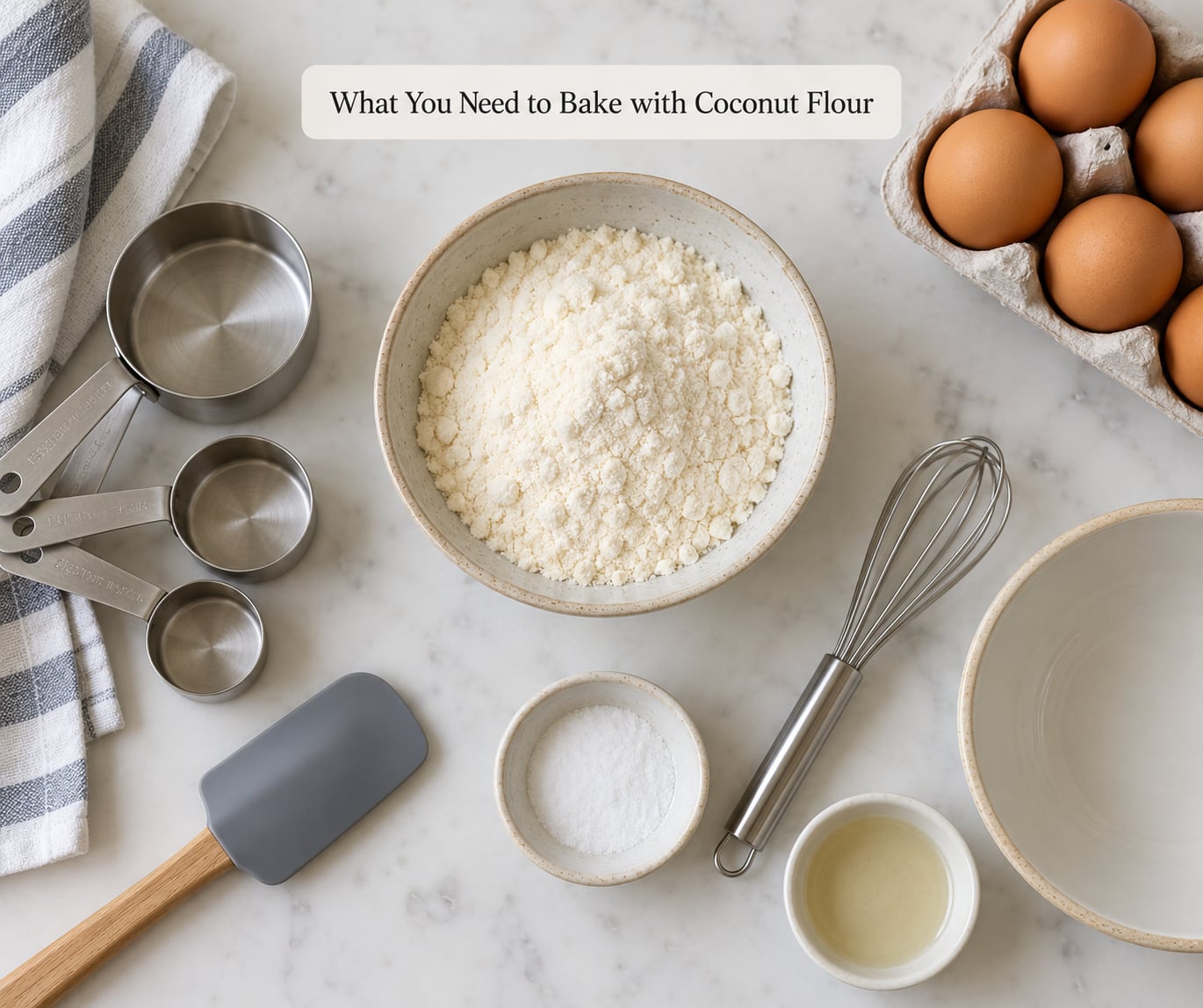
Coconut flour is a fine, pale, slightly sweet powder made by drying coconut meat, removing the fat, then grinding what is left until it is powder-fine. Nothing is bleached and nothing is enriched, so it carries no gluten, no grain and no nuts. That makes it the flour allergy families reach for when wheat, eggs and nuts all need to stay out.
Brands are not interchangeable. Some bags run drier and grittier than others, and a recipe developed on one brand can turn out drier on another. Stick with the brand the recipe was tested on until you have a feel for how your bag behaves.
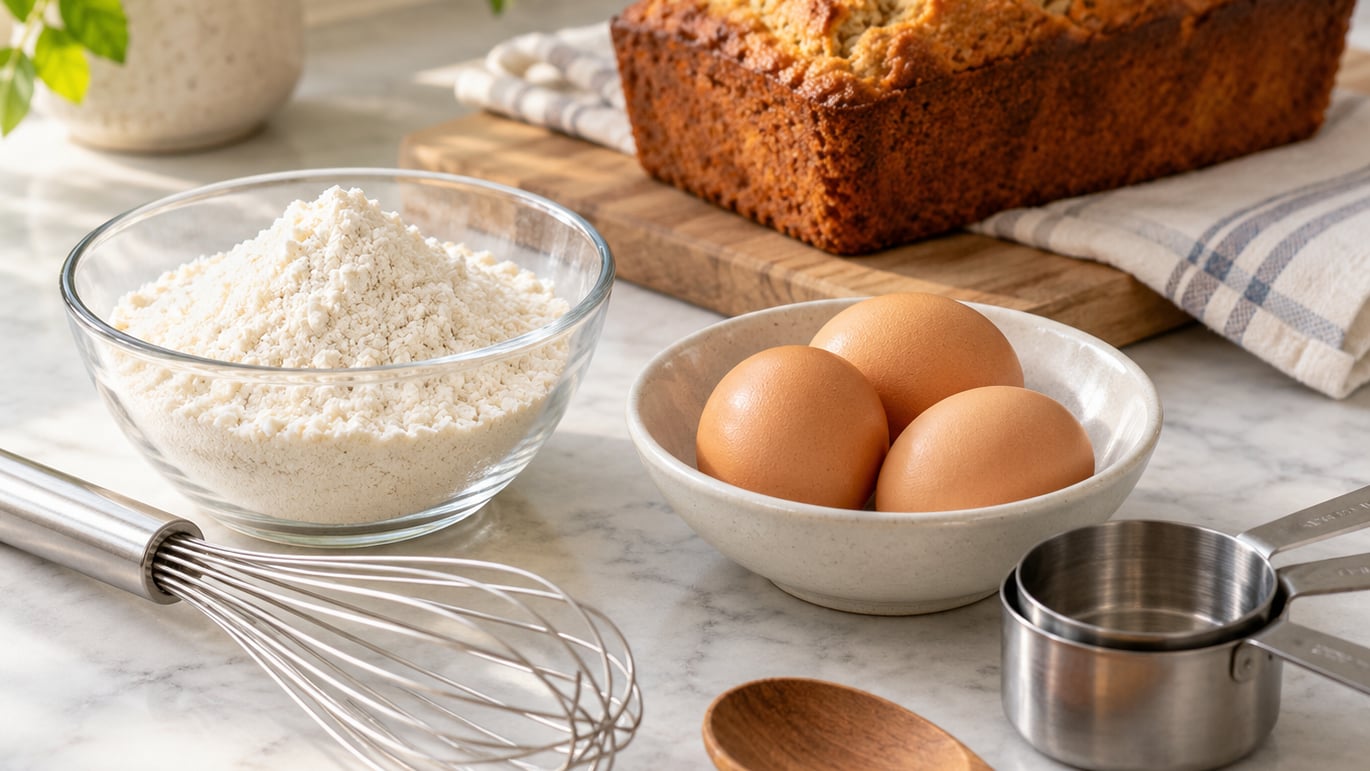
What you actually need on hand is short. A kitchen scale is the most useful item on the list, because grams remove the guesswork that scooping introduces. Add a fine-mesh sieve, two mixing bowls, a wire whisk or electric mixer, a rubber spatula, and the pan your recipe calls for lined in parchment or fitted with liners.
If you are baking in a household where several people react to different allergens, the flour is only one part of the picture. Managing the rest of the environment, from bedding to pantry staples, is worth its own plan. I wrote about how to pick a mattress for a child with allergies if that situation sounds familiar.
For ingredients, expect to lean harder on eggs, fat and moisture sources than a wheat recipe does. Butter or coconut oil for fat, eggs for binding, and something wet and soft such as yogurt, applesauce or mashed banana to answer the flour’s thirst.
Step-by-Step: How to Bake with Coconut Flour
Work through these seven steps in order and the technique stops being mysterious. Most first attempts fail at step two, when the flour gets scooped and packed instead of spooned and leveled.
1. Choose a Recipe That Says Coconut Flour
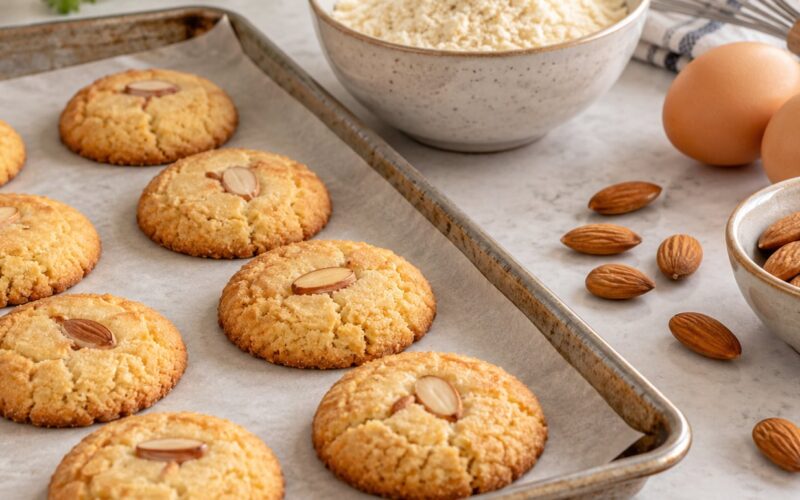
The single biggest improvement comes from picking a recipe written for the flour. A coconut flour cookie and a coconut flour chocolate cake already contain the egg count, liquid and resting time that make them work, so you avoid every conversion error at once.
Read the ingredient list before you start. If it leans on eggs and dairy, you are set. If it depends on yeast, whipped egg whites or a chemical leavening on its own, pick a different recipe.
2. Measure the Flour Correctly
Spoon coconut flour into the measuring cup, level it off with the back of a knife, and do not press it down. Packed coconut flour can measure half again as much as it should, and that alone will sink a whole batch.
When you own a scale, use it. Weighing solves the packing problem and the brand variation problem at the same time, because you are measuring mass rather than volume.
| Flour | 1 cup, by weight (approx.) | Replaces 1 cup of all-purpose flour |
|---|---|---|
| All-purpose flour | about 120 g | Baseline |
| Coconut flour | about 112 to 128 g | 1/4 to 1/3 cup (about 30 to 40 g) |
| Almond flour | about 96 g | 3/4 to 1 cup, add 1 to 2 tbsp liquid |
| Coconut plus almond blend | varies | 1/2 cup coconut flour plus 1/2 cup almond flour |
Start at one-third cup per cup of all-purpose flour, bake, then adjust. Baking powder, not baking soda, is the usual leavener in coconut flour baking because soda needs acid to activate and there often is not enough of it in the batter.
3. Add the Right Binder
With no gluten, the binder does the structural work that gluten used to do. Eggs are the simplest choice, and a reliable starting point is 1 extra egg for every 1/4 cup of coconut flour in the recipe. A cake built on 2 cups of coconut flour can legitimately call for ten eggs, which surprises people the first time they see it.
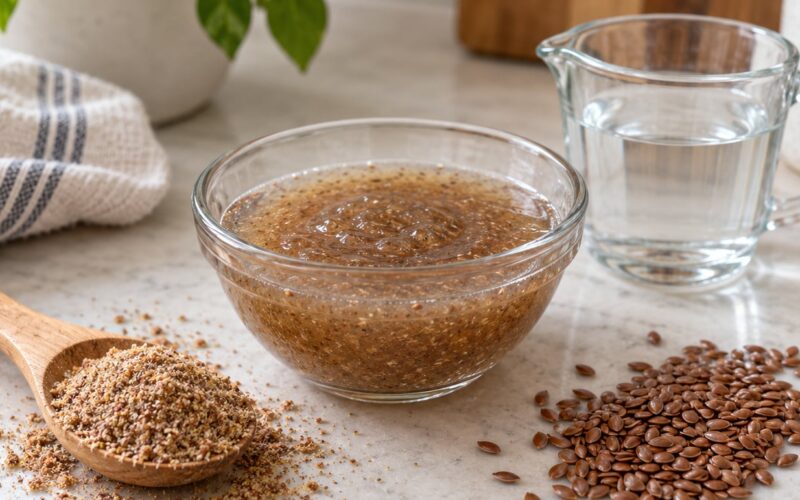
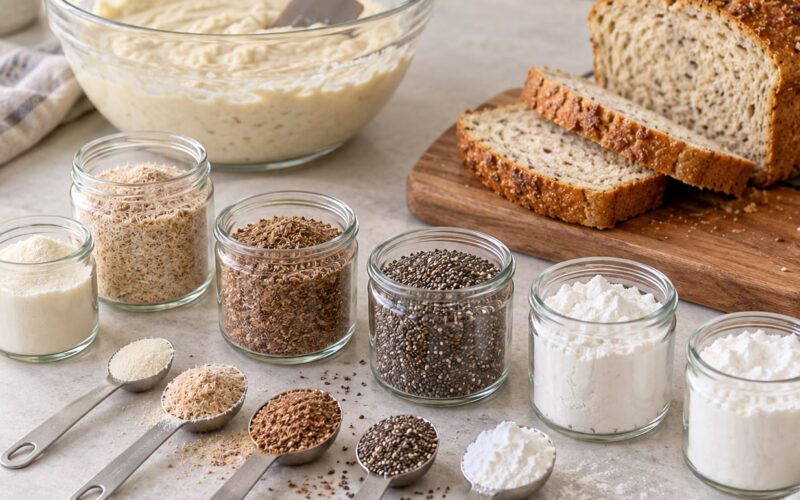
Egg-free options include xanthan gum, psyllium husk and commercial egg replacers. They work, but they need careful measuring because too much turns the crumb gummy and rubbery. Add one binder, bake, and only then consider another.
Avoid combining every binder in the cupboard. Forum bakers who stack xanthan, psyllium and flaxseed together almost always report a tough, dense result and no idea which ingredient caused it.
4. Combine Wet and Dry Ingredients Gently
Whisk the dry ingredients first, then add the wet ingredients and mix just until combined. Coconut flour has no gluten to develop, so heavy mixing buys you nothing and only dulls the texture you worked for.
Beat the eggs separately when the recipe includes acidic ingredients such as vinegar, lemon juice or buttermilk. Creaming eggs and acid together at speed makes them curdle, and curdled egg means a gummy center no amount of extra baking will rescue.
5. Rest the Batter
Cover the bowl and let the batter sit 5 to 10 minutes at room temperature, or refrigerate it for up to an hour. Resting lets the fiber take on the liquid it needs, which is what turns a thin, splattery mix into something thick enough to hold its shape.
Bakers who skip the rest almost always describe the same result: cookies spread too far, muffins sink in the middle, and the crumb stays tight and heavy. Ten minutes of patience removes an entire class of mistakes.
6. Bake and Check Doneness
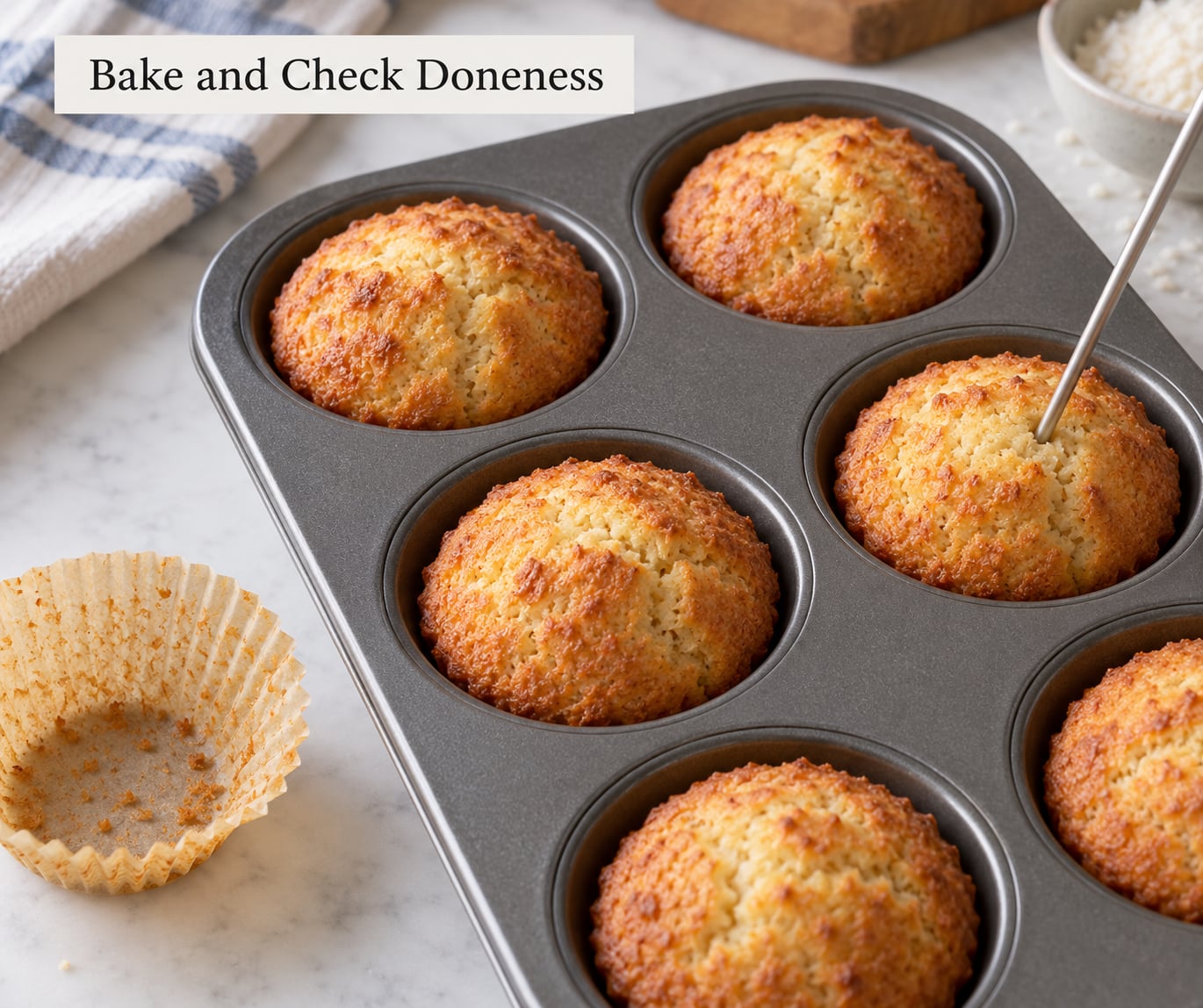
Line the pan rather than relying on grease alone. Coconut flour and melted coconut oil bond with a greased surface, and the first slice or cookie often tears trying to come out. Parchment or a fitted liner is the simpler fix.
Coconut flour browns faster than wheat, so many bakers drop the temperature by about 25°F and let the carryover heat finish the bake. Check the edges first, then the top. Cookies are done at set edges and a light golden brown; muffins should spring back when tapped lightly.
For cakes and quick breads, use a toothpick in the thickest part. Moist crumbs are fine, wet batter stuck to the stick is not. Appearance alone is not proof of doneness, because the same pale top can hide a raw center when the batter contains no gluten structure.
7. Cool, Slice, and Store
Let muffins cool in the tin for 5 to 10 minutes, then move them to a rack. A full hour on the rack keeps a layer cake from crumbling when you cut it, because the crumb sets as it cools.
For slicing, use a serrated knife with one steady sawing motion instead of pressing straight down. Coconut flour lacks gluten, so any downward pressure compacts the crumb and it breaks apart.
Storage runs longer than most cakes. Cookies keep 4 to 7 days in a sealed container at room temperature, quick breads about 4 days, and frosted cakes 3 to 4 days in the refrigerator. Wrap bread and unfrosted cakes tightly and freeze them for up to 3 months; thaw at room temperature in the wrapping so the crumb does not dry out.
Common Mistakes and How to Fix Them
Nearly every coconut flour disaster lands in one of five buckets. Find your symptom, work across to the likely cause, and change one thing on the next bake.
| Symptom | Likely cause | Fix |
|---|---|---|
| Dense, heavy, brick-like crumb | Too much flour or not enough egg and liquid | Drop to 1/4 cup coconut flour per cup of all-purpose flour, add an egg, add matching liquid |
| Crumbles when you cut it | No gluten network, not enough binder | Add 1 egg per 1/4 cup coconut flour, or 1/2 tsp xanthan gum per cup |
| Spreads flat or thin | Batter was too thin and never rested | Rest the batter 10 minutes, chill the dough, add more flour in 1 tbsp increments |
| Gummy center | Underbaked, or eggs and acid were beaten together | Bake 3 to 5 minutes longer, beat eggs separately, test with a toothpick |
| Strong coconut taste | Unroasted flour used in a mild recipe | Use roasted coconut flour, add vanilla, citrus zest or cocoa |
A few habits prevent most of this. Weigh the flour instead of scooping it, and sift or whisk it before it meets any liquid. Rest every batter. Follow recipes developed for coconut flour, and never double one. Experienced bakers repeatedly warn that scaling up changes the balance, and doubled cupcakes come out heavy.
When a bake goes wrong, keep it. A crumbly batch turns into parfait cups or croutons, and a gummy one often improves on day two once the moisture redistributes.
Frequently Asked Questions
Can I use coconut flour in any recipe?
Not without adjustments. Coconut flour works well in cookies, muffins, quick breads, pancakes, brownies and cupcakes, all of which lean on eggs or a binder for structure. It struggles with yeast breads, meringue cookies, custards, angel food cake and anything built on whipped egg whites. Starting from a recipe written for coconut flour saves you from guessing at every conversion.
How much coconut flour should I use for each cup of flour?
For every 1 cup of all-purpose flour, use 1/4 to 1/3 cup of coconut flour, roughly 30 to 40 grams. It absorbs about four times more liquid than wheat flour and holds no gluten, so pushing past a third of a cup leaves you with a dry, crumbly batter. Weighing in grams is far more reliable than scooping and leveling.
Why does my coconut flour baked goods crumble?
Coconut flour has no gluten to form a network, so the crumb leans entirely on eggs, fat and any gum you add. Too few eggs and a loaf or cookie falls apart the moment you cut it. Add 1 extra egg per 1/4 cup of coconut flour, then rest the batter so the flour hydrates before the structure sets.
Do I need to add an egg or binder to coconut flour?
In most recipes, yes. A common starting point is one extra egg for every 1/4 cup of coconut flour. Egg-free bakers can use xanthan gum, psyllium husk or a commercial egg replacer, but they need careful measuring, since too much makes the crumb gummy. Add one binder at a time and bake between changes.
Can I use parchment paper instead of greasing the pan?
Yes, and for coconut flour it is usually the better option, because the flour and any melted coconut oil grip a greased surface and pull the first slice loose with it. Cut the parchment to fit, press it into the corners and leave a small overhang. For muffins and cupcakes, skip greasing entirely when the liner fits snugly.
How do I keep coconut flour muffins from being dry?
Do not reach for extra liquid, because the flour will drink it up. Dryness comes from too little fat or too few eggs, so add a tablespoon of melted coconut oil or butter, one more egg, or a moist add-in like applesauce, mashed banana, pumpkin or zucchini. Baking a minute or two less also helps, since it dries during the long tail of the bake.
Conclusion
Mastering how to bake with coconut flour takes three numbers and a little restraint: 1/4 to 1/3 cup of coconut flour per cup of all-purpose flour, 1 extra egg per 1/4 cup of flour, and an equal bump in liquid. Weigh it, sift it, mix gently, rest it ten minutes, then change one variable at a time.
Start with a tested coconut flour recipe rather than converting a wheat favorite on your first attempt. Once the crumb behaves, the conversion opens up to everything else, and you will reach for it by choice instead of by allergy.