If you have wondered how to make a flax egg, the whole method is short: stir 1 tablespoon of ground flaxseed meal into 3 tablespoons of water, wait 5 to 15 minutes, and use the thickened gel wherever a recipe calls for one egg. There are two ingredients and no cooking. Most of the work is getting the ratio right and giving it enough time to gel.
That little gel does two jobs an egg does in baking. It binds, so cookies and muffins hold together instead of crumbling, and it adds moisture, which keeps quick breads from drying out. What it does not do is leaven, and that is where most disappointing flax egg cakes come from.
Table of Contents
- What You Need
- Step-by-Step: How to Make a Flax Egg
- Step 1: Measure the Ground Flaxseed and Water
- Step 2: Mix Until the Flaxseed Is Evenly Suspended
- Step 3: Let the Mixture Rest
- Step 4: Add the Flax Egg to Your Recipe
- Common Flax Egg Mistakes and How to Fix Them
- Frequently Asked Questions
- How much flaxseed do I need for one egg?
- Are 2 flax eggs equal to 2 real eggs?
- How long do you let a flax egg sit before using it?
- Does a flax egg taste like an egg in baking?
- Can I use whole flax seeds instead of ground flax?
- Which recipes should I never use a flax egg in?
- Conclusion
What You Need
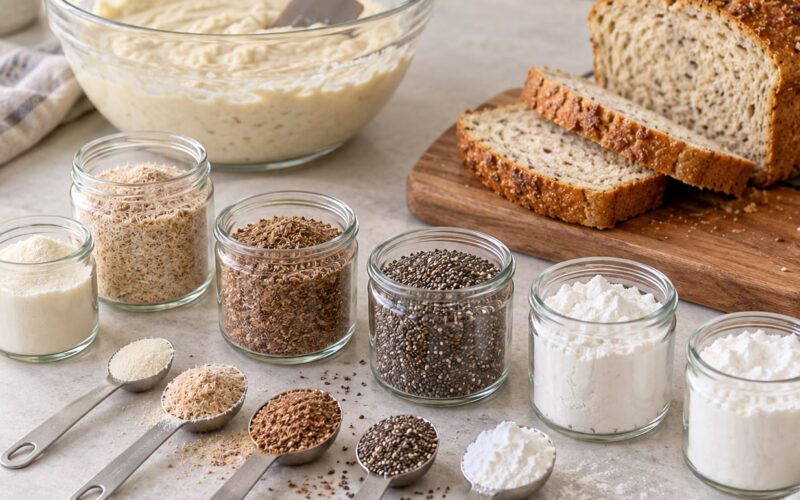
The ingredient list is genuinely two things: flaxseed meal and water. Flaxseed meal, also called ground flaxseed or flax meal, is the whole seed milled into a fine powder. Buy it already ground or grind your own, but buy ground flour rather than assuming whole seeds will work. They will not.
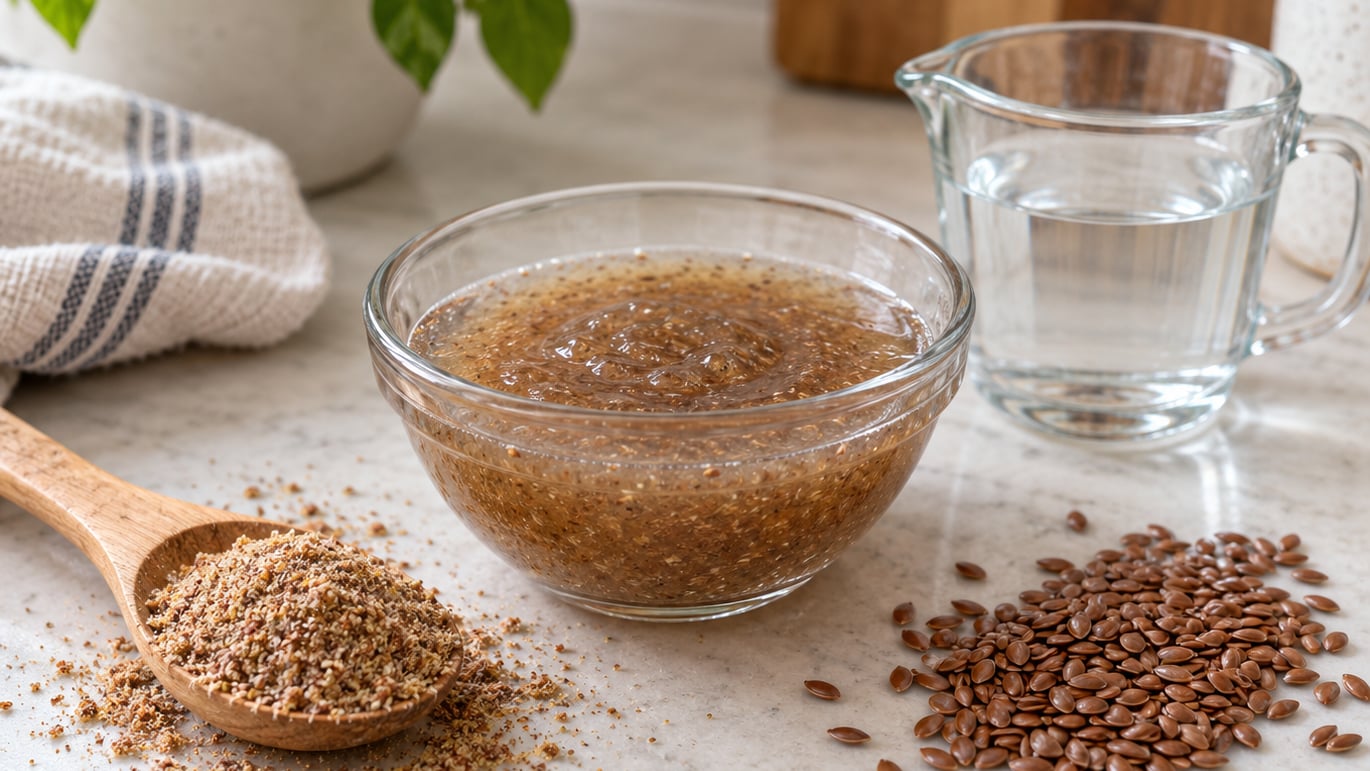
Whole flaxseed has an intact outer hull, and water cannot get in to break it down into the mucilage that forms the gel. Swallow a spoonful of whole seeds and nothing happens. Grind that same spoonful and it turns into a loose jelly in about ten minutes. If you only have whole seeds, pulse them in a coffee grinder or spice grinder for 30 seconds until they look like coarse sand, then measure. One tablespoon of whole seeds gives you roughly 1 to 1.5 tablespoons of meal, so always measure after grinding, not before.
For tools, a small bowl and a fork or a whisk are enough. Warm water speeds the gel up, cold water works fine if you can spare another minute. Golden flaxseed and brown flaxseed both gel the same way; golden is simply milder and lighter in color, which matters only if you mind flecks in a pale bake.
If you are replacing more than one egg, scale the same 1:3 ratio every time:
- 1 egg: 1 tablespoon ground flaxseed meal plus 3 tablespoons water (about 1/4 cup)
- 2 eggs: 2 tablespoons ground flaxseed meal plus 6 tablespoons water (about 1/2 cup)
- 3 eggs: 3 tablespoons ground flaxseed meal plus 9 tablespoons water (about 3/4 cup)
- 4 eggs: 4 tablespoons ground flaxseed meal plus 12 tablespoons water (about 1 cup)
Two flax eggs are exactly as much batter-binding power as two chicken eggs. The gel is what does the work, and doubling it doubles the gel. Keep in mind that eggs also contribute fat and lift, so a recipe calling for four eggs will still want adjusting once you swap the binder out. More on that below.
Step-by-Step: How to Make a Flax Egg
Step 1: Measure the Ground Flaxseed and Water
Put 1 tablespoon of ground flaxseed meal into a small bowl and add 3 tablespoons of water. That ratio is the whole recipe, and it is worth measuring properly rather than eyeballing. Baking spoons vary more than you would think, and too much water gives you a loose gel that runs through the batter instead of holding it.
Step 2: Mix Until the Flaxseed Is Evenly Suspended
Whisk or stir briskly for about 30 seconds, scraping the bottom of the bowl, until no dry pockets remain. You are looking for an even brown slurry with no loose powder clinging to the sides. If the flax keeps settling into lumps, a second whisk usually clears it up. Some bakers add a pinch of baking powder at this point, which gives a little extra lift in pancakes and muffins, but it is optional.
Step 3: Let the Mixture Rest
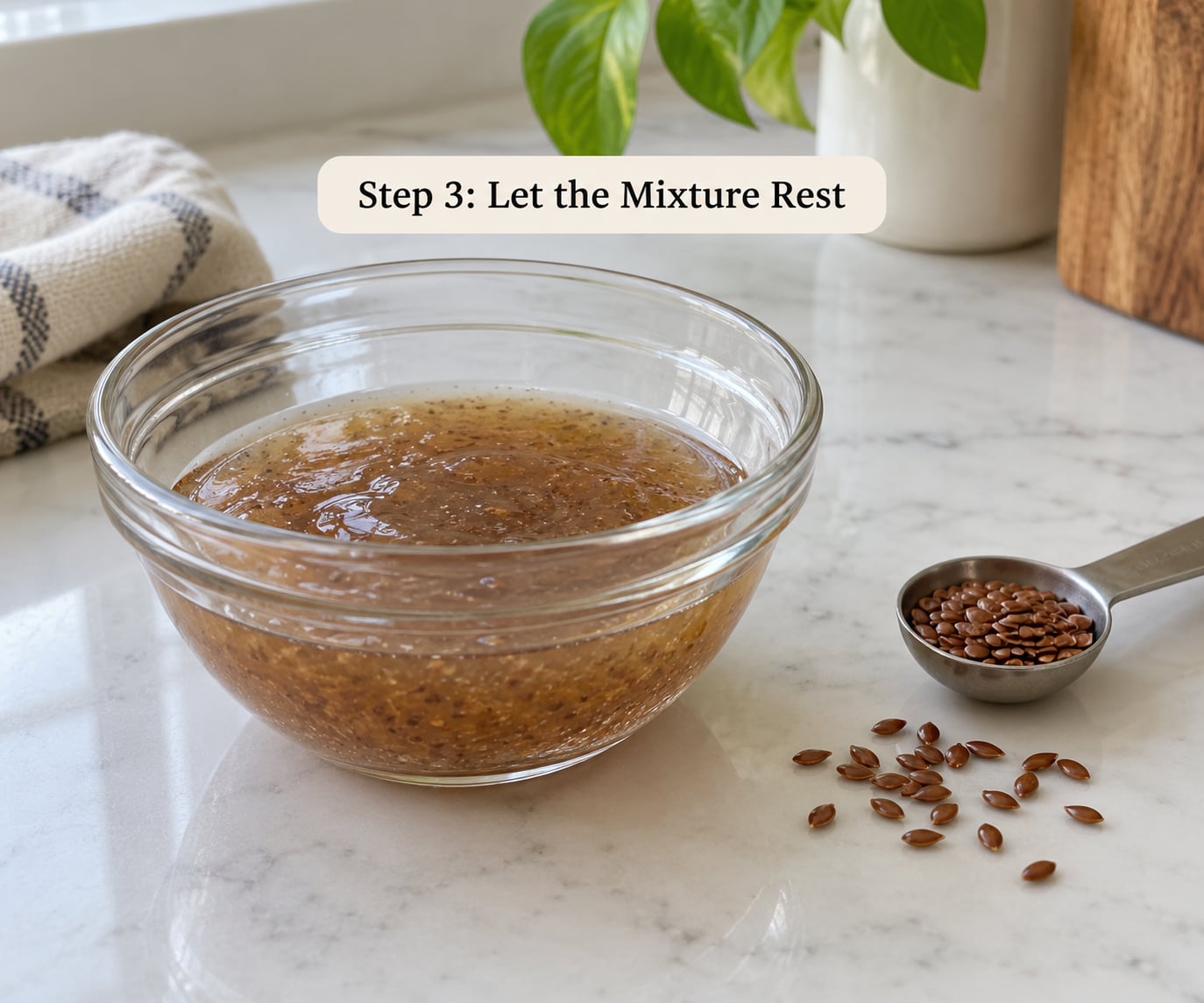
Leave the bowl alone for 5 to 15 minutes. You will know it is ready when the mixture is thick, sticky and goopy, a bit like raw egg white, and holds its shape if you tilt the bowl. Five minutes gets you a usable gel in a pinch. Fifteen gives the fullest set, and that is what I use for cookies and brownies. Letting it sit for 30 minutes is not better; the gel just gets firmer and can go gluey in a delicate batter.
The gel thickens as it cools and keeps setting in the bowl, so the resting time you choose is really the consistency you get. For muffins and quick breads, rest it the full 15 minutes. For pancakes and waffles, 5 is plenty since the batter is thin anyway.
Step 4: Add the Flax Egg to Your Recipe
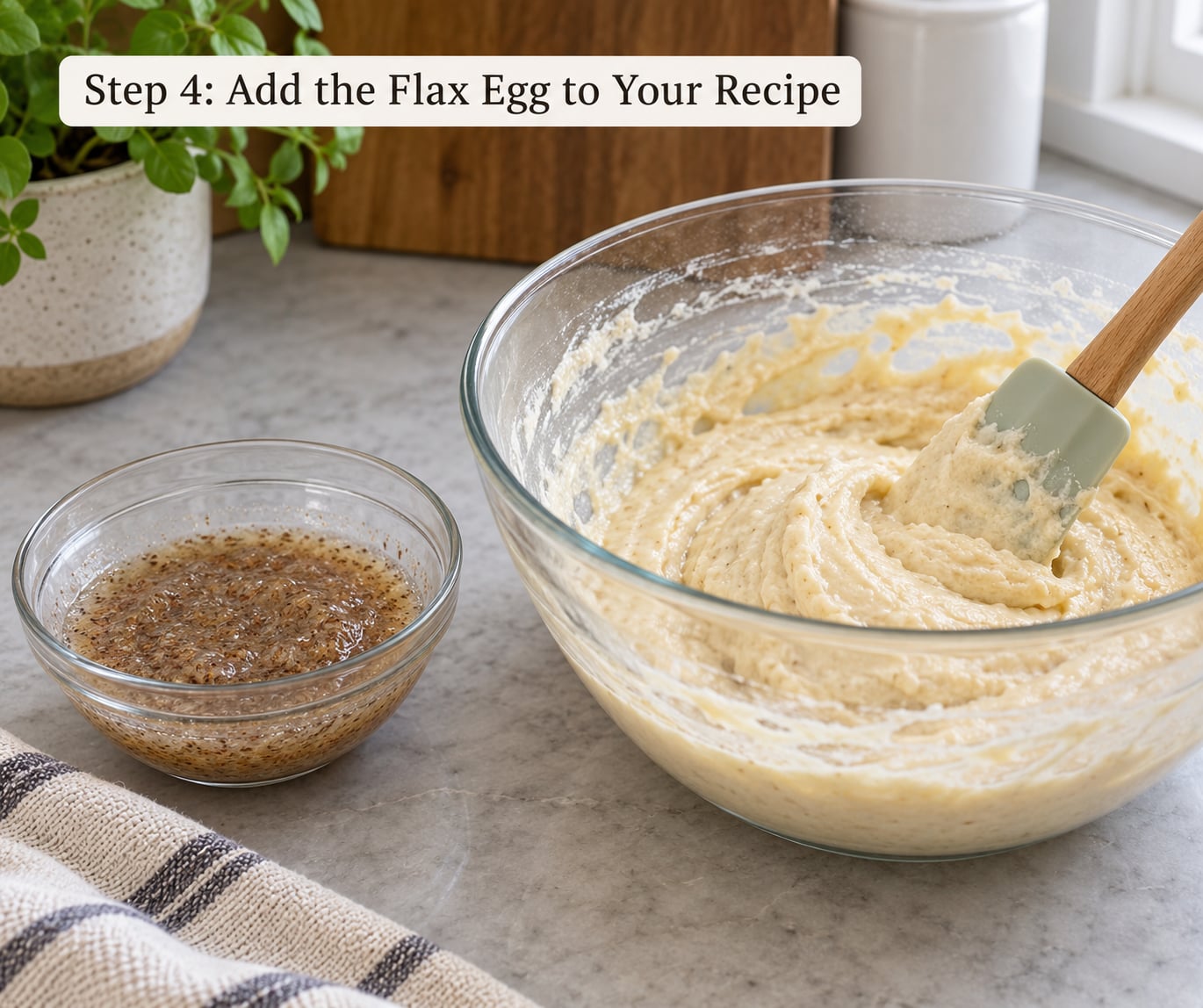
Use the gel exactly where the egg went, and add it with the wet ingredients rather than at the end. Pour it into the batter and fold through until you see no streaks of raw gel left, roughly 20 to 30 seconds of mixing. If you are working with a dry mix like a boxed muffin blend, whisk the flax egg together with the milk or water first, then add it to the bowl. Scrape the little bowl out with a spatula so you are not losing a quarter cup of batter.
Bake straight away. The gel does not need to come to room temperature and it does not improve with time in the pan. If you are doubling a recipe that calls for two eggs, make two flax eggs rather than one giant one, because the same resting time applies to each.
Common Flax Egg Mistakes and How to Fix Them
The cake came out dense and gummy. This is the most common complaint, and it is not really a flax egg failure. An egg is a leavening ingredient as well as a binder, and flax replaces only the binding. If your recipe has no other leavening, add 1/4 teaspoon extra baking powder per egg replaced, and check that your baking powder is fresh. Recipes with three or more eggs need more than a binder, so consider Ener-G style replacer powder, extra baking powder, or a recipe designed to be egg-free.
The cookies were oily and the tops spread too far. An egg emulsifies fat and water together. A flax gel binds but does not emulsify, so in brownie and cookie batters the oil can separate. Trim about 1 tablespoon of added oil per egg replaced, or replace a quarter of the oil with an equal amount of the flax gel.
You used whole seeds. They pass through you without gelling. Grind them first, then measure the meal.
You skipped the rest. Dumping flax and water straight into the batter gives you clumps and a gluey, uneven crumb. Give it the full 5 minutes minimum.
Too much water. Runny gel that pools at the bottom of the bowl means you went past 3 tablespoons per tablespoon of meal. Stir in another tablespoon of flaxseed meal and wait a few more minutes.
You used it in a recipe that needs lift. Skip the flax egg for souffles, meringues, angel food cake, custards, quiches, and anything you plan to scramble or fry. Those recipes rely on trapped air or egg proteins that no plant gel can imitate. Aquafaba, the liquid from a tin of chickpeas, is the swap for meringues and macarons because it whips like egg white.
A couple of storage notes, because wasted flaxseed meal is the other common complaint. Keep ground flax in an airtight container in the fridge for a few weeks or in the freezer for several months, and always use it by the date on the package. If it smells sour, bitter, or oddly like crayons, it has gone rancid and the fats have turned. A finished gel keeps in a sealed container in the fridge about three days; mix a fresh one if you are baking after that.
If you like the binder idea but not the texture, chia gel works the same way at the same 1:3 ratio, sets a little firmer, and stays neutral in flavor. Flax adds soluble fiber and a little ALA omega-3, and it can stand in for xanthan or guar gum in gluten-free bakes. If your gluten-free loaves keep coming out dry and crumbly, my guide to how to make gluten-free bread that is not dry covers the other half of that problem. And in a house where mealtimes are part of the daily negotiation, I wrote about making transitions between activities easier for the times the baking is the easy part.
Frequently Asked Questions
How much flaxseed do I need for one egg?
One tablespoon of ground flaxseed meal mixed with 3 tablespoons of water makes a single flax egg. Measure the meal after grinding if you started with whole seeds, since one tablespoon of whole seed only yields about 1 to 1.5 tablespoons of meal. Warm water thickens the gel a little faster than cold water.
Are 2 flax eggs equal to 2 real eggs?
For binding, yes. Two flax eggs means 2 tablespoons of flaxseed meal and 6 tablespoons of water, and that gel holds just as much batter together as two chicken eggs. What you lose is leavening and fat from the real eggs, so in recipes using three or more eggs you may still need extra baking powder or a commercial replacer powder.
How long do you let a flax egg sit before using it?
Between 5 and 15 minutes. Five minutes is the minimum for a usable gel and works fine in pancakes and waffles. Fifteen minutes gives the fullest set and is what you want for cookies, brownies and quick breads. The gel should end up thick, sticky and goopy, similar to raw egg white.
Does a flax egg taste like an egg in baking?
No, but it is faintly nutty and most people stop noticing it once the recipe is baked and flavored. Golden flaxseed is milder than brown if flecks bother you. In very plain bakes such as plain French toast the flavor can come through, so sweeten the batter or add vanilla or cinnamon to balance it.
Can I use whole flax seeds instead of ground flax?
No. Whole seeds have an intact hull that water cannot penetrate, so they will not gel and will not bind anything. Pulse them in a coffee or spice grinder for about 30 seconds until they look like coarse sand, then measure the meal. Grinding takes almost no time and beats losing a batch of cookies to seeds that never set.
Which recipes should I never use a flax egg in?
Skip it for souffles, meringues, angel food cake, custards, quiches, and anything you intend to scramble, fry or omelet. Those recipes depend on whipped air or egg proteins setting in a particular way. Flax works best in muffins, quick breads, pancakes, waffles, sturdy cookies, brownies, breading, meatballs and veggie burgers.
Conclusion
How to make a flax egg comes down to three things: 1 tablespoon of ground flaxseed meal, 3 tablespoons of water, and 5 to 15 minutes of resting time. Stir it until no dry pockets remain, wait until it is thick and goopy like raw egg white, then use it in place of one egg.
Start with a single replacement in a muffin or quick bread recipe and measure carefully the first time. Once the ratio is in your hands, you can scale it for any batch without a recipe change at all.