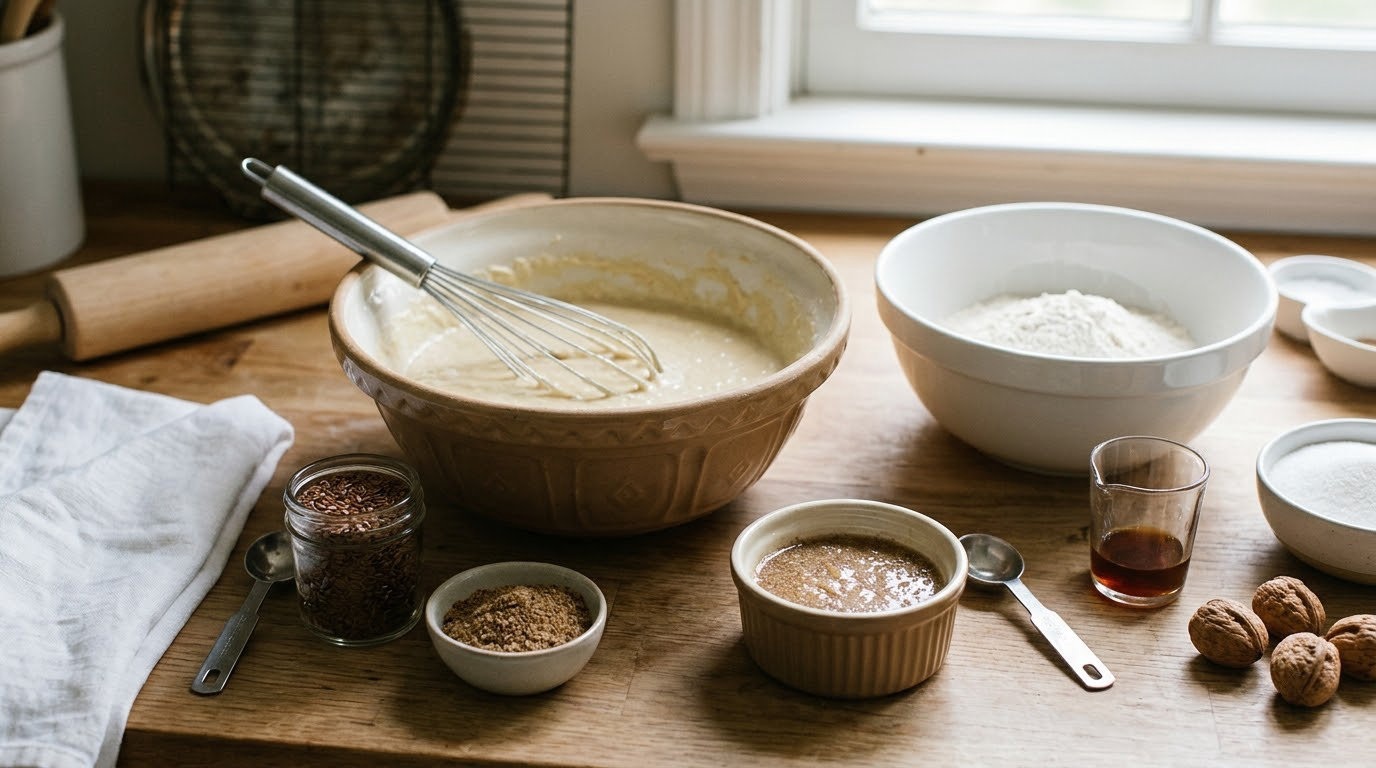
If you know how to replace eggs in baking, you will never abandon a recipe because the carton is empty. One large egg is about 1/4 cup (59 ml) of volume, so the usual rule is to swap in an equal volume of substitute. For gels like flax or chia, mix 1 tablespoon of ground seeds with 3 tablespoons of water and let it sit 5 to 10 minutes before it goes into the batter. Egg substitutes do work, though the crumb comes out denser and the top browns less deeply than an egg version.
I bake a lot of egg-free cakes now, mostly because someone in the house reacts badly to eggs, and the swaps fall into clear groups. Start by figuring out what the egg was actually doing in that recipe. It was binding, lifting, adding moisture, or emulsifying, and the right substitute depends on which job matters most.
This guide covers the ratios, the gluten-free options, the adjustments to make once you have swapped, and the handful of bakes where I would just buy eggs instead.
Table of Contents
What You Need
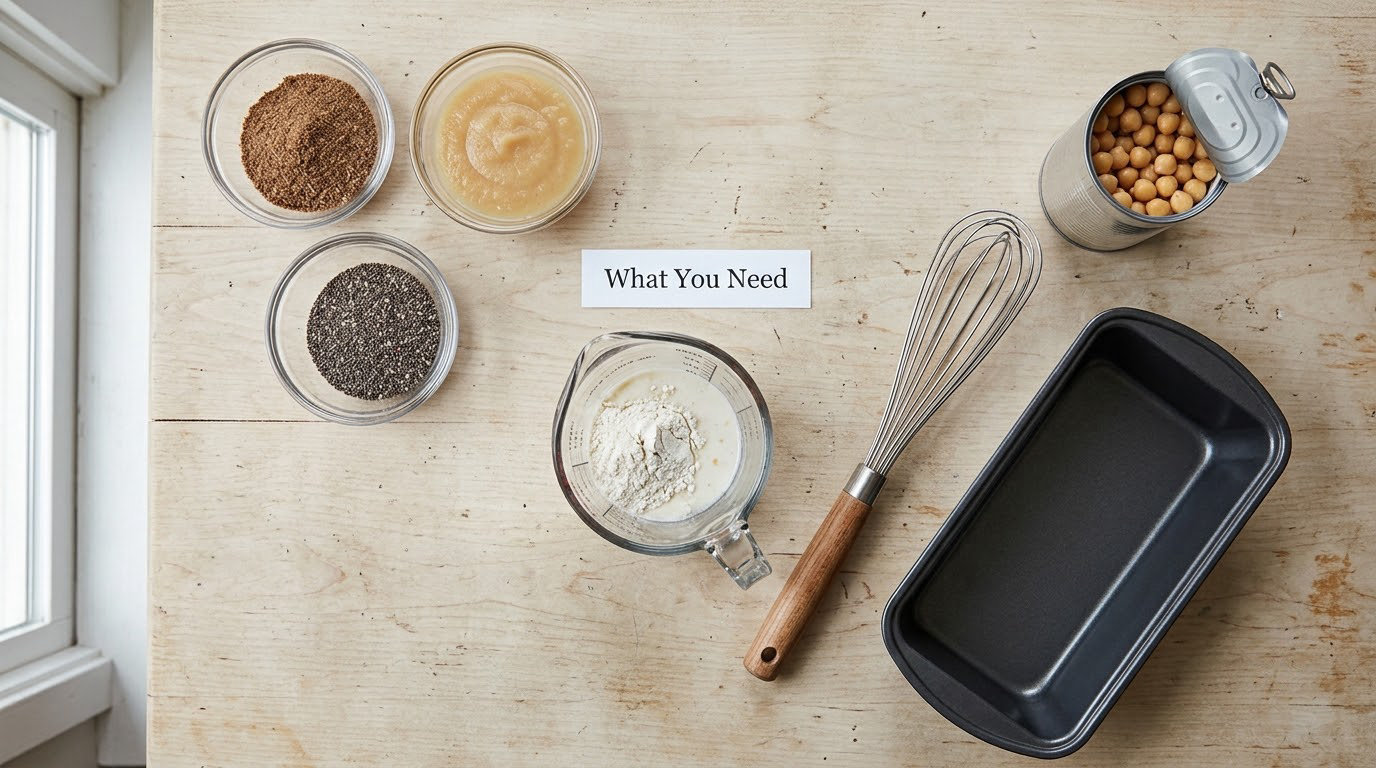
You do not need special equipment. You need a measuring cup or scale, a small bowl for mixing gels, and the substitute that matches the job the egg was doing.
Before you pick anything, look at the recipe and answer four questions:
- How many eggs does it call for? Two eggs in a loaf of banana bread is a very different swap from two eggs in a sponge cake.
- What is the egg doing there? Holding crumb together, lifting the batter, keeping it moist, or holding an emulsion.
- How much structure does the bake need? A layer cake needs more help than a cookie.
- Are there dietary rules? Gluten-free, egg-free, nut-free, and vegan all rule out different pantry staples.
The substitutes worth having on hand are unsweetened applesauce, ground flaxseed, chia seeds, a can of chickpeas or white beans for the aquafaba, plain yogurt or buttermilk, and a box of commercial egg replacer powder for the bakes where you want the closest match.
The egg substitute cheat sheet
| Substitute | Amount per 1 large egg | Best for | Flavor or texture change |
|---|---|---|---|
| Unsweetened applesauce | 1/4 cup | Cakes, muffins, quick breads, brownies | Slightly denser, mildly sweet |
| Ground flaxseed + water | 1 tbsp flax + 3 tbsp water | Cookies, muffins, pancakes, meatloaf-style binding | Faint nuttiness, no spread |
| Chia gel | 1 tbsp chia + 3 tbsp water | Gluten-free batters, puddings, cookies | Neutral, speckled with dark seeds |
| Aquafaba | 3 tablespoons | Meringue, macaron whips, marshmallows, brownies | None, whips like egg white |
| Silken tofu | 1/4 cup blended smooth | Cheesecakes, brownies, quiches, dense cakes | Slight bean note if underblended |
| Plain yogurt or sour cream | 1/4 cup | Cakes, quick breads, muffins | Adds tang, keeps crumb moist |
| Buttermilk | 1/4 cup | Cakes, muffins, biscuits | Adds tang and tenderness |
| Mashed banana | 1/4 cup mashed | Banana bread, muffins, chocolate cakes | Sweet, banana flavor, more moist |
| Pumpkin puree | 1/4 cup | Cakes, muffins, quick breads | Earthy, colorful, moist |
| Baking powder | 1 teaspoon | Any leavened bake already using baking powder | Lighter crumb, needs 1 to 2 extra minutes |
| Baking soda + vinegar | 1 tsp soda + 1 tbsp vinegar | Cake recipes with no other leavener | Rises faster, can turn gummy if overdone |
| Commercial egg replacer | Per package, usually 2 tbsp | Cakes and muffins where you want a neutral swap | Neutral, mixed real-world results |
How much for 2, 3, or 4 eggs
This is the conversion most people actually need mid-recipe.
| Substitute | 1 egg | 2 eggs | 3 eggs | 4 eggs |
|---|---|---|---|---|
| Unsweetened applesauce | 1/4 cup | 1/2 cup | 3/4 cup | 1 cup |
| Flax egg (ground flax + water) | 1 tbsp + 3 tbsp | 2 tbsp + 6 tbsp | 3 tbsp + 9 tbsp | 4 tbsp + 12 tbsp |
| Chia gel | 1 tbsp + 3 tbsp | 2 tbsp + 6 tbsp | 3 tbsp + 9 tbsp | 4 tbsp + 12 tbsp |
| Aquafaba | 3 tbsp | 1/3 cup | 1/2 cup | 2/3 cup |
| Silken tofu | 1/4 cup | 1/2 cup | 3/4 cup | 1 cup |
| Yogurt or buttermilk | 1/4 cup | 1/2 cup | 3/4 cup | 1 cup |
Twelve tablespoons of water is 3/4 cup, so four flax eggs need a full cup of water plus four tablespoons of ground flaxseed. Mix them in separate batches if your bowl is small.
Step-by-Step
Here is the order I follow when a recipe needs an egg I do not have.
1. Name the job. Read the recipe and decide what the egg is doing. In a chocolate chip cookie it is mostly binder. In a sponge cake it is binder, leavening, and emulsifier all at once, which is why sponge cakes are the hardest swap in baking.
2. Count and check the pan. Note the egg count, the pan size, and whether the recipe already contains baking powder or baking soda. Then decide whether the recipe is a good candidate at all. Layer cakes, custards, and pie crusts are not.
3. Prepare the substitute. If you are using flax or chia, grind the seeds first and mix with water, then wait the full rest time. If you are using aquafaba, open the can and pour off the liquid. If you are using a commercial replacer, measure it dry and add it with the dry ingredients instead of with the wet ones.
4. Swap and adjust. Add the substitute and make the recipe adjustment the new binder needs. Bump the baking powder by 1/2 teaspoon per egg replaced if the crumb needs lift, and consider trimming 1 to 2 tablespoons of sugar if you used applesauce or banana, which bring their own sweetness.
5. Bake and judge. Set the batter in the pan and look at it before it goes in the oven. If a cake batter is loose and shiny rather than thick and matte, it needs more binder, and adding flour at this point is the wrong fix. Add another gel or the next egg’s worth of substitute instead.
6. Judge the finished bake. The tests that matter are spread, rise, tenderness, browning, and whether the pieces hold together in your hand. Details on each one are below.
How to Replace Eggs in Baking for Binding
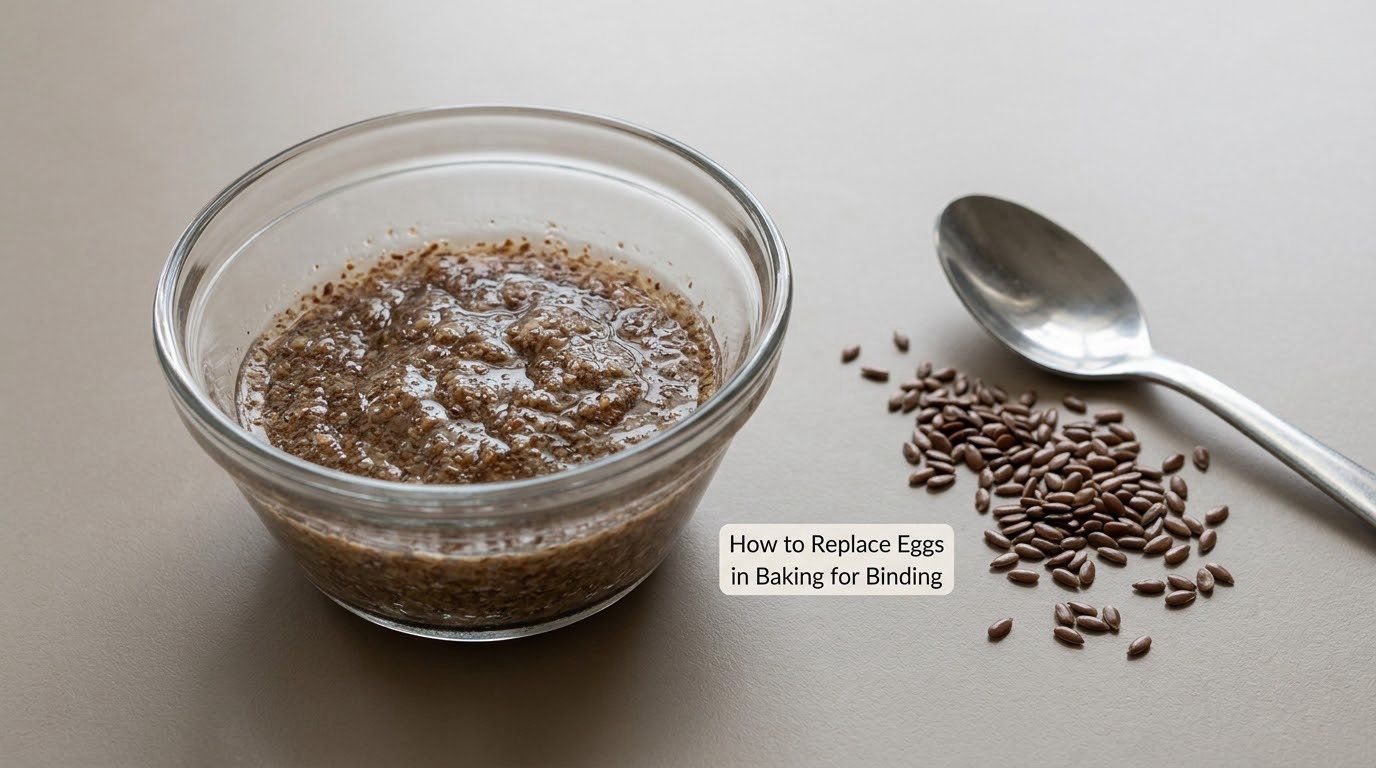
Binding is the most common job, and the most forgiving substitute category. If the egg is holding flour or oats together, a gel does the work.
Flax egg
Mix 1 tablespoon of ground flaxseed with 3 tablespoons of water and let it stand until thickened, roughly 5 to 10 minutes. It swells into a gelatinous gel that behaves like a whole egg in cookies, muffins, pancakes, waffles, and quick breads.
Grinding matters. Whole seeds pass straight through the batter and you end up with a chocolate chip cookie full of husks, which is the single most common reason people decide flax does not work. White chia seeds avoid the speckled look if that bothers you, though they do not swell as reliably as ground flax.
The texture is slightly denser and a little nuttier. On the upside, flax and chia are naturally gluten-free, which makes them the go-to in a gluten-free kitchen.
Mashed banana and applesauce
One quarter cup of mashed banana replaces one egg in muffins, quick breads, and chocolate cakes. It adds sweetness and moisture, so cut the sugar in the recipe by a tablespoon or two. Applesauce is the blander sibling at the same 1/4 cup, and it works in cakes and brownies where you do not want a banana note.
Aquafaba and starch slurries
Three tablespoons of aquafaba is a 1:1 swap by volume, and unlike fruit purées it adds no sweetness or color. It also whips, which makes it the one binder that can do structural work.
For gluten-free batters that need a starch set, whisk 2 tablespoons of cornstarch or arrowroot powder with 2 tablespoons of cold water and use that slurry in place of the egg. It sets on cooling, so it works best in bars and puddles rather than cakes that need to rise while baking.
How to Replace Eggs in Baking for Leavening
Eggs are a secondary leavener in most baking powder cakes, so a chemical substitute works well. Use the first option only when the recipe has no other rising agent.
Baking powder: 1 teaspoon per egg. If the recipe already calls for baking powder, add 1/2 to 1 teaspoon per egg replaced. This is the adjustment nearly every test kitchen recommends, and it is why an egg-free cake can still rise.
Baking soda plus acid: 1 teaspoon soda with 1 tablespoon vinegar or lemon juice per egg. The acid and base react on contact and produce the lift. Because that reaction burns out fast, cakes made this way often need 1 to 2 extra minutes in the oven or a slightly cooler temperature, or the crumb bakes out before the center rises.
Whipped aquafaba: 3 tablespoons per egg. Whip the chickpea liquid to stiff peaks and fold it in at the end. It is the closest thing to egg white structure and the only substitute that gives real lift through mixing rather than through a chemical reaction.
In boxed and pancake mixes: mixes usually list eggs as optional, so for a standard 9-inch cake use 1/4 cup unsweetened applesauce, 1/4 cup water plus 1/2 teaspoon baking powder, or 2 tablespoons aquafaba. For pancake and waffle mixes, 1/4 cup water per egg is enough, since the mix is already loose.
How to Replace Eggs in Baking for Moisture and Texture
Some recipes use the egg purely to keep things tender. In those, moisture substitutes do more good than gels, and the crumb comes out closer to the original than with a binder.
Yogurt or sour cream, 1/4 cup per egg. Adds moisture and a little tang, which keeps cakes and quick breads tender for days. Use plain and full-fat; the sugar and flavored varieties skew sweet.
Buttermilk, 1/4 cup per egg. The acidity tenderizes the crumb and reacts with baking soda. If you are out of buttermilk, stir 1/2 tablespoon of lemon juice or vinegar into 1/2 cup of milk, wait 5 to 10 minutes, and use that.
Applesauce and pumpkin puree, 1/4 cup per egg. Both work in quick breads and muffins. Pumpkin is the quieter of the two and holds its color better.
Plant milk, 1/4 cup per egg. Fine in cakes that already have a strong flavor, less noticeable in a plain vanilla cake. Oat milk browns the tops better than almond or soy because of its higher sugar content.
Two adjustments matter here. First, if the recipe already calls for a lot of liquid, swap in a thicker option like yogurt rather than another liquid, or thin the batter. Second, fruit purées add sugar, so reduce the recipe sugar by about 1 to 2 tablespoons per egg replaced or the bake will be cloying.
How to Replace Eggs in Baking for Vegan Recipes
If eggs are out for dietary reasons rather than a missing carton, the same job-first approach applies. Four substitutes carry most vegan baking.
Aquafaba for anything that needs lift or whipping, including meringue, macaron whips, marshmallows, and brownies.
Flax or chia gel for binding in cookies, muffins, quick breads, pancakes, and waffles. Rest time is not optional; skip it and the batter runs loose.
Silken tofu, 1/4 cup blended per egg for dense cakes, cheesecakes, brownies, and savory quiches. Blend it fully smooth or the bean flavor shows.
Commercial egg replacers, which are starch-based powders blended from tapioca, potato starch, and cellulose or similar. Follow the package quantity, which is usually about 2 tablespoons per egg, and mix them in with the dry ingredients. Forum bakers report genuinely mixed results, with some loving them in cakes and others finding they did not cooperate with the rest of the recipe. Treat one as a backup swap, not the plan.
Know where a simple substitution runs out. Sponge cakes, custards, pastry cream, and meringue traditionally made with sugar and egg white are the hard ones, and a plain one-for-one swap will not carry them.
How to Test a Replaced-Egg Batch
Five things tell you whether the swap worked, and you can check most of them before and during the bake.
- Spread. Cookies should spread to the size the recipe intends. Cookies that come out as tight little discs need more flax, chia, or aquafaba.
- Rise. A cake that is level or slightly domed is fine. A sunken center means the batter could not hold gas, and you needed more leavening or a whipped binder.
- Tenderness. If the crumb is gummy in the middle, the batter was too wet or the leavening burned out too early. Adding more flour after the fact makes it worse; add more binder next time.
- Browning. Egg-free bakes rarely brown as deeply. If the top looks pale but the center is set, it is done. If the top is pale and the center is raw, give it more time, or tent loosely with foil and finish.
- Binding. Lift one cookie or bar and hold it. It should not crumble at the seam. If it does, the binder was under-measured or was not allowed to gel.
A failed batch is rarely wasted. If a dense cake did not dissolve, tear off the top layer and turn the rest into a trifle or bread pudding. Cookies that spread into one sheet break apart into very good crumbs for a sundae or a topping.
Common Mistakes
Most egg-free bakes go wrong in the same handful of ways, and each one has a straightforward fix.
Swapping by volume alone. Volume is the starting point, not the whole method. If the egg was doing more than one job, add the leavening adjustment too.
Using too much banana or fruit puree. More is not better here. A quarter cup per egg is the ceiling, and extra puree makes the bake gummy and cloying. Cut the recipe sugar to match.
Skipping the rest time for flax or chia. Unrested gel has not swollen yet, so it does not bind. Give it the full 5 to 10 minutes, and grind flaxseed first.
Mixing baking powder and baking soda. They are not interchangeable. Baking powder works alone. Baking soda needs an acid, so pair it with vinegar, lemon juice, buttermilk, or yogurt, and remember it burns out fast.
Expecting whole-egg substitutes to behave like egg whites. Whites whip, whites foam, whites make meringue. No whole-egg replacement does that. When a recipe specifically calls for whites, use whipped aquafaba or a white-meringue recipe instead.
Substituting in delicate or yeasted recipes. Custards, pie crusts, and enriched yeasted doughs rely on eggs for structure, fat, and protein. Egg-free versions exist, but they are rewritten recipes, not swaps.
Short version by bake type: cookies and muffins take flax or chia, cakes take applesauce plus extra baking powder, quick breads take yogurt or applesauce, pancakes take whatever is already in the fridge, and meringues take whipped aquafaba.
Frequently Asked Questions
What is the best egg substitute for cakes?
Unsweetened applesauce is the best everyday substitute for cakes. Use 1/4 cup per large egg, then add 1/2 teaspoon extra baking powder per egg replaced because the egg was helping with lift. For a cake that must hold heavy mix-ins, use a flax egg instead, which binds but adds no sweetness. Expect a slightly denser, more moist crumb than the egg version.
How much baking powder replaces one egg?
Use 1 teaspoon of baking powder per egg you replace, on top of the amount the recipe already calls for. In practice that means adding 1/2 to 1 teaspoon extra per egg to a recipe that already uses baking powder. Baking powder works on its own. Baking soda does not, so it must be paired with an acid such as vinegar, lemon juice, buttermilk, or yogurt.
Can I use aquafaba instead of egg whites?
Yes. Aquafaba is the starchy liquid from a can of chickpeas or white beans, and it whips to soft or stiff peaks much like egg white. Use 3 tablespoons per egg white. It works for meringues, marshmallows, macaron whips, and brownies, and it is one of the few substitutes that adds lift through whipping rather than a chemical reaction.
Are flaxseed and chia good egg substitutes for gluten-free baking?
They are two of the best options in a gluten-free kitchen, since both are naturally gluten-free and high in fiber. Mix 1 tablespoon of ground seeds with 3 tablespoons of water and rest 5 to 10 minutes before adding to the batter. Grind flaxseed first, or the whole seeds pass through and leave the bake speckled with husks.
Does replacing eggs make cookies cakey or dense?
It can, and that is the most common complaint from home bakers. Eggs add structure and lift that no pantry swap fully reproduces. For cookies, use a flax egg or chia gel rather than applesauce or banana, since a gel binds without adding weight or moisture. Baking the cookies a minute or two longer also dries out the extra moisture and crisps the edges.
Which baked goods are difficult to make without eggs?
Sponge cakes, custards, pastry cream, pie crusts, and meringues made without egg white are the hardest. They need egg whites for structure or yolks for richness and emulsification in ways a simple one-for-one swap cannot match. Meringues and whipped desserts have an aquafaba route. Everything else on this list is a rewritten recipe rather than a substitution.
If you are standing in front of an empty egg carton right now, make a flax egg for cookies or muffins and use 1/4 cup of unsweetened applesauce plus 1/2 teaspoon extra baking powder for a cake. Whipped aquafaba is the one to reach for when the recipe needs egg white. 2026