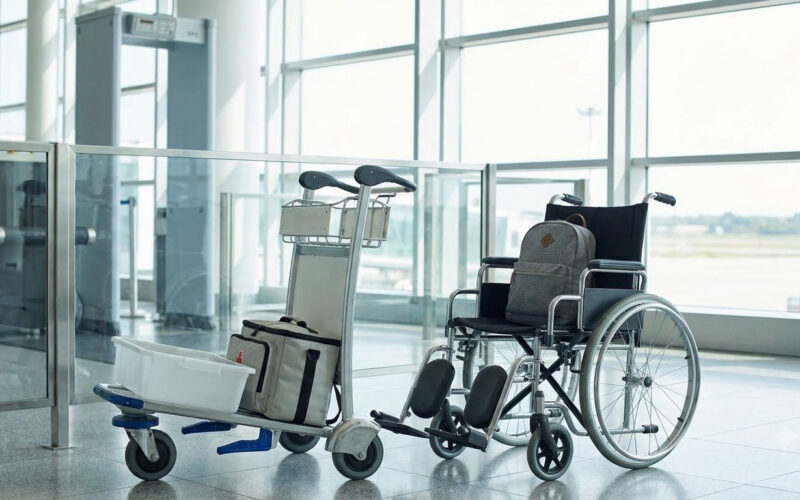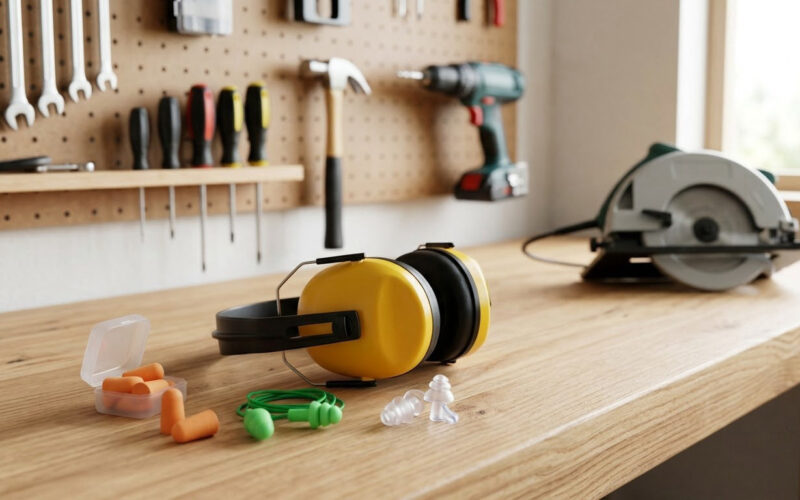
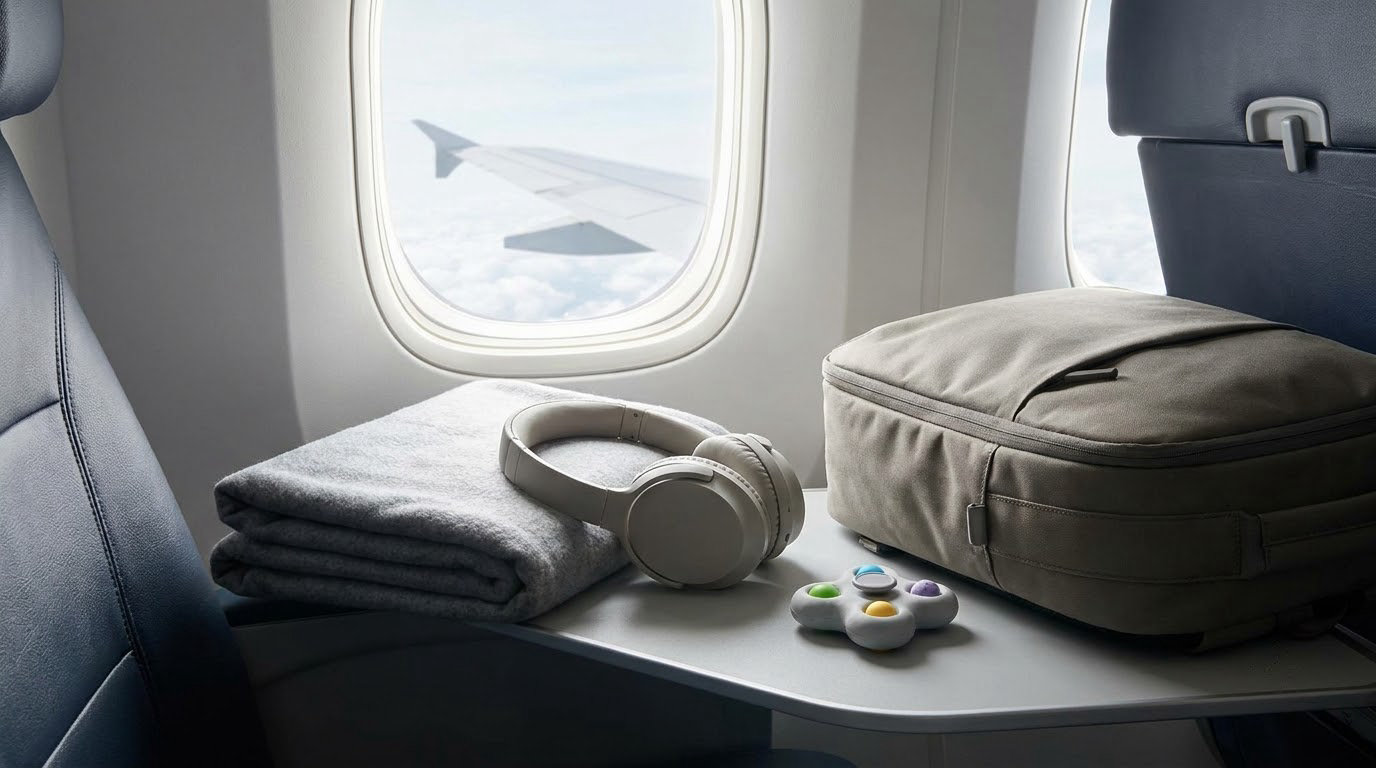
Learning how to fly with an autistic child comes down to three things: tell your child what is coming, tell the airline and TSA what your child needs, and pack for the waiting. Most of the hard parts of air travel with an autistic child are not the plane. They are the queue at security, the announcements nobody warned them about, and the three hours where nothing happens.
This guide walks through the whole trip in order, from picking a flight to landing. It should take about 30 minutes to read, and most of the work happens in the weeks before you leave.
Nothing here guarantees a meltdown-free day. A crowded terminal on a bad travel day is going to be hard. What the preparation does is shrink the number of surprises, and surprises are what most meltdowns are made of.
Table of Contents
- What You Need
- How to Fly With an Autistic Child, Step by Step
- Choose the Right Flight and Seats
- Build a Visual and Sensory Travel Plan
- Prepare for Airport Security and Delays
- Use Simple Rules During the Flight
- Prepare for a Meltdown or Sensory Overload
- Common Mistakes
- Frequently Asked Questions
- Can an autistic child use an airline’s special assistance or accommodations?
- How should I prepare my child for airport security?
- Should I choose an aisle seat, window seat, or bulkhead seat?
- What sensory and comfort items should I pack in my carry-on?
- What should I do if my child becomes overwhelmed or has a meltdown at the airport?
- Can special diets or medical needs affect what I bring on a flight?
- Start With the Phone Call
What You Need
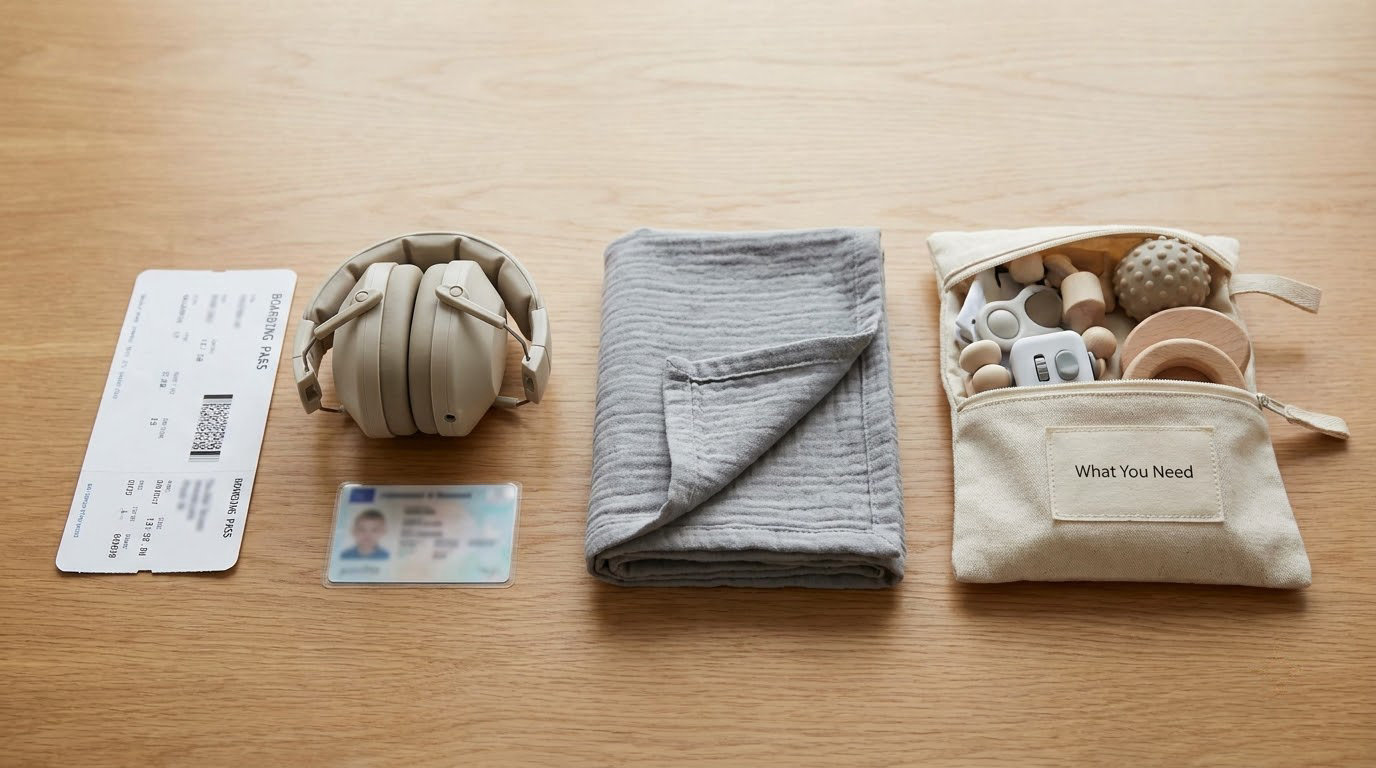
Before you book anything, gather five categories of things. Starting a few weeks early is much easier than sorting it out the night before.
Documents. A government-issued ID for the child or a passport for domestic flights, your own ID, the boarding passes, and any medical documentation your child’s doctor has provided. If your child takes medication, carry a doctor’s letter describing the medication and the diagnosis, and keep it accessible rather than buried in a bag.
Airline arrangements. Contact the airline’s accessibility or special assistance desk at least 72 hours ahead and ask about pre-boarding, medical or bulkhead seating, and how they handle a child who may be non-verbal. Policies differ by carrier, so check rather than assume. Parents on autism parenting forums frequently report that families who called ahead got calmer treatment than families who said nothing and hoped.
A TSA plan. The TSA Cares helpline takes requests at least 72 hours in advance and assigns a passenger support specialist who meets you at the checkpoint and helps move you through screening. Print a TSA Notification Card as well. The card is a conversation starter, not an exemption from screening.
Comfort items. Pick a small number of objects that already feel safe and familiar, and do not wash them before you travel. A taggy blanket or a worn stuffed animal carries the smell of home, and that smell does more calming work than most families expect.
Sensory tools. Noise-reducing headphones or ear defenders that fit over the child’s ears, a small fidget kit, a chew item, a visual timer, and a tablet with downloaded content and headphones. Every item should fit in one bag you can reach without unpacking.
How to Fly With an Autistic Child, Step by Step
Choose the Right Flight and Seats
Pick nonstop flights and treat connections as a last resort. Every extra airport adds a security line, a new gate, a boarding announcement and an unfamiliar bathroom, which is four chances to overwhelm your child in one trip.
Time of day matters more than most parents expect. If your child naps predictably, a flight that overlaps the nap window can turn the hardest stretch into the easiest. Parents on Reddit have described red-eye flights as the trip where the child slept the whole way, while a same-day daytime flight on the same route ended in an overloaded, overstimulated child by the second hour. The reverse is also true for children who cannot sleep when travelling.
For seats, aisle and window both have arguments. A window seat reduces the urge to bolt into the aisle and gives a wall to lean on. An aisle seat makes bathroom trips easier, which matters a lot with a six-year-old and a three-hour flight.
A bulkhead row gives extra legroom and removes the seat in front, which is useful for a child who kicks or bangs. Ask about it early, since bulkheads are limited. If you need a child safety seat, that goes in the reservation at booking, not at the gate.
Ask the airline for medical seats when you book, and state plainly that you are flying with an autistic child and would like pre-boarding. Tell the flight attendant at the gate as well, once you know who you are talking to.
Build a Visual and Sensory Travel Plan
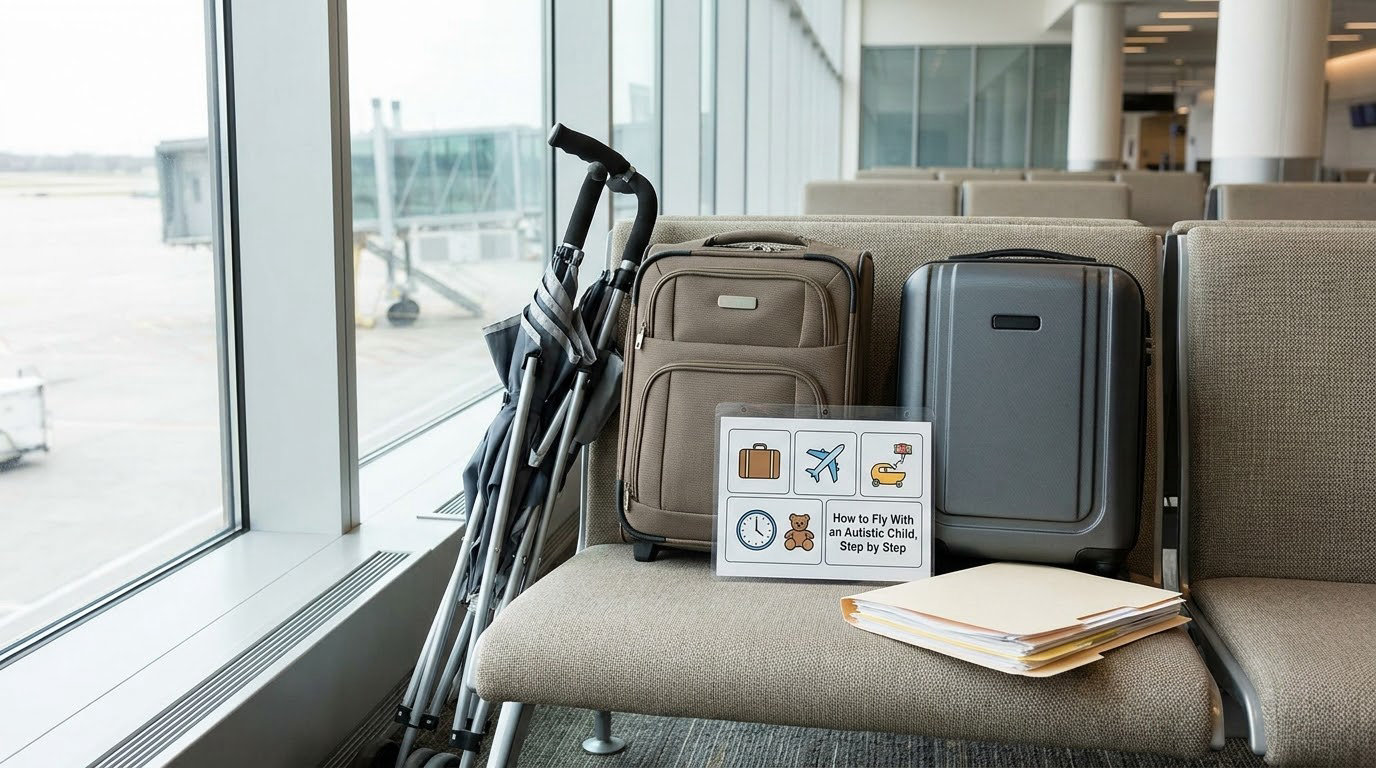
A social story is a short, plain sequence of pictures or words that shows what will happen in what order. Build it two to six weeks out and keep reading it daily until departure, then again on the morning of the trip.
Keep it accurate rather than reassuring. A story that says the plane will be fun and then delivers a four-hour delay teaches your child that your pictures lie. Instead show the real sequence: car, airport, queue, walk through scanner, gate, plane, fuss, then sleep.
A simple checklist works almost as well. Something like: backpack with headphones, snacks, comfort toy, phone charged, ID in front pocket. If your child reads, let them run the checklist at the door.
One technique worth trying is asking your child to explain the process back to you. Autistic children often learn better by teaching than by being told, and it shows you quickly which part of the trip they have not understood yet.
Pack the sensory bag the night before and keep it in one place. Overpacking is the most common prep mistake and it makes the security checkpoint harder, because a full carry-on means unpacking on a hard floor with a line behind you.
By age, the packing list shifts. A toddler needs chew items, a lovey, a snack that survives in a pocket and noise-reducing headphones. A school-age child adds a fidget kit, a visual timer and a tablet. A teenager may need headphones, a book and the space to be left alone, which is its own accommodation.
Prepare for Airport Security and Delays
Call TSA Cares at 855-787-2227 at least 72 hours ahead. Ask for a passenger support specialist and note the confirmation. Arrive early, because the specialist meets you at the checkpoint and the process still takes time.
Tell your child what screening involves before you reach it. Say that bags go on a belt and through a machine, that adults walk through a scanner, and that strangers will look at everyone the same way. A child who has seen a video of the process usually handles the reality better.
Keep the backpack decision simple. Agree beforehand that the backpack comes off and goes through with the adult bags, and practice that exchange at home a couple of times. Many parents describe a meltdown at exactly this moment, because the bag is a security object and giving it up feels like a loss.
If medication, liquids or medical devices are involved, tell the officer at the start rather than waiting to be asked. A doctor’s letter on hand makes screening quicker and calmer. Frozen gel packs and cooling packs may need to be frozen solid and declared.
For delays, decide your plan before you leave home. When a flight is cancelled, a predictable routine helps more than any distraction: find a quiet corner away from the speaker, put on headphones, set a visual timer for 20 minutes, and tell your child what happens next. If your airline offers rebooking on another carrier, ask about terminal changes and added travel time before you agree.
Families flying alone report that a lounge or a quiet paid waiting area is worth it during a three-hour delay. A bathroom, a chair that is not a floor, and food that is not a vending machine will hold a tired child together.
Use Simple Rules During the Flight
Boarding is a decompression window. Pre-boarding means fewer people in the aisle and more space to sit down calmly, so request it and use it if it is offered.
Announcements are loud and unpredictable. Put headphones on before boarding and keep them on through takeoff and landing. If your child cannot tolerate headphones, agree on a hand signal for when an announcement is coming.
For ear pressure, sucking and swallowing help, which means snacks, drinks or gum during descent. For a child who cannot chew or who is non-verbal, offer water, a straw, or a chew tube instead. Nothing has to be swallowed a certain way; the point is the swallowing motion.
Keep the tablet downloaded and offline. Streaming needs a connection the family may not have, and a buffering screen in row 14 is its own small crisis.
Set movement expectations early. Takeoff and landing mean sitting still for roughly 15 minutes each. Do not plan a full meal service for a child who will not eat it; bring your own familiar food and save the airline meal for you.
Ask the flight attendant to return with promised items. When turbulence interrupts service and drinks never arrive, a snack you packed yourself stops being a backup plan and becomes the whole plan.
Prepare for a Meltdown or Sensory Overload
Early signs arrive before the visible meltdown. Watch for repeated questions, hand flapping that escalates, plugging the ears, refusal to move, or a sudden drop in verbal output.
When you see them, lower the input rather than adding more. Headphones on, lights down, voices low. Move to a quieter part of the cabin or an empty row if you can, and keep your own voice flat and short. Statements work better than questions.
Do not introduce a new reward or treat during the airport as a surprise. Promising something for good behaviour at the check-in counter sets up every other queue to be a problem. Choose the reward before the trip, keep it small, and make it predictable.
If you are solo, tell the flight attendant before you go to the bathroom. A parent on Reddit described a workable routine where the attendant watched her son during a quick bathroom trip. It is a reasonable ask, and it works better when requested calmly at the start of the flight.
After a meltdown, do not lecture. Recovery often takes an hour or more in a quiet space. Give your child water, low stimulation and time before you expect normal behaviour back.
Common Mistakes
Overpacking the carry-on. Fix: one sensory bag, packed the night before, everything reachable without unpacking. If it does not fit in one bag, it does not fit through security easily.
Relying on a perfect schedule. Fix: build the plan around the worst realistic delay, not the published one. Assume you will sit and wait longer than you meant to.
Not telling the airline. Fix: call the accessibility desk at least 72 hours out, request pre-boarding and medical seating, and repeat it at the gate. Parents report that gate agents who knew were consistently calmer than ones who did not.
Skipping the practice run. Fix: before the first trip, attend an airport mock-flight event or book a desensitization tour through an airline disability department. One family described their actual flight day as surprisingly smooth after a practice run.
New rewards at the airport. Fix: decide the reward before you leave home. Novelty in Terminal B is noise your child does not need.
Washing the comfort items. Fix: skip the laundry. Familiar smell is doing sensory work you cannot buy.
Forgetting the return trip. Fix: the flight home gets its own preparation. A child who remembers a bad outbound trip will start anxious before you even land at the other end, and that anxiety shows up at check-in on the way back.
Ignoring wandering risk. Fix: in a crowded terminal, hold hands or use a wandering-prevention device, and put contact details on an ID card or wristband in case your child moves out of sight.
Frequently Asked Questions
Can an autistic child use an airline’s special assistance or accommodations?
Yes. Most US carriers offer pre-boarding, medical or bulkhead seating, and help getting on and off the plane. You generally request these through the airline’s accessibility or special assistance desk, and many ask for at least 48 to 72 hours notice. Tell them your child’s age, whether they are verbal, and what helps with noise, waiting, or unexpected movement. Repeat the request at the gate, because gate agents rarely see advance notes.
How should I prepare my child for airport security?
Explain the steps in order, in plain words: bags on the belt, adults through a scanner, everyone gets looked at the same way. Show a video of the checkpoint so the pictures are familiar. Practice taking the backpack off at home so the exchange is not a surprise. Arrive early so waiting does not stack on top of a new environment.
Should I choose an aisle seat, window seat, or bulkhead seat?
A window seat cuts the urge to bolt into the aisle and gives your child a wall to lean on. An aisle seat makes bathroom trips easier during a long flight. A bulkhead row adds legroom and removes the seat in front, which helps children who kick or bang. Request bulkheads early because there are few of them, and book any child safety seat at the same time as the ticket.
What sensory and comfort items should I pack in my carry-on?
Noise-reducing headphones or ear defenders, a small fidget kit, a chew item, a visual timer, comfort toys you did not wash, and a tablet with content downloaded for offline use. Keep all of it in one bag that opens without unpacking. Add familiar food, a straw, and a refillable bottle so drinking during descent works without a flight attendant.
What should I do if my child becomes overwhelmed or has a meltdown at the airport?
Lower the input first. Put headphones on, drop your voice, and move to a quieter corner away from announcements. Keep sentences short and declarative rather than asking questions. If you are solo, alert the flight attendant before you leave your child for any reason. Recovery takes time, often over an hour in a calm space before your child returns to baseline.
Can special diets or medical needs affect what I bring on a flight?
They shape almost every decision on the trip. Bring your own safe food, because airline meals may not meet restrictions and service can be interrupted. Keep medication in its original labelled containers with a doctor’s letter describing the diagnosis and the medication. Declare liquids, cooling packs, and medical devices to the officer at the start of screening rather than waiting to be asked.
Start With the Phone Call
If you do one thing from this guide, make the call to the airline’s accessibility desk and to TSA Cares at least 72 hours before departure, then tell your child the plan out loud. Everything else on the list, from the sensory bag to the return-trip social story, makes that day easier. None of it works if the airline and the security line have never heard from you.