How to choose a preschool for a child with special needs comes down to five things: the placement setting, staff training, how the school aligns with your child’s plan, the child-to-adult ratio, and whether the room itself will keep your child regulated. Start by confirming what your child is legally eligible for, then tour several classrooms and compare every answer on the same written scorecard.
This is one of the biggest decisions a family makes in the first five years, and it is made under time pressure. Districts cap preschool special education seats, and waitlists are real. The good news is that the process is repeatable: ask every school the same questions in the same order, and the differences between them become obvious fast.
Quick answer: The best preschool for a child with special needs is the one that can show you, in writing, a plan for your child’s communication, sensory, learning, medical, and behavioral needs, delivered by staff trained to do it, in a classroom small enough to deliver. Everything else — the brochure, the playground, the friendly director — matters far less than that.
A note before we start: this is general education and special education information, not legal or medical advice. Rules about eligibility, plans, and services differ by state, and your child’s doctor and your state Department of Education should be part of the conversation. Where I describe what public school programs are required to do, that comes from the Individuals with Disabilities Education Act (IDEA) as administered by the U.S. Department of Education.
Table of Contents
- What You Need
- Step-by-Step: How to Choose a Preschool for a Child With Special Needs
- 1. Identify the Child’s Must-Have Supports
- 2. Research Licensing, Staffing, and Inclusion
- 3. Call or Email to Ask Specific Questions
- 4. Tour More Than One Preschool and Learn How to Choose a Preschool for a Child With Special Needs
- 5. Observe How the School Handles a Typical School Day
- 6. Review the Child’s Daily Support Plan
- 7. Check Safety, Transportation, and Family Logistics
- 8. Make a Trial Enrollment or Short-Term Plan
- Common Mistakes
- Frequently Asked Questions
- When should I start looking for a preschool for a child with special needs?
- Should autistic children go to preschool?
- Is special education preschool free?
- What if my child does not have an IEP yet?
- What if a preschool seems hesitant to accommodate my child?
- How do I know the placement is working in the first weeks?
- Conclusion
What You Need

Most families walk into a preschool tour with a brochure and a gut feeling. Bring paperwork instead. Before you call a single school, gather these things and write your child’s must-haves in your own words.
- The current plan your child has. If your child is still in early intervention, that is an IFSP. If they have turned three or are turning three, ask your district whether an evaluation is warranted. If a plan already exists, bring a copy. If not, that is a separate task, and Step 2 covers it.
- Evaluation and therapy reports. Speech-language, occupational, physical, and hearing reports tell you what services your child currently receives and who provides them.
- A weekly therapy schedule. Note days and times. School-based therapy and private therapy at home pull in opposite directions more often than families expect.
- A one-page list of nonnegotiables. For example: a quiet space, a visual schedule, an adult who knows how to do a safety intervention, allergy-safe meals, toileting help, or a hearing-consistent space.
- Your ideal school day. Full day, half day, three days a week, or mornings only. Include what happens in the hours a half-day program leaves open.
- Travel limits. How long your child can tolerate a bus ride, and who covers the second half of the day if the program is half-day.
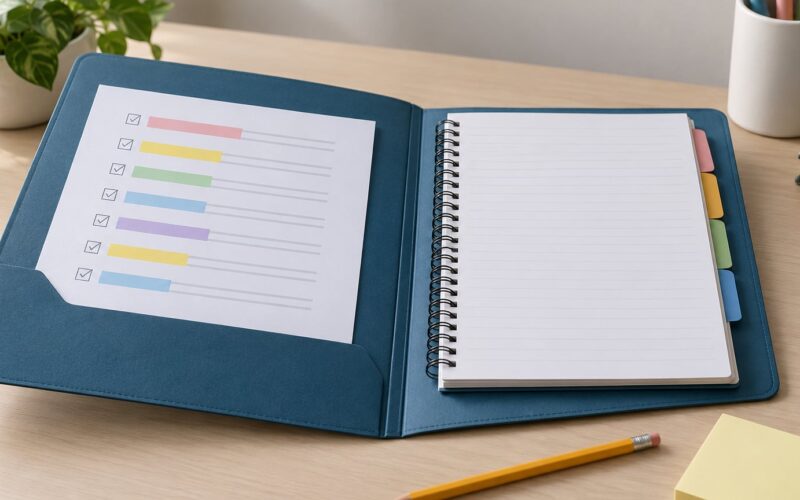
- A tour scorecard. One page, the same questions for every school, with a column per school. A phone photo of a printed sheet works fine.
If you can get the paperwork together in one evening, the rest of the process moves twice as fast. The scorecard is the piece families skip and later wish they had.
Step-by-Step: How to Choose a Preschool for a Child With Special Needs
The sequence below is the order that wastes the least time. Skipping ahead to the tour is the most common mistake, because a tour without prior research mostly tells you how the school performs for visitors.
1. Identify the Child’s Must-Have Supports
Translate your child’s needs into things a school can actually do or cannot do. Vague needs produce vague promises, and vague promises are worth nothing at 8 a.m. on a Tuesday.
- Communication. Speech-language services, a speech-language pathologist on site or on a schedule, a plan for a child who is nonverbal or minimally verbal, and a real answer about how staff communicate with you daily.
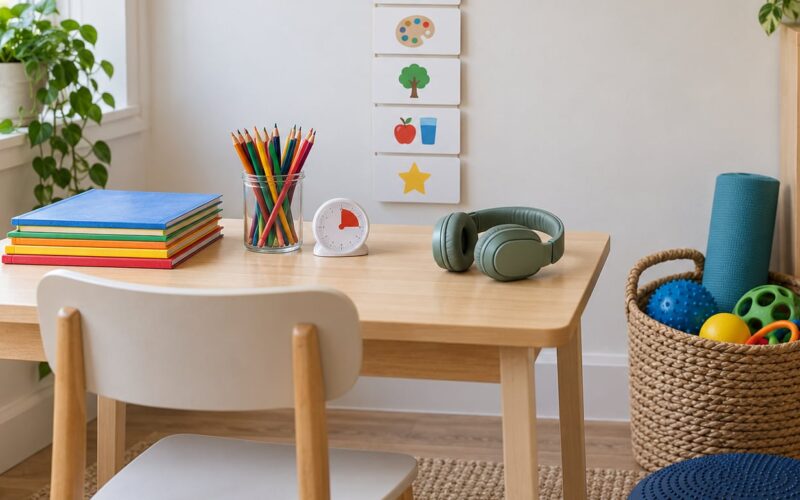
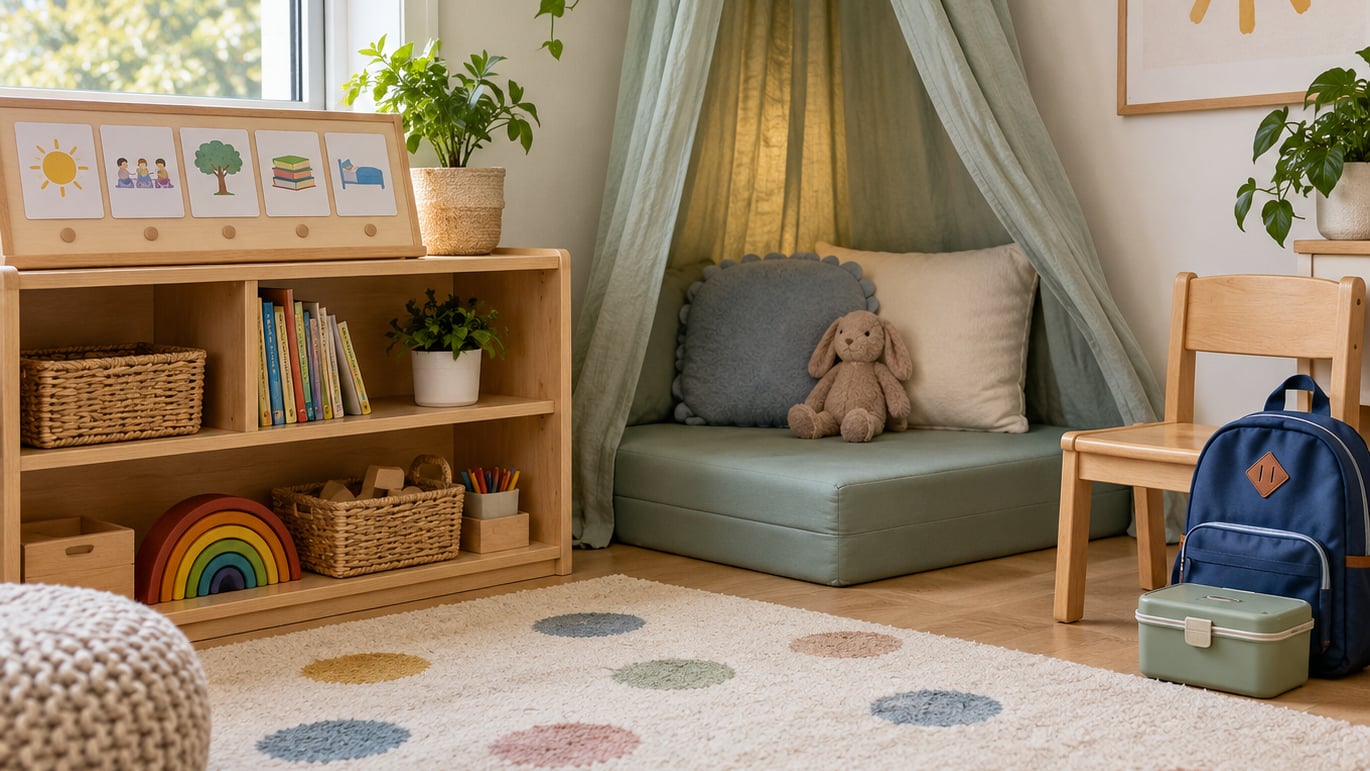
- Sensory. Noise level, lighting, a quiet corner, movement breaks, headphones, a predictable place for a child to reset. Ask what happens when a child is overwhelmed in the middle of a group activity.
- Learning. Visual schedule, small-group instruction, predictable routine, how transitions are handled, and whether the child gets one-on-one attention on their hardest moments.
- Medical. Medication administration policy, allergy and dietary procedures, mobility access, hearing accommodations, toileting support, and who is authorized to give what.
- Behavioral. A written behavior intervention plan, how it is shared with every staff member the child sees, and what adults are trained to do during a crisis.
- Therapy access. Can outside therapists come into the building, and will they coordinate with the classroom teacher? A child who gets pull-out therapy but no classroom follow-through can lose more than they gain.
Gross motor and sensory work often continues outside the school day too. Our guide to how to find swim lessons for special needs kids covers what to look for in an adaptive program, and it tells you which questions about water safety and staff ratios transfer straight into a preschool tour.
How to tell this step is working: every line on your list has a specific answer attached to a named person. If the answer is “we’ll figure that out once your child is here,” it is not an answer.
2. Research Licensing, Staffing, and Inclusion
Research is where you find out whether a school can serve your child at all, before anyone spends an afternoon showing you around. The public district and private preschool questions are different questions, and the difference is bigger than most families expect.
For a public school district preschool program, IDEA Part B, Section 619 funds special education for children ages 3 through 5, and those services are part of a free appropriate public education, meaning the district provides them at no cost to the family. If your child is eligible, the district is required to provide special education and related services, including speech-language, occupational, and physical therapy when they are in the plan. Eligibility for special education is not the same as having a diagnosis, and a child does not need an autism label to qualify.
For a private or religious preschool, none of that applies. IDEA does not cover private preschools, so those programs are not required to honor an IEP, provide a specific placement, or deliver related services. A Section 504 plan protects against disability discrimination, but only for programs receiving federal financial assistance, and it grants accommodations rather than specialized instruction. This is the single biggest legal difference between the two routes, and it is worth settling before you fall in love with a private school’s classroom.
Then check the basics for any school, public or private. Look up its licensing status with your state’s licensing authority. Ask about the child-to-adult ratio in the specific classroom your child would enter, not the school’s best room. Ask what training staff have actually completed in special education, autism, sensory supports, and crisis response, and how long the current teachers have been there. High turnover is a real predictor of a hard year for a child who depends on one trusted adult.
Finally, test inclusion against practice. Ask which adults are in the room, where a child with mobility needs sits, whether a child who melts down during circle time gets supported or sent out, and whether the school has actually served children with your child’s profile. Interested in inclusion as a value is not the same as staffed for it.
How to tell this step is working: you can name the classroom your child would be in, the ratio in it, and the staff who would be with your child, and the school’s answers match each other.
3. Call or Email to Ask Specific Questions
Before you schedule a visit, ask these by email so you get written answers you can compare later. A school that answers all of these clearly has a functioning special education program. A school that answers two of them is telling you something.
- How many children and how many adults will be in my child’s classroom on a typical day?
- What is your child-to-adult ratio for the specific room, and does it change during circle time, outdoor play, and transitions?
- Have any of the teachers in that room completed training in special education, autism, or sensory supports? Which ones, and when?
- What happens during a typical preschool morning, hour by hour?
- Is there a written behavior or support plan for my child, and if so, who writes it and who reviews it?
- How do you handle a child who becomes overwhelmed or distressed? What is the calm-down plan, and where does it happen?
- Can my child’s therapists come on site, and how do you coordinate with them and with me?
- How will you communicate with me during the day, and how often?
- What is your medication administration policy, and who is authorized to give it?
- How do you handle allergies, dietary restrictions, and special food textures?
- What are your arrival, dismissal, and pickup authorization procedures, and who releases a child to whom?
- What happens if my child is absent repeatedly or if a crisis occurs during the day?
How to tell this step is working: answers arrive within a few days, in writing, and they include specifics. Follow up on any vague answer before booking a tour rather than after.
4. Tour More Than One Preschool and Learn How to Choose a Preschool for a Child With Special Needs
Tour at least two realistic options, and tour them at the same time of day. A program that works beautifully at 9 a.m. during free play can look very different at 12:30 during the hardest transition of the day.
Bring the scorecard. Stand at the edge of the room and watch the room rather than listening to the director. Note the noise level, how many adults are actually on the floor, whether children are supervised by sight and sound, how long children wait when materials are not ready, what happens at a transition, whether the bathroom is reachable without stairs, and whether there is a place a child can go to be quiet without being removed from learning.
Watch the adults, not the children. Does a teacher get down to a child’s level? Do two adults talk to each other while a child is escalating? When a child has a hard moment, is there a plan, or is there improvisation? Ask what the daily schedule looks like on a normal Tuesday and check whether the room you saw matches it.
The American Academy of Pediatrics, through its Caring for Our Children standards, publishes maximum child-to-staff ratios and group sizes. They are not rules for a special education classroom, but they are a useful benchmark to hold any preschool against.
| Age | Maximum children per staff member | Maximum group size |
|---|---|---|
| 2 years | 1 to 6 | 12 |
| 3 years | 1 to 7 | 14 |
| 4 to 5 years | 1 to 9 | 19 |
Self-contained special education classrooms and many inclusion-based preschool programs run smaller than these numbers, often by design. If the room you are considering runs well above them, ask directly what happens when every child in the group needs help at once, and listen to whether the answer is a plan or a shrug.
How to tell this step is working: your scorecard has a clear favorite and a clear rejection, and you can name the specific moment in each room that decided it.
5. Observe How the School Handles a Typical School Day
The best evaluation is a normal one. Ask to watch a full morning including arrival, circle time, free play, a transition, lunch, outdoor time, and rest. Then mentally run your child through each one.
- Arrival. What happens between the car and the door? A greeter, a visual schedule, a predictable routine, or a group hug that sends a sensory-sensitive child over the edge?
- Waiting. Can your child wait for materials or for a turn, and for roughly how long? Repetition of the same wait is a lot to ask of a three-year-old.
- The bathroom. Is it independent or assisted, and is there help when a child needs it during class?
- Lunch. How are allergies and textures handled? Where does a child sit, and is there a quieter option?
- Rest. Is napping required or optional? Many autistic and sensory-sensitive children cannot rest in a noisy room.
- Transitions. This is where most breakdowns happen. Watch a warning before a change and watch how much warning your child would get.
- Distress. Find out what happens the first time your child cries, refuses to participate, or escalates, and where the adult takes them.
- Group time. Can a child participate without performing, or is participation the only way to be included?
If your child usually needs extra help keeping up with the pace of a room, read how to help a child keep up with classroom pace before the first week. Those strategies are easier to coach toward when the school already builds in small-group instruction.
How to tell this step is working: you can picture your child in each of those eight moments, and the picture is calm rather than clenched.
6. Review the Child’s Daily Support Plan
For a child in special education, ask to see the daily support plan before you sign. If your child is not yet eligible, ask what the school will write and how often it will be reviewed.
A workable plan names supports across the areas you listed in Step 1: communication, sensory regulation, behavior, learning goals, medical needs, meals, therapy services, and home-school communication. It should say who is responsible for each one and what happens if a support is missed. It should be shared with every adult the child sees, including substitutes and bus staff, not just the lead teacher.
If your child has an IEP, look at the goals. Preschool goals should be functional and measurable, and they should describe what your child can do, not what your child is like. A goal such as independently completing four of five steps of a visual schedule, or requesting a break with a card or sign in four of five opportunities, tells a teacher what to practice. A goal such as improving social skills does not.
Ask how progress is monitored, how often you receive updates, and what triggers a change to the plan. Then ask what happens between the end of early intervention and the start of school services, because that gap is where progress often stalls.
How to tell this step is working: the plan is specific enough that a substitute teacher could follow it, and there is a date on it for the next review.
7. Check Safety, Transportation, and Family Logistics
Support that only works in theory is not support. Now look at everything around the education decision.
- Arrival and dismissal. Is there a staff member at the door every single time? Who is authorized to pick up your child, and how is that list enforced?
- Supervision. Is supervision by sight and sound, including at arrival, dismissal, and on the playground? Playground surfaces, separate equipment for toddlers, and shade matter more than most parents expect.
- Emergency communication. How do they reach you, what is the backup contact, and what is the reunification procedure?
- Meals. Allergy protocols, how food is handled, and whether a child who needs to eat separately can.
- Restroom and mobility access. Walk it yourself. Check width, ramps, door latches, and whether a child can reach the sink.
- Hours and the second half of the day. Most district special education preschool programs are half-day. That means a second provider, a second set of staff, and a second transition for your child. Ask whether the after-care provider knows your child’s plan, and consider whether your child can handle two settings at once in one day.
- Attendance expectations. Distances between a public program and a private program can make attendance the deciding factor, so ask before you commit.
- Backup plans. Who covers if a teacher calls out, and what happens to your child’s supports that day?
If your child relies on emergency medication, feeding supplies, or a backup set of clothing every day, ask where the school stores the equivalent. Our guide to how to make a go bag for a child with medical needs lists what to pack, which is a useful checklist for building that conversation.
How to tell this step is working: the whole day, not just the school hours, is mapped out and staffed.
8. Make a Trial Enrollment or Short-Term Plan
Do not treat the first day as the end of the decision. Ask for a written first-month plan with checkpoints, and make it reversible on both sides without drama.
Agree in advance on what you are watching for: how regulated your child is at drop-off, whether they communicate needs, how much they participate, how tired they are after, whether behavior changes, and how they sleep. Write down a review date, usually two to four weeks in, and a set of indicators that would mean the placement is not working.
Talk to your child in whatever way works, whether that is words, a picture chart, or a visual scale. Many children cannot tell you they are struggling, so watch the adults’ communication logs and your child’s body at pickup.
How to tell this step is working: at the checkpoint, adults in two settings describe a similar child. If the program sees a child your family does not recognize, the fit is the problem, not the child.
Common Mistakes
Almost every avoidable problem in this search traces back to one of these.
- Choosing on location and convenience first. Distance matters enormously, but not more than whether the program can serve the child. A 25-minute ride to the right placement beats a 5-minute ride to a program that cannot say what happens during a meltdown.
- Accepting “we’ll figure it out.” A program that will not name a specific support in writing is telling you it does not have one. Ask for the written plan before enrollment, not after the first hard week.
- Skipping the observation. The polished tour is a performance. A normal morning tells you the truth about ratios, transitions, and staff.
- Not asking about training or turnover. Ask which teachers trained in what, and how long the lead teacher has been with the room. A child who loses the one adult who understands them loses months.
- Assuming a private preschool owes you the same protections. It does not. Get any accommodations a private program agrees to in writing, with specifics, before you pay anything.
- Overlooking the second half of the day. Half-day programs are common in districts, and the after-care provider is often an entirely different program with different staff. Ask about the transition, the communication, and whether your child can manage it.
- Deciding after one cheerful visit. One good morning is not a fit. Make the decision after a second, less flattering look.
- Ignoring sensory reality. Loud rooms, mandatory group time, required napping, and no quiet corner will exhaust a sensory-sensitive child every single day, and it will not improve with time.
- Waiting for a diagnosis to start. Eligibility for special education does not require a diagnosis, and evaluation requests take months. Start the process while you are still touring.
And one more that comes up constantly: do not wait for the school year you think you should. Enrollment caps and waitlists mean that starting a year early is often the only way to get the seat you want.
Frequently Asked Questions
When should I start looking for a preschool for a child with special needs?
Start 12 to 18 months before you need the placement. District preschool special education programs are funded through IDEA Part B Section 619 and often cap enrollment, so popular programs fill early with waitlists. Begin by asking your district for an evaluation referral, gather your child’s early intervention or therapy records, and tour in the fall before the year you plan to start. If your child is turning three, the transition from early intervention to school services is the moment to have paperwork finished.
Should autistic children go to preschool?
Yes, for most children preschool is beneficial, and many autistic children thrive in a well-run classroom with predictable routines and peers. The decision is not preschool versus home, it is a supportive program versus an unsupportive one. Look for visual schedules, a quiet space, staff trained in autism, a written support plan, and a way to opt out of demanding group activities. If your child is nonverbal or has significant sensory needs, prioritize those supports over proximity and schedule convenience.
Is special education preschool free?
In a public school district, yes. If your child is eligible under IDEA, special education and related services for ages 3 to 5, including speech-language, occupational, and physical therapy, are provided as part of a free appropriate public education at no cost to the family. Private and religious preschools are not covered by IDEA, so they charge tuition and are not required to provide special education services. Ask your district about related costs such as extended-day care, transportation, or summer services, which vary by state.
What if my child does not have an IEP yet?
You do not need one to start looking, and a diagnosis is not required for eligibility. If you suspect a disability, request a comprehensive evaluation from your school district in writing and keep a copy of the request and the date. Early intervention services, which run through an IFSP from birth to age two, end around age three unless extended, so the transition is the natural moment to ask about special education. A preschool cannot diagnose your child, but it can describe the supports it already provides for children with similar needs.
What if a preschool seems hesitant to accommodate my child?
Treat hesitation as data, then ask precise questions. Do you serve children with sensory processing differences, what is your child-to-adult ratio in that room, and can you describe the last family whose child looked like mine? If a private program is hesitant, remember it is not required to say yes: IDEA protections do not apply to private preschools, and Section 504 covers only programs receiving federal funding. If the program is public, ask the special education coordinator in writing and keep the response for your records.
How do I know the placement is working in the first weeks?
Set a written review date two to four weeks in and watch a small set of things: how regulated your child is at drop-off, whether they can communicate needs, how much they join in, how tired they are afterward, and whether behavior shifts at home. Ask the teacher for a daily log, since many children cannot report their own experience. If adults in the program describe a child your family does not recognize, treat the placement as the variable and start the conversation about change early, while you are still on good terms.
Conclusion
Choosing a preschool for a child with special needs is not a popularity contest. It is a match between one child’s specific needs and one program’s actual capacity to meet them, and the only way to measure that capacity is to ask the same questions, watch the same moments, and read the same paperwork at every school you visit.
Start this week by writing your child’s must-have supports on one page. Then confirm what your child is eligible for, research licensing, ratios, and staff training, send the twelve questions before you tour anything, and compare two or three schools on a single scorecard. Look at a normal morning, read the daily support plan, map the whole day including the hours a half-day program leaves open, and agree on a first-month checkpoint with a clear way out.
You do not have to get it perfect on the first try. You do have to go in knowing what your child needs, because you are the only person in the room who does.