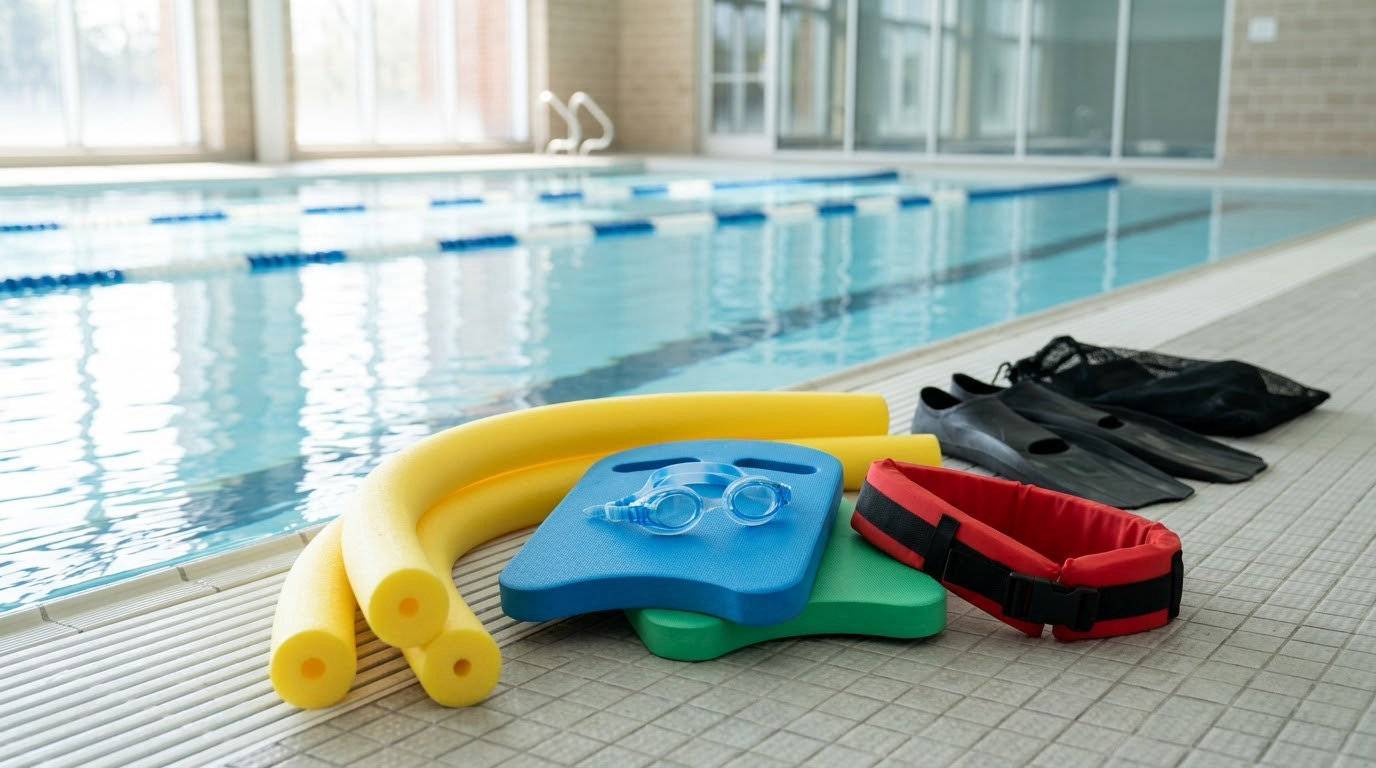
To find swim lessons for special needs kids, work through a fixed order: ask your child’s therapist, then your local YMCA or city recreation department, then adaptive sports organizations, then private in-home instructors, and vet every option against the same checklist. Start the search two to three months before you want lessons to begin, because the right program often has a wait.
Yes, autistic children and children with other disabilities can and should take swim lessons. The National Autism Association identifies drowning as one of the leading causes of death for autistic children, and many autistic children are drawn to water without fully grasping how dangerous it is. That makes water safety competence a life skill, not a nice extra.
What makes this harder than finding a regular swim class is that your child’s diagnosis, age, communication style, and sensory profile all change what a good program looks like. A class that works beautifully for a typical six-year-old can fall apart for a child who is non-verbal and overwhelmed by echo.
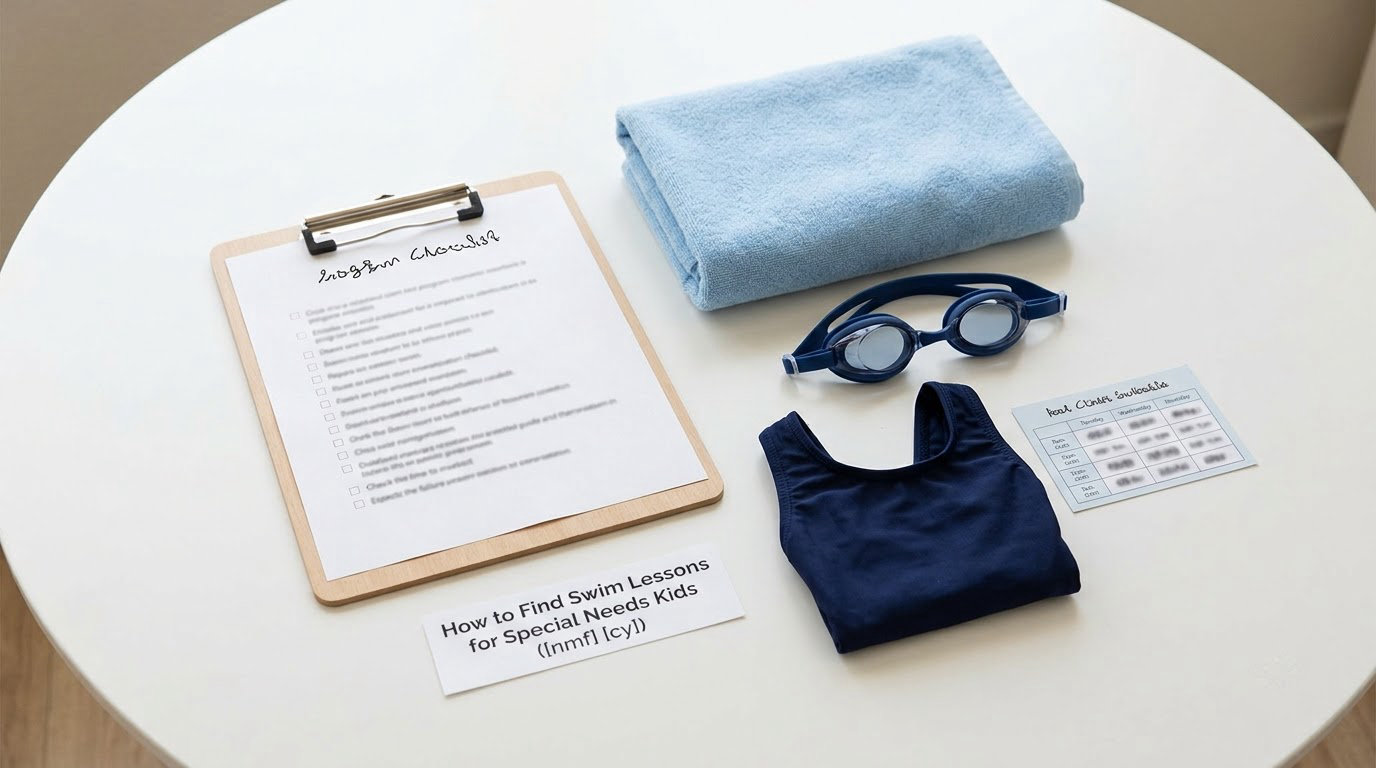
Table of Contents
- What You Need Before You Start Searching
- Step-by-Step: Finding and Vetting the Right Program
- Common Mistakes Parents Make
- Frequently Asked Questions
- How do I know if a swim program is safe for my child with special needs?
- What age should a child with autism or Down syndrome start swim lessons?
- Can my child receive one-on-one swim instruction or therapy-based lessons?
- How much do special needs swim lessons usually cost in the US?
- Should my child use a flotation device during swim lessons?
- How can I help a child who is afraid of water or distressed by noisy pools?
What You Need Before You Start Searching
You can search faster once you can describe your child in a few specific sentences instead of a diagnosis label. Programs screen with what you tell them, so vague answers get vague answers back.
- Age and current water comfort. Note whether your child tolerates a bathtub, a splash pad, or nothing at all right now.
- Communication style. Verbal, limited words, non-verbal, uses a device, or signs. Instructors need to know exactly how they will receive instructions.
- Sensory triggers. Loud echo, bright lights, cold water, cold air on the deck, wet clothing, crowds, or unfamiliar routines.
- Mobility needs. Walking ability, transfers, brace or wheelchair use, and whether stairs or a lift get your child into the water.
- Medical precautions. Seizure history, heart or respiratory conditions, feeding or swallowing issues, and any water safety precautions your pediatrician has written down.
- Elopement or wandering risk. If your child has a history of bolting toward water, say so plainly when you call.
- Insurance and waiver details. Your child’s Medicaid plan name, state, and case manager contact if you are working with a waiver.
- Budget and schedule. What you can realistically spend per month, and which days and times you can actually get to the pool.
- Current gear. A swim suit your child tolerates, well-fitting goggles, and a towel that dries fast.
Ask your child’s pediatrician for a pre-participation note before you call any program. It shortens the conversation with every instructor and it is the document most programs will ask you to sign anyway.
Step-by-Step: Finding and Vetting the Right Program
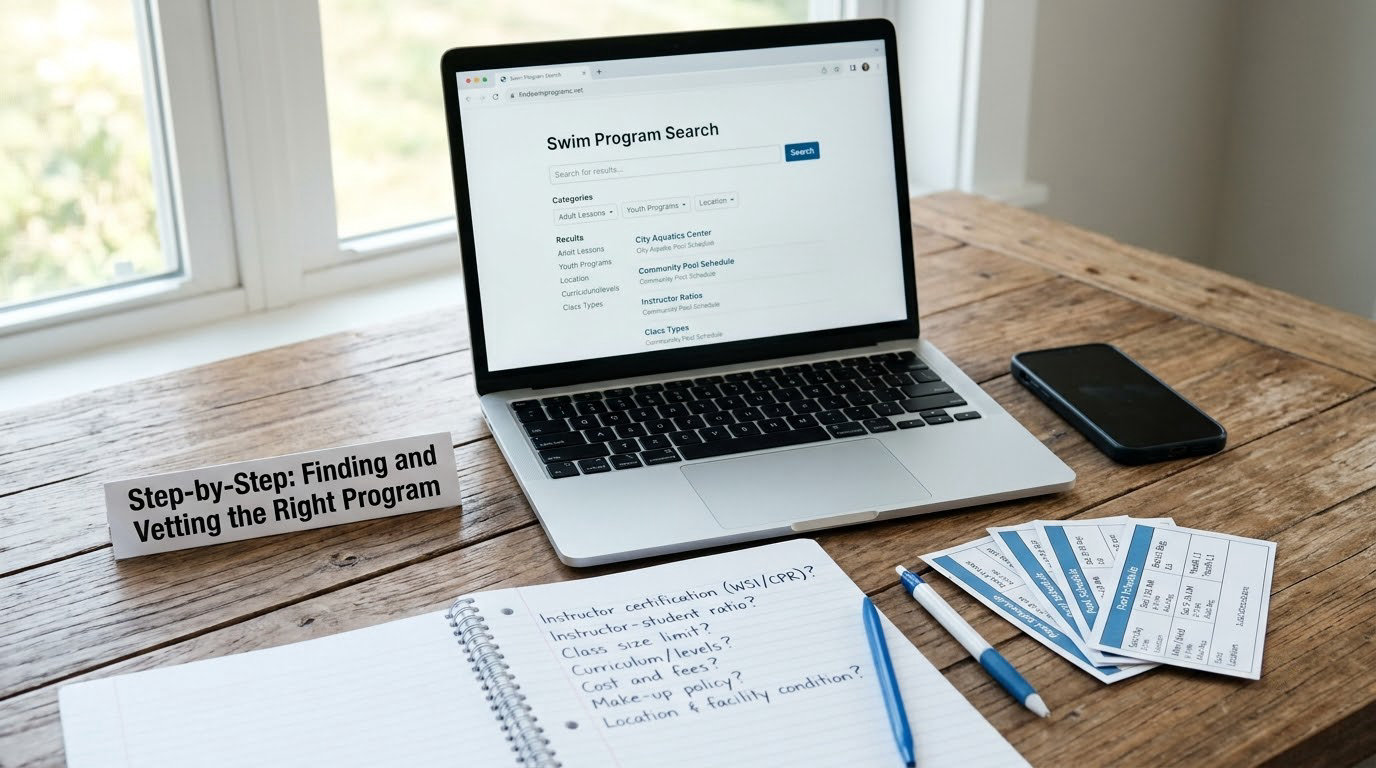
Five steps, in this order. Rushing past step two is how families end up paying for a program that will not work.
How to Search for Special-Needs Swim Programs
Search in a deliberate order, because the sources differ in what they can actually offer. Your child’s occupational or physical therapist usually knows which local programs have real adaptive aquatics experience, not just a friendly front desk.
- Your child’s therapy team. Ask your OT or PT directly which pools they work with and which instructors actually hold adaptive certification.
- YMCA, YWCA, JCC, and city recreation departments. Community programs have been the most flexible in parent reports, and many run adaptive sessions or accept accommodations in a standard class.
- Adaptive sports organizations. Move United and Disabled Sports USA both keep chapter directories, and chapters often run their own aquatics programs.
- Hospitals and pediatric therapy clinics with hydrotherapy pools. These are clinical settings with higher staff-to-child ratios, and they sometimes bill insurance.
- Private in-home instructors. Pricier per session, but the environment is calm, the water is warm, and nothing about the setting is a surprise.
- Summer camps with a swim strand. Useful as a short bridge, though camp sessions are shorter than a real course.
- Online directories and parent groups. Local autism parent groups are where families share which state-funded options are actually opening up right now.
When you call, describe your child’s age, communication method, and one specific accommodation you need. You will learn more in the first two minutes than you will from a website.
Programs fall into a few recognizable types, and the differences matter more than most families expect:
| Program type | Typical ratio | Setting | Best for |
|---|---|---|---|
| Standard class with accommodations | One instructor to three or four swimmers | Shared public pool | Children who are comfortable in a busy setting and mainly need predictability |
| Adaptive group lesson | One instructor to two or three swimmers | Dedicated or shared pool | Mixed needs, social exposure, moderate cost |
| One-on-one adaptive lesson | One instructor, one child | Pool or private | Severe sensory needs, elopement risk, seizure precautions |
| In-home private instruction | One instructor, one child | Your own pool | Families far from a program, or children distressed by any public pool |
| Aquatic therapy | One or two therapists with the child | Clinical or warm hydrotherapy pool | Children who need physical or occupational therapy goals alongside water skills |
| Camp swim session | One instructor to a small group | Camp pool | A low-pressure trial before committing to a full course |
Ask About Staff Training and Child-to-Instructor Ratios
Ask what the instructor’s specific credentials are, not whether they are “trained in special needs.” Parent forums are full of parents who assumed it and then watched an instructor improvise with a rigid thirty-minute lesson plan.
- Adaptive aquatics certification from an organization such as the National Association of Special Needs Aquatics, or an equivalent course with a named certificate.
- Current CPR and first aid certification, and whether a lifeguard is on deck for every lesson.
- How many children they currently teach per hour, and whether a one-to-one ratio is available in your child’s case.
- What they do when a child has a seizure in the water, and whether their seizure-response plan is written down.
- How they give instructions to a non-verbal child: visual demonstration, hand signals, a picture card, or a communication device.
- Whether they write progress notes, and whether you get them.
- What their behavior support policy is, and whether they use restraint. If a restraint policy is not in writing, keep looking.
A program that answers these questions plainly, including the ones it cannot promise, is the program you want.
Visit the Pool and Check the Lesson Environment
Watch one full lesson before enrolling. This is the single most useful step in the whole process, and parents who skip it tend to regret it.
Stand at the deck edge and notice the things your child will notice. How loud is the echo when three kids land at once? How warm is the water, and how cold is the air on the deck during the walk from locker room to pool? How crowded is the room, and how many children are in the water at any moment?
Then check the practical items: is there a lift or stairs with a handrail, is there a quiet waiting area away from the entrance, can a parent stay poolside, is there a private changing space, and is there an obvious exit route you can point out to your child before they need it?
Ask what the emergency plan looks like and who calls an ambulance. If the answer is vague, that is information too.
Prepare Your Child for the First Lesson
The first visit decides whether the rest goes well. Most of the work happens at home, in the two to three weeks before it.
- Build a visual schedule. Photos or simple drawings of arrive, change, walk to the pool, get in, practice, go home. Put it somewhere your child checks daily.
- Write a social story. A few sentences about what happens at a pool, who will be there, and that it is okay to ask for a break.
- Trial the swim gear. Wear the suit, goggles, and towel at home for short stretches so the clothing is familiar rather than a surprise.
- Practice in the bathtub or a shallow paddling pool. Blowing bubbles, sitting in water, floating on your back with support, and getting in and out of a tub. Short sessions, no pressure.
- Agree on a break signal your child can use with the instructor, such as a hand sign or a card on the deck.
- Rehearse the goodbye. Short separations, clear that you are coming back, and a specific time you will return.
- Plan a low-pressure first session. Watch from outside the locker room, join the water only if invited, and expect the lesson to end early.
Bring the schedule, the social story, and your written list of precautions to the deck on day one. Give the instructor a copy.
Start Slowly and Track What Works
Progress in adaptive swimming looks different from progress in a standard class, and parents who know the markers relax faster and switch programs sooner when something is not working.
- Water comfort: entering without a fight, tolerating a minute of face in the water, sitting or standing calmly.
- Regulation: fewer distressed episodes, and faster settling after a transition.
- Routine: remembering the order of the lesson, finishing the goodbye without a meltdown.
- Communication: using a word, sign, or gesture to ask for something, even once.
- Safety skills: staying at the edge, turning to grab the wall, recovering to the wall after jumping in, and responding to an adult reaching for them.
Keep a short weekly note. Note the skill, whether your child used the break signal, and how long the good part of the lesson lasted. When something is off, that note is your evidence.
Give a new program six to eight sessions before judging it, unless your child is consistently distressed or a safety concern is being ignored. After that, stop and reassess. Switching is normal and it is not failure.
Common Mistakes Parents Make
Picking the cheapest option first. Cost tells you very little about fit. Compare ratios, training, and accommodations, then compare fees among the programs that actually pass your checklist.
Enrolling without watching a lesson. Website language is written to sell you. A fifteen-minute observation answers questions no page will.
Ignoring sensory needs. Cold water and hard echo cause more failed enrollments than ability does. Ask about water temperature, class size, and a quiet time slot before you sign.
Expecting quick progress. A child who was frightened of water last month may be tolerating five minutes this month. That is real progress, and it rarely looks like a race block.
Not communicating with the instructor. Five minutes at the end of each lesson, in plain terms, prevents most misunderstandings. Instructors cannot read your child’s signals without you translating them.
Treating the diagnosis as the whole plan. Two children with the same label can need completely different instruction. Describe the child, not the diagnosis, and insist on an individualized lesson plan.
Not preparing a backup funding route. Ask your case manager early about Medicaid waiver services, state vocational rehabilitation, local recreation fee assistance, and hospital-based programs that bill insurance. Rules vary by state and change, so confirm current eligibility with the agency itself.
A few habits that help: ask for the instructor’s name before you enroll, keep the same lesson slot if you can, and put all agreements in writing. Bring your child’s therapist into the conversation early, since a letter of medical necessity can carry far more weight than a phone call.
Frequently Asked Questions
How do I know if a swim program is safe for my child with special needs?
Look for named instructor credentials, a current CPR and first aid certification, a written emergency and seizure-response plan, a lifeguard on deck for every lesson, and a child-to-instructor ratio your child actually needs. Watch one full lesson before enrolling and note whether staff stay within arm’s reach of your child, whether transitions are announced before they happen, and whether the instructor’s body language stays calm under stress. A program that answers these questions in writing is a program that has thought about them.
What age should a child with autism or Down syndrome start swim lessons?
Age matters far less than water comfort and temperament. Many families start between four and seven, when a child can follow a one-step instruction, but younger children can benefit from water acclimation classes with a parent in the water. For children with Down syndrome or significant motor needs, ask the program about buoyancy support and transfer help before you book. Older children and teens who never learned to swim do start successfully, often with one-on-one instruction, because the goal can be water safety rather than competitive technique.
Can my child receive one-on-one swim instruction or therapy-based lessons?
Yes, and for many children it is the right starting point. One-on-one instruction is common for children with elopement risk, seizure disorders, severe sensory needs, or limited verbal communication. Therapy-based lessons sit with a hydrotherapy pool and are billed differently from instruction, so ask whether a provider is offering swim teaching, aquatic therapy, or both. A blended plan often works well: therapy-based sessions for physical goals alongside adaptive swim lessons for water safety skills.
How much do special needs swim lessons usually cost in the US?
Fees vary widely by region, group size, and setting, and providers change them, so treat any figure you find online as a starting point for a conversation rather than a quote. Group adaptive lessons are the least expensive, one-on-one instruction costs substantially more, and in-home private instruction usually costs the most because it removes the pool facility cost. Ask about sliding-scale fees, session packs, and scholarship programs at every stage, and check whether your Medicaid waiver or state vocational rehabilitation agency will fund the service.
Should my child use a flotation device during swim lessons?
Talk to the instructor before deciding, because this is a safety decision rather than a preference. Flotation devices such as life jackets, belts, and noodles can build confidence in early lessons, but they change how a child floats and can mask real skill development if used too long. A program should explain how it introduces equipment, use it as a teaching tool rather than a permanent solution, and work toward the water safety skills your child needs without it. Never treat a flotation device as a substitute for active supervision.
How can I help a child who is afraid of water or distressed by noisy pools?
Start with a calmer setting rather than a louder program. An in-home instructor or a quiet time slot at a community pool removes echo, crowds, and cold air, which are the most common reasons children escalate in the pool. Build water confidence at home in short, low-pressure sessions, rehearse the routine with a visual schedule or social story, and agree on a break signal your child can use with the instructor. If distress continues after several sessions, switch to one-on-one instruction rather than pushing through a group class.
Start tomorrow by calling your child’s OT or PT and asking which two local pools have instructors with real adaptive aquatics training. Then watch one lesson before you commit to anything. That single hour of observation will save you months of trial and error, and it protects your child while you do it.
This article is for general information and does not replace advice from your child’s pediatrician, therapist, or swim instructor. Water safety decisions belong with the professionals who know your child.