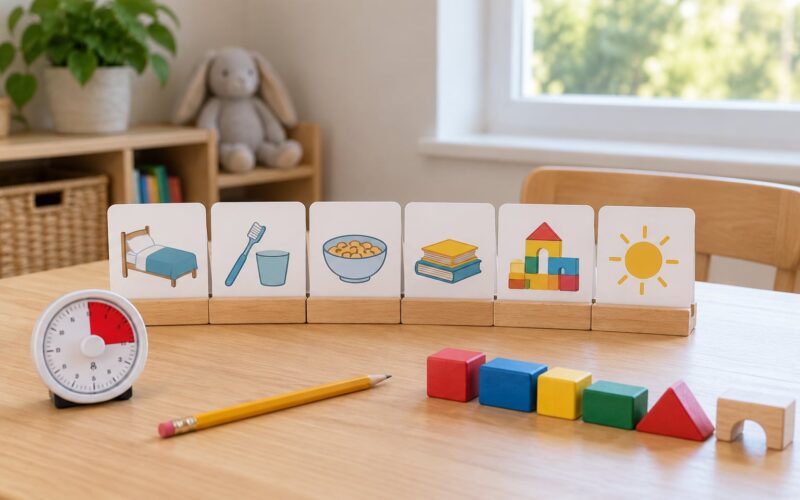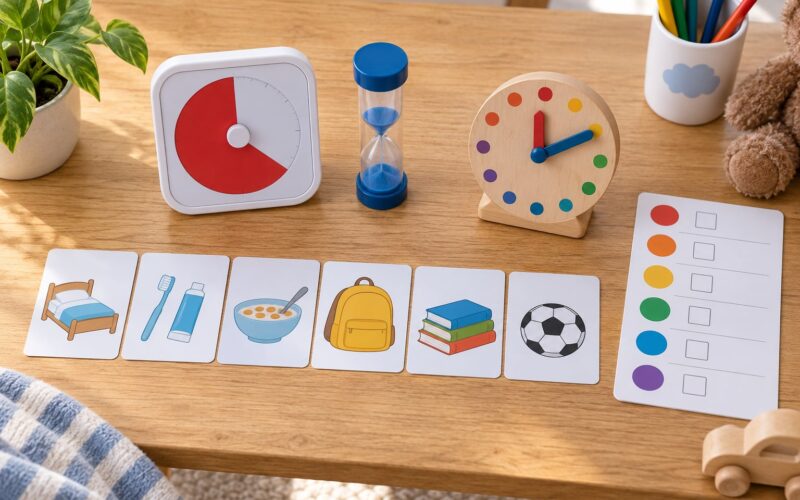
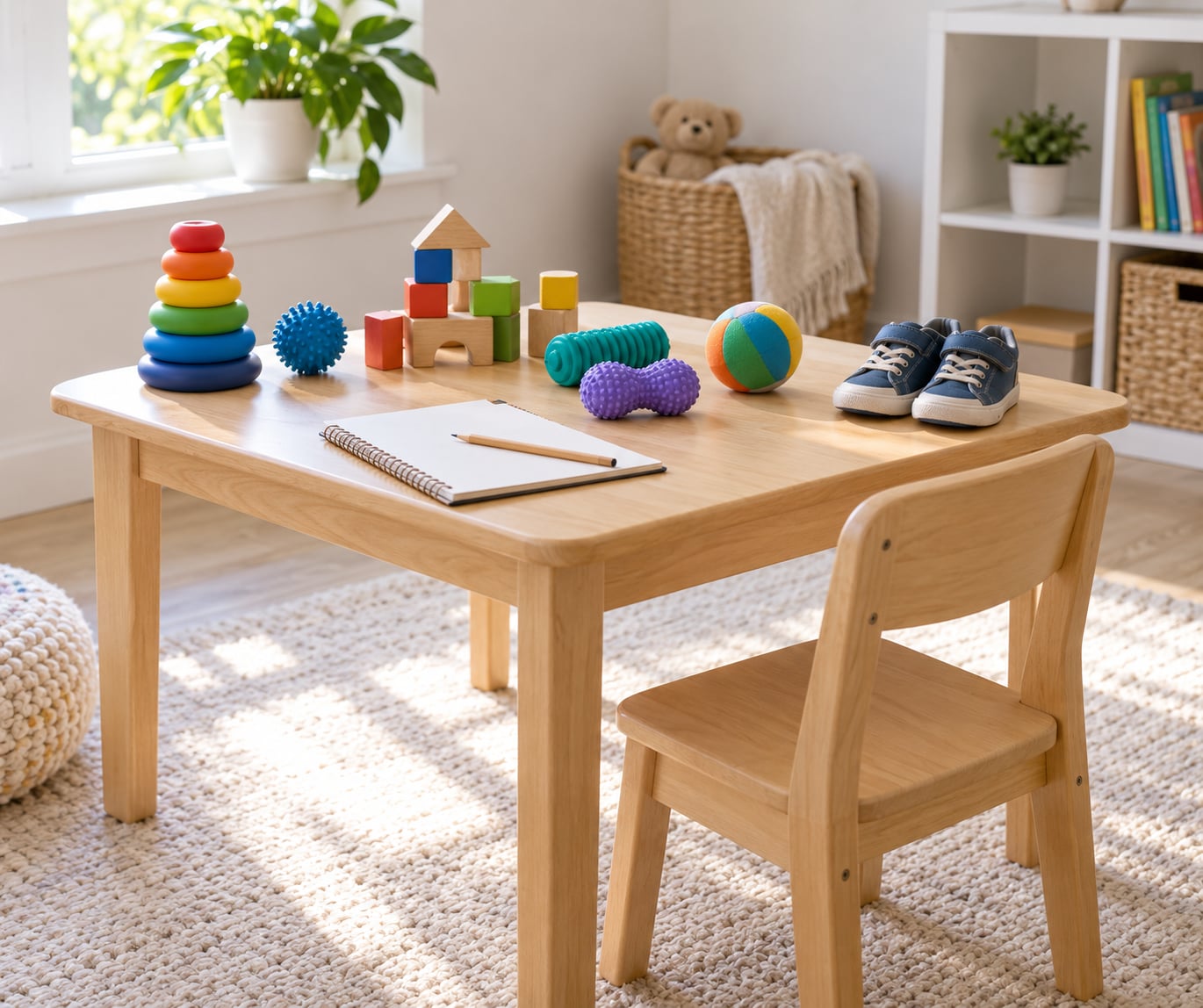
You know how to know if your child needs occupational therapy by watching what they struggle to do every day, not by comparing them to a milestone chart. Trouble with buttons, handwriting, food textures, sounds, or routine changes that keeps showing up across weeks and settings is the pattern worth acting on. One hard day is not a referral. A repeated, consistent difficulty that slows your child down is.
Most of what worries parents turns out to be normal variation. Kids hit their own timelines, and some skills come later without any underlying problem. The point of this guide is not to sort your child into a box. It is to help you describe what you see clearly enough that a pediatrician or an OTR/L can make sense of it with you.
Table of Contents
- What Is Occupational Therapy for Children?
- Why Might a Child Need Occupational Therapy?
- What Signs Suggest Your Child May Need Occupational Therapy?
- How to Know If Your Child Needs OT: Fine-Motor and Developmental Signs
- Sensory and Everyday Routine Signs
- Age-by-Age Signs to Watch For
- How to Observe Your Child’s Everyday Challenges
- How to Tell the Difference Between a Temporary Struggle and a Concern
- When Should You Talk With Your Child’s Doctor?
- How to Prepare for an Occupational Therapy Evaluation
- How to Know If Your Child Needs Occupational Therapy
- What Happens After an Occupational Therapy Evaluation?
- Frequently Asked Questions
- Can occupational therapy help a child with autism or sensory processing differences?
- What age should I consider an occupational therapy evaluation for my child?
- How is occupational therapy different from physical therapy?
- Do I need a diagnosis before requesting occupational therapy?
- What should I say when I contact my child’s doctor about OT concerns?
- What if my child can complete a task occasionally but struggles most of the time?
- Where to Start
What Is Occupational Therapy for Children?
Pediatric occupational therapy helps a child do the everyday occupations of being a kid: getting dressed, eating, writing, playing, going to the bathroom, focusing long enough to finish something. The therapist is called an occupational therapist, and a licensed one carries the credential OTR/L.
What looks like play in the therapy room is usually targeted practice. A therapist might have your child string beads, climb a foam structure, or play a game that requires reaching across the midline, all because those activities build the specific skills getting in the way right now. OT also supports sensory processing, which is how the brain organizes touch, sound, movement, and other input, and it builds self-regulation so a child can handle a haircut, a fire drill, or a busy cafeteria without falling apart.
Activities of daily living, or ADLs, is the clinical term for the self-care tasks most parents care about. Dressing, bathing, toileting, and eating are all ADLs. So is handwriting at a desk. If a child cannot do an activity their peers manage easily, and it is costing them independence or confidence, that is exactly the gap OT is built for.
One thing OT does not do is diagnose. That is the pediatrician’s or developmental specialist’s job. OT measures, describes, and treats.
Why Might a Child Need Occupational Therapy?

Referrals usually come from one of a handful of places. A pediatrician flags a developmental delay at a well-child visit. A teacher watches a child struggle through a full writing assignment and mentions handwriting. An early intervention evaluation or a state screening comes back with recommendations. Sometimes a parent simply asks, and that is a perfectly good reason.
Common reasons include a developmental delay in motor, language, or self-help skills, autism, attention differences such as ADHD, Down syndrome or another genetic condition, cerebral palsy, an injury or illness that changed how a child moves or processes sensation, or a long stretch of sensory processing difficulty. Feeding difficulties that go beyond ordinary picky eating bring many families in too, especially when chewing, swallowing, or handling food textures limits what a child can actually eat.
None of these labels rule OT in or out on their own. A child with ADHD may need OT, may not need it, and may need it for one specific skill rather than for attention itself. The reason for the referral matters less than the pattern of difficulty.
What Signs Suggest Your Child May Need Occupational Therapy?
Here is what to watch for, grouped the way parents usually notice it. These are observable behaviors, not clinical terms, because you should be able to spot them at home without a screener.
How to Know If Your Child Needs OT: Fine-Motor and Developmental Signs
Fine motor skills are the small movements of the hands and fingers: grasping, pinching, twisting, writing. When those are behind, everything that depends on them gets harder, and parents usually notice the symptom before the cause.
- Has an unusual or very loose pencil grasp and tires quickly while writing or coloring
- Produces handwriting that is slow, cramped, or hard to read compared with other children in the class
- Avoids drawing, puzzles, clay, or anything requiring a pincer grip, and prefers TV or passive play
- Struggles with buttons, zippers, snaps, or lacing shoes well past the age when peers manage
- Drops things often, has a weak grip on utensils, or cannot open jars and containers
- Uses one hand for most tasks and avoids crossing the midline of the body
- Has difficulty copying from the board, lining work up on a page, or judging spacing and margins
- Ties a knot in string, threads a needle, or uses scissors with difficulty well past the typical timeline
- Has low muscle tone, slumps when writing or eating, or props on their arm to write
- Bilateral coordination is clumsy, meaning hands do not work together smoothly on tasks like opening a jar or catching a ball
Milestone charts are a rough guide, not a rulebook. A child who does not hit a mark at 30 months is not automatically behind. What matters is the trend: is the gap closing on its own, or is it holding steady while everything around it moves forward?
Sensory and Everyday Routine Signs
Sensory signs show up as reactions to ordinary things. A child who will not wear a haircut, refuses a shirt without tags, or melts down in a grocery store is telling you something real about how input lands.
- Avoids or reacts strongly to textures: clothing seams, socks, sand, toothpaste, play dough, certain foods
- Covers ears, leaves noisy rooms, or is distressed by sounds others barely notice
- Seeks movement constantly: spinning, jumping, crashing, climbing, or never sitting still
- Seems not to notice pain, temperature, or a bump, or seeks heavy pressure such as squishing or pushing
- Has trouble tolerating haircuts, nail trims, dental exams, or new clothing
- Distressed by being touched unexpectedly or by light touch during ordinary play
- Takes in very little sensory input and appears withdrawn or hard to engage
- Struggles with routines: getting dressed, bathing, meals, or bedtime take far longer and end in tears
- Won’t sit for a meal, chews on one side, gags on lumps, or eats only a narrow set of foods by 18 months or older
- Has trouble moving between activities, and transitions take longer as the day goes on
If the sensory picture is part of what you are dealing with, how to build a sensory diet for your child is worth reading before an evaluation. It gives you concrete things to track and describe.
Attention and regulation belong on this list too. A child who cannot follow a two-step direction, bounces between activities constantly, melts down daily, or cannot sit through a short story may have executive functioning gaps that an OT addresses through routine, organization, and regulation work rather than through writing practice alone.
Age-by-Age Signs to Watch For
Age changes what looks typical, so here is a rough band to sort against. Use it to start a conversation, not to decide anything.
| Age | Signs worth a closer look | Why it matters |
|---|---|---|
| 18 months to 3 | Not grasping or transferring toys between hands, no pointing, cannot pull clothing off simply, sits or stands without core support, refuses most textures | These are the foundations everything else is built on, and they feed self-feeding and dressing |
| 3 to 5 | Cannot button or unzip, avoids drawing and stacking, walks or runs in a noticeably clumsy way, extreme reactions to sound or touch, extreme food selectivity | Kindergarten readiness depends on these tasks far more than most parents expect |
| 6 to 9 | Slow illegible handwriting, fatigue after a few minutes of writing, difficulty dressing and grooming independently, frequent classroom disruptions, trouble following multi-step directions | School output drops and confidence usually drops with it |
| 10 to 12 | Writing still laborious and painful, unable to manage clothing fasteners, avoids sports or clubs built on coordination, difficulty organizing materials and finishing two tasks in a row | Peer comparison is at its peak here, and so is the daily homework load |
How to Observe Your Child’s Everyday Challenges
Parents often know more than they think. The problem is that worry compresses everything into a feeling. A two-week log turns the feeling back into something a clinician can actually use.
For each struggle, write down what happened, where it happened, how often, how long it lasted, what helped, and what stayed hard even after the helping. “Refused socks, Tuesday morning, home, every morning this week, took ten minutes and ended in a meltdown, distraction helped for a minute, still could not finish” is far more useful than “he is difficult about clothes.”
Pay attention to settings. A skill that is difficult everywhere is a different conversation from one that is difficult only at school, and only during handwriting. Also note what is going well, because a therapist needs to know what to build on, not only what to fix.
Keep it simple enough that you will actually do it. A notes app entry, a shared family calendar, or a sheet of paper on the fridge all work. Two weeks is usually enough to see the shape of the problem.
How to Tell the Difference Between a Temporary Struggle and a Concern
Every child has bad weeks. The difference is whether the difficulty is anchored. Five questions help you sort.
- Does it persist? If the same struggle shows up most days for several weeks rather than once, it is a pattern.
- Does it span settings? Trouble at home and at school points to a skill gap. Trouble in one setting only may point to something else.
- Is it getting worse? A skill that is slipping backward, not just staying flat, deserves a look.
- Is it costing something? Trouble matters most when it delays dressing, ruins meals, keeps a child out of an activity, or drains confidence.
- Has your child’s usual functioning changed? A child who could do a task comfortably and now cannot is different from a child who never could.
Normal variation has a shape too. Most children fumble buttons at some point, get frustrated over a noisy restaurant, or write slowly when tired. Normal variation is inconsistent, improves with practice, and does not spread to new tasks. A concern tends to be reliable and cumulative.
You do not need a diagnosis, a label, or a rulebook before asking for help. Deciding to get an evaluation is not the same as deciding your child is broken, and most therapists would rather look early.
When Should You Talk With Your Child’s Doctor?
Bring it up at the next visit, or sooner, when a concern keeps repeating. Pediatricians can screen, refer, and often rule things out. A referral also carries weight with schools and insurers in a way a parent request alone does not.
Call sooner, and ask for a prompt appointment, if your child loses a skill they previously had, cannot manage a basic safety task, is not eating or drinking adequately, or shows pain. Those are not OT questions. They are medical questions first.
Specifics get you further than adjectives. Instead of “he seems behind,” say “he has needed help with buttons since he was four, cannot copy from the board, and writes about four words before saying his hand hurts.” If your child has ongoing medical needs, keeping a go bag for a child with medical needs helps you bring the relevant history to any appointment without digging for paperwork.
How to Prepare for an Occupational Therapy Evaluation
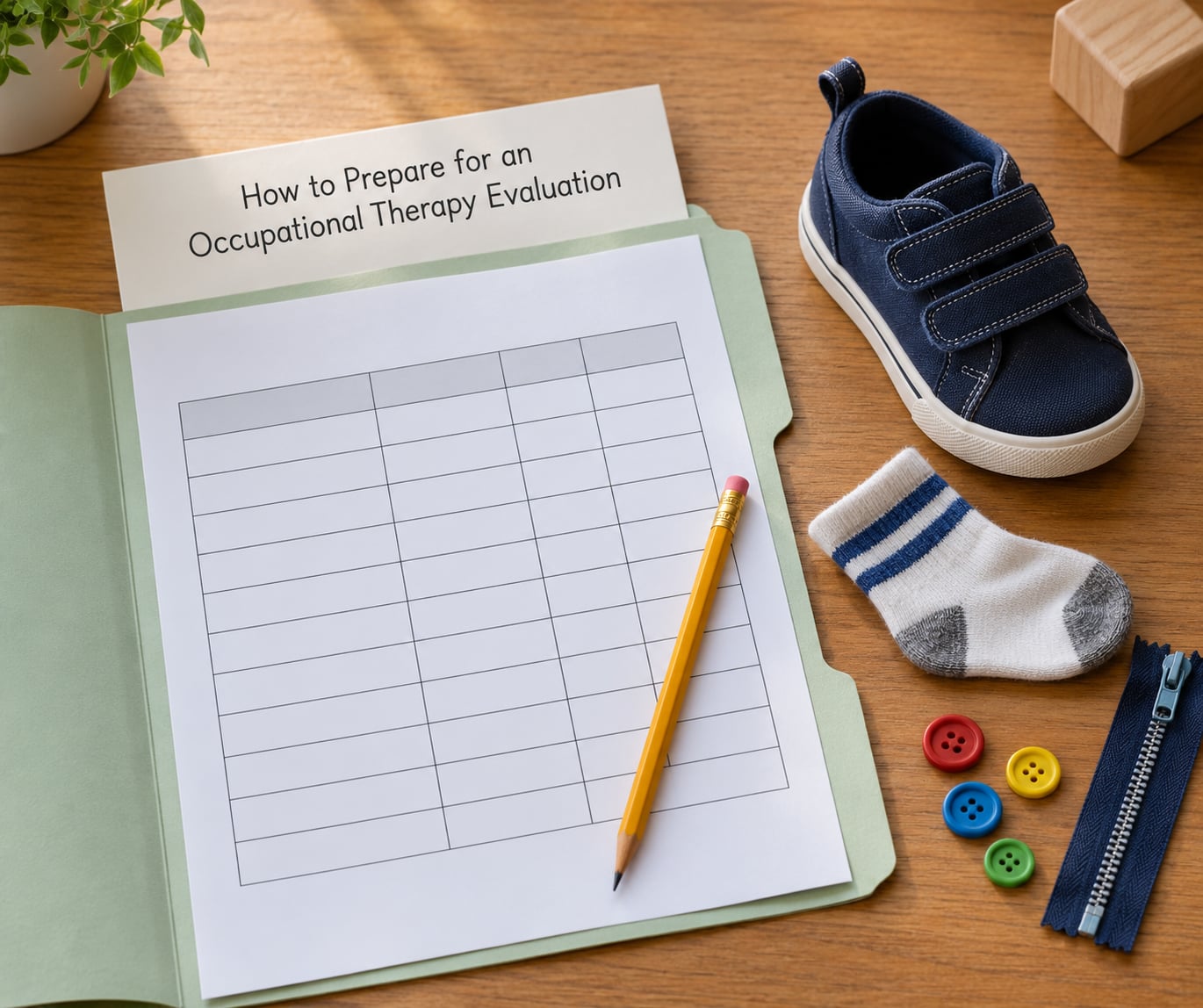
An evaluation is usually one long visit, often 60 to 90 minutes, and it feels less like a test the more you know going in. The therapist will interview you, watch your child play and move, and try small tasks that reveal how they handle buttons, pencils, movement, and sensory input. Standardized screening tools may be part of it. You will get a written report afterward.
Here is what to bring or line up beforehand.
- Your two-week observation log, with specific moments and dates
- Photos or short videos of a task that goes badly, if you have any
- School reports, teacher notes, or a 504 or IEP, if your child is in school
- Early intervention or developmental screening paperwork
- Medical history, current medications, and other therapy your child already receives
- A short list of your own goals, in plain language, such as getting dressed independently or finishing homework without a fight
- Your questions about frequency, cost, insurance, and how progress will be measured
Do not rehearse your child for it. Tell them there will be some playing and some trying things out, and let the rest happen naturally. A tired, over-prepared child produces a misleading picture, and experienced therapists can tell.
Do not ask a website to tell you whether your child needs OT. Only an evaluation can confirm that. This guide is meant to help you arrive at the appointment ready to describe the problem accurately.
How to Know If Your Child Needs Occupational Therapy
Four things have to line up before a referral makes sense. Repeated difficulty in the same area, a visible effect on daily life, a pattern that has held or worsened instead of resolving, and an evaluation that confirms the gap. Miss any one of them and watching closely is reasonable. Hit all four and the answer is clear.
Common early OT referrals include persistent fine motor difficulty like handwriting or buttoning, sensory processing differences that limit family life, self-care skills far behind what most children manage, feeding difficulties that restrict diet or cause distress, and attention and regulation patterns that make school and home daily fights. A child who is behind on several of these at once is the strongest case for evaluation.
The awkward part is that none of it feels decisive from inside the house. Your child is your child, and you see the worst hour of the day. That is exactly why the log matters, and why the evaluation exists. It gives you a second set of eyes on a question you cannot settle by watching.
What OT cannot do is predict your child’s future. Anyone who promises that is selling something.
What Happens After an Occupational Therapy Evaluation?
The report typically covers what your child does well, what is getting in the way, and what a therapist would work on first. Most families discuss goals at the end of the visit or in a follow-up call, so come with the questions you wrote down.
After that, families usually talk about frequency and length of therapy. A common starting point is a session once or twice a week for a short block, with goals and a plan to reassess. Children who make progress often have the block shortened or switched to a maintenance rhythm rather than stopping cold. The therapist and your child’s doctor or school are the right people to tell you what your child specifically needs.
Where the therapy happens varies too. School-based services, arranged through a 504 plan or an IEP, are delivered on campus and cover school-related skills, often at no cost to the family. Private clinic therapy goes further into home routines, feeding, and community participation and is usually billed through insurance or out of pocket. Some children use both. Ask which route your child’s goals actually need, because they are not interchangeable.
Progress is easy to see and easy to lose track of. Keep the original goals somewhere you will find them again, and ask how progress will be measured and when the plan will be reviewed. If nothing has shifted after several sessions, asking for a review is normal and not a criticism of anyone.
Frequently Asked Questions
Can occupational therapy help a child with autism or sensory processing differences?
Yes, and sensory differences are one of the most common reasons children are referred. OT helps a child manage input they find overwhelming or avoid, build tolerance for clothing, food textures, haircuts, and noise, and stay regulated enough to get through a school day. It does not replace behavioural supports or speech and language therapy. Many autistic children also need those alongside OT, and the therapist usually works from the child’s own strengths rather than forcing tolerance.
What age should I consider an occupational therapy evaluation for my child?
Earlier is generally better, and there is no minimum age. Evaluations happen in infancy through the preschool years, most often because of delays in sitting, crawling, grasping, or self-feeding. After about age three, referrals usually come from school or from concerns about handwriting, dressing, and sensory behaviour. If something feels off at any age and keeps repeating, an evaluation is reasonable. You do not have to wait for a milestone checklist to flag it.
How is occupational therapy different from physical therapy?
They overlap, and many children see both. Physical therapy focuses on movement, strength, balance, walking, and gross motor skills such as jumping and climbing. Occupational therapy focuses on how those movements get used for daily life: dressing, eating, writing, sensory regulation, and following routines at school and home. A child who cannot climb a playground structure safely may need PT. A child who can climb but cannot manage fasteners at the bathroom sink usually needs OT.
Do I need a diagnosis before requesting occupational therapy?
No. Most private OT clinics will evaluate a child based on functional concerns without any diagnosis at all, and school-based services work from a 504 plan or IEP rather than a medical label. A diagnosis can change what insurance covers and open additional services, so it is worth raising with your doctor, but it is not a prerequisite for getting an evaluation. Parents frequently start with a functional worry and a diagnosis arrives later, if it ever does.
What should I say when I contact my child’s doctor about OT concerns?
Describe what you see, where, and how often, then say what you want. A useful version sounds like: he has needed help with buttons since he was four, cannot copy from the board, and writes four words before saying his hand hurts, and I would like an OT evaluation. Bring your observation log and ask whether they can screen him and refer you. If the doctor is unsure, ask whether an early intervention or developmental evaluation would be a sensible first step.
What if my child can complete a task occasionally but struggles most of the time?
That is the normal pattern for a real difficulty, not a reason to dismiss it. A child who buttons a shirt once with great effort and then gives up for a week is showing you exactly what an OT looks at: the effort, the consistency, and the cost. Look at the percentage of days, the length of the task, and whether the trouble is spreading to new tasks. Mention the wins and the struggles together, since the contrast is what makes the picture clear.
Where to Start
If you take one thing from this, make it the log. Two weeks of specific, dated observations will tell you whether you have a pattern or a bad month, and it is the thing that makes a referral conversation go smoothly.
Then call your child’s doctor and describe one task in plain words. That is enough to begin.
This guide is general information, not medical advice, and it cannot tell you whether your child needs OT. That answer comes from an evaluation by a pediatric occupational therapist, working with your child’s doctor and taking your observations seriously.