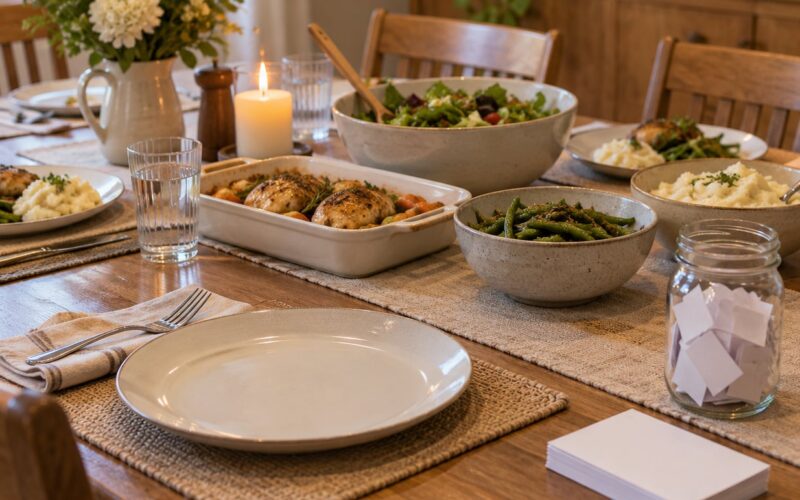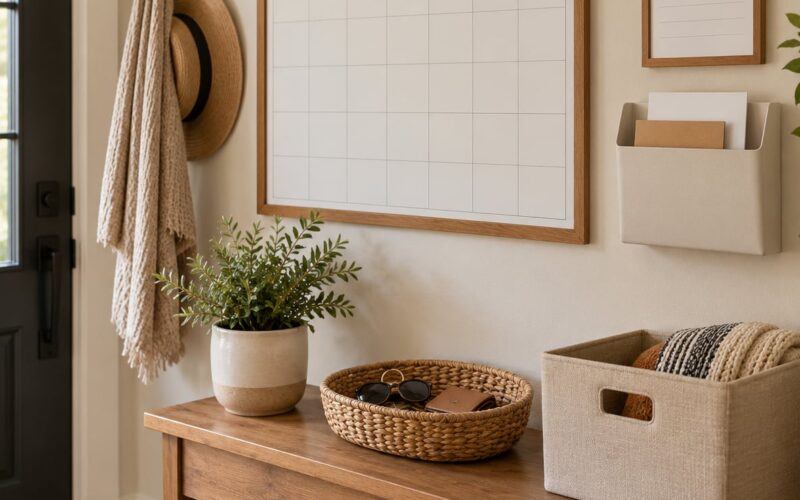

To make mealtime less stressful, build a routine your child can predict and stop negotiating over what goes in their mouth. You decide when, where and that a meal happens; your child decides whether and how much to eat from what is served. Most families see the first shift within a week of consistent practice. Updated for 2026.
I have talked to a lot of caregivers who are completely out of ideas by 5pm. The child is not eating the food, the parent is crying in the kitchen, and dinner somehow turned into a debate about broccoli. The fix is rarely a new recipe. It is a smaller routine, fewer demands, and an adult who is not standing at the table refereeing every bite.
Plan for about two weeks of small, boring consistency before you expect anything different. Here is how to make mealtime less stressful in five steps you can start this week.
Table of Contents
- What You Need
- Step-by-Step: How to Make Mealtime Less Stressful
- 1. Set a Predictable Mealtime Routine
- 2. Reduce Sensory Pressure at the Table
- 3. Offer Choice and a Safe Food Option
- 4. Make Communication Easier
- 5. End the Meal Calmly and Reset
- Common Mistakes
- Frequently Asked Questions
- How long does it take for a calmer mealtime routine to work?
- What can I do if my child refuses every food I offer?
- Is it okay to offer the same safe foods at every meal?
- How do I help a child who becomes overwhelmed during meals?
- When should I talk with a doctor or registered dietitian about my child’s eating?
- A Calm Mealtime Starts With One Small Change
What You Need
You do not need special equipment or a new budget. You need the same six things most calm-mealtime households already have at home.
- A consistent schedule for meals and snacks, written down where everyone can see it.
- A simple visual or written routine — a short checklist on the fridge or a laminated card at the table works better than a long chart.
- Familiar dishes and utensils your child already accepts, plus one or two backups for the week.
- One safe food option at every meal. Something eaten regularly, without pressure.
- A preferred drink that is always available at the table.
- A calm seat with support at the back, away from the door and away from the busiest walkway in the house.
Budget versions work fine. A plain placemat from a discount bin does the job a special divided plate would. Notebook paper for a visual schedule beats nothing, and a supportive chair can be a firm cushion wedged against the back of an ordinary dining chair.
Set-up takes 10 to 20 minutes the first time. After a few repetitions you are looking at five minutes, because the routine stops being a project and becomes the way dinner happens.
Step-by-Step: How to Make Mealtime Less Stressful
Change one or two things at a time, then watch how the next several meals go. Changing everything at once means you cannot tell which change helped. Write down one observation per meal — even three words is enough — and give a new element a minimum of five meals before you judge it.
1. Set a Predictable Mealtime Routine
Pick the same meal and snack times every day and write them where everyone can see. Predictability removes the negotiation before it starts, because nothing about the evening is a surprise.
Keep the sequence the same each time: wash hands, sit at the table, eat, take a break, finish with something neutral like clearing the table or a quick tidy. A written or visual version helps most when it stays short. Five steps or fewer.
Keep the sitting itself short — roughly 20 minutes for a meal and 10 for a snack — and space meals and snacks about 2.5 to 3 hours apart so appetite has room to build. You are teaching timing here, not endurance. A predictable end is easier when your child can read the shape of the evening, and our guide to making transitions between activities easier has warning scripts worth borrowing for the last five minutes.
2. Reduce Sensory Pressure at the Table

For sensory-sensitive children, the room is doing as much work as the food is. Lower the noise — turn off the television, move the table away from the dishwasher, close the window if the street is loud. Turn down harsh overhead lighting and keep the number of items on the table as low as you can.
Give the seat real support, not a booster that leaves their feet dangling. Let your child keep their preferred cup, fork or placemat if those matter to them.
The one-plate rule helps more than most parents expect: everything on the table that your child is expected to eat in that meal, and nothing else waiting in the kitchen. If your child rejects everything, pull back to the one safe food for a few days, then add a new item alongside it.
3. Offer Choice and a Safe Food Option
Give two acceptable options instead of one instruction. Two foods, not a yes-or-no question — “would you like chicken or tonight’s pasta?” lands very differently than “you are having chicken.”
Always keep at least one familiar or nutritionally supported option on the plate. Serving a small portion of a new food next to a known safe food, with no comment about it, is a gentle exposure. That is the whole method: the new food is present and safe to ignore.
Skip bribery, rewards, sticker charts and screens-for-food. Skip clean-plate rules. Food is not a prize and it is not a chore to be completed.
Any food allergy, medical restriction or restrictive diet concern is worth taking to your child’s doctor or a registered dietitian before you change what is served. That includes anything that restricts variety or growth, and any list that has been shrinking. If a gluten-free or allergen-free plate is part of your week, we have a gluten-free bread guide that keeps a familiar staple on the table.
4. Make Communication Easier
Use short, concrete sentences, one instruction at a time. “You can sit for five minutes” is workable. A full paragraph about the benefits of vegetables is not.
Pair the words with a visual support where possible — a simple picture schedule, a hand sign for all done, or a communication card your child can hand you. A break card is one of the most useful tools in this whole routine: it lets your child say “I need a break” without either of you improvising mid-meal.
Not every child communicates the same way. A child who uses limited speech, a device or a movement may need more time and more warning, not less. Give a two-minute warning and a five-minute warning before the meal ends.
If your child becomes overloaded, lower the demands rather than raising your voice. “Would you like to sit with me for a minute?” is enough. A calmer corner nearby helps more than pushing through — our guide to building a calm-down corner at home has simple ideas that work in small spaces.
5. End the Meal Calmly and Reset
Give the warning, eat your own food, then close the sitting when you said you would. Ending on time is the thing that teaches trust in the routine more than anything you say during it.
Watch for the signs of overload — pushing the plate away, covering ears, standing on the chair, crying that will not settle, words getting louder. When you see them, stop talking, reduce the number of things being asked, and move to a low-demand break. A quiet activity nearby is better than a lecture.
Leftovers go into a container and into the fridge within two hours. Then wipe the table, reset the seat, and put the visual schedule back. That reset is short but it matters, because it makes the next meal start from the same clean place.
Common Mistakes
Changing everything at once. Six new rules in one week gives you no information and gives your child a chaotic week. Pick two changes, hold them for five meals, then add more.
Forcing the issue. Holding a spoon, blocking the exit, or saying “you are not leaving until you eat” turns eating into something to escape. Watch what happens to the next meal instead of what happens at this one.
Making refusal personal. “You never eat anything you are offered” is about you, not about dinner. Neutral and short works: “It looks like you are not hungry right now. That is okay.”
Too many instructions. Instructions piled on top of each other become noise and your child stops hearing any of them. One request, then silence.
Offering unsafe foods. Never use an allergen as a learning food and never bring a known-allergic item to the table for exposure. Allergen safety is not a behaviour strategy.
Expecting immediate results. Change shows up in a week or two of consistent repetition, not over one meal. Judge it in weeks, and judge it on distress levels rather than on the contents of the plate.
Track what you can: how long the sitting lasted, whether your child stayed at the table, whether there was crying, what they chose to eat. Involve every co-caregiver in the same rules, and keep the whole plan on paper so a grandparent or sitter can follow it without a lecture from you.
Adjust gradually. If a step is clearly making things harder after a week, stop doing it. A routine nobody can sustain is not a routine.
Frequently Asked Questions
How long does it take for a calmer mealtime routine to work?
Expect the first noticeable shift in one to two weeks of consistent repetition, and steadier results over a month or more. Judge it by distress first: less crying, fewer refusals to sit, easier leaving, more words or gestures from your child. Do not judge it by a particular food appearing on the plate. Nights you change nothing still count as data, and small wins like finishing the sitting early are real progress.
What can I do if my child refuses every food I offer?
Pull back to the one safe food they reliably eat, served without comment, and hold there for a few meals. Then add a new food beside the safe food in a tiny portion, with no praise for touching it and no disappointment for ignoring it. Keeping the sitting short and the atmosphere calm matters more than variety right now. If the accepted list keeps shrinking or you are worried about nutrition, talk with your child’s doctor or a registered dietitian.
Is it okay to offer the same safe foods at every meal?
Yes. A reliable safe food is the foundation the rest of the routine is built on, not a failure. Serve it consistently without pressure and without framing it as settling for less. Alongside it, you can place a small portion of something new, which gives your child repeated low-pressure exposure without ever being pushed. If you are managing an allergy, celiac disease or another medical restriction, get individual guidance from your child’s doctor or registered dietitian before making changes.
How do I help a child who becomes overwhelmed during meals?
Lower the demands immediately rather than pushing through. Turn down noise and light, reduce seating, and move the sitting shorter. Offer a break card or a hand signal first so your child can ask for a pause, then take a low-demand break nearby. Watch for ear covering, pushing the plate away, standing on the chair or rising volume. After several overloaded meals in a row, ask your pediatrician about an occupational therapist or feeding team who works with sensory issues.
When should I talk with a doctor or registered dietitian about my child’s eating?
Talk with your pediatrician if your child loses weight, seems to be in pain when eating, vomits or gagges often, chokes, or eats so little that you are worried. It is also worth raising a conversation if the list of accepted foods keeps shrinking, if eating has become frightening for your child, or if mealtimes are affecting sleep, school or your own mental health. A feeding team can include a speech-language pathologist, occupational therapist and registered dietitian. This guide is general information, not a diagnosis or a treatment plan for your child.
A Calm Mealtime Starts With One Small Change
If you do nothing else this week, pick one predictable element and hold it. Same dinner time, same seat, same order, every night for five meals. That single repetition is usually where the first bit of relief comes from.
Then write down what felt easier: less distress, a longer sitting, a request for a break, more communication, more joining in. That is what progress looks like when you make mealtime less stressful. Not a clean plate.
Keep the safe food coming, keep the sitting short, and keep the pressure off. Slow, boring consistency is what changes how a meal feels for everyone at the table.