If you are searching for high protein snacks for kids, the honest answer is that most children already get enough protein from normal meals, so the goal is not a protein contest. It is finding snacks that hold a hungry kid until dinner and add a few grams of protein along the way. A good target is roughly 5 to 10 grams of protein per snack, paired with fiber or fat so it actually satisfies.
The snacks below run from no-cook to make-ahead, and every one lists the protein it delivers so you can plan portions by age. I have included nut-free, dairy-free, gluten-free and texture-modified swaps because that is where most families get stuck. If your child has a diagnosed allergy or medical feeding concern, check with their pediatrician or a registered dietitian before changing their diet.
Table of Contents
- High Protein Snacks for Kids at a Glance
- 1. Greek Yogurt with Fruit
- 2. Apple Slices with Peanut Butter
- 3. Cheese Cubes with Whole-Grain Crackers
- 4. Egg Muffin Bites
- 5. Cottage Cheese with Berry Swirl
- 6. Tofu and Vegetable Bites
- 7. Edamame with Sea Salt
- 8. Seeded Hummus with Veggies
- 9. Turkey or Chicken Roll-Ups
- 10. Protein-Packed Oat Bites
- Frequently Asked Questions
- How do I get my picky kid to eat protein?
- How much protein does a child need per day?
- What snack has 30 grams of protein?
- What is a quick snack that is high in protein?
- What are good sources of protein for a 7-year-old?
- Is 20 grams of protein too much for a child?
- Conclusion
High Protein Snacks for Kids at a Glance

This table gives you the protein per serving, the best use and the allergy notes for each snack so you can pick in a few seconds. Figures are typical for standard serving sizes and vary by brand and preparation.
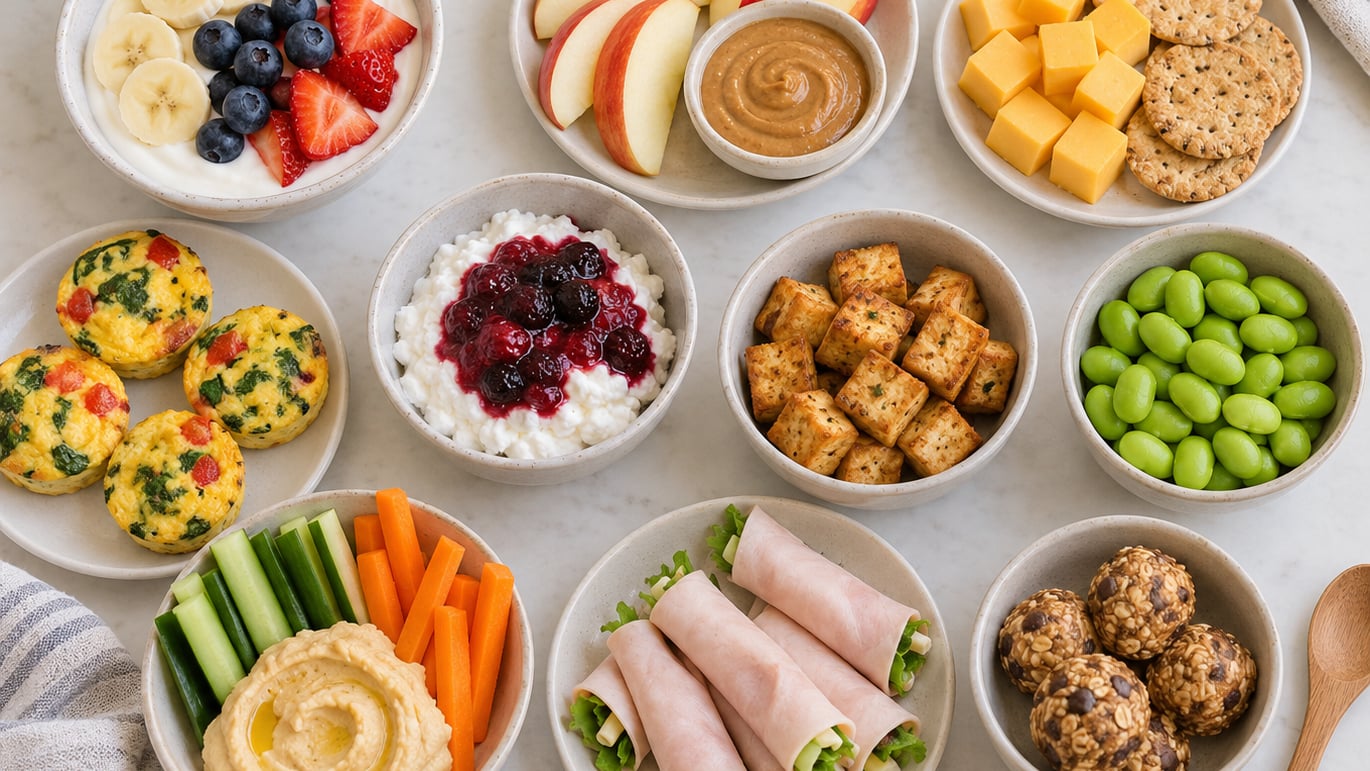
| Snack | Protein per serving | Best for | Texture | Allergy notes |
|---|---|---|---|---|
| Greek yogurt with fruit | About 14 g in a 170 g cup | After school | Smooth | Dairy; soy in some brands |
| Apple slices with peanut butter | About 7 g in 2 tbsp of nut butter | On the go | Smooth or crunchy | Peanut; swap seed butter |
| Cheese cubes with crackers | About 13 g for 1 oz cheese plus 3 crackers | Travel and lunchbox | Firm or soft | Dairy, wheat, gluten |
| Egg muffin bites | About 7 g each | Make-ahead | Soft, holds together | Egg, dairy if added |
| Cottage cheese with berry sauce | About 12 g in a half cup | Picky eaters | Lumpy or blended smooth | Dairy |
| Tofu bites | About 9 g in a half cup of tofu | Plant-forward | Chewy or crisp | Soy |
| Edamame | About 8 g in a half cup of shelled edamame | Lunchbox | Firm, pop from a pod | Soy |
| Hummus with veggies | About 6 g in a quarter cup of hummus | Sensory-friendly | Smooth dip | Sesame; chickpea in some brands |
| Turkey or chicken roll-ups | About 11 g for 1 oz deli meat plus 1 oz cream cheese | Savory snack | Soft and rollable | Dairy, gluten in wraps |
| Protein oat bites | About 6 g each | Batch cooking | Soft, crumbly | Gluten unless GF oats; seed or nut butter |
A note on age before the list: whole nuts, whole grapes and hard chunks are choking hazards for children under four, so anything below stays spread, mashed, diced finely or blended until smooth.
1. Greek Yogurt with Fruit
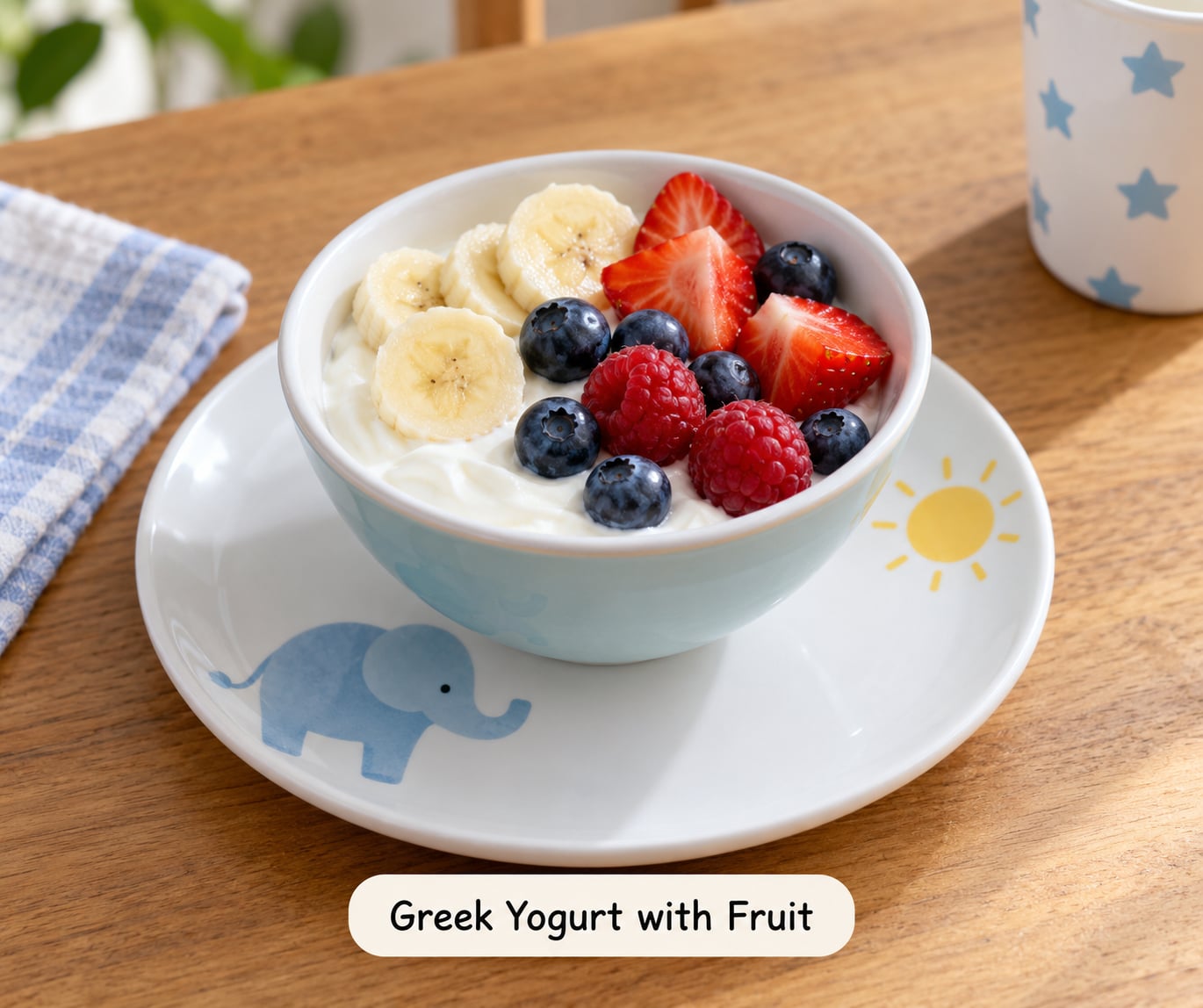
Plain Greek yogurt is the easiest place to add protein without anyone noticing. A 170 g cup of plain full-fat Greek yogurt carries about 14 to 17 grams of protein, which covers a young child’s whole snack target on its own. Fruit adds the carbohydrate and fiber that yogurt alone lacks.
For serving, let kids stir the fruit in themselves rather than pre-mixing it. That small bit of control tends to matter with picky eaters, and it keeps the yogurt smooth and predictable if texture is a sticking point. If you want a kid who rejects anything with visible lumps, blend the fruit into the yogurt first or use a smooth pouch yogurt with 8 to 10 grams of protein per pouch.
For a dairy-free swap, soy yogurt is the closest match nutritionally and often delivers 6 to 8 grams of protein per cup. Check the label, since plant yogurts vary widely and many are mostly sugar and water. If you are also removing gluten and casein from your child’s diet, this list of swaps is worth reading before you shop.
How to start a gluten-free, casein-free diet for kids covers the label-reading basics that make dairy swaps less of a guessing game.
2. Apple Slices with Peanut Butter
Apple slices with peanut butter deliver about 7 grams of protein from two tablespoons of peanut butter, and the combination is sweet enough that many kids accept it without negotiating. It travels well, needs no refrigeration, and takes about two minutes.
Slice thin and rub the apple with a little lemon juice to slow browning. For children under four, spread the nut butter rather than spooning it out, and skip whole spoonfuls of sticky nut butter, which is a common choking hazard in that age group.
At school or with a nut allergy, sunflower seed butter and pumpkin seed butter are the usual stand-ins. They deliver comparable protein and fat and taste close enough that most kids do not notice the swap, but check for cross-contact warnings if the allergy is severe. Pumpkin seed butter has a distinct flavor, so it works better mixed into yogurt or oatmeal than spread on an apple.
3. Cheese Cubes with Whole-Grain Crackers
Cheese and crackers is a pairing that holds up in a car, a lunchbox or a waiting room. An ounce of cheese gives about 7 grams of protein, and a few whole-grain crackers add 2 to 4 more, landing close to 13 grams for a typical serving.
Cut the cheese into small cubes or thin sticks rather than thick wedges, and let your child assemble the pairs. Kids who dislike the smell of warm melted cheese will often eat cold cubes happily, which is useful to know if dairy is already a battle.
For gluten-free and dairy-free needs, there are two swaps to make rather than one. A gluten-free cracker or seed-based crisp covers the grain side, and a vegan cheese slice or a few walnuts covers the dairy side, though a plant cheese slice is usually only 1 to 3 grams of protein. If you are building a full rotation rather than a single snack, our gluten-free dinner ideas kids actually eat works the same way: familiar format first, swapped ingredients second.
4. Egg Muffin Bites
Mini egg muffins are the workhorse of the make-ahead list. One bite carries about 7 grams of protein, they freeze well, and a full batch of twelve takes about 25 minutes in the oven plus cooling time.
Beat four eggs with a splash of milk, fold in chopped vegetables and a little cheese, then pour into a lightly greased mini muffin tin. Bake at 350 degrees Fahrenheit until the centers are set. For food safety, cook the eggs to a firm set and let the bites cool before serving; the USDA safe minimum internal temperature for eggs is 160 degrees Fahrenheit.
Store them covered in the refrigerator for up to four days, or freeze on a tray first and then move them to a bag so they do not clump. On the vegetable front, grate them finely and keep the ratio high on things your child already tolerates, because a bite that looks mostly green will get refused. Some families add spinach or bell pepper and call it a win if a third of the batch gets eaten without a conversation.
5. Cottage Cheese with Berry Swirl
Cottage cheese is one of the best protein-per-calorie options you can serve a child, and it is also one of the least popular. A half cup delivers about 12 grams of protein, which is more than most packaged snack bars aimed at kids.
Blend it smooth first. Cottage cheese that has been blended is creamy and uniform, and a spoonful of berry sauce stirred in afterward removes the word cottage from the conversation entirely. Texture is often the entire objection here, so if you want more background on why that happens and what to do about it, read why food texture matters more than taste for some kids.
Offer it in a small cup with a spoon rather than a bowl on the table, because a bowl invites a child to decide it looks wrong before tasting it. For a dairy-free version, blended silken tofu with a little lemon does a surprising amount of work in the same role.
6. Tofu and Vegetable Bites
Baked tofu bites give plant-forward families a snack that travels like a nugget and holds roughly 9 grams of protein per half cup of tofu. Press the tofu for 15 minutes, cube it, toss it with a little oil and seasoning, and bake at 400 degrees Fahrenheit until the edges crisp.
Serve the bites with a dipping sauce rather than sauce baked onto them, since wet coating keeps the outside soft and kids tend to prefer crunch. Silken tofu blended smooth works well for a younger child or anyone with chewing difficulty, and can be spooned out with rice or folded into mashed potatoes.
Soy is the allergen to plan around, and for a soy-free household that rules out edamame too. Lentils, white beans mashed with a little olive oil, and roasted chickpeas cover the same plant protein ground. Keep any new food to a small portion the first time, offered when your child is not already hungry and frustrated.
7. Edamame with Sea Salt
Edamame is a compact, one-handed, nut-free protein snack that needs no dipping and no plate. A half cup of shelled edamame delivers about 8 grams of protein and more fiber and folate than most snack foods aimed at children.
Serve it in the pod for older kids, since popping beans out of a pod keeps them busy for the whole snack. For younger children, use shelled edamame and mash it lightly, or offer it whole if their chewing is solid. Steamed with a sprinkle of sea salt is usually enough; heavy seasoning tends to make it an adult food.
The texture is the sticking point for many kids, and beans that look like green blobs get declined on sight. If edamame is a hard no, roasted chickpeas or a chickpea-based crisp usually get accepted instead, at about 6 to 7 grams of protein per half cup.
8. Seeded Hummus with Veggies
Hummus is a protein and fiber combination that is hard to beat, with about 6 grams of protein in a quarter cup. Pair it with cucumber, carrot, bell pepper or snap peas and you have a snack that stays in the fridge for two days without any cooking.
Serve the dip and the vegetables in separate small containers. Children are far more likely to eat an item they choose and pick themselves, and separated foods sidestep the issue of a soggy or wet texture, which is a common refusal for kids who prefer dry and separate components on the plate.
Sesame is the allergen that matters here, and tahini is the usual base. Sunflower seed butter makes a convincing seed-based replacement that also happens to be nut-free, which solves two problems at once. Watch labels on prepared hummus, since some brands add chickpea flour or other fillers that dilute the protein and can also introduce gluten.
9. Turkey or Chicken Roll-Ups
Deli meat rolled around cream cheese or vegetables is a savory option that travels without refrigeration for a short time and carries about 11 grams of protein for an ounce of turkey plus an ounce of cream cheese. Kids often accept these even when they refuse sliced deli meat on a plate.
Spread the cream cheese thinly on the underside of the slice, add the filling, and roll tightly. Cut into half-inch rounds, and let the child eat them with fingers. Turkey and chicken are the versions that circulate most reliably in our house; salami works for adults and is usually too salty for a young child.
Sodium is the real drawback. Deli meat and processed cheese are among the highest-sodium foods in a typical pantry, so keep these for once-a-day snacks rather than twice-daily. Watch the label for wheat, milk and soy, and for nitrite-free versions if your family prefers them.
10. Protein-Packed Oat Bites
Homemade oat bites are the one item on this list that solves several problems at once: they travel, freeze, and can be made entirely from ingredients your household can eat. One bite carries about 5 to 6 grams of protein, so three small ones add up to a full snack.
Combine rolled oats with a nut or seed butter, a binding ingredient such as honey or maple syrup, and a protein anchor like a scoop of protein powder, egg, or pumpkin and sunflower seeds. A cup of oats with two tablespoons of nut butter and a quarter cup of seeds gives you roughly 15 grams of protein in the whole batch. For gluten-free households, use certified gluten-free oats, since regular oats are frequently cross-contaminated during milling.
Bake at 350 degrees Fahrenheit for about 15 minutes, cool completely, and refrigerate for up to a week or freeze for three months. Let a pediatrician or dietitian weigh in before using protein powder in a snack for a young child; most families find that nut or seed butter plus eggs does the same job without the question.
Frequently Asked Questions
How do I get my picky kid to eat protein?
Stop aiming for the most protein-dense option and aim for the one that gets finished. Most picky eaters already accept Greek yogurt, cheese sticks, hard-boiled eggs, deli meat roll-ups and nut butter on fruit, so build the snack around those and add a new protein once a week rather than at every snack. Offering a small portion on a plate your child chose tends to work better than putting the food out in a shared bowl.
How much protein does a child need per day?
The recommended daily allowance is about 13 grams for ages 1 to 3, 19 grams for ages 4 to 8, 34 grams for ages 9 to 13, and 46 to 52 grams for ages 14 to 18. Those are daily totals from meals and snacks combined, so a snack only needs to carry a share of them. A rough per-snack benchmark is 2 to 3 grams for toddlers and 5 to 7 grams for school-aged children.
What snack has 30 grams of protein?
No single snack reaches 30 grams without being a large portion, but a few combos do it. Two eggs plus a slice of toast and a glass of milk is about 22 grams. A Greek yogurt cup with a scoop of protein powder, a hard-boiled egg and half an avocado comes to roughly 30. A turkey roll-up with cream cheese, edamame and a small handful of roasted chickpeas lands close to 27.
What is a quick snack that is high in protein?
The fastest options need no prep at all. A hard-boiled egg from the fridge, a cheese stick with a few crackers, a Greek yogurt cup or pouch, a handful of roasted chickpeas, or apple slices with nut butter are all ready in under two minutes. Bowl foods like cottage cheese or yogurt with fruit take about the same time. Cutting vegetables is what slows this down, so do it once at the start of the week.
What are good sources of protein for a 7-year-old?
At age 7, a child needs about 19 grams a day, so a 5 to 7 gram snack covers a solid share of it. Greek yogurt, cheddar or string cheese, eggs, turkey and chicken slices, edamame, hummus, cottage cheese, nut or seed butter, and lentils all qualify. Rotating two or three sources across the week is more useful than finding one superfood, because variety is what keeps a child eating the same rotation months later.
Is 20 grams of protein too much for a child?
Twenty grams in a single sitting is not dangerous for most school-aged children; a 10-year-old eats that much routinely at breakfast. What matters is total intake over the day and what comes with it. Very high protein intakes displace fiber, iron and calcium, and adult protein powders and bars are not designed for young children. If you have a specific concern, a pediatrician or registered dietitian can look at your child rather than a number.
Conclusion
If you are starting from scratch, pick two snacks your child already eats and turn one of them into a protein anchor: yogurt with fruit, cheese with crackers, or apple slices with nut butter. Add a third from a different food group, keep the protein math visible so portions match your child’s age, and rotate rather than repeat.
Watch the choking guidance for anything under four, read labels for allergens in your own household, and skip adult protein products. For individual nutrition questions or a child with medical feeding needs, your pediatrician or a registered dietitian is the right person to ask.