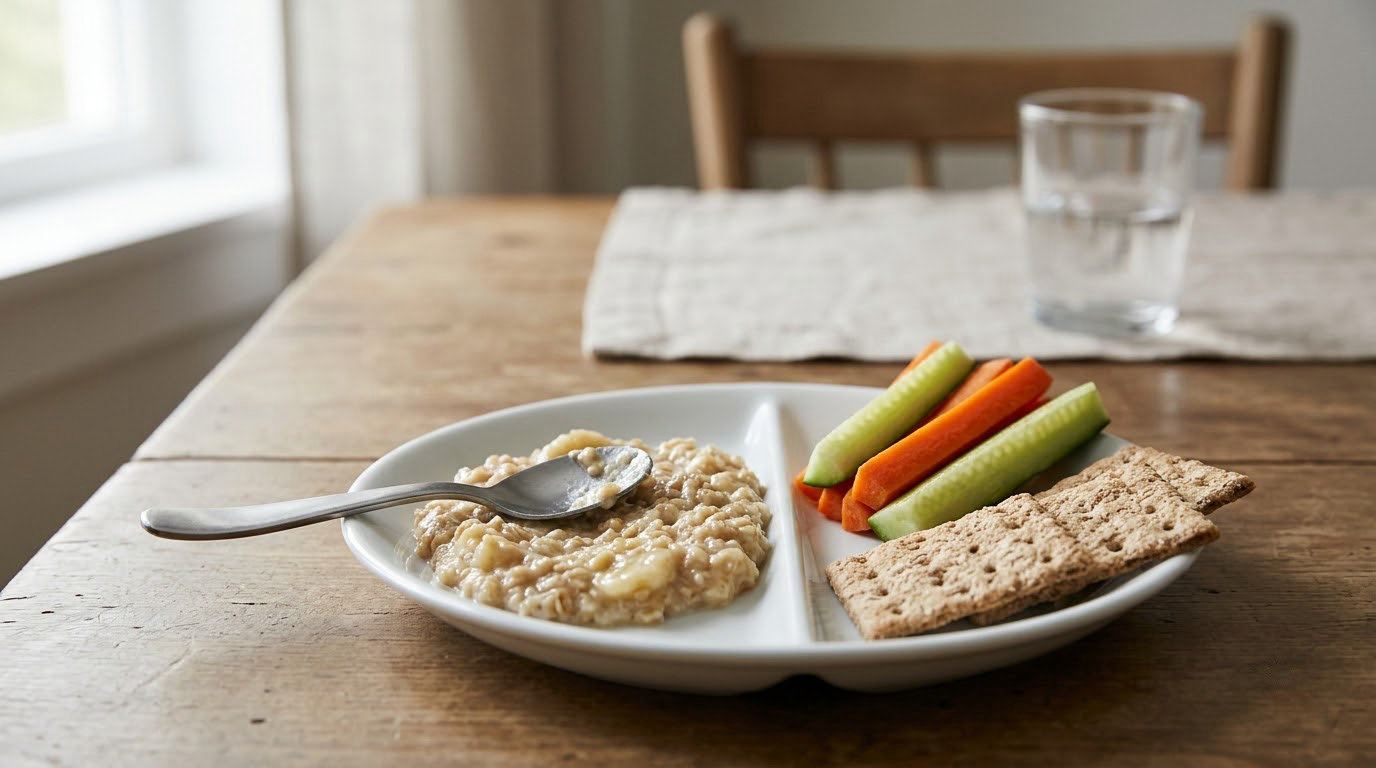
Your child turns down a perfectly good dinner, then asks for the same plain toast three nights running. That is not random stubbornness, and it is not really about taste either. Understanding why food texture matters more than taste for some kids starts with one idea: the mouth is a sensory organ doing far more work than tasting, and for some children it is the loudest voice at the table.
Here is the honest version. Texture is not a quirk layered on top of picky eating. For a large group of kids, especially autistic children and children with sensory processing differences, mouthfeel is the first gate a food has to pass, and taste never gets a say. That said, every child is different, and texture is only ever part of a bigger picture that can include medical and developmental causes.
This guide walks through what texture sensitivity actually looks like, which differences children notice most, and what you can do at home this week without turning dinner into a battle.
Table of Contents
- Why Food Texture Matters More Than Taste for Some Kids
- How Does Texture Affect a Child’s Eating?
- What Texture Preferences Often Look Like
- What Texture Differences Do Kids Notice?
- How Can Caregivers Support Texture Acceptance Safely?
- Which Texture Changes Are Worth Trying First?
- When Should a Parent Ask for Professional Help?
- Frequently Asked Questions
- What to Do First
Why Food Texture Matters More Than Taste for Some Kids
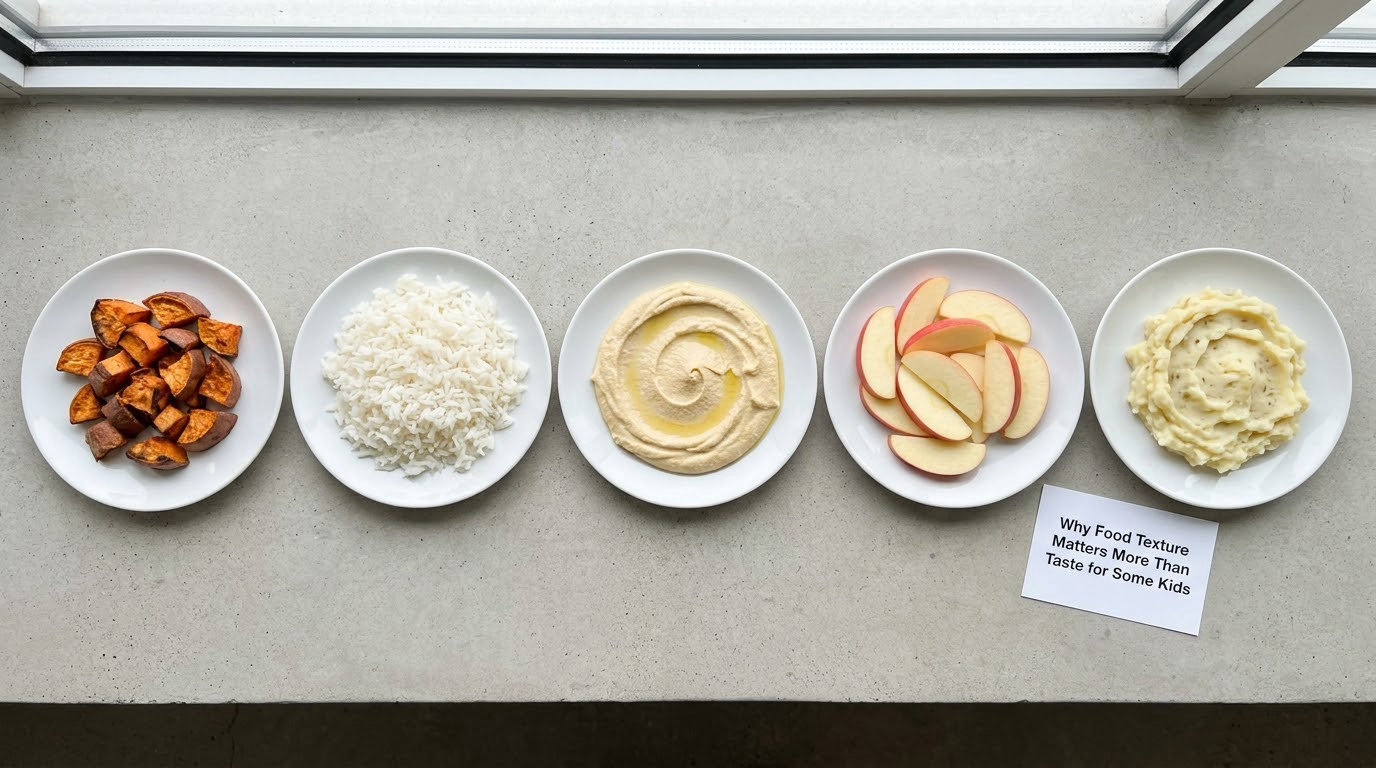
For many children, predictable mouthfeel decides whether a food is even considered, and taste comes second. Chewing, swallowing and the sensation of pressure, temperature and moisture across the tongue and palate are continuous signals, and a child who finds them overwhelming will reject a food before its flavour registers. Taste is also heavily influenced by how a food feels, so the two are hard to separate.
Think about a child who will eat a strongly flavoured cheddar cracker but refuses a plain square of the same aged cheese. The flavour is not the deciding variable. The crunch is. Reverse it and you get the same result in the other direction: soft, smooth cheddar sauce over pasta gets eaten while a firm cube of the identical cheese sits untouched.
That said, texture does not explain everything. Refusal that comes with pain, vomiting, coughing or a sudden change in an established diet needs looking at by a clinician, not a texture experiment. This article is general information, and your child’s pediatrician is the right place to start with anything medical.
How Does Texture Affect a Child’s Eating?
Eating is a sensory event before it is a nutritional one. Every bite delivers a bundle of signals at once, and a child with oral sensory sensitivity may register the whole bundle as one overwhelming impression rather than as separate, manageable details.
The signals that show up most often:
- Pressure. How hard the food pushes against the mouth, from mush through to a firm raw carrot.
- Moisture. Dry and crumbly versus wet and slippery. This is the single biggest divide for many selective eaters.
- Temperature. Some children eat only room temperature food, or only cold, or only warm. One parent described a child who accepts the same chicken cold but not the identical chicken hot.
- Stickiness. Melted cheese, oatmeal and melted marshmallow can be more distressing than they look.
- Chew. The effort and noise of biting through something fibrous or tough.
- Mixedness. Whether one food touches another. Soup with chunks and yogurt with fruit pieces are frequent flashpoints.
Children with sensory over-responsivity often show the same sensitivity far from the table: clothing tags against the neck, toothpaste in the mouth, hair washing, wet hands, loud restaurant noise. When those line up with eating, texture stops looking like a preference.
Where sensory expectation ends is worth naming. Refusing a texture because it feels wrong is one category. Coughing during meals, choking, gagging that brings food back up, pain, nausea, constipation, or difficulty managing a sip all point to something medical or skill-based, not sensory. Those belong with a doctor.
What Texture Preferences Often Look Like
Texture aversion rarely arrives as a neat list. It usually shows up as patterns you can learn to spot once you know what to look for.
- Mixed textures get dismantled. Your child separates the rice from the sauce, or picks every pea out of the soup, one at a time.
- One food at a time. A plate with two components gets two plates.
- Rejection after the first bite. The food makes it in, then the texture registers and it comes back out.
- The same texture at every meal, whatever the menu says.
- Brand specificity. The exact same product in a different package is refused, which is a texture and consistency signal rather than a taste one.
- A safe food list that quietly shrinks. Foods drop off month by month and do not come back.
- Different behaviour at school than at home, because noise, smells, pace and other children are all sensory input too.
Why Food Texture Outweighs Taste for Some Kids
Strong flavour can mask a texture, which is exactly why a child may eat a vividly spiced, smooth soup and refuse the same vegetable roasted dry and firm. The stronger the seasoning, the less the mouth has to notice the underlying texture.
The reverse is common too. Bland foods that are perfectly smooth get eaten reliably, while a favourite flavoured dish is rejected once a new ingredient is added to it. Parents often read that as the child being contrary, when the more useful reading is that the addition changed the mouthfeel.
Repetition alone often stalls here, and it is worth saying why. Repeated exposure works when the food is neutral or mildly interesting. When a texture causes an outright gag, the child is not sampling a new preference, they are practising an unpleasant event. Parents on sensory parenting forums describe the same pattern: offer after offer, same refusal, and eventually the child believes you are going to keep pushing.
One thing families notice repeatedly is that pressure makes things worse. Forcing, bargaining or short-cooking reduces intake and raises anxiety rather than building tolerance. Parents also describe how often safe foods disappear quietly without anyone deciding to remove them.
What Texture Differences Do Kids Notice?
This is the comparison that helps most, because the gaps between these columns are where children fall out. The last column shows what most families see at the table.
| Texture contrast | Often accepted | Often refused | Usual reason |
|---|---|---|---|
| Soft vs chewy | Mashed potato, yogurt, well-cooked pasta | Steak, raw sugar snap peas, dried fruit | Chew effort and jaw fatigue |
| Wet vs dry | Rice, dry cereal, crackers, plain bread | Soup, stew, sauce-heavy pasta, oatmeal | Moisture is the strongest single predictor |
| Smooth vs lumpy | Silky purée, applesauce without pieces | Cottage cheese, oatmeal, finely chopped mixes | Tongue detects small lumps as larger ones |
| Sticky vs nonsticky | Plain bread, dry cereal | Melted cheese, oatmeal, date or raisin filling | Adhesion feels hard to clear from the palate |
| Crunchy vs soft | Crackers, toast, raw vegetables | Steamed vegetables, flaky pastry when wet | Some children need that predictable resistance |
| Separated vs mixed | Components side by side | Rice in sauce, cereal in milk, soup with chunks | Mixing destroys predictability |
Read across the rows before you read down them. A child who refuses an entire wet group but happily eats a dry, crunchy food in the same category is showing you the exact axis to work on, which is moisture and mixing rather than flavour or nutrition.
How Can Caregivers Support Texture Acceptance Safely?
The goal is not to fix your child. It is to widen what they can comfortably eat while keeping the pressure at zero, because pressure is what turns eating into a fight.
1. Map the accepted zone. Write down every texture your child reliably eats without complaint, across a typical week. Look at the pattern rather than the food names. Most families find a narrow band, such as dry, crunchy, separated, and room temperature.
2. Protect the safe foods. Keep serving what works without negotiation and without calling it a compromise. That is the base you build from.
3. Change one variable at a time. Take a food that already works and adjust exactly one thing: moisture, temperature, piece size or mixing. Two changes at once and you will not know which one caused the reaction.
4. Serve components separately. Put the sauce on the side. Put the rice and the protein in different areas of the plate. This costs nothing and often gets a mixed meal eaten that would otherwise have been dismantled.
5. Offer small samples. A teaspoon on a separate plate, offered once, without comment. A refusal is fine and needs no follow-up.
6. Watch what happens at meals. Note distress, gagging, chewing duration, which foods get touched but not eaten, and how the list changes over a month. Parents bring this to appointments far more usefully than a memory of a bad Tuesday.
You can also borrow the division of responsibility framework, where adults decide what is offered and when, and children decide whether and how much to eat. The single line I would keep visible: you are responsible for the food, they are responsible for the eating. It takes the bargaining out of the room.
And accept that the timeline is months, not weeks. Families who assumed a couple of attempts would do it report the opposite. Expansion happened slowly, over months, without a single meltdown.
Which Texture Changes Are Worth Trying First?
If you only have the energy for a few experiments, start at the top of this list. Each is cheap, reversible and usually produces the clearest signal.
- Cutting soft foods smaller. Turning a soft, chewy item into very small pieces often removes the chew problem without changing flavour.
- Adjusting moisture. Adding a little broth, or draining and drying the same food, shifts it from one side of the wet-dry divide to the other.
- Separating the plate. Sauce on the side, toppings apart. The most reliable trick for mixed texture refusal, and it takes almost no extra time.
- Serving at a different temperature. Warming something that was previously served cold, or moving it to room temperature, costs one microwave.
- Offering the same food in two acceptable forms. If mashed potato works, put a small amount of the same potato in a dry-ish form beside it. Familiarity does the work.
- Changing the container or the portion. A different plate or a smaller portion reduces the visual load before any taste or texture is involved.
- Adding a familiar bridge food. A food chaining approach moves from what is already accepted to something slightly new, one step at a time, in a set the child chooses.
Note what is missing. Making a new food, hiding vegetables in sauce, or insisting on one more bite are not on this list, and that is deliberate.
When Should a Parent Ask for Professional Help?
Ask sooner rather than later if any of the following are true. None of them need to be dramatic to count.
- The range of foods accepted is shrinking rather than stable.
- The child eats very few foods overall, and variety is not growing with age.
- Growth, weight or hydration concerns have come up.
- Mealtimes bring distress: gagging, vomiting, tears, or the child leaving the table.
- There is coughing, choking, wet or gurgly voice during or after eating, or food is coming back up.
- The child avoids whole texture groups, such as refusing every wet food.
- Sensitivity shows up outside meals, with tags, toothpaste, haircuts or hand washing.
- You are avoiding restaurants, birthdays or school lunches because of it.
Coughing or choking during meals, pain, and vomiting are reasons to contact your pediatrician promptly rather than to keep experimenting at the table. Those symptoms can point to swallowing or medical issues that need their own assessment.
Who you see depends on what you need. A registered dietitian looks at nutritional adequacy and growth. A pediatric occupational therapist assesses sensory processing and oral motor skills. A speech-language pathologist with feeding expertise covers swallowing and oral motor work. A psychologist or feeding team addresses the wider pattern, including avoidant restrictive food intake disorder, which is a formal diagnosis made by qualified clinicians and not something to work out from a checklist at home.
For school lunches and social eating, tell the school what actually works rather than what sounds reasonable. A packed lunch in a predictable container, eaten in a quieter spot, is often the difference between a child eating and going hungry. Many families find the same food accepted at school and refused at home, which says more about environment than about the child.
This article is general information and not medical advice. Your child’s pediatrician is the right starting point for anything physical, and a feeding team can take the sensory side further.
Frequently Asked Questions
Can a child dislike a food because of its texture?
Yes, and for many children the texture is the whole reason. A child may eat a strongly flavoured crunchy food and refuse a milder version of the same ingredient because it feels different in the mouth. If your child reliably eats one form of a food and not another, that pattern is more about texture than taste. Talk with your pediatrician or a feeding team if refusals are also accompanied by gagging, coughing or pain.
How do I know if my child’s food refusal is sensory?
Sensory refusal usually follows texture groups rather than single foods. Watch for whole categories avoided, such as everything wet or everything mixed, gagging at the sight or smell of food, and the same sensitivities outside meals such as clothing tags, toothpaste or haircuts. A food list that shrinks over time is another strong clue. Refusal that comes with pain, vomiting or coughing is not sensory and needs a medical assessment.
Should I keep offering a food my child rejects?
Keep it on the menu, keep offering it calmly once per meal, and never require a bite or a taste. Repeated pressure tends to raise anxiety and can lower intake rather than build tolerance. If a food causes an outright gag, keep it away for a while and work back toward it through a food chaining approach with steps your child chooses. A registered dietitian can help you plan this so nutrition stays on track meanwhile.
Are mixed-texture foods harder for autistic children?
They often are. Mixing destroys predictability, because the mouth cannot anticipate what is arriving next. Soup with chunks, rice in sauce and cereal softened in milk are frequent triggers, and many autistic children eat the components separately instead. Serving each part in its own area of the plate, or putting sauce on the side, often gets a mixed meal eaten without changing anything about the food itself.
What if my child only eats a few textures?
A narrow but reliable range is common and often not dangerous on its own, especially if growth and hydration are fine. The part to watch is whether the range is shrinking, because foods tend to drop off quietly without intervention. Keep serving the accepted foods and change one variable at a time when you feel ready. A registered dietitian can check that the current range still covers what your child needs to grow.
When does difficulty eating need medical attention?
Contact your pediatrician promptly if there is coughing or choking during meals, pain, vomiting, food coming back up, a wet or gurgly voice after eating, or any concern about weight, growth or hydration. A steadily shrinking food list or distress at every meal also deserves a referral. Your pediatrician can assess the medical side and point you toward an occupational therapist, speech-language pathologist or feeding team for the sensory and oral motor work.
What to Do First
Write down the textures your child reliably accepts and the ones they reliably refuse, then watch one week of meals without changing anything. That list, plus a note of what actually happens during eating, is the first thing to bring to a conversation with your pediatrician or a feeding team.
Texture often sits at the table before taste does, and once you can see that pattern, the work becomes quieter and much less loaded. Change one variable at a time, keep the pressure off, and let your care team handle anything that comes with pain, coughing or vomiting.