To manage constipation in autistic kids, the work is mostly routine: short, predictable toilet sits, fluids your child genuinely accepts, and food offered without pressure. Most families see steady improvement once those three things are consistent, and none of it needs to wait for a specialist appointment. What does need attention right away is pain, blood, vomiting, or a sudden change in bowel habits.
Constipation is one of the most common health problems in autistic children, and it is also one of the most commonly missed. A child who cannot say that their tummy hurts will show it through posture, sleep, eating, and behavior instead. The steps below are general guidance for home routines, not a treatment plan — your child’s age, medical history, medications, and existing diet all change what is safe.
Table of Contents
- What You Need Before You Manage Constipation in Autistic Kids
- Step-by-Step
- Common Mistakes
- Frequently Asked Questions
- What are common signs of constipation in autistic kids?
- How can I help a child who resists going to the toilet?
- Should I give my autistic child fiber supplements or laxatives?
- How much water should an autistic child drink to prevent constipation?
- When is constipation in a child a medical emergency?
- Can constipation be related to autism or sensory stress?
- Conclusion
What You Need Before You Manage Constipation in Autistic Kids
You need three things: a way to record what is happening, a clear picture of what your child already eats and drinks, and access to a clinician who knows your child’s history. That last part matters more than most guides admit, because what looks like a routine problem on paper can be a medication side effect or something a clinician needs to look at directly.
Start with a symptom and bowel-movement diary. A notebook, a phone note, or a simple chart on the fridge all work. The best ones record the same few things every day rather than a long list you abandon on day three.
Then write down your child’s current foods, fluids, medicines, and supplements. Include anything prescribed for autism symptoms, ADHD symptoms, or allergies, because several commonly used medicines affect how fast things move through the gut. If your child follows a gluten-free or casein-free diet, write that down too, since those diets remove easy sources of fiber.
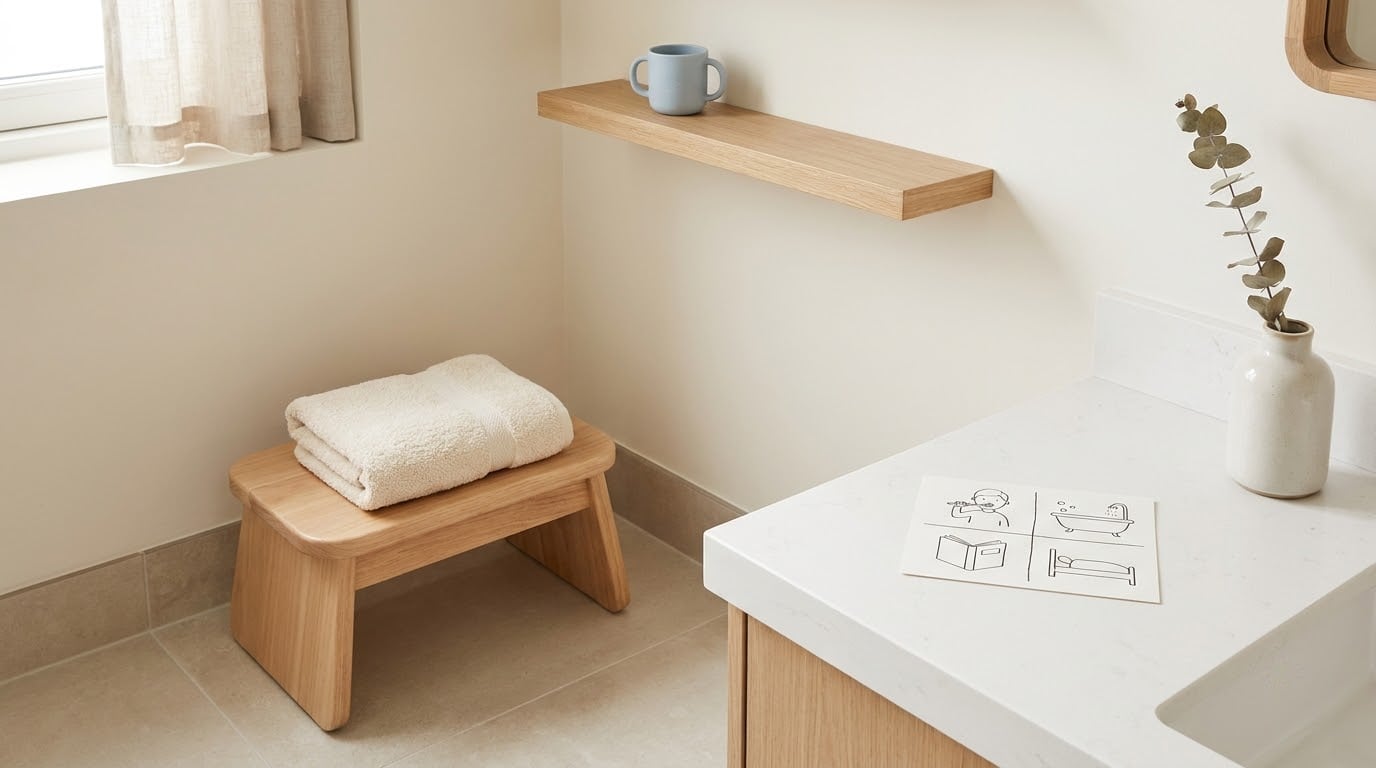
Have comfortable clothing and simple toileting supplies ready: a footstool or step for positioning, wipes that your child will tolerate, and clothes that are easy to change quickly. For children still in diapers or pull-ups, have those within reach — fighting them usually adds stress rather than solving anything.
Finally, know who to call. That is your child’s pediatrician, primary care clinician, or gastroenterologist. If your child already has a feeding therapist, occupational therapist, or other provider, they often know what has worked before.
Step-by-Step
1. Track Bowel Patterns and Warning Signs

For about a week, record when a bowel movement happens, what it looks like, and how much effort it took. You are looking for a pattern, not a diagnosis.
Write down the day and time, stool consistency using a simple scale from hard pellets to loose, whether there was straining or pain, and any accidents or smearing. Add appetite changes, gas, a hard or bloated lower belly, sleep disruption, and times your child avoided the bathroom or the potty entirely.
Watch for withholding postures too — leaning against furniture, standing on tiptoe, or arching and bracing can be a child holding stool in rather than a child being difficult. Parents on autism parenting forums describe this as the moment it clicked for them.
Any pattern that is unusual for your child, or a marked change from their normal routine, deserves a conversation with a healthcare professional. A one-week log is also the single most useful thing you can bring to that appointment.
2. How to Manage Constipation in Autistic Kids With a Toileting Routine
Offer the toilet or an age-appropriate toileting method at similar times each day, for a few unhurried minutes. The strongest habit is sitting within roughly 20 minutes after a meal, because the gastrocolic reflex makes a bowel movement more likely then.
Keep the setup sensory-friendly. A footstool so feet are flat on the floor, a door that locks, lighting your child chooses, and a familiar comfort item all reduce the effort of going in there. Some children do far better with a potty, a portable toilet, or even a diaper over the toilet seat.
Make it predictable rather than prompted. A visual schedule showing when the sits happen tends to work better than verbal reminders, and calm follow-through matters more than the exact time. If your child is still in pull-ups, sitting on the toilet with the pull-up in place is a reasonable bridge; a towel or underwear layered over the pull-up can also help a child notice wetness.
Reinforce the attempt, not the result. Praising sitting on the toilet works better than reacting to an accident, which is how most toilet training stalls.
3. Make Fluids Easier to Accept
Offer drinks your child already likes, in small and predictable amounts, at the same points in the day. A familiar cup, a favorite flavor, or a straw can matter more than what is in it.
Vary presentation without forcing intake. A cold slice of melon and a cup of the same melon are different experiences, and offering both costs nothing. Do not make drinking a condition of something your child wants.
More fluid is not automatically better, and it is not something to force. Urine color is a rough hydration cue for many families, though it is only a cue. If your child has fluid restrictions, kidney or heart conditions, a history of feeding problems, or cannot reliably signal thirst, ask a clinician for individualized guidance rather than guessing at amounts.
4. Offer Fiber Foods Without Forcing

Foods that generally help include fruit, vegetables, beans, lentils, whole grains, and seeds. Start by listing what your child already eats comfortably and adding fiber within that range, rather than introducing something entirely new.
Texture and presentation drive acceptance. Soft cooked vegetables, smooth blended options, or a familiar food in a new shape all work better than a raw food your child has never met. Parents often report that keeping the food routine predictable, with the same items offered calmly and repeatedly, is what finally moves acceptance forward.
Build on any existing gluten-free or casein-free diet carefully, because that pattern removes several high-fiber staples. A registered dietitian is the right person for that adjustment, particularly if your child is small, has a restricted diet, or has swallowing or digestive concerns.
Change food gradually, one variable at a time, so you can tell what helped. A sudden switch often ends in refusal, more distress, and a child eating less fiber than before.
5. Encourage Comfortable Movement
Offer movement your child tolerates: walking, stretching, playground time, dancing, or supervised active play. Fifteen minutes counts, and it does not have to be a workout.
Adapt to abilities and preferences, and stop if it becomes another demand. Movement supports general comfort and routine, but it does not replace medical evaluation when constipation is persistent, severe, or changing.
6. Know When to Contact the Child’s Doctor
Contact your child’s clinician promptly for any of the following. These are reasons to call, not reasons to wait and see.
- Severe or persistent abdominal pain, or a markedly swollen, hard, or tender belly
- Vomiting, especially repeated vomiting or vomiting that looks green
- Blood in the stool, or stool that looks black and tarry
- An inability to pass stool despite clear trying, particularly with discomfort
- Signs of dehydration, such as very few wet diapers, dry mouth, or no urine for many hours
- Fever alongside pain, or any sign the child is generally unwell
- Weight loss, poor growth, or a new reluctance to eat
- Soiling or accidents appearing suddenly in a child who was previously clean
- Any significant change in bowel habits, or constipation that lasts more than a few days
Call emergency services for severe or rapidly worsening symptoms, a rigid swollen abdomen, fainting, or a child who seems seriously unwell. Do not wait for a routine appointment in those cases.
Common Mistakes
Forcing food or fluids. Pressure at meals rarely adds fiber and usually adds stress, and stress makes the bathroom harder. Offer calmly, keep the variety steady, and involve a feeding professional if the range is very narrow.
Assuming autism is the whole explanation. It raises the risk, but it does not rule out medication effects, a diet that leaves little room for fiber, or a physical condition. Say what you have noticed rather than assuming the diagnosis covers it.
Starting supplements without guidance. Fiber powders, magnesium products, and over-the-counter laxatives are medicines, and parents on autism forums often describe weeks of gas and bloating that turned out to be a supplement that was never going to be the answer. Check with a clinician or pharmacist first.
Using harsh laxatives or adult products on a child. Additives, stimulant laxatives, and anything intended for adults are not something to experiment with at home.
Rewarding only results, or shaming accidents. Praise the sitting, ignore the outcome, and keep the bathroom neutral. Children who associate toileting with frustration hold stool in longer.
Waiting too long to report warning signs. A few days of tracking is useful. Weeks of pain, avoidance, and behavior change are not, and chronic constipation can need supervised treatment rather than home routines alone.
A few prevention habits that help: keep meal and toilet times predictable, keep preferred drinks within easy reach, keep fiber foods available daily within the range your child already accepts, and keep the diary going even after things improve so you have history at the next appointment. During travel or schedule changes, hold onto the mealtime and toilet routine first, and loosen the food rules rather than the routine.
Frequently Asked Questions
What are common signs of constipation in autistic kids?
Watch for fewer than three bowel movements a week, hard or lumpy stools, straining on the toilet, a bloated or hard lower belly, and sudden refusal of the bathroom or potty. Other clues include withholding postures, unexplained irritability, disrupted sleep, and small smeary stools in underwear, which can mean liquid stool is leaking around a backed-up colon.
How can I help a child who resists going to the toilet?
Make the visit short, predictable, and low pressure: a few minutes at the same times each day, often within 20 minutes after a meal. Offer a footstool, privacy, chosen lighting, and a comfort item, and never punish or shame. A visual schedule and calm praise for trying usually work better than mid-episode reminders.
Should I give my autistic child fiber supplements or laxatives?
Only with clinician guidance. Over-the-counter laxatives and magnesium products are medicines, and a child who is withholding stool or has a swollen belly may need supervised treatment rather than a home remedy. Fiber supplements can add gas and bloating, and a gluten-free or casein-free diet already limits easy sources. Ask before starting anything.
How much water should an autistic child drink to prevent constipation?
There is no single number that works for every child, and more fluid is not automatically better. Offer preferred safe drinks in small, predictable amounts through the day. If your child has fluid restrictions, heart or kidney conditions, a history of feeding difficulty, or cannot reliably signal thirst, ask a clinician for an individualized plan.
When is constipation in a child a medical emergency?
Call emergency services for severe or rapidly worsening abdominal pain, a rigid or swollen belly, repeated vomiting, blood in the stool or vomit, fainting, marked dehydration such as very few wet diapers or no urine for many hours, or any child who cannot pass stool and looks unwell. These can signal a blockage that needs urgent assessment.
Can constipation be related to autism or sensory stress?
Often, yes, though autism is not itself a diagnosis of constipation. Differences in the enteric nervous system, interoception, food selectivity, medications, and sensory stress around the toilet all raise the risk. That is why routines built around your child’s sensory needs work better than generic advice, and why persistent symptoms deserve a medical review.
Conclusion
Start with a log, not a product. Record bowel patterns, food, fluids, medicines, and behavior for about a week, then build a predictable set of short toilet sits after meals with the sensory setup your child needs. Keep preferred drinks easy to reach and keep suitable fiber foods available daily within the range your child already accepts, without force.
Knowing how to manage constipation in autistic kids is mostly about consistency and about knowing where your own role ends. A pediatrician, gastroenterologist, or dietitian can turn the log into an individualized plan, and any pain, blood, vomiting, swelling, or sudden change in habits should reach them quickly rather than waiting for a routine appointment.