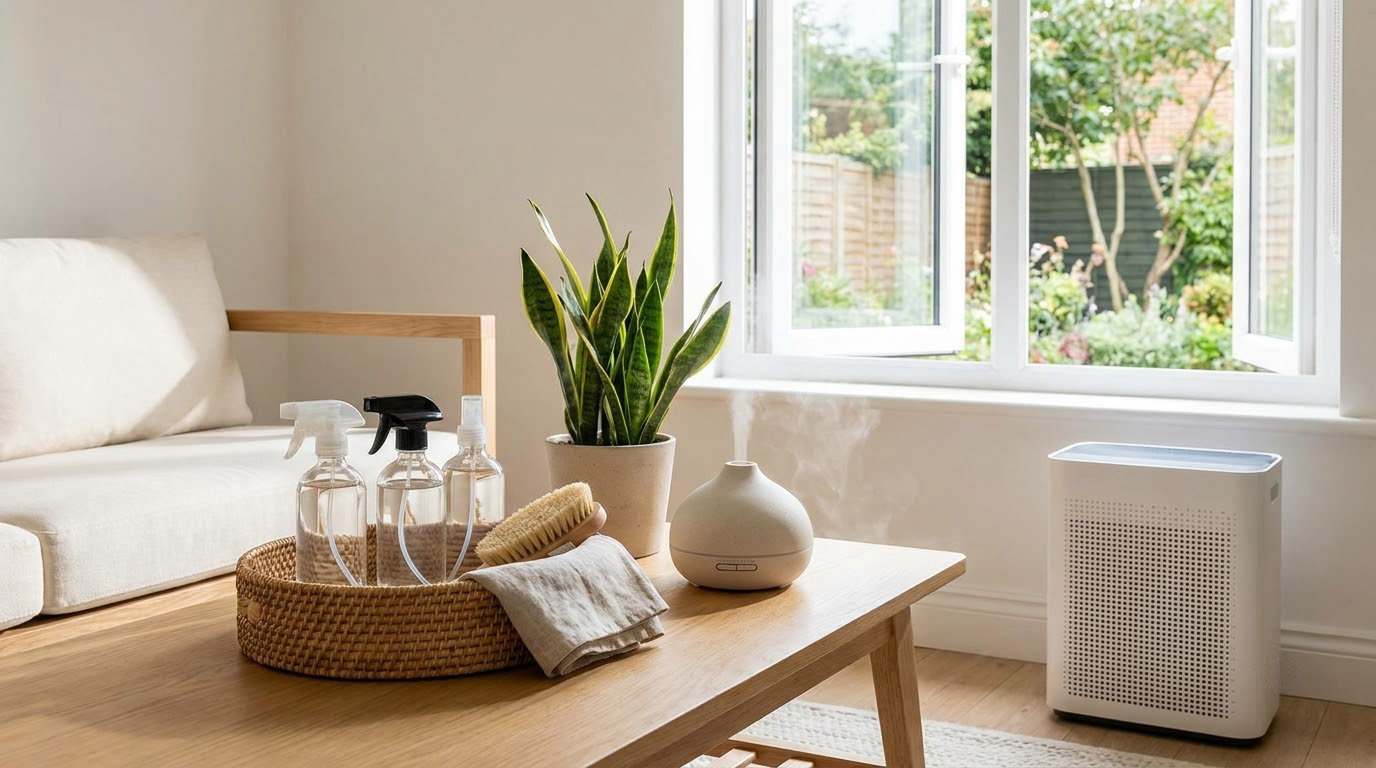
To detox your home one room at a time, you pick one room, open the windows, remove the highest-scent or highest-dust items, clean what stays, and air the room out again before moving to the next space. Most people can finish a room in 60 to 90 minutes, and the whole plan spreads comfortably across a few weekends instead of one exhausting weekend.
The reason room-by-room works is that a whole-home detox fails on scope. You end up with a garage full of half-packed boxes, a broken dishwasher and nothing changed. One room at a time gives you a finished result you can actually see, and finished rooms are what keep you going.
Table of Contents
- What You Need
- Step-by-Step
- 1. Assess and Set Up the Project
- 2. Detox the Kitchen
- 3. Create a Lower-Exposure Bedroom
- 4. Refresh the Bathroom
- How to Detox Your Home One Room at a Time
- 5. Clear and Clean the Living Area
- 6. Finish the Entryway and Create a Maintenance Routine
- Common Mistakes
- Frequently Asked Questions
- How long does it take to detox one room at a time?
- What should I detox first in my house?
- Can I use vinegar or baking soda instead of household cleaners?
- How do I detox my home when someone has allergies or sensory sensitivities?
- Do I need to test my indoor air before detoxing?
- How can I keep my home detox going after the first week?
- A Small First Step Is Enough
What You Need
You need less than most home detox guides imply. Gather these basics once and every room after the first is quick.
- Nitrile or dish gloves
- A simple spray bottle, a bowl for mixing, and two microfiber or cotton cloths
- Dish soap, white vinegar, baking soda, and a soft brush for grout and corners
- Masking tape and a marker for labeling boxes
- A trash bag or two for things leaving the house
- A notebook or your phone notes for a before-and-after checklist
- A box for items you are inspecting rather than discarding
A box fan with a clean filter, or a HEPA vacuum if you own one, moves dust faster than a broom ever will. If your household water is under question, your local utility publishes a water quality report, and that report is free. You do not need to buy a specialty cleaner collection or a full set of replacement equipment to start.
Step-by-Step
1. Assess and Set Up the Project
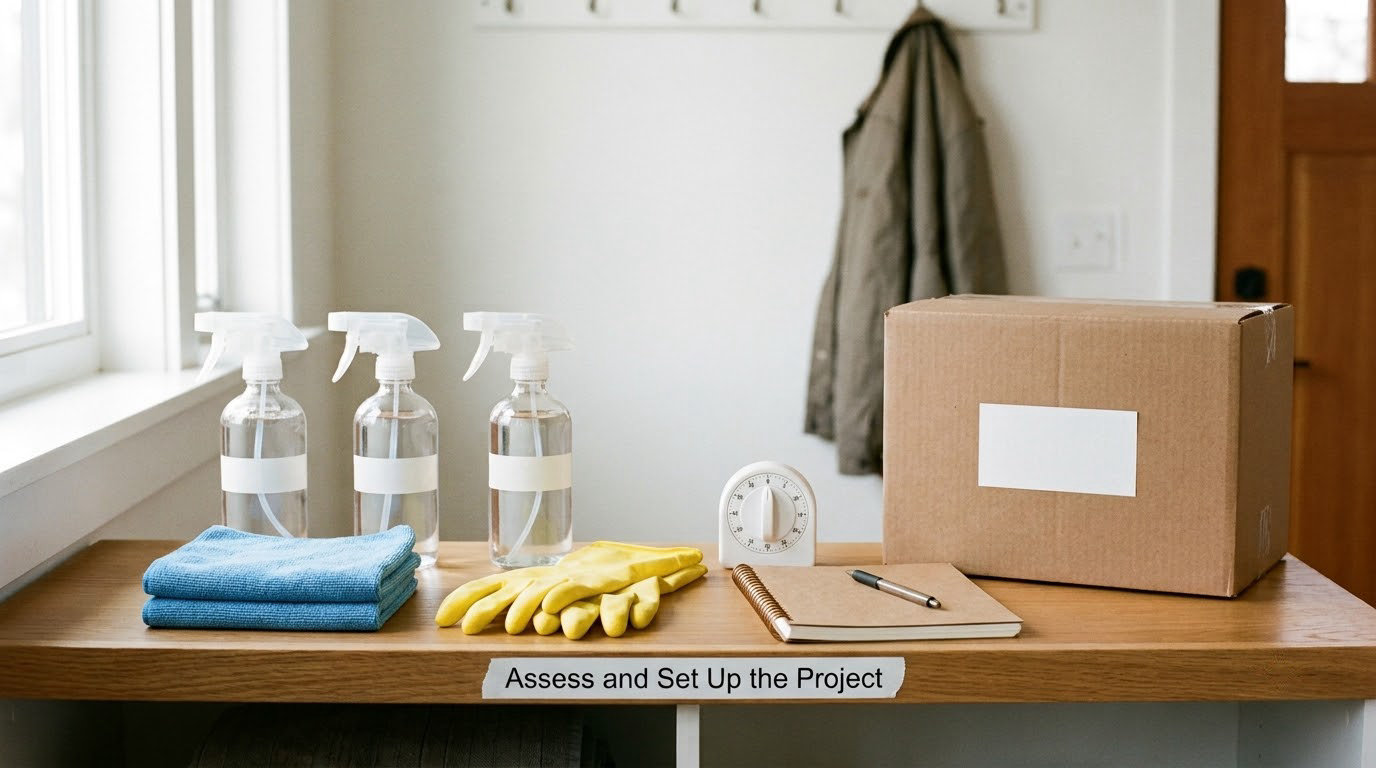
Start by finding the room that bothers you most, not the room that looks the messiest. Smell it when you walk in. Notice whether your eyes water, whether the room feels stuffy, and whether anyone in the family coughs or gets headachey there.
Then set a time limit. Sixty minutes with a timer is honest and it stops the drift into a two-week project. Take four photos from the corners before you touch anything, and write your checklist afterward, not during.
Order the rooms so the heaviest buildup comes first and the low-stakes room closes out the week. Kitchen first because of food contact surfaces and daily handling, then the bedroom where most of your night hours happen, then the bathroom for moisture plus stored products, then the living area with its upholstery, rugs and electronics, then the entryway where outdoor dirt gets carried deeper, and finally a whole-home reset covering ventilation, filters and weekly habits.
If your home houses an autistic child or a medically fragile child, do the bedroom first regardless of this order, and treat any scented product as a trigger worth removing early. Overwhelm in a familiar space is a real symptom, and clearing one room well can settle the rest of the house. Our guide to how to handle autism meltdowns at home covers the other half of that problem.
Completion check for step one: you have a box, a timer, a notebook entry and one named room.
2. Detox the Kitchen
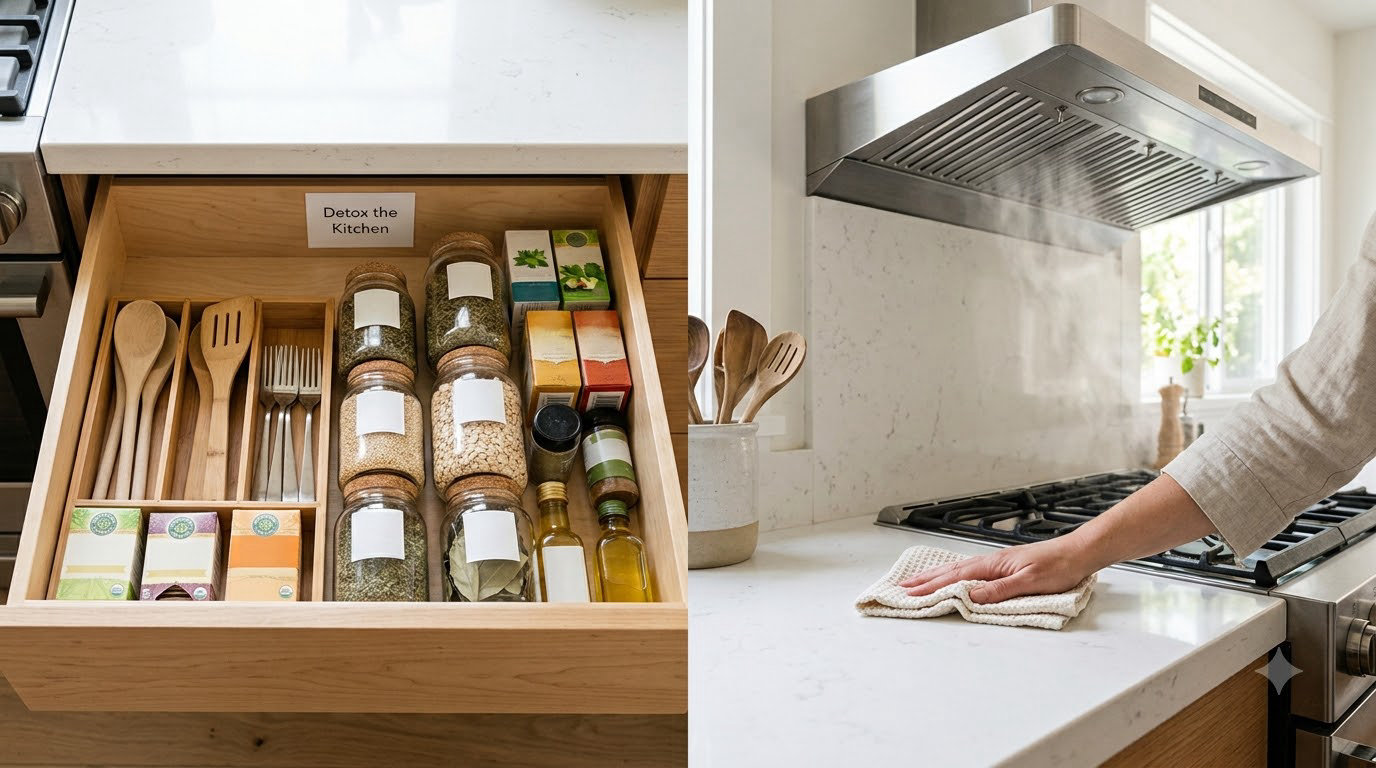
Work in this order: counters and backsplash, then drawers and cabinet shelves, then the outside of the refrigerator, then the pantry.
For sticky surfaces, warm water and dish soap does most of the work. For residue on counters or cabinet faces, mix one part white vinegar with one part water in your spray bottle, spray, let it sit two minutes, wipe, then rinse with plain water so you are not leaving acidity behind on a food-prep surface.
Baking soda handles the smell in the sink and the fridge. Sprinkle a layer, leave it 15 minutes, scrub, rinse.
Now the audit. Pull out open dry goods you are not sure about and read the label for “fragrance” or “natural flavor,” both of which can hide a lot. Replace heavily scented cleaners under the sink with an unscented or fragrance-free option, and note the old bottle for the trash.
Plastic containers are not the enemy. A well-used plastic tub that holds dry cereal is fine. Swap a cracked or warped container, and move anything holding oily or hot food to glass when you get around to it.
Improve ventilation while you work: run the range hood, open a window across the house if you can, and let the room air out for ten minutes before you put anything back.
Completion check: crumbs gone, no sticky film on the counter at your fingertips, pantry labels readable, hood running during cooking.
3. Create a Lower-Exposure Bedroom
Bedrooms concentrate hours of exposure. A person asleep in one room for eight hours meets everything in it far more closely than someone passing through the kitchen.
Wash all bedding in hot water, and skip fabric softener and dryer sheets, which add scent back onto fabric. A rinse with plain vinegar in the wash cycle handles detergent residue.
Dust control matters more here than anywhere. Vacuum with a sealed system, then damp-wipe the top of the dresser, the headboard, the window sill and the baseboards. Dry dusting pushes dust into the air, and you are cleaning so it can breathe it in again.
Read the room for scent. Candles, diffusers, scented sprays and dryer sheets are the most commonly reported first win in chemical-sensitive households. Out they go, and air the room overnight.
For a child with sensory sensitivities, an uncluttered room is often the bigger relief. Cut the number of visible objects before you buy anything.
Completion check: bedding is fresh and unscented, the dresser top stays dry-dust-free for a week, and the room holds no fragrance source.
4. Refresh the Bathroom
Bathrooms combine moisture with a shelf full of products, so they reward steady attention rather than one dramatic purge.
Check the vent fan first. Turn it on with the door cracked and feel for airflow at the latch. If it moves nothing, running the shower briefly with a window open still beats nothing. Keeping humidity between 30 and 50 percent limits mold growth.
Clean the sink, tub and shower with dish soap and water first, then the vinegar solution on hard-water film. Scrub grout with a soft brush. Dry the surfaces afterward, including behind the toilet and under the sink lip, where moisture hides.
Walk the stored products. If a bottle is old, unlabeled or has separated, toss it. Replace strongly scented soaps and sprays with fragrance-free versions when you are ready, not all at once.
Never mix bleach with vinegar, ammonia or any other cleaner. The gas released can injure people and pets, and no amount of ventilation makes it safe.
Keep children and pets out of the room while you clean and while it airs. Ten minutes of fresh air clears most of what you released.
Completion check: no residue on tile, everything dry, the vent fan actually moving air, and the shelf holds only products you recognize.
How to Detox Your Home One Room at a Time
Once you have done two rooms, the method becomes the same six moves every time. Learn it once and the rest of the house stops feeling like a project.
Notice. Walk in, smell it, note what makes you or your child react.
Remove. Take out what you can live without for the next month: plug-ins, air fresheners, scented candles, decanted perfume, old rugs.
Clean. Damp-wipe surfaces, vacuum with a sealed vacuum, scrub the edges of rooms where dust settles.
Ventilate. Windows open, fan on, door closed to contain dust while you work. Ten minutes after.
Replace selectively. Swap only what is actually used. People stick with gradual replacement as things wear out, and that is the version that survives year two.
Verify. Sit in the room for five minutes. Any sting in your eyes, throat or nose tells you what to handle next.
Ventilation and removing everyday irritants move the needle far more than any label on a bottle. Two steps, repeated room after room, beat an expensive overhaul you abandon in a month.
5. Clear and Clean the Living Area
Living rooms collect off-gassing from furniture, fabrics and electronics, plus whatever the pets and the tracked-in shoes bring with them.
Start with the rug and the upholstered pieces. Vacuum both thoroughly. If you can remove a washable cover and wash it, do that. Rugs with a rubber or synthetic backing hold onto smell more than they release it, and a rug pad makes a floor easier to scrub.
Books collect dust on their top edges, and the shelf above them holds a fine layer you cannot see. Take the shelf down, wipe it, and put the books back.
Deal with air fresheners and wax melts first. They exist to add scent into the air and they are one of the easiest wins in the room. Air purifiers and diffusers both count.
Leave the electronics. Wipe screens and vents with a barely damp cloth, keep devices off soft upholstery when they run warm, and give a bookshelf lamp some clearance.
This is everyday cleaning and exposure reduction. It is not remediation of a confirmed hazard, and if you suspect one you need a professional rather than a damp cloth.
Completion check: the rug smells neutral at floor level, the shelves are wiped, and no product in the room is adding scent to the air.
6. Finish the Entryway and Create a Maintenance Routine
The entryway is where the outside gets in. A bench for shoes and a hook by the door keep pollen, outdoor dust and damp from crossing into the rest of the house.
Leave shoes at the door. It is the most repeated single tip in non-toxic living communities and it costs nothing.
Wipe doorknobs, light switches and the small tray where you drop keys. Hang coats on the entry hook rather than over a bedroom chair, because outdoor allergens come in on fabric.
For delivered packages, open them at the door and recycle the box rather than carrying cardboard dust into the living area.
Then build the ten-minute daily reset:
- Open two windows for five minutes, twice a day, whatever the weather is doing
- Run bedding and towels every week, unscented
- Vent the shower during and after use
- Do one damp-wipe of the kitchen counters each day
- Empty the entry shoe tray weekly
Add the seasonal reminders: change the furnace filter on schedule, open the windows properly in spring and autumn, and tackle a garage or basement in a stretch of good weather rather than squeezing it in.
Completion check: the entry is orderly, shoes stay there, and your family can keep the routine on a normal week.
Common Mistakes
Trying to do every room at once. Fix: one room, one time limit, one weekend at a time. The pace is the plan.
Replacing everything you own. Fix: replace as items wear out, plus one deliberate swap per room. A mattress you love can stay until it fails you.
Believing a green label means harmless. “Fragrance-free” is stronger than “unscented,” and both can still leave a reaction. Named third-party marks such as EWG Verified, Greenguard Gold, Made Safe and Leaping Bunny are checkable in a way that a leaf logo is not.
Ignoring ventilation. Cleaning without air movement just relocates dust onto your next surface. Open a window first, always.
Mixing cleaners. Vinegar and bleach release a toxic chlorine gas, and so do bleach and ammonia. Use one cleaner at a time and rinse between them.
Chasing hazards with no evidence. Lead paint in a house built before 1978, asbestos in old flooring and insulation, and mold covering more than about 10 square feet belong to licensed professionals. Test first, then decide.
Buying disposable replacements to feel done. A new unbleached cotton cloth, a refill instead of a new bottle, or a washable cover instead of a replacement sofa keeps the habit affordable.
Believing houseplants fix the air. The frequently cited space study found roughly 10 to 1,000 plants per square meter needed to move meaningful amounts of air in a sealed chamber. Plants are pleasant. They are not ventilation.
Frequently Asked Questions
How long does it take to detox one room at a time?
A typical room takes 60 to 90 minutes with a timer set. Add 15 minutes for airing the space out with windows open before you put belongings back. A full pass through six rooms is easier to finish across three or four weekends than in one long weekend, and it keeps the rooms you finished still finished.
What should I detox first in my house?
Start with the room that bothers someone most, not the room that looks dirtiest. Smell it on entry and notice reactions. In most homes the kitchen or the bedroom comes first because both concentrate daily exposure. If a child has allergies or sensory sensitivities, do the bedroom first and remove scented products before anything else.
Can I use vinegar or baking soda instead of household cleaners?
Yes, for most routine tasks. Mix one part white vinegar with one part water for counters and hard-water film, and keep baking soda for sinks and odors. Dish soap and warm water still handle most grease. Never combine vinegar or peroxide with bleach, and rinse food-prep surfaces with plain water after vinegar.
How do I detox my home when someone has allergies or sensory sensitivities?
Remove scent sources first, because fragrance is the most commonly reported trigger. Take out candles, plug-ins, air fresheners, scented laundry products and dryer sheets, then ventilate the room overnight. Keep the space uncluttered and use unscented detergent. If symptoms continue or breathing is affected, speak with a clinician rather than treating the home as the whole answer.
Do I need to test my indoor air before detoxing?
No, not to begin. Source control, ventilation and dust reduction are sensible regardless of what a test says, and they cost little. Testing makes more sense when something specific is suspected, such as lead, mold or a chemical smell you cannot locate. Your local health or environmental agency can point you to the right kind of test and what result to act on.
How can I keep my home detox going after the first week?
Keep the ten-minute habits, not the big sessions. Two five-minute window openings a day, weekly unscented laundry, shower ventilation, one daily damp-wipe and shoes staying at the door do more long-term than a single weekend of scrubbing. Swap items as they wear out rather than all at once, and photograph each finished room so the progress is visible.
A Small First Step Is Enough
Choose one room tonight. Set a 30- or 60-minute timer, open the windows before you start, put the scented things in the trash, and damp-wipe the surfaces. Make one real substitution, take a photo, and stop.
That is how to detox your home one room at a time, and it is a plan you will still be running next month. The rooms come later. The first one starts now.
This guide is educational and is not medical advice. For suspected lead, asbestos or extensive mold, contact your local health department or a licensed professional. If someone is struggling to breathe or has persistent symptoms, talk to a doctor.