Most babies are ready to start solids at about 6 months, and the signs matter more than the date on the calendar. The American Academy of Pediatrics and the CDC both frame it the same way: wait until your baby can sit upright with steady head control, shows interest in what you are eating, and no longer pushes food out with the tongue. Here is how to start solids with a baby, one calm feeding at a time.
I remember the first spoonful feeling like a tiny event. My own kid smeared sweet potato across the high chair, wiped it on the bib, and ate maybe two teaspoons. It felt like failure for about an hour. Then we ate the same thing again the next day, and the day after that.
That is the honest shape of starting solids: less about a single perfect meal and more about dozens of small, unhurried repetitions. This guide walks through the supplies you might want, the readiness signs worth trusting, the first foods that make sense, how to work in allergens, and what to do when your baby spits everything out.
This is general information, not medical advice. Your own baby’s age, development and medical history come first, and your pediatrician is the right person for anything specific about your child.
Table of Contents
- What You Need
- How to Start Solids With a Baby Step by Step
- 1. Check readiness before offering the first food
- 2. Choose a comfortable first-feeding setup
- 3. Offer a small taste of a simple first food
- 4. Repeat gently and watch for changes
- 5. Introduce allergens one at a time
- 6. Move gradually toward more textures
- Common Mistakes
- Frequently Asked Questions
- When should I start solids with my baby?
- How long should it take a baby to eat a full meal of solids?
- Can I give solids while my baby is still breastfeeding or formula-feeding?
- What if my baby refuses every new food?
- How do I know if my baby is ready for more texture?
- When should I call the pediatrician about feeding?
What You Need
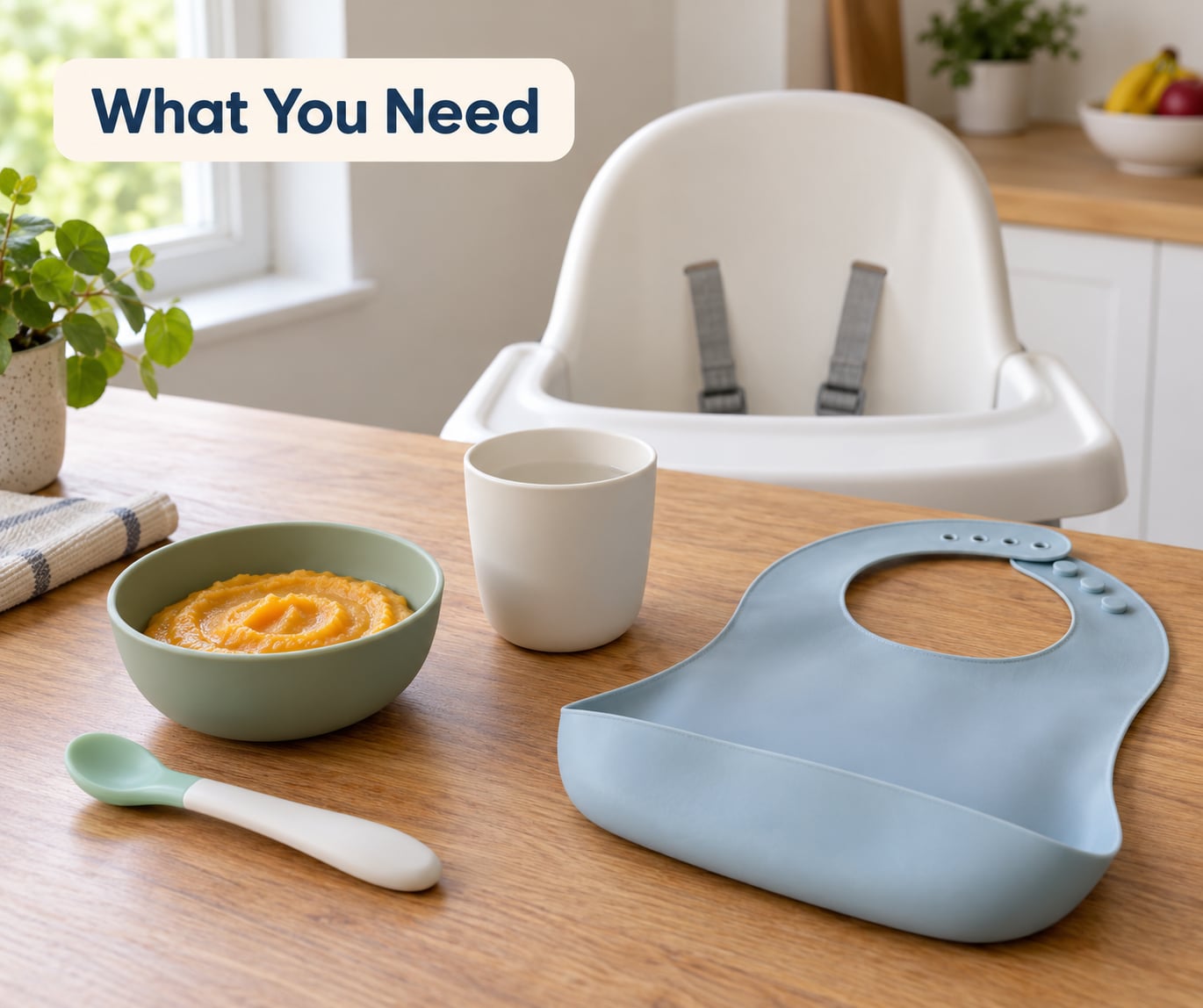
None of this is mandatory. You can start solids with a spoon and a bowl on your lap. But a few things make the first two weeks noticeably calmer.
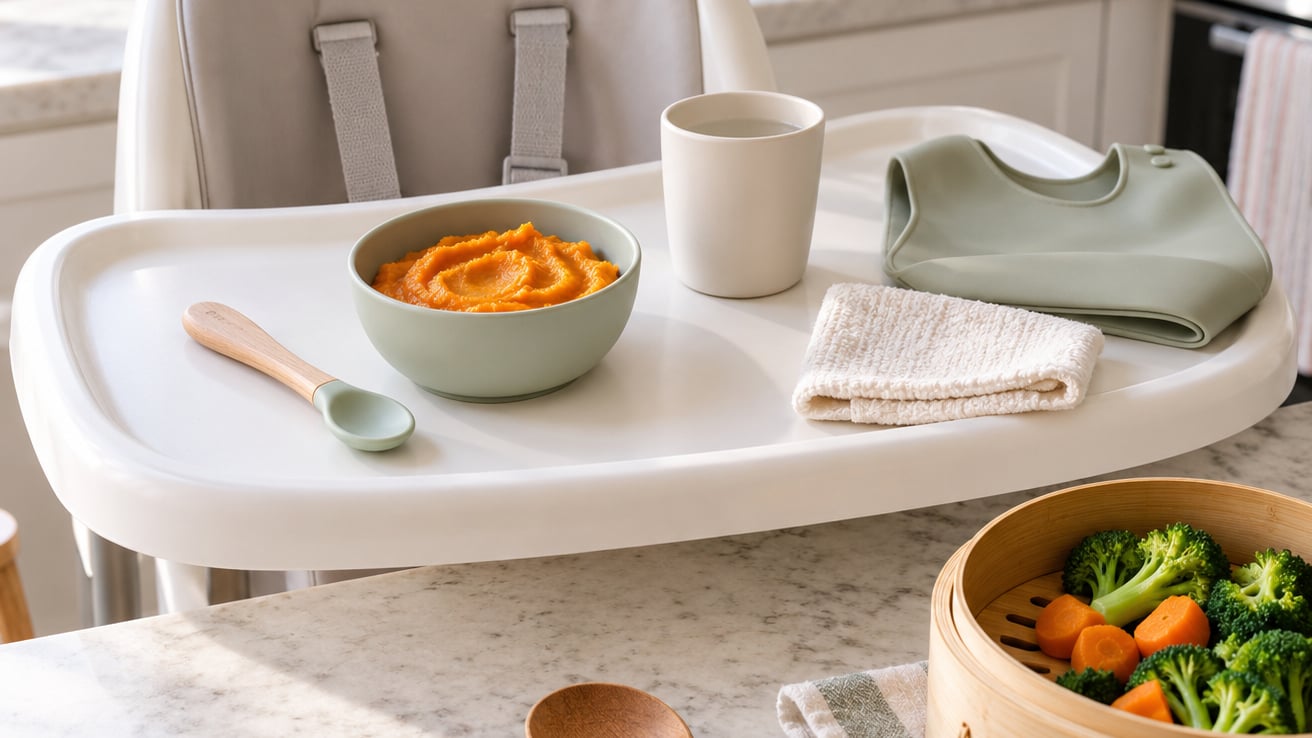
- Stable upright seating. A high chair with a harness, a booster strapped to a chair, or even your lap with your baby sitting supported at the hips. If the baby can flop forward or slump backward, food handling gets harder than it needs to be.
- A soft baby spoon. The coated kind with a small bowl is easier on a new mouth than a full-size kitchen spoon. You will use it for a couple of months.
- A bowl and an open cup. Pour jarred or pouch food into a bowl rather than feeding from the container, and offer water from an open or straw cup instead of a bottle.
- A washable bib or a damp washcloth. This is the single item that saves the most sanity in week one.
- A short list of starter foods. Iron-fortified infant cereal, smooth mashed beans, well-cooked mashed vegetables, mashed avocado. Pick two or three, not fifteen.
- Plain water. Small sips in a cup alongside food. Juice is not needed at this stage.
- A backup feed. Whatever nursing or bottle routine already works. Solids are an addition, not a replacement.
Wash your hands, wash the bowl, and keep a separate spoon for prepping food. That is the whole hygiene story for most families.
Before the first spoonful, know two safety basics. Choking and gagging are not the same thing, and allergens are far easier to manage when you introduce them deliberately rather than by accident. We will come back to both.
How to Start Solids With a Baby Step by Step
1. Check readiness before offering the first food
Readiness beats the calendar. Most guidance points to around 6 months, and many families land somewhere between 5 and 7 months depending on their baby. If you are still waiting at 7 or 8 months, talk to your child’s clinician rather than worrying you have missed a window.
Look for this cluster of signs together:
- Holds their head steady and sits well with support
- Can sit upright in a high chair or on your lap
- Watches you eat with real interest, sometimes leaning forward or opening their mouth
- Reaches for objects and brings them to their mouth
- The tongue-thrust reflex has faded, so food is not automatically pushed back out
- Doubled their birth weight, according to many pediatric sources
One sign on its own is not enough. Babies who are not ready usually arch, cry, gag hard or push the spoon away with their tongue every single time.
If you have been watching for readiness for a while and nothing is clicking, mention it at the next checkup. Persistent concerns about head control, sitting or oral motor development are worth a conversation with a pediatrician or a feeding therapist.
2. Choose a comfortable first-feeding setup
Pick a time when your baby is alert and mildly hungry, not starving and not already asleep. Late morning, when you have about twenty minutes and nothing else is happening, usually works better than a feed at the end of a long day.
Strap them in, keep your hand on the tray or their chest, and never walk away mid-sitting-down. Do not feed a baby who is reclined or lying down, and do not prop a bottle or a pouch where it can be sucked on unsupervised.
Talk or sing through the first few spoonfuls. It is not about entertainment; babies are matching your tone about whether this is a normal thing that happens.
If your baby cries, arches, turns away or clamps shut, stop. Not forever, just for that meal. End it, sit with them for a minute, and try again another day at a different hour. Forcing the point rarely speeds anything up.
3. Offer a small taste of a simple first food
Breast milk or infant formula remains the main source of nutrition in early infancy. The first solid foods are about practice and extra iron, not about replacing a feed.
Start with one single-ingredient food so that if something goes wrong, you know exactly what caused it. Good candidates:
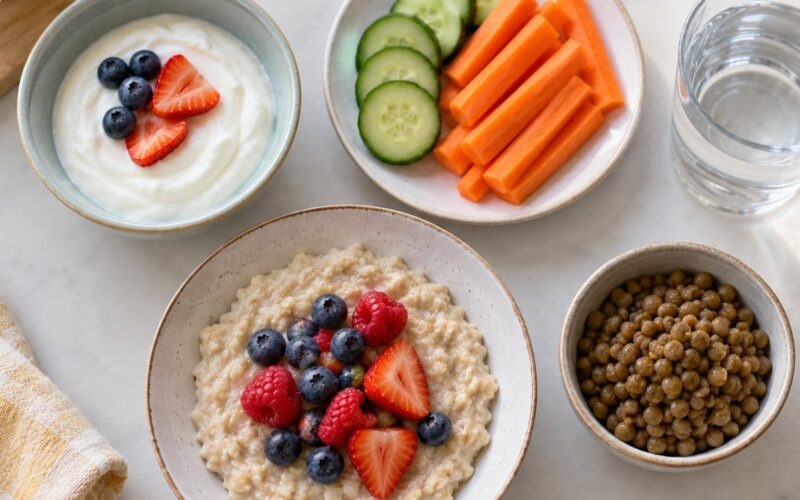
- Iron-fortified infant cereal, oatmeal or rice, thinned with breast milk or formula
- Smooth mashed beans or lentils
- Well-cooked and well-mashed sweet potato, carrot, pumpkin or squash
- Mashed avocado
- Plain full-fat yogurt, thinned if needed
Begin with a teaspoon or two. Let your baby open their mouth, and put the spoon in gently with the bowl flat against the tongue, not tipped in. Many babies get more on the chin than in the mouth, and that is genuinely normal in the early weeks.
What success looks like at this stage is small. Swallowing some. Smacking their lips. Looking at the spoon. That is enough for one meal.
4. Repeat gently and watch for changes
Offer the same food for two to three days before adding a new one. That window is what lets you notice whether something provoked a rash, swelling or a change in stool or sleep.
Keep a simple list. A note in your phone is fine. Write the food and the date, then tick off textures tried, because parents in feeding groups constantly say the hardest part is not knowing what you already introduced last week.
Then expect resistance. Babies often need somewhere between 10 and 15 separate exposures to a new flavor before they genuinely accept it, and spitting a food out in week one says very little about whether they will eat it in month three.
Do not chase a specific number of spoonfuls. Follow your baby’s cues: turning away, closing the mouth, leaning back, crying. Finishing a bowl is not a goal you should be training toward at this age.
Signals to pause and contact your child’s pediatrician include ongoing refusal across many foods, gagging or coughing during every feed, difficulty swallowing, a wet or raspy voice after feeds, or any sign of a possible allergic reaction such as hives, swelling or vomiting.
5. Introduce allergens one at a time
Current pediatric guidance, including from the American Academy of Pediatrics, has moved well past the old advice to delay egg and peanut. Introducing common allergens early, once a baby is developmentally ready for solids, is associated with a lower risk of later food allergy, particularly for babies with eczema.
A simple framework:
- Wait until your baby is well, rested and already comfortably eating a few first foods.
- Pick one allergen at a time, early in the day when you will be awake and nearby for hours afterward.
- Choose a form that suits your baby’s stage. For peanut, that usually means smooth thinned peanut butter mixed into warm water or pureed food rather than a spoonful straight from the jar, or a suitable powder. Whole nuts are a choking hazard at any age.
- Offer a small amount once, then a slightly larger amount the next day, and keep watching for several days before moving on.
For eggs, fully cooked scrambled egg or well-set egg mixed into a familiar food is a common starting point. Yolk or whole egg, cooked soft enough to mash, depending on what your clinician suggests.
If your baby has moderate or severe eczema, or a history of food reactions, raise the allergen plan with your pediatrician or allergist before you start. Some families are referred for testing or a supervised introduction, and that is routine rather than an overreaction.
Call emergency services for trouble breathing, facial or throat swelling, a widespread rash with vomiting, or a baby who becomes pale, floppy or hard to rouse. Those are the moments where minutes matter. Anything milder and non-urgent goes to your child’s clinician with a note of what you gave and when.
Families managing dietary restrictions for a child often find our guide to how to start a gluten free casein free diet for kids useful for the label-reading side of it. And if allergies run in your household, our piece on how to pick a mattress for a child with allergies covers the environmental end of the same question.
6. Move gradually toward more textures
Textures should follow your baby’s developing skills, not a strict birthday. Most babies manage a steady climb from smooth to lumpy to soft chunks over roughly six months of eating.
A typical progression looks like this:
- Smooth and thin. Purées and thinned cereals that slide off the spoon easily.
- Thicker and mashed. Mashed foods with some texture, full-fat yogurt, soft cooked grains.
- Soft lumps and finely chopped. Small pieces of well-cooked vegetables, soft rice, scrambled egg, tender fish.
- Finger foods. Anything a baby can hold with a whole fist and gum: soft banana or avocado strips, steamed broccoli florets, soft-cooked carrot sticks, pieces of toast, strips of cheese.
Skip hard, round or slippery items entirely, including whole grapes, raw carrots, apple chunks, popcorn, whole nuts and uncut cherry tomatoes. Cut grapes lengthwise into quarters and stay nearby for every finger-food meal.
Gagging is loud and normal. It is a reflex that pushes food back toward the throat, and it usually fades as coordination improves. Choking is silent or noisy, involves an inability to breathe or cry, and needs immediate action. Learning the difference is the difference between a normal month and a panicked one.
Common Mistakes
- Starting before the readiness signs appear. Fix: wait for the cluster of skills, not the date. A baby who is not ready will fight the food and you both lose.
- Chasing a fixed number of spoonfuls. Fix: follow hunger and fullness cues. A spoonful eaten enthusiastically is worth more than a required serving eaten cold.
- Skipping allergens for months. Fix: work them in one at a time early, alongside regular foods, with your clinician’s guidance if eczema is present.
- Offering choking hazards. Fix: cut round, hard and slippery foods into safe shapes and stay seated with your baby through every meal.
- Treating spit-out food as a reaction. Fix: spitting out, gagging and a genuine allergy look different. Look for a combination of signs across hours or days, not one messy meal.
- Dropping breast milk or formula too fast. Fix: keep the existing feeding routine and add solids around it. Milk feeds still do most of the work in the first months of solids.
- Forcing the meal when everyone is upset. Fix: stop, breathe, and try again another day. Feeding should feel routine and boring, not like a nightly negotiation.
Frequently Asked Questions
When should I start solids with my baby?
Most guidance points to around 6 months, with readiness signals mattering more than the exact date. Look for steady head control, the ability to sit upright with support, interest in what you are eating, and a fading tongue-thrust reflex. Babies vary widely, so discuss your own child’s readiness with their pediatrician, especially if nothing seems to be clicking by 7 months.
How long should it take a baby to eat a full meal of solids?
It depends on the baby, and a full meal is not the goal at the start. Early on, one or two spoonfuls within about 20 minutes counts as a successful feeding. Amounts grow gradually over months, not weeks. Watch your baby’s cues rather than the clock, and stop when they turn away or close their mouth. Finishing a whole bowl at six months is unusual and not necessary.
Can I give solids while my baby is still breastfeeding or formula-feeding?
Yes. Solids are introduced alongside breast milk or infant formula, not as a replacement for them. Most babies who start around 6 months are still taking their main milk feeds, with one or two solid meals added on top. Milk remains the primary nutrition for months, and any reduction in milk volume should be discussed with your child’s pediatrician rather than tried on your own.
What if my baby refuses every new food?
Refusal is common and rarely means something is wrong. Babies may need 10 to 15 separate exposures before accepting a flavor. Offer the food without pressure, keep it on the menu, and try again another day. Spitting food out, gagging and closing the mouth are normal developmental behavior. If refusal continues across nearly all foods, or comes with coughing or weight concerns, contact your pediatrician.
How do I know if my baby is ready for more texture?
Look at skills rather than age. A baby is usually ready when they sit upright steadily, bring food to their own mouth, swallow thicker textures without pushing them back out, and show interest in what other people eat. Many babies handle mashed lumps from around 6 to 8 months and soft finger foods a few months later. Your baby’s clinician can confirm readiness at a routine checkup.
When should I call the pediatrician about feeding?
Call for signs such as persistent refusal of nearly all foods, gagging or coughing during every feed, a wet or raspy voice after eating, or poor weight gain. Call promptly about hives, swelling, vomiting or unusual stool after a new food, since allergies need identification. Seek emergency help for breathing difficulty, facial or throat swelling, or a baby who becomes floppy or hard to rouse.
Start with readiness, not a date. Check the signs, pick one iron-rich single-ingredient food, offer a couple of teaspoons in a calm twenty minutes, and then repeat it tomorrow. That is genuinely the whole beginning of how to start solids with a baby, and the rest is patience, a wet cloth and someone to ask when you are not sure.