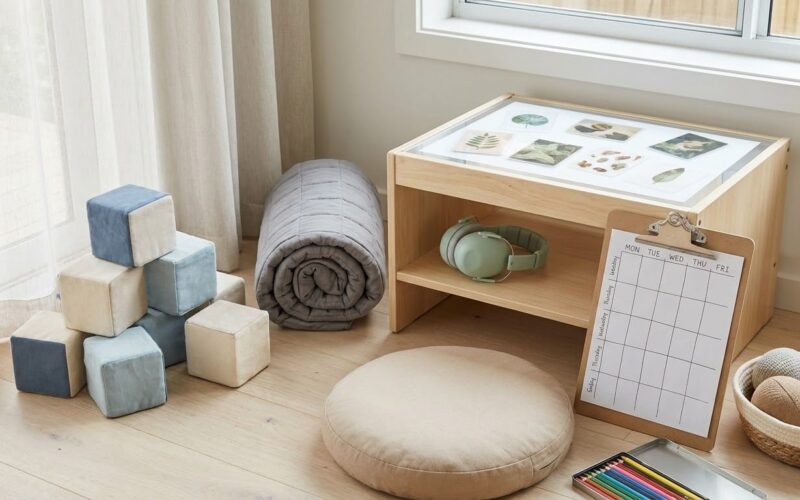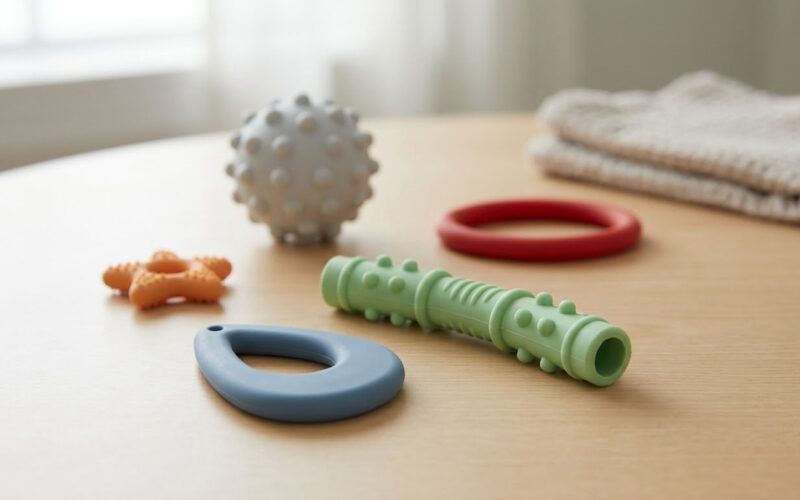

Most stimming in autism is regulation, not a warning sign. A child who rocks, hums, flaps their hands or spins a fidget is usually doing something that helps their nervous system feel manageable. Worry becomes reasonable when the behavior is new, has suddenly grown much bigger, seems to hurt, or is blocking eating, sleeping, learning or play.
This guide covers what stimming usually looks like, what it may be doing, and the changes that make stimming in autism and when to worry a real conversation. Nothing here replaces a medical opinion about your child.
Table of Contents
- Stimming in Autism and When to Worry: What to Look For
- Why parents ask about stimming in autism and when to worry
- Two things to track: the pattern and the change
- What Is Stimming in Autism?
- Why Do Autistic People Stim?
- Regulation
- Sensory input
- Communication and emotion
- Movement and predictability
- How to Recognize Stimming in Autism and When to Worry About Changes
- Common Types of Stimming and What They May Communicate
- When Should You Contact a Pediatrician?
- How to Support Stimming Without Trying to Stop It
- Frequently Asked Questions
- Is all stimming in autism harmful?
- Can stimming become dangerous?
- What if stimming suddenly increases?
- Should I stop my child from stimming?
- Does stimming mean my child is in pain?
- When should a family seek help for stimming?
- What to Do First
Stimming in Autism and When to Worry: What to Look For
Two separate questions get tangled together when parents search this topic. The first is whether a stim is normal and useful. The second is whether something about it has changed. Keeping them apart makes the whole thing calmer to assess.
Why parents ask about stimming in autism and when to worry
Most caregivers I talk to are not worried about the behavior. They are worried about being told to stop it, or about ignoring something that mattered. Both worries are reasonable, and neither is answered well by a single rule of thumb.
Autistic people stim across the whole spectrum and at every age, including adulthood. A stim that has been there for years and settles in predictable moments is doing its job. A stim that appears out of nowhere, escalates fast, or arrives alongside pain, sleep loss or a loss of skills is a different situation and belongs in a conversation with a clinician.
Two things to track: the pattern and the change
Track the pattern first. When does it happen, how long does it last, what usually comes just before it, and what helps afterward. A written note in your phone is enough, and three weeks of notes beats a hazy memory every time.
Then track change. New stims, much stronger stims, stims in new places, and stims paired with distress, weight loss, sleep disruption or injury are the ones that move this from parenting territory into health territory.
What Is Stimming in Autism?
Stimming, short for self-stimulatory behavior, is any repetitive movement, sound or object play that a person repeats. In autism it is extremely common and serves a purpose for that person, even when the purpose is not obvious from the outside.
Common examples include hand-flapping, rocking, finger-flicking or wiggling, spinning wheels, pens or objects, pacing, jumping, bouncing a leg, humming, whistling, repetitive vocalizations, echoing phrases, chewing on non-food items, staring at lights or fans, lining up objects, twirling hair, and tapping surfaces in a rhythm.
It is also worth naming what stimming is not. It is not a moral failing, it is not a trick being played on you, and it is not automatically a behavior to eliminate. Suppressing a stim a person relies on tends to move the pressure somewhere less comfortable, often into the evening.
Everyone stims to some degree. Bouncing a knee, clicking a pen, chewing gum, cracking your knuckles and tapping a rhythm while driving are all small versions of the same thing. Autistic people often rely on their version more, do it more visibly, or need it in more predictable form.
Why Do Autistic People Stim?
There is no single explanation, and the same behavior can serve different purposes for different people, sometimes within the same afternoon. Caregivers who treat a stim as a message rather than a symptom tend to get more useful information out of it.
Regulation
Repetitive, predictable movement helps bring a nervous system back toward a calmer state. It is a self-administered dose of input that does not depend on anyone else saying yes.
Sensory input
Some people seek input, some avoid it. Rocking, spinning and jumping deliver vestibular and proprioceptive input. Chewing, fidgeting and repetitive touch deliver tactile input. Others cover their ears or pull away, which is a different kind of response to the same crowded sensory world. If noise is the part that gets to your child, when to use ear defenders vs earplugs is worth reading before you buy another pair of headphones.
Communication and emotion
A stim can express excitement long before a child has the words for it, or fill a silence where speech is hard. A child who flaps hard at something wonderful is not malfunctioning. They are broadcasting.
Movement and predictability
Repetition is soothing partly because nothing changes. For a brain that finds novelty tiring, a repeatable rhythm is a restful thing to hold onto, and it often appears during waiting, transitions or boredom.
Pain relief is on the list too. Rocking or rocking-chair use sometimes shows up alongside toothache, ear infection, reflux or constipation, which is a good reminder to rule out the boring explanations first.
How to Recognize Stimming in Autism and When to Worry About Changes
These are the changes that make stimming in autism and when to worry a real conversation rather than a worry. You do not need all of them, and one on its own may have an innocent explanation.
- A stim that is brand new and has no clear pattern yet.
- A dramatic jump in frequency, intensity or duration over a few weeks.
- Stimming that looks painful, such as head banging, repeated biting, or hitting the head or face with a closed fist.
- Skin breaking, bruising, or repeated injury to the same body part.
- Any behavior with a medical-looking quality, including persistent grimacing, jaw clenching, or hands pressed hard against the body.
- Sleep disruption, such as stimming hard in bed, waking repeatedly, or being unable to settle after the day is over.
- Eating changes, including refusing food, gagging on previously fine textures, or a notable weight change.
- Withdrawal from things your child used to enjoy, or loss of a skill they had reliably.
- Stimming that now happens constantly, in every setting, with no settled or recovery time.
- Stimming that injures someone else, or blocks eating, drinking, toileting, schoolwork or safe movement.
Stimming that happens when a child is excited is a good sign, not a warning. It is the combination of a stim with distress, injury or functional loss that changes the picture.
One more distinction parents raise: stimming and tics look similar but are not the same thing. Tics usually come in bouts, often with a preceding urge, and often involve the face, throat or shoulders. Stimming is more often chosen, rhythmic and tied to a sensory or emotional need. If you are not sure which you are seeing, say so when you call the doctor. That is exactly the question clinicians are used to being asked.
Common Types of Stimming and What They May Communicate
Use this table as a way to start noticing, not as a fixed translation. The same behavior can sit in more than one row, and only the person doing it knows for certain what it does for them.
| Behavior | Sensory system involved | What it may be doing |
|---|---|---|
| Hand-flapping, finger-flicking, wiggling fingers | Proprioceptive, vestibular | Regulation, excitement, sensory seeking |
| Rocking, pacing, bouncing a leg | Vestibular, proprioceptive | Grounding, calming, focus support |
| Spinning wheels, pens, hair, laces | Visual | Predictable visual input, focus |
| Staring at lights, fans or spinning objects | Visual | Seeking strong or steady visual input |
| Humming, whistling, repetitive sounds, echolalia | Auditory, vocal | Self-soothing, self-talk, communication |
| Covering ears, blocking sound, noise avoidance | Auditory | Managing sensory overload or anxiety |
| Chewies, mouthing non-food items, shredding fabric | Tactile, oral | Safe oral input, calming, sensory seeking |
| Squeezing, fidgeting, fidget toys, repetitive handling | Tactile, proprioceptive | Keeping hands busy, attention support |
| Head banging, hitting self, biting | Pain, vestibular, proprioceptive | Often pain relief or intense dysregulation, needs attention |
| Lining up, sorting, repetitive play sequences | Visual, tactile | Predictability, order, control |
Two observations from families: stimming shows up when a child is happy and excited, not only when they are struggling, and children who hold it together all day at school often stim hardest right after they get home. That second pattern is worth mentioning to a teacher, because it usually means the day, not the child, is the problem.
When Should You Contact a Pediatrician?
Call your pediatrician if a stim is new, is clearly growing, appears painful, is causing injury, or is showing up alongside a change in eating, sleep, mood or skills. You do not need to be certain. Describing the change accurately is more useful than diagnosing it yourself.
Before the appointment, gather a few things:
- When the stim started, and roughly what changed in the weeks before it.
- How often it happens, how long each time lasts, and whether it is new or different from usual.
- Triggers you can see, such as transitions, noise, hunger, pain or a disrupted night.
- Sleep, eating and bowel patterns over the last month.
- Any new or changed medication, supplement or dose, including anything prescribed for sleep or attention.
- Whether your child is unusually tired, unusually awake, or withdrawing from favorites.
- Any injury, even a small one, and what the injury looked like afterward.
If the eating change is the thing worrying you most, our guide to handling extreme picky eating in autism at home covers the tracking side of it, and it is useful groundwork for this appointment.
Do not wait for the notes to be perfect. A rough timeline beats none. If you are documenting on your phone, record a short clip if your child is comfortable being filmed, since patterns are often easier to show than to describe.
Any sudden neurological change, any severe injury, or any urgent concern warrants prompt medical attention rather than a routine appointment. If you cannot reach anyone and something feels badly wrong, use urgent care or the emergency department. A pediatrician can also point you toward an occupational therapist, a behavior analyst or a feeding team, depending on what you describe.
How to Support Stimming Without Trying to Stop It
The goal is not a quieter child. It is a child who can regulate himself, and the most useful support usually comes from making stimming safe, understood and reasonably available rather than from removing it.
Ask what helps. If your child can tell you, ask directly and take the answer seriously, even when it is not the answer you hoped for. Many autistic adults say that being believed about a stim is worth more than any tool in the drawer.
Keep the sensory tools they actually use within reach. Fidgets, chewies, headphones, a weighted blanket, a movement toy, a body sock, a small trampoline. Parents sometimes buy a shelf of options and then find their child uses one item exclusively, and that is fine.
Reduce the triggers you can control. Lower the volume before you need to ask, soften the room, keep transitions predictable, warn about changes in advance, and give a clear warning before any activity ends. A change you warned about is far less likely to trigger a hard episode.
Allow movement when it is safe. Pacing, jumping, spinning, walking the length of a hallway or rocking in a chair is not a problem to be solved. Some families set up a small area, even a corner with a mat, where movement is welcome.
Watch the after-school crash rather than treating it as bad behavior. A long, intense stim session at pickup is often a decompression, not a problem. Give quiet time and low demands rather than a debrief conversation right away.
Know the difference between a stim and an overload. A child who is regulating with a fidget is coping; a child who is heading toward a full meltdown needs a quieter room and fewer demands, not a request to stop moving. Our steps for handling autism meltdowns at home lay out that difference in more detail.
Expect pushback from other people. Grandparents, relatives, and some teachers assume stimming is noise or manipulation, and that pressure is one of the most common sources of stress for autistic kids. A short, matter-of-fact explanation, plus written support at school, protects your child more than arguing in the moment. If you can, ask the school for a plan that names the stims, explains their function, and states that they are not to be interrupted.
Parents on r/autism and r/Autism_Parenting describe treating the home as a place where no masking is required, and one of the common threads in those discussions is that validation works better than correction. A comment like I can see you are calming your body goes further than please stop that.
Frequently Asked Questions
Is all stimming in autism harmful?
No. Most stimming is harmless and serves a regulating purpose, such as calming, focusing, seeking sensory input or expressing excitement. The behaviors that need attention are the ones that cause pain or injury, or that block eating, sleeping, learning and safe movement. Everything else is usually a useful tool, not a problem to remove.
Can stimming become dangerous?
It can, and it deserves attention rather than a wait-and-see approach. Head banging, hitting the face, biting, or any behavior that breaks the skin or bruises repeatedly is a safety concern. So is stimming that interferes with eating, drinking or toileting. Keep the area soft, reduce obvious triggers, and contact your pediatrician promptly if you see injury or a sudden change.
What if stimming suddenly increases?
Treat a sudden increase as new information rather than a bad phase. Note when it started, what changed in the weeks before, and whether sleep, eating, mood or medication also shifted. Pain, illness, constipation, reflux and earache are common and easy to miss. Book an appointment with your pediatrician and bring your notes or a short clip.
Should I stop my child from stimming?
In most cases, no. Forcing a stim to stop tends to raise stress and often moves the pressure into the evening, a meltdown, or a shutdown. What matters more is whether the behavior is safe and whether it is preventing your child from eating, sleeping, learning or playing. If it is, work with your child on an alternative that gives similar input.
Does stimming mean my child is in pain?
Not necessarily, but pain can cause it. Rocking, jaw clenching, holding a specific body part, and covering the ears are all worth noting, particularly if they are new. A dental pain, ear infection, reflux, constipation or tight clothing can all change how a child stims. When you see a new pattern, mention pain as one possibility when you call the pediatrician.
When should a family seek help for stimming?
Seek help when the behavior is new, increasing, painful, causing injury, or interfering with daily function, and whenever other things have changed too, such as sleep, appetite, mood or skills. A pediatrician is the right first stop and can refer you onward to an occupational therapist, feeding team or behavior analyst. Severe injury or a sudden neurological change should be assessed promptly.
What to Do First
Start by deciding whether the behavior is familiar or changed. If it is familiar and not hurting anyone, the practical job is making it safe and expected, not making it stop.
If something is different, write down the pattern for a couple of weeks and watch for pain, injury, sleep loss and changes in eating or skills. Cut down the triggers you control, keep sensory tools available, and give predictable warnings before transitions.
Then pick up the phone. Contact your pediatrician when the pattern is new, worsening, painful or getting in the way of daily life, and seek prompt care for a sudden neurological change, a serious injury, or anything that feels urgent.