Sensory processing disorder symptoms in children show up as outsized reactions to ordinary things: a child who covers their ears at the vacuum, cries over a sock seam, refuses every green food, or crashes into furniture and seems not to notice pain. Sensory processing disorder means a child’s brain has trouble registering, sorting, and responding to sensory input, so everyday sights, sounds, smells, tastes, touches, and movement register as overwhelming, unpredictable, or barely there at all.
What follows is a plain-language guide to what sensory processing disorder symptoms in children actually look like at home, at school, and at the dinner table, plus how to tell an ordinary childhood preference from a pattern that deserves a closer look. This is educational information, not a diagnosis. If you are worried about your child, a pediatrician or a pediatric occupational therapist is the right person to assess.
If your child is under three, start with the how to build a sensory diet for your child guide, and come back here once you know which sensory systems are hardest for your kid.
Table of Contents
- What Are Sensory Processing Disorder Symptoms in Children?
- Why sensory processing disorder symptoms in children get mistaken for behavior
- 12 Common Signs of Sensory Processing Differences
- 1. Covering the ears at ordinary sound levels
- 2. Distress from clothing textures and tags
- 3. Hair washing, haircuts, or face-touch routines that end in tears
- 4. Avoiding crowds, bright lights, or busy public places
- 5. Food texture refusal that narrows over time
- 6. Hyposensitivity to taste
- 7. A very high pain threshold
- 8. Not noticing temperature or hunger cues
- 9. Clumsiness, poor balance, or low muscle tone
- 10. Constant motion seeking or spinning
- 11. Outsized meltdowns at small things
- 12. Difficulty with transitions and waiting
- How Sensory Processing Disorder Symptoms May Look by Age
- Infants and toddlers (under 3)
- Preschoolers (3 to 5)
- School-age children (6 and up)
- Sensory Seeking vs. Sensory Avoidance vs. Sensory Overload
- What Triggers Sensory Processing Disorder Symptoms at Home and School?
- How to Support a Child With Sensory Processing Differences
- 1. Cut avoidable input before adding any
- 2. Make transitions visible and predictable
- 3. Build heavy work into the day
- 4. Keep a quiet retreat within reach
- 5. Swap clothing and routine items
- 6. Widen the food range slowly
- 7. Respect communication, even mid-meltdown
- 8. Coordinate with school instead of relying on reports
- When Should Parents Seek Professional Help?
- Signs that are not sensory, and need a medical look first
- What an occupational therapy evaluation involves
- Frequently Asked Questions
- What age do sensory processing disorder symptoms in children usually appear?
- How is sensory processing disorder different from autism?
- Can a child have sensory processing disorder without autism?
- What does an occupational therapy evaluation for sensory issues involve?
- Are weighted blankets and sensory tools helpful for every child?
- Next Steps for Parents
What Are Sensory Processing Disorder Symptoms in Children?
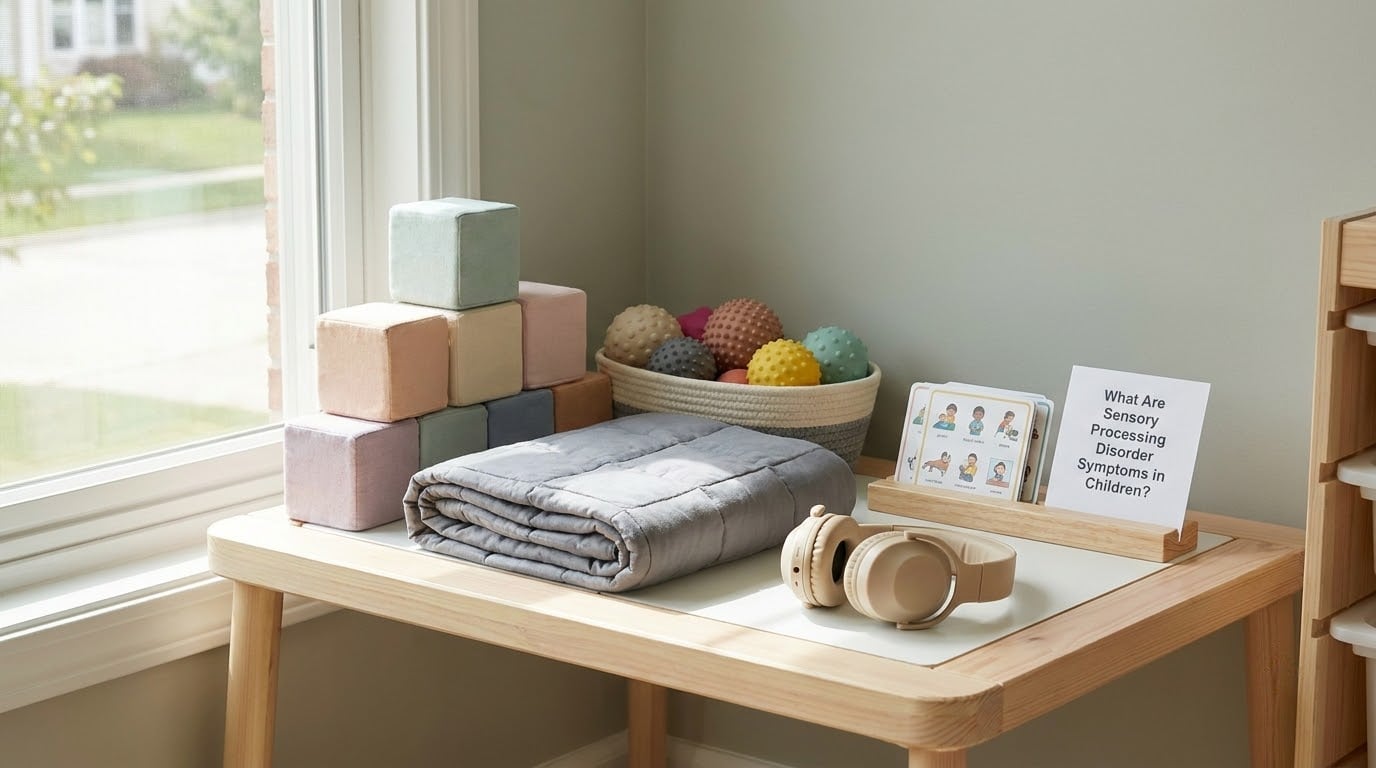
Sensory processing is the job your child’s nervous system does every waking moment: taking in information from the senses and turning it into something the body can act on. It happens through eight main systems at once, and when the brain struggles to integrate them, ordinary input becomes too loud, too bright, too heavy, or simply invisible.
A sensory need is the input a nervous system requires to stay settled: movement, pressure, sound, texture, predictability. Most children get enough of what they need without noticing it. A child with sensory processing differences either pulls away from input that hurts or keeps piling it on because input that registers is the only thing that feels right.
The eight systems behind sensory processing disorder symptoms in children are visual, auditory, tactile, olfactory, gustatory, vestibular (balance and head position in space), proprioception (where your body parts are and how much pressure they take), and interoception (what is happening inside your body, like hunger, fullness, pain, and needing the toilet).
Children also differ in sensory discrimination, which is the ability to notice the difference between two similar inputs. A child with poor discrimination might not notice that food is warm until it burns their mouth, or might not register a splinter in their foot.
The practical result is that sensory processing disorder symptoms in children look like stubbornness, fussiness, or anxiety from the outside. Nobody sees a child whose nervous system is drowning in sound when the child is simply having a tantrum in a restaurant.
Why sensory processing disorder symptoms in children get mistaken for behavior
Parents routinely hear “he’s a picky eater,” “she’s just sensitive,” “that’s a phase,” or “you’re making it worse by giving in.” Those comments land hard because the child really is struggling, and the struggle looks identical to defiance from across a table.
Not every child who reacts strongly has a sensory processing disorder. Plenty of toddlers do genuinely dislike the texture of slime. The difference is the pattern: sensory-driven reactions tend to be consistent across situations, disproportionate to what happened, and hard to talk the child out of in the moment.
12 Common Signs of Sensory Processing Differences
Every child is different, and a child can be a seeker in one system and an avoider in another. The most reliable signs are concrete and repeatable, so read the list for things you have actually seen rather than things that sound alarming in the abstract.
1. Covering the ears at ordinary sound levels
Covering ears during loud play, crying before the school bell, or asking you to speak more quietly in a room you find calm. Sound sensitivity, or auditory hypersensitivity, is one of the most commonly reported signs.
2. Distress from clothing textures and tags
Sock seams, waistbands, collars, and labels get removed or hidden under a shirt. Many parents discover their child wears the same soft shirt every day for exactly this reason.
3. Hair washing, haircuts, or face-touch routines that end in tears
Crying when hair is brushed or cut, screaming when water hits the face, or a serious reaction to the dentist. There is more on this in how to help a child who hates haircuts.
4. Avoiding crowds, bright lights, or busy public places
Refusing the grocery store, the playground at peak hours, or anywhere with flickering lights or strong smells. This is not shyness; a sensory-avoiding child is managing input that genuinely hurts.
5. Food texture refusal that narrows over time
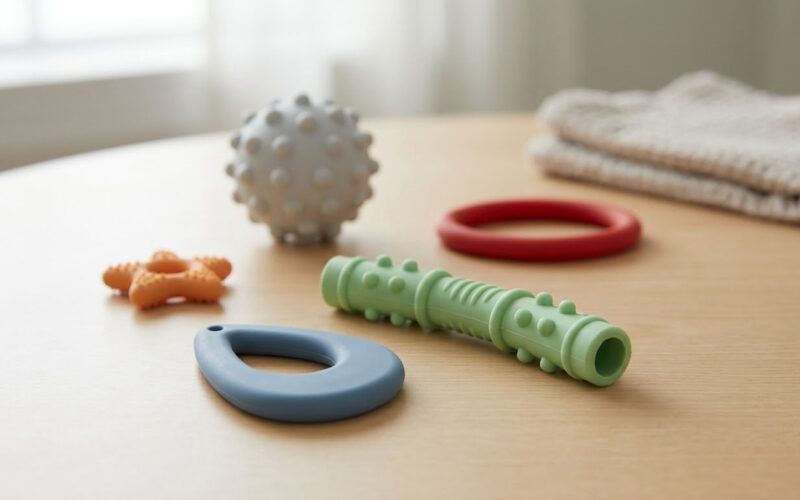
Rejecting anything mixed, crunchy, wet, or stretchy, and gagging at smells before tasting. A child who eats only a handful of bland, uniform foods may be doing sensory-based feeding avoidance rather than being a picky eater. Chewing and mouthing work is covered in oral sensory activities for chewing and mouthing.
6. Hyposensitivity to taste
Hyposensitivity to taste means reduced awareness of or indifference to flavor intensity. The child eats only bland, uniform textures, does not notice bitter or spoiled food, or actively seeks very strong or unusual flavors. It is far less common than taste hypersensitivity, which looks like gagging and food refusal.
7. A very high pain threshold
A child who keeps climbing a bookshelf after falling, does not notice a cut, or shrugs off a fever. Under-responsiveness to pain is one of the clearest signals that sensory input is not registering normally.
8. Not noticing temperature or hunger cues
Coming in from the cold without noticing, going hours without eating or drinking, or not registering that they need the toilet. This is interoception, the internal sense, and it is easy to overlook because nobody thinks of it as sensory.
9. Clumsiness, poor balance, or low muscle tone
Frequent trips and collisions, difficulty with stairs or playground equipment, messy handwriting, or trouble with buttons and zippers. These motor signs come from under-processed vestibular and proprioceptive input.
10. Constant motion seeking or spinning
Crashing into things, swinging far higher than seems safe, spinning, hanging upside down, or seeking out bumping and heavy physical play. These are the proprioceptive and vestibular seeking signs, and they look like a kid who cannot sit still.
11. Outsized meltdowns at small things
Reactions wildly bigger than the event: a tantrum over a broken crayon, a meltdown at a schedule change, or being unable to recover for a long time afterward. After a sensory overload a child is not choosing to stop; recovery takes the time it takes.
12. Difficulty with transitions and waiting
Losing control at bedtime, at the door, at clean-up time, or in line at the store. Unexpected change is harder than the change itself, and rigid routines can be a child’s way of holding their nervous system steady.
How Sensory Processing Disorder Symptoms May Look by Age
Development varies widely, so age is a rough guide rather than a checklist. Still, the way sensory processing disorder symptoms in children present shifts noticeably from toddlerhood onward, and recognizing the pattern early is what gets a child support before school demands pile on.
Infants and toddlers (under 3)
Signs are easier to miss because so much of baby behavior is surprising anyway. Watch for arching away from cuddles, hand flapping or rocking that seems to happen independently of what is going on around the child, extreme distress at bath time or hair washing, and mouthing objects well past the typical age. A baby who does not startle at a loud sound or who seems unusually unaffected by touch is worth mentioning to a pediatrician.
Preschoolers (3 to 5)
Signs become easier to see because expectations rise. This is where food texture refusal, clothing battles, loud-playground avoidance, and hair-washing tears show up most clearly. A three-year-old who cannot tolerate a group music circle, bolts from crowded birthday parties, or gags at almost any new food may be a sensory seeker in movement and an avoider in touch at the same time.
School-age children (6 and up)
The signs often shift from obvious distress to subtle social and academic strain. Children get labeled picky, clumsy, lazy, or disruptive. Classroom noise, cafeteria smells, and unpredictable schedules consume the energy they need for reading and writing, so handwriting looks sloppy and attention wanders even when the child is bright.
| Age group | Normal developmental behavior | Sensory red flag worth discussing |
|---|---|---|
| Infant and toddler | Some mouthing, some stranger anxiety, some crying at bath time | No startle response, arching from most touch, hand flapping or rocking that is not triggered by anything |
| Preschooler | A strong food preference, a dislike of loud play, a hard time at the hairdresser | Same triggers every time, reactions far bigger than the event, food options narrowing rather than widening |
| School age | Some fussiness about clothing, some trouble waiting or switching tasks | Sensory distress that shows up as school refusal, stomachaches before school, or a persistent fight over meals |
If you are still sorting normal from not-normal, the most useful thing you can do is track it. A week of notes beats an hour of remembering.
Sensory Seeking vs. Sensory Avoidance vs. Sensory Overload
Parents often ask whether their child is seeking or avoiding, as if it has to be one or the other. It can be both, in different systems, and a third thing, overload, is the state you are probably seeing in public.
| Pattern | What it looks like | What the child usually needs | Hard situations |
|---|---|---|---|
| Sensory seeking | Spinning, crashing, jumping, seeking pressure or strong flavors, touching everything | Movement and proprioceptive input in safe doses | Quiet indoor spaces, car seats, waiting in line |
| Sensory avoidance | Pulling away from touch, covering ears, refusing textures, leaving crowded rooms | Less input, predictable routines, control over the environment | Crowds, salons, dentists, cafeteria lines |
| Sensory overload | Meltdown, shutdown, covering the face, running out, going quiet and unresponsive | Immediate reduction of input, then recovery time | Anyplace where several triggers stack up at once |
Shutdown is the one parents miss most. A child in overload does not always escalate; sometimes they simply go blank, flop down, or fall asleep wherever they are. Either way it is the same event viewed from two directions.
A real safety note: a child running during overload can bolt toward water, traffic, or a parking lot. Stay with them, keep a hand on them if you can do it gently, and plan your exit before you need it.
What Triggers Sensory Processing Disorder Symptoms at Home and School?
Triggers rarely announce themselves, and the same child can tolerate a fabric on Tuesday and reject it on Wednesday. That variability is not you imagining it, and it is a big reason parents doubt themselves.
- Auditory: the school bell, hand dryers, alarms, background television, several children talking at once.
- Tactile: tags, socks, sand, grass, wet hands, unexpected hugs, dental tools, a parent with a new scent.
- Visual: fluorescent lights, busy patterns, flickering screens, crowds in motion.
- Gustatory and olfactory: mixed foods, strong smells from the kitchen or other children’s lunches, perfume.
- Vestibular and proprioceptive: swings, climbing frames, being lifted or moved unexpectedly, being seated for a long stretch.
- Interoceptive: hunger, pain, fatigue, needing the toilet when there is no easy exit.
- Emotional and situational: schedule changes, waiting, no-clear-instructions moments, or a shopping trip that runs long.
Rather than guessing at each incident, record patterns across settings for one to two weeks: what happened, what the sensory input was, what your child did, and how long recovery took. Bring that to an appointment. It is more useful than anything a parent can describe from memory, and it turns “he’s difficult at meals” into something a clinician can actually work with.
Also record the good days. A child who handles a family birthday party fine one week and melts down at a birthday party the next is not being manipulative; the load just changed.
How to Support a Child With Sensory Processing Differences
You do not need a diagnosis to make your home easier to be in. These are low-cost, general strategies that work while you wait for an appointment or decide whether you need one.
1. Cut avoidable input before adding any
Turn off background television, hand your child noise-reducing earmuffs for trigger spaces, dim harsh lighting, and keep smells out of the room when you can. Reducing load comes before adding equipment.
2. Make transitions visible and predictable
Two warnings before a change, a picture schedule for the morning, and a clear signal for what comes next reduces the panic that makes a simple transition blow up.
3. Build heavy work into the day
Pushing something heavy, climbing, jumping, crawling, or carrying groceries gives a seeking child proprioceptive input in a contained way. Ten minutes before homework often does more than twenty minutes of reminders.
4. Keep a quiet retreat within reach
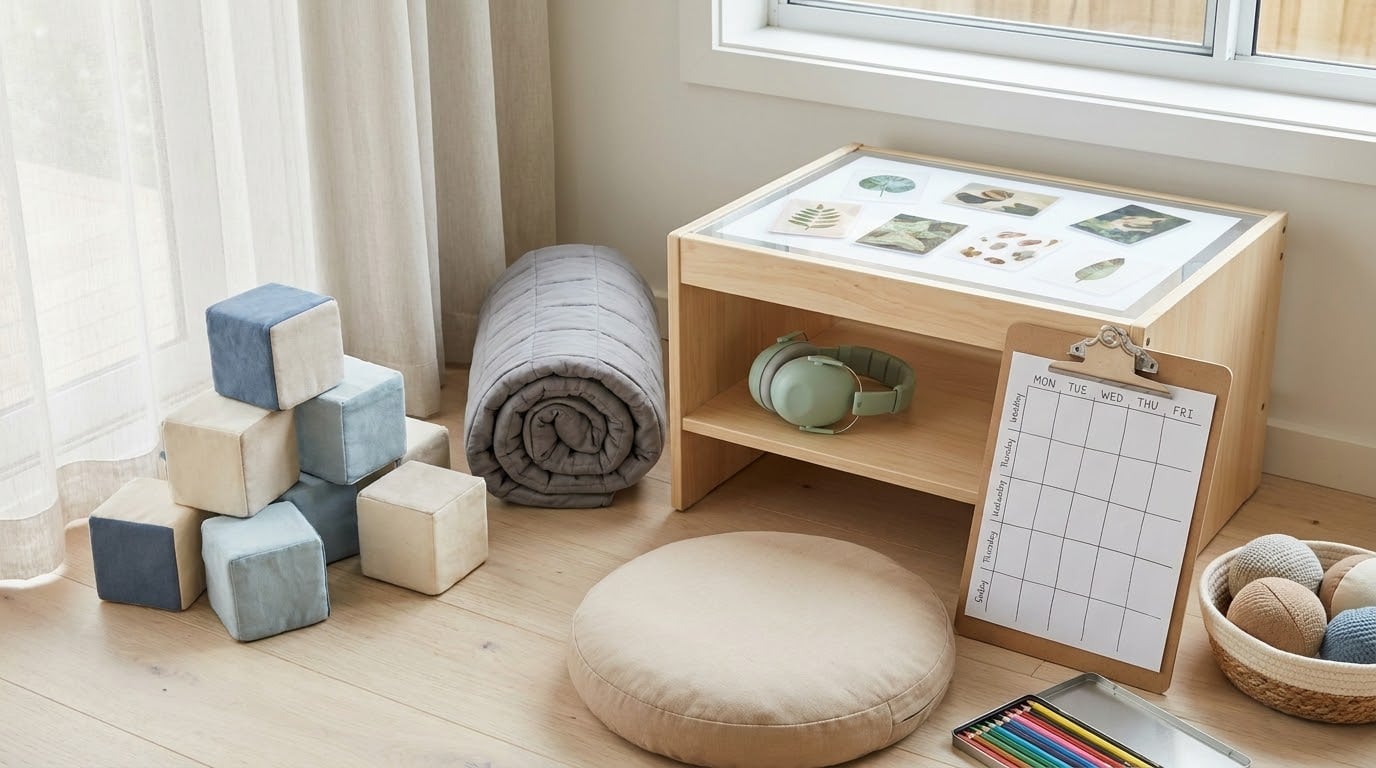
A small, dim, predictable place the child can choose on their own, with headphones and a couple of familiar objects. Agency matters: a break the child asks for is very different from one an adult imposes.
5. Swap clothing and routine items
Seamless socks, tagless shirts, softer toothbrushes, and a wet cloth instead of running water at face-washing time remove conflict rather than winning an argument.
6. Widen the food range slowly
Add one new item beside something familiar, with no pressure to eat it, and let exposure happen in small, ordinary moments instead of a formal tasting session. If eating is a serious struggle, say so at the appointment rather than treating it as a behavior problem.
7. Respect communication, even mid-meltdown
Offer words for what they are feeling and what would help. A child who can name the trigger over time often needs the trigger removed less often.
8. Coordinate with school instead of relying on reports
Ask what happens at lunch, in line, and on the playground, and share what you see at home. Sensory signs rarely show up in only one setting, and teachers often hold the half of the picture you cannot see.
Weighted blankets, brushes, and swings get recommended constantly. Some children find deep pressure calming and some find it more input to process, so watch your child’s response and stop anything that increases distress. There is a fuller treatment of that question in the FAQ below.
When Should Parents Seek Professional Help?
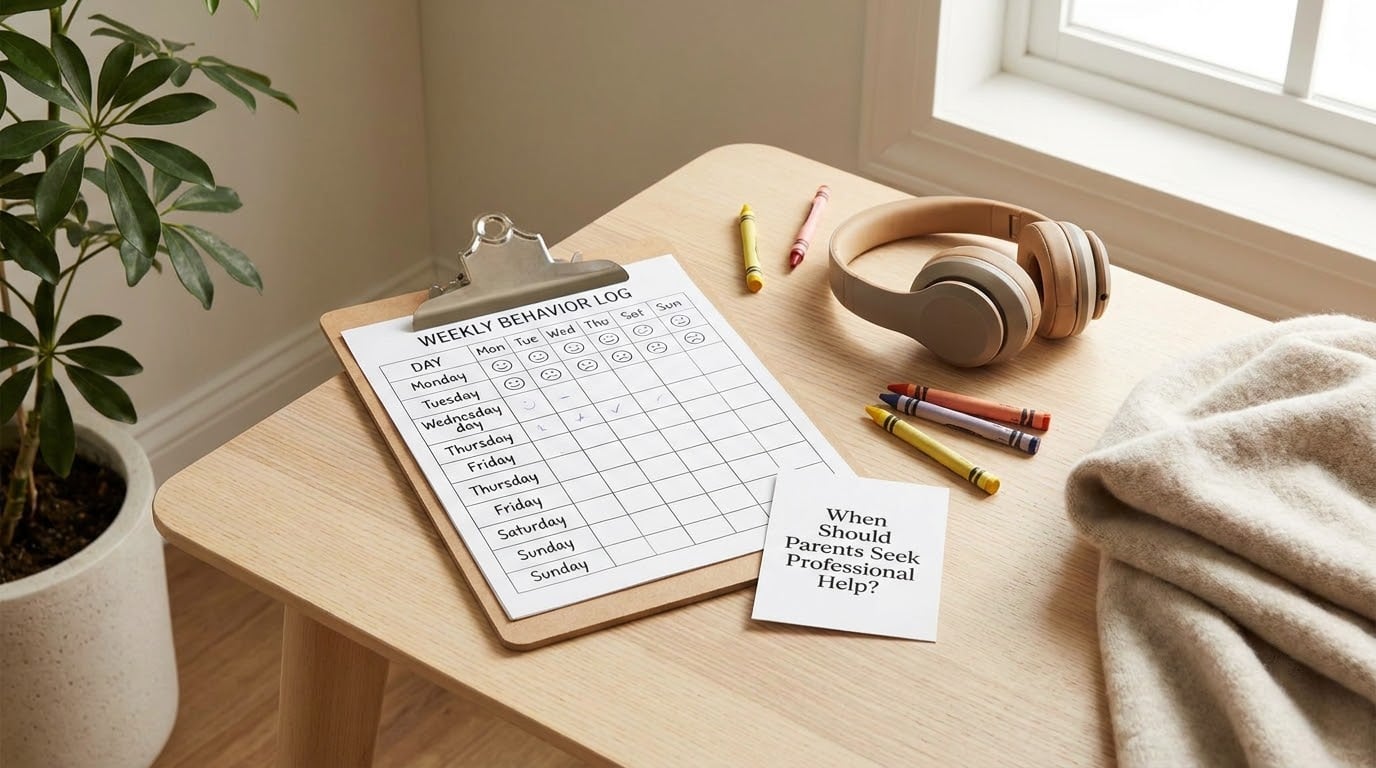
Talk to your pediatrician when sensory differences interfere with eating, sleep, learning, relationships, self-care, or the ability to get through a normal day. Those are the areas where it stops being a personality trait and becomes something a child needs support with.
It is also worth raising concerns if the child is in pain often, is not sleeping, is losing skills, is missing school, or if the distress is getting worse rather than more manageable over months. Bring your notes. Also mention if you have noticed a high pain threshold, not registering hunger, or no startle response, since those point toward a request for hearing and vision screening.
Signs that are not sensory, and need a medical look first
- Hearing loss showing up as not responding to you or turning the wrong way to sounds.
- Vision problems showing up as squinting, eye-rubbing, headaches, or trouble reading lines of text.
- Chronic pain or illness that a child describes badly because they do not feel it clearly.
- Trauma or a major change such as a move, a new sibling, a death, or a frightening event.
- Development not keeping pace with age, or skills being lost rather than plateauing.
Your pediatrician can rule these out and decide whether a developmental-behavioral assessment is warranted alongside a sensory one.
What an occupational therapy evaluation involves
A pediatric occupational therapist takes a detailed history of daily routines, asks you to complete standardized questionnaires such as the Sensory Processing Measure or the Sensory Profile, observes your child during ordinary play, and tests coordination, balance, muscle tone, and fine motor skills. Some measures are screeners only, so ask what the score does and does not tell you.
An evaluation is one to two hours, sometimes followed by a written report and recommendations. If your pediatrician says it is a phase, it is fair to ask what specifically would change their mind and to request a recheck with a clear timeline. You can also ask for a developmental-behavioral referral, and check whether your plan covers therapy delivered in school or a clinic.
Sensory processing disorder is not a standalone diagnosis in the DSM-5, which is why many parents arrive expecting one diagnosis and leave with a description instead. In practice, occupational therapists do evaluate and treat sensory processing difficulties, often as part of a broader picture that may include ADHD, anxiety, speech delay, dyspraxia, or autism spectrum disorder. Understanding where the difficulty sits helps you find the right support, whichever labels are involved.
Frequently Asked Questions
What age do sensory processing disorder symptoms in children usually appear?
Most families notice something between 12 and 30 months, and signs often become obvious in the preschool years when expectations around food, clothing, haircuts, and group settings rise. Some children show earlier signs, such as arching away from touch or not reacting to loud sounds. Presentation shifts with age: young children show overt distress, school-age children show avoidance, stomachaches, or school refusal. Any persistent pattern that interferes with daily life is worth mentioning to a pediatrician.
How is sensory processing disorder different from autism?
They overlap but are not the same thing. Autism spectrum disorder is a neurodevelopmental diagnosis defined by differences in social communication and restricted, repetitive behaviors. Sensory processing difficulties are not a standalone diagnosis in the DSM-5, though sensory hyperreactivity and sensory interests are commonly recognized as part of autism. A child can have significant sensory difficulty without autism, and a child with autism may have little sensory difficulty at all. An evaluation clarifies which applies.
Can a child have sensory processing disorder without autism?
Yes. Many children who receive sensory support do not meet criteria for autism. Sensory difficulty also shows up alongside other conditions, including ADHD, anxiety, speech delay, dyspraxia, and feeding disorders. Because sensory processing disorder is not a standalone DSM-5 diagnosis, the label you may have expected may not appear, but the difficulties are real and deserve assessment and practical support from a pediatric occupational therapist.
What does an occupational therapy evaluation for sensory issues involve?
Expect a detailed interview about daily routines, standard questionnaires such as the Sensory Processing Measure or the Sensory Profile, and direct observation of your child during play and everyday tasks. The therapist tests coordination, balance, muscle tone, and fine motor skills, then writes up findings and recommendations. It usually takes one to two hours, sometimes with follow-up sessions. Bring your own dated notes so the picture of patterns across settings is accurate.
Are weighted blankets and sensory tools helpful for every child?
No. Some children find deep pressure genuinely calming, while others treat a weighted blanket as more input to process and it makes things worse. The same goes for brushes, swings, and noise-reducing earmuffs. Introduce one tool at a time, watch closely for a calmer, more settled child, and stop anything that increases distress or leads to avoidance. Ask your occupational therapist which tools suit your child specifically.
Next Steps for Parents
Start with a record, not a conclusion. Pick one week and write down three things for each difficult day: the trigger, what your child did, and how long it took to settle. Patterns jump out of a page in a way they never do from memory.
Then make the environment easier where you can, using the low-cost steps above, and bring the notes to your next appointment. You do not need a label to justify advocating for your child.
Many parents describe the same moment: reading a list of these signs and finally having a word for something they have lived with for years. The behavior that got labeled picky, clumsy, or spoiled usually makes sense once you can see the input behind it.