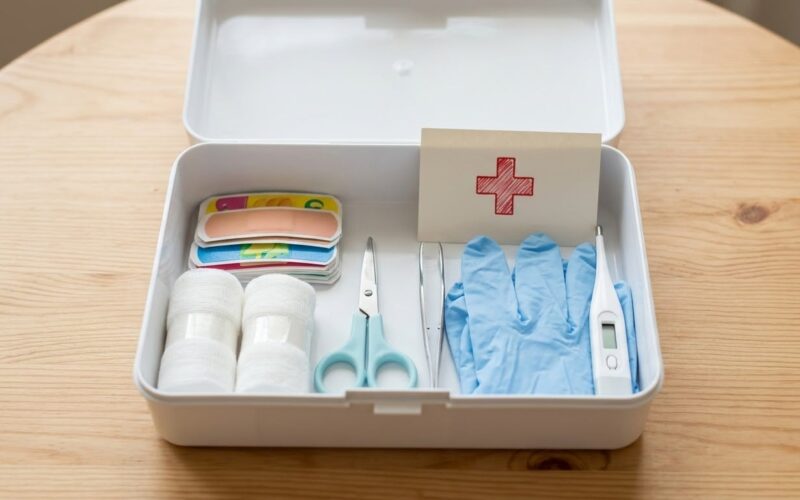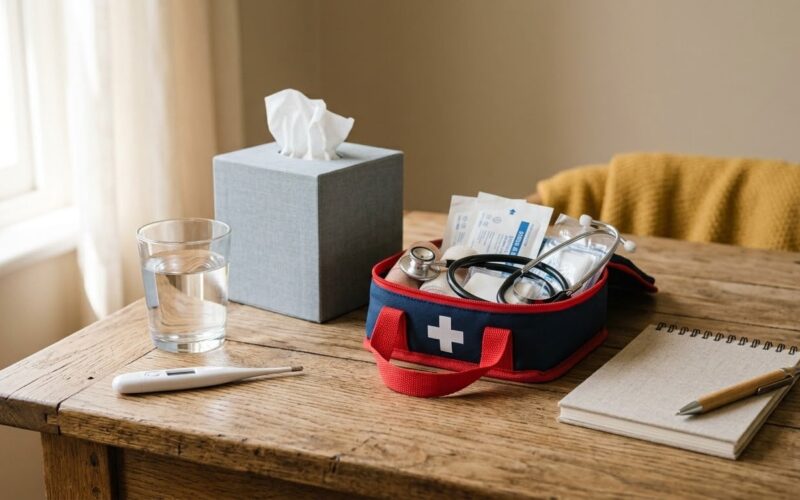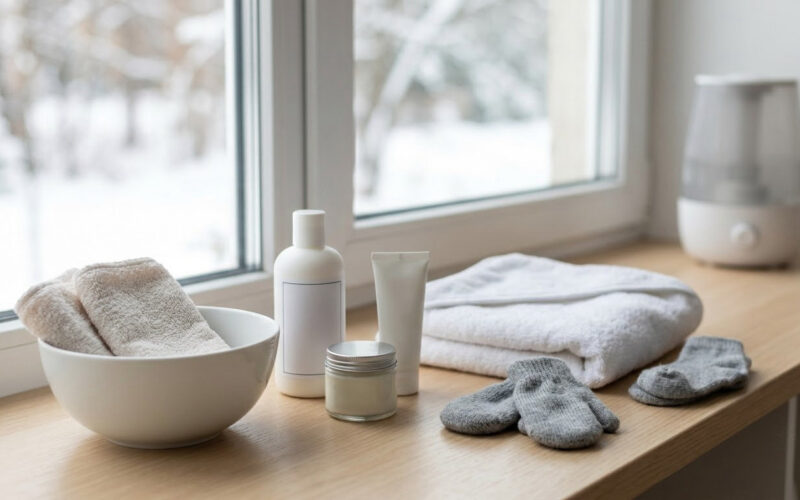

How to keep kids healthy during cold and flu season comes down to a handful of habits you repeat on the busiest days, not a perfect routine: current vaccines, protected sleep, regular meals and fluids, hand hygiene that your child can actually tolerate, and a clear plan for when someone does get sick. Most of it takes a few minutes a day once the routine exists.
The hard part for our family was never knowing what to do. It was making the doing possible when the child in front of us could not follow a standard instruction, needed a predictable sequence, or reacted badly to a wet sleeve and a loud countdown.
This guide covers the parts that actually change outcomes, adapted for children with sensory differences, communication differences, medical conditions and individual schedules. It is general information, not medical advice. Your child’s pediatrician is the right person for anything specific to your child.
Table of Contents
- What You Need
- How to Keep Kids Healthy During Cold and Flu Season, Step by Step
- How to Keep Kids Healthy During Cold and Flu Season: Step 1 — Stay Up to Date on Recommended Vaccines
- How to Keep Kids Healthy During Cold and Flu Season: Step 2 — Make Sleep and Daily Routines Easier
- How to Keep Kids Healthy During Cold and Flu Season: Step 3 — Support Nutritious, Safe Meals and Fluids
- How to Keep Kids Healthy During Cold and Flu Season: Step 4 — Practice Hand Hygiene Without Creating Resistance
- How to Keep Kids Healthy During Cold and Flu Season: Step 5 — Reduce Germs in High-Touch Spaces
- How to Keep Kids Healthy During Cold and Flu Season: Step 6 — Know When to Call the Pediatrician
- How to Keep Kids Healthy During Cold and Flu Season: Step 7 — Make an Illness and Exposure Plan
- Common Mistakes
- Frequently Asked Questions
- Can my child with sensory differences use alcohol-based hand sanitizer?
- How do I get a sick child to drink more fluids?
- Do supplements like elderberry, vitamin C or zinc prevent illness?
- When should I call the pediatrician instead of waiting it out?
- How long should a child stay home after a fever?
- Conclusion
What You Need
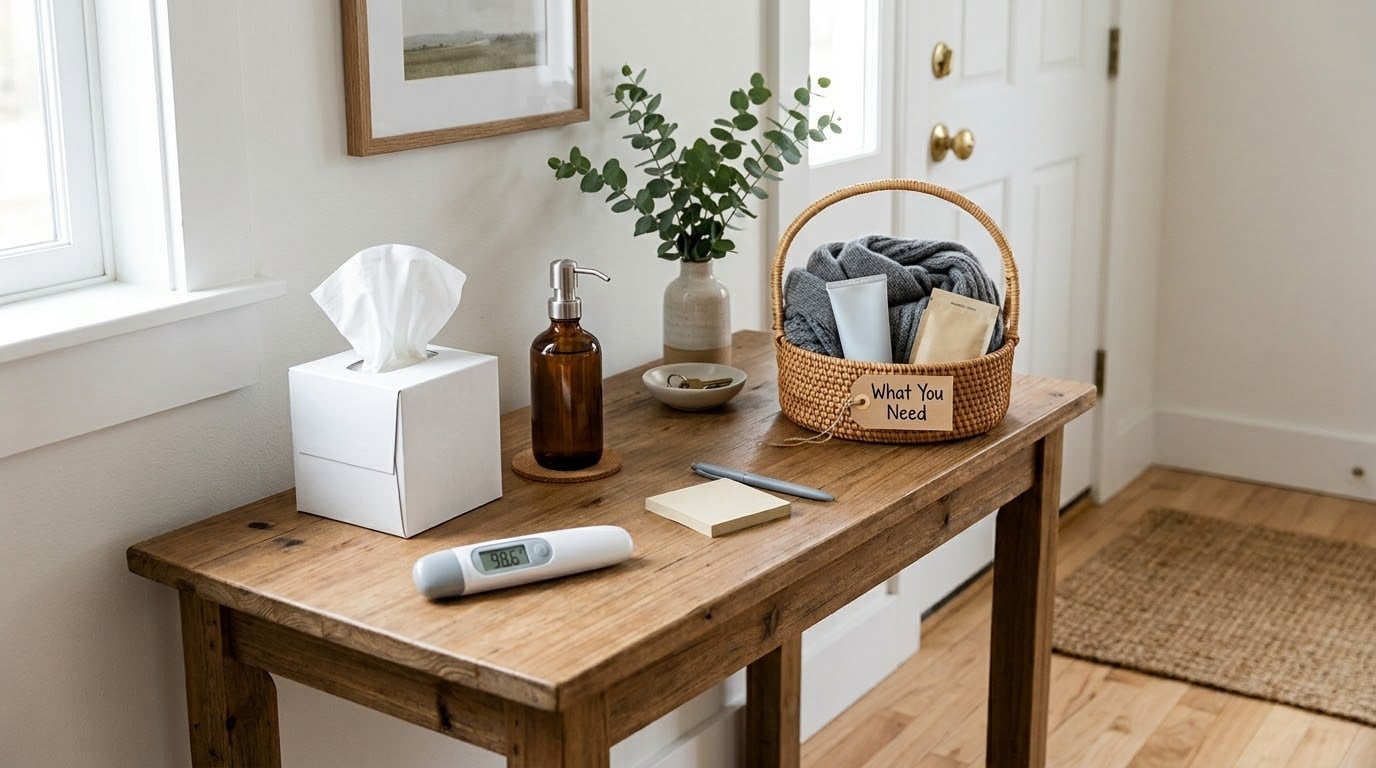
Getting supplies in before respiratory viruses peak turns a scavenger hunt at 9pm into a drawer you already know. Most families need far less than a pharmacy aisle suggests.
- A pediatrician contact and after-hours line. Put the number on the fridge and in your phone. When a fever hits at 2am, searching for it is wasted time.
- A thermometer your child tolerates. Temporal (forehead) or ear models are often easier than an oral one, especially for a child who resists or cannot reliably hold still.
- Liquid hand soap and paper towels. Fragrance-free versions matter more for children with eczema or sensory sensitivity. I keep the link I have filed separately from the link I use daily.
- Tissues, one designated bin, and elbow sleeves. Coughing into the crook of the elbow beats reaching for a tissue mid-sneeze.
- A cleaning product appropriate for the surface. Follow the label. Never mix a bleach product with an ammonia or vinegar product.
- Your child’s comfort items. A specific blanket, headphones, or chew item does more during a sick stretch than most supplies in the cabinet.
- Written household contacts. Daycare, school, the backup caregiver, the pediatrician. A paper card is faster than scrolling when you are holding a crying toddler.
That last item sounds fussy. It is the one I have used most, because the moments I most needed a phone number were exactly the moments my hands were full.
How to Keep Kids Healthy During Cold and Flu Season, Step by Step
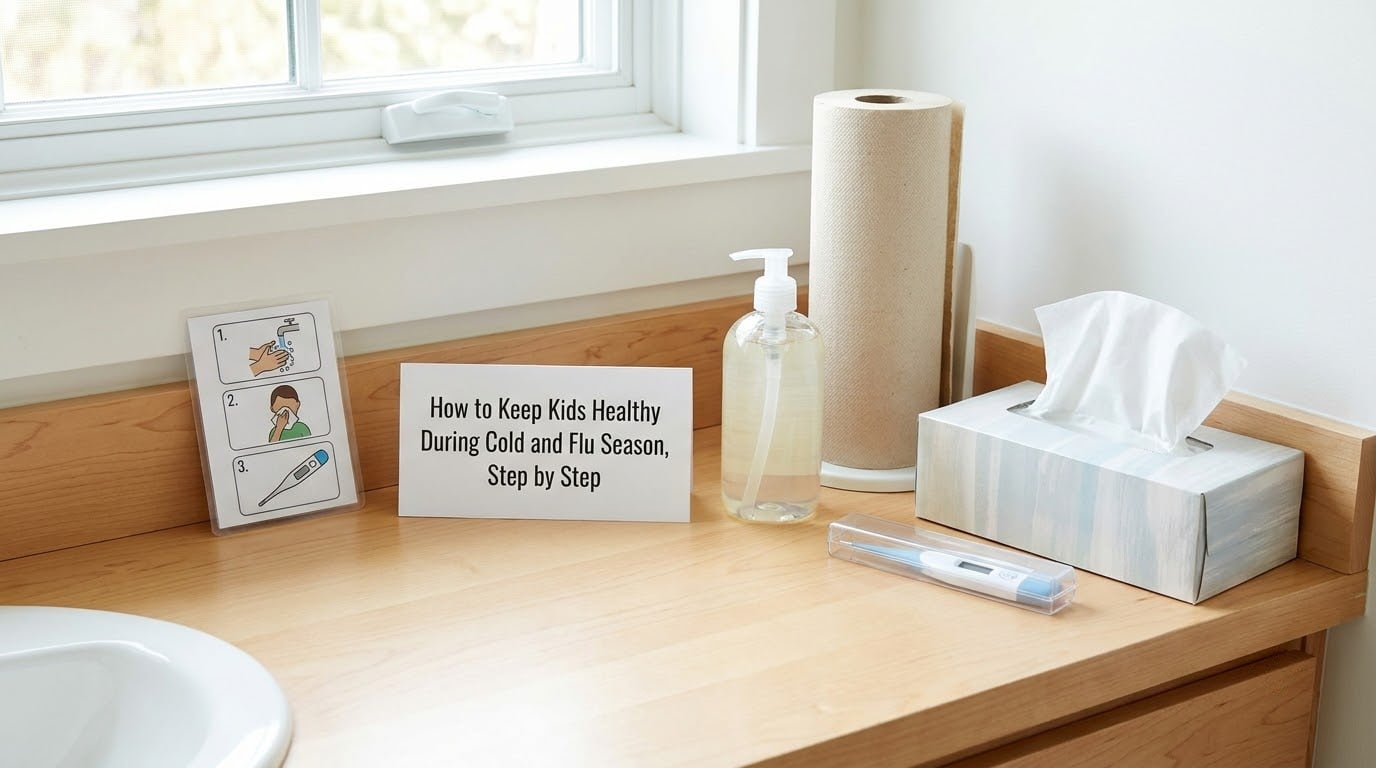
Each step below includes what it looks like in practice and how you can tell it is working. None of them requires a specialist, an expensive device, or a perfect week.
How to Keep Kids Healthy During Cold and Flu Season: Step 1 — Stay Up to Date on Recommended Vaccines
Review current influenza and routine vaccination recommendations with your child’s pediatrician, ideally in the weeks before viruses circulate rather than during a surge. Ask about your child’s specific schedule.
This matters more for some families than others. Children with asthma, heart conditions, neurological conditions or immune differences may qualify for additional protections or a tailored timing plan. So do children who were born prematurely or who missed a dose window.
You will get better guidance by asking a specific question than a general one. Try: “Given my son’s asthma and his current schedule, what should we prioritize this season?” The answer you get back belongs in the written plan from Step 7.
Nothing here replaces your pediatrician’s advice. Recommendations change, and a clinician who knows your child’s chart will know things a web page cannot.
How to Keep Kids Healthy During Cold and Flu Season: Step 2 — Make Sleep and Daily Routines Easier
Protecting regular sleep is the step families skip when the calendar gets crowded, and it is the one that shows up in every piece of guidance about supporting a child’s immune system.
Keep the wake time steady and let bedtime drift by no more than an hour. An anchored morning does more for a child’s sleep than an enforced bedtime on a night when the body is not ready.
Build the routine around what your child can manage. A visual schedule with five icons, a first-then board, or a simple song before a transition gives a child who does not read or does not handle surprises something predictable to hold onto.
Leave slack in the week. Sensory appointments, therapy blocks, travel and hospital visits all compete with sleep, and pretending they do not is how a good week collapses into three bad nights.
How to Keep Kids Healthy During Cold and Flu Season: Step 3 — Support Nutritious, Safe Meals and Fluids
Offer a food and drink routine that your child will actually accept, then keep the variety gentle. Change one variable at a time rather than rebuilding the whole menu in November.
Texture matters more than taste for a lot of children. I have had far more luck getting a new food in when I changed one property at a time than when I changed temperature, texture and flavor in the same week. We wrote about that in more detail in why food texture matters more than taste for some kids.
If your child follows a gluten-free or casein-free diet for allergies, the routine is already built; see how to start a gluten free casein free diet for kids for the setup.
When appetite drops, offer small amounts more often rather than larger plates. Fluids count even when food does not, and warm liquids are often accepted when plain water is not.
Keep food safety basics steady even when routines are disrupted. Cook poultry to 165°F, ground meat to 160°F, and whole cuts and fish to 145°F. Refrigerate perishables within two hours, and clean hands and surfaces before handling a lunchbox.
How to Keep Kids Healthy During Cold and Flu Season: Step 4 — Practice Hand Hygiene Without Creating Resistance
Scrub with soap and clean running water for about 20 seconds, covering fingertips, thumbs and between the fingers. Skipping the full time matters more than the technique, and it is the part children rush.
Alcohol-based sanitizer is a useful backup when hands are visibly dirty, a bathroom is not nearby, or handwashing is not possible right now. Soap and water remain the better choice when hands are visibly soiled, after using the bathroom, and before eating.
Watch the product label for minimum age requirements, and keep the bottle out of reach. If your child mouths everything, use soap and water instead.
Adapt the routine instead of abandoning it. Children who dislike the wet feeling may accept a lotion or gel at the sink, a scratchy brush, or a song that runs for the full length of time. A visual timer removes the countdown from the parent’s face and puts it somewhere neutral.
Teach the elbow for coughs and sneezes, and give your child a tissue bin at the right height. Practise it while everyone is well so it is a known move rather than something new during a coughing fit.
How to Keep Kids Healthy During Cold and Flu Season: Step 5 — Reduce Germs in High-Touch Spaces
Target the surfaces that get touched constantly rather than trying to sanitize a whole house. Door handles, light switches, faucets, toilet handles, the top of the refrigerator, and the child-proofing latches at the bottom of doors are the ones that matter.
Clean with soap or detergent first, then disinfect if you choose to. Cleaning removes germs and dirt; disinfecting kills them on a surface. A surface that has not been cleaned first will not disinfect well, no matter what the label claims.
Follow the label for contact time, and never let the surface stay wet around a child who puts hands in their mouth. Ventilation helps too: opening a window or running an exhaust fan moves virus-laden air out of a shared room.
Watch your child’s skin while you are at it. Frequent wet hands and cleaning products can trigger eczema, and broken skin is its own problem to manage. Our guide to managing eczema flare ups in kids covers how to handle that without abandoning hygiene.
How to Keep Kids Healthy During Cold and Flu Season: Step 6 — Know When to Call the Pediatrician
You are not expected to diagnose anything. You are expected to notice patterns that feel wrong for your child and act on them.
Contact a healthcare professional if your child has difficulty breathing, pauses in breathing, or ribs pulling in with each breath. Also call for signs of dehydration such as very few wet diapers, a dry mouth, no tears when crying, or a child who will not drink.
Call if symptoms are getting steadily worse instead of better, or if a fever persists past the timeframe your pediatrician has given you. A fever in a young infant needs prompt evaluation regardless of how the child looks.
Trust your own baseline knowledge. You know what your child’s normal breathing, appetite and alertness look like, and you have seen hundreds of fevers. A change from that baseline is a valid reason to call, even if you cannot explain why.
For breathing difficulty, unresponsiveness or severe dehydration, use urgent or emergency care rather than waiting for a call back.
How to Keep Kids Healthy During Cold and Flu Season: Step 7 — Make an Illness and Exposure Plan
A plan written on a calm day removes hard decisions from a hard week. Mine lives on one page and covers who to call, what the daycare needs, and what comfort items stay with the sick child.
Write down what daycare and school actually require. Most programs have their own exclusion rules and forms, and the ones that mattered for us were specific about fever-free duration and return timing.
Decide comfort items and any medication questions with your child’s healthcare team in advance. Ask what they recommend for fever relief, at what weight-based dose, and what you should not give. Do not give any medication to your child without checking with a clinician or pharmacist first.
Plan for the sensory side of being sick. A child who cannot tolerate a stuffy room or a wet cough needs options that do not depend on reasoning: a darker corner, headphones, a favorite blanket, a quieter room with a door that stays closed.
If several children are ill at once, keep one designated caregiver for the sick child where you can. It is a small thing that limits how many times the same germs get a new host.
Common Mistakes
Treating supplements as the main plan. The fix: keep supplements, if you use them, in a supporting role and put your effort into sleep, nutrition, vaccines and hygiene. Ask your pediatrician about any supplement before starting it.
Using sanitizer on visibly dirty hands. The fix: use soap and water for visibly soiled hands, after the bathroom and before eating, and check the label for minimum age requirements.
Skipping the flu vaccine because last year’s was a bad match. The fix: ask the pediatrician directly. They can explain the current season’s guidance for your child better than a headline can.
Expecting a suddenly perfect diet. The fix: protect the routine, not the ideal menu. Consistency across the week matters far more than any single nutritious meal.
Overcleaning until skin and air suffer. The fix: target high-touch surfaces, clean before disinfecting, ventilate the room, and follow label contact times. More product is not more protection.
Overlooking hydration and warning signs. The fix: track wet diapers or offered drinks, and treat a change from your child’s normal baseline as a reason to call.
Building a rigid plan that falls apart on day three. The fix: make the plan a set of anchors rather than a schedule. Sleep time, handwashing at the door and one check-in on fluids will hold on a bad day.
Frequently Asked Questions
Can my child with sensory differences use alcohol-based hand sanitizer?
Check the label for the minimum age and keep it out of reach of children who mouth things. Many families use sanitizer only as a backup when soap and water are not available right now, and at the door or after errands rather than on a schedule. If your child dislikes the sticky feeling, a foaming lotion at the sink usually goes over better than a cold gel. If washing is skipped for weeks because of sensory distress, ask your pediatrician for ideas specific to your child.
How do I get a sick child to drink more fluids?
Offer small amounts often instead of a full cup or bottle, and keep the drink they already accept within reach. Warm liquids such as broth, tea or warm water are often accepted when plain water is refused. For breastfed babies, more frequent feeds usually cover it. Watch for signs of dehydration such as very few wet diapers, a dry mouth, no tears when crying, or a child who will not drink, and call your pediatrician if you see them.
Do supplements like elderberry, vitamin C or zinc prevent illness?
The evidence for most over-the-counter cold and flu supplements in children is limited and inconsistent, so they are not a substitute for vaccination, sleep, nutrition and hand hygiene. Vitamin D supplementation is common for children who get little sunlight in winter, but it is about bone and overall health rather than preventing colds. Bring any supplement you are considering to your pediatrician, especially if your child takes other medications or has a medical condition. A realistic routine beats an expensive bottle.
When should I call the pediatrician instead of waiting it out?
Call for difficulty breathing, pauses in breathing, ribs pulling in with each breath, signs of dehydration, or symptoms that get steadily worse instead of better. A fever in a young infant needs prompt evaluation. Call if a fever lasts longer than the timeframe your pediatrician gave you, or if your child is not drinking, not alert, or behaving differently from their usual baseline. For breathing difficulty, unresponsiveness or severe dehydration, go straight to urgent or emergency care.
How long should a child stay home after a fever?
Most programs and clinicians use fever-free for at least 24 hours without fever-reducing medicine before a child returns to daycare or school, and many also want symptoms improving overall. Policies vary, so check your own program’s rules rather than assuming. Staying home while a child is still coughing heavily or running a fever protects classmates and staff, especially infants who cannot be vaccinated yet. Keep your child’s pediatrician’s specific guidance in your written plan for the season.
Conclusion
If you take four things from this guide: review vaccination questions with your pediatrician, protect sleep and regular meals, keep handwashing and targeted cleaning doable rather than perfect, and write down your child’s personal warning signs while you can think straight.
Then start small. One routine, one written page, one conversation. It will not keep every virus out of the house, and honestly, none of it did for us last winter either. It makes the weeks shorter and the nights calmer, which turned out to be the thing that mattered.