
Yes, girls can be autistic, and the signs of autism in girls are often the quiet ones. Girls are more likely than boys to copy how peers talk and behave, to hide stimming in public, and to hold it together all day at school, which is why many are identified late or not at all.
This guide covers what parents and teachers usually notice first: how conversation feels one-sided, why small changes can cause visible distress, why sensory reactions matter more than a single behavior, and what to do with a pattern you keep seeing. It is written for 2026 families who are still deciding whether what they are seeing is worth a phone call to the pediatrician.
A note before you read on: nothing in this article can tell you whether your daughter is autistic. Autism is diagnosed by qualified professionals after a proper assessment, and several other things can look similar. What this list can do is help you describe what you see clearly enough to bring to that appointment.
Table of Contents
- Signs of Autism in Girls at a Glance
- 1. Reduced back-and-forth conversation
- Signs of Autism in Girls at Different Developmental Stages
- 2. Limited or unusual eye contact
- 3. Difficulty understanding other children’s intentions
- 4. Uneven progress in imaginative play
- 5. Echolalia or scripted conversational language
- 6. Difficulty adapting to small changes
- 7. Emotional regulation that differs from what peers expect
- 8. Sensory differences
- 9. Intense or unusually restricted interests
- 10. Masking or camouflaging social difficulties
- 11. Uneven developmental skills
- 12. Later developmental milestones or loss of previously acquired skills
- How to Tell If the Signs Need Professional Evaluation
- Frequently Asked Questions
- Can girls really be autistic?
- Why are girls diagnosed later than boys?
- Is my daughter masking or just shy?
- What is the difference between autism and ADHD in girls?
- How do I get an autism assessment for my daughter?
- Do autistic girls have meltdowns and shutdowns?
- What to Do First
Signs of Autism in Girls at a Glance
The table below groups the twelve signs into the four areas they usually show up in. Patterns that repeat across weeks and across settings matter far more than a single behavior on a single afternoon.
| Area | What you might notice | Signs covered below |
|---|---|---|
| Social communication | One-sided conversations, missed hints, little eye contact, literal reading of language | 1, 2, 3, 5, 11 |
| Behavior and flexibility | Scripted play, distress after small changes, interests that dominate daily life | 4, 6, 9 |
| Sensory processing | Reaction to sound, touch, texture, light, smell and movement; seeking input too | 8 |
| Masking and regulation | Hiding stimming, imitating peers, performing socially, crashing at home | 7, 10, 12 |
One more thing to keep in mind as you read. Girls are often described as quiet, shy, well-behaved or a perfectionist, and each of those descriptions can be accurate and still miss the point. A child who is simply shy withdraws from situations she finds hard. A masking child enters them, performs, and pays for it later.
1. Reduced back-and-forth conversation
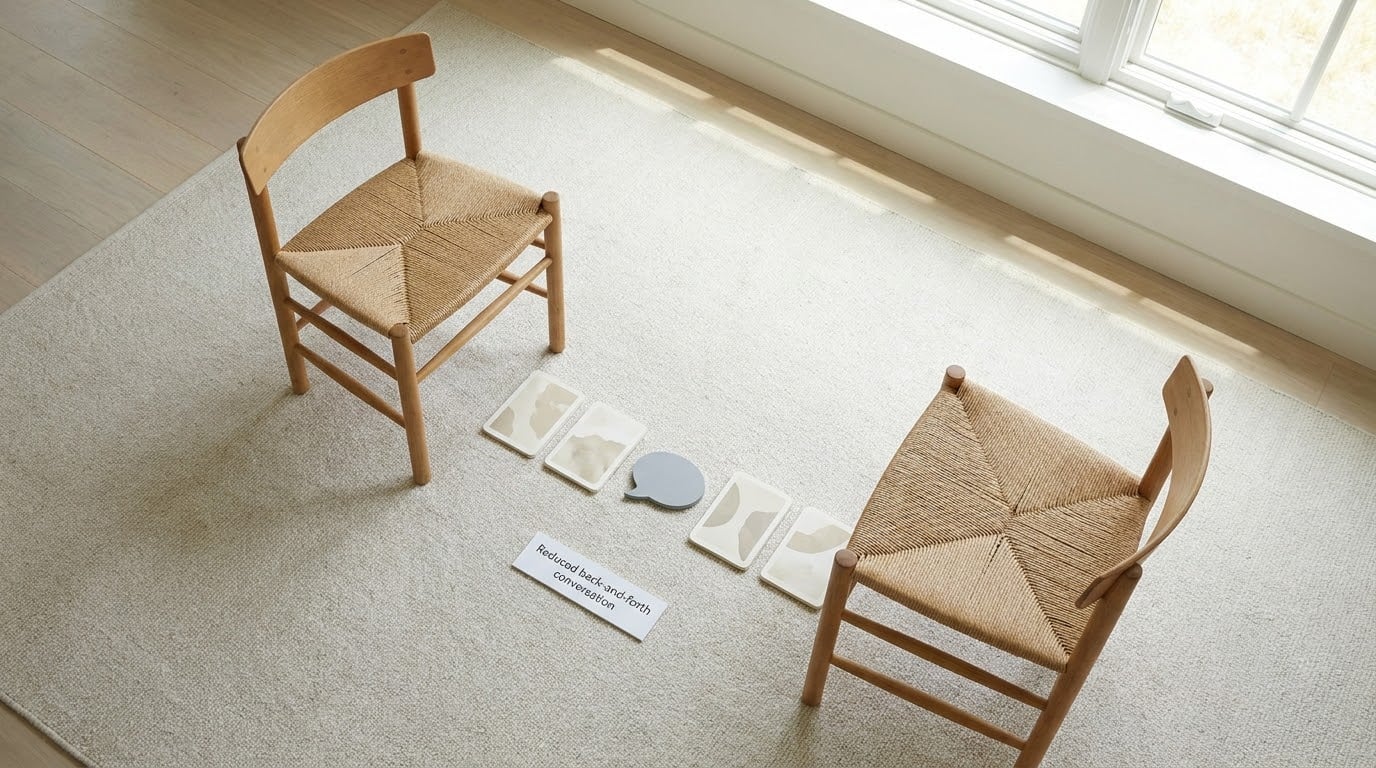
One of the most commonly reported signs is that conversation does not flow both ways. Your daughter may talk about her day in detail and still not pick up that you wanted to tell her something, or she may answer a question in a way that technically responds but leaves the other person with nothing to hold on to.
It often shows up as difficulty with turn-taking. She may talk through a pause, or hand the conversation back with a question that has no real interest behind it. She may also struggle to adjust when someone else changes the topic, because staying on a topic she chose feels more manageable than following where everyone else is going.
Keep this in proportion. Plenty of children are simply tired, or in the middle of something, or not especially chatty that day. It becomes a meaningful observation when it repeats, when adults describe her as a good listener who somehow never really connects, and when she struggles to pick up on another person’s point of view rather than the words themselves.
Signs of Autism in Girls at Different Developmental Stages
Presentation changes with age, language ability and maturity, so the same underlying difference looks different at three, eight and fifteen.
For toddlers and preschoolers, watch for limited back-and-forth babble or talk, very few back-and-forth gestures such as pointing to share interest, and play that runs alongside other children rather than with them. Some girls talk early and use words well, so language milestones alone tell you very little.
For school-age children, the pattern is often a good report card alongside struggles with peer invitations, group chats, birthday parties, and reading what a friend meant rather than what they said. Girls at this stage may have one steady friendship rather than a wide circle, and may describe themselves as having no best friend despite years of knowing the same children.
For tweens and teens, differences can sharpen because social stakes rise and conformity pressure increases. A girl who managed primary school by copying her peers may find the workload unsustainable by year seven. Puberty, changing friendships and increased academic load often bring the first visible collapse, which is why adolescence is a common point for diagnosis in girls who were missed as toddlers.
2. Limited or unusual eye contact
Reduced eye contact is often the first thing adults notice, though it is rarely enough on its own. Your daughter may look at the floor while you talk, glance away the moment something emotional comes up, or hold eye contact for slightly too long in a way that feels uncomfortable to watch.
Some girls learn to force eye contact because they are told to be polite, so what you see can be effortful rather than natural. A child holding steady eye contact with an adult across a restaurant might be working at it, not enjoying it.
Eye contact is also heavily cultural and personal. Some people naturally make less of it, some children are uncomfortable with strangers, and some families raise children to look politely at adults. Treat this as one piece of a wider pattern, not as a test.
3. Difficulty understanding other children’s intentions
She may miss the joke, take a comment literally, or need instructions spelled out before she can act on them. Teasing, sarcasm and hints often go over her head, not because she is not listening but because the meaning sits in what was not said.
A concrete example: a classmate says can you pass the salt in a tone that means something else entirely, and your daughter hands over the salt. Or a group falls silent when a teacher leaves the room because someone said something unkind, and she keeps talking until the silence becomes obvious.
Direct instruction is usually easier than implied communication. Tell her exactly what you want and she is likely to do it reliably. Ask her to work out what you want and she may genuinely not know where to start. Parents often notice this as a difference between school, where everything is scripted, and home, where the rules are assumed.
4. Uneven progress in imaginative play
Play may be real but narrow in range. She might line up figures in a fixed order, act out the same scene from the same film repeatedly, collect and sort small objects, or take an elaborate scenario very seriously without ever shifting the rules.
That looks different from open-ended pretend play where the plot changes depending on who joins in. A masking child may also play imaginatively very well in private and withdraw from it entirely in front of peers, which is one reason teachers often report her as a quiet, cooperative child.
Many children enjoy imaginative play in different ways, and some prefer real activities like building, cooking or gardening. The question is whether play is confined and rule-bound, and whether changing the scenario causes genuine distress rather than simple preference.
5. Echolalia or scripted conversational language
Echolalia is repeating words or phrases, sometimes immediately and sometimes hours or days later, from films, adults, siblings or earlier conversations. Delayed echolalia often carries the original emotion with it, so a line from a film can come out in an excited or upset tone depending on the scene it came from.
Scripted language is closely related. Your daughter might ask questions in a sequence she has heard many times, or hand you a running commentary on an activity using phrases that sound like they were written rather than thought on the spot.
This is where the literal quality of autistic language shows. Once a conversation has a rehearsed version, improvising a new one is much harder, and a change of plan can leave her without words for what should come next.
6. Difficulty adapting to small changes
An unexpected transition, a different route to school, a change of clothes or a swapped order of activities can produce visible distress over something that looks minor from the outside. The reaction may be tears, refusal, anger, or going quiet and shutting down.
Notice whether the trigger is the change itself or the loss of predictability. A child who is inflexible and rigid may genuinely struggle to reorganise a plan she held. A masking child may manage the change in the corridor and fall apart about it in the car ten minutes later.
Keep a short note of what the change was, what happened, and what finally helped. That log is more useful to a clinician than a memory of a bad week, and it also tells you where a small accommodation pays off, such as previewing tomorrow’s schedule the night before.
7. Emotional regulation that differs from what peers expect
Emotions can arrive at full volume, arrive late, or stay switched on long after the moment that started them. A small frustration at school may produce an enormous reaction in the car, and recovery can take hours rather than minutes.
Girls are also more likely to internalise distress. Instead of a visible meltdown, you may get a quiet shutdown: she goes blank, answers in one word, sits on the stairs, or falls asleep at 4pm on a day nothing obviously went wrong. The adult response is often to assume she is being difficult or is not telling the truth. Our guide to handling autism meltdowns at home covers what helps in the moment.
Strong feelings are not uniquely autistic, and plenty of children have big reactions to small things. What is worth tracking is the mismatch between the size of the emotion and the size of the trigger, plus how long it takes to come back down.
8. Sensory differences
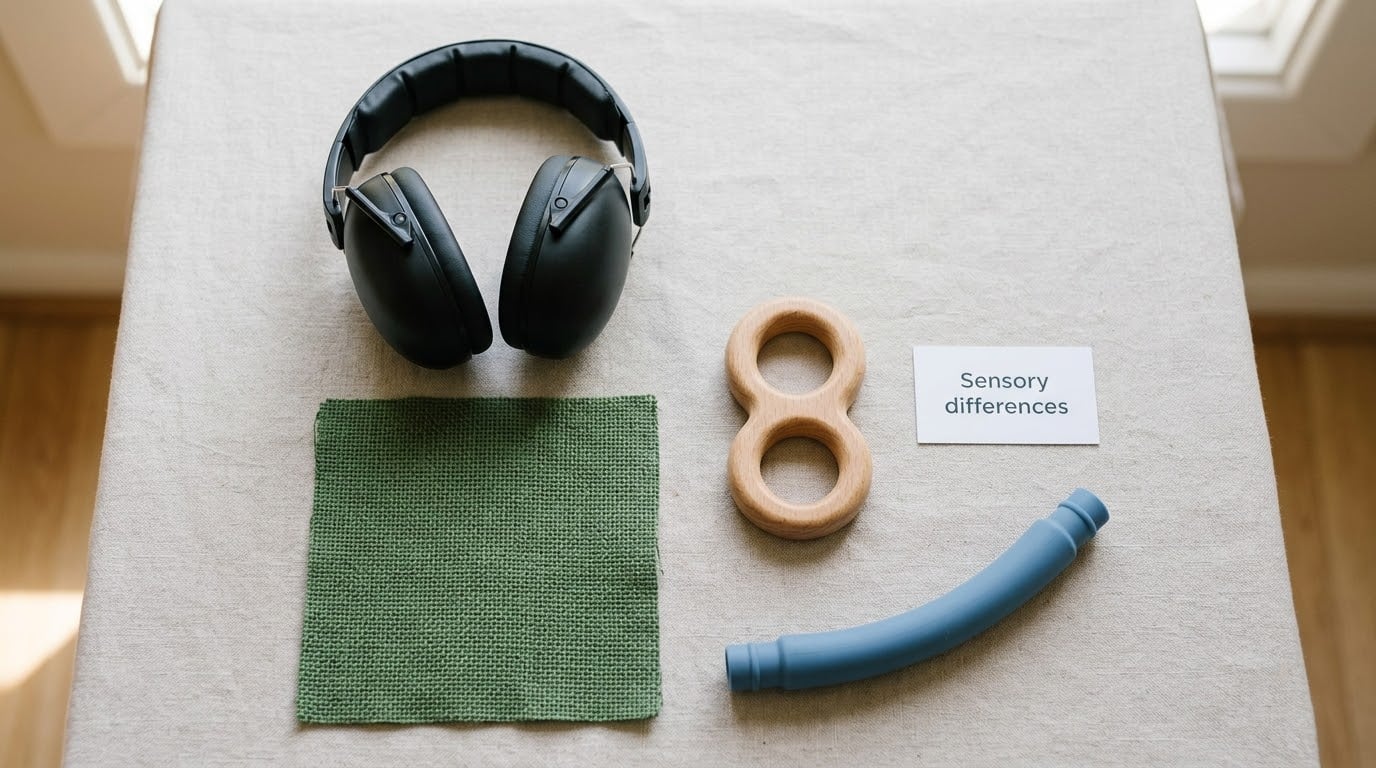
Sensory signs are often the first thing parents notice and the first thing dismissed. Sensitivity shows up as distress, avoidance or shutdown; sensory seeking shows up as a child who needs to move, press, spin, chew or repeat constantly.
Common sensitivities include hand dryers, flushing toilets, vacuum cleaners, hair dryers, hairdressing scissors, clothing seams and labels, scratchy fabrics, strong smells, bright or flickering lights, background noise in a restaurant, and textures in food. Parents of girls who were later diagnosed often say the sensory signs came years before anything social did. When food texture is the sticking point, our steps for extreme picky eating in autism are worth a look.
Seeking looks different: fidgeting, rocking, spinning, humming, tapping, climbing, squeezing, or needing food with a specific texture every single time. Both ends of the same system are common, and a child can be hypersensitive to sound while actively seeking movement or pressure.
Sensory overload is what happens when too much input stacks up. It can look like a meltdown, a shutdown, sudden illness, or a child who insists they need to go outside. Fatigue, hunger and poor sleep all lower the threshold, which is why sensory trouble so often shows up at the end of a long day.
9. Intense or unusually restricted interests
An interest can be entirely typical in content and still unusual in depth. A girl who loves horses, anime, baking, a band, a video game, a sport or a celebrity may know more about it than most adults, bring it up unprompted, and struggle to talk about anything else.
Watch how the interest is used. It may dominate conversation, replace other activities, require extensive and repetitive use of information, or lead to rigid rules about how things are done, such as a specific order, a specific brand, or a fixed routine around watching.
This is the sign most often waved away, because the topic is a girl-coded one. A strong interest in animals or fashion is not a sign of autism on its own, and many children are simply enthusiastic. It matters when the depth is consuming, inflexible, and disconnected from the rest of her life.
10. Masking or camouflaging social difficulties
Masking is the effort a person makes to appear socially comfortable by learning how others talk, move and react, and copying it under pressure. Girls are generally good at this, and many learn it early enough that adults assume it comes naturally.
What masking looks like from the outside: rehearsing conversations before they happen, forcing eye contact, copying the tone or slang of friends, analysing body language and tone of voice, laughing when something is not funny, apologising for taking up space, or suppressing stimming when anyone is watching.
What it costs shows up afterwards. A school day that looks fine can produce several hours of recovery at home: a meltdown in the car, a shutdown on the sofa, constant irritation with her younger siblings, or an early night. Parents often read this as ordinary tiredness or screen overuse, and it is frequently the earliest and most reported pattern families notice.
Masking and genuine shyness can look similar from the outside, so here is how I would tell them apart. Shy children relax when they know the situation; masking children relax only after the performance is over, and often need recovery. Shyness usually shrinks with familiarity; masking often intensifies as situations get longer, larger and less predictable. A shy child avoids; a masking child performs and then collapses.
Support at home should aim to reduce the load rather than raise it. Rehearsing scripts with her, giving her a quiet place to stim without an audience, and letting her opt out of optional social plans all help. If she has siblings who need to understand why she does things differently, our simple scripts for explaining autism to siblings are a good starting point. Training a girl to mask harder at home, to be more like her peers, takes the thing that is already costing her the most and makes it worse.
11. Uneven developmental skills
Advanced vocabulary, a big reading habit or encyclopedic knowledge of a topic can sit right next to real difficulty with flexible thinking, reading social situations, planning a sequence of steps or recovering from a change of plan. Late-diagnosed women describe this as the little professor presentation: precise, adult-sounding language and impressive knowledge, with a lot of struggle hidden underneath.
School performance is often high, sometimes because the work is genuinely manageable and sometimes because she is spending real effort on it. Strong grades can be the thing that makes adults dismiss a concern, so it is worth asking how much energy the achievement costs her rather than whether the result is good.
Uneven skills do not establish a diagnosis. Plenty of children are verbally advanced and organisationally messy, and giftedness produces a superficially similar picture. What matters is whether the gap is wide, persistent, and consistent with a wider pattern of differences.
12. Later developmental milestones or loss of previously acquired skills
Missed or very late milestones are a reason to raise concerns, not to assume a diagnosis. A later start with talking, a very late start with pointing or showing, no interest in other children by around the age when most children seek them out, and no response to her name are all worth mentioning to a pediatrician.
Loss of previously acquired skills deserves prompt medical attention. Losing words, social responsiveness or everyday skills after a period of steady development is not a pattern to watch and wait on. Sudden loss of skills can have medical causes, and a clinician needs to look at your daughter rather than a web page.
Seek urgent care for any loss of skills, and for any concerns that come with seizures, marked changes in behavior, or physical symptoms. Your pediatrician can decide what kind of assessment is needed first.
How to Tell If the Signs Need Professional Evaluation
What matters is a pattern over time and across settings, not a list of behaviors collected on a hard afternoon. Look for signs that repeat, that show up at home and school, and that cost her something, such as distress, exhaustion or difficulty recovering.
Write down specific examples rather than conclusions. Instead of she is antisocial, record that she did not respond to her name in the kitchen on four of the last seven mornings, that she left a party at 4pm and cried in the car for forty minutes, or that she watched the same thirty-minute sequence three times on Saturday. Add the date, the setting, what happened immediately before, and what helped.
When you call the pediatrician, describe the pattern and ask specifically about a developmental evaluation or referral to a child psychologist or developmental behavioural paediatrician. Many families are told to wait and see because the child talks, does well at school and does not look autistic. If you have specific observations and a pattern, say that clearly, and ask what the referral process involves and how long the wait is.
A full evaluation looks at more than social interaction. It generally covers communication and language, cognitive and adaptive skills, sensory processing, and co-occurring concerns such as ADHD, anxiety, low mood or eating difficulties. Ask what is covered so you can prepare, and ask whether the person doing it works with girls specifically, because not all assessors recognise the subtler presentations well.
Other things can look similar. Anxiety, ADHD, selective mutism, language difficulty, sensory processing differences, being gifted, being shy and a processing delay can each produce overlap with some of the signs of autism in girls listed above, and more than one can be true at the same time. That is a reason to be assessed properly rather than a reason to relax.
Frequently Asked Questions
Can girls really be autistic?
Yes. Autism is diagnosed in girls at much lower rates than in boys, largely because the diagnostic picture was built on how it presents in boys and because girls often learn to copy how peers behave. Many girls are verbal, do well at school and hold it together in public, which makes the condition easy to miss. Girls are also frequently described as shy, anxious or a perfectionist instead of autistic.
Why are girls diagnosed later than boys?
Several reasons overlap. Diagnostic research and clinical experience grew mostly from boys, so the classic picture is a boy who is visibly distressed by social situations. Girls mask instead, they often have interests that look entirely typical for their gender, and they tend to internalise distress rather than acting it out. Many also get referred for anxiety or ADHD first, which pushes autism further down the list.
Is my daughter masking or just shy?
Both can look quiet in public. The clearest difference is what happens afterwards. A shy child relaxes once she knows the situation; a masking child performs through it and then needs hours to recover, often with a meltdown or shutdown at home. Shyness shrinks with familiarity, while masking tends to get heavier as the day goes on. Watch the recovery period after social events, not just the event itself.
What is the difference between autism and ADHD in girls?
They overlap a lot and often occur together, but the emphasis differs. Autism tends to show up in social reciprocity, understanding of implied meaning, sensory processing and insistence on sameness. ADHD tends to show up in sustained attention, impulse control, organisation and task completion. A girl with both will usually show patterns in each group. Only a full developmental assessment can separate the two.
How do I get an autism assessment for my daughter?
Start with her pediatrician and describe specific examples across settings rather than a conclusion. Ask for a developmental evaluation or a referral to a child psychologist or developmental behavioural paediatrician, and ask what the process involves and how long the wait is. Bring a written log of what you have observed, including changes in routine, sensory reactions, friendships and recovery after school.
Do autistic girls have meltdowns and shutdowns?
Yes, and they often happen at home rather than at school, which is why a teacher may describe a model student. A meltdown is an intense reaction to overload that may include crying, aggression, or a loss of control, and it is not a punishment or a behavior problem. A shutdown is a quieter version involving withdrawal, going blank, going quiet, or falling asleep. In girls, a meltdown in the car after school is a common pattern.
What to Do First
Record specific examples. Note what happened, when, where, what came just before, and what helped, and keep going for a few weeks. Patterns across settings are what a clinician can actually work with.
Then book the appointment. Describe the pattern, not the label, and ask for a developmental evaluation. If you have a clear sense of what is not working, say it directly, and ask for an assessor who works with girls.
While you wait, lower the load rather than adding to it. Let her stim without an audience, preview changes, build in recovery time after social events, and treat a meltdown as information about overload rather than a behavior to correct.
And if your daughter loses skills, or you notice anything sudden and worrying, get medical advice now rather than adding it to the list. The signs of autism in girls are easier to act on when they are written down, and a parent who has a clear record of a pattern is usually the reason a child finally gets seen.