To teach kids gratitude, you model appreciation out loud every day and turn thankfulness into a short, repeatable family habit. Start with one specific good thing at dinner, name the people who help your child, and let your child give something back. Most of this costs nothing and takes five minutes.
Gratitude is not a lesson you finish. It is a skill that grows through hundreds of tiny moments, and the wording you use matters more than any worksheet. Updated for 2026, the seven steps below are the version I wish someone had handed me sooner.
Table of Contents
- What You Need
- Step-by-Step: How to Teach Kids Gratitude
- 1. Start With Simple, Specific Examples
- 2. Name Feelings and Actions
- 3. Practice Receiving Help
- 4. Notice What Other People Do
- 5. Include the Child in Small Acts of Care
- 6. Create a Repeatable Gratitude Routine
- 7. Let the Child Lead and Personalize the Practice
- Common Mistakes
- Frequently Asked Questions
- What are the four A’s of gratitude?
- How do I teach an ungrateful child to be grateful?
- My child is never happy with anything. What could be causing this?
- Should I make my kids say thank you to adults?
- Is a gratitude journal or gratitude jar worth doing?
- How do I teach gratitude to a neurodivergent or sensory-sensitive child?
- Conclusion: Begin With One Noticeable Good Thing
What You Need
You do not need a curriculum or a shelf of books. Gratitude gets taught in ordinary moments: handing over a warm blanket, driving to school, a teacher handing back a drawing.
Optional tools, if you want them:
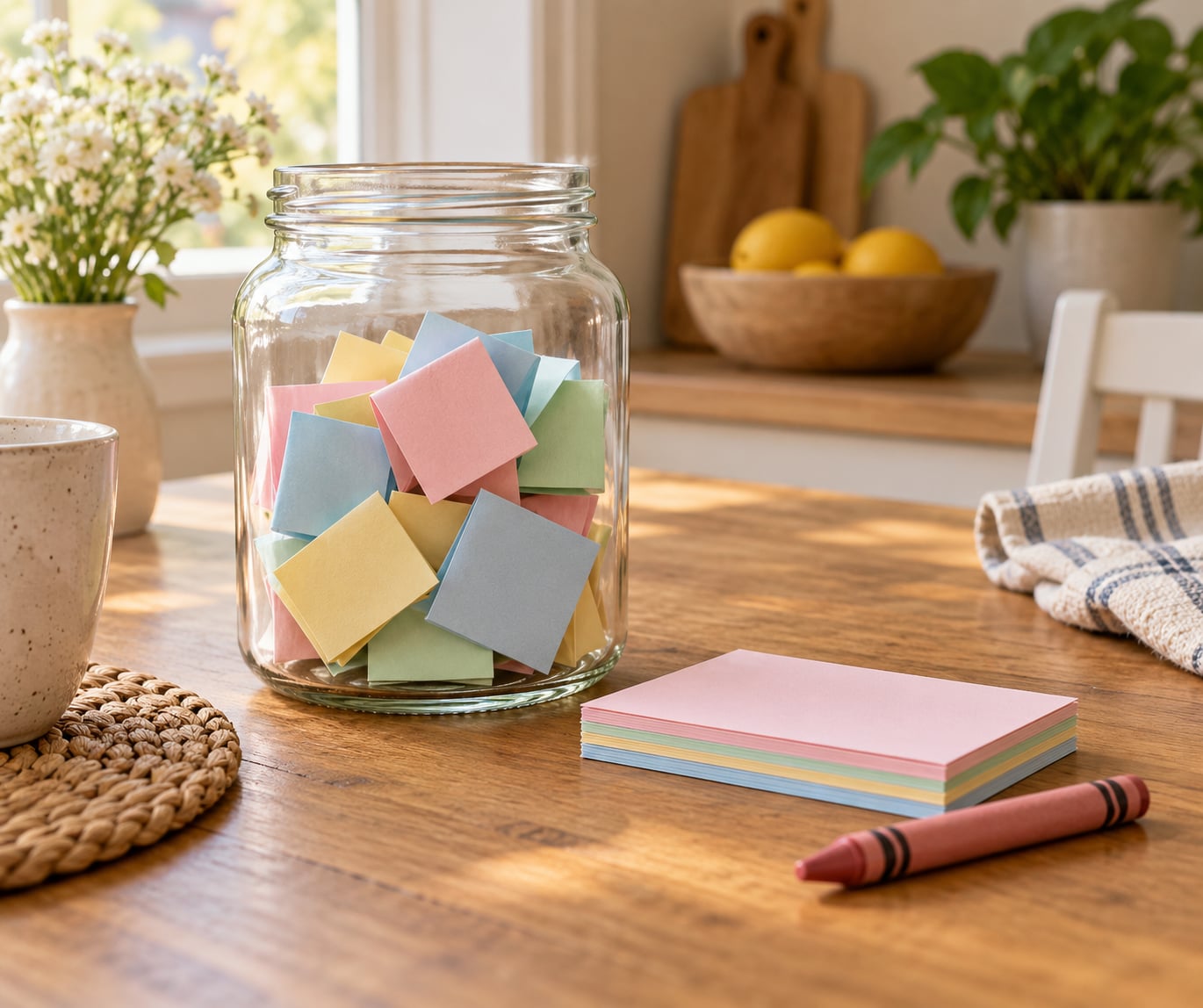
- A gratitude board or jar. A jar with folded paper notes works well because it is visible without being a test.
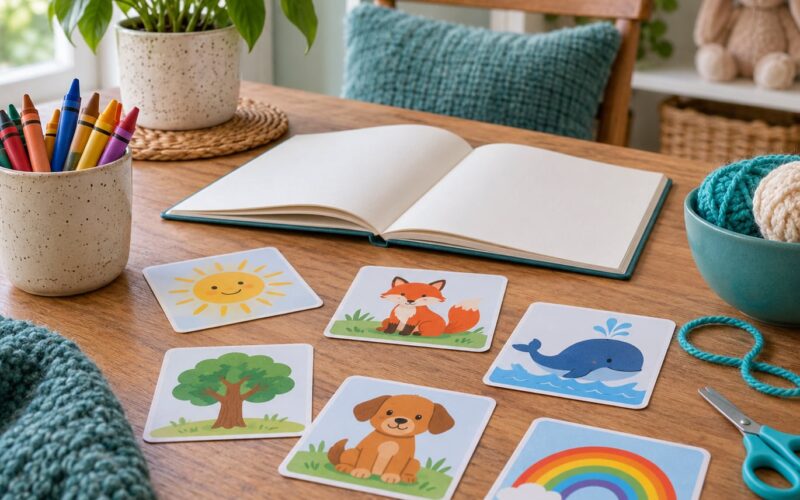
- Picture cards. Useful for younger children and for any child who finds writing or speaking difficult.
- A simple journal. For elementary ages and up, keep it short enough that nobody dreads it.
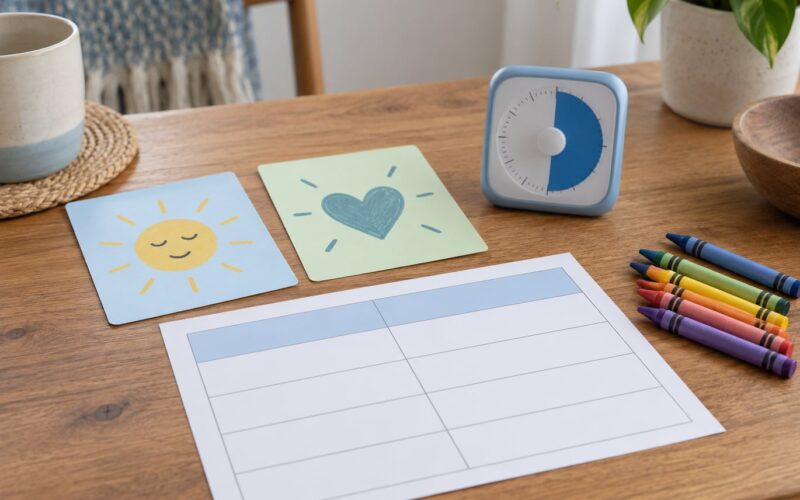
- A calm family routine. The same time, the same place, the same three questions.
If you only manage one thing, make it the routine. Materials do not create the habit.
Step-by-Step: How to Teach Kids Gratitude
1. Start With Simple, Specific Examples
Begin with one concrete thing your child genuinely enjoys. Not “your life is wonderful” but “you liked that mango smoothie.” Specific beats sweeping every time.
Good early examples:
- A favorite meal or a treat from the bakery
- The warm blanket on a cold morning
- A song your child asked to play again
- Someone holding a door or carrying a heavy bag
- Rain, because sometimes weather is the topic
Keep sentences short. A two-year-old cannot hold “we should be thankful for all our blessings” in working memory, so give them “you liked that blanket” and let it land.
2. Name Feelings and Actions
Connect gratitude to something your child can notice in their body. “That blanket feels warm and you relaxed into it” is teaching. “Say thank you” is a rule.
Try phrasing like “it feels good when someone helps you” or “I liked that you shared your blocks.” Then stop talking. Describing the moment is enough; you are not asking for a performance of happiness.
3. Practice Receiving Help
Children receive help constantly and rarely acknowledge it, because help is invisible to them by the time they notice. Point it out once, plainly.
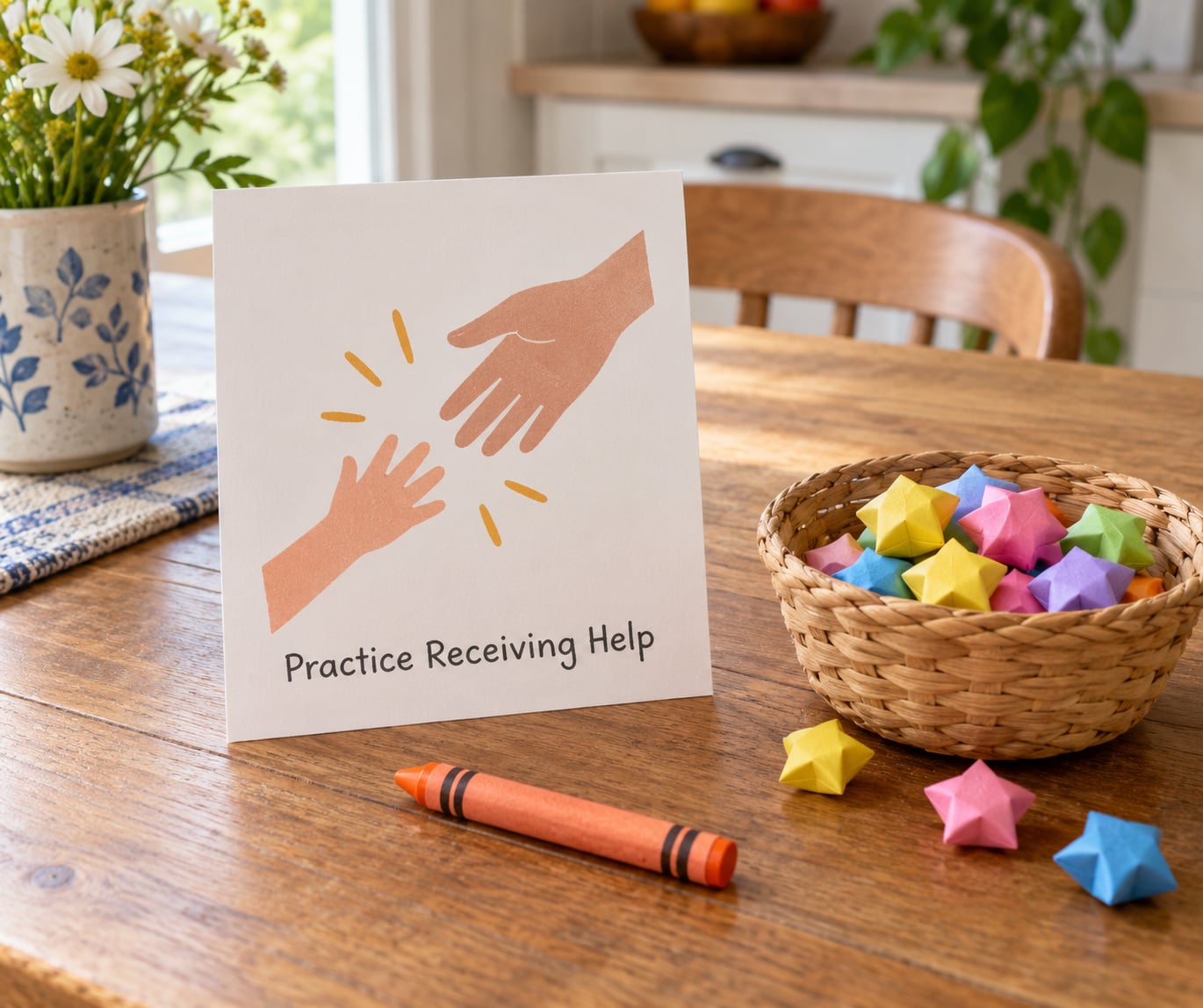
Model the phrasing yourself first: “thank you for getting the bowl down for me.” Then let your child respond in whatever way works. Pointing, signing, showing a picture card, or a two-word answer all count. Children who use an assistive device or who are still learning to speak are not doing gratitude wrong.
If your child needs to see the step before they do it, video works well here. This guide on how to use video modeling to teach life skills covers the setup.
4. Notice What Other People Do
Shift gratitude outward. When a clean-up helper empties the bin, when the bus driver waits, when a coach stays late, name the action: “the janitor sweeps the floor every night so the school feels clean.”
Do it without turning it into a quiz. Say the acknowledgment, then let your child move on. If your child is mid-meltdown or mid-stimulus, skip it entirely and catch the next one. A missed moment costs nothing.
5. Include the Child in Small Acts of Care
Gratitude grows fastest when the child is on the giving side. Offer real jobs, matched to ability: carrying a light object, drawing a card, watering a plant, choosing the family snack, feeding a pet.
Match the task to what your child can actually do. For children who benefit from step-by-step teaching, how to teach chores to an autistic child breaks real jobs into manageable pieces.
Donating outgrown clothes or toys together is the version parents report opens their own eyes most. You get to see how much your child actually has when the pile leaves the house.
6. Create a Repeatable Gratitude Routine
Pick one moment and keep it. Dinner works for most families. Three questions, five minutes, every night.
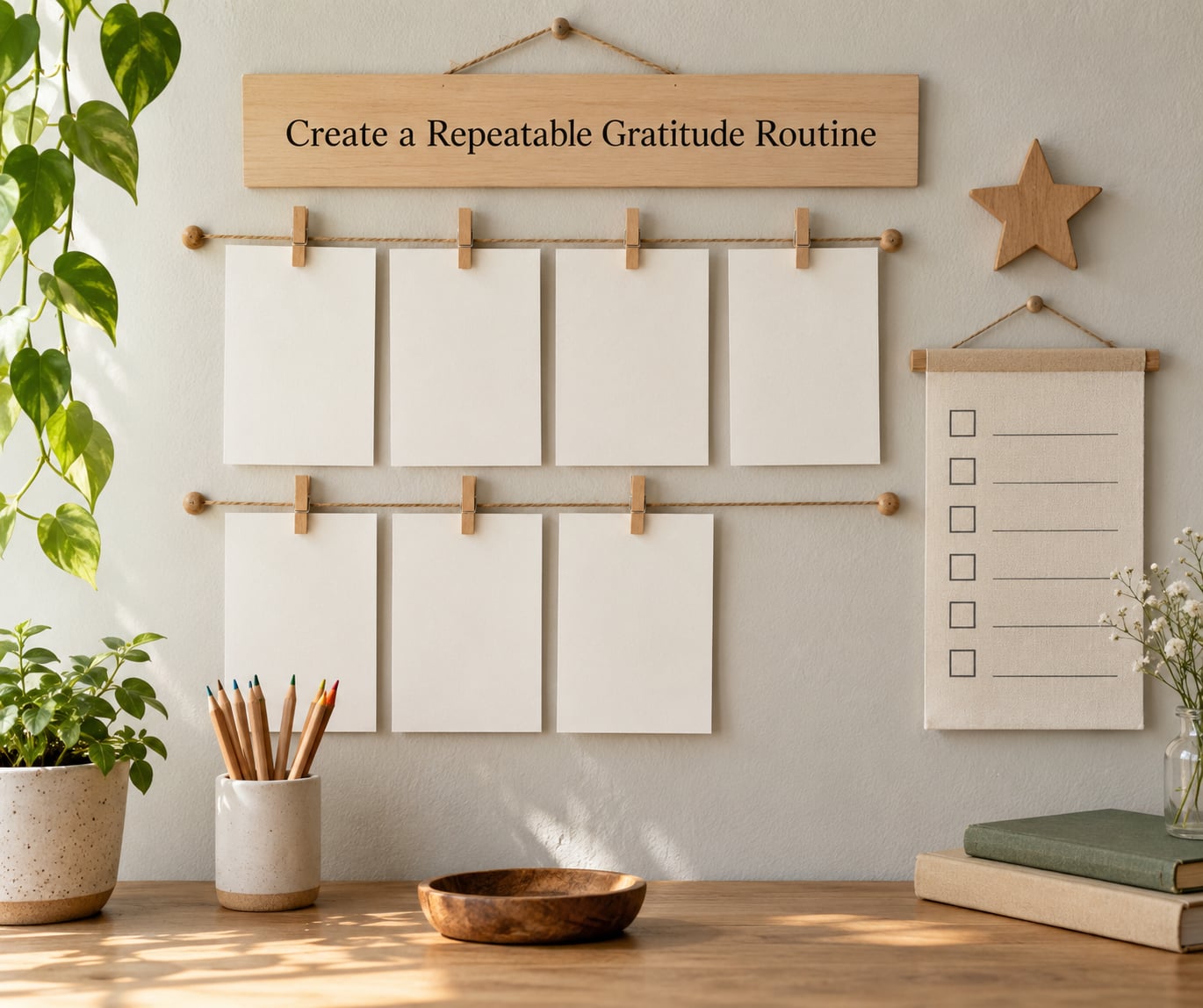
Keep the routine short enough that nobody dreads it. Two minutes is enough. If your child is tired or flooded, say the prompt once and let them pass. A skipped night does not break the habit; a nightly interrogation does.
Writing down one good thing works too. A gratitude jar on the counter that everyone adds to makes it a family thing rather than a homework assignment.
7. Let the Child Lead and Personalize the Practice
Eventually your child chooses what they are grateful for and how they show it. That is the goal, not a side effect.
Here is how the same practice shifts by age.
- Toddler (1 to 3). Naming one thing out loud while you say it for them works best. Skip journals, long lists, and any question they cannot answer yet.
- Preschool (3 to 5). Picture cards, choosing a family snack, or drawing one thing. Skip requiring eye contact while they say thank you.
- Elementary (6 to 11). A gratitude jar, thank-you cards for real gifts, or one written line. Skip forced writing when the child is dysregulated.
- Teen. Naming effort, time, or privilege instead of objects, and voice notes or texts. Skip anything that feels like a lesson or a lecture.
Respect nonverbal communication, sensory preferences, and any cultural or religious practice your family already has. Gratitude can look like words, actions, art, or quiet time together. All of those count.
Common Mistakes
Most families struggle with gratitude because of what happens around it, not because the practice is wrong. Here is what I would change.
- Demanding eye contact. Requiring a child to look at you while saying thank you makes gratitude feel like a confrontation. Accept the words without the eye contact.
- Correcting their wording. “That is not the right way to say it” stops the moment dead. Acknowledge what they said, then move on.
- Asking for a list of ten things. One specific thing beats ten vague ones every time.
- Expecting gratitude on demand. You cannot order the feeling. You can only build the conditions for it.
- Rewarding every answer. Stickers and treats for saying thank you teach performance, not appreciation.
- Comparing siblings. “Your sister is always grateful” is the fastest way to end the conversation and start a fight.
- Lecturing. A two-minute speech about sacrifice leaves children defending themselves instead of thinking about anyone else.
Two phrases to avoid entirely: “you should be grateful because we sacrificed for you,” and any version of that. Parents raised on guilt-based gratitude often describe it as the most damaging pattern of their childhood, and there is no reason to hand it down.
Gratitude talk also lands badly in a family that is struggling financially, going through a divorce, or caring for a sick parent. Acknowledge the hard thing first. “This month is tight” followed by “the library is free and the park is right there” is honest and it teaches.
Keep the whole practice brief and positive. Five minutes a day, most days, beats an hour once a month.
One more note: sibling conflict over gratitude habits is common enough that it deserves its own approach. how to teach turn taking with games covers the sharing side, which is where most of the arguing happens.
Frequently Asked Questions
What are the four A’s of gratitude?
Researchers who study gratitude describe four qualities: attention to what is good, appreciation of its value, appreciation of how it benefits you, and how it makes you feel afterward. The framework matters because children usually jump straight to the fourth one, saying thanks without noticing anything first. Slowing them down at the first step is most of the work.
How do I teach an ungrateful child to be grateful?
Start with modeling instead of reminding. Say thank you out loud for small things yourself, then name one concrete good thing at dinner. Let your child refuse sometimes without a lecture. Gratitude that gets demanded tends to come back as eye rolls; gratitude that gets modeled tends to get copied, slowly and without much fuss.
My child is never happy with anything. What could be causing this?
Most children say something is not good enough because their wish list is bigger than their lived experience, and because every want gets met quickly. Practice, exposure to what others live with, and letting them wait for some things all help. So does teaching gratitude for non-material things: effort, health, safety, free time, and people who show up.
Should I make my kids say thank you to adults?
Yes, but expect it to sound flat, scripted, or silent, and accept that. Requiring eye contact or the exact words turns a social nicety into a power struggle. What you are actually teaching is that noticing another person’s effort matters. Say the acknowledgment yourself, and let your child copy it when they are ready rather than on command.
Is a gratitude journal or gratitude jar worth doing?
Worth it if it stays short and stays the child’s idea. A jar on the counter where everyone adds a folded note works better than a nightly worksheet, because nobody is graded. Children who dislike writing can draw, dictate their note to you, or pick a picture. If it starts to feel like homework, drop it for a few weeks.
How do I teach gratitude to a neurodivergent or sensory-sensitive child?
Go visual and predictable instead of verbal and spontaneous. Picture cards, a written checklist, a gratitude jar, or a short video of the routine all work better than asking in the moment, when the child may already be overwhelmed. Keep the ritual to two minutes, allow a pass, and never require eye contact or a spoken answer to count it.
Conclusion: Begin With One Noticeable Good Thing
Teaching kids gratitude comes down to a few things. You notice the good thing out loud. You name the people who help. You let your child give something back. You repeat it often enough that it stops feeling like a lesson.
Start tonight. Ask your child to name, point to, draw, or otherwise show you one thing they appreciate. Then say the acknowledgment out loud for them: “that is good, I am glad you like that.” Five minutes is the whole assignment.