To prepare an autistic child for kindergarten, you build familiarity, not just skills. Start three to four months out: request the school’s daily schedule, tour the building, practice the morning and lunch routines at home, use social stories for the parts that feel unpredictable, and put sensory supports in place before the first day rather than after a hard week.
Most autistic children need weeks, not days, to settle into a new setting. Parents often plan a picture-perfect first day and then spend October wondering what went wrong. This guide skips the perfection. It covers the seven steps that consistently make a transition calmer, based on what caregivers and teachers say actually helps.
The single biggest predictor of a smooth start is how concrete the school day is. When a child knows what the hallway smells like, where the bathroom is, and what happens right before lunch, the nervous system has less to solve on its own.
Table of Contents
- What You Need Before You Start
- How to Prepare an Autistic Child for Kindergarten Step by Step
- 1. Start by Learning Exactly What Kindergarten Will Look Like
- 2. Build a Morning Routine That Runs the Same Way Every Day
- 3. Practice the Communication Your Child Will Need at School
- 4. Teach the School Day as a Visual Sequence
- 5. Plan for Sensory Changes Instead of Hoping They Pass
- 6. Practice the Independence a Classroom Actually Needs
- 7. Write a Coping and Transition Plan Everyone Shares
- Common Mistakes That Make the Transition Harder
- Frequently Asked Questions
- When should my autistic child start kindergarten?
- How long does it take an autistic child to adjust to kindergarten?
- Is my child ready if he can read but struggles in a group?
- What is a social story and how do I write one?
- What should I pack in my child’s sensory toolkit?
- What do I do when my child melts down right after school pickup?
- How to Prepare an Autistic Child for Kindergarten: Where to Begin
What You Need Before You Start
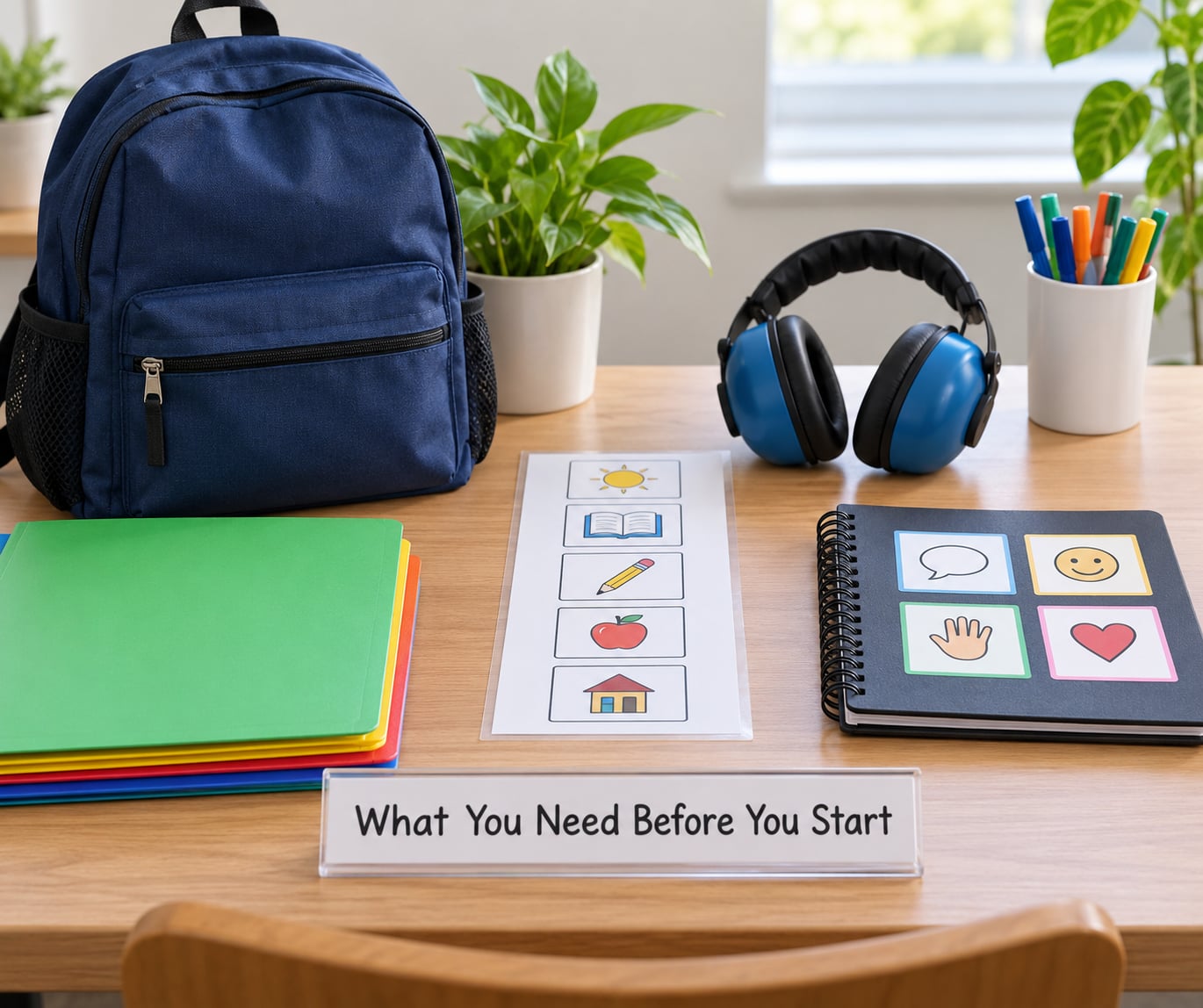
You do not need a lot of gear. You need information first, and materials second.
- Enrollment and school paperwork. Registration forms, proof of address, immunization records, and any prior evaluation reports you have.
- Key contacts. The teacher, the front office, the special education contact or case manager, the school nurse, and the bus driver if transport is involved.
- The daily schedule. Ask for arrival, dismissal, circle time, lunch, recess, specials, and the exact bell or timing system.
- Sensory tools. Noise-canceling headphones, a fidget, a weighted lap pad, a break card, and comfort items the school agrees to allow.
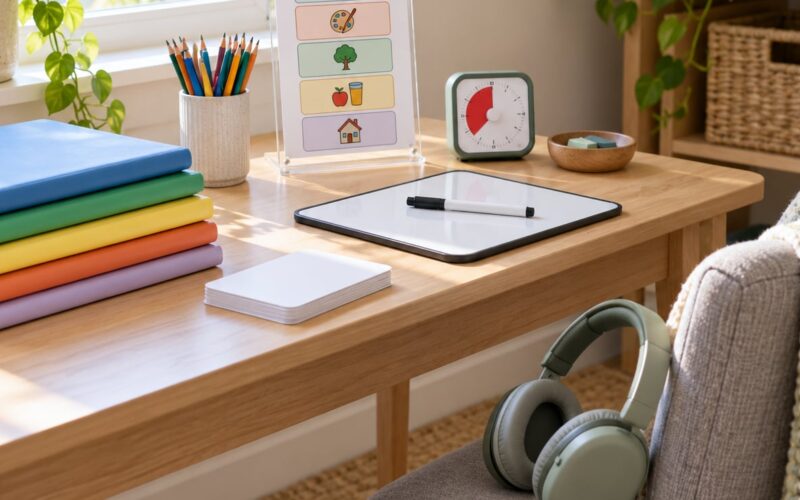
- Visual supports. A visual schedule, a first/then board, a social story, and a written morning checklist.
- Current information about your child. Strengths, communication method, sensory triggers, what a shutdown looks like, what helps, and what your child already does independently.
Write that last item down before you meet anyone at the school. Parents are often the best source of detailed information about their own child, and that information is what a teacher actually needs on day one.
Two things worth building early: a simple consistent bedtime routine so morning starts rested, and a plan for after-school decompression so the end of the school day does not undo everything the morning built up.
How to Prepare an Autistic Child for Kindergarten Step by Step
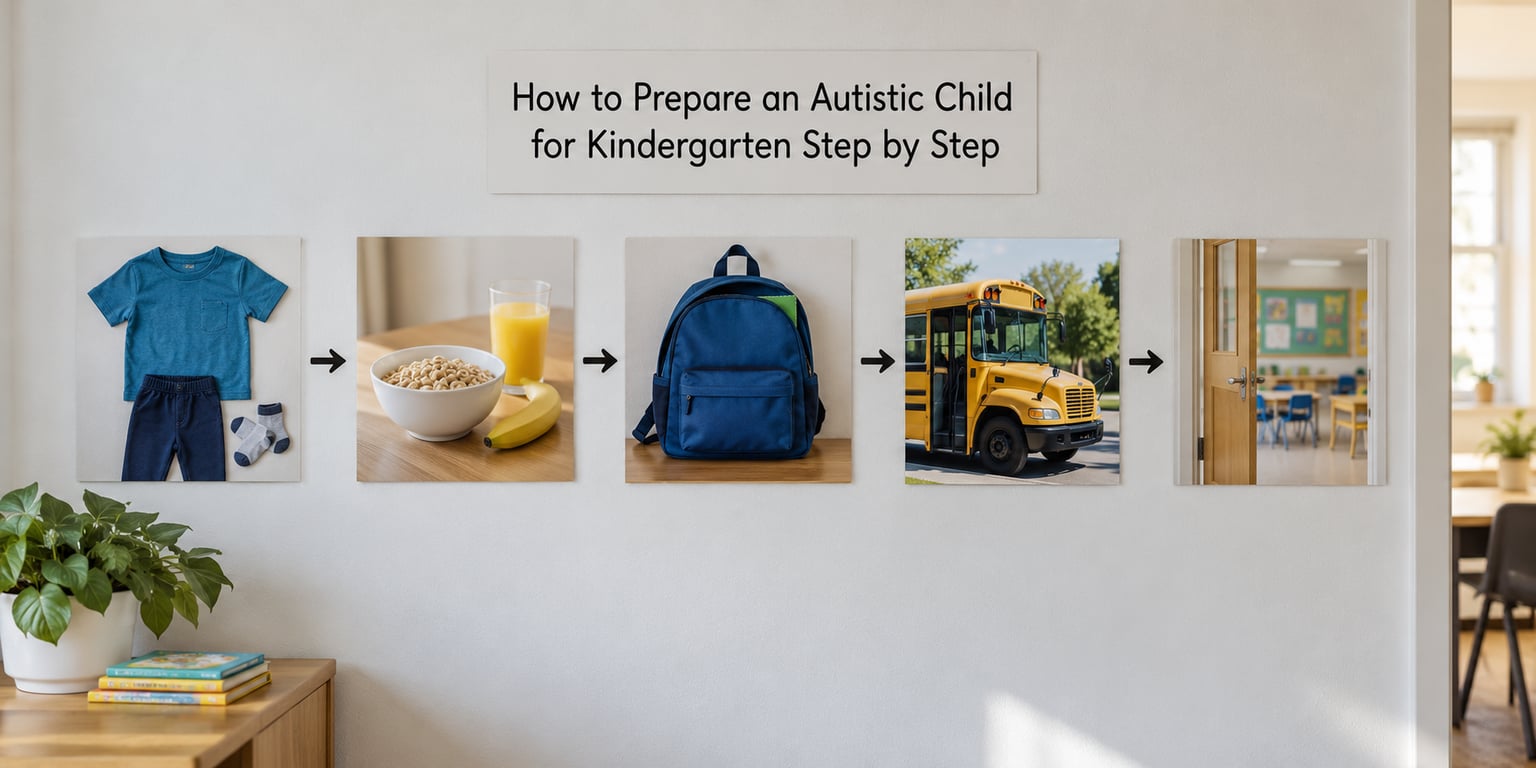
Seven steps, in the order that works best. The sequence matters because information comes first, routines come second, and coping plans come last, once you know what the school actually does.
1. Start by Learning Exactly What Kindergarten Will Look Like
Ask the school for concrete details instead of general reassurance. You want to know when the first bell rings, what happens in the first ten minutes, where the child’s cubby is, how long lunch is, whether there is a lunch monitor, where the nurse’s office sits, and how dismissal works.
Also ask what supports already exist: a calm corner, a designated break location, permission to wear headphones, a seat away from the door, visual schedules posted in the room, and a signal the child can use to ask for a break. If the school does not have those things, you can help build them, but you need to know what is missing.
Tour the building if you can. Visit the classroom, stand in the hallway, look at the bathrooms, and spend ten minutes on the playground. Parents who took an unofficial summer tour report that familiarity with the physical space does more for the first morning than almost anything else you can do at home.
Skipping the crowded open house night is also reasonable if your child melts down in noise and crowds. Ask for a one-to-one meeting with the teacher instead. You get the same information without the sensory load of fifty parents in a small room.
2. Build a Morning Routine That Runs the Same Way Every Day
Kindergarten mornings are a chain of small tasks: wake up, get dressed, eat breakfast, brush teeth, use the bathroom, pack the bag, get in the car. Practice that exact chain at home in the same order, at the same time, starting three to four weeks before school.
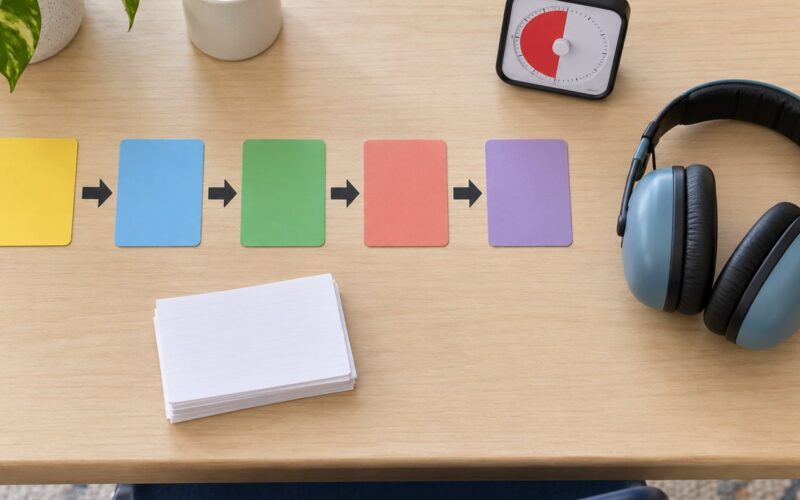
Put the steps on a visual checklist your child can follow. Photos work well for many kids; words work better for others. Try a first/then board so the child can see what comes after the hard part.
Add a visual timer for the parts that typically derail mornings. Many autistic children handle a countdown better than a vague idea of hurry-up.
Then do the school run. Drive or walk the actual route, including the actual drop-off point. If your child rides a bus, find out when the bus arrives, whether it is loud, and whether there is an aide on board. A practice commute removes one whole variable from the first morning.
Keep the real school-day version of the routine. Going back to pajamas and cartoons the night before first day feels kind in the moment and confusing later.
3. Practice the Communication Your Child Will Need at School
Work on the handful of things a child must be able to signal: I need help, I need a break, this is too loud, I am not finished, and I need the bathroom.
Rehearse with whatever system your child already uses. If it is speech, role-play short phrases. If it is AAC, gestures, or picture cards, practice pressing the right button in the right situation. Practicing a communication method your child has never used will not transfer to school.
Keep the practice low pressure and short. Five minutes of pretending you are the teacher, then stopping while it is still going well, works better than a long session that ends in a shutdown.
One habit pays off all year: have your child say or signal when they need a break, and then actually honor it. A break that gets refused teaches a child that asking does not work.
4. Teach the School Day as a Visual Sequence
Break the day into blocks: arrival, circle time, independent work, lunch, recess, specials, dismissal. Introduce one or two blocks at a time rather than the whole day at once.
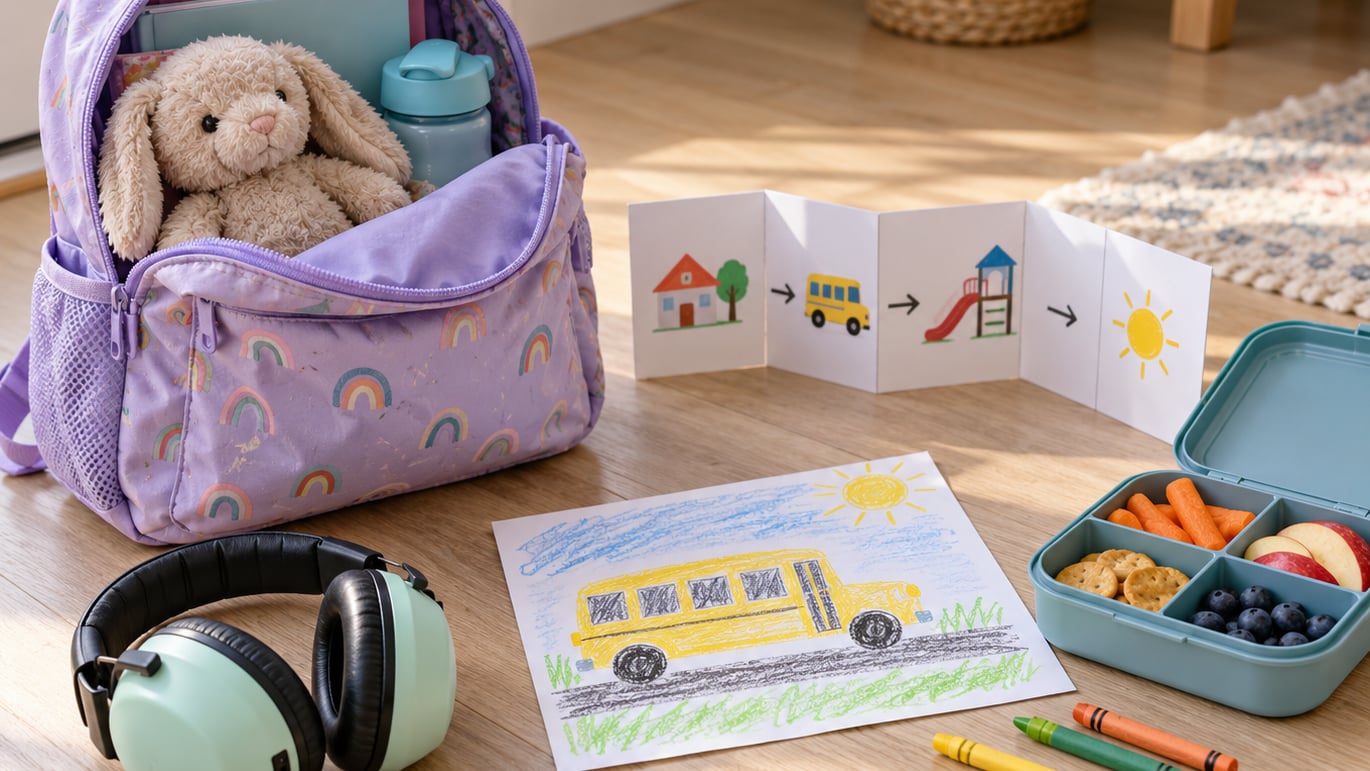
A social story works well here. Write it in simple present tense, from your child’s point of view, describing what will happen and what will stay the same. A short first-day story might read: When I walk into school, my teacher will say good morning. I will sit at a table with other children. We will sing a song. Then I will go to lunch.
Add a why sentence where it helps, such as I might feel loud, and that is okay. I can wear my headphones. Predictability, not persuasion, is what reduces anxiety.
Write stories for the parts nobody rehearses: the fire drill, the lockdown drill, the nurse’s office, the cafeteria, the bathroom. Parents on autism parenting forums say drill stories were more useful than anything else, because those moments arrive without warning.
5. Plan for Sensory Changes Instead of Hoping They Pass
Kindergarten is loud in ways home is not: twenty-two children, a gym, a fire alarm, a cafeteria, a bathroom without a stall door, and clothing rules that were never negotiated.
Identify the likely demands ahead of time. Noise, movement, unexpected touch, crowded spaces, and clothing texture are the usual ones. Then make a written plan with the teacher that names the specific trigger, the specific response, and who is responsible.
Do not describe an overwhelming situation as a test your child must pass. Graded exposure means starting small, repeating until it is comfortable, and then stepping up. Practicing a fire drill with the noise turned down first is fine; drilling it until the child is distressed is not.
Bring comfort items if the school permits them, and know the rule in advance. Parents report a lot of wasted energy on first-day mornings spent discovering that a stuffed animal is not allowed in the classroom.
Ask how the school handles sensory overload in the moment. A clear answer, including where the child goes and who stays with them, is worth more than a general promise that the school supports autism.
6. Practice the Independence a Classroom Actually Needs
Kindergarten readiness for an autistic child is less about letters and more about a short list of functional skills: waiting, taking turns, following a group activity, raising a hand, asking permission, managing belongings, using the bathroom independently, and opening and eating lunch items.
Practice at the actual difficulty level of your child, not the age level. A non-speaking child who uses AAC may need a full year of adult support for hand raising; a verbal child who is academically advanced may still need years of work on group participation.
Lunch is worth rehearsing specifically. Carry a tray, open a container, unzip a lunch bag, use utensils, eat in a setting with other children around. Cafeteria noise can be simulated at home by eating lunch with the radio on.
Keep practice short and play-based where possible. Twenty minutes of unpacking and repacking a bag every few days does more than an hour once.
Keep an eye on fine motor and self-help skills: handwriting, zipping, buttoning, and handwriting readiness. If your child has motor delays, an occupational therapist can tell you which specific skills matter at kindergarten level.
7. Write a Coping and Transition Plan Everyone Shares
One page, shared with the child, the teacher, the front office, the bus driver if relevant, and every caregiver. Include warning signs of overwhelm, calming options, break locations, safe adult contacts, transportation changes, and what happens after a difficult day.
Be specific about early signals. Hand flapping, covering the ears, going quiet, or asking to go home can all show up minutes before a meltdown, and naming them gives adults a head start.
Include a note about what not to do. Punishment for stimming, taking away a communication method, or forcing eye contact tends to escalate things and takes weeks of trust with you to undo.
Rehearse how your child can signal that support is needed. If your child cannot yet say the words, agree on a signal the classroom will recognize: a card, a device, a hand signal, or a word like break.
Also plan the drop-off itself. Short, consistent, and visible beat long and emotional. Most parents find that a quick goodbye with a clear next-touchpoint, such as a text message after the school starts, reduces separation anxiety more than staying longer.
Common Mistakes That Make the Transition Harder
Overloading the child with information. Twenty social stories, five tools, and four new routines in one week creates more novelty, and novelty is stress. Fix: introduce one new support every week or two, and let it settle before adding the next.
Practicing only at home. Rehearsing breakfast at the kitchen table teaches breakfast, not the school building. Fix: practice in the actual setting whenever you can, even briefly.
Promising a perfect first day. It sets everyone up to read normal nerves as a failure. Fix: tell your child what will happen, including that some things might feel hard, and tell yourself the same.
Focusing on behavior compliance. A quiet child who follows rules but is overwhelmed is not doing well. Fix: track sensory load, breaks used, and recovery time, not just finished work and quiet behavior.
Changing every support at once. If the morning routine, the snack, the clothing, and the commute all shift in August, there is nothing familiar left. Fix: keep a few anchors constant even if you change everything else.
Not confirming the school understands. Assume the plan was read. Fix: ask each adult involved to repeat back what they will do when your child is overwhelmed, and document it.
Ignoring the gap between home and school. Teachers may see something entirely different from what you see at home. Fix: ask for a daily note at first, even a checklist with three items, then narrow it as things settle.
Missing the transition home. A child can hold it together all day and fall apart in the car. Fix: plan quiet time, a snack, and no demands for the first hour. If you want more on that, after-school decompression strategies cover the details.
One more gap: peers. Academic ability rarely predicts social readiness, and the classroom relationship is what parents tend to worry about most once the logistics settle. How to help an autistic child make friends at school covers the early-connection side.
Frequently Asked Questions
When should my autistic child start kindergarten?
Most autistic children start on time unless there is a clear, documented reason to wait. Redshirting or Transitional Kindergarten is worth discussing when the child’s self-care is far below the classroom expectation, when medical needs will disrupt attendance heavily, or when the team supports the delay in writing. Talk with your child’s teacher, occupational therapist, and school psychologist, and weigh the social cost of being the oldest child in the class.
How long does it take an autistic child to adjust to kindergarten?
Most autistic children need several weeks, often four to eight, to feel settled in a new classroom. Some settle quickly and others take the whole first marking period. Adjustment looks like fewer drop-off crises, using the bathroom independently, recovering after hard days, and starting to connect with peers. If nothing has shifted after six to eight weeks, ask the team to review supports rather than assuming your child is behind.
Is my child ready if he can read but struggles in a group?
Yes, often. Kindergarten readiness is mostly about following a routine, participating in group activities, managing belongings, and asking for help. A child reading at a sixth-grade level can still be three years behind socially, which is common and not unusual. Focus your practice on circle time participation, waiting, transitions, and independent self-help skills rather than on more academics.
What is a social story and how do I write one?
A social story is a short written description, usually in simple present tense from your child’s point of view, that explains what will happen in a specific situation. Write one event at a time, describe what is predictable, and add a reason when it helps. Keep it short enough to read in a minute, and pair it with a real photo or drawing if your child is a visual thinker.
What should I pack in my child’s sensory toolkit?
Keep it small and consistent. Most families use noise-canceling headphones, one or two fidgets, a weighted lap pad, a break card, and one comfort item. Ask the school which items are permitted, label everything with your child’s name, and send a small labeled set to keep in the classroom rather than packing the whole kit. Bring the full kit in the backpack for field trips.
What do I do when my child melts down right after school pickup?
Do not start with questions or corrections. Reduce input first: dim lights, skip talking, offer water or a snack, and give the child a predictable next step such as a bath or a quiet car ride. Later the same day, when everyone is calm, write down what happened and share it with the teacher. Repeated after-school meltdowns are usually a signal that the school day needs adjusting, not that your child needs more discipline.
How to Prepare an Autistic Child for Kindergarten: Where to Begin
Call the school this week. Ask for the daily schedule, the drop-off and pickup procedures, and the list of sensory supports already in place, then request a short meeting with the teacher.
From there, pick one routine and start rehearsing it in the same order every morning. One routine done properly beats five routines attempted once.
Hold on to this: readiness is individual. A child who is academically advanced can still be socially young for the room, and a child who talks late can still understand far more than adults assume. Progress over the first weeks matters more than a smooth-looking first morning.
And give yourself room too. You are learning a new system at the same time as your child, and the adults who manage the transition well are usually the ones who ask questions early and ask for help without embarrassment.