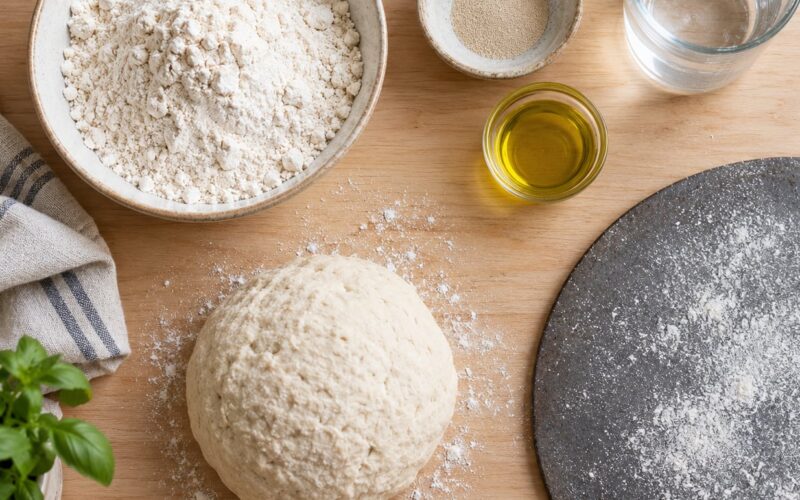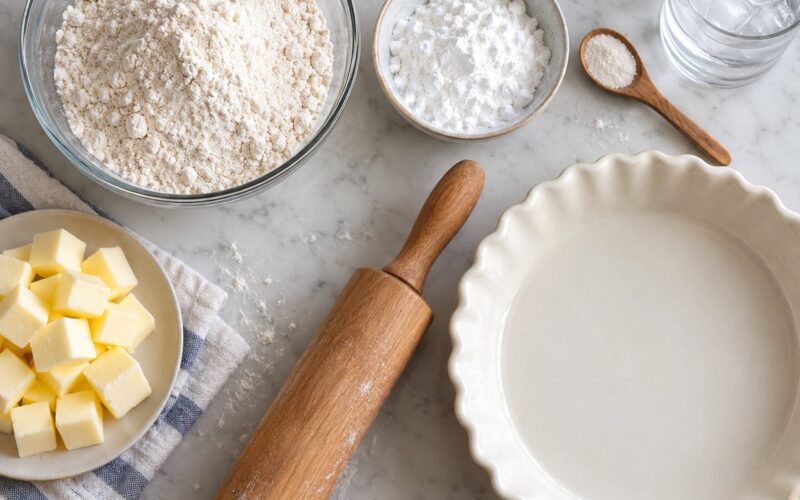
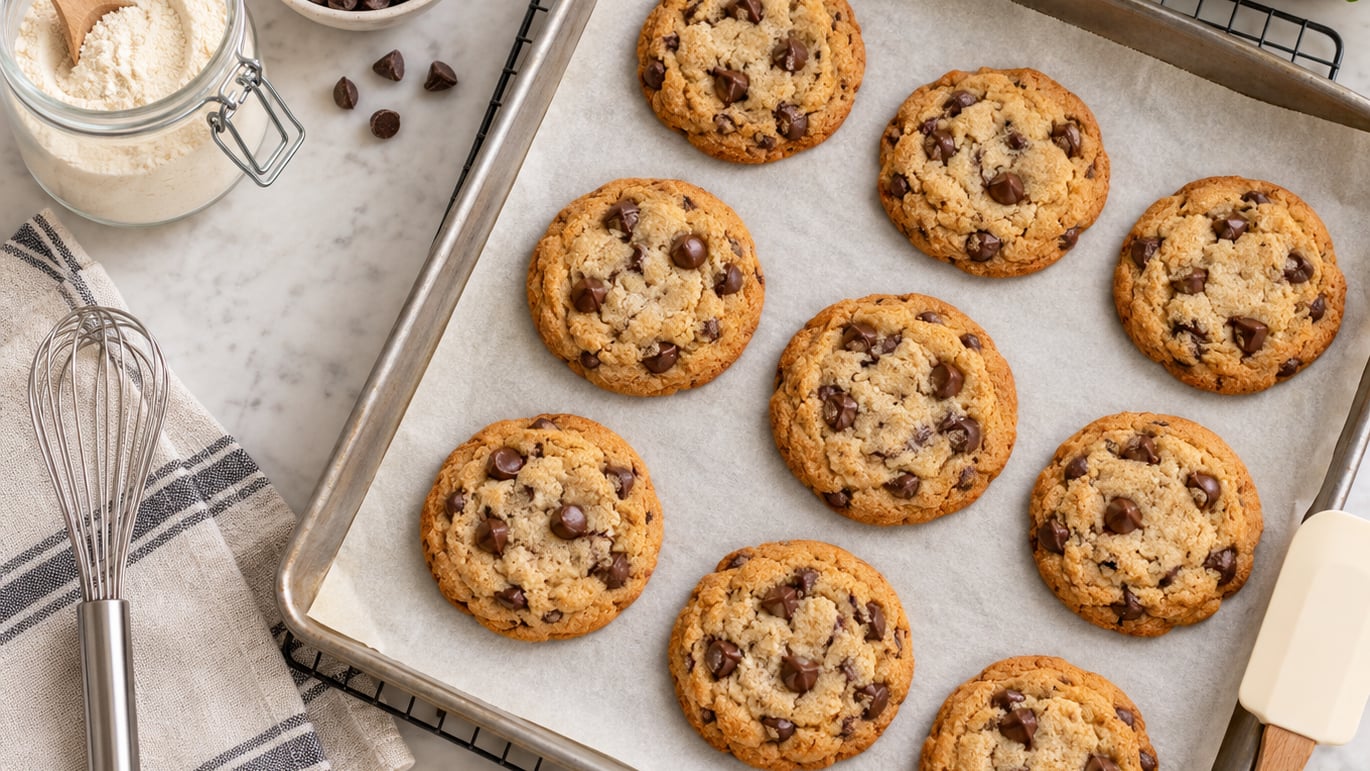
How to make egg free cookies is mostly a binder question. Swap the egg for something that supplies moisture and holds the dough together — a commercial egg replacer is the most predictable all-purpose pick, while aquafaba, ground flaxseed, and unsweetened applesauce each work with small adjustments. The chocolate chip formula below mixes in one bowl, chills 30 minutes, and bakes at 350°F in about 12 minutes.
I baked this version dozens of times while managing an egg allergy in my house, and the same two details fix almost every disappointing batch: weigh the flour, and give the dough a rest before it hits the pan. Skip either one and you get cookies that spread thin or crumble.
Table of Contents
- What You Need
- Equipment
- Ingredients
- How to Make Egg Free Cookies
- How to Make Egg Free Cookies Without a Mixer
- Step-by-Step
- Step 1: Choose and Measure Your Egg Replacer
- Step 2: Mix the Dry Ingredients
- Step 3: Combine the Wet Ingredients
- Step 4: Make the Dough and Add Chocolate
- Step 5: Chill the Dough for Better Cookies
- Step 6: Bake Until the Edges Are Set
- How Do You Know the Egg Free Cookies Are Done?
- Step 7: Cool and Store the Cookies
- Common Mistakes
- How to Control Cookie Texture Without Eggs
- Choosing the Best Egg Replacer for Your Cookie Style
- How to Adapt the Recipe for Other Add-Ins
- Frequently Asked Questions
- What is the best egg substitute for making cookies?
- Can I use applesauce instead of eggs in chocolate chip cookies?
- How much aquafaba should I replace one egg with?
- Will egg-free cookies freeze well?
- Are commercial egg replacers safe for people with an egg allergy?
- Conclusion
What You Need
An egg-free chocolate chip cookie needs five groups of ingredients: flour for structure, fat and sugar for texture, a binder and liquid for moisture, leavening for lift, and chocolate for the part everyone actually wants. Most of it comes from the pantry already.
Equipment
- Kitchen scale that reads grams (flour by weight is the single biggest fix for dry cookies)
- Two bowls, one whisk, and a rubber spatula
- Rimmed baking sheet lined with parchment paper
- Cookie scoop or two tablespoons for portioning
- Wire cooling rack, plus an airtight container for storage
Ingredients
- Dry: 1 cup (120 g) all-purpose flour, 1/2 teaspoon baking powder, 1/4 teaspoon fine salt
- Fat and sugar: 6 tablespoons (85 g) unsalted butter or plant butter sticks, 1/2 cup (100 g) packed light brown sugar, 2 tablespoons granulated sugar
- Binder and liquid: 1 egg replacer used per package directions, or 2 tablespoons aquafaba, plus 1 tablespoon unsweetened milk or water
- Flavor and finish: 1 tablespoon pure vanilla extract, 3/4 cup (105 g) chocolate chips or chopped chocolate
Every item on that list needs a label check the first time you buy it. Some baking powders list egg albumen as a processing aid, chocolate chips carry may contain warnings for milk and soy, and vanilla or almond extract is occasionally blended with egg-derived carrier oil.
Plant butter matters here in one specific way: buy the stick, not the tub. Tubs hold more water, and extra water in an egg-free dough is exactly the thing that makes cookies spread. For more on building a baking shelf that works for allergy households, read how to set up an allergen free pantry.
How to Make Egg Free Cookies
The dependable formula pairs a real binder with carefully measured flour and fat, then relies on baking powder for lift instead of egg proteins. Whisk the dry ingredients first, melt and cool the butter, stir the wet ingredients together, combine them, fold in the chocolate, and chill before baking.
None of that is complicated, but every ingredient has to be egg-free, including the ones people forget. Commercial baking powder, vanilla extract, chocolate chips, sprinkles, marshmallows, and canned dairy are the usual offenders. If a label says may contain eggs or was made in a facility with eggs, treat it as off-limits for a severe allergy.
How to Make Egg Free Cookies Without a Mixer
Melt the butter instead of creaming it and you can do the whole recipe with a whisk and a spatula. Melted butter also gives you more reliable creaming-free results, because there is nothing to aerate and nothing to under-mix.
The tradeoff is flavor. Creamed butter and sugar whip air into the dough, which bakes into a slightly chewier, more complex cookie. Melted butter cookies taste more buttery and caramel-like, and they spread a little more unless you chill them.
Step-by-Step
Here is the full recipe in one place before the individual steps. It makes 12 medium cookies, takes about 15 minutes to prepare, and needs a 30-minute chill before baking.
- 1 cup (120 g) all-purpose flour
- 1/2 teaspoon baking powder
- 1/4 teaspoon fine salt
- 6 tablespoons (85 g) unsalted butter or plant butter sticks, melted and cooled about 10 minutes
- 1/2 cup (100 g) packed light brown sugar
- 2 tablespoons granulated sugar
- 1 egg replacer prepared according to package directions, or 2 tablespoons aquafaba
- 1 tablespoon unsweetened milk or water
- 1 tablespoon pure vanilla extract
- 3/4 cup (105 g) chocolate chips or chopped chocolate
Bake at 350°F (175°C) for 10 to 12 minutes on a parchment-lined rimmed sheet, spacing the scoops 2 inches apart.
Step 1: Choose and Measure Your Egg Replacer
Measure the replacer before anything else, because the four common options behave very differently in dough. Each supplies binding, and each one also changes moisture and flavor in ways you can taste.
- Commercial egg replacer: starch-based, neutral, and the most predictable of the four. Use the package ratio, which is usually 1 tablespoon of powder to about a quarter cup of water. It binds well and needs no other adjustment.
- Aquafaba: the liquid from a can of chickpeas. Two tablespoons stands in for one egg. It whips like egg white, so beat it briefly before folding it in for extra lift.
- Ground flaxseed: 1 tablespoon of ground flaxseed plus 3 tablespoons of water, rested 5 to 10 minutes until gel-like. It binds firmly but adds a nutty note and faint speckling.
- Unsweetened applesauce: 4 tablespoons per egg. It works, but it is a moisture swap more than a binder, and using it alone tends to give you flatter, cakier cookies.
Do not treat an applesauce-only swap as an equal replacement. If you use it, cut the milk in the recipe to a teaspoon and chill the dough the full 30 minutes.
Step 2: Mix the Dry Ingredients
Whisk the flour, baking powder, and salt together in a medium bowl until no streaks of flour remain. Baking powder distributes unevenly by nature, and pockets of it are exactly why some egg-free cookies come out lumpy.
Weigh the flour if you have a scale, and if you do not, spoon it into the measuring cup and level it with a knife instead of scooping. A packed cup of flour can carry 20 or more extra grams, which reads as dryness in the finished cookie.
Step 3: Combine the Wet Ingredients
In a second bowl, whisk the prepared egg replacer or aquafaba with the milk, vanilla, and cooled melted butter until smooth. Give the flour mixture a quick stir, then pour the wet bowl in.
Accuracy matters most with the liquids here. Oil, melted butter, and any liquid sweetener spread further than you expect, and one extra tablespoon is the difference between chewy and puddle.
Step 4: Make the Dough and Add Chocolate
Stir with a spatula until no dry flour is visible, about 30 to 45 seconds, then switch to folding in the chocolate chips. Resist the urge to beat the dough; overmixing after the flour goes in is what makes egg-free cookies tough rather than tender.
A properly combined dough looks soft and slightly slack, closer to thick cookie dough than biscuit dough. Mini chips fold in cleanly, while chopped chocolate or a chopped bar gives you uneven shards that melt into pools.
Step 5: Chill the Dough for Better Cookies
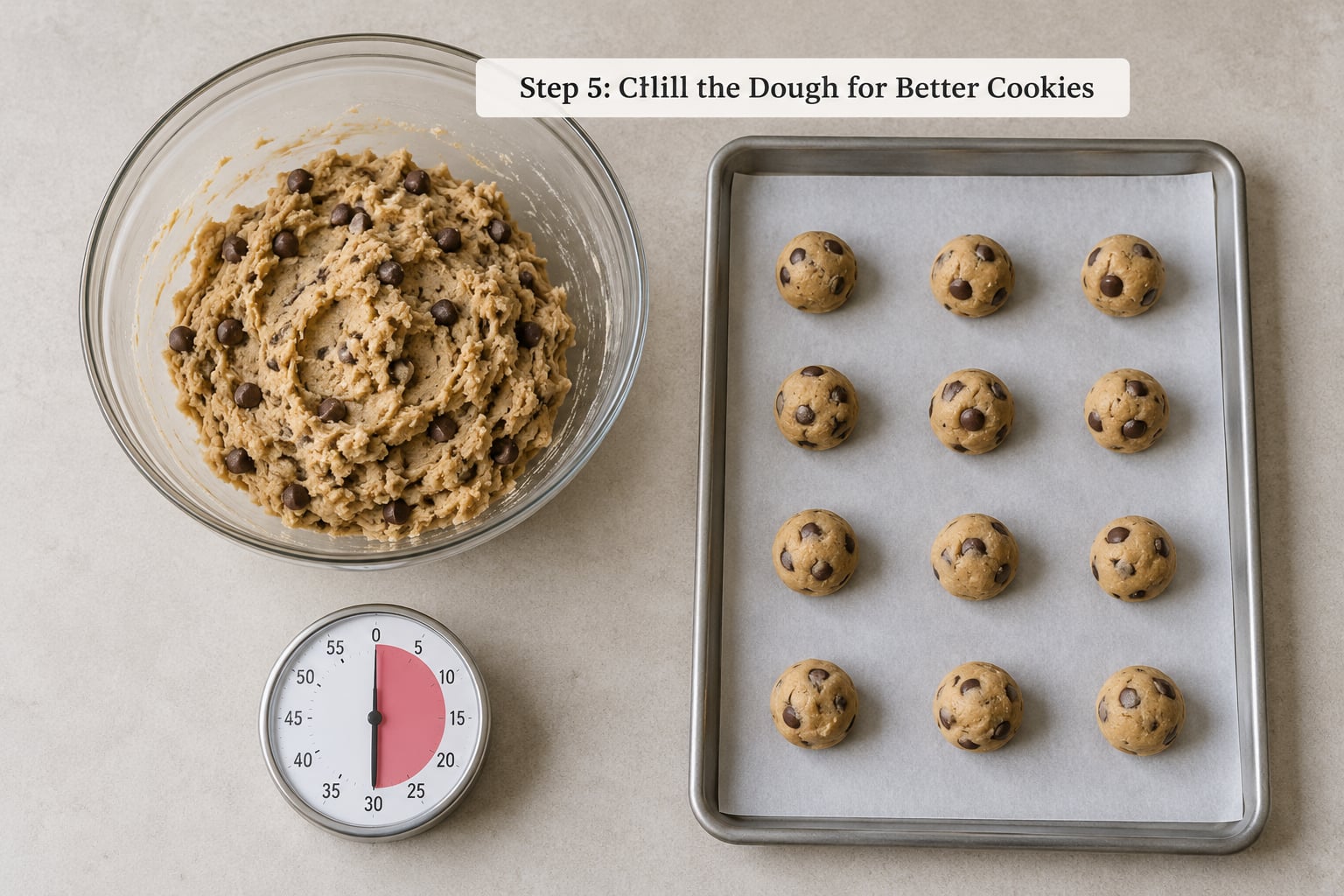
Chilling firms the butter so the cookies hold their shape, slows the spread in the oven, and lets the flour hydrate fully for a better texture. Thirty minutes in the refrigerator is the minimum worth doing.
For a house with an egg allergy, chilling also buys you planning time: dough balls keep in the refrigerator for up to 72 hours before baking. If you only have half an hour, a shorter counter rest still helps, though the dough needs to stay cold rather than room temperature.
Step 6: Bake Until the Edges Are Set
Heat the oven to 350°F (175°C) and line a rimmed sheet with parchment. Scoop 2 tablespoons of dough per cookie, spacing them 2 inches apart so they have room to spread without merging.
Bake 10 to 12 minutes. The centers should still look slightly soft and underdone when you pull them, which is normal — they finish setting on the pan.
For cut-out holiday cookies, roll the chilled dough to a quarter-inch thickness and chill it again for 20 minutes before cutting. That second chill is what keeps the shapes from slumping into ovals.
How Do You Know the Egg Free Cookies Are Done?
Three cues together mean done: the edges are set and no longer glossy, the rim is lightly browned, and the center still looks pale and slightly underdone. The center should spring back lightly when you press the pan edge, not feel firm.
Cookies keep setting as residual heat leaves them, so pulling them a minute early is safer than a minute late. Ten minutes gives a softer center, twelve a firmer one, and past that you are heading toward cracker territory.
Step 7: Cool and Store the Cookies
Let the cookies sit on the pan for 2 minutes, then move them to a wire rack so the bottoms finish setting. Storing them while warm traps steam and softens the texture unevenly.
- Counter: 2 to 3 days in an airtight container at room temperature, with parchment between layers.
- Refrigerator: up to 7 days sealed, which suits very humid kitchens where cookies go soft fast.
- Freezer: 2 to 3 months for baked cookies, or up to 3 months for portioned dough balls.
- Thawing: leave baked cookies on the counter 15 minutes; bake frozen dough balls straight from the freezer at 325°F for 11 to 13 minutes.
Frozen dough balls bake better than frozen cookies. The dough goes from freezer to oven, which is the opposite of what dry, hard reheated cookies come from.
Common Mistakes
Almost every failed egg-free cookie batch traces back to measurement, temperature, or patience. The table below maps the symptom to the cause and the fix, and the same three ideas explain most of them.
| Problem | Likely cause | Fix |
|---|---|---|
| Cookies spread thin and merge | Dough was warm, or too much liquid | Chill 30 minutes, measure liquid carefully, add 1 tablespoon flour |
| Cookies crumble when lifted | Flour over-measured, dough overworked | Weigh flour at 120 g, stir no more than 45 seconds |
| Cookies taste cakey and puffy | Too much leavening or not enough sugar | Halve the baking powder, use brown sugar, chill before baking |
| Edges burn before centers cook | Oven running hot, rack too close to the element | Drop 25°F, move the rack to the center, pull at 10 minutes |
| Cookies come out dry | Overbaked, or too much flour | Cut 2 minutes from bake time, weigh flour, use 1 tablespoon less fat |
| Cookies are gummy in the middle | Piled onto a crowded pan | Space 2 inches apart, bake one sheet at a time |
| Cookies taste flat with no lift | Old baking powder, dry replacer not hydrated | Replace leavening, wait the full 10 minutes on flax or chia |
How to Control Cookie Texture Without Eggs
Eggs contribute moisture and fat that you now supply yourself, so texture becomes a matter of ratios. Four adjustments cover nearly every preference.
- Chewy: add 1 tablespoon brown sugar, use melted butter, and drop the bake time by 1 minute.
- Crispy: swap to all granulated sugar, spread the dough thinner, and bake 2 minutes longer at the same temperature.
- Cakey and soft: add 2 tablespoons flour, use baking powder instead of baking soda, and pull the cookies 2 minutes early.
- Thick and bakery-style: chill the shaped dough balls for 2 hours instead of 30 minutes.
If you are switching an existing favorite recipe rather than starting from scratch, work through how to replace eggs in baking for the gluten-free and structural swaps that recipes rarely spell out.
Choosing the Best Egg Replacer for Your Cookie Style
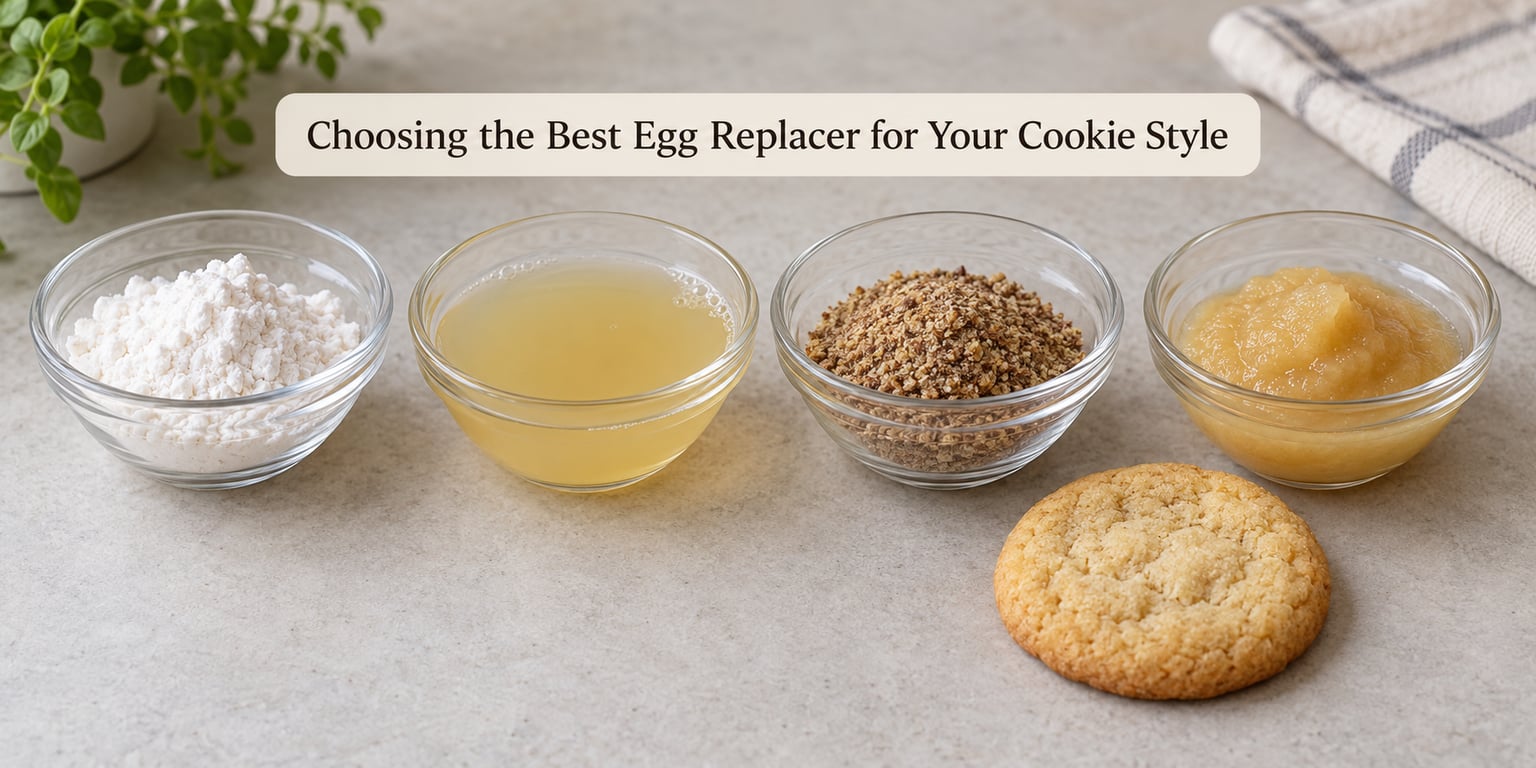
There is no single best egg substitute for every cookie, because the best one depends on the texture you want and the shape you need the dough to hold. Commercial replacers win on predictability, while aquafaba wins on lift and flax wins on binding.
| Substitute | Ratio per egg | Binding | Flavor and leavening | Best cookie texture | Adjustment needed |
|---|---|---|---|---|---|
| Commercial egg replacer | Per package, usually 1 tbsp powder to 1/4 cup water | Strong and predictable | Neutral, no lift of its own | Chewy and even, good for drop cookies | None; pair with baking powder |
| Aquafaba | 2 tablespoons | Good, improves when whipped | Neutral, whips for extra lift | Light and cake-like with crisp edges | Beat briefly, bake 1 minute less |
| Ground flaxseed | 1 tbsp flaxseed plus 3 tbsp water, rest 10 minutes | Very strong | Slightly nutty, no lift | Dense and sturdy, ideal for cut-outs | Reduce sugar by 1 tablespoon, add baking powder |
| Unsweetened applesauce | 4 tablespoons | Weak | Adds moisture and fruit sweetness | Cakey and soft, spreads more | Cut added liquid, chill longer |
| Milk or plain yogurt | 2 tablespoons milk or 2 tablespoons yogurt | Moderate | Tart, promotes browning | Chewy with crisp edges, no equipment needed | Add 1 teaspoon baking powder |
For drop-style chocolate chip cookies, milk or yogurt gives the most familiar result with the least fuss. For decorated cut-out cookies, ground flaxseed or a commercial replacer holds edges better, and you want baking powder rather than baking soda for structure.
Flax and chia both leave visible specks. That is purely cosmetic, but if appearance matters for a school-safe treat or a holiday plate, reach for the starch-based commercial replacer instead. The wider swap list, including gluten-free milk options, is covered in 10 dairy free substitutes for milk in baking.
How to Adapt the Recipe for Other Add-Ins
The base dough is a structure, not a finished cookie. Add-ins mostly change the moisture balance, so each variation comes with the adjustment that keeps the dough workable.
- Pumpkin oatmeal: use 1/2 cup pumpkin puree, reduce the milk to zero, add 1 cup rolled oats and 1 teaspoon cinnamon, and chill the full 30 minutes. The puree is wetter than applesauce.
- Snickerdoodle: swap the chocolate for 1 teaspoon cinnamon, keep the brown sugar, and roll the chilled balls in 2 tablespoons granulated sugar mixed with 1/2 teaspoon cinnamon before baking.
- S’mores: skip the chocolate chips, press mini marshmallows into the dough with the graham cracker crumbs, and add 1 tablespoon more sugar. Check marshmallow labels, since many contain egg white.
- Cookie dough bites: skip the oven entirely. Chill the dough for 2 hours, roll 1-inch balls, and chill 20 minutes before serving.
- Decorated cut-outs: roll to 1/4 inch, chill 20 minutes, cut, then brush with milk before baking to encourage browning without adding fat.
If your dough feels sticky after adding any of these, dust lightly with flour rather than adding more liquid. Liquid is the one ingredient you cannot take back.
Two equipment adjustments cover most ovens. For convection or fan settings, drop the temperature by 25°F and start checking at 8 minutes. In an air fryer, use 325°F for 6 to 9 minutes, skip the parchment, and keep the dough in a single layer.
Above 5,000 feet, cookies bake out flatter and drier because of lower atmospheric pressure and faster moisture loss. Reduce the sugar by 2 tablespoons per cup of flour, add 1 extra tablespoon of flour, and expect to shave 1 to 2 minutes off the bake time.
Frequently Asked Questions
What is the best egg substitute for making cookies?
A commercial egg replacer is the most predictable all-purpose choice because it binds without changing flavor or moisture. Aquafaba adds the best lift, ground flaxseed binds the firmest for cut-out shapes, and plain yogurt or milk gives you the chewiest result with the fewest ingredients. Avoid an applesauce-only swap if you want a thin, crisp cookie.
Can I use applesauce instead of eggs in chocolate chip cookies?
Yes, at about 4 tablespoons per egg, but treat it as a moisture swap rather than an equal binder. Applesauce cookies come out softer and cakier, so cut any added milk to a teaspoon and chill the dough the full 30 minutes before baking. Adding a teaspoon of baking powder helps the dough rise.
How much aquafaba should I replace one egg with?
Use 2 tablespoons of aquafaba per large egg. It is the liquid from a can of chickpeas, so strain it through a fine sieve and use it straight from the can, undiluted. Beat it briefly with a whisk to mimic egg white foam, which gives the cookie more lift and slightly crisper edges.
Will egg-free cookies freeze well?
Yes, and frozen dough balls bake better than frozen baked cookies. Portion the chilled dough into 1-inch balls, freeze them on a tray until solid, then move them to a sealed bag for up to 3 months. Bake from frozen at 325°F for 11 to 13 minutes. Already-baked cookies keep for 2 to 3 months.
Are commercial egg replacers safe for people with an egg allergy?
A labeled commercial egg replacer is formulated without egg proteins, but always read the ingredient list rather than trusting the front of the box. For a severe allergy, verify the label each time you repurchase since formulas change. Avoid baking in a shared space or with utensils used for egg-containing recipes.
Conclusion
Start with a small test batch: one egg replacer, flour weighed at 120 grams, and 30 minutes of chilling. That single combination fixes most of what goes wrong with egg-free cookies, and it takes about 25 minutes from bowl to cooling rack.
Check every label before the first bake and again when you repurchase, and if the allergy is severe, bake in a space and with tools that never touch egg. Once you have a batch you like, adjust the liquid or sugar by a tablespoon at a time until the texture matches your family.