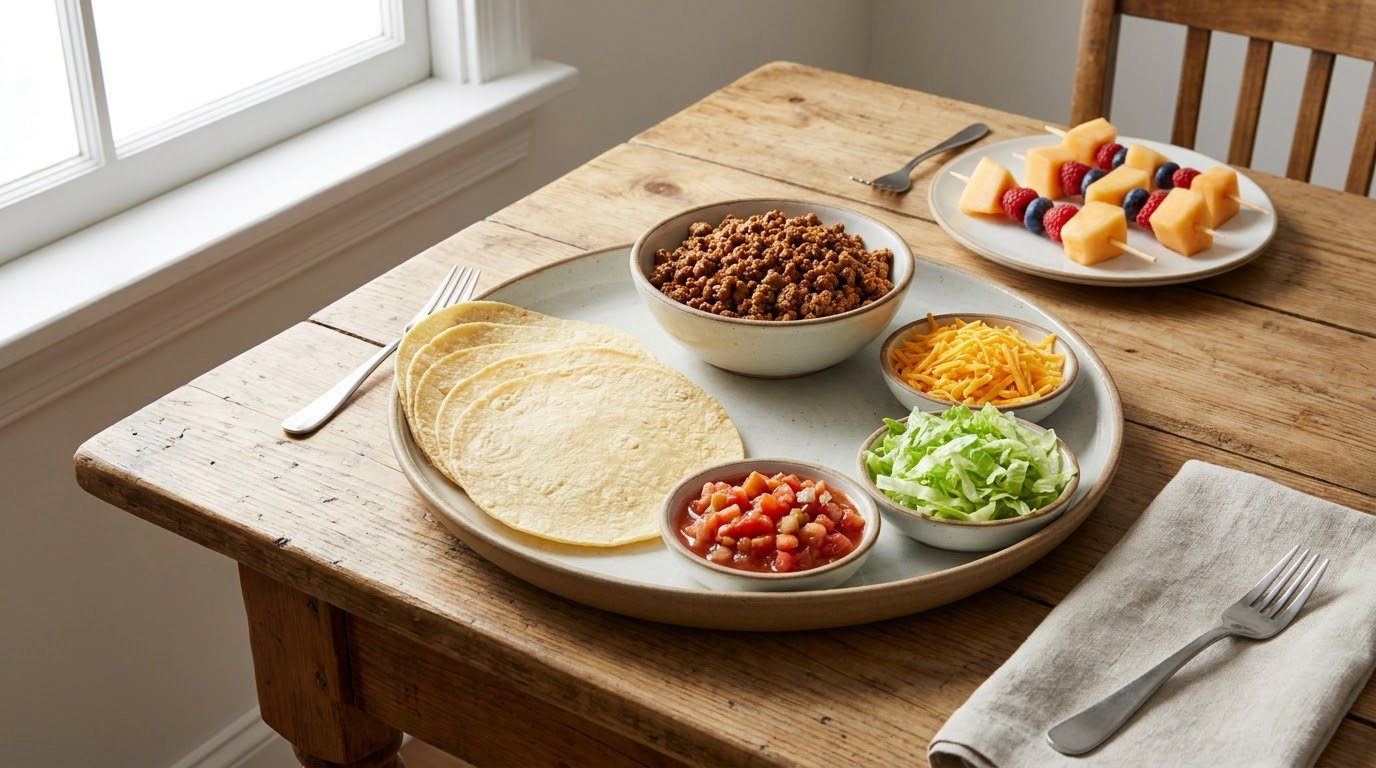
Gluten free dinner ideas kids actually eat start with food that never had gluten in it: rice, corn tortillas, potatoes, meat, eggs, cheese and fruit. The second group is familiar dishes rebuilt around a single swap, like rice pasta or gluten-free bread, made to match the exact texture your child already accepts. Either way, the rule is the same — stop cooking a separate dinner for one person and start serving food the whole table can share.
That last part matters more than it sounds. Parents on Celiac.com and r/glutenfree describe the same loop repeatedly: the child refuses the gluten-free version of a dish they love, even when the flavour is nearly identical. The reason is almost never taste. It is crunch that goes soft, sauce that breaks and turns grainy, bread that crumbles dry, or a coating that stays pale and bready instead of turning golden brown.
A useful note before the list. Gluten-free on a label means different things depending on why your family is avoiding gluten. Celiac disease is an autoimmune condition where gluten damages the small intestine, and those children need strict cross-contact control, not just gluten-free ingredients. A gluten intolerance or sensitivity is uncomfortable rather than damaging. And plenty of families are simply choosing gluten-free without a diagnosis at all, which changes nothing about the cooking but changes the risk tolerance at the grocery store. Talk to your child’s physician or a registered dietitian about which situation you are in before you change how they eat.
Table of Contents
- Gluten Free Dinner Ideas Kids Actually Eat at a Glance
- 1. Crispy Gluten Free Chicken Tenders
- 2. One-Pot Gluten Free Mac and Cheese
- 3. Gluten Free Pizza Pinwheels
- 4. Soft Taco Bowls with Seasoned Chicken
- 5. Baked Gluten Free Fish Sticks with Lemon
- 6. Gluten Free Beef and Rice Burrito Bowls
- 7. Mini Gluten Free Pizza Bagels
- 8. Slow-Cooker Gluten Free Chicken and Dumplings
- 9. Gluten Free Meatball Subs with Marinara
- 10. Mild Gluten Free Chicken Fried Rice
- 11. Gluten Free Cheeseburger Sliders
- 12. Sweet Potato and Black Bean Quesadillas
- Frequently Asked Questions
- What can a kid eat that is gluten-free?
- What would be a good gluten-free dinner for a picky eater?
- What is a quick gluten-free dinner I can make in 30 minutes?
- How do I keep a shared kitchen safe for a child with celiac disease?
- What are good gluten-free foods to bring to a kids’ party or potluck?
- Are gluten-free foods better for kids who do not have celiac disease?
- Start With Your Child’s Safe Foods
Gluten Free Dinner Ideas Kids Actually Eat at a Glance
| Dinner | Main base or protein | Prep time | Why kids eat it | Swap or dietary note |
|---|---|---|---|---|
| Crispy chicken tenders | Chicken breast | 30 minutes | Crunchy outside, plain inside, sauce on the side | Certified gluten-free breadcrumbs or a flour blend |
| One-pot mac and cheese | Gluten-free pasta | 25 minutes | Orange colour, familiar shape, no lumps | Blend the sauce smooth for texture-averse kids |
| Pizza pinwheels | Gluten-free flatbread | 20 minutes | Hand-held, dippable, cut into small rounds | Check the dough for wheat flour |
| Soft taco bowls | Chicken and corn tortilla | 25 minutes | Build-your-own bar, everyone controls the mix | Corn tortillas are naturally gluten free |
| Baked fish sticks | Mild white fish | 30 minutes | Finger food with a lemon dip | Gluten-free crumbs, baked not fried |
| Beef and rice burrito bowls | Ground beef and rice | 35 minutes | Sections stay separate, easy to pick at | Naturally gluten free, no swap required |
| Mini pizza bagels | English muffin or GF bagel | 15 minutes | Small, soft, no knife skills needed | Check English muffin labels for malt or wheat |
| Slow-cooker chicken and dumplings | Chicken and GF dumplings | 10 minutes active | Set-and-forget, familiar flavour | Certified gluten-free dumplings, added late |
| Meatball subs | Turkey or beef meatballs | 40 minutes | Marinara is a sauce they already know | Gluten-free rolls or serve over rice |
| Chicken fried rice | Cooked rice and egg | 15 minutes | Fast, mild, easy to de-vegetable | Naturally gluten free with tamari instead of soy sauce |
| Cheeseburger sliders | Ground beef patties | 25 minutes | Small patty, toppings on the side | Gluten-free bun or lettuce wrap |
| Sweet potato quesadillas | Sweet potato and black beans | 25 minutes | Sweet and mild, vegetarian friendly | Corn tortillas only, not flour tortillas |
1. Crispy Gluten Free Chicken Tenders
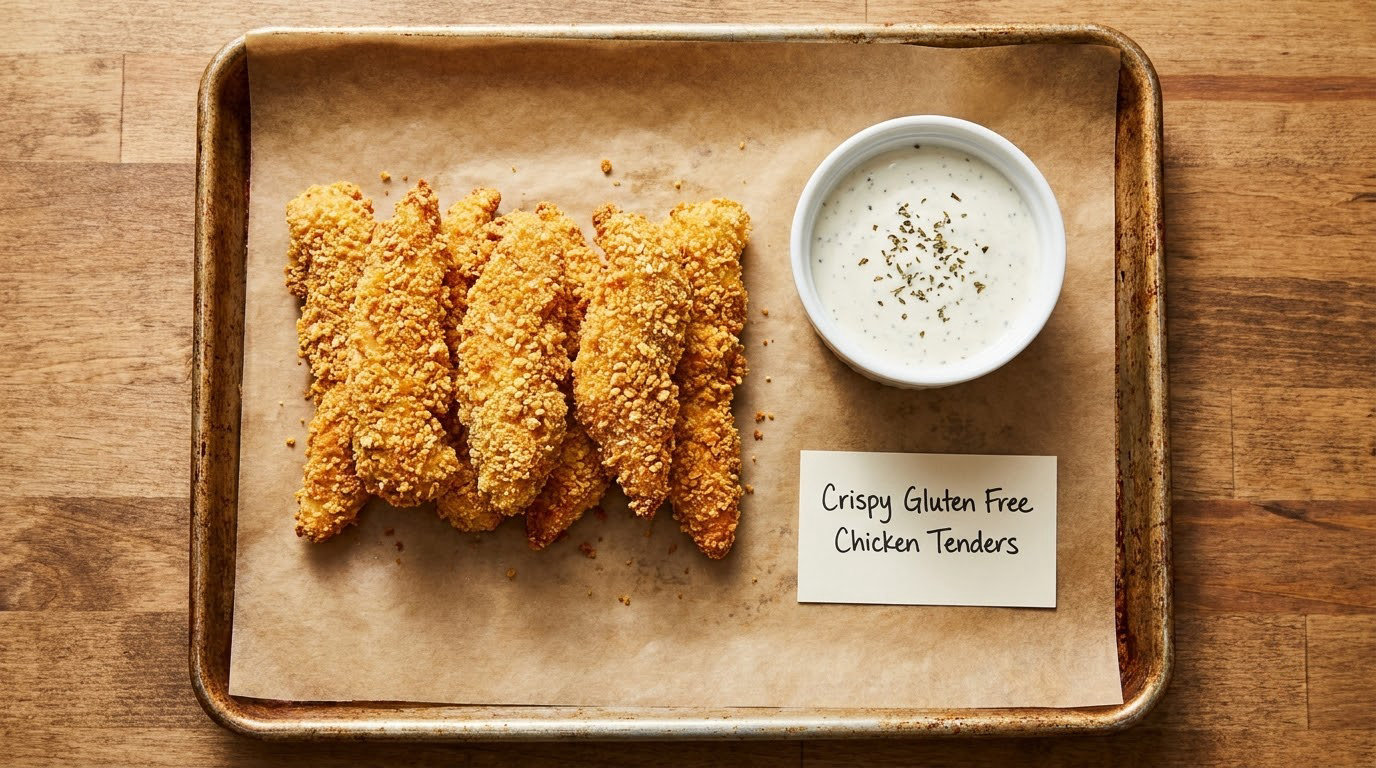
Chicken tenders are the single most reliable gluten-free dinner in our house, mostly because the version that works is not a “substitute” at all. It is a well-seasoned, double-crusted piece of chicken, which is how tenders taste to most kids in the first place. The coating is what carries the gluten-free part, so that is where the attention goes.
Pound the chicken to an even thickness, about half an inch, so it cooks through at the same rate as the crust. Season the pounded cut directly with salt, pepper and a little garlic powder, then the double dredge does the rest: seasoned gluten-free flour, egg, then certified gluten-free breadcrumbs. Double-coating is not fussy. It is the difference between a tender that stays crunchy after sitting for five minutes and one that gives up.
How to Make Gluten Free Chicken Tenders Extra Crispy
Give the breaded tenders a spray of oil and a 5 minute rest uncovered in the fridge before they go in. A cold, slightly dry surface browns faster and the crust stays firm. Bake at 425°F for 12 to 15 minutes until the outside is deep golden, or air fry at 400°F for 8 to 10 minutes, flipping once. Check that the thickest tender reaches 165°F in the centre before serving, and use a food thermometer rather than cutting timing alone.
Check every breading ingredient before you start, including the flour blend and the breadcrumbs. Ordinary grocery-store breadcrumbs and seasoned blends frequently contain wheat, barley or rye, and soy sauce in a seasoning blend is a common hidden source. A certified gluten-free label is the simplest guard. Serve the tenders with sauce on the side rather than poured over, which keeps the coating crisp and lets a child who dislikes wet food dry off each piece first.
2. One-Pot Gluten Free Mac and Cheese
Mac and cheese stays on the list because it works, not because we are pretending it is a new idea. The two failures we see most are grainy sauce that separates after baking and a crumbly, pale crust on top. Both are fixable without leaving the recipe.
Use a gluten-free pasta that holds its shape, cook it one minute under the package time, and drain it well. Make the sauce with butter, milk and a modest amount of corn starch, cook it until it coats the back of a spoon, then fold the pasta through. For children who reject lumps or flecks of melted cheese, blend the finished dish smooth and return it to the pot — the result tastes the same and presents as one consistent texture, which often matters more than the flavour does.
For the top, use gluten-free breadcrumbs tossed with a little melted butter and bake until golden, or skip the topping entirely and add a handful of shredded cheese at the table so each child controls the amount. Hidden vegetables blend in here without a fight: a cup of pureed cauliflower or squash disappears into the sauce and adds body. Freeze the finished dish in a shallow container and reheat with a splash of milk, and it comes back closer to fresh than most sauces do.
3. Gluten Free Pizza Pinwheels
Pinwheels solve two problems at once: the portion is small enough for a young child to finish, and there is no cutlery and no fork. A gluten-free flatbread or a package of gluten-free pizza dough rolled with cheese and sauce, then baked, gives you the flavours of pizza in a form that is genuinely easy for small hands.
Spread a thin layer of tomato sauce over the dough, add shredded mozzarella and one mild topping, roll it up tightly, and slice into rounds about an inch thick. Lay the rounds cut-side up on a lined sheet and bake at 400°F for 10 to 12 minutes, until the edges brown and the cheese bubbles. Pressing the toppings into the dough rather than piling them in stops the filling from squeezing out when you slice.
For storage, keep pinwheels in the fridge in a sealed container for up to four days, separated with parchment so the cut faces do not stick. Reheat in a hot oven for five minutes rather than the microwave, and the crust stays crisp instead of turning rubbery. Cut them larger for school-age children and halve them for toddlers, and pack a small cup of sauce for dipping.
4. Soft Taco Bowls with Seasoned Chicken
This one earns its place because it removes the argument. Instead of assembling one plate and hoping, put the components in small bowls and let everyone build their own. A child can have plain rice and cheese, and the next child can load the same dinner with beans, corn and salsa, from exactly the same pot of food.
Dice chicken breast and cook it in a skillet with a little olive oil, cumin, garlic powder, smoked paprika and a pinch of salt until the pieces are browned and cooked through to 165°F. Simmer corn tortillas in water for a minute to soften, or warm them straight in a dry pan. Serve the chicken over rice, with the tortillas cut into strips on the side so they can be used as scoops or eaten plain.
Keep the components in separate serving bowls and let children assemble their own bowl. That one change turns a refused dinner into a meal that gets finished, because nothing in it was forced onto the plate. For a lower-sensory version, serve the plain seasoned chicken and rice with cheese on the table and hold the toppings back until someone asks for them.
5. Baked Gluten Free Fish Sticks with Lemon
Baked fish sticks solve the “fish is too fishy” complaint, which is usually about smell and appearance rather than the taste itself. Use mild, boneless white fish, cut into finger-width strips, and the smell that puts children off largely disappears.
Pat the fish dry, dust lightly with a certified gluten-free flour or a gluten-free bread crumb, and add a small squeeze of lemon and a little pepper. Bake at 400°F on a lined sheet for 12 to 14 minutes, turning once, until the outside is set and lightly coloured. Check that the thickest piece reaches 145°F in the centre, and use frozen or canned fish in your own kitchen only if it has been thawed safely in the fridge, not on the counter.
Serve with a plain lemon dip made from sour cream and lemon juice, or a small cup of tartar sauce. Both are mild and cool, which balances the baked crumb. A cup of corn or a buttered green bean on the side rounds it into a dinner rather than a snack. If a child rejects the coating entirely, serve the unbreaded fish alongside a separate dish of crumbs — same food, two textures, no pressure to commit to both at once.
6. Gluten Free Beef and Rice Burrito Bowls
Burrito bowls are the safest gluten-free dinner to make for a child with celiac disease, because nothing needs to be substituted. Rice, ground beef, beans, corn, cheese and salsa are all naturally gluten free, so there is no swap that can quietly introduce a problem.
Brown ground beef in a skillet, drain the fat, and season with chili powder, cumin, garlic powder and salt. Simmer it with a splash of water for 10 minutes so the flavour goes into the meat rather than sitting on it. Cooked ground beef should reach 160°F. Build bowls over white or brown rice with the beef, then set out black beans, corn, shredded cheese, lettuce and salsa as separate bowls.
Keep a plain portion in mind for a child who is still finding their safe foods: rice with the seasoned beef beside it, nothing mixed, and cheese added only if wanted. Mixing is what often triggers refusal, and separated components let the same dinner work for a very selective eater and a hungry teenager at the same table.
7. Mini Gluten Free Pizza Bagels
Mini pizzas are the fastest dinner on this list, and they scale to any age. An English muffin or a gluten-free bagel split and topped gives you a personal pizza with a soft, bready base that most children recognise immediately.
Split the base, spread sauce on the cut side, add a light layer of shredded mozzarella and a topping the child has already approved. Bake at 375°F for 8 to 10 minutes until the cheese is melted and the edges are crisp. Watch English muffin labels carefully — some contain malt or wheat-based flour, and a dedicated gluten-free bagel is the more reliable choice for a child with celiac disease.
Cut a mini pizza into quarters for a toddler, which makes it graspable and less intimidating than a whole slice. For a child who dislikes mixed toppings, put plain cheese on one half and toppings on the other, so the two never touch. One English muffin makes two mini pizzas, which is a fast way to feed a family without doubling the cooking time.
8. Slow-Cooker Gluten Free Chicken and Dumplings
A slow cooker handles the part of the evening when everyone is hungry and nobody is patient. Shredded chicken in broth with carrots and celery is the kind of meal that smells good by late afternoon and asks almost nothing of you while it cooks.
Put boneless chicken thighs, low-sodium broth, carrots, celery and a little thyme in the cooker and set it to low for six to seven hours. Shred the chicken with two forks and stir it back into the liquid. Add certified gluten-free dumplings in the final 20 to 25 minutes so they heat through without turning to paste, and stir once at the halfway point so they do not stick together at the bottom.
If your child refuses store-bought dumplings, make them from a gluten-free flour blend and puff pastry or a simple dough, and freeze the extras flat on a tray before bagging them. They keep for weeks and go straight from freezer to slow cooker. Serve the dumplings beside the broth rather than in it when a child prefers to control each bite, and add a small plate of the broth on its own for anyone who finds the dumplings too soft.
9. Gluten Free Meatball Subs with Marinara
Meatball subs are a good weeknight dinner because the sauce does the heavy lifting and the oven does the cooking. The trick to meatballs that stay tender is not to overwork the mix and not to bake them dry.
Combine ground turkey or ground beef with egg, grated Parmesan, garlic, oregano and a little milk, then mix with a light hand until combined and stop. Overworking gives you dense, bouncy meatballs that kids describe as rubbery. Bake on a lined sheet at 400°F for 18 to 20 minutes, until the beef reaches 160°F, then warm them briefly in marinara sauce in the same pan.
Serve the meatballs on a gluten-free roll, or over rice if the bread is not landing. Offer shredded lettuce, cheese and sauce in separate small dishes on the side. For a child with celiac disease, marinara is worth checking twice, since some jarred sauces use wheat flour as a thickener. Loose meatballs on a plate with sauce for dipping often go down better than a fully assembled sub.
10. Mild Gluten Free Chicken Fried Rice
Fried rice is the fastest dinner here and one of the easiest to make naturally gluten free. The one thing that matters is starting with cold, cooked rice — freshly steamed rice turns to mush in the pan instead of separating into grains.
Heat a little oil in a wok or large skillet, push the rice to the edges and scramble an egg in the middle. Add shredded cooked chicken, a cup of peas and shredded carrots, and stir over medium heat until everything is hot. Season with a little tamari, which is gluten free and does not contain the wheat that ordinary soy sauce does, plus a small amount of sesame oil. Taste before adding salt.
Most of the texture arguments happen around the vegetables, so serve peas, carrots and any mushroom on the side as a separate dish and leave them out of the pan by default. Kids who accept a mixed rice dish can have them folded through. A fried egg on top turns it into something that reads as a bigger meal, and a small bowl of cucumber on the side adds crunch if the child wants it.
11. Gluten Free Cheeseburger Sliders
Sliders work for the same reason pinwheels do: a smaller portion means a child is more likely to finish it. A thin patty on a small bun is also close enough to a full burger that most children treat it as the same food, not a compromise.
Make thin, wide patties from ground beef and season the outside only, keeping salt off the raw side so it does not toughen the texture. Cook in a hot skillet for about three minutes per side and check that the thickest part reaches 160°F. Toast the gluten-free buns briefly in the same pan with a little butter, which keeps them from going limp under the toppings.
Bun choice is the part that trips people up. A bun that holds together without falling apart in a small hand is worth testing before you buy a large stack, and lettuce wraps work well for children who prefer the patty without bread at all. Plate the cheese, lettuce and tomato in separate small bowls and let each person build their own slider. Add sweet potato fries or a small fruit cup on the side to round it out.
12. Sweet Potato and Black Bean Quesadillas
This one is vegetarian-friendly, which makes it useful when a child’s friends come over or when the adults at the table want something different. Sweet potato gives it a mild sweetness that needs very little seasoning, and the melted cheese does the rest of the work.
Mash a baked sweet potato with a small amount of butter, then fold in black beans, a pinch of cumin and shredded cheese. Spread it over a corn tortilla, top with a second tortilla, and press gently. Cook in a dry skillet over medium heat for 2 to 3 minutes a side until the outside is crisp and the cheese has melted, then cut into wedges with a pizza wheel.
Corn tortillas are the only tortillas to use here — a flour tortilla turns the whole thing into a wheat meal. Serve with plain Greek yoghurt or sour cream for dipping rather than salsa, which gives the mild version a cooling contrast. For a child who prefers the filling on its own, serve the mashed sweet potato and beans in a small cup with a few tortilla chips alongside. It is the same dinner, dismantled, and that often does the trick.
Frequently Asked Questions
What can a kid eat that is gluten-free?
Most foods are naturally gluten free, including rice, corn, potatoes, meat, fish, eggs, dairy, fruit, beans and oats from a dedicated gluten-free source. Kids will usually eat these because nothing about them feels different. For familiar dishes like pasta, pizza, breaded chicken or pancakes, look for certified gluten-free versions made from rice, corn, tapioca or potato starch, and check every sauce and seasoning for wheat.
What would be a good gluten-free dinner for a picky eater?
Build from what your child already eats. Rice bowls, taco bowls with build-your-own toppings, one-pot mac and cheese with a smooth blended sauce, and chicken fried rice with vegetables served on the side all tend to land better than a direct swap of a wheat dish. Keep the components separate so nothing is forced together, and expect a new gluten-free food to be offered several times before it is accepted.
What is a quick gluten-free dinner I can make in 30 minutes?
Mini pizza bagels take about 15 minutes, chicken fried rice about 15, and pizza pinwheels about 20. Baked fish sticks, taco bowls and cheeseburger sliders all land near the half-hour mark. The common thread is starting with naturally gluten-free ingredients rather than a substitute that needs its own prep, so nothing extra is added to the cooking time.
How do I keep a shared kitchen safe for a child with celiac disease?
Use a separate toaster, colander, cutting board and butter knife for gluten-free food, and store flour and crumbs on a high shelf away from crumbs. Wash hands and wipe surfaces before preparing gluten-free food, and check labels on soy sauce, marinara, oats and seasoning blends, which often contain hidden wheat. For a child with celiac disease, talk to your physician or a registered dietitian about how strict your household needs to be.
What are good gluten-free foods to bring to a kids’ party or potluck?
Serve food that is naturally gluten free rather than a baked substitute, since it suits the celiac child and the rest of the crowd at the same time. Good picks are a fruit platter, veggie sticks with two dips, corn tortilla chips with guacamole, a rice dish, deviled eggs, potato salad made with a flour-free dressing, and a bag of frozen popcorn. Keep everything covered and separate from any bread or wheat-based dish on the table.
Are gluten-free foods better for kids who do not have celiac disease?
There is no evidence that a gluten-free diet improves health for a child without celiac disease, and gluten-free products are often higher in sugar and fat than their wheat-based equivalents. Some families still choose the diet for preference reasons, and that is a reasonable choice. If your child is not gluten free, check with your pediatrician or a registered dietitian before removing gluten, especially if there are growth or digestion concerns.
Start With Your Child’s Safe Foods
Pick one base your child reliably eats, one protein they already accept, and one add-in you are willing to have on the table. A rice bowl, seasoned chicken and a separate bowl of cheese is a complete dinner, and it costs you one pan. Add the second component once the first has been eaten regularly for a week or two.
And if the diagnosis is medical, whether celiac disease, sensitivity or a preference, the specifics belong to your child’s physician or a registered dietitian. The recipes above are built to be eaten. The rules on cross-contact, nutrition and reintroduction are theirs to set.