Learning how to plan a road trip with a special needs child comes down to four things: time the drive around your child’s calmest hours, build in a movement break every one to two hours, pack one organized bag they can reach themselves, and preview the whole trip so nothing on the day is a surprise. This guide walks through all seven steps, from two to four weeks out to the emergency plan in the glove box. Updated for 2026.
Road trips hit every hard thing at once. Your child leaves a familiar room, sits longer than usual, gets hit by road noise and motion they cannot switch off, and sleeps somewhere unfamiliar. That combination is why a drive that should take four hours can unravel at hour two.
I want to be straight with you before we start: no plan makes a trip meltdown-free. What a good plan does is cut the number of things going wrong, so the hard moments are shorter and easier to recover from. Think of it as managing load, not preventing it.
Most families who get road trips right do the same three things. They build the trip around the child rather than the schedule, they prepare the boring parts in advance so there are fewer surprises, and they decide in advance what the backup plan is. Everything below feeds those three things.
Table of Contents
- What You Need to Plan a Road Trip With a Special Needs Child
- A health and sensory information sheet
- Medical supplies and enough medication for extra days
- Sensory and comfort items
- Comfort-worn clothing and layers
- Documents and logistics
- Backup supplies you rarely think of
- Entertainment, downloaded before you leave
- Step-by-Step: How to Plan a Road Trip With a Special Needs Child
- Step 1: Define Your Child’s Needs and Travel Triggers
- Step 2: Choose a Manageable Route and Backup Plan
- Step 3: Build a Flexible Schedule Around Energy Levels
- Step 4: Pack for Comfort, Health, and Unexpected Delays
- Step 5: Rehearse the Trip and Practice Coping Strategies
- Step 6: Drive With Breaks and Check In Often
- Step 7: Have an Emergency and Communication Plan
- Common Mistakes to Avoid When Planning the Trip
- Overpacking without setting priorities
- Scheduling too tightly
- Skipping sensory preparation to save time
- Neglecting medical documentation
- Failing to plan for delays
- Expecting a meltdown-free trip
- Frequently Asked Questions
- How long should a road trip be for a child with special needs?
- How often should we stop on a long drive with an autistic or disabled child?
- What should we pack for a child with sensory needs?
- How do we manage medications and a special diet while traveling?
- What should we do if the child becomes overwhelmed or unsafe during the trip?
- How can we prepare for an unexpected delay, traffic jam, or hotel change?
- Where to Start Tomorrow Morning
What You Need to Plan a Road Trip With a Special Needs Child
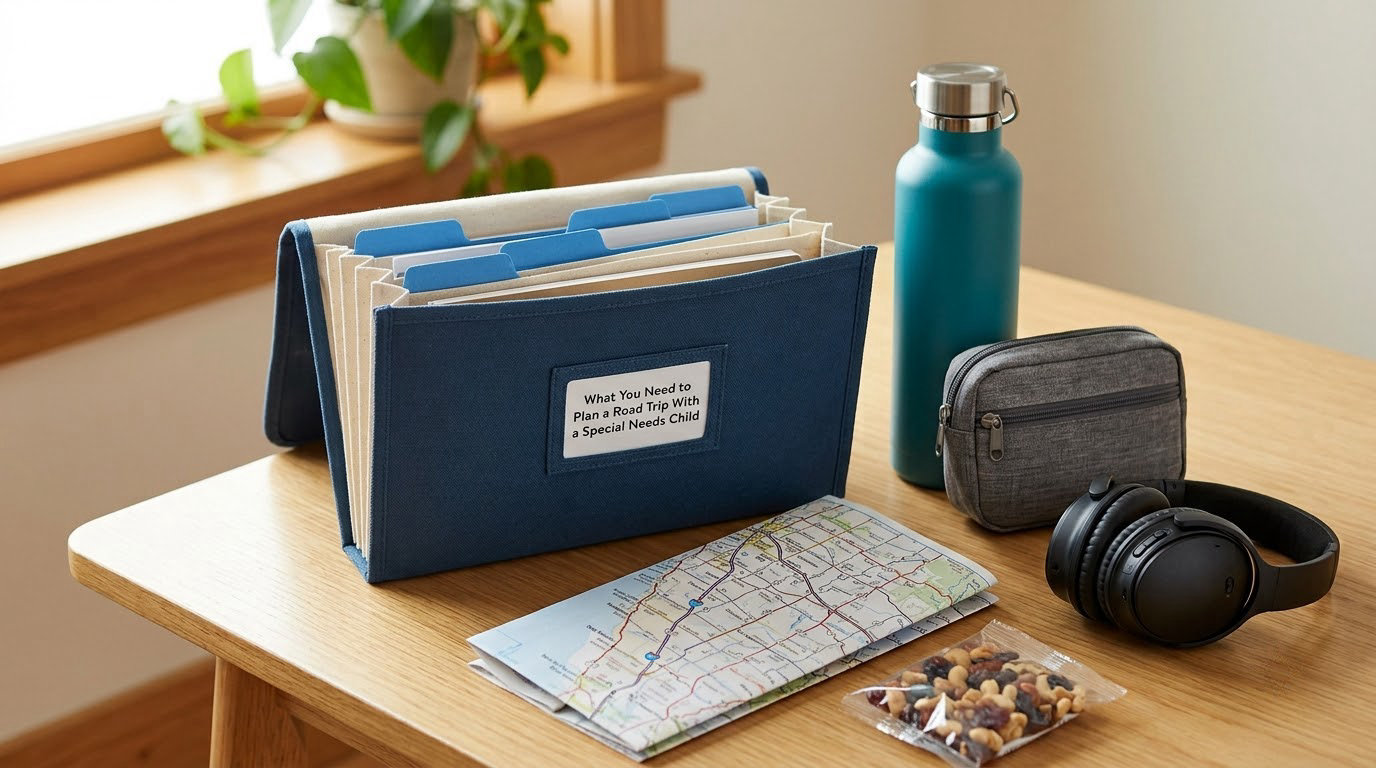
Most of this is stuff you already own, organized so you can find it without thinking. Think of it as three folders in your head: health information, sensory and comfort gear, and the practical paperwork that keeps you moving.
A health and sensory information sheet
One page, printed twice, one copy in the bag and one in the vehicle’s document holder. Include your child’s diagnosis in plain words, current medications with doses and timing, allergies, what a seizure or breathing emergency looks like for your child specifically, and who to call in order. Add the pediatrician’s and specialist’s direct numbers. Parents traveling with medically complex children should add equipment details here, such as feeding tube supplies, oxygen settings, or insulin pump information.
Medical supplies and enough medication for extra days
Bring more medication than the trip requires. A delay of two days is ordinary, not an exception, and refilling a prescription out of state or on a weekend adds hours. Ask your pharmacy about a vacation override in advance if your child runs a controlled or specialty medication, and ask the clinician what they want you to do if a dose gets missed or vomited back up. That answer should come from your child’s clinician, not from the internet.
Sensory and comfort items
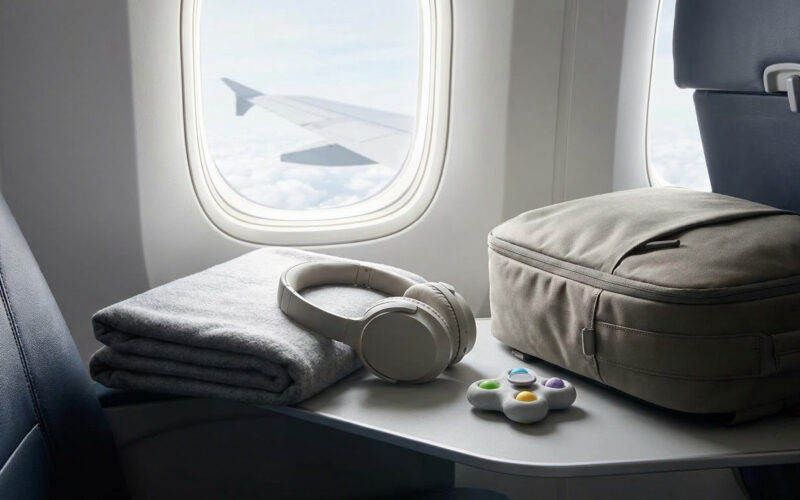
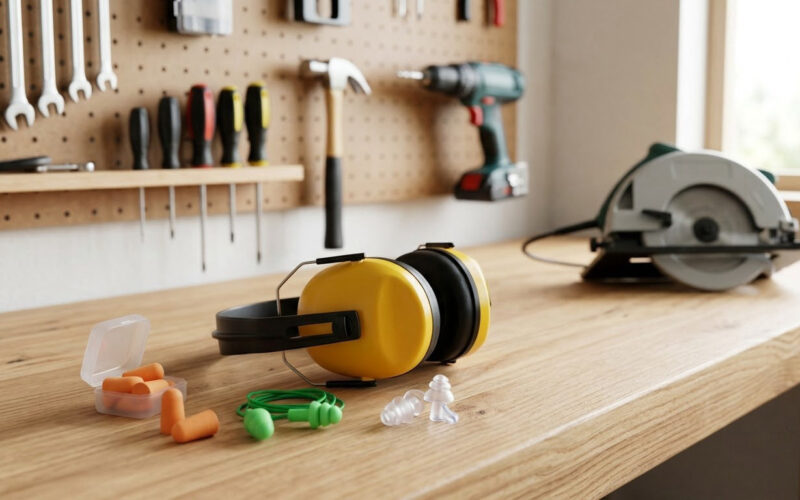
Noise-canceling headphones or ear defenders, a weighted lap blanket, the two or three fidgets that actually get used rather than the drawer full that do not, and a comfort item from home like a specific blanket or shirt. Add whatever your occupational therapist has recommended for regulation on the go. Keep these in one bag that your child can open themselves, because reaching into a bag is often the difference between a reset and an escalation.
Comfort-worn clothing and layers
Put your child in the outfit they will be wearing for the whole drive, including sleep, if they nap in the car. Extra clothes sit in a small bag, not a suitcase. A shirt that fits fine at home can become unbearable after three hours of car seat straps, so plan for a change.
Documents and logistics
Insurance card, any medical letter you may need at a hospital or urgent care, the car seat manual, hotel confirmations with accessibility notes, and a printed version of the route with your planned stops marked. Paper matters because phone batteries die and cell coverage has holes exactly where you need directions most.
Backup supplies you rarely think of
A portable car potty with a plastic mat underneath if toileting is still in progress, a changing bag, extra pull-ups treated as underwear, wipes, a plastic bag for wet clothing, hand sanitizer, and a car charger plus power bank. Also pack a car sickness plan, which usually means a bag your child can open without help, plus whatever your clinician has said about motion sickness for your child.
Entertainment, downloaded before you leave
Download shows, games, and audiobooks onto the device while you still have reliable wifi. Parents on autism parenting forums keep saying the same thing: pre-downloading was the deciding factor between a good day and a bad one. A buffering wheel at mile 300 in the middle of nowhere is its own kind of meltdown trigger.
Step-by-Step: How to Plan a Road Trip With a Special Needs Child
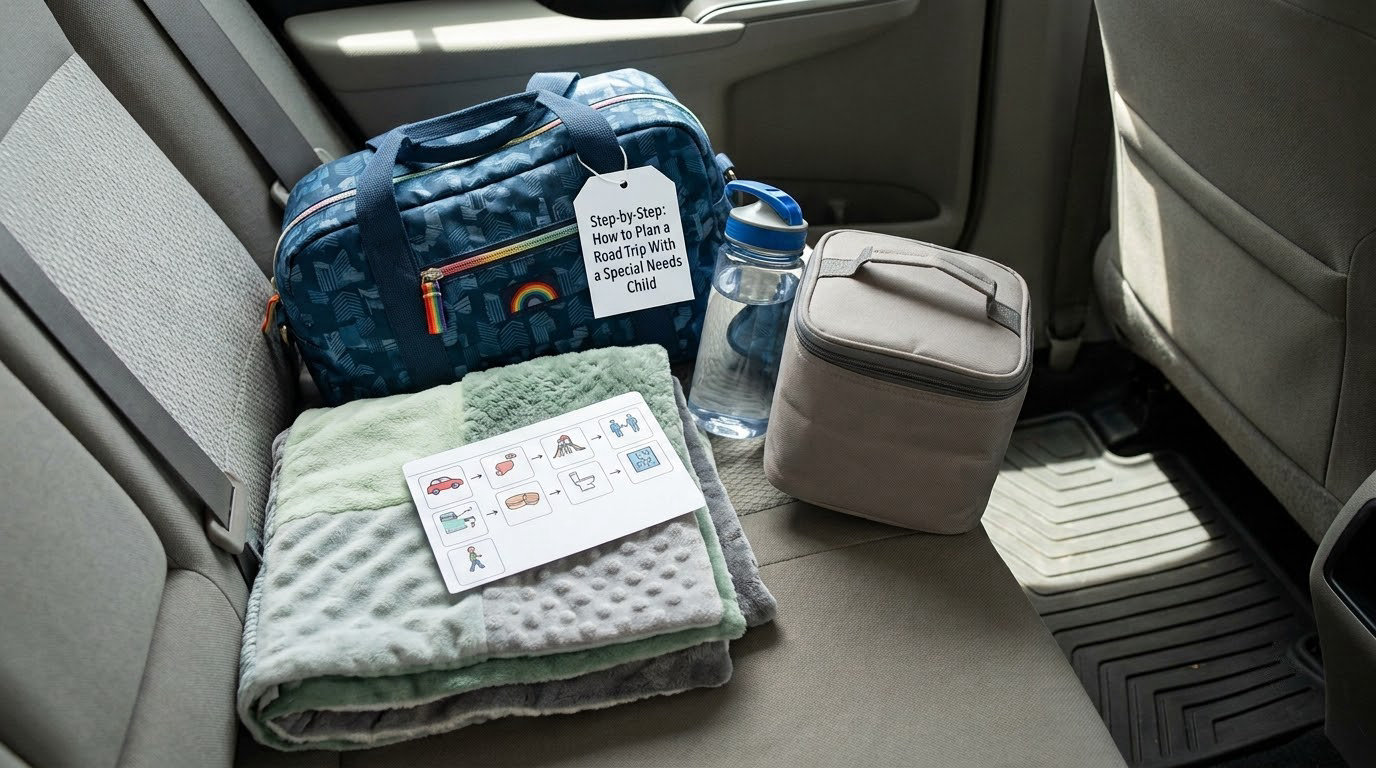
Work through these in order. Each one builds on the last, and skipping ahead to packing usually shows up as a problem on the road.
Step 1: Define Your Child’s Needs and Travel Triggers
Before you open a map, write down what your child specifically struggles with. Parents who do this get clearer plans because they stop planning for a generic kid and start planning for theirs.
Cover five areas. First, sensory profile: which senses are most sensitive, and whether noise, motion, light, or unexpected touch is the biggest offender. Second, transition tolerance: how much warning your child needs before a change, since many autistic and neurodivergent children need a specific amount of processing time rather than more words. Third, communication style: if your child is non-verbal or uses an AAC device, pack spare batteries and know how they say no, tired, and hungry.
Fourth, mobility and medical needs, including how long your child can comfortably stay buckled. Fifth, the signs that mean a break is needed. On autism parenting forums, parents describe writing these signs down as the turning point in planning, because a quiet early sign is far easier to act on than a loud late one.
Also note what a good day looks like for your child and what your own tolerance is. Caregivers who plan a trip they cannot physically sustain end up worse off than those who plan a shorter version of it well.
Step 2: Choose a Manageable Route and Backup Plan
Pick the route before you pick the destination date. A road trip is not a race, and the goal is the calmest possible version of the distance between two places.
Map two options. The first is the fastest route. The second is a slightly slower route with better rest stops, more predictable traffic, and a hospital within easy reach. Parents often describe the second route as the one that actually happens, because a highway with fewer exits tends to have quieter stops.
For each route, list every rest stop roughly every one to two hours, plus one extra unplanned option per leg in case your child needs movement sooner than expected. Check each stop for shade or indoor space, a bathroom, and room to walk rather than only a vending machine lot. Skip the trucker-heavy stops during busy hours if noise is a trigger for your child.
Mark hospitals and urgent care along the way, and screenshot them offline. Save the nearest three in your phone for each overnight stop. It is a small task that removes a large amount of dread.
Check whether any part of your drive crosses a state line with different rules around your child’s care, and confirm your coverage before you go. Plans can shift; a backup route is not a defeat.
Step 3: Build a Flexible Schedule Around Energy Levels
Timing is the highest-leverage decision you make, and it is free. Most autistic and sensory-sensitive children handle a car best during their calmest window: often early morning before the day starts, or during a usual nap time. Leaving at 6 a.m. to beat rush hour is a completely different trip from leaving at noon.
Build the day in blocks rather than a rigid timetable. A block is a drive segment, a break, a meal, and another segment, with more buffer than you think you need. Write the plan as a rough window, not a fixed clock: leave between 6 and 7, drive for ninety minutes, stop for twenty. When you give exact times, one slow merge at mile 40 makes the rest of the day feel broken.
Protect the things that hold the day together. If your child naps at one o’clock, plan to be parked and quiet then, even if it means driving earlier or later. Meals matter too: stop before hunger turns into dysregulation, and keep a backup snack in the sensory bag for the moment between stops.
And build the schedule around your child, not around a sightseeing ambition. Two stable stops a day is a better plan than five that depend on your child tolerating transitions all day.
Step 4: Pack for Comfort, Health, and Unexpected Delays
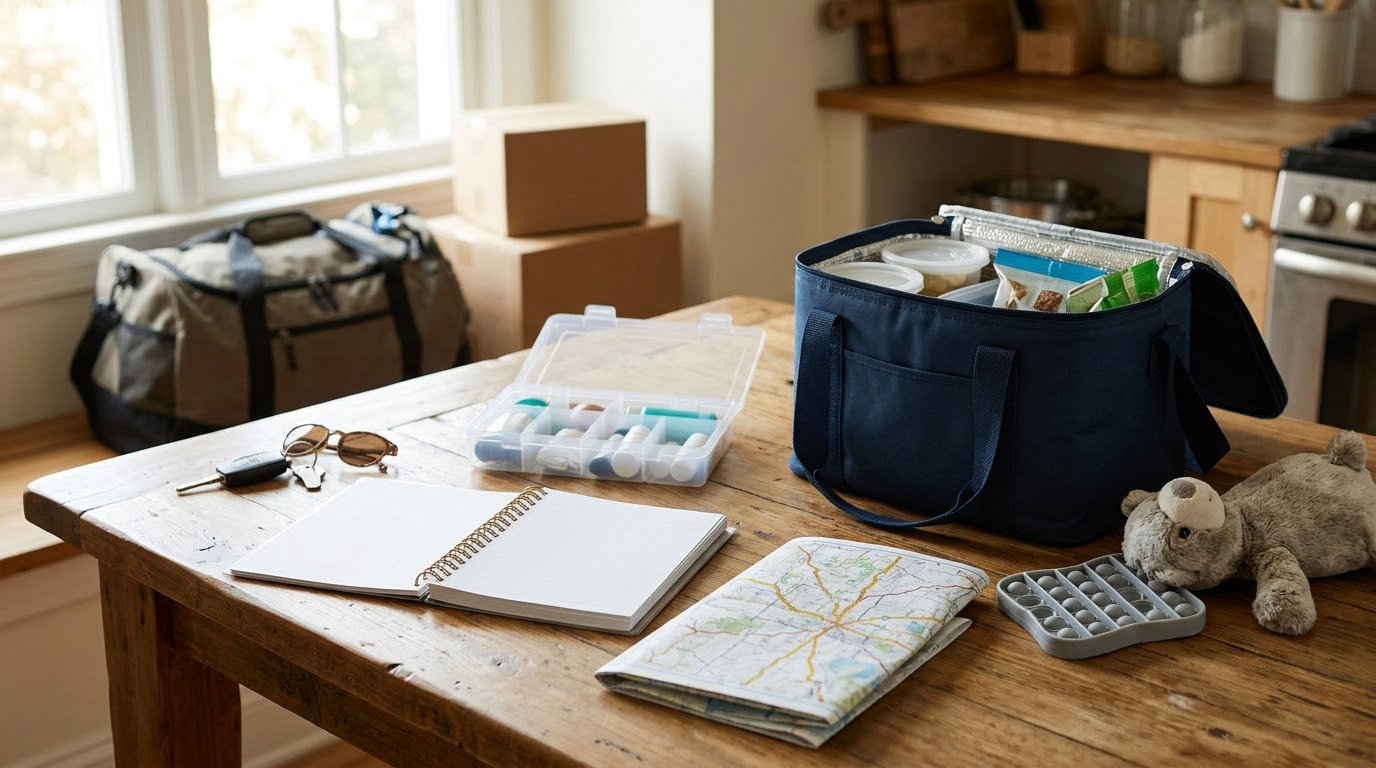
Organize the bags so nothing depends on you remembering where you put it. Three separate bags beat one big suitcase every time.
- Sensory bag: headphones, weighted blanket, fidgets, comfort item, and a small chew or snack item. This is the bag your child can reach.
- Entertainment bag: downloaded shows and games, audiobooks, headphones, and something quiet for when the car gets loud.
- Medical and safety bag: extra medication, information sheet, first aid basics, wipes, changing supplies, hand sanitizer, and the car sickness kit.
Load the medical bag where an adult can reach it without leaving the driver’s seat, and keep the sensory bag where your child can get to it. That small detail saves you a negotiation at mile 200.
Bring extra of anything that cannot be replaced on the road: formula, a specific milk brand, allergen-safe food, a familiar snack. Parents traveling with food allergies mention checking grocery availability at each stop in advance rather than gambling at a highway station.
For a child who is non-verbal, add a simple identification card or bracelet with your contact number, and keep it on them even when they seem fine. This is basic elopement planning, and it costs you nothing.
Step 5: Rehearse the Trip and Practice Coping Strategies
How to plan a road trip with a special needs child means rehearsal, not just logistics. What your child has practiced at home will show up on the road.
Start two to four weeks out with a visual schedule. Simple beats detailed: a strip of cards showing depart, drive, stop, snack, stop, arrive. Social Stories, the tool Carol Gray developed, work well for a child who needs a written narrative about what will happen and why. Use whichever one your child actually responds to, and stop using a format that has stopped working rather than forcing it because you built it.
Show photos of the route, the rest stops, and the hotel room before the day. Previewing removes a surprising image from an already overloaded environment. Many families also preview the trip by doing a short practice run, even a trip to the grocery store and back, so the car ride itself becomes familiar.
Practice the coping moves you plan to use on the road. If noise-canceling headphones are your reset, let your child use them at home first. If you plan to offer choices, practice choosing. When parents describe trips that worked, the pattern is consistent: giving a child control over small decisions, like which rest stop or which show, cut resistance far more reliably than reasoning did.
Finally, practice the phrase you will use for the hard moment. A short, calm, consistent sentence you have used before is easier to say under stress than one you are inventing in a parking lot.
Step 6: Drive With Breaks and Check In Often
On the road, treat the break schedule as a plan and the actual needs as real. Plan a break every one to two hours and stop earlier whenever your child shows early signs, even if the timing is inconvenient. Longer gaps between movement breaks reliably make things worse, according to parents reporting back from long drives.
Keep a visual cue of the remaining time until the next break. A timer or a progress map your child can see answers the are we there yet loop that drives so many families crazy, and it turns an open-ended wait into a bounded one.
Check in on your child at every stop with a simple observation rather than a question that demands a response. Noticing aloud that the light is very bright is often more useful than asking how they are feeling.
Rotate driving if you can, so one adult is always free to sit in the back with your child rather than supervising from the front seat. If you are solo, build your own breaks into the schedule too. Caregivers consistently report arriving at the destination already exhausted, which is a planning failure you can fix by writing yourself into the itinerary.
Never leave your child alone in a vehicle, even briefly, even in the shade with a window cracked. Vehicles heat dangerously fast, and this rule holds no exceptions.
Step 7: Have an Emergency and Communication Plan
Plan for the worst day so the middle of the trip is not spent improvising it. Write down what to do if a meltdown happens in public, if your child wanders, and if there is a medical issue, then keep that page in the vehicle.
For elopement, decide in advance what you do: call your local non-emergency police number first rather than emergency services, give a clear description of clothing and last seen location, and stay put unless you have someone else with you. Write your phone number and your child’s name on paper in the bag so anyone who helps them can reach you.
For a medical issue, carry the information sheet, know the nearest hospital at each stage of the drive, and agree with your child’s clinician in advance what counts as an emergency that needs the emergency room versus a call to the doctor first. If your child uses an AAC device, write the device’s essential functions on that same sheet.
Decide the turnaround question before you leave, not during a meltdown at a rest stop. Agree on what a stop-and-go-home decision looks like, and make sure both adults agree. If you travel with a neurotypical sibling, tell them in advance what the plan is so they are not waiting in the car wondering whether the trip is over.
Keep one printed card with your child’s name, your contact number, and the trip destination somewhere in the vehicle. If you are separated in a parking lot or rest area, it does the work for you.
Common Mistakes to Avoid When Planning the Trip
These are the planning errors I see most often, and each has a simple correction.
Overpacking without setting priorities
A full suitcase feels productive and does nothing for the drive. Choose three non-negotiable items for the sensory bag and let the rest go. Everything else is optional.
Scheduling too tightly
Plans with exact times break at the first slow lane merge. Use windows instead of clock times and build in a whole extra hour of buffer per driving day. The extra hour is usually the difference between arriving calm and arriving wrecked.
Skipping sensory preparation to save time
The visual schedule takes twenty minutes to make and prevents most of the trip’s worst surprises. Doing it the night before instead of a week before is a fair compromise. Doing it never is what turns a hard moment into a crisis.
Neglecting medical documentation
Two printed copies of the health sheet, one in the bag and one in the vehicle. If a clinician needs to know about a feeding tube, an allergy, or a seizure history in an unfamiliar emergency room, you will not remember the details under stress. This is also the item to ask your child’s clinician to help you write.
Failing to plan for delays
Assume traffic, a closed rest stop, or a hotel that cannot honor what you booked. Keep the backup route saved, carry food and water for an extra day, and confirm every accessibility feature by phone before leaving rather than trusting a listing.
Expecting a meltdown-free trip
Low expectations are not failure. A parent who expects a perfect trip treats the first hard moment as a personal failing, and that stress is felt by everyone in the car. Plan for a trip with two hard stretches and a good memory at the end.
Frequently Asked Questions
How long should a road trip be for a child with special needs?
Match the drive to your child’s real tolerance rather than to the distance you want to cover. Many autistic and sensory-sensitive children do best with two-hour driving blocks and a full break between them. If your child currently manages short car rides comfortably, build up in stages with practice runs rather than attempting six hours on a first attempt. A shorter trip you enjoy beats a longer one that ends with everyone depleted.
How often should we stop on a long drive with an autistic or disabled child?
Plan a break every one to two hours, and stop sooner whenever your child shows early signs of overload. Each break should include movement, a bathroom stop, and something quiet. Parents consistently report that longer gaps between breaks make escalation more likely, not less. Also build in one extra unscheduled stop per leg so an early need never means improvising at the next exit.
What should we pack for a child with sensory needs?
Pack one sensory bag your child can open themselves: noise-canceling headphones or ear defenders, a weighted lap blanket, two or three fidgets they actually use, and a comfort item from home. Add a small snack and chew item, and keep comfort-worn clothing ready to change into. Staying in control of that bag is often enough to prevent escalation, so store it where they can reach it rather than buried in a suitcase.
How do we manage medications and a special diet while traveling?
Bring more medication than the trip requires, since a two-day delay is common and out-of-state refills can take hours. Ask your pharmacy about a vacation override and ask your child’s clinician what to do about a missed dose or a dose vomited back up. For diet, pack enough of the specific brands and allergen-safe foods you rely on, and check grocery availability at each stop in advance. Keep a backup snack in the sensory bag for the gap between planned meals.
What should we do if the child becomes overwhelmed or unsafe during the trip?
Move to a quieter spot, reduce input first by dimming and quieting, and wait. Do not ask questions or demand eye contact while your child is dysregulated. Follow your own safety plan: if there is a risk to your child or a driver, make sure everyone is physically safe before addressing anything else. Never leave your child alone in a vehicle. Afterwards, note what happened so you can adjust the plan rather than treating it as a failure.
How can we prepare for an unexpected delay, traffic jam, or hotel change?
Map a second route that has better, quieter rest stops and a hospital within easy reach, and save both offline. Carry food and water for one extra day, keep all downloads finished before departure, and confirm every accessibility feature by phone rather than trusting a listing online. For overnight stays, book two nights where you can and treat the first as optional, which removes most of the pressure from a late arrival.
Where to Start Tomorrow Morning
Sit down with a pen and write your child’s sensory triggers, transition needs, signs of an early overload, and your realistic limit for driving time. That single page decides most of the rest of the plan, and everything else on this list hangs off it.
Then start the two-to-four-week countdown: build the visual schedule, make the two copies of the health information sheet, map a second route, and ask your child’s clinician about medication, travel, and emergency questions specific to your child. Nothing here replaces their guidance on your child’s care, and nothing here guarantees a smooth drive.
Generous planning, a visible timer, and breaks every one to two hours will carry you most of the way. The rest is a good playlist and a parent who has realistic expectations.