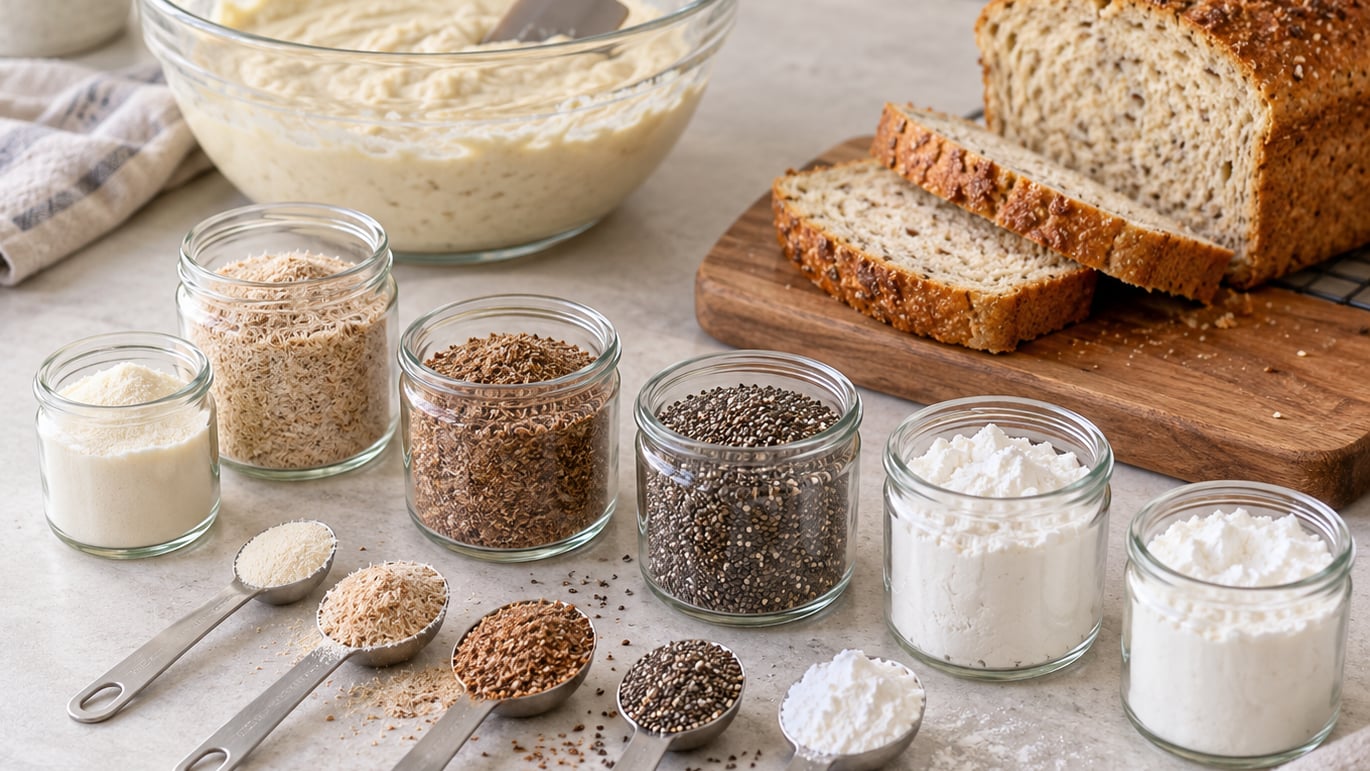
If you need xanthan gum substitutes in gluten free baking, the shortlist is psyllium husk powder, ground flaxseed, chia seeds, cornstarch, potato starch, and preblended gluten-free binders. Which one works depends on the crumb you want: tender cake, chewy cookie, or a sliceable loaf. Nothing here is a straight one-for-one swap, so the ratios and the liquid matter as much as the powder.
The reason people go looking is usually practical. Some kitchens react to xanthan gum itself, some 1:1 flour blends already ship with gum baked in, and a few households just want a short ingredient list. This guide sorts the options by what they actually do in the pan.
One useful note before you swap anything: an egg or egg white often does the same structural job, and our guide to how to replace eggs in baking covers that route in detail.
Table of Contents
- Xanthan Gum Substitutes in Gluten-Free Baking at a Glance
- What Is Xanthan Gum and Why Is It Used in Gluten-Free Baking?
- Psylium Husk: The Closest All-Purpose Substitute
- Ground Flaxseed: A Binding Option with a Nutty Flavor
- Chia Seeds: Useful for Moisture and Binding
- Cornstarch: Best for Light, Tender Gluten-Free Recipes
- Potato Starch: A Neutral Thickener for Bakes
- Commercial Gluten-Free Binding Blends: A Simple One-for-One Option
- How to Choose the Right Substitute for Your Recipe
- Bread and pizza crust
- Cookies
- Cake and cupcakes
- Muffins and quick breads
- How to Adjust Gluten-Free Baking Without Xanthan Gum
- Which Substitute Should You Choose?
- Frequently Asked Questions
- What can I use instead of xanthan gum in gluten-free baking?
- Can I bake gluten-free bread without xanthan gum?
- Can I make gluten-free cake and cookies without xanthan gum?
- How much xanthan gum do I add to 1 cup of gluten-free flour?
- Is there gluten-free flour that does not already contain xanthan gum?
- Why do people avoid xanthan gum?
- Conclusion: Start With the Recipe’s Texture Needs
Xanthan Gum Substitutes in Gluten-Free Baking at a Glance
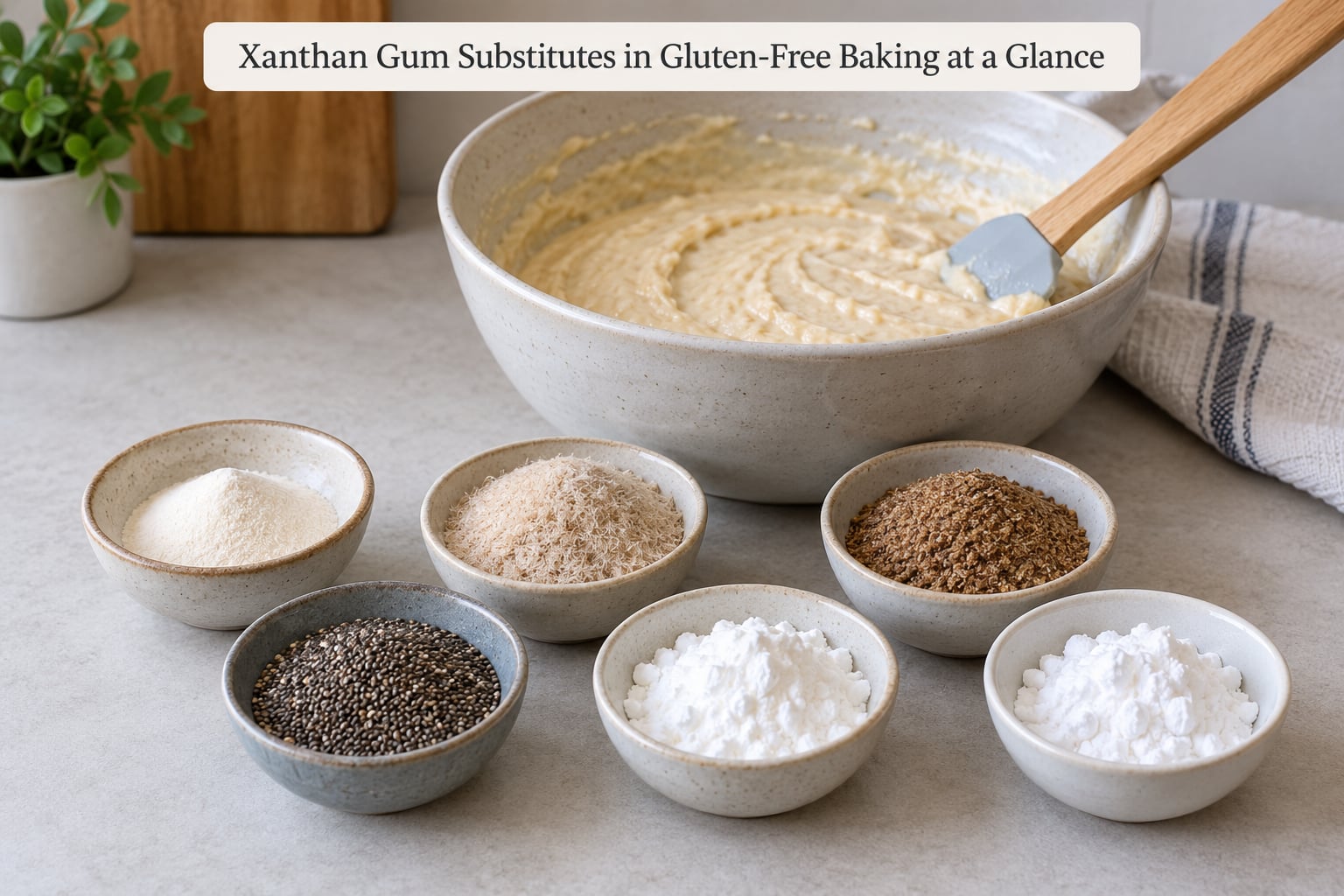
| Substitute | How strongly it binds | Effect on texture | Flavor added | Best gluten-free bakes |
|---|---|---|---|---|
| Psyllium husk powder | Strong, gel-forming | Firm, chewy, holds shape | None | Bread, pizza crust, muffins, cookies |
| Ground flaxseed (flax meal) | Strong once hydrated | Dense and moist | Nutty, earthy | Quick breads, muffins, cookies |
| Chia seeds or ground chia | Moderate, gel-forming | Soft, moist crumb | None | Cookies, brownies, muffins, cakes |
| Cornstarch | Light thickening only | Tender and delicate, can be fragile | None | Cakes, muffins, cookies, custards |
| Potato starch | Light thickening only | Very tender, fine crumb | None | Cakes, scones, quick breads |
| Guar gum | Strong | Smooth and creamy, slimy if overdone | None | Cakes, icing, puddings, bread |
| Commercial GF binder blends | Varies by blend | Tuned per product | None | Any bake, least guesswork |
Only the first three on that list can hold up a loaf of bread. The starches and guar gum are thickeners first and binders second, which is why they belong in cakes and cookies rather than doughs.
What Is Xanthan Gum and Why Is It Used in Gluten-Free Baking?
Xanthan gum is a powder made by fermenting corn syrup with the bacterium Xanthomonas campestris. It is a hydrocolloid, a word that just means a powder which thickens liquid and holds things in suspension.
Gluten does three jobs in a wheat bake. It forms an elastic network that traps air, it binds starch and fat into one piece, and it holds moisture in the crumb. Xanthan gum covers the second job well and helps with the third. It does not create lift the way gluten does, which is why gluten-free cakes still rely on whipped eggs or baking powder for height.
That is the standard to judge a substitute against. Does it stick the batter together, does it keep the crumb from drying out, and does it survive the oven without turning gummy? Anything that answers two of those three is a usable swap for most recipes.
Ask what happens if you leave it out entirely and the answer depends on the bake. Cakes and cookies usually survive with no gum at all, because eggs and sugar are doing most of the work. Bread is different, and so is pizza crust.
Psylium Husk: The Closest All-Purpose Substitute
Finely ground psyllium husk powder is the substitute most bakers land on after xanthan. It is the seed coat of Plantago ovata, it swells into a gel when it meets water, and it holds structure in a way nothing else on this list does.
It is neutral in flavor and it forms a network rather than a single thick gel, so doughs stay workable instead of turning to paste. That is also its weakness. Too much and the crumb turns dense and gummy in exactly the way people were trying to escape.
Start with about a quarter of the volume of the xanthan gum you are replacing, then adjust. Psyllium drinks liquid greedily, so if your dough feels tight and cracks at the edges, add water a spoonful at a time before you blame the flour.
Two practical warnings. Absorbency varies a lot between brands, so the same recipe can behave differently in two kitchens, and psyllium is a soluble fiber that can loosen stools if you eat a lot of it in a short window. For anyone with a wheat allergy or celiac disease, buy it labeled gluten-free, because plain psyllium is often milled alongside wheat.
Ground Flaxseed: A Binding Option with a Nutty Flavor
Flax meal, which is whole ground flaxseed, does for a gluten-free baker something xanthan gum cannot. It brings structure and fiber and flavor in one ingredient, and bakers on r/glutenfreebaking frequently mention flax as one of the ingredients they moved to when they dropped gum.
The catch is the flavor. Flax meal tastes nutty and earthy, and it darkens the crumb slightly. In a chocolate brownie or a ginger quick bread that reads as warmth. In a vanilla cake it reads as something different.
Because the whole seed is ground, you need to grind it yourself or buy it already milled. Mill it in a coffee grinder and use it straight away, because the oils in the ground seed go rancid within weeks in a warm pantry.
For binding, roughly one tablespoon of ground flaxseed per cup of flour is a sane starting point. Combine it with an equal amount of chia and you get a blend that behaves more evenly than either alone, and the two textures cover each other’s gaps.
Chia Seeds: Useful for Moisture and Binding
Chia is the quieter option. Whole chia seeds form a mild gel when they soak in water, ground chia does it faster, and both bring soluble fiber and a long, slow moisture release into the crumb.
That makes chia the right pick when dryness is your complaint. A gluten-free muffin that crumbles when you unwrap it usually needs moisture more than it needs structure, and chia solves that without gumming the batter the way overdone psyllium does.
Two things to plan around. Chia takes time, so if you are mixing batter in advance, let the hydrated chia sit for ten minutes before it goes into the pan. And ground chia leaves a fine speckled finish that shows on pale cakes, which is one more reason people use whole chia for texture and ground chia for cookies, where nobody is looking at the color.
Cornstarch: Best for Light, Tender Gluten-Free Recipes
Cornstarch is a thickener, not a gluten replacer. That distinction keeps people out of trouble when they use about twice the volume of the gum they removed, since starch has no elasticity to lend.
What it does give you is a fine, tender crumb in cakes, muffins, cookies, and custards. It cuts moisture loss in brownies and makes a crumb more delicate in a vanilla cake. Roughly two parts cornstarch for one part xanthan gum is the commonly cited conversion.
If you swap cornstarch in for gum in a bread dough, expect a crumbly loaf. It is the wrong tool for that job, and it will not become the right tool at a higher dose.
Potato Starch: A Neutral Thickener for Bakes
Potato starch sits in the same family as cornstarch but behaves a little better in the oven. It leaves a finer, more tender crumb with less of the cakiness cornstarch can bring, and it carries no flavor at all.
It is a good fit for cakes, scones, and quick breads where you want structure without weight. Use it at roughly two parts to one part xanthan gum, and treat it as a tender-cake tool rather than a dough binder.
Commercial Gluten-Free Binding Blends: A Simple One-for-One Option
Preblended binders are the least interesting answer and the most reliable one. These products mix psyllium, ground flax, cellulose fiber, guar gum, or starches into a measured scoop, so you replace the gum with the same number of scoops and stop thinking about ratios.
The trade is that you give up control over flavor and texture, and you pay for someone else’s ratio decisions. If you are avoiding gums entirely because of a gut reaction, check the ingredient list carefully, since many blends contain guar gum or xanthan anyway.
Read the label for wheat, milk, soy, and tree nuts before you buy, especially if you are baking for more than one person with different restrictions. If a household is managing several allergies at once, our guide to reading a label for hidden gluten covers the wording to look for.
How to Choose the Right Substitute for Your Recipe
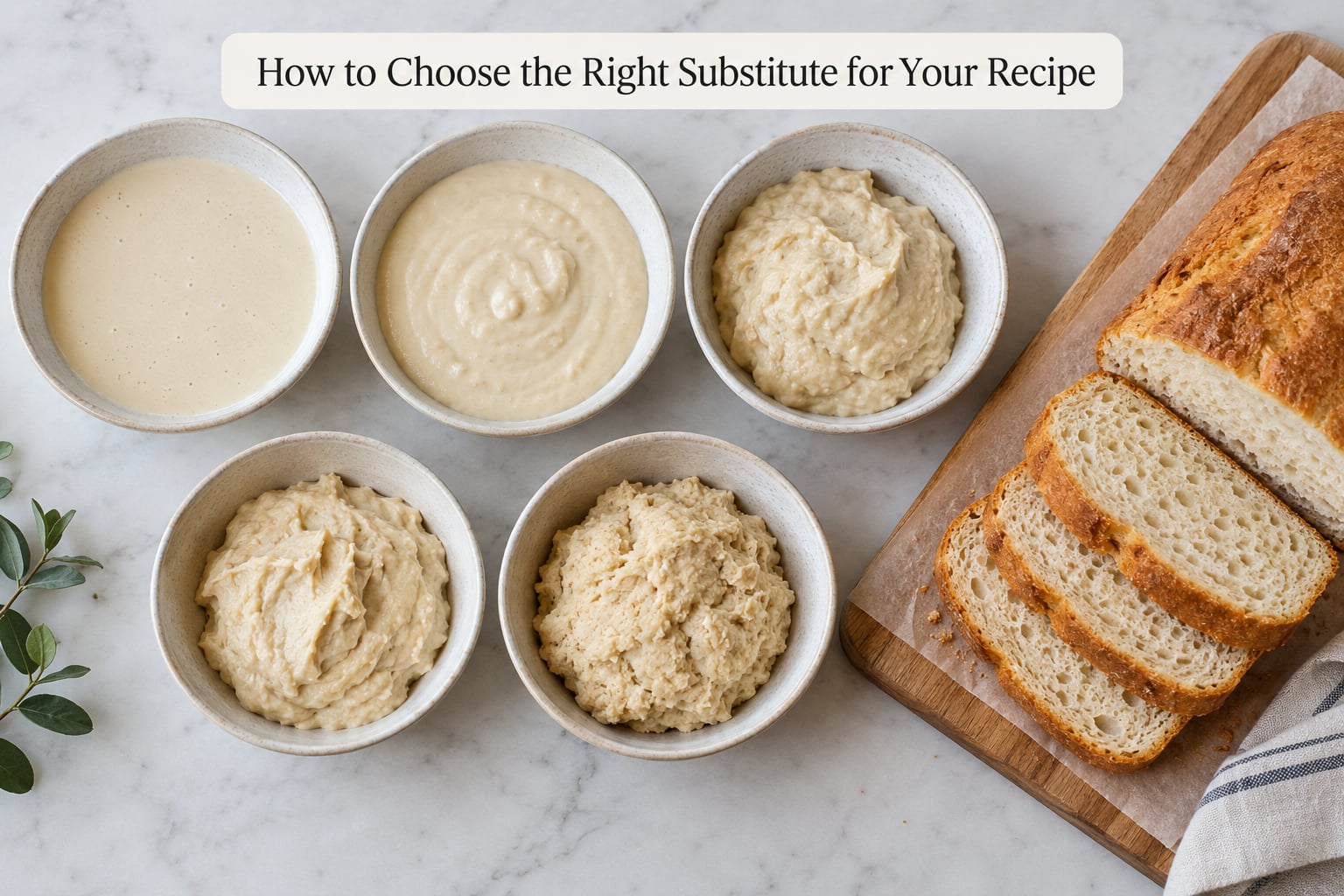
Start from the bake, not from the ingredient. Here is how the best xanthan gum substitutes in gluten free baking line up once you know what you are making.
Bread and pizza crust
Use psyllium husk powder, or ground flaxseed if you want a nuttier loaf. These are the only two on the list that can hold up a dough that needs shaping. If your bread also tends to come out dry, our guide to gluten-free bread that is not dry covers the flour side of that problem.
Cookies
Most gluten-free cookies do not need a binder at all, because the egg and the butter already hold them. When you want a softer, cakier cookie, add chia or use a little psyllium, and keep cornstarch for the ones that should stay thin and crisp.
Cake and cupcakes
Cornstarch or potato starch will give you the tenderest crumb with no flavor change. Psyllium is worth trying if the cake has cocoa or nut butter in it and needs extra moisture held over a longer bake.
Muffins and quick breads
Ground flaxseed is the natural pick here, because the flavor suits these bakes and the structure holds well. Chia works too if dryness is the issue you are chasing.
One habit worth adopting: before you swap anything, check whether your 1:1 gluten-free flour already contains xanthan or guar gum. Many carry two to four teaspoons per recipe, and adding more on top is the reason so many home bakes come out gummy. The ingredients panel tells you within a second.
How to Adjust Gluten-Free Baking Without Xanthan Gum
Most swaps go wrong on the liquid, not the powder. These are the adjustments that have rescued my own doughs more than once.
- Mix the dry binder into the dry flour first. Dispersion is what prevents clumps, and clumps are what read as gumminess later.
- Hydrate the binder before it meets the wet ingredients if the recipe is a batter rather than a dough. Ten minutes of soaking is usually enough for ground chia and ground flax.
- Rest the dough before shaping. Thirty minutes lets psyllium and flax finish absorbing, which relaxes the dough enough to shape without tearing.
- Hold back liquid, then add it. Psyllium, chia, and flax all drink more than they advertise. Keep a little water or milk back and add it only if the dough is stiff.
- Bake a small test batch first. A dozen cookies or one small loaf costs far less than discovering the problem an hour into a full bake.
- Avoid overmixing. Once the flour looks hydrated, stop. Extra mixing works gluten into structure and here it only pushes the batter toward gum.
Two warning signs are worth calling out. A crumb that is dense and tears rather than crumbles usually means too much binder, not too little, and a dough that spreads flat on the tray usually means not enough binder plus too much liquid. Fixing either one means changing a single variable and rebaking, not rewriting the recipe.
For readers who still want gum-free results with no ratio math, a commercial blend sidesteps all of this. Celiac.com forum threads also show plenty of long-time bakers using unflavored gelatin with good results, though it is worth remembering that gelatin is not vegan and comes from an animal source.
Which Substitute Should You Choose?
Pick psyllium husk powder for the widest range of bakes, especially anything shaped or sliced, and accept that it wants extra water. Choose ground flaxseed when the recipe is a quick bread or muffin and a nutty note belongs there. Choose chia when the complaint is dryness rather than structure.
For cakes, cupcakes, and scones, cornstarch or potato starch will beat both gums on tenderness, and you may not need to compensate for the loss at all. Guar gum is the choice for frosting, puddings, and very smooth batters where it sits closer to a one-for-one swap, using roughly 50 percent more than the xanthan amount, a conversion Carol Fenster’s Gluten Free 101 is often quoted for.
And if you would rather not calculate anything at all, a commercial blend handles the ratios for you at the cost of control.
Frequently Asked Questions
What can I use instead of xanthan gum in gluten-free baking?
The most common options are psyllium husk powder, ground flaxseed, chia seeds, cornstarch, potato starch, guar gum, egg white, unflavored gelatin, and preblended gluten-free binders. Choose psyllium for bread and pizza crust, ground flax for quick breads and muffins, chia for moisture, and cornstarch or potato starch for cakes and cookies.
Can I bake gluten-free bread without xanthan gum?
Yes, but you still need something to hold the dough together. Psyllium husk powder is the closest match and is used in many gum-free bread recipes. Add liquid slowly, since psyllium absorbs a surprising amount of it, and rest the dough before shaping so it stops cracking at the edges.
Can I make gluten-free cake and cookies without xanthan gum?
In most cases, yes. Cakes and cookies lean on eggs, sugar, and fat for structure, so removing gum costs you very little. Add cornstarch or potato starch if the crumb feels fragile, or a spoonful of ground chia if it dries out. Reserve psyllium for bakes that need real structure.
How much xanthan gum do I add to 1 cup of gluten-free flour?
A typical starting point is 1/4 to 1/2 teaspoon of xanthan gum per cup of gluten-free flour, which is about 1 to 2 teaspoons for a two-cup recipe. Always check the flour blend first, since many 1:1 blends already include two to four teaspoons and adding more causes a gummy crumb.
Is there gluten-free flour that does not already contain xanthan gum?
Yes. Single-ingredient flours such as almond, coconut, chickpea, and brown rice flour contain no gums at all, and some blends list xanthan and guar gum on the ingredients panel while others omit them. Read the panel each time, because blends change between production runs and even between sizes of the same bag.
Why do people avoid xanthan gum?
The most cited reason is digestive. Because it is a large soluble fiber, a generous amount can cause bloating, gas, and loose stools, which matters to people with sensitive guts and to those already managing celiac disease or autoimmune conditions. Others prefer it for clean-label reasons, since it is a fermentation byproduct rather than a whole-food ingredient.
Conclusion: Start With the Recipe’s Texture Needs
Most gluten-free bakes do not need a complicated answer, so comparing xanthan gum substitutes in gluten free baking comes down to a short list. Start with psyllium husk powder for bread and anything you shape, ground flaxseed for quick breads and muffins, and cornstarch or potato starch when you want a tender cake. Use chia when the problem is dryness.
Choose one substitute, use a conservative amount, and bake a small test batch before you convert a full recipe. That one habit will save you more failed bakes than any ratio on this page.