Independence for a teenager is not a single milestone on a birthday. It is a stack of small, ordinary abilities: knowing when to shower, writing down what the doctor said, comparing two prices at the store, getting home from a shift without a panic. This independent living skills checklist for teens breaks those abilities into 12 areas you can actually practice, one at a time, and shows you what to look for at each stage.
Use it as a map, not a scorecard. Two teens the same age can sit in completely different places on this list, and that is normal. A teen with ADHD may master grocery shopping quickly and still need years of practice with time management, while a teen with a motor difference may manage money well and need adapted ways to handle laundry. The goal is progress your family can see, not a number to hit before the school year ends.
Most parents I talk to say the same thing: they did not know where to start. So pick one skill, practice it until it feels boring, then move to the next.
Table of Contents
- Independent Living Skills Checklist for Teens at a Glance
- 1. Managing Personal Routines and Time
- How do you fade reminders without the morning falling apart?
- 2. Communication and Asking for Help
- 3. Organization and Completing Tasks
- 4. Laundry and Clothing Care
- 5. Meal Planning, Cooking, and Kitchen Safety
- 6. Grocery Shopping and Food Choices
- 7. Money Management and Everyday Purchases
- 8. Hygiene, Health, and Self-Care
- 9. Household Chores and Maintaining a Space
- 10. Transportation and Planning a Safe Trip
- 11. Technology, Privacy, and Online Safety
- 12. Choosing Goals and Practicing Greater Independence
- Frequently Asked Questions
- At what age should teens start learning independent living skills?
- How do I teach independent living skills to an autistic teen?
- What are the most important independent living skills for an 18-year-old?
- How much prompting is too much when a teen is learning a new skill?
- How can I track whether my teen is actually making progress?
- When should I bring in a school, occupational therapist, or other professional?
- How to Start This Checklist
Independent Living Skills Checklist for Teens at a Glance
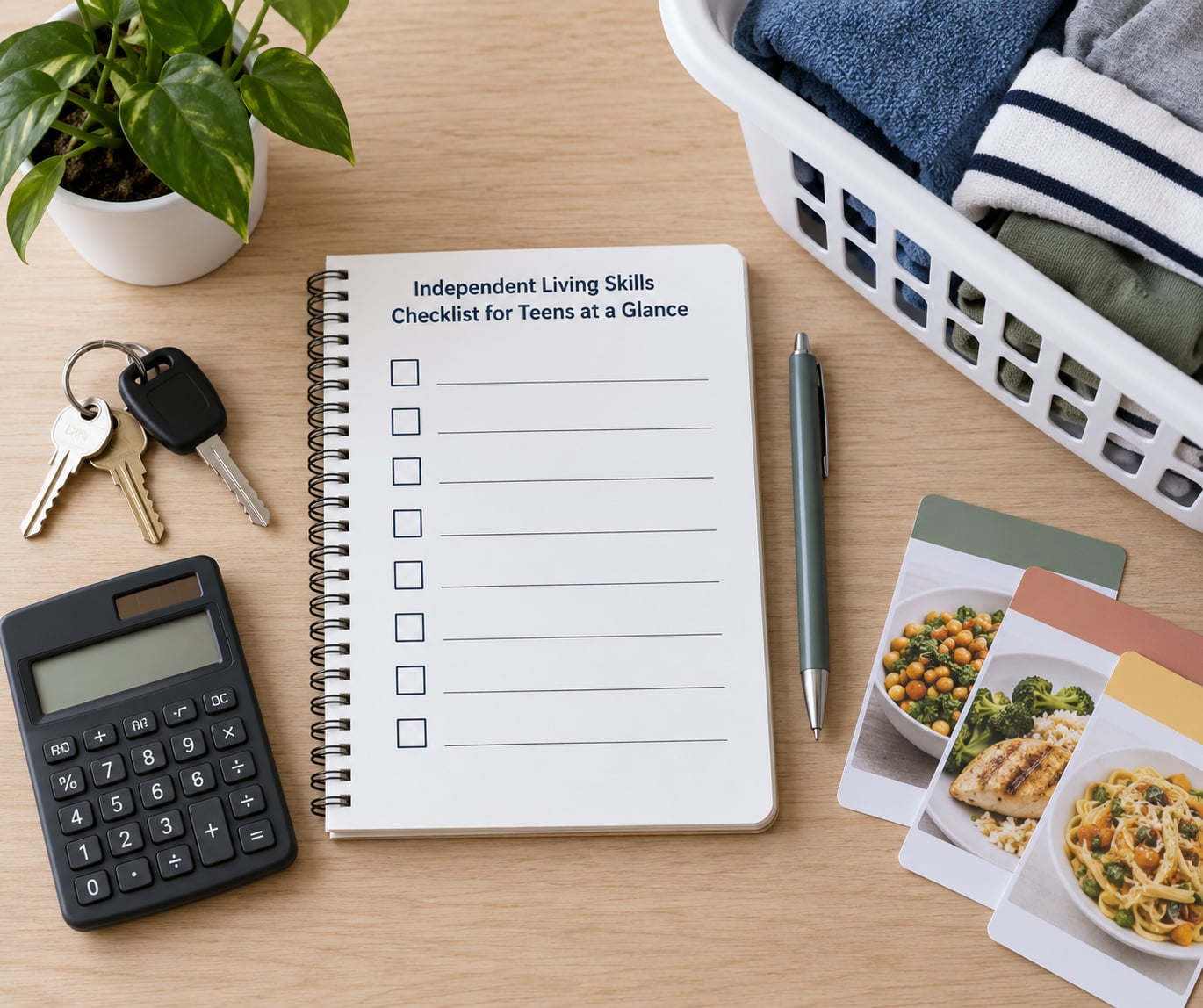
This checklist is a gradual-readiness tool. Readiness depends on age, abilities, interests, and the amount and type of support a teen has available, so treat each skill as something a teen can move toward rather than something they either have or do not have.
Here is the short version of what you are assessing across the 12 areas below.
- Managing personal routines and time — waking, grooming, meals, bedtime, and planning an hour of their own.
- Communication and asking for help — making a request, asking a follow-up question, and knowing who to contact.
- Organization and completing tasks — turning a big job into steps that actually get finished.
- Laundry and clothing care — sorting, washing, drying, folding, and putting clothes away.
- Meal planning, cooking, and kitchen safety — planning simple meals and handling equipment safely.
- Grocery shopping and food choices — a list, a budget, a label, and a completed checkout.
- Money management and everyday purchases — needs versus wants, tracking spending, and guarding personal information.
- Hygiene, health, and self-care — private routines, appointments, sick days, and knowing when to ask an adult.
- Household chores and maintaining a space — dishes, counters, floors, trash, and a room that stays livable.
- Transportation and planning a safe trip — reading a schedule, getting there, and handling a change of plan.
- Technology, privacy, and online safety — passwords, privacy settings, scams, and oversharing.
- Choosing goals and practicing greater independence — picking one meaningful goal and reviewing it honestly.
If your teen learns better by watching someone else do a task first, our guide to how to use video modeling to teach life skills is a good way to build your own recordings. For teens who learn most from doing the task alongside a person rather than from a lecture, a walkthrough of how to teach self dressing skills step by step shows a task broken into teachable steps, and that same approach works for laundry, cooking, and budgeting.
1. Managing Personal Routines and Time
A teen does not need to be self-motivated to build a routine. They need a visible routine that works on a low-energy day, followed by slow removal of the prompts that hold it up.
What to practice: waking at a set time, showering and grooming without reminders, eating at regular times, choosing clothes, and getting to bed at an agreed hour. For a 13-year-old, the goal is usually one or two of these handled independently, not the whole list.
Tools that help: a written or phone-based visual schedule with pictures rather than words, a timer for the length of a shower, and a two-week calendar they mark off themselves.
Fading prompts is the part most families get wrong. If you call out the morning routine from another room every single day, your teen never practices deciding when to start it. Try stepping back one step at a time, from verbal reminder to a written note to a silent visual cue.
How do you fade reminders without the morning falling apart?
Change one prompt at a time and give it a full week before deciding whether to change another. Most teenagers need roughly three weeks of consistent practice before a new routine feels automatic, so expect the first few weeks to look messy.
2. Communication and Asking for Help
Independent teens ask for things clearly and know who to contact when something goes wrong. Both halves matter, and both can be taught out loud before they ever have to be used in a real appointment.
Start with low-stakes practice: ordering their own food, asking a teacher one question, calling a business to check an appointment time. Then work up to phone calls to a doctor’s office, which is a milestone many parents mention as the one that finally felt like adulthood.
Teach the phrase that does most of the work: “I did not understand that part, can you say it another way?” A teen who can ask that question in a doctor’s office is far more independent than a teen who nods and leaves with nothing usable.
Part of this skill is knowing when information is unclear. Practice it at home by giving a deliberately vague instruction, like “get the stuff for tomorrow,” and asking what questions your teen needs answered before starting.
3. Organization and Completing Tasks
The gap between knowing how to do something and actually finishing it is usually not motivation. It is that the task was never broken down into steps small enough to start.
Work together on the breakdown once. Instead of “clean your room,” write five specific steps: put trash in the bin, put books on the shelf, put clothes in the hamper, wipe the desk, make the bed. Then let your teen own the list from there.
Tools that help: one calendar for appointments and deadlines, a repeating checklist taped inside a closet door, a timer for anything that tends to sprawl, and a single folder per subject so nothing gets lost between backpacks.
For executive-function-heavy learners, externalize the thinking. Put the checklist where the task happens rather than in a phone app your teen may never open on a distracted day.
4. Laundry and Clothing Care
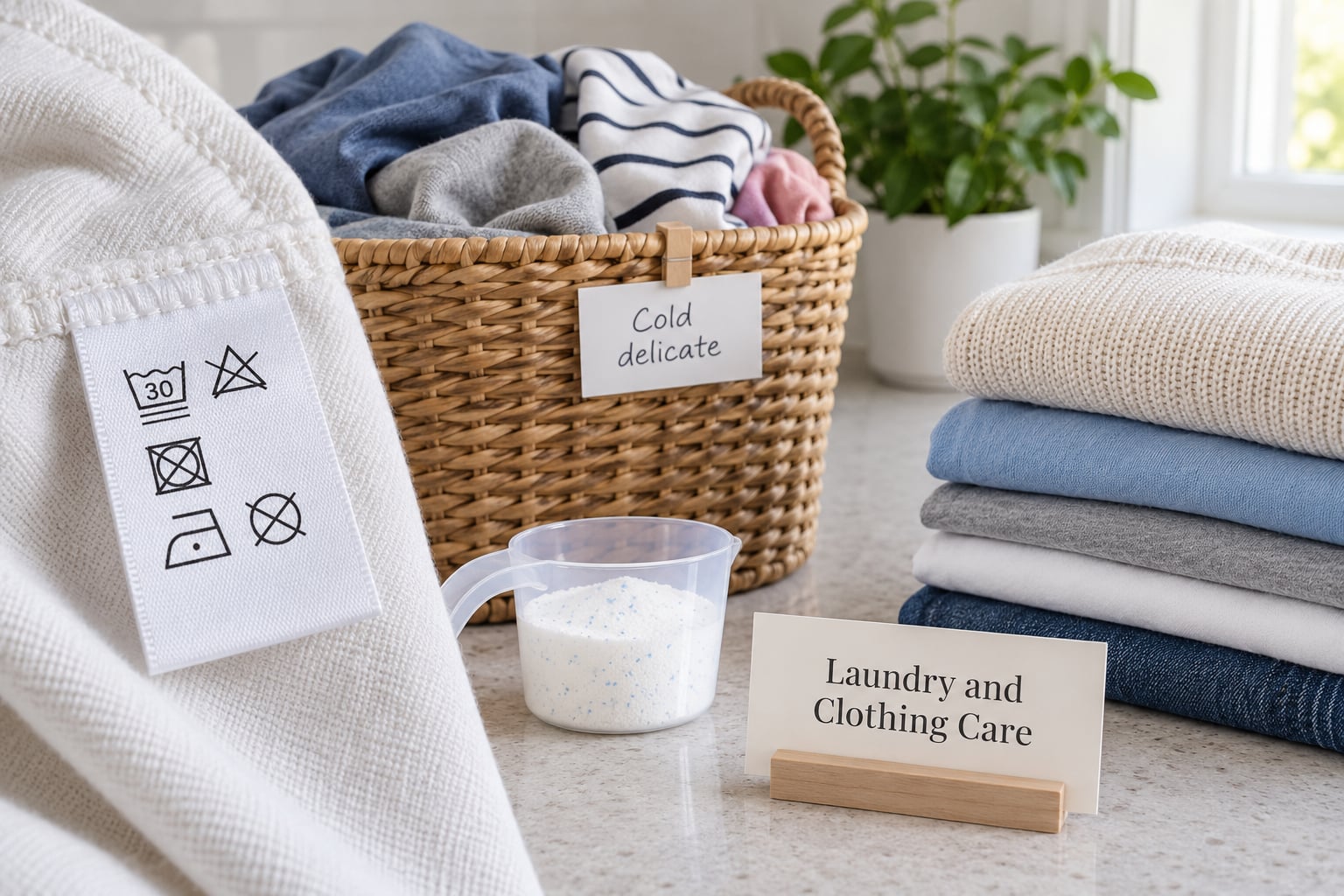
Laundry is the most commonly skipped skill and one of the easiest to practice, because the steps repeat on a schedule and mistakes are cheap.
Work in this order: sort by color and fabric, check each care label, measure detergent rather than pouring, choose a cycle, start the machine, move clothes to the dryer at the right time, fold, and put away.
The care label is where most real-world reading happens. A label saying “Cold gentle, line dry” tells a teen two decisions, and reading those symbols is a genuine literacy skill worth naming as one.
Adaptations matter here. A teen with sensory sensitivities may prefer a fragrance-free detergent and a fast cycle, or may need a visual timer to move the load. A teen with motor differences may find measuring detergent or using a dryer latch difficult, and switching to liquid detergent in a pre-measured bottle removes that barrier without changing the goal.
5. Meal Planning, Cooking, and Kitchen Safety
Cooking three to five simple meals is worth more than a long list of complicated recipes. Aim for meals a teen can make from a written list without asking a single question.
Start with a small rotation: one breakfast, two easy dinners, one snack, and one item they can pack for school. Have them read the recipe the night before and list what they need from the kitchen.
Safety is non-negotiable and should be taught before independence is expanded: which appliances need an adult nearby, how to handle a hot pan, why knives get passed handle-first, and how to check that food is safe to eat. Follow current USDA guidance on internal temperatures and storage times rather than relying on guesswork.
For teens with allergies or dietary restrictions, keep an allergy-safe shopping list on the fridge and check ingredient labels every single purchase. When a family uses an allergen-free kitchen, teach cross-contact awareness too, since a clean-looking surface can still matter.
6. Grocery Shopping and Food Choices
A successful grocery trip has three parts: a list, a comparison between options, and a plan for allergies and preferences. Practice all three before sending a teen out alone.
Build the list from the meal plan rather than the other way around, and have your teen write it. A simple comparison exercise works well: two brands of the same item, look at the unit price, and pick the better value per ounce.
Store navigation is a skill on its own. Practice finding three specific items without a list, handling a substitution when something is not on the shelf, and returning an item to the correct aisle.
Teach checkout as a sequence, not a single action: scanning, knowing what payment method to use, watching the total, and keeping the receipt when needed. Many teens first do a full solo trip with a parent standing a few feet behind, then graduate to the next aisle.
7. Money Management and Everyday Purchases
Money is usually the number one skill parents wish they had taught earlier, and the one teens are most willing to learn when the money is their own.
Begin with the needs-versus-wants distinction using real purchases. A tube of toothpaste goes on the list; a video game does not. Let your teen make a wrong choice on purpose once, then talk through the tradeoff afterward without judgment.
Next, open or supervise an account your teen can use day to day, such as a youth checking account, debit card with limits, or prepaid card. Teach the mechanics of a bank app: what a pending charge is, how to find a transaction, and why a password is never shared with a friend.
For families who want more detail on starting small with a young learner, our piece on how to teach money skills to a child with a disability covers budgeting in a way that adapts well to teens who need repetition or visual supports.
Personal information deserves its own line item. A teen should know that no legitimate caller, employer, or online seller needs their account password, PIN, or full card number, and what to do if someone asks.
8. Hygiene, Health, and Self-Care
This category is the one most families hesitate to hand over, because hygiene is private and health information is sensitive. Both parts of that hesitation are reasonable, and both need a plan rather than avoidance.
Build a private checklist your teen keeps in a drawer or on their phone: shower, brush teeth, deodorant, clean clothes, any medication they are cleared to manage. Specific beats general. “Wash after soccer practice” is easier to act on than “keep yourself clean.”
Appointments are the milestone here. Work toward a teen scheduling and attending a routine appointment, with a written list of questions beforehand and permission to bring a trusted adult for a first visit.
Teach sick-day basics: how to tell an adult they are unwell, which symptoms mean stopping and calling a clinician rather than pushing through, and how to contact a family member and their doctor. A teen who knows how to report a problem early is safer and more independent than one who hides it.
9. Household Chores and Maintaining a Space
A chore routine works when it is small, fixed, and attached to something the teen already does. Attaching laundry to the shower routine and dishes to dinner works better than a separate standing demand.
Pick three recurring jobs, not twelve. Load the dishwasher, take out trash, and wipe counters after dinner is a realistic starting set that most teens can run with a visual schedule.
Executive-function challenges show up most on jobs with no visible endpoint. Break “clean the bathroom” into separate weekly tasks, one square of the counter at a time, and expect the first few passes to need a prompt.
Match the task to energy. A tired teen can still fold towels even if cooking dinner is out of reach that night, and allowing for that avoids turning a chore routine into an argument every evening.
10. Transportation and Planning a Safe Trip
Getting somewhere on their own builds confidence faster than almost any other item on this list. The prep matters as much as the trip.
Before leaving, have your teen check the schedule, plan the route, pack what they need, and share a trip plan with a trusted adult: where they are going, with whom, when they expect to arrive, and what to do if plans change.
New riders should practice the routine first: arriving early, telling an adult when they are leaving and returning, standing in a well-lit waiting area, and what to do if a ride falls through.
Public transportation adds a layer of practice. Ride the route together once before riding alone, download any needed passes or apps, and plan for one realistic problem, like a missed connection or a stop that moved.
11. Technology, Privacy, and Online Safety
Teens manage more accounts than their parents have passwords for, so privacy skills are daily skills. Start with the fundamentals: a unique password per account, two-step verification turned on, and an account recovery email or phone the teen actually controls.
Review privacy settings together once every few months, especially on the devices used for social media. Most platforms default new accounts to public visibility.
Practice spotting scams. Look at a couple of common examples of messages that create urgency, ask for payment, or impersonate a brand, and talk through why each is suspicious. Remind your teen that a real organization will never ask for a password or a gift card code.
Set a personal boundary around oversharing: what is not shared publicly includes school, address, daily location, and other people’s information. Agree on what to do when something online feels confusing, including how to screenshot it and tell an adult.
12. Choosing Goals and Practicing Greater Independence
Teens sustain skills they chose themselves, so the final item is about handing over some real control. One goal at a time works best, and the goal should be meaningful rather than a punishment.
Run it like a small project. Name the goal, define what success looks like in plain terms, choose which supports are still wanted, pick a low-risk place to practice, and set a review date.
An example: the goal is getting to the orthodontist independently. Success is calling the office, booking the appointment, writing down the questions, and checking in the day before. The supports chosen are one practice call with a parent listening and a checklist on the fridge.
Independence is not an all-or-nothing test. A teen who manages a calendar, cooks two meals, and rides transit to school is building real competence even if laundry still takes a reminder.
Frequently Asked Questions
At what age should teens start learning independent living skills?
Start early and keep it small. From around age 12 or 13, a teen can take on one routine task such as managing their own shower or packing a school bag. By 15 or 16, most teens can handle a weekly chore, simple cooking, and making their own appointments. By 18, expectations usually rise to shopping alone, managing an account, and planning transport. Age is only a rough guide, so move a teen up or down a level based on what they can actually sustain.
How do I teach independent living skills to an autistic teen?
Teach one concrete step at a time, in the same order every time, and make the sequence visible with a written checklist or photo cards. Video modeling works well, since watching the task done without a person present reduces social pressure. Predict what will be unpredictable, like a noisy appliance or a change in routine, and practice it in advance. Repetition is not a plateau here; it is the method.
What are the most important independent living skills for an 18-year-old?
The ones that come up most often from parents and from teens themselves are managing money, planning and preparing a few simple meals, doing laundry end to end, scheduling and attending appointments, and getting around safely on their own. Add knowing how to ask for help and how to protect personal information, because those two quietly prevent most bad situations.
How much prompting is too much when a teen is learning a new skill?
More prompting than most parents expect is fine at the beginning. The useful measure is whether the amount is going down. If you are still giving the same reminder every day after several weeks of consistent practice, the steps are probably too big or the skill is not scheduled tightly enough. Try shrinking the task, adding a visual checklist, or prompting less frequently rather than pressing harder.
How can I track whether my teen is actually making progress?
Keep one page per skill area with a date and a short note each time your teen does it independently, partially, or with prompts. A simple three-column grid works: skill, date, level of support. Review it once a month rather than daily. What matters is the trend in the support column over time, and it also gives you something concrete to talk about without turning progress into a lecture.
When should I bring in a school, occupational therapist, or other professional?
Bring in a professional when a skill is not progressing despite consistent practice, when delays in daily self-care, communication, or motor skills are a concern, or when a school or disability-related plan exists. An occupational therapist can adapt a task to a teen’s motor, sensory, or processing needs, and special education staff can fold skills into a transition plan. Asking early is easier than untangling a stalled skill later.
How to Start This Checklist
Pick one skill from this independent living skills checklist for teens and make it small enough to succeed this week. If laundry is your goal, start with sorting a single load and reading three care labels, nothing more.
Then choose a teaching method that fits your teen: a written checklist, a video model, doing it side by side, or working from a phone reminder in the room where the task happens.
Practice on a schedule, not on a good mood. Note the level of support each time, and expect to prompt more than feels comfortable for the first few weeks.
When a skill sticks, name it out loud and move on. Independence is built out of many small wins, and the teens who manage well as adults are usually the ones who were allowed to do ordinary things imperfectly, a long time before anyone called it independence.