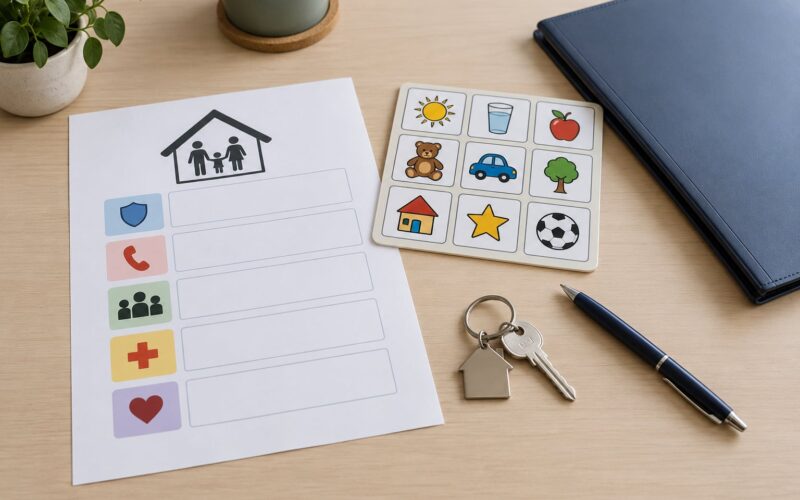

Learning how to support a friend whose child has a disability mostly comes down to three things: listen first, ask what would actually help, then follow through with one specific thing you said you would do. Most friends want to help but worry about saying the wrong thing or making the family feel pitied, so the safest first move is a simple one.
Most useful support is unglamorous. A meal on Tuesday, a ride to the therapy appointment, an hour of childcare on Saturday so a parent can sleep past six. It takes about ten minutes to set up and it does more good than a week of worried texts.
Table of Contents
- What You Need
- Step-by-Step
- Step 1: Ask What Support Would Be Most Helpful
- Step 2: Listen Without Trying to Fix Everything
- Step 3: Make Specific, Reliable Offers
- Step 4: Support the Whole Family’s Well-Being
- Step 5: Stay Connected After the Immediate Crisis
- Common Mistakes
- Offering Unsolicited Advice About Their Child
- Pitying the Parent or the Child
- Comparing Your Situation to Their Situation
- Promising More Than You Can Deliver
- Treating the Parent as Only a Disability Manager
- Drifting Away Quietly
- Frequently Asked Questions
- What should I say when my friend tells me their child has a disability?
- How do I help with meals and transportation without making it feel like charity?
- What do I do if the family says they do not need help?
- How do I support my friend without overstepping or giving advice they did not ask for?
- What if I disagree with how they parent or which therapy they chose?
- Conclusion
What You Need
You do not need training, money or a special personality. You need three things: the willingness to listen without fixing, a clear idea of what you can realistically give, and honesty about your own limits.
Before you offer anything, take five minutes and answer three questions for yourself:
- How much time do I genuinely have each week? Not the time I wish I had.
- Am I good at meals, driving, phone calls, paperwork, childcare, or listening? Pick the one or two that are actually me.
- What can I keep doing for a year, not just for three weeks after a diagnosis?
That last question is the one most people skip. A friend who cooks dinner once after the diagnosis and then drifts away ends up costing the family more than a stranger, because now they have to process one more loss.
Then ask your friend what support would be most helpful, and let their answer set the terms. If you have never had to work out how to support a friend whose child has a disability before, the uncertainty is usually what stalls the whole thing, so the step-by-step below walks through the conversation phrase by phrase.
Step-by-Step

Step 1: Ask What Support Would Be Most Helpful
Do not guess. Guessing is how you end up with a casserole the family already has too much of, or a weekend of childcare from someone the child has never been alone with.
Offer a menu instead of a vague question. Something like: “We can do dinner on Wednesdays, or drive you to appointments on Tuesdays, or I can sit with him for two hours on Saturday so you can get out. Which of those would help most, and is there something else that would be better?”
Giving options lowers the work of answering. A parent who is exhausted can point at a card instead of describing a need, and they can change their mind later without it being awkward.
You know it worked when the answer sounds specific rather than polite. “Any Thursday evening, whatever you need” is a brush-off. “Every Thursday from six to eight would get me to bed before nine” is a real answer, and it tells you exactly what to do.
Step 2: Listen Without Trying to Fix Everything
The hardest habit for a helpful friend is leaving the problem unsolved. You hear that therapy went badly, that the school ignored a request, that the child had a rough week, and some part of you starts assembling solutions while they are still talking.
Two phrases fix most of it. “I’m here to listen” and “you don’t have to explain or solve anything right now.” Then follow the caregiver’s lead. If they vent, let them vent. If they ask a question, answer it.
Reflecting back what you heard is more useful than advice. “So the biggest problem is that every morning takes ninety minutes and you’re doing it alone” tells them you were actually paying attention. It costs nothing and parents say it is the thing they remember.
Advice given unasked usually lands as a verdict on their parenting. If you genuinely think something would help, wait for an opening, then ask permission: “Can I tell you what helped us with the sleep thing? No pressure at all.”
Step 3: Make Specific, Reliable Offers
“Let me know if you need anything” is the most common offer and the least usable, because it hands all the work back to the person who is already exhausted. Replace it with a date, a task and a limit.
Compare the two: “I’m here whenever you need me” against “I’ll bring dinner Thursday and stay twenty minutes unless you ask me to stay longer.” The second one is a plan. It can be accepted, refused or rescheduled without anyone performing gratitude.
Reliable beats generous. One person who shows up every other Tuesday is worth more than six friends who each drop off once, because the family can build a week around a known thing.
If you take on something logistical, own the whole task. It is worth reading up on visiting a theme park with a disabled child before you offer an outing, so the planning burden does not land back on the parent. That kind of preparation is invisible help and it is deeply felt.
Step 4: Support the Whole Family’s Well-Being
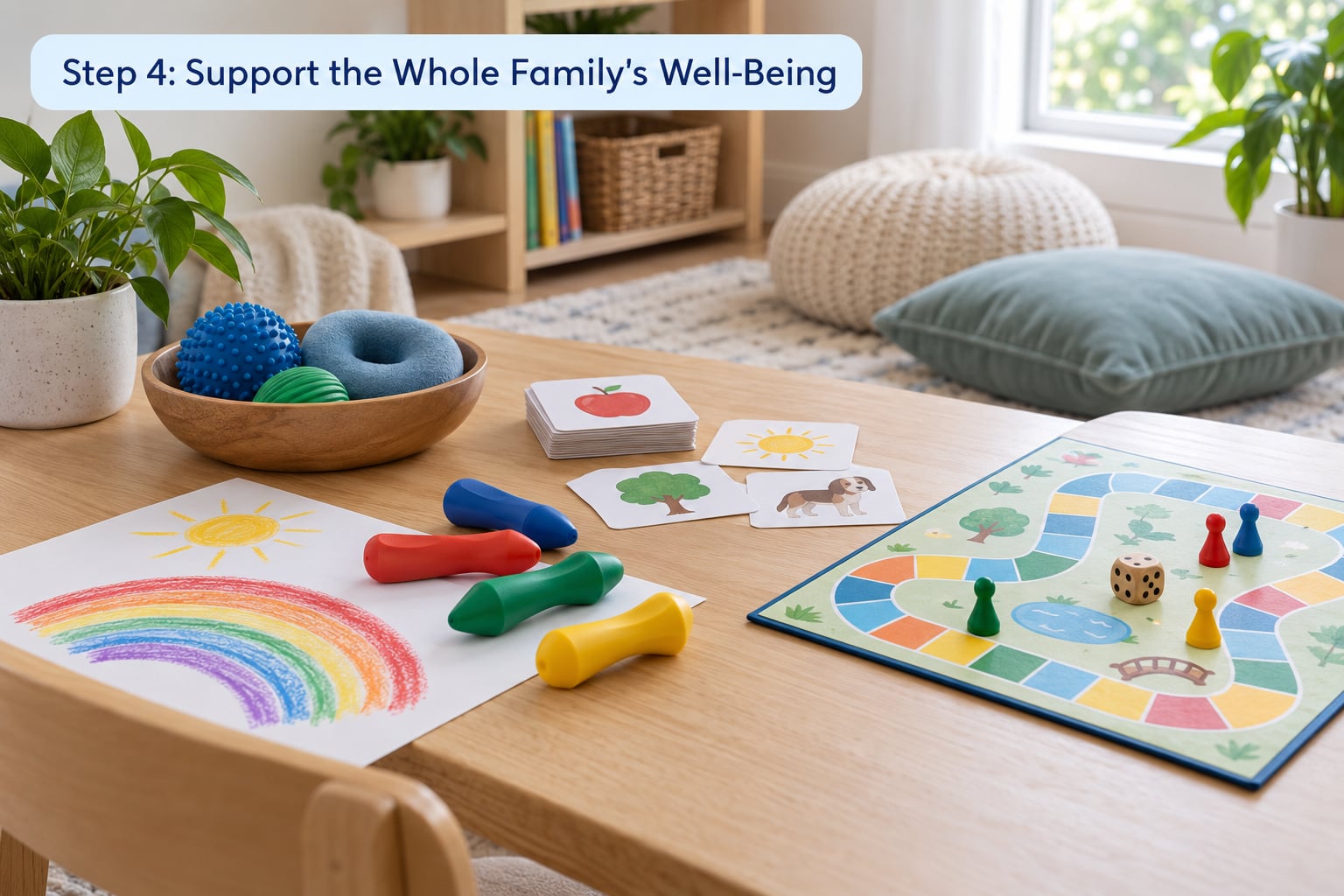
A disabled child’s siblings often get less attention as the months pass, and they are the easiest place for an outside friend to help. Offer to take a sibling to an activity, sit with them while their parent handles an appointment, or just ask how they are doing and then wait through the pause.
The disabled child deserves to be included as a whole person, not discussed as a diagnosis. Follow the family’s lead on how much they share. Use the child’s actual name when you talk about them to other adults. If you are unsure whether person-first language (“a child with autism”) or identity-first language (“an autistic child”) fits, ask the parent once and use their words from then on.
When you are around the child, lower the expectations of yourself. Follow their lead, do not force eye contact, and let a stim be a stim rather than something to correct. Our guide to supporting echolalia instead of stopping it covers the same principle for a specific behavior. If homework is the flashpoint right now, how to help a child with homework meltdowns has a step-by-step approach you can read before offering to sit alongside them.
The best sign of success is ordinary. The child talks to you about something that has nothing to do with therapy, and the parent mentions a normal complaint. That means the family is relaxed around you.
Step 5: Stay Connected After the Immediate Crisis
The first weeks after a diagnosis bring an unusual amount of attention, and then it fades. The load does not fade with it. This is where most friendships quietly end, and it is also the easiest place to stand out.
Consistent, low-pressure contact beats dramatic gestures every time. Put a recurring reminder in your phone for a short text on Friday afternoons. Ask to share a meal once a month. Offer a walk that needs no conversation if nobody feels like talking.
Keep messages easy to answer. A paragraph about how you noticed something is sweet and requires a reply. “Want me to grab dinner Thursday?” requires one word.
If a text goes unanswered for a few weeks, do not assume you did something wrong. Send a short one anyway. The quiet stretch after the diagnosis is when a friend who is still around is worth the most.
Common Mistakes
These are the missteps that come from good intentions, and they are the ones that trip up people who are new to how to support a friend whose child has a disability. Each one has a simple correction.
Offering Unsolicited Advice About Their Child
“Have you tried a different therapist?” lands as a verdict on choices they have already poured money and tears into. Ask before you advise, and if they ask, keep it short and about your own experience rather than their child.
Pitying the Parent or the Child
Pity is the fastest way to make a family feel like a charity case. It turns their life into something sad that happened to them, instead of a life that is full and different and mostly private. Treat them as parents first and as friends second, the same way you would with anyone.
Comparing Your Situation to Their Situation
“At least he can walk” or “I know what you mean, my anxiety is bad too” both shrink what they are dealing with. Every family’s load is different, and comparison only makes their load feel ungrateful to complain about.
Promising More Than You Can Deliver
A big enthusiastic promise that quietly fades teaches them that your word is unreliable. Offer the smaller thing you can repeat. One dependable hour beats a month of enthusiasm.
Treating the Parent as Only a Disability Manager
If every conversation is about the diagnosis, appointments and progress charts, the friendship starts to feel like an appointment. Ask about their week, their job, their terrible television taste, the holiday they are dreading. Ordinary conversation is a form of care.
Drifting Away Quietly
Not showing up rarely comes from bad motives. It comes from not knowing what to do, and from assuming someone else is handling it. Put reminders in your calendar now, while you are motivated.
A few habits cover most of it. Ask, then shut up. Offer a date, not a feeling. Keep showing up after the novelty wears off. And when in doubt, name the child and ask what would help this week.
Frequently Asked Questions
What should I say when my friend tells me their child has a disability?
Thank them for telling you, then ask what kind of support would help rather than commenting on the diagnosis. Parents often remember the friends who skipped the difficult part and started planning a meal or a drive. Keep your reaction calm, use the child’s name when you talk about them to others, and follow the parent’s lead on what gets shared in public.
How do I help with meals and transportation without making it feel like charity?
Tie the help to a schedule instead of an occasion. Say you are cooking on Wednesdays and driving on appointment days, so it reads as a routine rather than an act of pity. Let them say no to a particular week without argument. Parents who describe support as helpful usually mention repeatability, not generosity, as the reason.
What do I do if the family says they do not need help?
Believe them and keep the relationship going. Say something like I am here when it gets hard, and check in periodically without attaching it to an offer. Sometimes the answer is no because the help offered is wrong, so leave the door open with a specific standing offer rather than pushing. Consistent low-pressure contact still counts as support.
How do I support my friend without overstepping or giving advice they did not ask for?
Ask permission before offering an opinion, and answer the question you were asked instead of the one you would rather answer. When someone is venting, the useful response is a reflection such as restating what they just said, not a solution. If you are unsure, say I do not know what you need, and would it help if I just listened for a bit.
What if I disagree with how they parent or which therapy they chose?
Hold the opinion unless they ask for it, and keep it to one sentence about your own experience rather than a judgment about their child. If it is a safety concern, name it plainly and once, then drop it unless they raise it. Most disagreements about therapy or schooling come from different budgets, waitlists and local services rather than from bad judgment.
Conclusion
Start with one question: what would actually help this week? Then do one small thing on a day you can commit to, and set a reminder to do it again.
You are not going to fix how to support a friend whose child has a disability, and nobody expects you to. Show up on an ordinary Tuesday, ask about their life and not just their child, and let the friendship do the rest. Updated for 2026.