
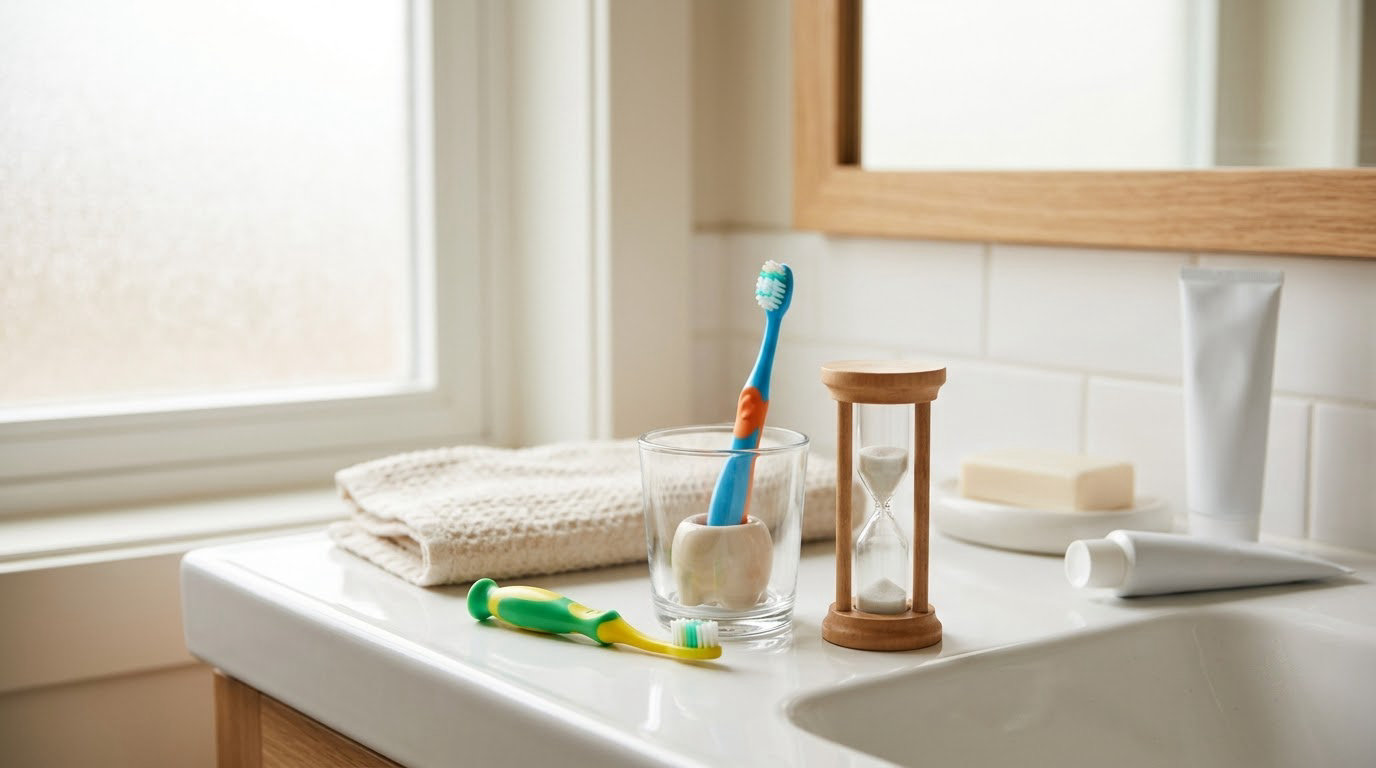
To help a child tolerate tooth brushing, shrink the ask until it is smaller than the fight, then repeat that small step until it is boring. Most children who clench, cry, or run from the brush are not being defiant. They are responding to something that feels too big, too fast, or too unpredictable, and tolerance is a skill you build rather than a behaviour you wait for.
This guide works for toddlers who suddenly refuse after months of fine brushing, for autistic children whose mouths are genuinely aversive, and for children with limited motor control who need hands-on help well past the usual age. It takes a few calm minutes a day, most days, and it takes longer than you want. The measure of success on any given day is less distress than last week, not a perfect two-minute routine.
One note before you start. What follows is general information about home routines, not diagnosis or treatment. If your child is in pain, has swelling, bleeds, or shows changes in eating or sleeping, that is a dental or medical question and it outranks any technique on this page.
Table of Contents
- What You Need
- Step-by-Step: How to Help a Child Tolerate Tooth Brushing
- 1. Check for pain before adding more practice
- 2. Choose a toothbrush the child can handle
- 3. Practice without touching the mouth
- 4. Touch the mouth in a predictable way
- 5. Add the brush to the routine gradually
- 6. Use short, consistent language
- 7. Practice twice daily and keep the goal flexible
- Common Mistakes
- Frequently Asked Questions
- How long will it take my child to tolerate tooth brushing?
- Should I use fluoride toothpaste if my child cannot tolerate brushing?
- What can I do when tooth brushing triggers a meltdown?
- How can I help a child with limited motor skills brush their teeth?
- When should I ask a dentist or doctor for help with tooth brushing?
- Start With the Smallest Step Your Child Can Accept Today
What You Need
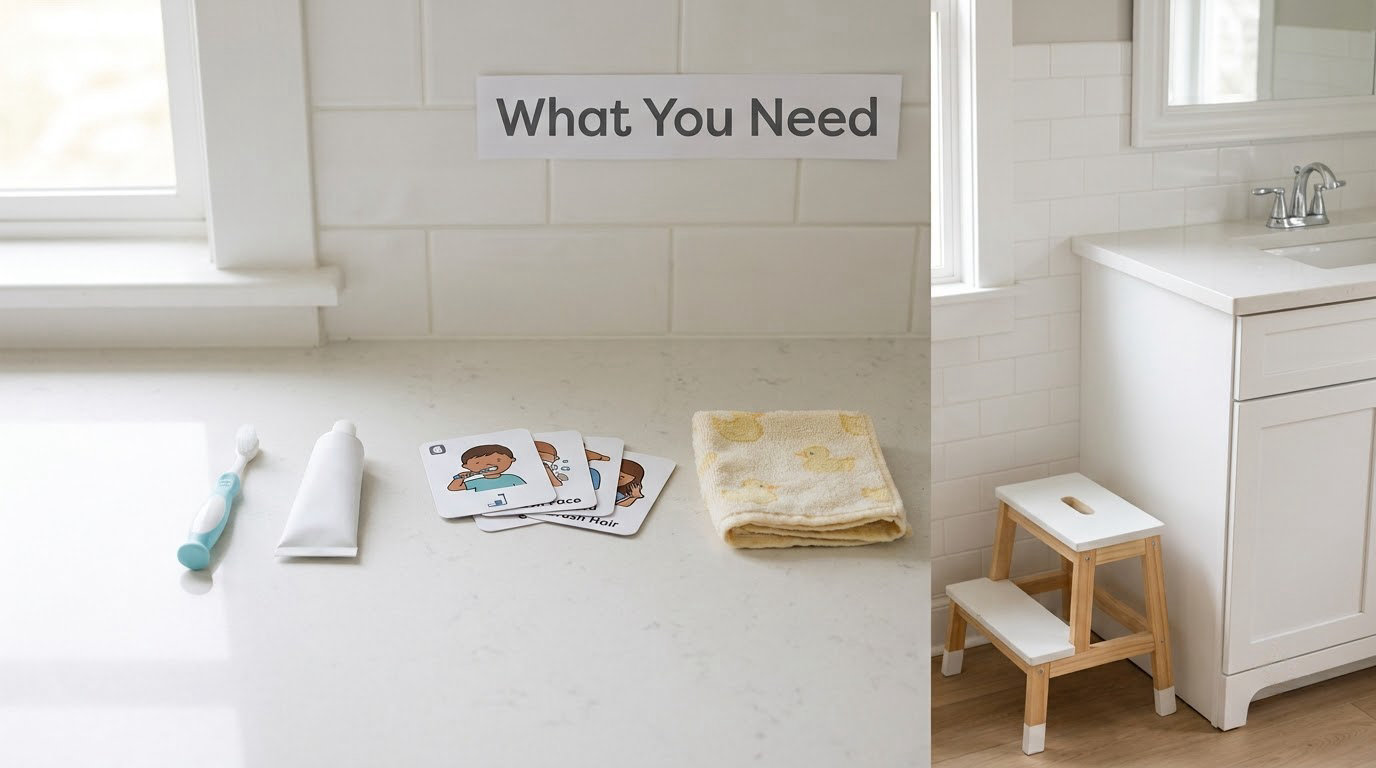
Gather a few things before you start a practice routine, but expect to swap some of them out. Nothing here is a magic tool, and the child who tolerates one item on this list may flatly refuse another.
- A child-sized toothbrush with very soft bristles. A head that is too big for the mouth turns a routine into a fight before it starts.
- Toothpaste the child already likes. Mint is the single most commonly reported trigger. Fruit flavours such as strawberry, grape, or applemint come up often as ones that work.
- A stable place to sit. A two-step stool at the sink solves the wobbling, which solves a surprising share of the flailing.
- A visual routine. Picture cards, a printed schedule, or the same three songs in the same order every night. Predictability is doing more work here than most parents expect.
- A small comfort item. A washcloth, a favourite toy, or a second toothbrush the child can hold while you work.
A note on toothpaste: mainstream guidance is that children use fluoride toothpaste from the first tooth, in a rice-grain smear for the youngest and a pea-sized amount for most preschoolers, with an adult supervising and helping until they can do it well themselves, usually around age six to seven. A child who cannot tolerate brushing is still a candidate for professional fluoride varnish on a schedule set by their dentist, so a tolerance problem does not have to mean no protection.
What you do not need is a full set of new tools on day one. Change one variable at a time, or you will not know which change helped.
Step-by-Step: How to Help a Child Tolerate Tooth Brushing
Before the seven steps, set the goal. Success means the amount of distress going down, which is a different target from getting every surface clean. On a hard day, brushing one front tooth calmly and stopping is a win. On a good day, the full routine runs without a fight. Both count as progress as long as you are moving in the same direction.
1. Check for pain before adding more practice
Rule out pain first, because desensitization work on a sore mouth makes everything worse. Tooth pain, a mouth sore, tender swollen gums, a recently chipped or loosened tooth, and irritation from reflux are all reasons a mouth might hurt when a brush touches it.
Watch for the quiet signals too, especially in a child who cannot easily tell you. Turning their head away the instant you approach, crying only at bedtime and not in the morning, eating on one side, flinching when you touch a specific tooth, or fussing during meals they used to enjoy all point at the mouth rather than the routine.
Contact your dentist or pediatrician when you see pain, swelling, bleeding that does not settle, a bump or change in the shape of the face or jaw, fever alongside mouth symptoms, or discomfort that persists for more than a few days. Do not try to diagnose the cause at home and do not push through pain to keep a practice streak going.
One quick home check helps. Run a clean fingertip gently along the outside of the gums and let the child watch you do it to your own teeth first. A child who tolerates a finger but not the brush usually has a problem with the brush, not with touch. A child who flinches from the finger is telling you something worth a phone call.
2. Choose a toothbrush the child can handle
Pick the brush by the child’s motor skills and sensory preferences, not by what is popular. Four things vary between brushes and each one changes what the mouth experiences: bristle softness, head size, handle shape and texture, and whether the brush vibrates.
- Manual versus electric. An electric brush adds vibration and a sound that many children find genuinely soothing, which is why it shows up so often as a breakthrough in parents’ accounts. Others find the hum unbearable. It is a trial, not an upgrade.
- Head size. For a small mouth or a child who clenches, a small head that can move a tooth at a time works better than a large one you are trying to angle.
- Bristle softness. Very soft bristles reduce the tactile load on tender gums. Anything firmer is harder to justify for a child who is already resisting.
- Handle shape. A thick, weighted, or rubber-gripped handle is steadier for a child with a tremor or limited fine motor control. A narrow slippery handle is the hardest kind to hold onto.
A silicone finger brush is worth adding to the rotation because it removes the need for the child to track a small object in a small mouth. Parents repeatedly report the position of lying the child on their back, sitting at the head, and using a finger brush as the combination that finally worked. It is slower and it needs a firm hold on the child’s head, which is its own hurdle.
Switching tools is normal and not a failure of the plan. Keep one spare toothbrush visible and treat trying a new one as part of the routine rather than as an event. The same goes for toothpaste: keep one accepted tube and one experimental tube, and swap when you have a calm run of a few days to judge it.
3. Practice without touching the mouth
Start where there is no contact at all, because the goal here is predictability rather than cleaning. Let the child look at the brush, hold it, smell it, and run it along their own arm or the back of your hand. Then let them brush your teeth while you hold still and make a fuss about how good it feels.
Keep these sessions short. Two minutes of looking and handling is plenty, and the most important rule is to end while it is still going fine. If you stop when it is calm, the child learns that the brush is not the start of something bad. If you push through the tears, they learn the opposite, and you spend the next week undoing it.
Showing a model with actual teeth helps more than describing it. A parent, a sibling, or a puppet with a wide smile makes the shape of the activity obvious in a way that instructions do not. Many families find that watching someone they love brush without complaint does more than ten reminders will.
4. Touch the mouth in a predictable way
Now you move from the hands to the face, using a clean fingertip, a damp washcloth, or a soft brush, one predictable spot at a time. The sequence most families use goes lips, then the outside of the cheeks, then the gum line, then the teeth. One touch per session at first, and repeat the same touch until it stops being a reaction.
Pair each step with your child’s own stop signal. That might be a word, a hand on your wrist, a hand over your arm, a specific sound, or turning away. Agree on it before you start rather than deciding mid-struggle what counts as enough, and treat the signal as completely legitimate rather than as a negotiation.
Move slowly. A fast approach reads as a threat, so keep the motion visible and predictable, let the child track the hand with their eyes if they want to, and pause on each spot. Going back down the ladder is normal. If a step produces distress, return to the previous step that was easy and repeat that until it is easy again, then try forward once more.
Some children need this for weeks before a toothbrush touches a tooth. That is not a plateau, it is the plan working, and the way through it is repetition at the level the child can handle rather than pushing to the level you need.
5. Add the brush to the routine gradually
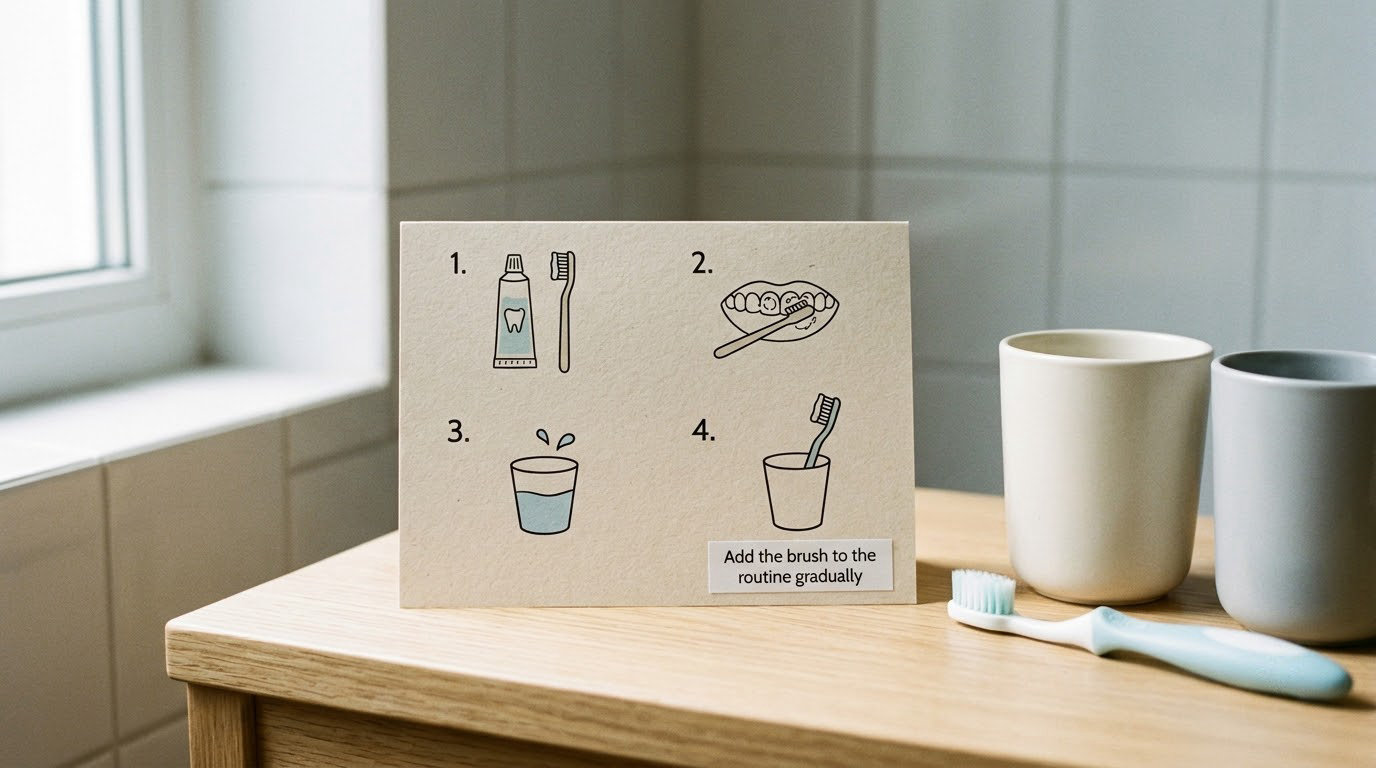
Bring the brush to the lips first, then the front teeth, then the inside of the cheeks and the areas they can reach most easily, adding a small number of seconds at each stage. Ten seconds that end calmly today is worth far more than a flailing minute that ends in tears, because the calm version is the one that gets repeated tomorrow.
Do not pin the arms or force the brush into the mouth. Gentle steadying of the head is different from holding a child down, and forcing tends to produce short-term compliance followed by more resistance over the following weeks. If the only way through is force, stop, drop back a step, and get advice from a dentist or occupational therapist rather than escalating at home.
Give the child a predictable increase in their part. Options work well here: they go first for three seconds and you finish, or they hold a second brush and brush while you brush. Parents report again and again that a child tolerates a parent’s brush far better than their own, even when the parent’s technique is less than perfect, and handing them a second brush takes the object out of their hands and off the critical path.
Then check in with yourself about time. A visual timer, a fixed song, or a two-minute hourglass the child can watch removes the negotiation about how long it takes, because the answer is visible rather than something you keep announcing.
6. Use short, consistent language
Say one short thing per step, in the same words every time, because long explanations give a child something new to resist. What you need is four lines that you can say without improvising, and you say them the same way at morning and at bedtime.
- Beginning it: “Time for teeth.” Then start. No negotiation opener.
- Giving notice: “One more side, then we stop.” Warning about two small steps ahead is usually calmer than counting.
- Taking a break: “Break. I’m here.” Water, a look out the window, and then back to the same spot.
- Stopping: “All done. Good job.” End on your terms rather than on the child’s escape.
Connect what you say to what they can see happening, in that order. “Open” before your hand is on their chin, “cheeks” as the brush moves there, “done” as you pull it away.
Leave out threats, bargaining, and repeated demands. A countdown threat says the routine is not really happening until they surrender, and a negotiated exception teaches that enough complaining changes the outcome. Repeating the same request three times at volume adds noise to a moment that is already loud.
7. Practice twice daily and keep the goal flexible
Fit practice into morning and bedtime, and pick the one time the child is most likely to be regulated. Late bedtimes and a tired child mean the routine is fighting your child’s state before it starts, so moving brushing earlier in the evening often helps more than any new technique.
Adjust the target to what the child can hold right now. For many families that means one brushing a day rather than two, which is what several parents describe as the breakthrough after months of daily refusal. Getting a routine in place at bedtime only is a real win, because a repeated routine beats an ambitious one that keeps collapsing.
Keep the long-term oral health goals with the dental professional who knows your child. Home practice is what builds tolerance, and the dentist or hygienist sets the plan for fluoride, varnish, sealants, and how much help your child needs and for how long. You do not have to settle that balance alone at the kitchen sink.
Common Mistakes
Most setbacks come down to five repeatable mistakes, and each one has a calm fix. Work through them in order, because they tend to stack.
Forcing the mouth open. A child held open long enough to brush will fight harder next time, and the association between the brush and being trapped is hard to unlearn. The fix is to drop back to touch-only work at a step the child can accept, or get an occupational therapist to guide the exposure.
Making every attempt last too long. If you always push for the full two minutes, the child has learned to brace for the worst. The fix is to set a deliberately short target, time it honestly, and finish early while it is still fine.
Using shame, or rewards that turn into pressure. Both create a performance rather than a skill, and both make the brush something to get past rather than something happening. The fix is a neutral, low-stakes praise such as noticing the effort, or nothing at all on the days it goes badly.
Changing five variables at once. New brush, new toothpaste, new song, new time of day, new reward, all in the same week. Then when things improve you have learned nothing. The fix is one change at a time, held long enough to judge.
Abandoning oral care after a bad week. A meltdown followed by three days of skipping teaches the child that the routine only comes when they are at their worst. The fix is a shortened version, not a skipped version. Ten seconds on the front teeth keeps the chain intact.
To track progress without turning it into a test, note the shortest successful attempt each day and whether the stop signal came earlier or later than last week. Look for a longer calm window rather than a cleaner mouth. Repeat the sequence often enough that it becomes ordinary, and ask a dentist, pediatrician, or occupational therapist for individualized guidance if nothing is shifting after a few weeks of steady practice.
Frequently Asked Questions
How long will it take my child to tolerate tooth brushing?
For most children it takes weeks rather than days, and the range is wide. A child who is anxious rather than sensory can move noticeably within a couple of weeks of consistent short practice. A child with strong oral defensiveness may need several months, and some take longer still. Judge progress by reduced distress and a longer calm window, not by a date on the calendar.
Should I use fluoride toothpaste if my child cannot tolerate brushing?
Fluoride toothpaste is the usual recommendation from the first tooth onward, in a rice-grain smear for the youngest children and a pea-sized amount for most preschoolers, with an adult helping until about age six. If your child cannot tolerate brushing, ask your dentist about professional fluoride varnish as a safety net. Small amounts of swallowed fluoride paste are not the same situation as a child ingesting a large amount, which is worth raising with your dentist directly.
What can I do when tooth brushing triggers a meltdown?
Stop the brushing and drop back, do not push through it. Lower the lights, reduce noise, and help your child regulate first; a child in a meltdown cannot process instructions. Once they settle, resume at an earlier, easier step rather than at the step that triggered it. Most of all, do not treat the meltdown as something you caused by failing, because that framing makes tomorrow harder rather than easier.
How can I help a child with limited motor skills brush their teeth?
Adapt the tool and the position rather than the expectations. A thick or weighted handle, a small brush head, or an electric brush can give a child with a tremor or limited fine motor control more control, and a silicone finger brush lets you do the work without asking them to track a small object. Position matters too: sitting with the child on your lap facing a mirror, or working with them lying down, often gives you the access and the steadiness you need.
When should I ask a dentist or doctor for help with tooth brushing?
Ask a dentist or pediatrician when you notice pain, swelling, bleeding, a lump or a change in the shape of the face or jaw, difficulty eating or swallowing, or mouth discomfort that lasts more than a few days. Ask an occupational therapist when a sensory aversion or oral-motor difficulty is limiting the routine, since they can guide the exposure work and set a pace that works. Also ask before your child first dental visit so the office can plan accommodations.
Start With the Smallest Step Your Child Can Accept Today
If you take one thing from this guide, make it the first step: pick the smallest action your child can tolerate right now and repeat it until it is unremarkable. Looking at the brush. Holding it. Touching an outer cheek. Ten seconds on the front teeth, ending while everyone is still calm.
That is genuinely how to help a child tolerate tooth brushing, and it is slower than the two minutes you are aiming for. You are building a tolerance, not completing a routine, and the routine gets easier as the tolerance does.
Get help sooner rather than later if there is pain, swelling, bleeding, a change in eating or sleeping, or any mouth discomfort that does not settle. A dentist can rule out what is physical and set a protection plan in the meantime, and an occupational therapist can pace the sensory work better than a parent at the end of a long day can.