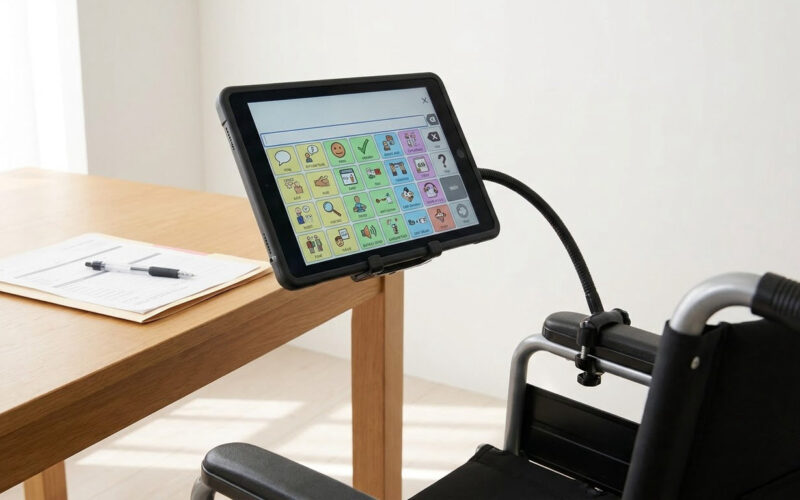
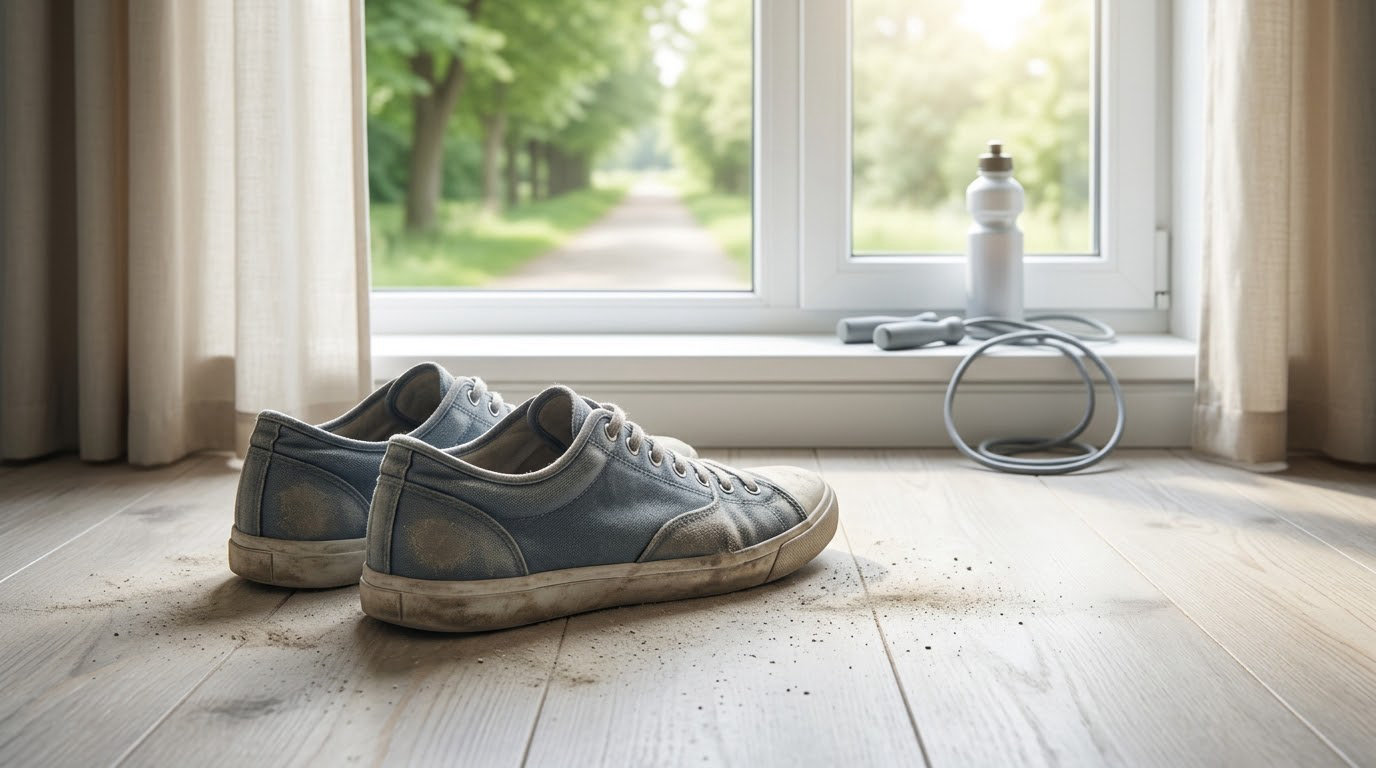
To start exercising again after years off, begin with five to ten easy minutes of low-impact movement on two days a week, keep the pace conversational, and add time before you add speed or weight. Most people who lapse for a long stretch do not need a dramatic comeback plan. They need a small, repeatable starting point that survives a bad week.
The gap is usually the hardest part, not the workouts. Nobody sets out to stop for four years; the break creeps in through a desk job, a caregiving stretch, an illness, a bad month, or simply a life that never left room for the gym. So this plan treats the break as a re-entry point rather than a failure. You are starting from where your body is today, not from where it used to be.
I have talked with a lot of people trying to come back to movement, and the same pattern shows up. The ones who stick are boringly consistent: two days a week, twenty minutes, the same movements, for six weeks before they change anything. The ones who quit are almost always the ones trying to reclaim a former routine immediately.
If you are restarting after a long illness, a surgery, an injury, or years of caring for someone else, move slowly through the sections below. Everything here is general information, not medical advice, and anything involving pain, balance problems, or a health condition deserves a conversation with your doctor or a physical therapist first.
Table of Contents
- What You Need
- Step-by-Step: Build a Routine You Can Keep
- 1. Learn How to Start Exercising Again After Years Off Safely
- 2. Choose Low-Impact Movement That Matches Your Needs
- 3. Start With a Small, Repeatable Baseline
- 4. Add Duration Before Adding Intensity
- 5. Include Strength, Balance, and Everyday Movement
- 6. Turn the Plan Into a Flexible Weekly Routine
- Common Mistakes
- Frequently Asked Questions
- How long should I exercise when restarting after years off?
- Is it normal to feel sore the first time I exercise again?
- Is walking enough exercise when getting back into fitness?
- Can I start exercising if I have chronic pain or a disability?
- When should I see a doctor before returning to exercise?
- How do I restart my exercise routine after missing several weeks?
- Start Small and Make Your Next Session Easy
What You Need
You need less than most people expect. None of the following is a purchase requirement, and none of it needs to happen before you take the first walk.
- Clothing that lets you move. Anything breathable that you do not mind sweating in. Old workout clothes beat new ones at this stage because there is no adjustment period.
- Supportive footwear. Shoes already broken in that suit your feet. If your current walking shoes cause numbness or heel pain, resolve that before adding volume.
- Water. Especially if you are returning in warm weather or working out in the evening.
- A clear activity space. A stretch of hallway, a driveway, a living room floor, or a chair with enough room to move your arms. Most home sessions need about six square feet.
- A schedule slot that already exists. Anchor movement to something you already do rather than creating a new appointment from nothing.
- A reason to check with a clinician. Long periods of inactivity alongside heart conditions, joint problems, diabetes, osteoporosis, balance issues, or any recent surgery or illness.
The last item matters more than the first five. Guidance from public health bodies generally assumes you are already reasonably active, and returning after years of nothing is outside that assumption. A quick appointment can also flag movements to avoid and give you a realistic starting dose instead of one you guessed at.
Step-by-Step: Build a Routine You Can Keep
1. Learn How to Start Exercising Again After Years Off Safely
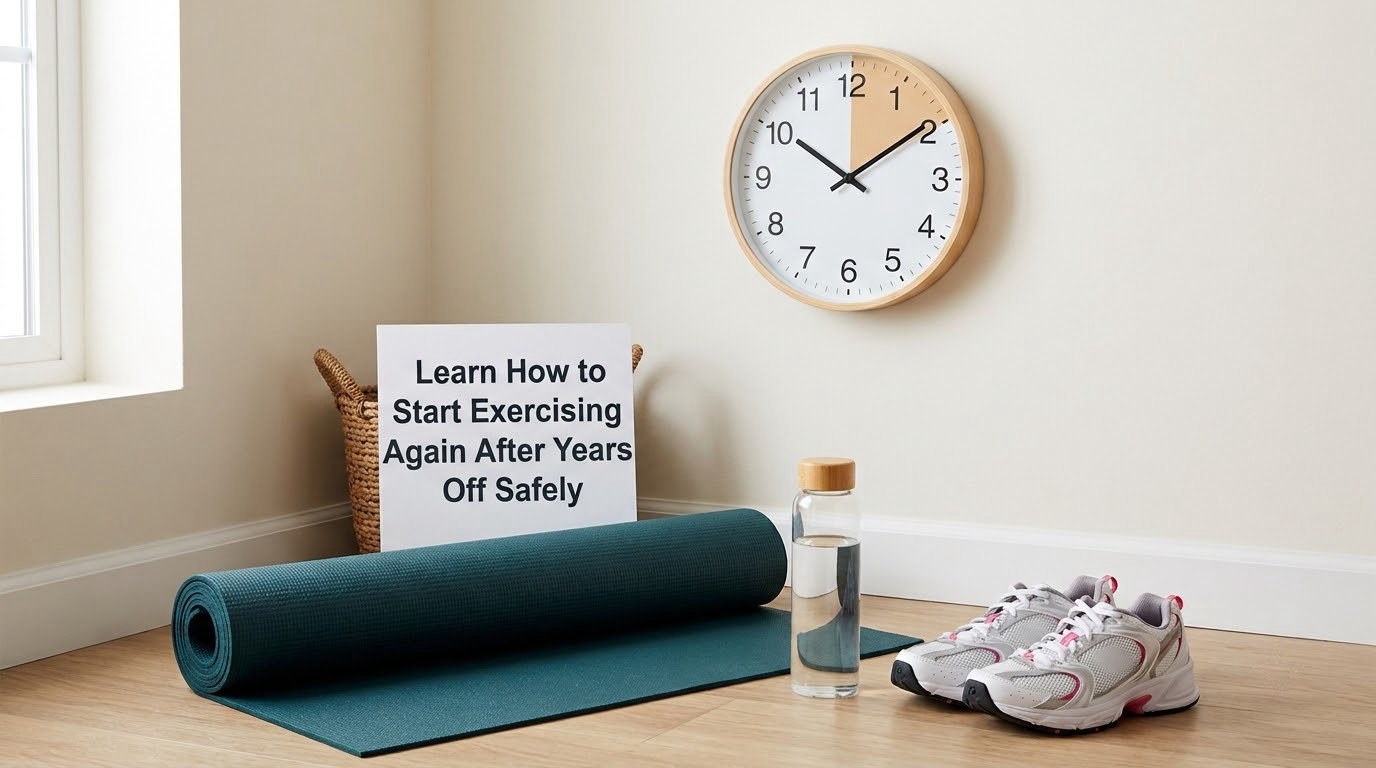
Safety here is not about avoiding every risk. It is about matching the first two weeks to what your body has been doing for the last two years, which is very little.
Notice what resting feels like now. Can you climb one flight of stairs without pausing? Does your breathing come back within a minute or two of sitting down? Can you stand from a low chair comfortably? These are ordinary baseline questions, not tests you pass or fail.
Talk to a healthcare professional before you start if you have a heart condition, uncontrolled blood pressure, a history of stroke, diabetes, osteoporosis, a joint that has already been damaged, or a fall in the past year. Get checked first if your return follows surgery, a serious illness, a long hospital stay, or an injury that never fully healed.
Then learn the difference between normal tiredness and a warning sign. Ordinary fatigue settles within a day or two, and mild muscle soreness feels symmetrical and dull. Warning signs feel sharp or one-sided, show up in a joint rather than a muscle, get worse through a session instead of easing, or keep building for more than a few days. Chest pain, unusual shortness of breath, dizziness, or a racing heart that does not settle are reasons to stop and call a doctor, not to push through.
2. Choose Low-Impact Movement That Matches Your Needs
Choose the activity you can do on your worst day, not your best one. That single filter removes most bad first months.
Walking is the most sustainable starting point and needs nothing but a safe route. Seated marching works when standing is uncomfortable, if the chair is stable and you have something to hold. Water exercise reduces load on painful joints and gives you the buoyancy to move freely, if a pool is reachable. Gentle strength work covers sit-to-stands from a chair, wall push-ups, and band rows. Stretching and mobility work keeps hips and ankles moving through a usable range, which matters more than it sounds once you start lifting again.
Adjust it to fit your energy, your joints, and your schedule. Someone managing fatigue may break one ten-minute block into two five-minute blocks. Someone with knee pain may prefer cycling over walking downhill, or swimming over both. Someone with limited shoulder range can stay at band rows and skip anything overhead for now.
Caregivers can count movement they already do. Wheeling a stroller around a park, laps around a playground while a sibling practices, tidying a room to music, or a phone call taken standing rather than sitting all add up. They are not a substitute for a session, but they rebuild tolerance for motion.
3. Start With a Small, Repeatable Baseline
Set your starting dose lower than feels necessary. Five to ten easy minutes on two days a week, with a rest day between, is a real beginning.
Judge the dose by four signals rather than by the clock:
- Talk pace. If you can speak in full sentences, you are in the right range.
- Breathing. Breathing gets deeper, not ragged. If you are gasping, trim the session rather than pushing to the target length.
- Recovery. You feel pleasantly tired the next day, not flattened.
- Next-day energy. You wake up and carry on with your day.
Soften the sore legs in week one. Delayed onset muscle soreness usually shows up 12 to 48 hours after unfamiliar movement and fades within a few days. It is not tissue tearing, and it is not a measure of whether the session worked. Some soreness is fine; pain that alters your gait or makes you avoid a movement is a signal to cut volume or get advice.
4. Add Duration Before Adding Intensity
Change one variable at a time. Add minutes first for two weeks, then consider pace or resistance.
Going from ten to twenty easy minutes produces a result. Going from ten to twenty at a hard effort produces soreness, an injury risk, and a reason to stop. Keep the pace conversational for most of the first eight weeks and let duration do the work.
Repeat a week whenever life gets in the way. A demanding caregiving day, a bad night of sleep, or a week that simply ran away is not a failure. Hold the same dose for another seven days rather than trying to catch up, and skip adding any minutes at all if you spent three days doing nothing.
A useful test: finish most sessions feeling like you had something left. That spare capacity is what lets you add next week, and it is what keeps you injury-free through month three.
5. Include Strength, Balance, and Everyday Movement
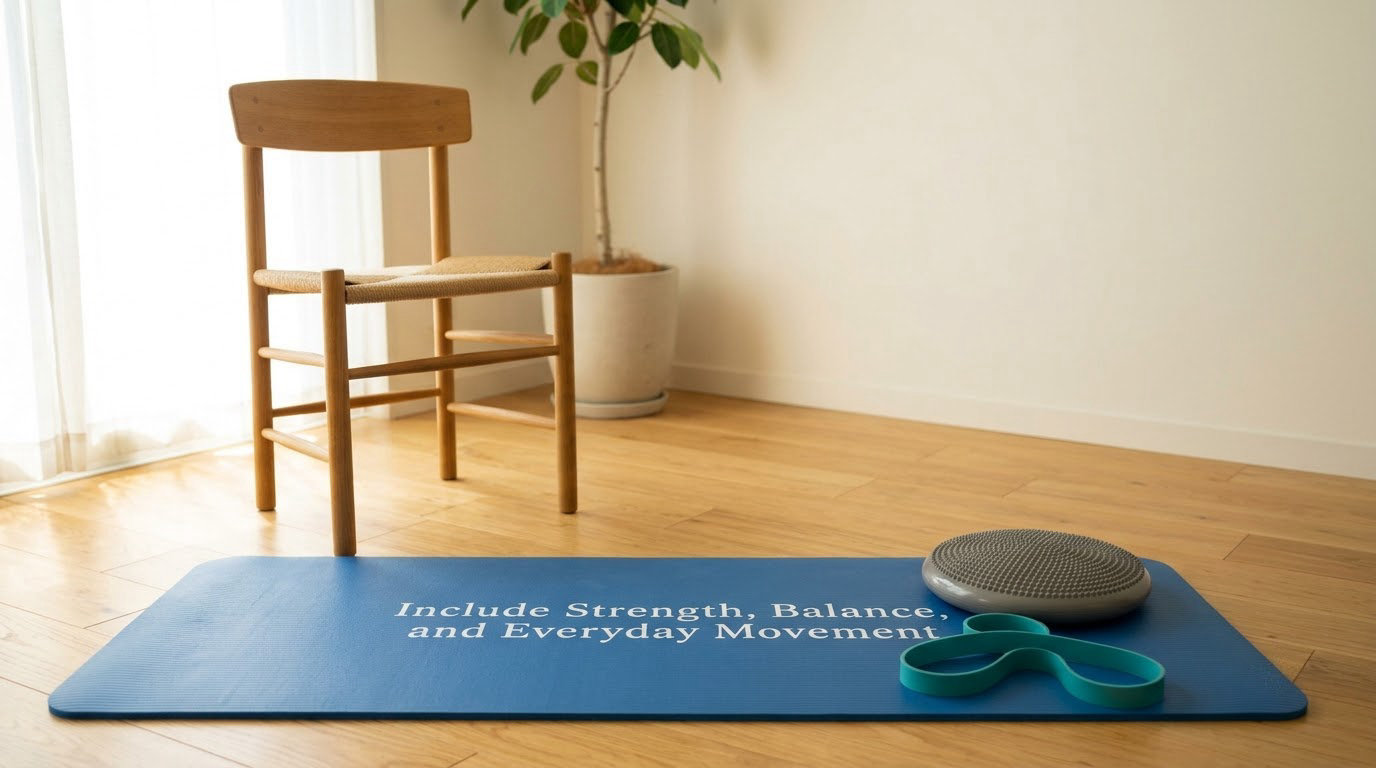
Cardiovascular work builds the base. Strength and balance work decides whether you stay upright and independent later, which is worth raising with anyone returning after years of sedentary living.
Start with movements you can control from a supported position. Sit-to-stands from a sturdy chair, wall push-ups, seated rows with a resistance band, heel raises holding a counter, and a standing or seated march all count. Two sets of eight to twelve repetitions, twice a week, is plenty for the first two months. Form beats load, so keep the range small and clean rather than chasing numbers you used to hit.
Balance work needs less equipment than people assume. Standing with fingertips on a wall, shifting weight heel to heel, and tandem walking along a counter or kitchen aisle are all beginner-friendly progressions. If balance is a concern, do these near a counter or with a chair within reach.
Everyday movement counts toward the same goal. Standing during phone calls, taking stairs instead than lifts when it is safe, doing a few minutes of chores standing up, and changing position regularly all reduce the stiffness that comes from sitting. Programs that formalize this, like sit-to-stand and step-up drills, are commonly recommended for adults returning to activity because they are simple and they transfer directly to daily life.
6. Turn the Plan Into a Flexible Weekly Routine
A plan that only works on a good week will not survive the year. Build a floor version, a ceiling version, and a backup for the days you have neither.
- Pair it with an anchor. Movement right after an existing habit works well: after the morning coffee, after the school run, after dropping the dog at the door. Decide once and stop renegotiating daily.
- Set a weekly floor. Two ten-minute blocks. On bad days, do the floor, not the full plan, and the week still counts.
- Prepare a backup option. A five-minute indoor mobility set for bad weather, a slow walk on a treadmill at home, or a chair routine for an inaccessible day. Decide now what your version B is.
- Track one thing only. A tick per session on a calendar beats an app with eight metrics. Do not weigh yourself daily at this stage.
- Never skip twice. One missed session is noise. Two in a row is how a routine quietly ends.
- Plan a class or a partner. People who report the best adherence after a solo lapse are the ones who added one external commitment, whether that is a weekly class, a walking group, or simply a friend who asks.
If motivation is the sticking point rather than time, lower the decision cost instead. Lay out shoes the night before. Pick one movement, not a routine. Keep a ten-minute version of the session written down somewhere you will see it. Removing the choice about how to start is often the whole fix.
Common Mistakes
1. Trying to reclaim your old routine immediately. The plan you ran four years ago was built on a body that has since done nothing for that long. Fix: halve your previous session length and drop the effort level to about half, then rebuild.
2. Treating discomfort as proof of progress. Sharp joint pain, a limp, or pain that changes how you move are not training signals. Fix: swap the movement for a lower-impact option, and raise it with a clinician if it persists.
3. Skipping the warm-up and cooldown. Five minutes of easy walking before and two minutes of gentle stretching after reduces the jolt on cold joints and stiff tissue. Fix: make the warm-up part of the clock you set, not an optional extra.
4. Chasing soreness. Soreness that lasts a week blocks your next two sessions. Fix: back off for two or three days, resume at the same level, and only progress when you finished a session feeling like you had something left.
5. Depending on equipment you have not tested. Overhead movements on a shoulder that cannot reach full range, or free weights with no spotter and no form, are how beginners get hurt. Fix: use bodyweight, bands, and machines with set limits for the first eight weeks.
6. Quitting after one missed session. Missing Monday becomes missing the month. Fix: hold the never-skip-twice rule and keep the weekly floor low enough that you can clear it on a bad week.
One last safety note. Anything involving chest pain, fainting, unusual breathlessness, or a loss of balance means stop and contact a healthcare professional. You do not have to be dramatic about a hard session; you do have to take warning signs seriously.
Frequently Asked Questions
How long should I exercise when restarting after years off?
Start with five to ten easy minutes on two days a week, with a rest day between. Keep the pace conversational enough to hold a short conversation. For the first two weeks, that amount is enough, and finishing with something left in reserve matters more than the number. Add five minutes per session every couple of weeks only once the current dose feels ordinary.
Is it normal to feel sore the first time I exercise again?
Yes. Delayed onset muscle soreness usually appears 12 to 48 hours after unfamiliar movement and settles within a few days, and some soreness is expected when your body does something it has not done in a while. Soreness is different from pain: it is dull, symmetrical, and spread across the muscles you worked. Sharp, one-sided, or joint pain that alters your movement is not soreness.
Is walking enough exercise when getting back into fitness?
Walking is a legitimate starting point and a genuinely useful long-term activity on its own. It is low impact, easy to adjust, and the activity returners most often keep. However, walking alone does not build muscle or bone, so many people pair it with two weekly sessions of bodyweight or band strength work and balance practice once the walking feels routine.
Can I start exercising if I have chronic pain or a disability?
In many cases, yes, with modifications rather than avoidance, but start from a clinician or physical therapist who knows your specific situation. Seated options, water exercise, low-impact cycling, chair-based strength work, and adapted equipment make movement possible across many mobility and pain conditions. Ask specifically which movements to avoid, which positions to avoid, and how much range to use.
When should I see a doctor before returning to exercise?
See a clinician first if you have a heart condition, high blood pressure, a history of stroke, diabetes, osteoporosis, a joint that has already been damaged, or a fall in the past year. Also seek advice when your break followed surgery, a serious illness, or a long hospital stay. Do not wait for the appointment to begin with easy walking and mobility work, since that is safe for most people.
How do I restart my exercise routine after missing several weeks?
Do not add a catch-up session and do not restart at the dose you had before the break. Return to the last level that felt easy, keep it for one full week, and progress from there. Missing weeks matters far less than missing weeks and then trying to recover them in a single hard session. Consistency across the next month does more than intensity in one day.
Start Small and Make Your Next Session Easy
Pick one movement you can do on your worst day. Set a ten-minute block on two days, put it on the calendar next to something you already do, and gather what you need before you finish tonight: shoes by the door, water nearby, a clear spot on the floor.
For the next two weeks, that is the entire plan. Nothing about intensity, weight, or the version of you that used to train for an hour. Consistency matters more than intensity at this point, and a small routine you keep is worth more than a demanding one you abandon in March.
If you are managing pain, a health condition, or a recent illness, get guidance from a doctor or physical therapist before you start, and ask which movements to leave out. That one conversation tends to do more for your confidence than any plan on paper.