
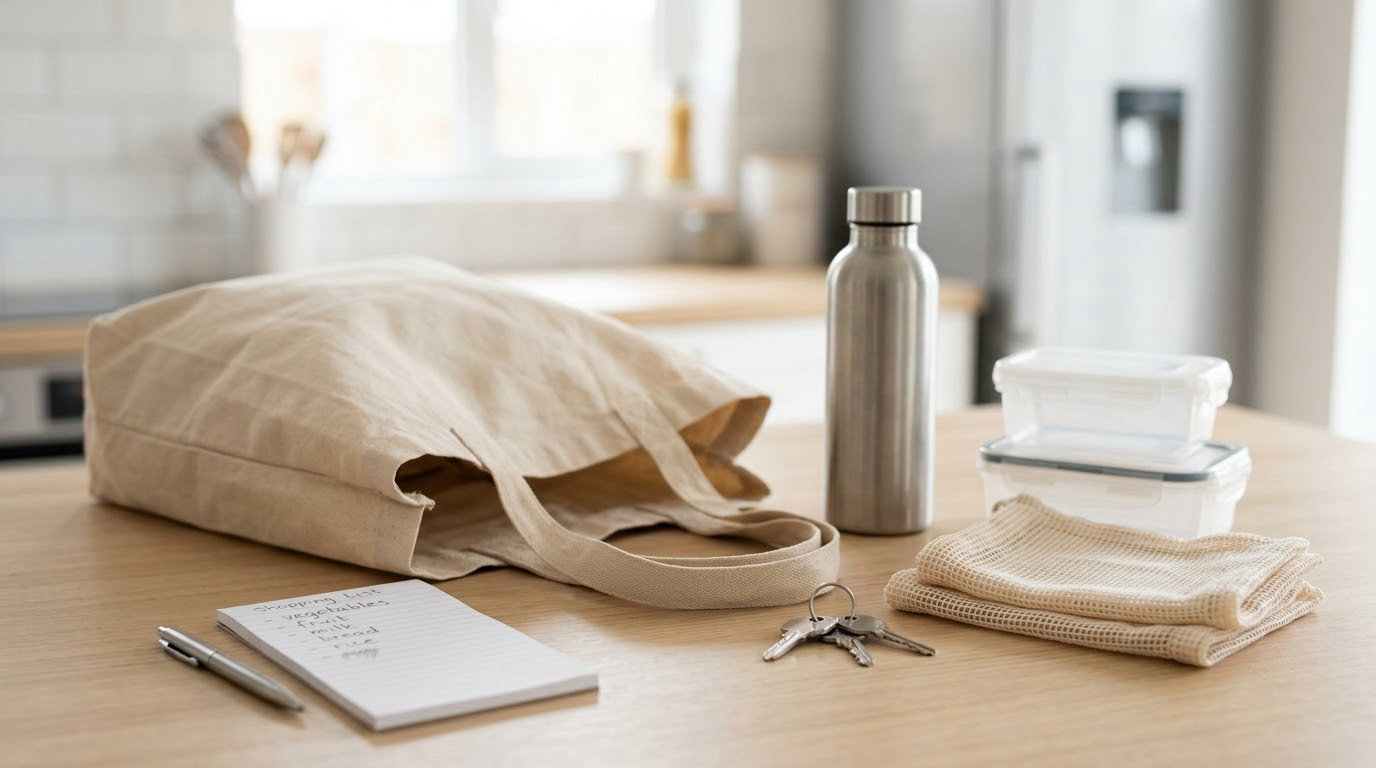
Grocery shopping is one of the most ordinary errands on the planet and one of the hardest weekly tasks for an autistic child. Learning how to prepare for a trip to the grocery store means replacing surprise with predictability: a short list, a clear warning before you leave, sensory gear in the bag, and a plan for what happens when things go sideways. Most families need about 10 minutes of preparation for a quick trip and closer to 30 for a full weekly shop. The work is easy. The remembering is the hard part.
The pattern shows up again and again in the families who get this one right. What works is not stricter rules for the child, it is a calmer adult walking into a predictable situation. This guide covers what to bring, a seven-step preparation process, and the fixes for the mistakes that turn a shop into a struggle.
Table of Contents
- What You Need
- Step-by-Step: How to Prepare for a Trip to the Grocery Store
- 1. Check the store, route, and timing
- 2. Build a short, category-based shopping list
- 3. Gather your child’s support items
- 4. Pack allergy, diet, and product information
- 5. Set the shopping expectations
- 6. Plan checkout, payment, and an exit route
- 7. Use a simple during- and after-store routine
- How long should a trip be?
- Common Mistakes and Simple Fixes
- Frequently Asked Questions
- How can I prepare a child with autism for a grocery store trip?
- What should I bring when shopping with a child who has sensory sensitivities?
- How do I manage a grocery trip when my child refuses to follow the shopping list?
- How can I shop safely when my child has a food allergy or follows a special diet?
- Is it better to go to the grocery store when it is busy or quiet?
- What should I do if my child becomes overwhelmed while grocery shopping?
- Conclusion
What You Need
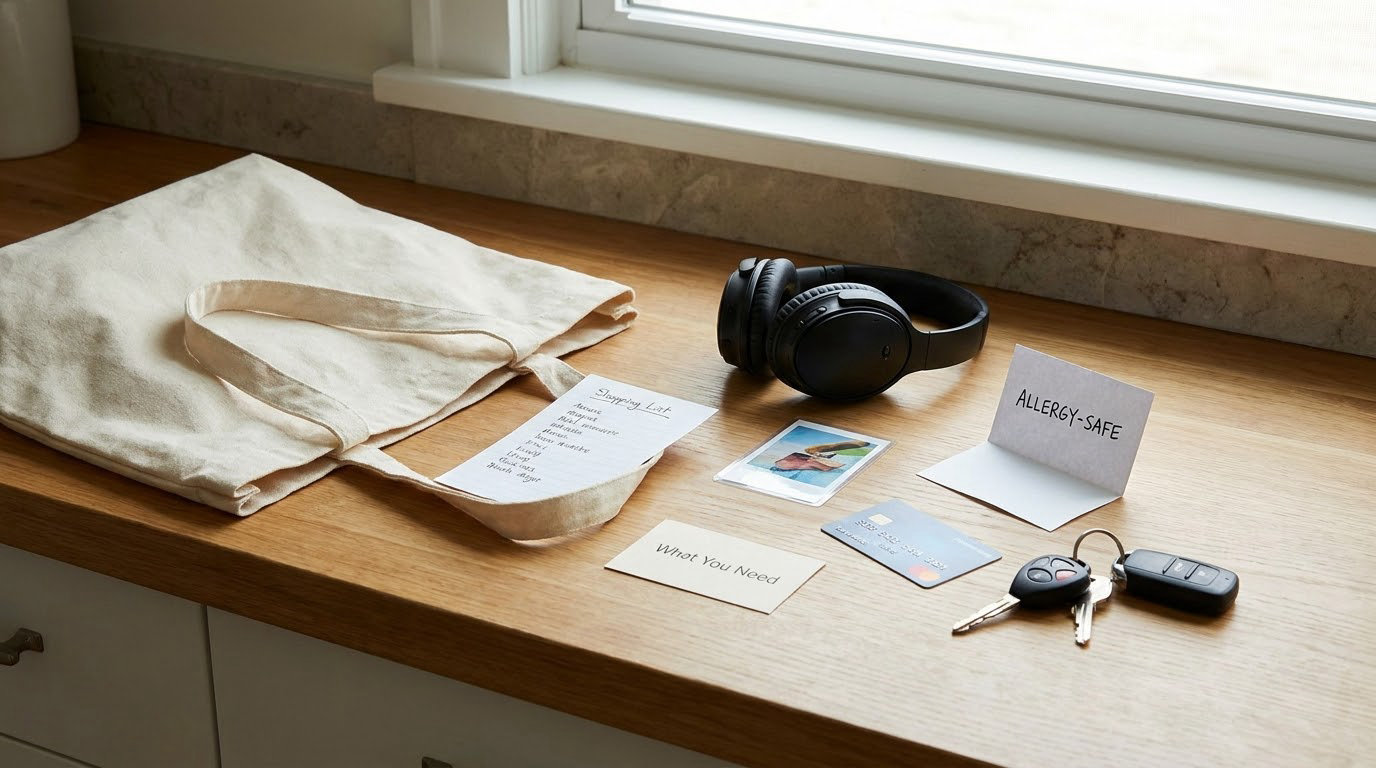
Preparation for a trip to the grocery store falls into two piles: the things you genuinely cannot shop without, and the things that help. Sorting them yourself takes one look at the table below.
| Essential | Helpful if your child needs it |
|---|---|
| A list short enough to finish | A laminated visual checklist they can mark off |
| Payment method and rewards card | A quieter checkout lane or curbside pickup |
| A clear start and end time | A visual timer they can watch |
| Allergy, diet, or medical product notes | Ingredient printouts and safe-brand notes |
| A way home that does not depend on finishing the list | Noise-reducing headphones, sunglasses, or a billed cap |
| A comfort item and a grocery-store-only snack | A pillow or blanket in the cart for the cold metal seat |
| Child-specific information for whoever else shops | A break card or word they can use to signal |
The essential column is short on purpose. When you are packing at 8am with a tired child waiting by the door, the fewer decisions the better.
Two details get skipped and both matter. First, write down who else is allowed to take your child shopping and what the rules are. Grandparents, babysitters, and relief caregivers need the list, the store name, the allergy information, and the exit plan in the same place you keep it. Second, decide before you leave what happens if you bail early. A plan written at home is a plan; a plan decided in a parking lot at 6pm is a scramble.
Step-by-Step: How to Prepare for a Trip to the Grocery Store
1. Check the store, route, and timing
Pick the quietest window you can manage and stay with it. Weekday mornings right after opening tend to work best, because you get wide aisles, thin crowds, and staff who have more patience. Late evening is the second-best option for the opposite reason: fewer shoppers, but harsher lighting and an empty-store atmosphere some children find unsettling.
Note the trip length in your calendar. If you have to leave by 9:40 to make a therapy appointment, the list ends when the appointment starts, not before.
You will know it worked when you walk in and your child does not immediately react to the door. If they freeze or cover their ears, that is data: change the time, not the child.
2. Build a short, category-based shopping list
Write the list in the order the store actually flows, not the order you think about it at home. Produce, dairy, frozen, pantry, checkout. When the list matches the route, nobody has to mentally reorder anything in a loud aisle.
Cap the number of items. For a quick trip, five to ten is plenty. For a full weekly shop with an autistic child, ten to fifteen is a realistic ceiling for a first run and something you grow into over months, not weeks.
Use a visual checklist they can handle themselves. Laminated cards, a dry erase board, or a picture list in a plastic sleeve all work. If they can cross an item off, they get a small, visible record of progress.
You will know it worked when they start pointing at the list before you do.
3. Gather your child’s support items
This is the part that makes a real difference on a bad day, and it is also the part that takes the longest to build because you figure it out by trial.
- Noise-reducing headphones for aisles, music, and the squeaky cart wheel
- A comfort item that stays in the bag or the cart, not in the car
- A movement break planned into the trip, not taken only in crisis
- A distraction for the checkout line, sized to their age
- A transition warning, given the night before or first thing in the morning
- A special snack reserved only for store trips, so it stays novel
- A pillow, blanket, or infant seat insert for the cold metal cart seat
- Sunglasses or a hat with a bill for fluorescent lighting
One honest trade-off: headphones that block out the noise also block out staff instructions and intercom announcements. Have a plan for taking one ear off when someone talks to you.
You will know the kit is right when you get through the produce aisle without negotiating.
4. Pack allergy, diet, and product information
For allergen-free, gluten-free, casein-free, medically restricted, or texture-limited shopping, the information has to travel with you. Bring a card with the specific allergens, the brands you have confirmed as safe, and the cross-contact language you can accept.
Write ingredient questions down in advance so you are not decoding a label under bad light with a child pulling at your sleeve. When a staff member helps, ask them to write down what they checked. It saves the same conversation next week.
Label any food you set aside as off-limits or for a specific person. A clear note on the container is faster than explaining it at 5pm every night.
You will know it worked when you can answer “is this safe for him” without leaving the aisle.
5. Set the shopping expectations
Tell your child what is coming in concrete terms, not vague ones. “We are going to the store, we are getting six things, then we are going home” lands better than “we need to do a little shopping.”
A first-then board works well: first we get the milk, then we go home. Offer choices inside safe boundaries, such as which of two aisles to start in. Avoid promising a specific item you cannot guarantee to find, because a missing item is the fastest route to a rigid distress response you did not plan for.
Say out loud what will happen if an item is missing. Rehearsing the swap keeps it from feeling like a betrayal in the moment.
You will know it worked when they can tell you what happens after checkout without being asked.
6. Plan checkout, payment, and an exit route
Waiting in line is harder than shopping for many autistic kids, because there is nothing to do and no end in sight. Teach it in advance: this is what we do while we wait, and here is how we know it is almost over.
Have the payment method, rewards card, and coupons ready in one hand before you reach the till. Bring the list to the till and read off the items so the cashier is not asking questions your child has to hear.
Decide your exit signal now. Pick one word or one gesture, teach it beforehand in a calm moment, and use the same one every trip. A break card in a pocket is even simpler for a child who is not verbal or not ready to speak up.
You will know it worked when they can get your attention in the aisle without you having to notice.
7. Use a simple during- and after-store routine
Follow the list in order, take the planned break when you reach it rather than when someone falls apart, and keep the trip to the time you set. Then do the after-trip part properly, because it is where the next trip gets easier.
Check items at home, store cold and frozen food promptly, and note anything that needs changing before you close the cupboard. A one-line note at the bottom of the list saves you re-learning the same lesson every week.
Look at USDA safe minimum internal temperatures when you cook or store meat, poultry, and seafood: 165 F for poultry, 160 F for ground meat, 145 F for whole cuts and fish. For a family grocery habit that holds up between trips, a written note beats memory every time.
Then give yourself the debrief too. You have just managed lighting, noise, crowds, and a regulated child at once. That load is real, and a short quiet minute before you start the next thing does more than pushing through.
How long should a trip be?
For a child new to grocery shopping, a first trip can be two minutes in and out of a door, and that counts. Most families find a workable rhythm around 20 to 30 minutes with a planned break somewhere in the middle. The number matters less than repeating it. Three short successful trips in a week beat one long, hard trip, and they teach the same thing faster.
Common Mistakes and Simple Fixes
Shopping at peak time. Saturday morning at 11am with a full crowd is the hardest version of this trip. Shift to weekday opening or early evening and keep the window the same every week.
Writing a list that is too long. Twenty-five items guarantees you end up over budget, over time, and overstimulated. Cut the list and add a second trip instead.
Forgetting the allergy information. If the card lives in your phone, it will not help you with a full basket and a melting child. Keep a paper copy in the bag permanently.
Skipping the preview. A surprise trip is fine for a neurotypical shopping run and usually a bad idea here. Ten seconds of warning in the morning costs nothing and prevents a lot of ground.
Packing for every possible trigger. Bring what you actually use. Ten items in the bag is five too many when you are doing this one-handed in a queue.
Having no break plan. Decide where the break happens and what it looks like before you enter. A break taken early is co-regulation; a breakdown followed by a break is recovery, and those are very different.
Treating a good trip as a test of compliance. A calm shop is not a win you earned over a child. It is a setup you built, which means the credit belongs to your preparation, not to your kid’s obedience.
One more thing worth adding to the plan. If shopping keeps collapsing, ask for an occupational therapist or a board certified behavior analyst. A sensory profile and a written break plan can turn the hardest errand into an ordinary one, and that is what those professionals are trained to build with you.
Frequently Asked Questions
How can I prepare a child with autism for a grocery store trip?
Start with the three things you can control: a short list, a clear warning, and a sensory kit. Tell your child in concrete terms what will happen and when it ends. Keep the list under ten to fifteen items at first and follow it in store order. Pack headphones, a comfort item, and a snack reserved for store trips, and decide your break and exit signal before you leave.
What should I bring when shopping with a child who has sensory sensitivities?
Bring noise-reducing headphones or earbuds, sunglasses or a billed cap for fluorescent lighting, a comfort item that stays with your child, and a pillow or blanket for the cold metal cart seat. Add a short visual checklist, a timer, and a snack you only bring to the store. Pack paper copies of allergy information, since you will not want to dig through your phone in a crowded aisle.
How do I manage a grocery trip when my child refuses to follow the shopping list?
Do not fight the list in the aisle. Cut the list down to five items and narrate the change out loud so the plan stays visible. Offer a choice of which section to start in, and let them cross items off a visual checklist so they own the sequence. If the refusal keeps happening, the list is too long or the trip is too long, not the child.
How can I shop safely when my child has a food allergy or follows a special diet?
Carry the specific allergens in writing, the brands you have already confirmed as safe, and your cross-contact standards. Write ingredient questions down before you go so you are not decoding labels in bad light. Ask staff to note what they checked, and label any food set aside for a specific person. If the diet is medically restricted, confirm the plan with your doctor or a registered dietitian.
Is it better to go to the grocery store when it is busy or quiet?
Quiet, every time. Weekday mornings right after opening usually give you wide aisles, thin crowds, and calmer staff. Late evening is a reasonable second choice, though the lighting can be harsher and the store emptier, which some children find unsettling. Pick one window, protect it, and repeat it, because familiarity does more work than the clock.
What should I do if my child becomes overwhelmed while grocery shopping?
Reduce demand first. Move to a quieter corner, lower your voice, and stop talking. Offer water, the comfort item, or the reserved snack rather than questions. Never block a bolting child, and use the exit route you planned instead of pushing through to the till. Recovery comes before finishing the list; the items can wait and the relationship cannot.
Conclusion
Before your next grocery trip, do three things. Pick the quiet window and put it in the calendar. Write the list in store order and cut it to what can actually be finished. Pack the bag with the sensory gear and the allergy notes, then tell your child exactly what will happen and when it ends.
That is the whole method. Learning how to prepare for a trip to the grocery store is not about building a stricter child or a stricter parent. It is about removing surprises from an environment full of them, so the weekly shop becomes another ordinary thing this family can handle.