Three days can be enough to get a ready toddler using a potty during the day, but it is not a guarantee and it does not fix nighttime dryness. If you are searching for how to potty train a toddler in three days, the honest version is this: it is a short practice experiment with close attention, a predictable rhythm, and plenty of calm when things go sideways.
The method usually means staying home for about 72 hours, keeping diapers and pull-ups off during the day, offering the potty on a fixed schedule, and celebrating every attempt. Readiness matters far more than age or a calendar. Some children finish in three days. Some need three weeks of the same gentle routine, and that is still normal progress.
Table of Contents
- What You Need
- Step-by-Step
- Step 1: Confirm Readiness Before Day One
- Step 2: Set Up Predictable Practice Times
- Step 3: Use the Same Simple Cue Each Time
- Step 4: Record Accidents Without Punishment
- Step 5: Build Success and Independence on Day Three
- Common Mistakes
- Starting before the child is ready
- Treating three days as a guarantee
- Asking instead of reminding
- Using pressure, punishment, or shame
- Leaving constipation and fear unaddressed
- Making disposables the only measure of progress
- Frequently Asked Questions
- How old should a toddler be before starting three-day potty training?
- Can a child with autism or sensory differences potty train in three days?
- Is it normal for a toddler to still have accidents after three days?
- Should I use training pants, diapers, or regular underwear during the three days?
- How often should I take my toddler to the bathroom during training?
- When should I contact a pediatrician about potty-training problems?
- Keep the First Day Simple
What You Need
Before you start, check readiness. Most pediatric guidance and developmental sources look for a cluster of these signs rather than one big milestone.
- The diaper stays dry for roughly two hours at a stretch.
- Your child notices a wet or soiled diaper and reacts to it.
- There is some way to communicate: words, signs, or pointing at the potty.
- Sitting or standing at the toilet is safe and steady enough.
- Simple instructions like “come here” or “sit down” get followed some of the time.
- Interest in the toilet, in wearing underwear, or in copying what other people do in the bathroom.
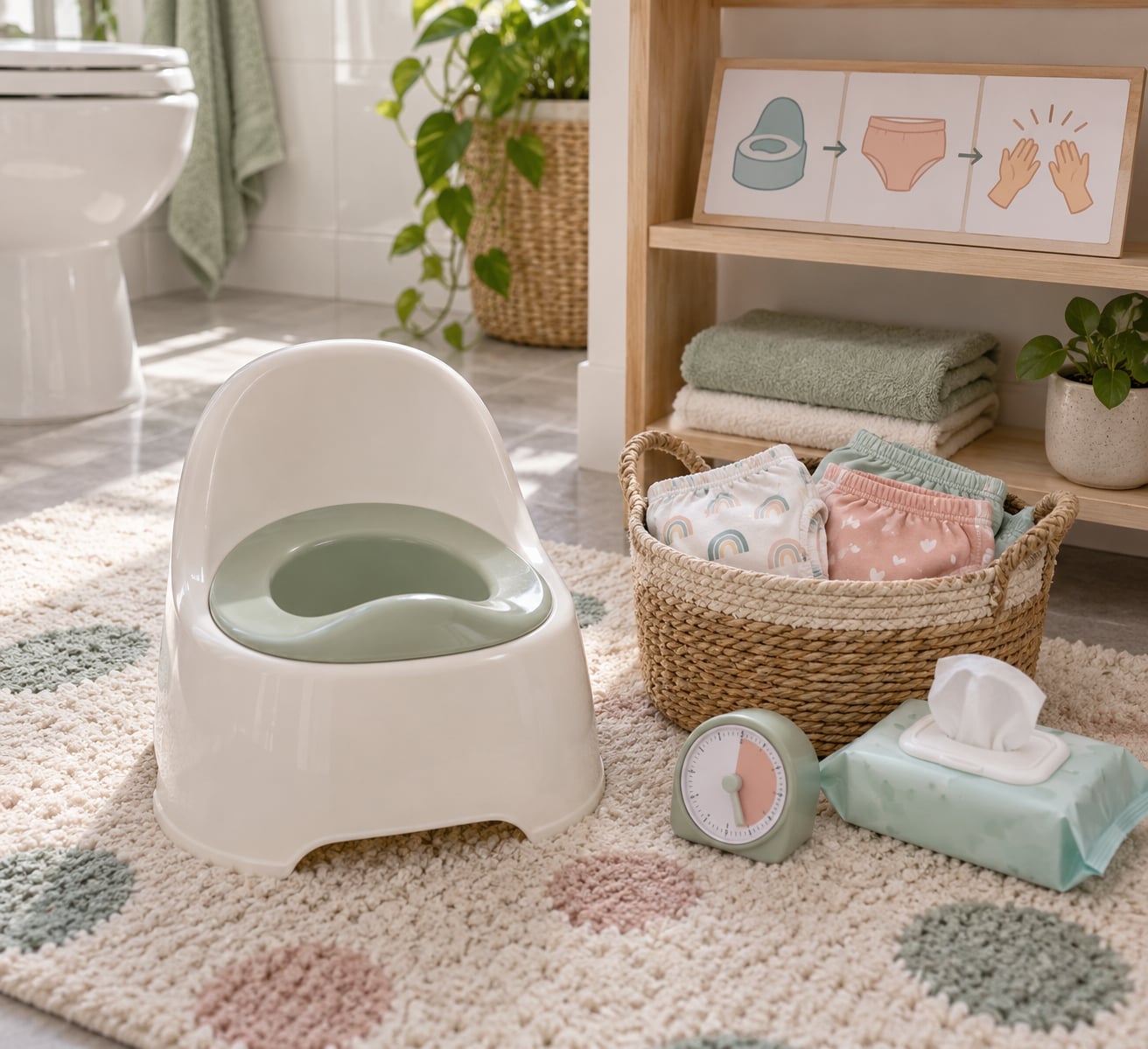
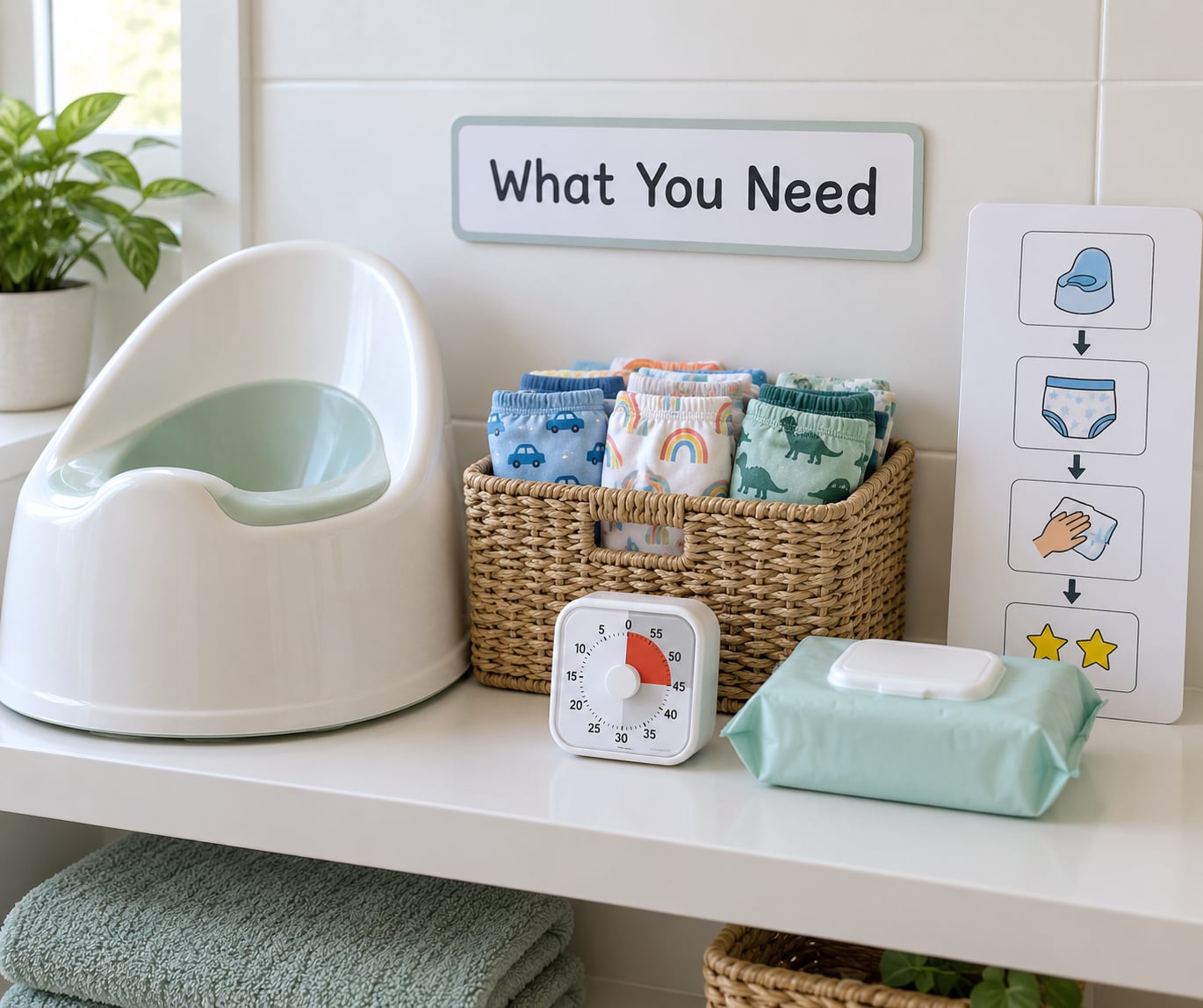
You also need a few practical things. A child-sized potty or a toilet seat adapter and a step stool so feet can rest flat. Training pants that are easy to pull down, or simply loose clothing and no underwear for the first stretch. A timer or a watch for the reminder rhythm. Wipes, a laundry basket, and a fragrance-free cleaner you are comfortable with. And one simple reward, whether that is a sticker chart, a small treat, or a song.
One note on three days: treat it as an experiment. The goal is that your child learns the connection between the urge and the potty, not that you produce a dry child by Thursday night. Some children also need medical advice first. If your toddler holds pee, has constipation, has a history of a painful toilet experience, or has been eliminated on backward, talk with the pediatrician before starting.
Step-by-Step
Step 1: Confirm Readiness Before Day One
Spend two or three days watching without changing anything. Note how long diapers stay dry, what happens right before a wet or soiled one, and whether your child can tell you afterward. That pattern is your schedule for the next three days.
If there is any delay, constipation, or a concern about elimination, get medical clearance before you begin. Pediatric guidance is consistent on this point: potty training is a developmental milestone, and pushing through a physical problem sets the routine back rather than moving it forward.
Step 2: Set Up Predictable Practice Times
Build the schedule around waking, meals, snacks, play transitions, and the bathroom trips you already observed. In the beginning, offer the potty every 30 to 60 minutes, then tighten to every 30 minutes if you are getting few attempts.
Give reminders instead of asking questions. Nearly every toddler answers “no” when you ask if they need to go, and then needs to go four minutes later. Say the cue as a statement, not a question, and keep it to one or two words so it becomes automatic rather than something to argue with.
Step 3: Use the Same Simple Cue Each Time
The same short routine, every time: lower the clothing, sit or stand safely, wait a few seconds, then respond. Keep the wait brief, maybe 30 to 60 seconds, so sitting never turns into a punishment or a bore.
Praise the process, not just the outcome. “You sat on the potty all by yourself” lands better with a toddler than “good job” after a success. When nothing happens, a neutral response works fine. Move on without a sigh.
For children with disabilities or sensory differences, keep the routine but shrink the demands. A child with autism may do much better with a visual schedule, a warning before every transition, and a fixed seat rather than a standing routine. Sensory-friendly wipes and a seat that is not cold or loud help more than parents expect. Children with Down syndrome or motor delays often need more set-up help with clothing, a support bar for standing, or hand-over-hand assistance for the wiping and lowering steps. If you want that adapted approach written out in full, our guide to toilet train an autistic child gently walks through the visual schedule, the no-surprise rule, and a sensory-safe seat.
Step 4: Record Accidents Without Punishment
Clean up fast and without commentary about what a shame it is. Say something neutral like “accident, all cleaned up” and move on. Then write down the time and what was happening. That note is the most useful data you will collect all week.
Praise attempts and routines. Treat accidents as information about the schedule, not as failure. A child who pees ten minutes after every snack does not need a scolding, they need a bathroom trip at 25 minutes instead of 40.
Step 5: Build Success and Independence on Day Three
By the third day, add independence. Reduce your language, let your child climb up and pull clothing down on their own, and let them flush. If a reward has been working, keep it small and immediate, and start planning how it will fade. Some families cut it back after a week, some after a month.
Set expectations honestly. Daytime dryness often moves faster than nighttime dryness, and night dryness can take months longer or arrive on its own with a bigger bladder and a full night. Decide whether day four is another practice day at a slower pace or a pause while you check readiness and constipation again. If progress stalls after a previously steady run, that is also the time to look at how to handle a potty-training regression.
Common Mistakes
Starting before the child is ready
Age alone means very little. A three-year-old who cannot tell a wet diaper from a dry one is not ready, and a younger child with all the readiness signs might be. Fix: two or three days of observation before you change anything.
Treating three days as a guarantee
The promise of a finished, dry toddler in 72 hours is what makes parents feel like they failed. Three days trains the potty connection. Wearing underwear all day without peeing through it can take weeks. Fix: judge the three days by attempts and by fewer accidents, not by a dry finish line.
Asking instead of reminding
“Do you need to go?” gets a no almost every time. Fix: say the cue as a statement and offer the potty on your schedule rather than waiting for a request that will not come.
Using pressure, punishment, or shame
Scolding, withholding something they love, or putting them back in a dirty diaper teaches fear, not control. Fix: neutral cleanup, praise the routine, and let the consequences of an accident be the uncomfortable one.
Leaving constipation and fear unaddressed
A child who holds pee because it hurts will avoid the toilet no matter how good your schedule is. Fix: talk to the pediatrician about pain, constipation, or a withholding pattern before restarting. Avoiding the bathroom out of fear needs the same attention.
Making disposables the only measure of progress
Diapers and pull-ups protect clothing, and some families keep them at night and during naps without losing daytime progress. What matters is daytime dryness and the growing awareness of the urge. Fix: track wet diapers and successful potty attempts separately so you can see the real trend.
Frequently Asked Questions
How old should a toddler be before starting three-day potty training?
Most sources point to somewhere around 18 to 30 months, but age is a weak guide. Readiness signs carry more weight than a birthday. Stay dry for about two hours, notices wet or soiled diapers, communicates somehow, sits or stands safely, and follows simple instructions usually matter more than being 24 months old. Starting before those signs show up tends to add weeks of resistance rather than saving time.
Can a child with autism or sensory differences potty train in three days?
Yes, many children do, and the same three-day structure works with adjustments. Keep the routine exactly the same, then lower the demands: use a visual schedule, warn before every transition, offer a fixed seat instead of a standing routine, and use sensory-friendly wipes. Extra set-up help with clothing and hand-over-hand support for lowering and wiping often does more than any change to the schedule itself.
Is it normal for a toddler to still have accidents after three days?
Very normal. Day one is usually the messiest, with a string of accidents, and most children improve noticeably by day two or three. Plenty of kids are accident-free bare but leak through underwear or shorts because they cannot feel the urge yet, which is why many families skip underwear for the first stretch. If accidents keep happening at the same time of day, move that bathroom trip 15 minutes earlier.
Should I use training pants, diapers, or regular underwear during the three days?
During the day, the least protection works best, since a soaking accident is what makes the next attempt feel urgent. No underwear with loose shorts is a common choice, and it solves the pee-through problem many children have. Regular underwear works once leaks stop. Keep diapers or pull-ups at nap and bedtime if that keeps everyone calm, and count nighttime separately from daytime progress.
How often should I take my toddler to the bathroom during training?
Start with an opportunity every 30 to 60 minutes, built around waking, meals, snacks and play transitions. If you are getting very few attempts, tighten it to every 30 minutes and add a trip 15 minutes earlier than the usual accident time. A short wait of 30 to 60 seconds on the potty is plenty, and remember that reminders work far better than asking whether they need to go.
When should I contact a pediatrician about potty-training problems?
Reach out before starting if your child holds pee, has constipation, eliminated on the toilet backward, or had a painful or frightening bathroom experience. Also call if attempts stop after a period of steady success, if your child is over three and shows no readiness signs at all, or if you see pain with urination or bowel movements. Your pediatrician can check for physical causes and point you toward the right support.
Keep the First Day Simple
Start where the plan says to start: check the readiness signs, pick practice times that follow real patterns in your day, and use one calm cue you repeat every time. Keep a short note of accidents so you can adjust the schedule instead of the child’s worth. Three days of practice can absolutely move things forward, and a slower pace is a perfectly good outcome when a child is not ready yet.