Going gluten free on a budget works when you build meals around foods that were never gluten to begin with: rice, potatoes, beans, eggs, corn tortillas, frozen vegetables and fruit. The expensive part of this diet is not the food itself, it is the specialty packaging, so the savings come from spending your money on naturally gluten-free staples and keeping specialty items to the few categories where cross-contact is a real risk. Most families can do this in a weekend of setup and a two-week review cycle, and the whole thing takes about an hour a week once it is running.
The people who make this easiest are the ones who stopped treating it as a diet of substitute products and started treating it as cooking from a different set of pantry basics. That is the shift this guide walks you through, step by step.
Table of Contents
- What You Need Before You Shop
- Step-by-Step: How to Go Gluten Free on a Budget
- 1. Calculate Your Weekly Gluten-Free Grocery Budget
- 2. Audit What You Already Have
- 3. Build a Low-Cost Gluten-Free Pantry
- 4. Shop With a Gluten-Free Shopping List
- 5. Read Labels and Watch for Hidden Costs
- 6. Cook From Flexible Base Recipes
- 7. Use Extra Portions and Planned Extras
- 8. Review Spending After Two Weeks
- Common Mistakes That Blow the Budget (and the Fix)
- Frequently Asked Questions
- Is eating gluten free more expensive?
- How can I save money while buying gluten-free bread?
- Which gluten-free foods are naturally affordable?
- How do I know whether rice, oats, or other foods contain gluten?
- What is the cheapest way to stock a gluten-free pantry?
- How do I feed a picky child gluten-free food on a budget?
- Conclusion: Start With One List and One Base
What You Need Before You Shop
You need five things before the first trip, and four of them are free.
A weekly food limit you have actually written down. Not a vague intention, a number. Even if you have never tracked food spending, you can look back at the last several weeks of bank or credit card statements and find the grocery total. Take the average, and that is your starting point.
A two-week meal plan. Two weeks sounds long until you compare it to the alternative, which is deciding at 5pm every night. Two weeks gives you room to buy one bag of rice and use all of it, and to cook a big batch of something on Sunday instead of four separate small dinners.
A short list of what everyone in the house will actually eat. Write down the three or four gluten-free meals nobody argues about. These become your rotation and they carry the week.
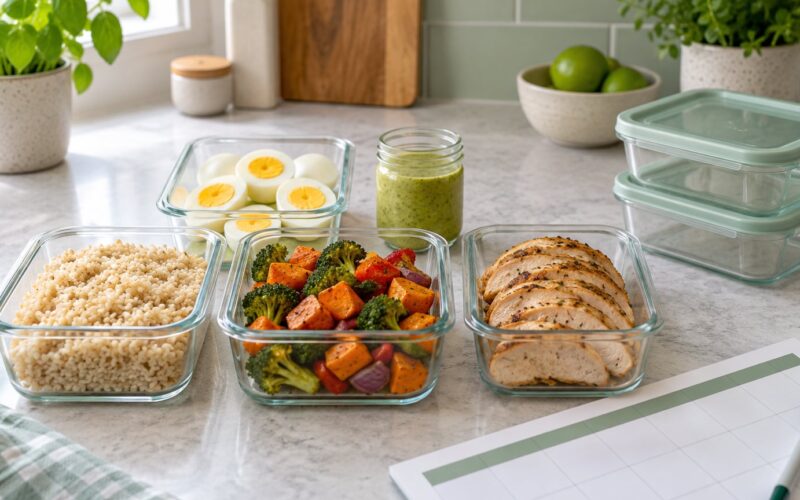
Storage containers you can actually close. A batch of rice that gets thrown away is money in the bin. I keep two or three glass containers with lids that fit in the fridge and a stack that fits the freezer, and that single decision removes most of the waste I used to have.
A simple tracking method. A note on your phone works. Some people use a spreadsheet, some use a notebook by the fridge, and some just photograph the receipt each trip. Whatever you pick, the rule is the same: record what you spent on food, then compare it to your written limit in step 8.
If your pantry is a mess, this is a good moment to sort it. My guide to setting up an allergen free pantry covers the sorting and storage side in more detail.
Step-by-Step: How to Go Gluten Free on a Budget
1. Calculate Your Weekly Gluten-Free Grocery Budget
Pull up your last four to six weeks of grocery spending and write down the total for each week. Average those numbers and you have your food budget, which is a real figure rather than a guess.
Now separate food from the rest of the trip. Household goods, cleaning supplies, paper towels, pet food and toiletries are not part of your gluten-free food number, and mixing them in makes the food look cheaper than it is. What you want to know is the number you can spend on food alone.
Split that food number into two parts. Most of it, call it the base, buys your normal meals with gluten-free swaps. A smaller slice, roughly 10 to 15 percent, covers the specialty items you genuinely need, like certified oats or a flour blend you will use more than once, plus the surprise thing you forgot on the list.
Write the base number where you will see it. A note on the fridge worked better for me than an app, because I looked at it every day instead of once a week.
2. Audit What You Already Have
Before you buy a single thing, go through the pantry, the fridge and the freezer with a pen. Most households already own a surprising number of naturally gluten-free foods that they never think of as gluten-free because they are not in the specialty section.
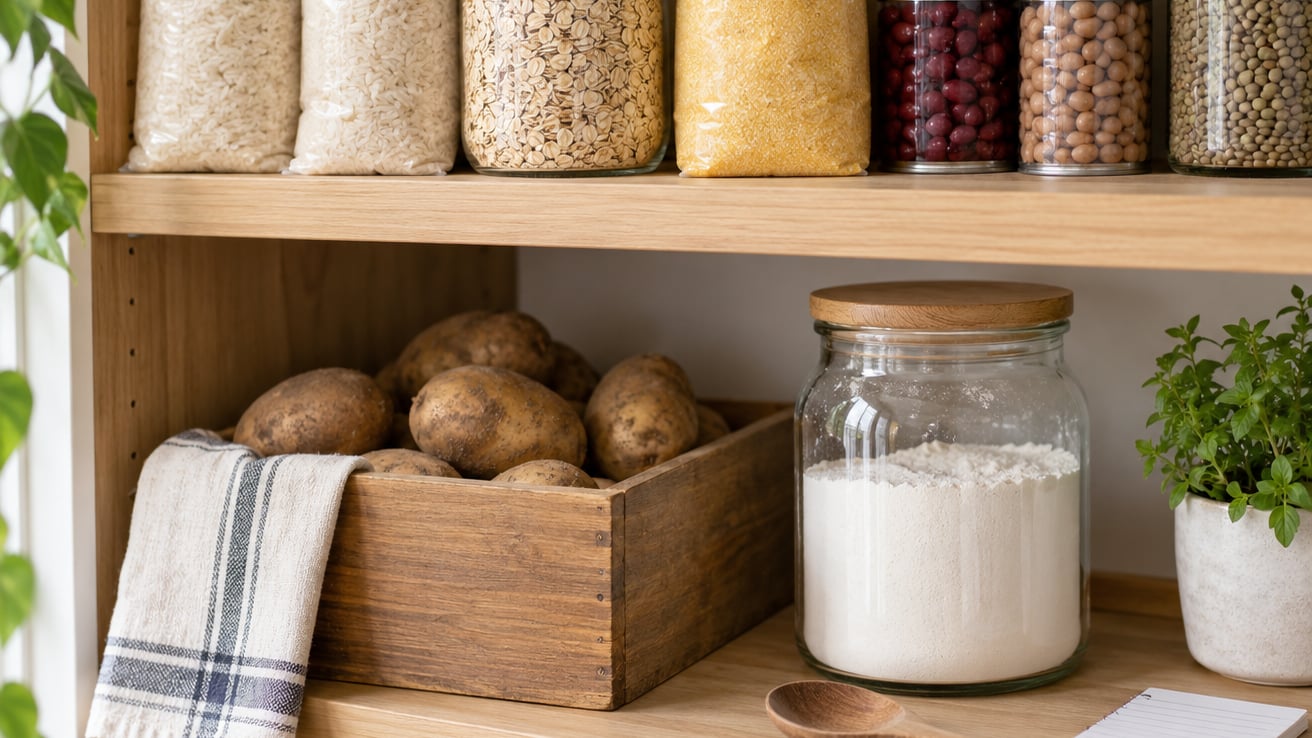
Check for rice in every form: white, brown, jasmine, wild rice, rice noodles, rice crackers. Look for corn tortillas, canned corn, cornmeal and polenta. Potatoes and sweet potatoes count. Any canned beans or dry lentils, any eggs, any plain meat, any frozen vegetables, any fruit, any nut butter, any cooking oil, any vinegar, any can of tomatoes.
Do the same for the commercial products, but read the ingredient list rather than trusting the front of the package. A box of corn cereal, a bag of lentil pasta, a jar of salsa, many tamari and soy sauces, and a good number of spice blends are already gluten free.
Write the safe items on your shopping list in one column and the things you need to buy in another. This step alone regularly removes a dozen items from a first trip, and it is the single best money saver in the whole process.
3. Build a Low-Cost Gluten-Free Pantry
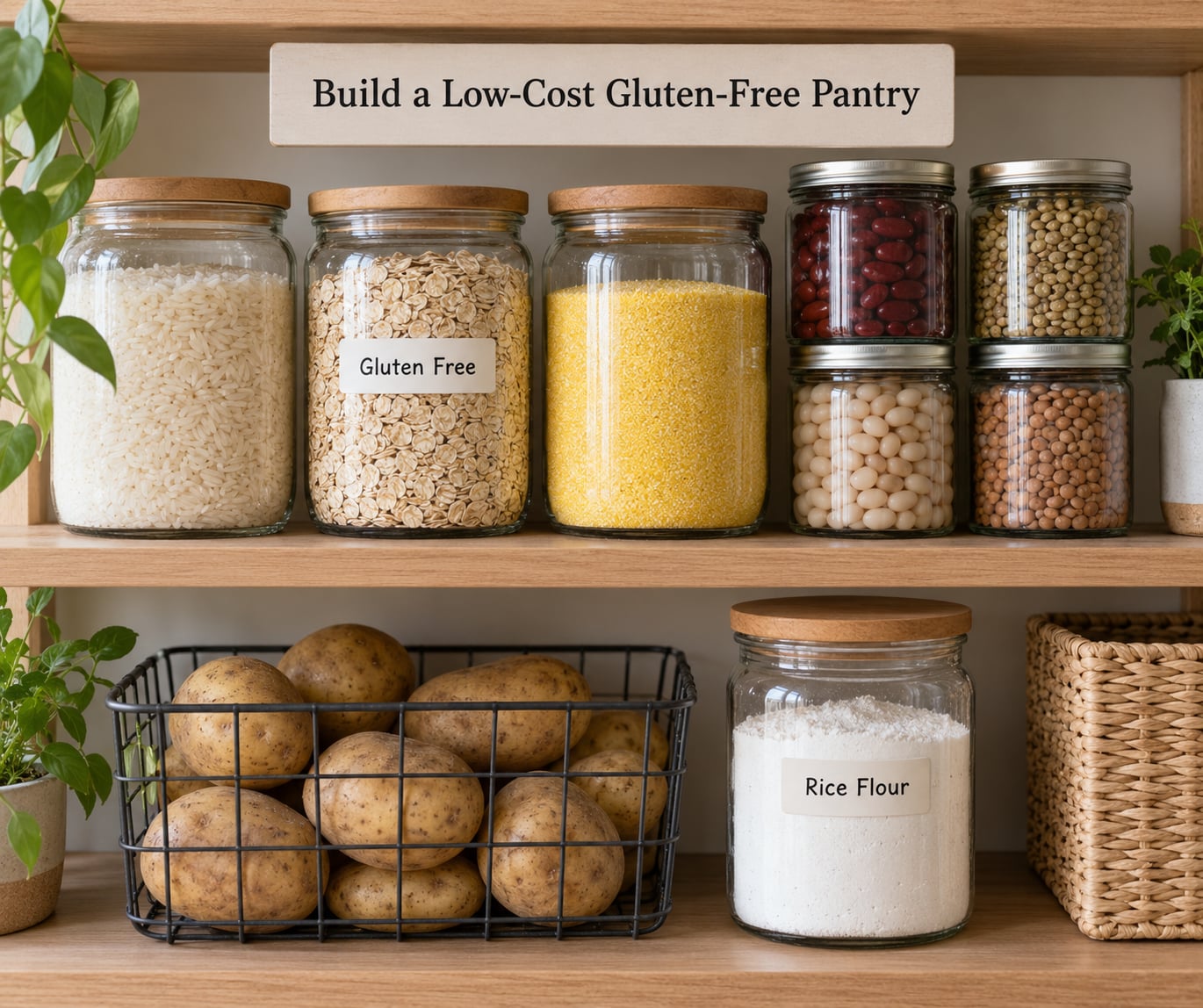
Build around categories, not around individual products, so you can swap whatever is cheapest in the category that week.
Starches and grains: plain rice in two or three varieties, corn tortillas, cornmeal, potatoes, and oats from a brand that clearly labels them gluten free. Oats are the one grain where I do not cut corners, because regular oats are frequently milled on shared equipment with wheat, and if that matters to you, certified is the only version worth buying.
Proteins: dried beans and lentils in the biggest package you can use before they get past their best, canned beans, eggs, and whatever meat or poultry your family already eats. If meat is a large line item in your budget, beans and lentils are the single most effective swap, and they work in chili, soups, tacos and rice bowls.
Produce: frozen vegetables are almost always the better buy than fresh for budget purposes, because they do not spoil while you get to them. Add fresh fruit and whatever seasonal vegetables are cheap that week.
Pantry extras: cooking oil, canned tomatoes, coconut milk, vinegar, herbs, spices without malt or brewer’s yeast, and a low-cost flour blend of rice flour, tapioca starch and potato starch. The blend is worth mixing once at home, because specialty baking blends are one of the most expensive things in this diet and a homemade version does the same job for a fraction of the cost.
Keep two lists inside your head: everyday staples you buy every single week, and occasional items you buy when you are actually making something that needs them. That second category is where the waste happens, so the rule is simple. No specialty bag or bottle of flour or sweetener unless a recipe on the calendar this month calls for it.
4. Shop With a Gluten-Free Shopping List
Organize the list by store section, in the order you will walk the store. Produce, then meat, then the grain and pasta aisle, then canned goods, then the specialty section last. A list you can follow without thinking is worth more than a longer list you never finish.
Compare unit prices rather than package prices. A bigger bag is only cheaper if your family will finish it before it goes stale, and for flours and specialty items the answer is usually no. For rice, beans, lentils, canned tomatoes and frozen vegetables, the answer is usually yes.
Go in this order: discount and no-name first, regular store brand second, specialty aisle only when the list specifically calls for something from it. This one habit is the difference between a list that keeps you on budget and a trip that quietly blows it.
Buy in bulk where it makes sense, and skip the membership unless you will genuinely use it. People on gluten-free forums often point out that a warehouse club pays for itself on rice, beans, frozen chicken and produce alone, and that you can eat well for a week before you ever touch a single specialty item. Test the rest of your shopping first and see if the fee is worth it to you.
When you do shop, spread the work out. The end of the trip is when the unplanned items go in the cart, so fill the basket early and keep an eye on the last few aisles. If you are near a small town with no big supermarket, ethnic markets are an underrated option for rice noodles, masa harina and rice flour sold by weight. Online grocery ordering is worth it for a monthly specialty restock, less so for fresh produce.
Finally, read the flyers and check the savings apps before you leave home. Most of the gluten-free deals are on the things you were going to buy anyway, and finding them in advance means you are substituting rather than adding.
5. Read Labels and Watch for Hidden Costs
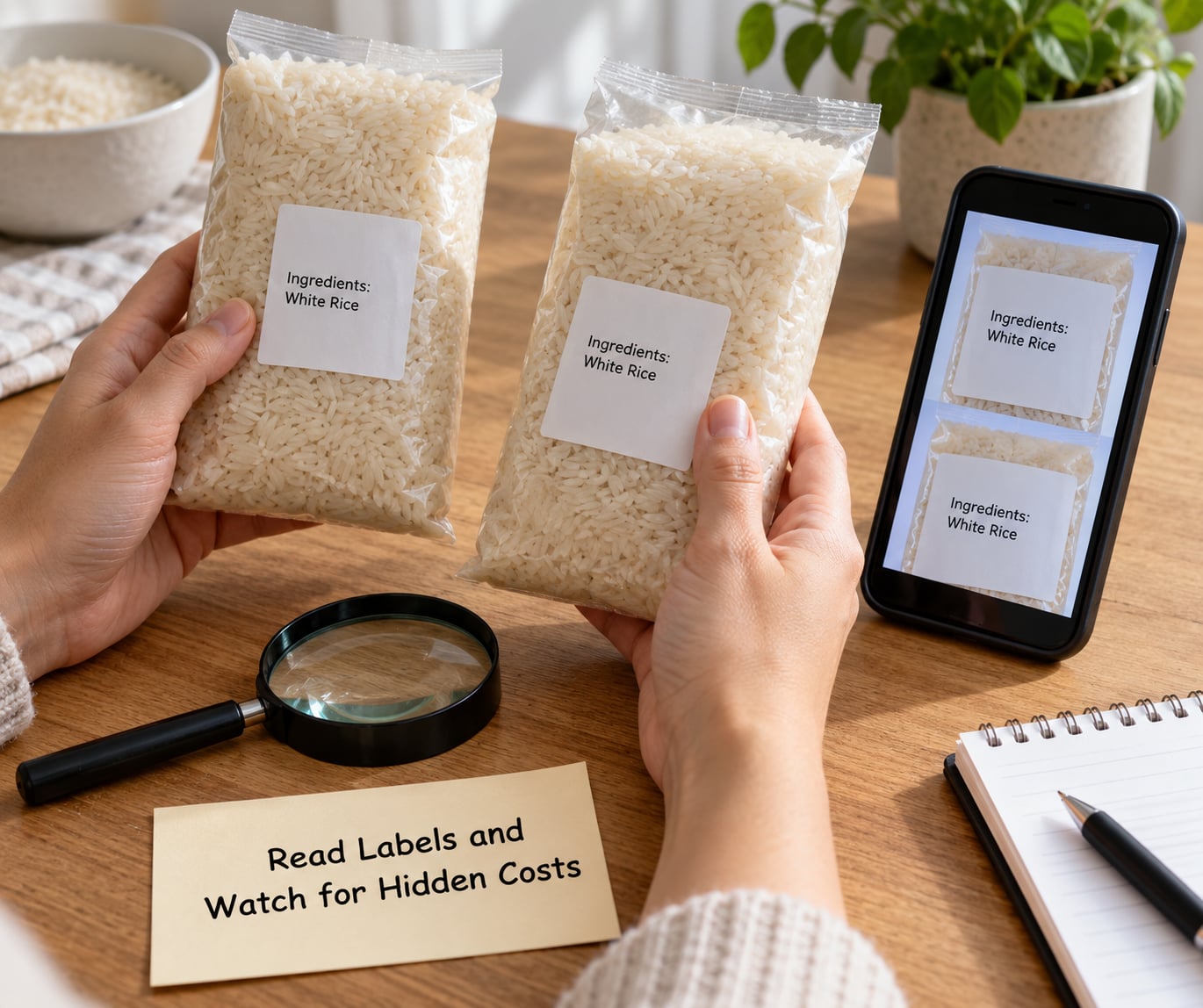
Gluten comes from a small number of grains, so learning to spot the words is fast. Watch for wheat, barley, rye, triticale, malt, malt extract, malt vinegar, brewer’s yeast, and semolina. If an ingredient list contains barley malt or brewer’s yeast, it is out, no matter what the front of the package says.
Health food does not mean gluten free. Granola, energy bars, oat cereal, snack mixes, protein powders and many breads marketed as healthy contain oats, wheat or malt. Read the list, every time, because these products change formulas without much notice on the shelf.
Watch the hidden sources that catch people out most often: soy sauce and many tamari styles, bouillon and stock cubes, seasoned salt blends, salad dressings, gravies, some canned soups, bread crumbs, and oats. My full walkthrough of reading a label for hidden gluten lists the words to scan for.
Then check the certification. A certified gluten-free label means third-party testing to a defined standard and a manufacturing process designed to limit cross-contact. That matters most for oats, flours, cereals, snack products and anything that starts as wheat, sorghum or barley before the gluten is removed. It matters far less for a bag of plain rice, a can of beans or a bag of frozen broccoli.
That is the whole risk-based logic, and it is where the money is. Spend where cross-contact risk is high, save aggressively where it is low. People managing this on a tight income say the same thing over and over on r/glutenfree and r/EatCheapAndHealthy: buying cheap is fine, but only within the categories that are actually risky for you.
6. Cook From Flexible Base Recipes
The cheapest dinners are the ones that change shape without becoming new meals to learn. Pick three or four bases you cook anyway, then build a different meal on top of each one.
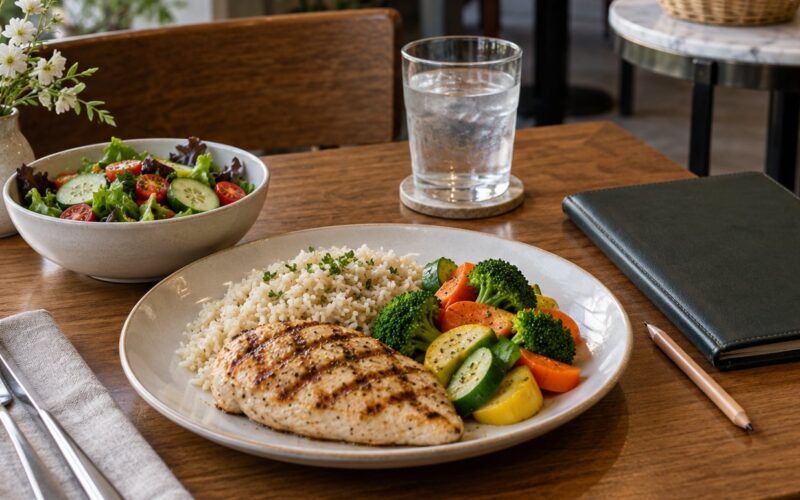
Rice is the most flexible. A batch of plain white or brown rice becomes fried rice with eggs and whatever vegetables are in the freezer, a burrito bowl with beans and salsa, a side for anything, or a chilled rice pudding style breakfast with fruit and cinnamon.
Beans and lentils cook a pot at a time and split three ways: soup with broth and vegetables, chili with canned tomatoes and spices, and a thick vegetable curry over rice. Season them well and the same pot feeds breakfast burritos too.
Corn tortillas are the fast route to a meal the kids recognize. Fill them with beans, cheese, scrambled eggs, or any leftover meat from the week before.
Potatoes are a one-pan situation. Roast them with oil and salt and they work as a side, a base for a bowl, or the top of a shepherd’s pie made with a naturally gluten-free mash.
Stir-fry is the answer for a night when there is nothing planned. Frozen vegetables, a protein, and a sauce you verified for gluten turn into a meal in about fifteen minutes.
Breakfast costs almost nothing once you stop buying specialty cereal. Eggs, oatmeal made with certified oats, fruit, and yogurt cover most mornings for a fraction of what the specialty aisle charges.
For nights when everyone is tired of the rotation, our gluten-free family meal planning guide covers how to build a plan the whole household will follow.
7. Use Extra Portions and Planned Extras
This is where most families quietly lose money. They cook the right amount for one meal and then buy something the next night because the cooking is done. Cook double on purpose instead.
A pot of chili made Sunday becomes Monday’s dinner, Tuesday’s lunch, and part of a Wednesday topping. A sheet pan of roasted vegetables feeds a grain bowl and then a wrap. A second bag of rice cooking alongside the first costs almost nothing extra in energy and saves a whole dinner later in the week.
Freeze in single portions rather than one big container. A single portion defrosts fast on a weeknight, and a big block often ends up eaten in a panic two weeks later.
Turn the extras into planned food, not leftovers you feel guilty about. Write them into the meal plan the night you cook, so they become part of the plan rather than a confession.
If a base goes in the freezer unplanned, that is fine too. People on celiac support forums describe the same habit: cook once on a busy weekend, freeze four portions, and stop the midweek scramble entirely.
8. Review Spending After Two Weeks
At the end of two weeks, add up your grocery receipts and divide by two. That is your real average weekly gluten-free grocery cost, and it is the only number worth planning around.
Compare it to the number you set in step 1. If you came in under, note what made the difference. Usually it is a bigger package of beans, fewer convenience buys, or fewer specialty items than expected.
If you came in over, look at what got thrown away first. Wasted food is spending you cannot see, and it is more common than people expect in the first two weeks. Then look at the specialty aisle total, and the impulse total at the end of trips.
Adjust the quantities, not the principles. Maybe you need a bigger bag of rice and fewer single-serving specialty items. Maybe you were buying two gluten-free sauces a week when one plus pantry seasonings does the same job.
After the review, set the new average as your budget going forward and repeat the cycle. The second review is usually where this starts feeling normal rather than like a project.
Common Mistakes That Blow the Budget (and the Fix)
Buying every specialty product. The gluten-free section is where the markup lives, and it is not where your nutrition comes from. Fix: shop naturally gluten-free foods first and enter that aisle with a specific item on the list.
Restocking before checking the pantry. Half the money saved in this plan comes from buying less. Fix: audit first, list second, cart third. Every trip starts with the audit.
Letting food go to waste. A family of four throwing out a quarter of what they cook is spending more per meal than the family eating takeout. Fix: cook double on purpose, freeze in single portions, and write extras into the plan.
Buying the small package. Fix: bigger bags for rice, beans, lentils, canned tomatoes and frozen vegetables. Keep small for specialty flour and anything you use once in a blue moon.
Assuming all health foods are gluten free. Granola, energy bars, oat cereal, many breads and protein powders are frequent sources of surprise gluten. Fix: read the ingredient list every single time, including on products you buy often.
Skipping the market and ethnic aisles. Rice noodles, masa harina and rice flour sold by weight are often far cheaper than their packaged specialty equivalents. Fix: add one market trip a month to your routine.
Buying loose goods from bulk bins. This is a real cross-contact question, and gluten-free communities warn about it often. For someone with celiac disease, sealed packages from a dedicated or certified facility are the safer buy. Fix: keep bulk bins for non-gluten items, or skip them.
Trying to change every meal at once. Fix: rotate the same three or four familiar meals with gluten-free swaps first, then add new recipes only after the first two weeks are under control.
Frequently Asked Questions
Is eating gluten free more expensive?
It can be, and the cost sits almost entirely in the specialty aisle. A packaged gluten-free loaf of bread or pasta commonly costs several times more than the conventional version, while naturally gluten-free foods like rice, beans, potatoes, eggs and frozen vegetables are usually the same price as before. The practical answer is to build your shopping around whole foods, treat specialty products as occasional purchases, and review your receipts every couple of weeks.
How can I save money while buying gluten-free bread?
Buy it less often and make it count. Choose a loaf that is actually certified, because certification cost is worth paying for on a product made from a gluten-containing grain. Then buy one or two at a time rather than in bulk, freeze half the loaf in slices, and toast it straight from frozen. Corn tortillas, rice cakes and lettuce cups cover most sandwich days at a fraction of the price.
Which gluten-free foods are naturally affordable?
Plain rice in any variety, potatoes, corn and corn tortillas, dried beans and lentils, eggs, plain meat, frozen vegetables, fresh fruit, nut butter and canned tomatoes all start life gluten free, so they carry no gluten-free premium. Choose these as the backbone of your meals and the budget impact of the diet shrinks to almost nothing. Specialty grains, flours and snack products are where the extra cost concentrates.
How do I know whether rice, oats, or other foods contain gluten?
Plain white and brown rice, wild rice and rice noodles are naturally gluten free, but check the package anyway because some are processed in facilities that handle wheat. Oats are the exception that confuses people. Plain oats are a wheat relative and are often milled on shared equipment, so buy oats clearly labeled certified gluten free if cross-contact is a concern for you. The ingredient list settles the rest.
What is the cheapest way to stock a gluten-free pantry?
Buy rice, dried beans and lentils in the largest sizes you can finish, and keep canned tomatoes, frozen vegetables, cooking oil, vinegar and spices in stock as the flavor base for all of them. Mix a basic flour blend of rice flour, tapioca starch and potato starch at home when you need it rather than buying a specialty baking blend. Avoid one-time specialty items until a planned recipe calls for them.
How do I feed a picky child gluten-free food on a budget?
Start with what they already eat and change one thing at a time. A child who likes rice and cheese is a rice-and-cheese gluten-free dinner, and a child who accepts pasta is usually fine with a lentil or corn pasta. Keep one safe backup meal for hard days, such as rice cakes with nut butter or a baked potato, and let them help add the sauce or toppings. New foods get offered without pressure, repeatedly, and never forced onto the plate.
Conclusion: Start With One List and One Base
Do not start with a specialty shopping trip. Start tonight by writing down the meals your family already eats, checking the pantry for what you can use, and choosing one affordable base, probably rice or beans, to build the next two weeks around.
That is the whole method in three moves: set a number, audit what you own, and cook from naturally gluten-free bases with specialty items limited to the categories where cross-contact actually matters. The first week takes a couple of hours. The week after that takes about an hour. The review at the end of two weeks is what keeps it honest, and it is how you learn to go gluten free on a budget in a way that holds up through 2026 and every year after it.
If you have a diagnosed condition or a child with one, take the specifics to your doctor or a registered dietitian before you change the plan, particularly around nutrition and any costs you may be able to claim.