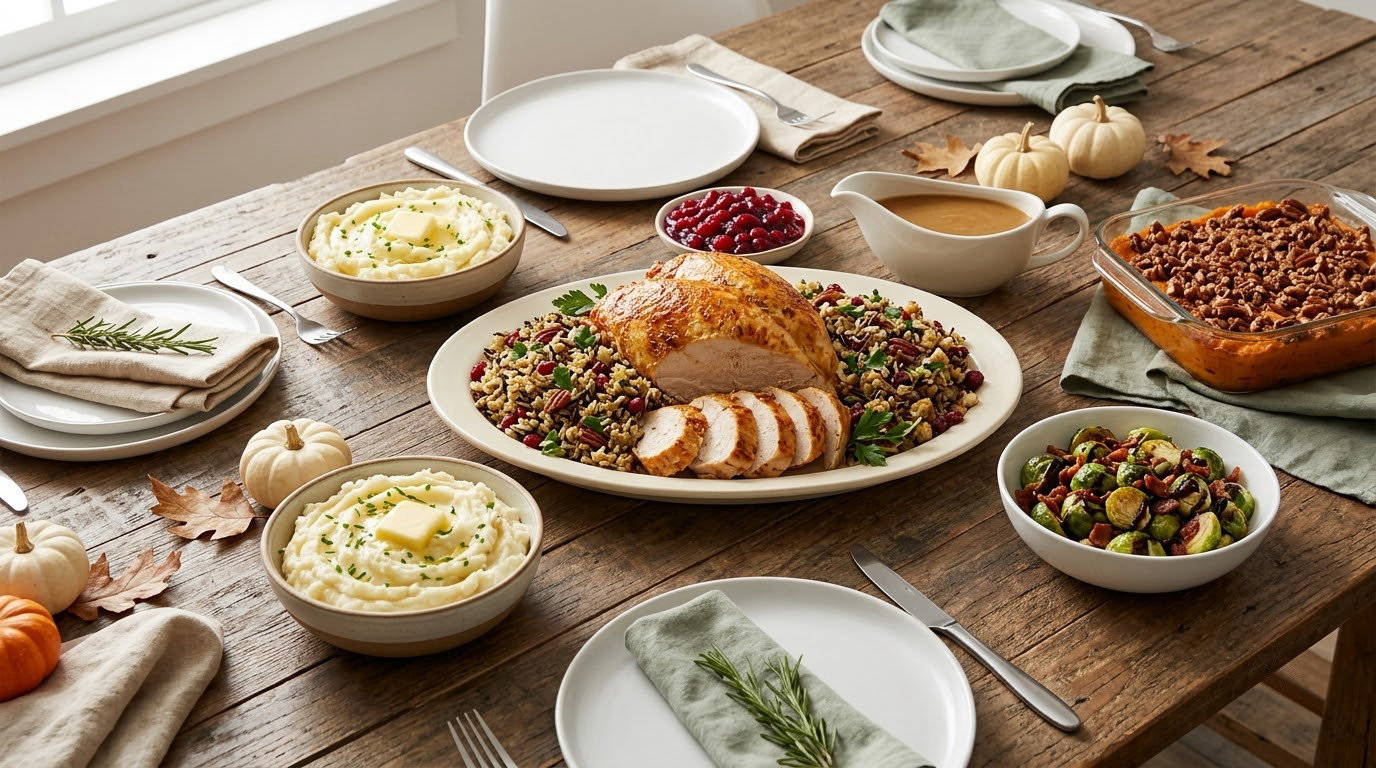
Gluten free Thanksgiving menu ideas do not have to be a compromise plate parked away from everyone else. A plain roasted turkey, mashed potatoes, gravy thickened with cornstarch, roasted squash, green beans and a fruit salad are all naturally gluten free as they are, and only three items on the traditional table usually need a swap: stuffing, bread, and pie crust.
I cook for a table with mixed needs every year, and the version that works best is the one where nobody is handed a separate plate. That is what these twelve dishes are built for: food the whole family eats, with the label-checking and cross-contact work done quietly in advance.
Table of Contents
- 12 Gluten Free Thanksgiving Menu Ideas at a Glance
- 1. Roasted Gluten-Free Turkey with Herb Butter
- 2. Apple-Cranberry Salad with Pumpkin Seeds
- 3. Butternut Squash Soup with Pumpkin Cream
- 4. Garlic Green Beans with Lemon and Almonds
- 5. Gluten-Free Cornbread Casserole
- 6. Sweet Potato Casserole with Gluten-Free Topping
- 7. Roasted Brussels Sprouts with Maple and Bacon
- 8. Gluten-Free Stuffing with Sourdough-Style Croutons
- 9. Mashed Potatoes with Olive Oil and Parsley
- 10. Rustic Gluten-Free Gravy
- 11. Pumpkin Pie with a Gluten-Free Crust
- 12. Apple Crisp with Gluten-Free Oat Topping
- Frequently Asked Questions
- How do I make a Thanksgiving dinner gluten-free for someone with celiac disease?
- Are gluten-free turkey, gravy, and stuffing naturally safe?
- How should I prepare and store a gluten-free Thanksgiving turkey?
- What Thanksgiving foods are naturally gluten-free?
- How can I keep a gluten-free Thanksgiving menu safe from cross-contact?
- Conclusion
12 Gluten Free Thanksgiving Menu Ideas at a Glance
Start with the table below. It shows how each dish handles gluten, whether it can be made ahead, and which family situation it suits best.
| Dish | Course | Gluten-free adaptation | Make-ahead | Best fit |
|---|---|---|---|---|
| Herb-butter roasted turkey | Main | Plain roast, check brine and butter | Season and rest ahead | Everyone |
| Apple-cranberry salad with pepitas | Salad | Skip sweetened cranberries and malt vinegar | Yes | Fresh-tasting sides |
| Butternut squash soup | Starter | Check cream and stock labels | Yes | Small gatherings |
| Garlic green beans with almonds | Side | Fresh or labeled canned beans | Yes | Vegetable-forward tables |
| Cornbread casserole | Side | Certified GF mix, check every add-in | Yes | Children |
| Sweet potato casserole | Side | Certified GF oat or crumble topping | Yes | Texture-seekers |
| Maple Brussels sprouts | Side | Check bacon label, use oil version instead | Roast day-of | Adults |
| GF stuffing with croutons | Side | Certified GF bread, check stock | Assemble day-of | The carb eaters |
| Olive oil mashed potatoes | Side | Nothing to swap | Mash day-of | Everyone |
| Cornstarch gravy | Sauce | Cornstarch or GF-labeled flour thickener | Yes | Everyone |
| Pumpkin pie with GF crust | Dessert | Certified blend crust, blind-bake | Bake day before | Traditionalists |
| Apple crisp with oat crumble | Dessert | Certified GF oats when cross-contact matters | Yes | Non-pie eaters |
1. Roasted Gluten-Free Turkey with Herb Butter
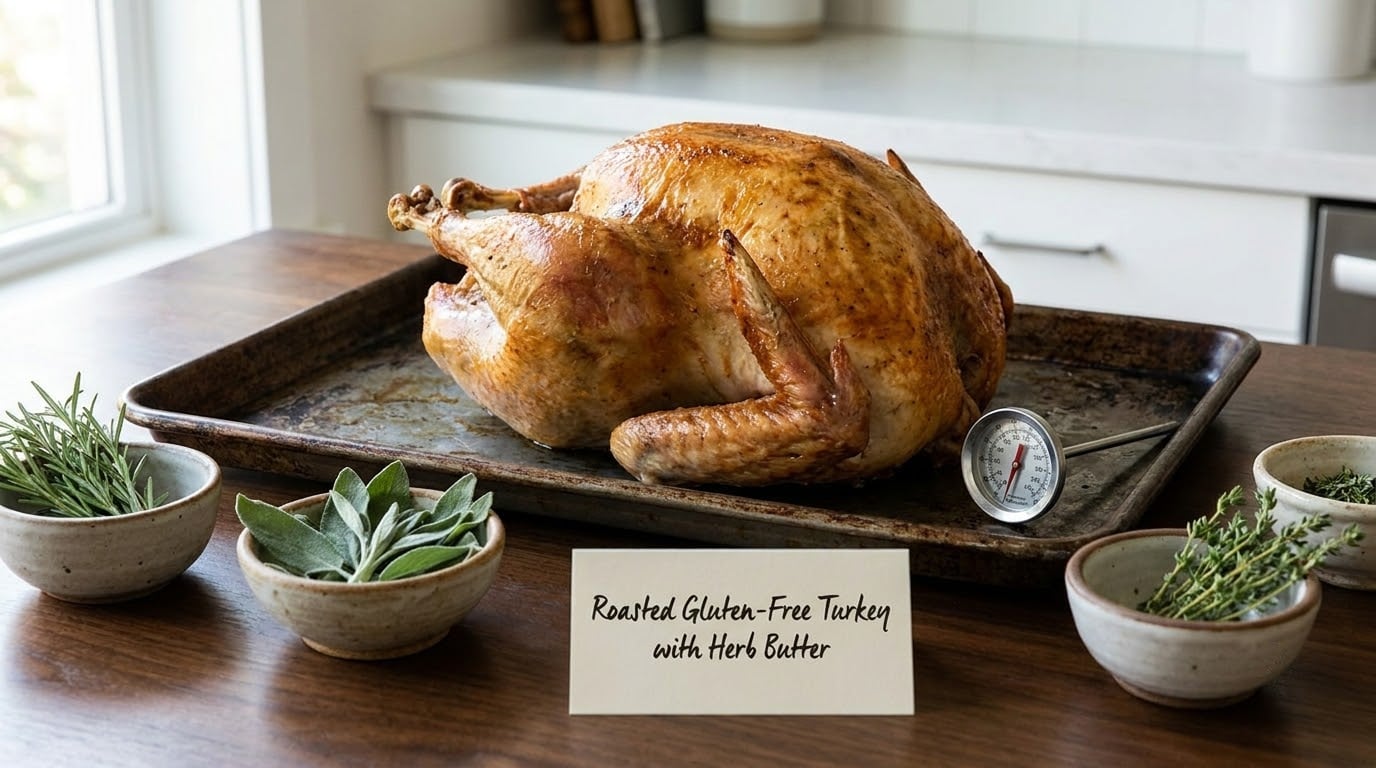
Turkey is the easiest part of the whole meal. A whole unbranded bird or a natural roast from the meat case carries no gluten, so the only real risks sit in the extras you rub on it.
Read the label on any butter you use. Some compound butters and seasoned butters contain wheat protein or are processed on shared equipment, and a self-serve butter tub at a family gathering is a common accidental exposure. Softened butter with salt, thyme, rosemary and garlic is all you need, and you can mix it the day before and keep it chilled.
The same check applies to a packaged brine. Many contain soy sauce, malted barley or malt vinegar, and the word marinade on the front tells you nothing. A dry rub of salt, pepper, paprika and orange zest needs no label at all.
Roast uncovered at 325°F. Check the thickest part of the thigh and the innermost wing joint, not the breast, and pull the bird when the thickest part hits 165°F. If the bird is stuffed, the center of the stuffing must also reach 165°F. Rest it 20 to 30 minutes before carving so the juices stay in the meat instead of on the carving board.
Carving a turkey at a mixed table raises one more question: shared slicing boards and serving spoons. Put out a separate platter, a separate knife and a separate serving spoon for the gluten-free bird if anyone at your table is sensitive to cross-contact, and place them on the far end of the table away from the regular serving dishes.
Choosing a turkey when cross-contact is the real worry
If celiac disease is the reason for the gluten-free menu, a labeled certified gluten-free turkey from the grocery case is the simplest choice. It costs more, and the label means the product was made in a facility that controls wheat, barley and rye, not just a product that happens to lack wheat as an ingredient.
If you are buying a plain fresh turkey instead, treat the grocery store case as the risk zone. Flour-dusted birds are common during the holiday season, and shared roasting equipment gets busier as the holiday gets closer. Wipe the outside of the packaging and the tray before you open them.
2. Apple-Cranberry Salad with Pumpkin Seeds
Fresh salads are useful because they need no swap, but canned versions hide things. Sweetened dried cranberries are usually cooked in sugar syrup, and some brands add malt vinegar or a wheat-based glaze for flow. Read the dried cranberry bag, not just the salad recipe.
Build the salad from crisp apples such as Honeycrisp or Granny Smith, fresh cranberries, tart cherries or pomegranate seeds, and pumpkin seeds for a crack that a nut-free version can use. A dressing of olive oil, lemon juice, a little maple syrup and Dijon mustard is wheat free and keeps the whole bowl naturally gluten free.
The pitfall with dressings is vinegar. Distilled white vinegar, cider vinegar and rice vinegar are gluten free, but malt vinegar contains barley. Balsamic is generally fine, so check the ingredient list on anything labeled balsamic-style.
3. Butternut Squash Soup with Pumpkin Cream
Roasted squash, onion and garlic blended with stock make a smooth starter that reheats beautifully, which makes it one of the best choices for a table that also has to survive a long afternoon of guests in the kitchen.
Buy stock labeled gluten free or use the leftover turkey drippings, and check the cream or dairy alternative for a wheat-based thickener. Plant milks that are not certified can be processed alongside wheat, so for a celiac guest choose one that is labeled.
Blend until completely smooth. A smooth soup works for young children who avoid visible lumps and unknown textures, and it also has a familiar orange color that reads as pumpkin rather than as a new food.
4. Garlic Green Beans with Lemon and Almonds
Green beans are a natural fit. Fresh beans need no label, and frozen or canned versions labeled gluten free are widely available for the months when fresh are expensive or out of season.
Blanch the beans for four minutes, then finish them in olive oil with sliced garlic, lemon zest and a squeeze of juice. Toasted sliced almonds go on at the end so they stay crisp.
For a table with a nut allergy, swap the almonds for pumpkin seeds and skip the crouton version entirely. Garlic cooked long enough to turn sweet rather than sharp is more likely to be accepted by sensory-sensitive eaters, so fry it gently instead of searing it hard.
5. Gluten-Free Cornbread Casserole
Cornbread is one of the easiest gluten-free swaps because the mix already exists in the baking aisle. A boxed gluten-free cornbread mix turns into a family-friendly casserole with eggs, milk and shredded cheese, plus whatever vegetables you have.
Check the entire ingredient list on the mix, not just the cornbread part. Several mixes contain a wheat flour blend in the packet alongside the cornmeal, and some add a wheat-based sourdough starter for flavor. Then check your own add-ins, because shredded cheese from a bulk bin and seasoned croutons are frequent accidental sources.
Casserole form is strategic. Baked in a buttered dish, the same mix that is dry on a baking sheet comes out moist and sliceable, which matters for kids who will not eat a dry wedge. Add corn kernels for sweetness and a little jalapeno for adults, and serve it warm so it does not dry out at the table.
6. Sweet Potato Casserole with Gluten-Free Topping
Mashed sweet potato casserole is naturally gluten free until the topping arrives. A certified gluten-free crumble or an oat-based topping solves it, and a marshmallow variation gives you a second texture option without a second recipe.
The soggy-casserole problem comes from moisture and time. Bake the mashed potatoes first for about 15 minutes, then add the topping and bake again. That dries the base slightly and keeps the crumble from steaming into mush.
If you use oats, buy certified gluten-free oats whenever someone at the table has celiac disease. Regular oats are grown and milled alongside wheat and are frequently cross-contacted. Certified oats come from a supply chain that controls wheat, barley and rye.
Gluten free Thanksgiving menu ideas for kids who avoid the unknown
Thanksgiving is hard for selective eaters because the table is full of foods they cannot identify by sight. A few adjustments help: serve a plain, familiar item in a familiar dish, put the sweet potato casserole on the same plate as something predictable, and let grazing happen without pressure.
Mashed potatoes and apple-cranberry salad both look like other Thanksgiving foods, which is part of why they work. The cornbread casserole in disguise as a cheesy bake is another, and offering a small serving on the side without a separate plate for the child keeps the table feeling normal.
7. Roasted Brussels Sprouts with Maple and Bacon
Roasted Brussels sprouts with maple syrup and crisp bacon bits are a good test of whether a picky eater will go for a vegetable. Halving or quartering them gives a better browned edge and a smaller, more familiar shape.
Bacon is the item to check. Regular grocery bacon is generally wheat free, but cured or seasoned varieties sometimes list malt, wheat protein or soy, and bacon bits sold loose can be breaded. Check each one, and use a vegetarian substitute or leave the bacon off entirely for a vegan guest.
For a child with sensory sensitivities, roast the sprouts until they are soft and caramelized rather than firm, skip the bacon, and offer the maple syrup on the side so nothing unfamiliar is touching the food. A small serving of plain roasted squash usually gets accepted even when the Brussels do not.
8. Gluten-Free Stuffing with Sourdough-Style Croutons
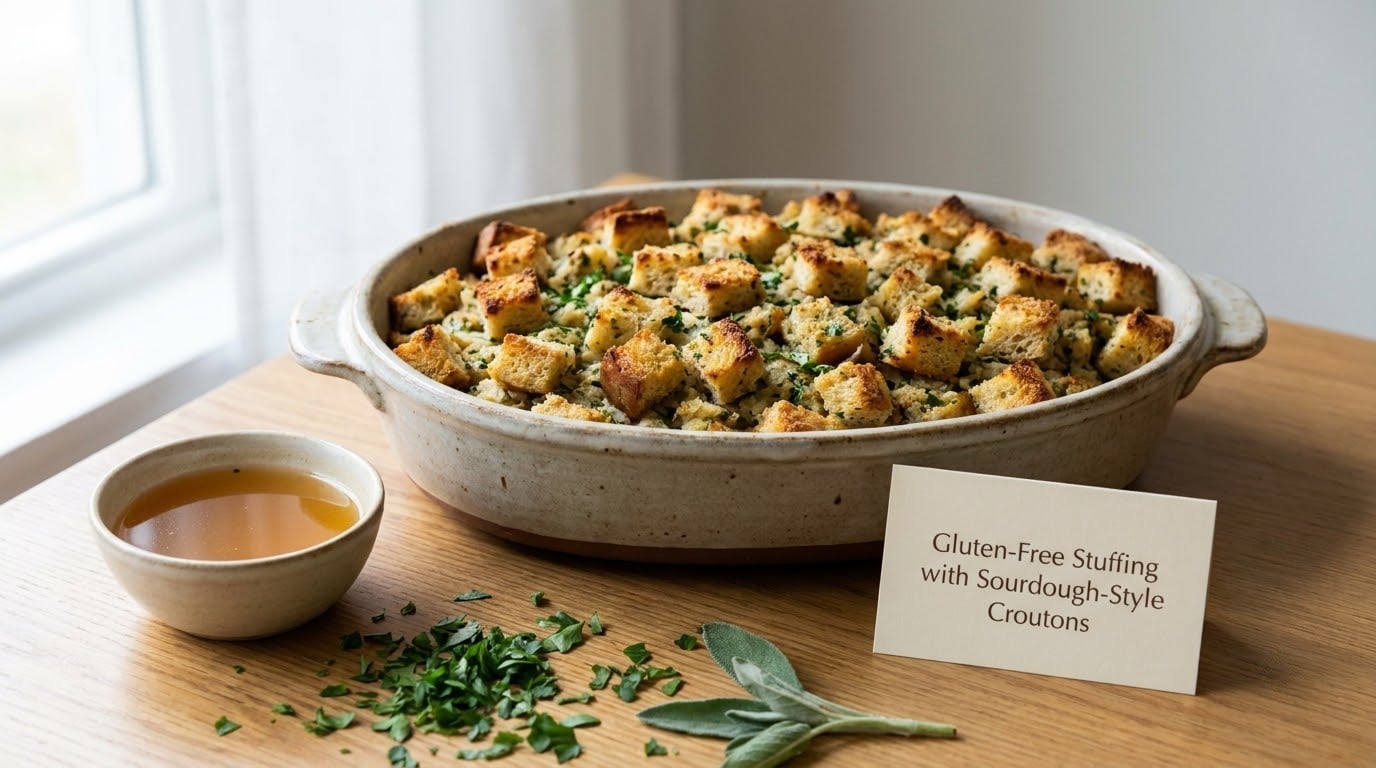
Stuffing is where most gluten-free Thanksgiving attempts lose the room, because the box contains wheat and the homemade version depends on a loaf that nobody wants to buy two of. A sourdough-style gluten-free loaf solves this well. Tear it rather than cube it, toast the pieces in butter until they firm up, then moisten them with eggs and stock.
Check the stock. Many cooking stocks contain wheat-based thickeners or are processed on shared equipment, so choose one labeled gluten free and read it every year because formulations change. The same applies to any breadcrumb you buy as a binder.
Moisture is what separates good stuffing from dry stuffing. Add stock in two rounds, mix gently, and let the mixture rest for 10 minutes before it goes in the oven so the bread absorbs rather than floats. If you are cooking it inside the turkey, the center must reach 165°F along with the bird, and that is easier to judge in a separate baking dish.
Make it the night before and refrigerate it loosely covered with foil. Stuffing made the day ahead reheats better and drier than stuffing made at the last minute.
9. Mashed Potatoes with Olive Oil and Parsley
Potatoes are naturally gluten free, which makes them the lowest-effort item on the table. Olive oil and parsley give them a different flavor from butter and cream without adding work, and they work for dairy-free guests too.
The lumps come from boiling too hard and from mashing too early. Cut the potatoes evenly, start them in cold salted water, keep the heat low, and drain them well before mashing. A ricer gives the smoothest texture for children who prefer a silky consistency, and a handheld mixer is faster than a masher for a large pot.
Keep the milk or dairy alternative at room temperature. Cold liquid added to hot potatoes thickens the starch and creates a gluey result that no amount of beating will fix.
10. Rustic Gluten-Free Gravy
Gravy is the most common hidden-gluten trap on a Thanksgiving table, because packaged gravy is frequently thickened with wheat flour. It also often contains soy sauce or bouillon with malt, and neither appears obviously on the front of the jar.
Make it yourself from pan drippings and it stops being a problem. Deglaze the roasting pan with gluten-free stock, scrape up every brown bit, then strain. Thicken with cornstarch whisked into cold stock, or with a flour blend that is labeled gluten free, and simmer two minutes before tasting.
Lumps form when the thickener hits hot liquid too fast. Mix the cornstarch into a third of a cup of cold stock until smooth, then pour that slurry back in while the pan is warm rather than boiling hard.
If your gravy comes out thin, simmer it two to three minutes longer. If it comes out gluey, add cold stock a quarter cup at a time. Cornstarch gravy loosens as it sits, so make it the day before and keep it in the fridge, then reheat with a splash more stock.
11. Pumpkin Pie with a Gluten-Free Crust
A homemade pumpkin filling is simple: canned pumpkin, eggs, evaporated milk, brown sugar, cinnamon, ginger, nutmeg and salt. No flour goes in the filling at all, so the crust is the only part that needs a gluten-free option.
Buy a certified gluten-free crust, or build one from a gluten-free flour blend, oat flour, or a combination. Gluten-free pastry needs fat and moisture to cooperate, so keep the butter cold and add ice water a spoonful at a time.
Blind-bake the crust for about 15 minutes before filling. A soggy base comes from filling a raw crust and putting it straight into a hot oven, because the filling never gets to set before the bottom crust starts to steam. Prune the base with a fork before the blind bake.
A pecan pie works on the same crust with no changes at all, and a pumpkin cheesecake uses the same crust if you want two desserts from one shell.
12. Apple Crisp with Gluten-Free Oat Topping
Not everyone wants another pie, and an apple crisp is a welcome second dessert that reheat like a dream. Tart apples such as Granny Smith hold their shape, and cinnamon plus a squeeze of lemon keeps them bright.
A topping of certified gluten-free oats, butter, brown sugar, cinnamon and a little flour blend gives you a crumble that toasts properly. Check the oats for certification when celiac disease is in the room.
For a smaller table, divide the crisp into ramekins and bake them on the same sheet. Individual portions reheat in minutes, which matters when the main meal runs long and the kids have already eaten.
Frequently Asked Questions
How do I make a Thanksgiving dinner gluten-free for someone with celiac disease?
Audit every packaged item before the holiday, including gravy, stuffing mix, bread, croutons, salad dressings and canned cranberry sauce. Buy certified gluten-free versions for anything processed, and prepare naturally gluten-free dishes such as turkey, potatoes, squash and green beans from scratch. Use separate utensils and cutting boards for the gluten-free items, and let anyone with celiac disease check labels with you.
Are gluten-free turkey, gravy, and stuffing naturally safe?
Turkey is naturally gluten free, but a self-serve butter or a packaged marinade may not be. Grocery gravy is usually thickened with wheat flour, so read the label or make it from pan drippings and cornstarch. Stuffing needs certified gluten-free bread, a labeled stock and a binder you have checked. Seasonings and croutons are where most hidden gluten turns up.
How should I prepare and store a gluten-free Thanksgiving turkey?
Choose an unbranded natural turkey, or a certified gluten-free bird when celiac disease is the concern. Keep the brine, butter and rub free of soy sauce, malt vinegar and wheat-based products. Roast at 325F and check the thickest part of the thigh and the wing joint, where the temperature is highest. Refrigerate leftovers within two hours and use them within three to four days.
What Thanksgiving foods are naturally gluten-free?
A plain roasted turkey, mashed potatoes, roasted squash, butternut squash soup, green beans, Brussels sprouts, fresh cranberry sauce, apple-cranberry salad, corn on the cob and fresh fruit all start life gluten free. Check canned versions, because many include a wheat thickener or are processed on shared equipment. Stuffing, bread, croutons and pie crust are the items that nearly always need a certified swap.
How can I keep a gluten-free Thanksgiving menu safe from cross-contact?
Use a separate cutting board, knife, serving spoon and platter for gluten-free dishes, and keep them on a different part of the counter from the flour-dusted baking area. Store prepped gluten-free dishes covered and higher on the shelf. If relatives bring food, ask what is in it, label every dish, and avoid sharing a toaster, fryer or oven the same day without cleaning it first.
Conclusion
Pick the turkey, two sides and one dessert from this list first, then decide what to do about stuffing. That is the order that matters, because the three items with real gluten in them are the ones you need time to source.
Next, set a label-checking date about a week out, and buy the certified bread, crust, oats and gravy thickener while the holiday aisle is fully stocked. On the day, work from the make-ahead list: squash soup, gravy, casseroles, salad and apple crisp all do their work in the fridge, and the turkey, potatoes, green beans and roasted vegetables finish last.
Leftovers matter more than people expect. Serve the gluten-free dishes in small containers you own and can wash, label them, and refrigerate them within two hours. Reheat to 165F and use them within three to four days, so nobody is cooking a second, separate meal on Thursday night.