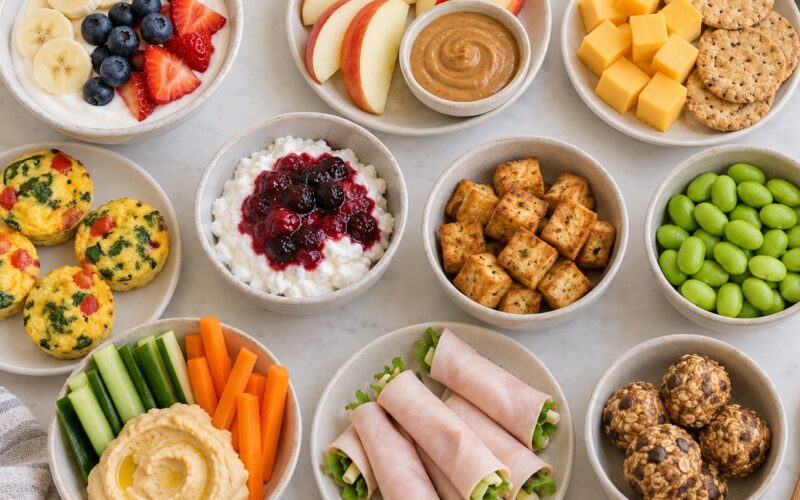
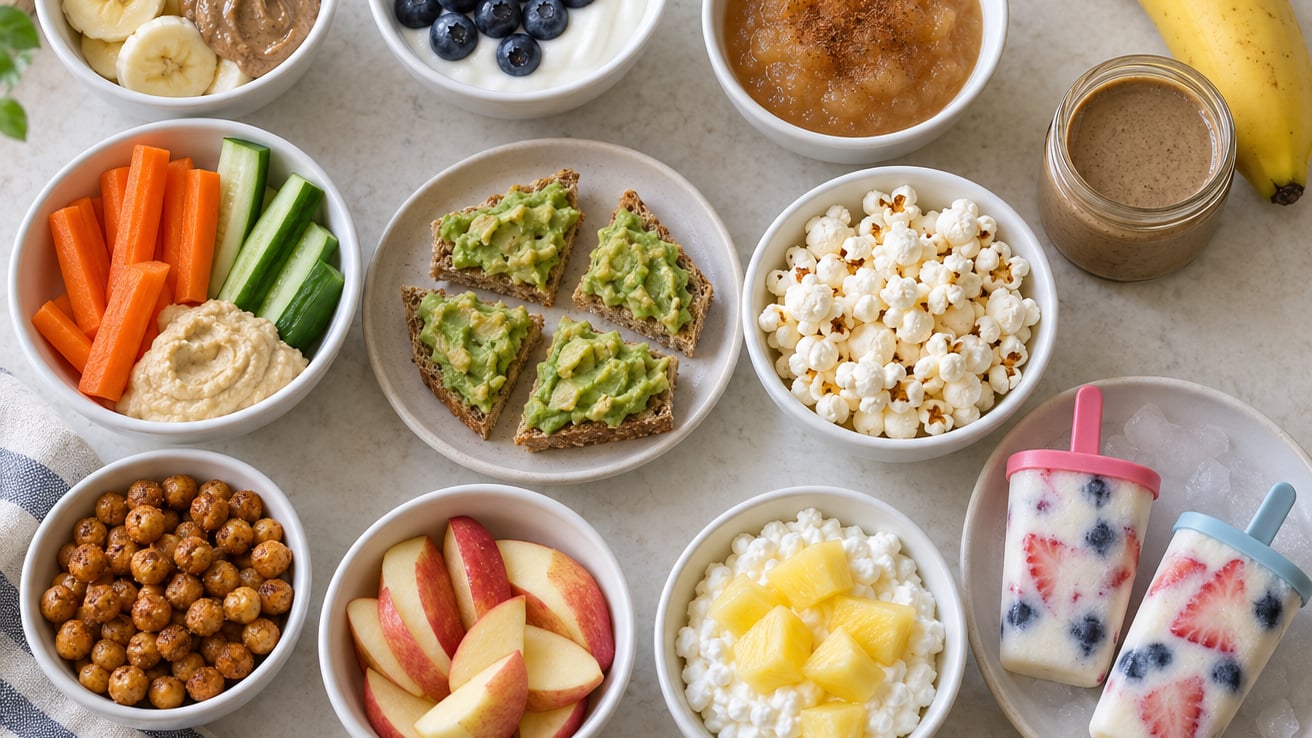
Healthy snacks for kids without added sugar are whole or minimally processed foods that contain no sweetener added during manufacturing: fruit, plain yogurt, nuts and seed butters, vegetables with hummus, popcorn, roasted chickpeas, eggs and freeze-dried fruit. Aim for about 5 or 6 grams of added sugar or less per serving for children aged 4 and up.
This list is written for the parent who has already stood in the snack aisle reading six labels and putting them all back. Some of the 15 ideas below will get eaten. Some will be refused on sight and refused again next Tuesday. A kid who reliably eats three of them is doing fine, and that is the honest framing I come back to in our house every week.
Two things drive acceptance far more than nutrition does: texture and format. A perfectly good no-added-sugar snack that arrives in a slippery mound on a plate gets declined, while the same food on a stick or in a cup goes. I lean on that a lot here, and it is worth reading why food texture matters more than taste for some kids before you swap anything out.
Nutrition notes below follow mainstream guidance from the Dietary Guidelines for Americans and the American Academy of Pediatrics. For anything specific to your child’s health, growth or allergies, your pediatrician or a registered dietitian is the right person to ask.
Table of Contents
- Healthy Snacks for Kids Without Added Sugar at a Glance
- 1. Fresh Fruit with Nut or Seed Butter
- How to Choose Healthy Snacks for Kids Without Added Sugar
- 2. Plain Greek Yogurt with Fresh Berries
- 3. Unsweetened Applesauce with Cinnamon
- 4. Hummus with Vegetable Sticks
- 5. Avocado Toast on Whole-Grain Bread
- 6. Oatmeal Energy Bites Without Sweeteners
- 7. Popcorn Seasoned Without Added Sugar
- 8. Cucumber, Pepper, and Tomato Snack Cups
- 9. Unsweetened Nut or Seed Butter with Apple Slices
- 10. Whole-Grain Crackers with Cheese or Avocado
- 11. Frozen Fruit Pops Made from Yogurt and Fruit
- 12. Cottage Cheese or Ricotta with Pineapple
- 13. Mini Muffins Made with Apples and Oats
- 14. Roasted Chickpeas or Edamame
- 15. Frozen Yogurt Cups with Nut or Seed Butter
- Frequently Asked Questions
- Is fruit healthy for kids if it contains natural sugar?
- How can I tell if a packaged snack has added sugar?
- What are good no-added-sugar snacks for children with food allergies?
- Are artificial sweeteners safe for kids?
- How many calories should a child’s snack contain?
- What can I serve to a child who avoids crunchy or mixed textures?
- Start With the Label, Not the Aisle
Healthy Snacks for Kids Without Added Sugar at a Glance
The table below covers all 15 snacks in this guide, with the details that decide whether a snack works for your family: what is in it, how it feels in the mouth, which allergens to watch, and how long it survives a lunchbox.
| Snack | Main ingredients | Texture | Allergy notes | Best use | Prep needed |
|---|---|---|---|---|---|
| Fruit with nut or seed butter | Banana, apple, pear, peanut or sunflower butter | Smooth or soft-chew | Nut-free if you use seed butter | After school, on the go | Yes, 2 minutes |
| Plain Greek yogurt with berries | Unsweetened yogurt, blueberries, strawberries | Creamy, spoonable | Dairy; swap coconut yogurt for dairy-free | Quiet afternoon, breakfast top-up | Yes, 1 minute |
| Applesauce with cinnamon | Plain applesauce, cinnamon | Smooth, no pieces | Usually none | Lunchbox, stroller, first foods | No if you buy plain |
| Hummus with vegetable sticks | Chickpeas, tahini, carrots, cucumber | Creamy dip plus crisp raw | Sesame is a top-9 allergen; chickpea allergy is rare | Any time, plate or cup based | Yes, 5 minutes |
| Avocado toast | Whole-grain bread, avocado, lemon | Crisp edge, soft middle | Gluten if wheat bread; check bread for nuts | Brunch, after-practice fuel | Yes, 4 minutes |
| Oat energy bites | Rolled oats, seed butter, unsweetened dried fruit | Firm, slightly sticky | Seed and oat cross-contact; keep small | Batch cook, freezer stash | Yes, 20 minutes |
| Seasoned popcorn | Popcorn kernels, oil, nutritional yeast or herbs | Light and crunchy | Check for butter or dairy in coatings | Movie night, travel | Yes, 5 minutes |
| Vegetable snack cups | Cucumber, pepper, tomato, hummus or guacamole | Crisp, self-fed pieces | Follow the dip you already use safely | Practice snack, party table | Yes, 10 minutes |
| Seed butter with apple slices | Thin apple wedges, sunflower or pumpkin butter | Crisp, dip-able | Choose a dedicated seed-butter-free-of-nuts label | Lunchbox, car snack | Yes, 3 minutes |
| Crackers with cheese or avocado | Whole-grain crackers, sliced cheese or mash | Crunchy or soft, depending | Gluten, dairy; check for sesame | Lunchbox, grazing board | No |
| Frozen yogurt and fruit pops | Plain yogurt, blended berries or mango | Frozen, smooth if blended well | Dairy-free yogurt if needed | Hot afternoons, dessert slot | Yes, 10 minutes plus freezing |
| Cottage cheese with pineapple | Cottage cheese or ricotta, fresh pineapple | Lumpy-curdy and juicy | Dairy; pineapple is not a common allergen | Afternoon snack, higher protein days | Yes, 2 minutes |
| Apple oat mini muffins | Apples, oats, eggs, cinnamon | Soft crumb, holds together | Egg and oat; nut-free by default | Batch bake, school-safe | Yes, 25 minutes |
| Roasted chickpeas or edamame | Chickpeas or edamame, salt, spices, herbs | Crunchy or chewy | Legume allergy; choking risk under 5 | Nut-free crunch, travel | Yes, 40 minutes or air fryer |
| Frozen yogurt with a butter swirl | Plain frozen yogurt, sunflower or seed butter | Cold, creamy | Sunflower butter is the safest nut-free swap | Dessert swap, post-dinner | No |
1. Fresh Fruit with Nut or Seed Butter
Fresh fruit plus a thin layer of nut or seed butter adds fat and protein to the natural sugar in the fruit, which is what keeps it satisfying past twenty minutes. Banana, apple wedges, pear slices and peach halves all work, and a swirl of peanut butter or sunflower seed butter turns a piece of fruit into something that feels like a treat.
The portion is smaller than most parents expect. Half a banana with a tablespoon of butter is a snack. A whole banana with butter on it is a meal your child is not asking for at four in the afternoon.
How to Choose Healthy Snacks for Kids Without Added Sugar
When you pick up a packaged no-added-sugar snack, work through these five checks in about thirty seconds. This is the part that changes results, because a package that says no added sugar on the front can still be a poor choice, and parents in our reader conversations say that distinction is what finally made labels click.
- Check the serving size against the container. A pouch with 40 packages often lists one package as a serving. Look at how many servings the container holds before you decide anything.
- Read the Added Sugars line, not Total Sugars. Added sugars is its own line on the nutrition facts label. That is the number this whole topic is about.
- Look for fiber and protein. If a snack has neither, it is mostly refined starch with flavoring, and the hunger comes back fast.
- Read the first three ingredients. Real food is usually three ingredients or fewer. If sugar, syrup or juice concentrate appears there, the no-added-sugar claim on the front is doing a lot of work for very little.
- Match the texture to your child. If they avoid crunchy, mixed or wet-and-dry combinations, that is a sensory preference, not a food problem, and swapping format beats swapping nutrition.
For the numbers themselves: the Dietary Guidelines suggest keeping added sugar under 10 percent of daily calories, which works out to roughly 25 grams for children aged 4 to 8. A working target of 5 or 6 grams or less per snack spreads that allowance across three or four snack times instead of burning it all before dinner. If you have ever wondered how to spot those sugars hiding under long names, how to spot added sugar under different names walks through the full list.
2. Plain Greek Yogurt with Fresh Berries
Plain Greek yogurt with fresh berries gives kids protein, calcium and fat without any added sugar, and the berries keep it sweet on their own. Whole plain yogurt is also the single most requested and least liked item in our house, which is worth saying out loud so you know it is not just you.
Texture is the lever here. Mashed berries stirred through gives a smooth, uniform mix that works for kids who reject anything with lumps. Whole berries on top turns it into a picking task. Both are the same snack; pick the one your child accepts today rather than the one that looks best in a photo.
Frozen yogurt pouches are the lunchbox version, and a plain pouch with nothing added is the one to buy. Freeze it solid in the morning and it thaws by lunchtime while doing double duty as the ice pack. This trick comes up constantly in parent groups as the answer to the no-refrigeration rule.
3. Unsweetened Applesauce with Cinnamon
Unsweetened applesauce with a shake of cinnamon is the lowest-effort no-added-sugar snack in this list, and it solves more problems than it gets credit for. Buy the plain unsweetened version, add cinnamon yourself, and the flavor boost comes from a spice rather than a sweetener.
Check the ingredient list, because most flavored applesauce is sweetened with apple juice concentrate or sugar. Plain varieties usually list apples, water and sometimes cinnamon or lemon, and nothing else.
Serve it in a reusable pouch, dip spoon, or straight from a small cup. Children under three, or anyone who is not yet managing mixed textures reliably, usually do best with smooth spoon-fed food like this. Add a few pieces of toast alongside and the same bowl becomes a snack with structure.
4. Hummus with Vegetable Sticks
Hummus with vegetable sticks turns raw vegetables into something most kids will pick up voluntarily, and the chickpeas and tahini bring protein and fat that raw carrot alone does not. Carrots, cucumber, bell pepper and broccoli are the four that work most often in our house.
Two adjustments matter more than the vegetable choice. Cut sticks long and thin like matchsticks rather than short and chunky, because small sticks are easier to grip and eat. Serve the hummus in a separate small cup so kids can dip with fingers, which keeps the whole thing self-feeding.
Sesame is a major allergen in the US, so read the hummus label if your child has allergies or your school restricts it. Tahini-free versions exist for that reason. For families working through a restricted diet with an elimination plan, how to start a gluten-free casein-free diet for kids covers how that process actually goes.
5. Avocado Toast on Whole-Grain Bread
Avocado toast on whole-grain bread is a fiber-rich snack that takes four minutes and survives the no-refrigeration rule, which makes it one of the most practical options here. Mash the avocado with a squeeze of lemon and a pinch of salt, spread it thick on toast, and cut the toast into small squares for younger children.
The bread is where this fails most often. A slice labeled whole wheat in big letters on the front is frequently not the whole-grain option people assume it is, so check the ingredient list for whole wheat flour as the first item. Many breads also carry sunflower or sesame seeds, which matters in a nut-free household.
If toast feels too dry for your child, serve the mashed avocado on its own with the bread alongside. Same food, less texture conflict.
6. Oatmeal Energy Bites Without Sweeteners
Oatmeal energy bites made with rolled oats, nut or seed butter and unsweetened dried fruit give you a snack you can cook once and pull from the freezer all week. The method is simple: warm two-thirds of a cup of nut or seed butter, stir in one cup of rolled oats and a third of a cup of unsweetened dried fruit, chill the mixture, roll it into small balls, and refrigerate or freeze.
Dried fruit in this recipe is a concentrated sugar source, which is fine in a small proportion but worth knowing. Portions matter more here than in most of this list. One or two balls is a snack for a child over three.
Cross-contact is the real limitation for allergy households. Oats are frequently milled alongside wheat and nuts, so if your child reacts to gluten or tree nuts, buy certified gluten-free oats and make the seed butter in a facility you trust, or choose a different recipe from this list.
7. Popcorn Seasoned Without Added Sugar
Air-popped or lightly oiled popcorn seasoned with nutritional yeast, garlic powder or dried herbs gives you a genuinely crunchy snack with nothing sweet on it, and it is one of the few snacks most kids accept without a negotiation. Melt a small amount of butter in a pan, add popped popcorn for the last thirty seconds, and dust with the seasoning of the day.
Popcorn is a choking risk for children under four because of its shape and lightness, so skip it before then and come back to it later. Ghee or olive oil instead of butter keeps it dairy-free when needed.
Popcorn is also a genuinely good car snack and travel snack because it does not crumble, melt or need refrigeration. It just needs to be portioned, since a whole bowl is a meal rather than a snack.
8. Cucumber, Pepper, and Tomato Snack Cups
Cucumber, pepper and tomato snack cups give kids something to assemble and eat on their own, which is half the battle at four in the afternoon. Small clear cups, a few pieces of each vegetable, and a spoonful of hummus or guacamole in the bottom.
These are the best practice snack for a child working on self-feeding skills, because each piece is discrete and there is nothing to scoop. Cherry tomatoes should be quartered for younger children, since a whole grape tomato is a well-documented choking risk.
For a child who avoids mixed or wet-and-dry textures, keep the vegetables and the dip in separate compartments rather than layered together. It is the same food with a completely different sensory profile, and the texture piece usually matters more than the nutrition piece.
9. Unsweetened Nut or Seed Butter with Apple Slices
Unsweetened nut or seed butter with thin apple slices is the fastest thing on this list to put together, and it is the one we keep coming back to. Two or three apple wedges, a tablespoon of butter for dipping, done.
Use seed butter for nut-free households. Sunflower seed butter is the most widely available and is made from a single ingredient; pumpkin seed butter works too. Check for a nut-free facility statement on the jar, because many brands process peanuts alongside sunflower seeds.
On browning: a squeeze of lemon in a bowl of water, a few slices dunked for a few seconds, or simply serving the apple right after slicing. Avoid the powdered drink packets people sometimes use for this, since those are sweetened and defeat the point.
10. Whole-Grain Crackers with Cheese or Avocado
Whole-grain crackers with cheese or avocado give you a portable, shelf-stable snack that travels well and does not need refrigeration. Look for crackers where whole grain or whole wheat flour is the first ingredient, then check the added sugars line, which is often 2 to 4 grams per serving even in crackers marketed for kids.
Cheese slices work for older children and older toddlers who handle finger food reliably. For younger children or anyone with chewing difficulty, mash the cheese or use soft buttered bread instead, and pair it with the crackers on the side.
If your child is on a gluten-free or restricted diet, the cracker aisle needs the same label reading as the snack aisle, with the same attention to sesame and nuts.
11. Frozen Fruit Pops Made from Yogurt and Fruit
Frozen fruit pops made from plain yogurt and blended fruit are a no-added-sugar dessert that feels like a treat rather than a compromise. Blend one cup of plain yogurt with a cup of fruit such as strawberries, mango or peaches, pour into silicone or reusable popsicle molds, and freeze for about four hours.
The ice crystals are the part that decides whether a kid eats it. Blending longer and adding a splash of milk or a few spoonfuls of the yogurt helps, as does blending the fruit fully rather than leaving chunks. Chunky pops get refused here every time.
Serve them slightly soft, straight from the fridge for ten minutes or so, or straight from the freezer if your child is a crunch-through-it type. Both are legitimate ways to eat a pop.
12. Cottage Cheese or Ricotta with Pineapple
Cottage cheese or ricotta with fresh pineapple is a mild, protein-rich pairing that works when plain yogurt has been refused too many times in a row. It has more staying power than fruit alone and less sweetness than most kids expect, which is either a feature or a problem depending on the day.
Fresh pineapple, cut into small chunks or cut into sticks and stuck into the cheese, works well for self-feeding. Use the canned unsweetened version when fresh pineapple is not worth the money, and drain it properly; the syrup is not an added sugar you want in a bowl.
This is one of the snacks most often described as too lumpy for sensory reasons. Blending the cottage cheese smooth with a little milk solves it in about fifteen seconds.
13. Mini Muffins Made with Apples and Oats
Mini muffins made with apples, oats, eggs and cinnamon get their sweetness from grated apple and ripe banana rather than refined sugar, and they freeze well enough that you can bake a double batch on a Sunday. Grate a small apple finely, fold it into an oat-and-egg batter with a spoon of cinnamon, and bake in a mini muffin tin at 350 degrees for about 15 minutes.
Mini size matters. A standard muffin is a meal for most children and a choking risk for a two-year-old. Mini muffins also freeze and thaw without going crumbly, which is rare in homemade baking.
These are nut-free as written, which makes them one of the safest things to send to a class party. Check your oats for gluten cross-contact if that matters in your household.
14. Roasted Chickpeas or Edamame
Roasted chickpeas or edamame seasoned with salt, spices and herbs give you the crunchy, salty snack that kids usually ask for by name, with plant protein and fiber instead of refined starch. Toss with oil, roast at 400 degrees for about 35 to 40 minutes, or use an air fryer for roughly 15 minutes.
Edamame does the same job with less fuss, since it comes ready salted from the freezer and needs no cooking. Frozen edamame is a genuinely useful emergency snack for most homes.
Two cautions. Whole nuts, whole chickpeas and hard roasted legumes are choking risks for younger children, and this is the reason most guidance puts roasted legumes off until around age five. And for a legume allergy, both of these are out, which is where the seed butter or cracker snacks above pick up the slack.
15. Frozen Yogurt Cups with Nut or Seed Butter
Frozen yogurt cups with a small swirl of nut or seed butter are the closest thing on this list to ice cream without added sugar, and it takes about a minute to assemble. Put a scoop of plain frozen yogurt in a small bowl and swirl sunflower seed butter through it.
Use sunflower seed butter rather than almond or peanut butter if the household is nut-free, and check the frozen yogurt label, because many varieties are sweetened. Vanilla and plain are the ones that pass.
This is also the easiest dessert-swap on the list. When the alternative is ice cream, offering this alongside, rather than instead of, usually lands better. Same goes for the frozen pops above.
Frequently Asked Questions
Is fruit healthy for kids if it contains natural sugar?
Yes. The sugar in whole fruit comes packaged with fiber, water, vitamins and the skin and flesh that slow its absorption, so kids rarely get the same blood sugar spike they get from sweetened drinks or gummies. Fruit juice and fruit snacks are different stories, because the fiber is removed or the sugar is concentrated. Serve whole fruit, keep portions reasonable, and you do not need to avoid it.
How can I tell if a packaged snack has added sugar?
Turn the package over and find the nutrition facts label. Read the serving size first, since it is often a third of the pouch. Then read the Added Sugars line, which sits under Total Sugars on every US label. Finally scan the ingredient list for sugar, syrup, cane sugar, honey, agave, maltose, dextrose, fruit juice concentrate and similar terms.
What are good no-added-sugar snacks for children with food allergies?
Seed butters, roasted chickpeas and edamame, plain yogurt or dairy-free yogurt, air-popped popcorn, plain oatmeal, boiled eggs, whole fruit, seed-based crackers and vegetables with hummus cover most allergy profiles. Check every label again for the specific allergen, since manufacturing changes and seed butter is often made in facilities that also handle peanuts. Talk to your allergist before making changes.
Are artificial sweeteners safe for kids?
The American Academy of Pediatrics advises that non-nutritive sweeteners are generally not recommended for children under five, and that children over five should only use them with medical guidance. Water is always the better first option. If your child is used to a heavily sweetened drink, switching gradually over a couple of weeks is far more likely to stick than an abrupt cut.
How many calories should a child’s snack contain?
There is no single number, because energy needs vary hugely with age, growth and appetite. A useful working target is roughly 100 to 200 calories for a snack offered between meals, which is generally enough to take the edge off hunger without cutting into the appetite for dinner. Ask your pediatrician for a number specific to your child’s growth curve and activity level.
What can I serve to a child who avoids crunchy or mixed textures?
Move to single textures that are smooth and consistent: unsweetened applesauce, blended yogurt with fruit stirred through, mashed avocado, cottage cheese blended until smooth, or an unsweetened smoothie. Keep each food separate rather than layered or combined, since a mixed bowl reads as mixed to a sensory-sensitive child even when every ingredient is familiar.
Start With the Label, Not the Aisle
If you change one thing this week, do not overhaul the snack drawer. Pick the one snack your child asks for most, read its added sugars line and its first three ingredients, and swap it for one item from this list that fits their texture. That is how the change actually sticks, because it targets the actual craving rather than replacing the whole diet with one your kid will refuse by Thursday.