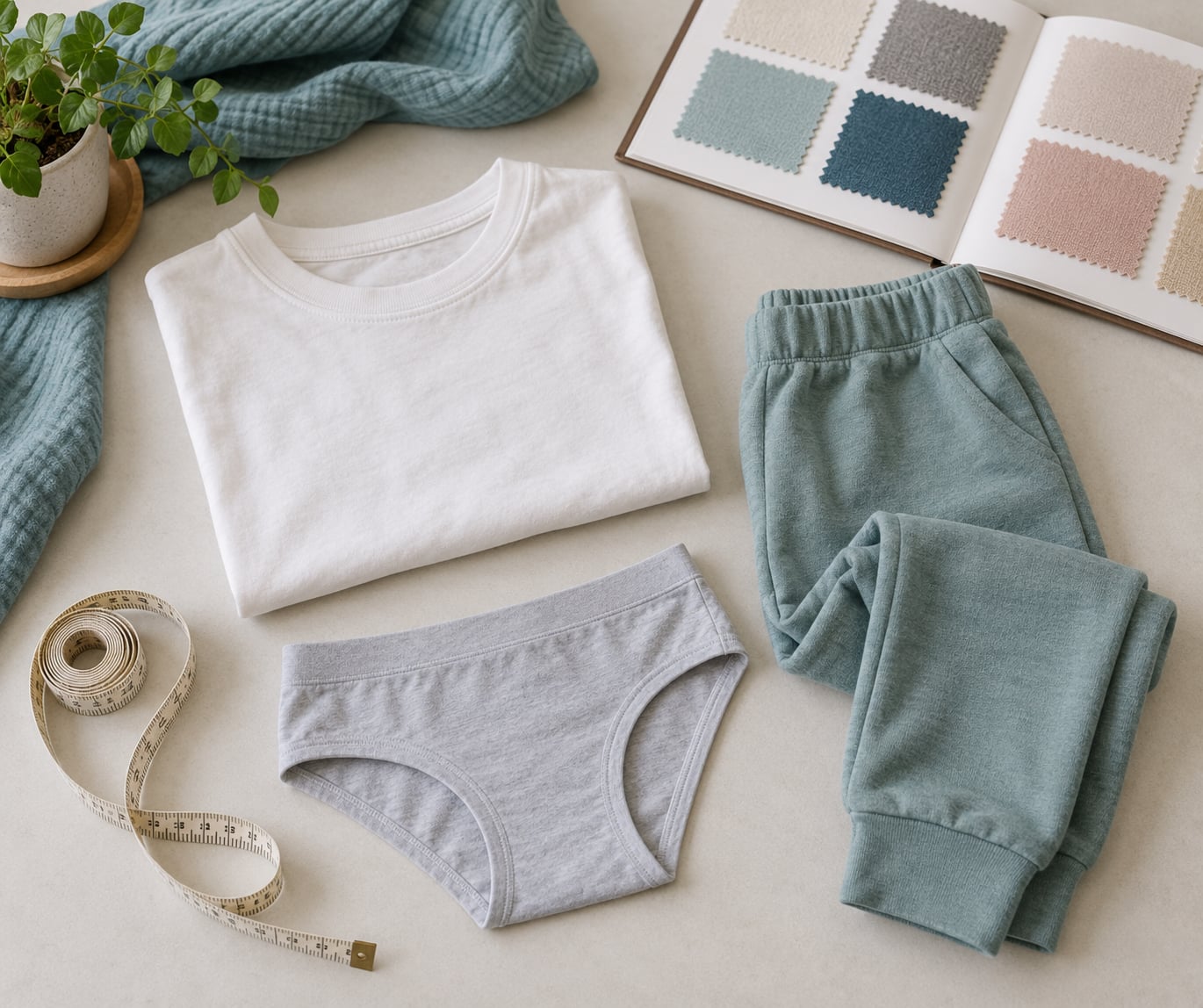
Choosing clothes for a sensory sensitive child gets much easier once you stop guessing and start checking. The garments that work usually have no sewn-in tags, flat seams, soft stretch fabric and a waistband that does not dig in, and you can spot every one of those things in about ten seconds in a shop. Here is how to choose clothes for sensory sensitive kids without another wasted trip or another week of morning battles.
First, a word for the adult reading this at 7am. If your child will only wear one specific outfit and you have been late, skipped an outing or lost a job over it, you are not doing this wrong. Tactile sensitivity is a real neurological difference, not a discipline problem, and it shows up most loudly in the one place your child has to touch fabric all day long.
This guide is written for families in the US dealing with autism, ADHD, sensory processing disorder, eczema or plain old sensitive skin, and for plenty of adults who recognise themselves in it. Bring a notebook. The whole process takes one afternoon to set up and about two minutes per garment after that.
Table of Contents
- What You Need
- Step-by-Step: How to Choose Clothes for Sensory Sensitive Kids
- 1. Identify Your Child’s Specific Sensory Triggers
- 2. Check Labels, Seams, and Construction
- 3. Choose Softer, Predictable Fabrics
- 4. Look for a Comfortable Fit
- 5. Test New Clothes Before Buying
- 6. Wash Clothes Before the First Wear
- 7. Buy a Small Backup Rotation
- Common Mistakes
- Frequently Asked Questions
- What kind of clothing is appropriate for a child with sensory issues?
- What does sensory friendly actually mean?
- Why does my child hate tags and seams so much?
- Do autistic kids and kids with ADHD have sensory issues with clothes?
- What is the 3-3-3 rule for clothes?
- How do I get my sensory sensitive child to actually wear new clothes?
- Conclusion
What You Need
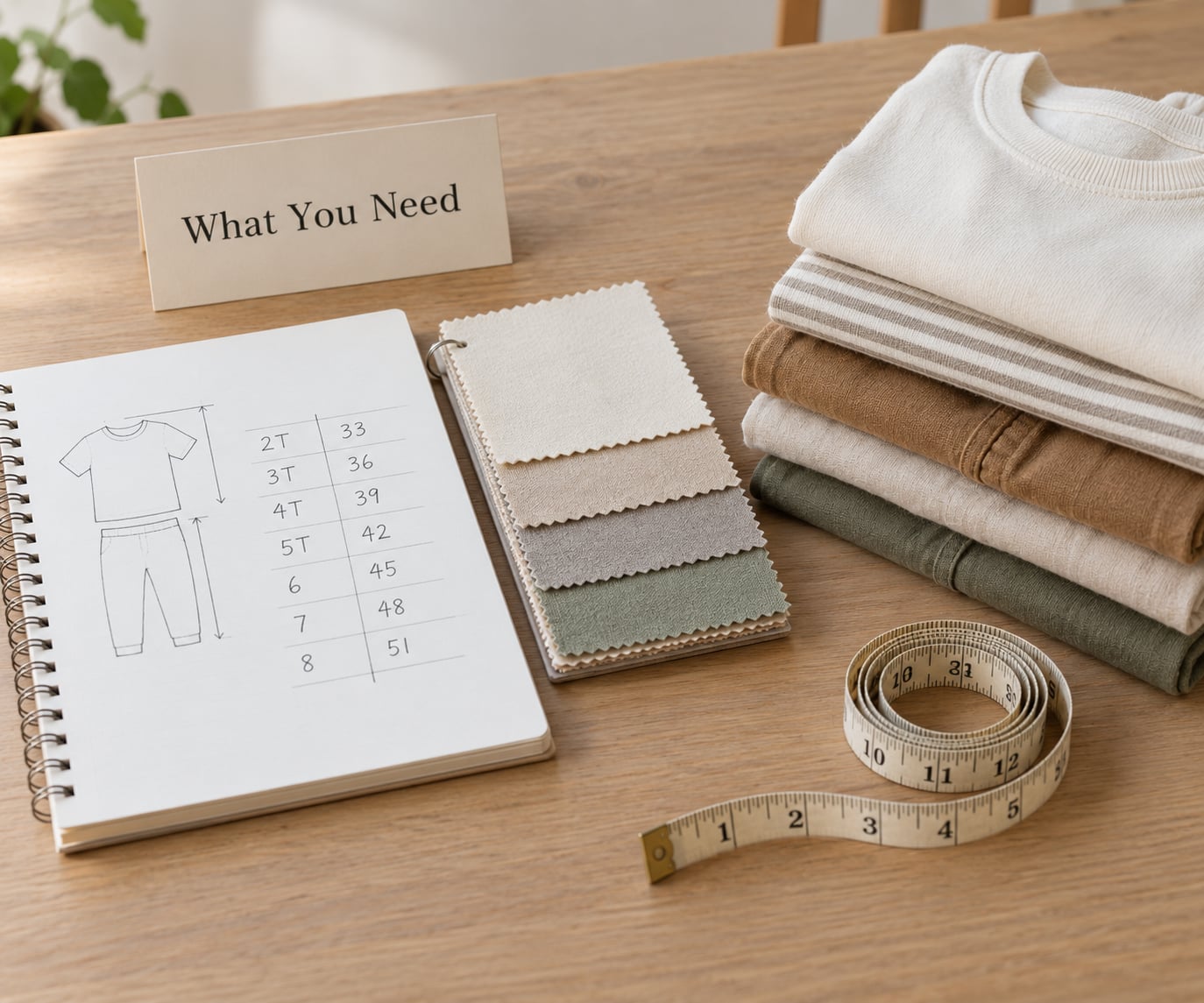
Everything you need is cheap and probably already in a drawer somewhere. Setting it up properly is what turns clothing shopping from a daily gamble into a repeatable five-minute check.
- A sensory profile. One page listing what your child actually reacts to, in their own words if they can describe it: tags, seams, waistbands, cuffs, zippers, buttons, thick socks, heat, rough texture, tight anything.
- Current measurements. Not the size on last season’s label. Waist, hip, chest, and the length from shoulder to where their sleeve should end.
- A fabric swatch notebook. Cut or tuck small samples of every fabric you already own that gets worn without complaint, and a couple they refuse. Label them yes and no. This becomes your personal reference, and it is worth more than any product description online.
- A measuring tape and a phone camera. The tape for fit, the camera so you can photograph a label, seam or waistband before you buy anything you might have to return.
- Four to six similar options to compare. Sensory preferences are about the garment, not the style. Two or three near-identical tees in the same fabric let you compare seams and waistbands honestly instead of guessing from a photo.
- A wash routine you already trust. Gentle cycle, mild unscented detergent, air dry or low heat. Set it up now so step six takes two minutes later.
One more thing worth having: a backup outfit that lives in the bag. Not a punishment item, not something you threaten them with. The garment that works, folded flat in the car, in the school bag, in the stroller pocket.
Step-by-Step: How to Choose Clothes for Sensory Sensitive Kids
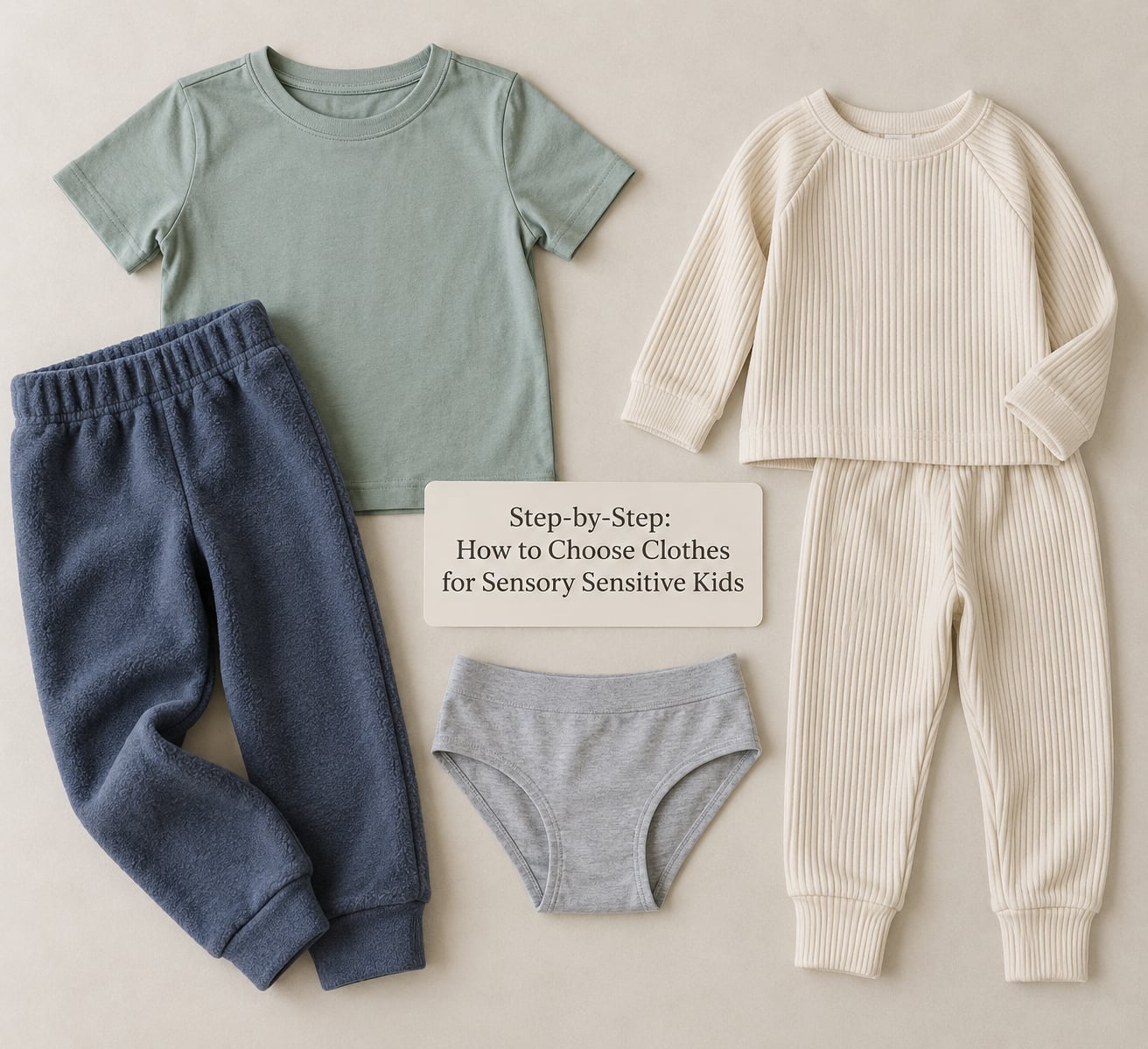
This seven-step process takes about ten minutes for a new garment once your profile exists. Work through it in order, because the later steps are wasted if you get the fabric wrong at step three.
1. Identify Your Child’s Specific Sensory Triggers
Start by writing down what your child reacts to, using observation rather than assumptions. Most sensory sensitive children are not equally bothered by everything: one hates the neck label and does not care about seams, another is the reverse, and a third is unbothered by fabric but cannot stand anything tight at the waist.
The most common triggers, in roughly the order parents report them, are sewn-in labels, bulky or raised seams, stiff or thick waistbands, rough or synthetic textures, zippers and buttons, cuffs that grip the wrist or ankle, and plain heat. Once you know which two or three actually cause a reaction, you can skip everything else when you shop.
Tracking takes a week and is the highest-value thing you will do this month. Keep a note on your phone or in a notes app: what they wore, what happened, how long it took. If you have not done any of this before, how to build a sensory diet for your child covers the same observation method applied to movement and regulation activities.
Important caveat: some children are sensory seeking rather than defensive. Those children often want tight, compressive clothing that provides deep pressure and proprioceptive input, which is the opposite of the loose-and-tagless advice printed everywhere. A child who calms down in leggings is not making a fuss about a waistband. Ask before you assume.
2. Check Labels, Seams, and Construction
Garment construction causes more sensory problems than fabric does, and it is the part most product descriptions skip. Look inside the neckline first, then at the seams, then at whatever closes the garment.
- Labels. A printed label transfers to the inside of the shirt and leaves no seam to feel. A sewn-in or heat-pressed tag adds a stiff rectangle right where the child notices skin most.
- Seams. Overlock seams are the raised, ridged kind that pucker the fabric. Flatlock seams lie flat. Knit garments with no side seams at all are the safest option for a child who reacts to anything raised.
- Waistbands. A wide, soft, covered elastic feels different from a thin elastic or a rigid bonded waist. Ribbed or gathered waistbands add texture, which is exactly what some children cannot tolerate and what others love.
- Fasteners. Zippers, hooks and snaps are hard, cold and fiddly. Hook-and-loop tabs are quieter and easier for small hands to manage on their own.
- Cuffs and hems. Ribbed cuffs grip. Bound hems sit flat. A raw cut edge rubs.
- Decorative bits. Embroidered logos, appliques, sequins and printed plastic decorations all sit on top of the fabric where the child feels them most.
| Common trigger | What to look for instead |
|---|---|
| Itchy neck or back label | Printed-on label or no label at all |
| Raised seams rub the skin | Flatlock seams, or a knit with no side seams |
| Stiff waistband digs in | Wide covered elastic, no drawstring, no rigid bonding |
| Fasteners are cold and hard | Hook-and-loop tabs or pull-on styles |
| Overheating and sweat | Loose cut in a breathable knit |
| Getting stuck on a zipper or buttons | Elasticated waists, wide openings, minimal fasteners |
3. Choose Softer, Predictable Fabrics
Soft, smooth, breathable, stretchy fabrics are the safest default for sensory sensitive clothing. But feel is personal, and your child’s accepted cotton tee will beat any bamboo garment you have not tested yet. Use the table below as a shortlist, then confirm with the swatch notebook.
| Fabric | How it usually feels | Worth trying? |
|---|---|---|
| Brushed cotton jersey | Very soft, matte, warm, slightly fluffy | Yes, a safe default for everyday basics |
| Standard cotton jersey | Soft, smooth, breathable | Yes, especially for underwear and layering |
| Bamboo jersey | Smooth, cool, slightly silky, drapes well | Yes for summer and warm sleepwear |
| Modal and Tencel | Very smooth, cool, fluid drape | Yes if your child likes a slippery feel |
| Ribbed knit | Stretchy with pronounced ridges | Ask first, some love the texture, some cannot stand it |
| Fleece and French terry | Brushed pile, warm, slightly fuzzy | Mixed, only after a worn item has proved it |
| Denim | Stiff, thick, often rigid at the waist | Usually not as a first choice |
| Polyester microfibre | Smooth but can trap heat and smell | Situation-dependent, test in warm weather |
| Wool, seersucker, waffle weave | Pronounced natural texture | Only if your child already accepts it unwashed |
| Sequins, glitter, appliques | Hard, raised, catching on everything | No, unless your child asks for it |
Two practical notes. Check the fibre content rather than the fabric name, because many garments labelled bamboo or brushed contain a large share of polyester. And if you are choosing sleepwear, wash the swatch first and rub it against the inside of your own wrist for a few seconds, because a fabric that feels fine dry can behave very differently damp.
4. Look for a Comfortable Fit
Fit decides more than fabric does. The right garment has enough room to move in, sits where it should without gripping, and does not bunch where your child bends or sits. Check four places: the waistband when they are standing and sitting, the neckline, the sleeve length, and the leg or ankle opening.
Some sizing habits that work for most families:
- Size up for socks and shoes. A cramped toe box is a top three trigger for many children. A half size up with a wide toe box usually beats a fashionable narrow last.
- Stay with the size that fits today. Sensory sensitive kids tend to get upset about clothes that are clearly for next season, because the too-long sleeve or the legging that slides down registers as a problem, not a promise.
- Check the neckline. Collarless or a shallow crew sits lower on the face, which most children prefer, and it is one less thing to tug at.
- Watch the cuff. Ribbed wrist and ankle cuffs are the most commonly reported grip point in socks and trousers.
- Do not assume loose is right. If your child pulls at a loose waistband, keep trying the next size down or reach for a stretchy knit rather than forcing the rule that sensory friendly means loose.
5. Test New Clothes Before Buying
Never ask a child to put a garment on in a shop and expect a useful answer. Instead, let them handle it. Hold the fabric, rub it between two fingers, let them press it to the inside of their forearm or the sole of their foot, and watch what they do next.
Real comfort signals look like: they keep holding it, they bring it to their face to sniff, they ask to try it on without being pushed, they get dressed and start doing something else instead of adjusting themselves. Warning signals look like: handing it straight back, a hand going straight to the neckline or waistband, turning it over to inspect the lining, or a flat no with no explanation.
Never negotiate past a no. A garment that goes on reluctantly today is worse than one you put back on the rail, because you now have to win the same argument every morning. When you are choosing between two near-identical options and cannot decide, buy both and let home decide. Returns are cheaper than a bad season.
6. Wash Clothes Before the First Wear
Wash every new garment before your child wears it, following the care label. This is the single most shared tip among parents and the one brands almost never print. Washing reduces the stiffness of new knit fabric, removes finishing residues and leftover mill odour, and lets you find out that a garment runs or shrinks before it hits the wardrobe.
Practical points for a sensory sensitive skin:
- Use a mild, fragrance-free detergent and skip the scented fabric softener and dryer sheets entirely.
- Run an extra rinse if the garment is new, because residues are a common cause of unexplained itch.
- Choose a gentle or eco cycle and a cool or low heat, then air dry when the label allows.
- If eczema is part of the picture, treat it as skin care as well as laundry. We wrote about how to choose nontoxic bedding for kids and the same low-fragrance thinking applies to what sits against their skin all day.
7. Buy a Small Backup Rotation
Once you find something that works, buy three or four of it. This is the least glamorous advice here and probably the most useful. Sensory sensitive clothing is sold in small quantities, sizes run out, and a favourite item is eventually lost in a washing pile, grown into, or spilled on. Two identical backups remove a weekly source of crisis.
Build the rotation around easy-change clothing, because independence is its own goal: elastic waists, pull-on tops, hook-and-loop closures, and anything your child can put on without an adult. Keep a backup outfit in the car, the school bag and the change bag. And preserve their style preferences. If your child wears one colour and that colour exists in a tagless, flat-seam version, that is the shopping list, not a problem to correct.
Plan for the favourite running out. When a child is attached to a specific garment, tell them when you notice it wearing thin, take photos of it in the right size, and order the replacement before the original is unusable. The outgrowing crisis is avoidable if you start looking before the seams go.
Common Mistakes
Most failed clothing purchases come down to a handful of repeat errors. Here they are with the fix.
- Buying a big haul in one go. Ten untested shirts become ten arguments. Buy two of anything new, keep them, and only then reorder.
- Trusting the word sensory friendly on the label. It is unregulated marketing language. Our guide to reading product claims covers the same signal-versus-noise problem in another category. Check the actual label, seam and waistband yourself.
- Ignoring a changed sensory profile. Children change. The seams that were fine at five are unbearable at nine, and some children get more tolerant over time. Re-run your trigger list twice a year.
- Choosing for looks only. A lovely outfit your child will not wear gets worn for one photo and then sits in a drawer. Prioritise the garment, then find a sensory version of the look they actually want.
- Forgetting care and return policies. If an item cannot be returned after the tag is removed and it has been washed, you are guessing. Check before you cut.
- Forgetting underwear, socks and swimwear. These are the most refused items in most households and the least discussed. Choose seamless underwear with no elastic leg edges, seamless or very thin-seamed socks, and swimwear without drawstrings or thick elastic.
- Assuming boys’ and neutral options exist in equal measure. Sensory clothing catalogues skew heavily toward girls’ styles, and toddler sizes for boys are the thinnest part of the market. Look at standard kidswear brands for tagless tees and leggings in plain colours, and check second-hand first.
- Ruling out school and PE kit. Talk to the school ahead of September about a labelled uniform, elasticated PE shorts in place of rigid ones, and permission to wear a soft base layer under the kit. Schools are often more flexible than parents expect.
One more thing worth doing: raise clothing sensitivity with your child’s pediatrician or an occupational therapist if it is daily, if it is getting worse, if other sensory reactions are appearing, or if it is keeping your family home. A child who cannot tolerate clothing, noise or touch in several settings deserves a proper assessment. Nothing in this guide is medical advice, and an occupational therapist can tell you whether your child’s difficulty is tactile defensiveness, something sensory-seeking, a skin condition like eczema, or a combination.
Frequently Asked Questions
What kind of clothing is appropriate for a child with sensory issues?
Choose garments with no sewn-in tags, flatlock or no side seams, soft stretch knit fabric, a wide covered elastic waistband, and hook-and-loop or pull-on fastenings. Check the fibre content, not just the fabric name, and avoid stiff denim, raised seams and thin ribbed cuffs. Most children do best in clothes that are loose in the body but not tight at the waist, wrist or ankle.
What does sensory friendly actually mean?
Sensory friendly describes clothing made to remove or soften common tactile triggers, so a child with sensory processing differences can get dressed with less distress. In practice it means printed labels instead of sewn tags, flat seams instead of raised ones, smooth breathable fabrics, soft covered waistbands and minimal fasteners. The term is marketing language rather than a regulated standard, so always check the garment yourself.
Why does my child hate tags and seams so much?
A sensory sensitive child processes ordinary touch differently, so a detail most people barely register, like a neck label or a ridged seam, can register as irritating or painful. This is often called tactile defensiveness, and it commonly appears alongside autism, ADHD, sensory processing disorder, or eczema and sensitive skin. Track which specific details trigger your child, because the answer is usually a short list rather than everything.
Do autistic kids and kids with ADHD have sensory issues with clothes?
Yes, many autistic children are hyper-responsive to touch and find ordinary clothing difficult, though severity varies a lot between individuals. Some children with ADHD also seek sensory input, including deep pressure from tight or compressive clothing. Sensory friendly clothing supports daily comfort, but it does not treat autism or ADHD. If reactions are severe or appear alongside other sensory difficulties, ask your pediatrician about an occupational therapy referral.
What is the 3-3-3 rule for clothes?
You will see the 3-3-3 rule mentioned in parent forums, usually as a rough testing guideline for trying new clothing on a child who is sensitive to it. It is not a recognised clinical term and no occupational therapy body defines it, so treat any specific version you read as that person’s personal rule of thumb rather than an established method. A slower, pressure-free approach based on your child’s own reactions works better than a fixed number.
How do I get my sensory sensitive child to actually wear new clothes?
Let them handle the garment before anything else: hold the fabric, rub it between two fingers, press it to the inside of their forearm. Watch for real comfort signs such as asking to try it on or starting to play rather than adjusting themselves. Skip scented fabric softener, wash new items before first wear, and keep a known-good backup outfit in the bag so dressing never becomes a test you can lose.
Conclusion
The process that works is the same every time: write down your child’s specific triggers, check tags, seams, waistband and fabric against that list, let them handle the garment before you buy, wash it before first wear, and buy several of whatever passes.
Start with one thing. Tonight, write down the three details your child reacts to most, then find one familiar, soft, tag-free item already in your home and treat that as the gold standard. Everything you buy from here is measured against it.