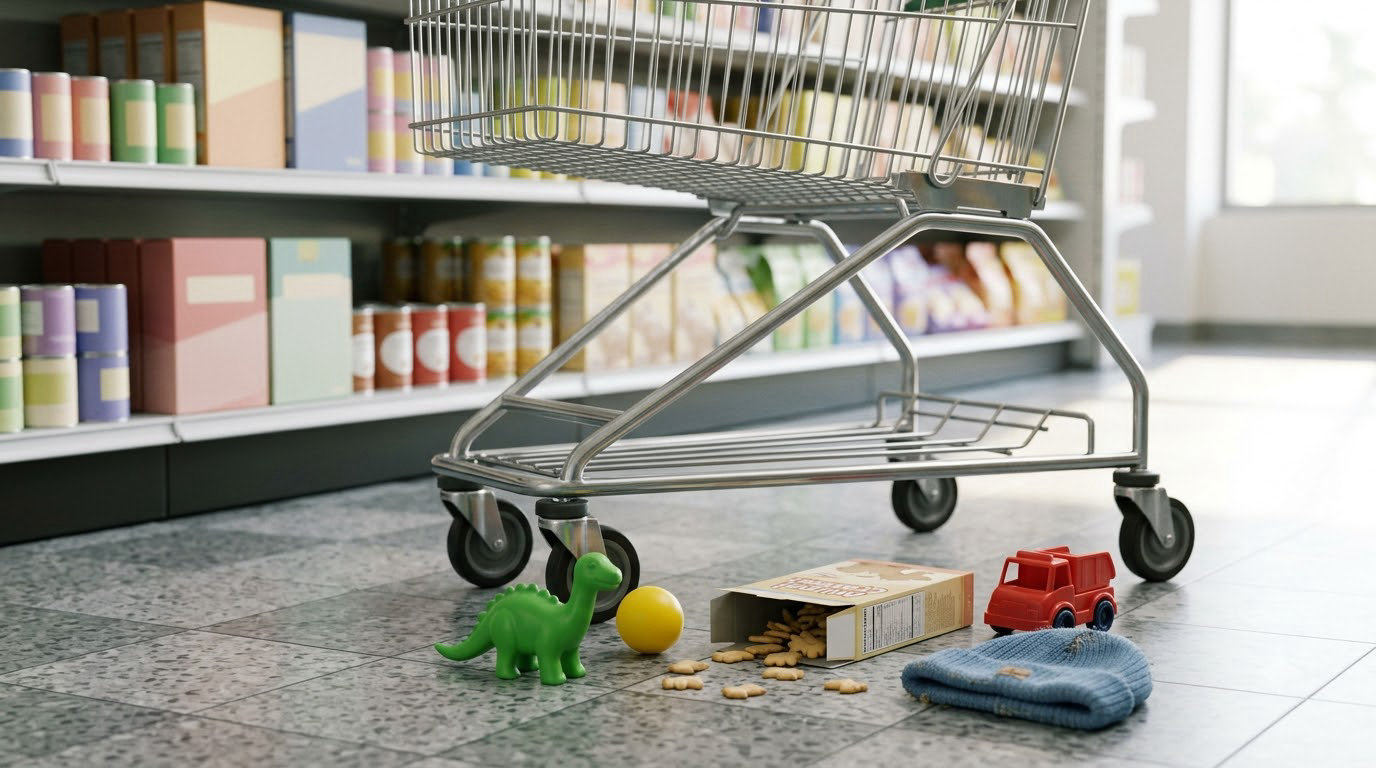
A grocery store meltdown is not defiance and it is not a tantrum you can talk a child out of. It is a nervous system hitting its limit, and how to grocery shop with a child who has meltdowns comes down to three things: lower the sensory load, remove the surprise, and have a plan for the trip you cannot control. Here is the plan I use, built from what autistic and sensory-sensitive parents actually say works.
Most of what you read about meltdowns stops at the moment. The parts that decide whether a trip survives happen the night before, in the car park, and ten minutes after the crying stops.
Table of Contents
- What You Need
- Step-by-Step: How to Grocery Shop With a Child Who Has Meltdowns
- How to Prepare Before Leaving Home
- How to Choose a Better Shopping Time
- How to Make the Store Easier to Move Through
- How to Handle a Meltdown in the Store
- How to Check Out and Transition Home
- Mistakes to Avoid While You Are Shopping
- How to Adjust the Plan as Your Child Grows
- Common Mistakes
- Frequently Asked Questions
- What should I do if my child has a meltdown while we are already in the grocery store?
- Should I leave the store as soon as my child starts melting down?
- How can I grocery shop with a child who dislikes noise and bright lights?
- How do I shop for a special diet without making every trip feel stressful?
- Can my child come along if they have communication delays or limited verbal skills?
- How can I tell whether my child needs a break or needs to leave the store?
What You Need
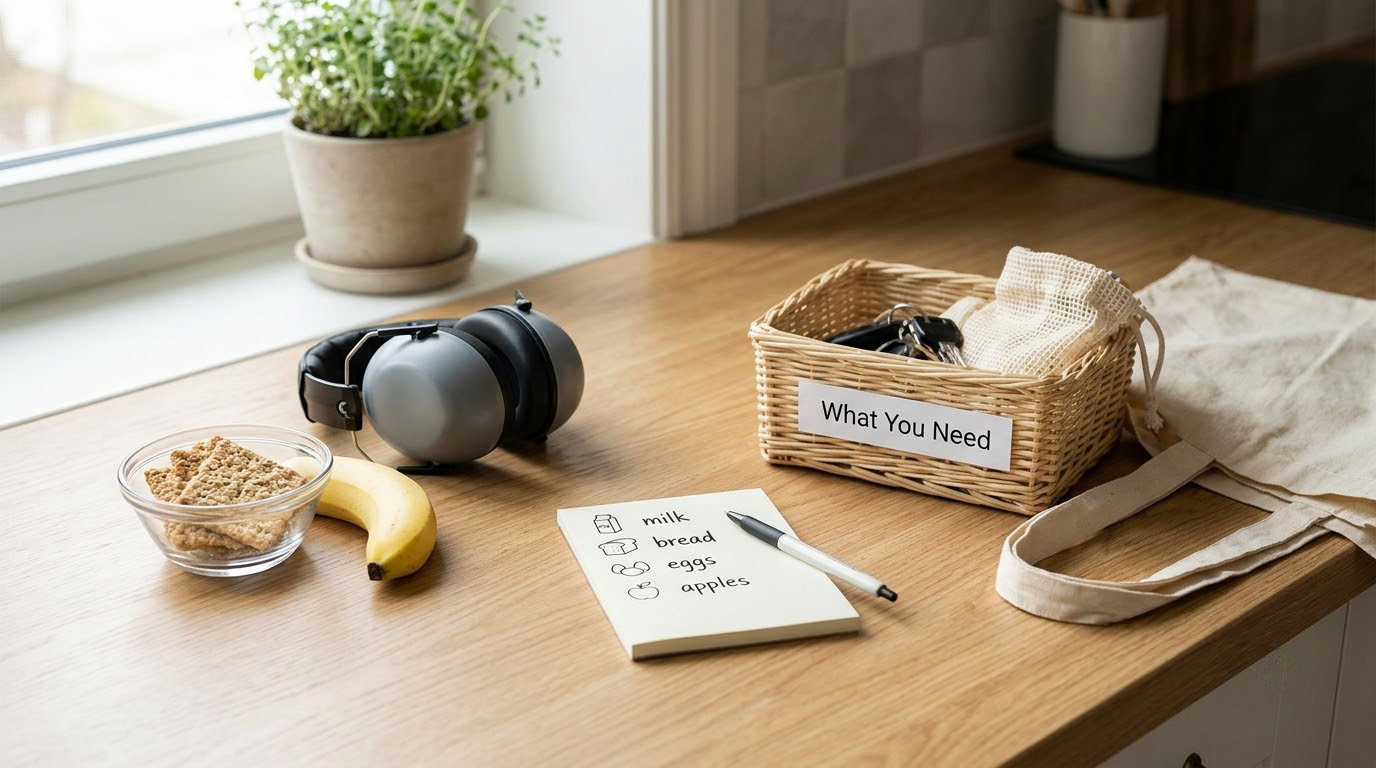
You do not need a new personality or a perfect child. You need a handful of small supports, and they cost almost nothing.
- A visual or written list. Pictures work better than words for many children, but a paper list written in their reading level works too. Keep it short enough to finish.
- Noise-reducing headphones. These are the single most useful item on this list. PA music, cart wheels and a refrigeration hum are all constant background load.
- A regulation snack. Something salty or chewy, packed separately, for the moment you are stuck in a checkout queue.
- A timer. A phone timer set for the length of the trip gives the countdown a shape. Most children handle a known ending better than an open-ended errand.
- A first-responder card. A small card that says your child has sensory processing differences and may be overwhelmed, and asks strangers not to approach.
- A backup option. Curbside pickup, delivery, or a caregiver at home. Deciding this in advance means you are not making the call in an aisle at 5pm.
Step-by-Step: How to Grocery Shop With a Child Who Has Meltdowns
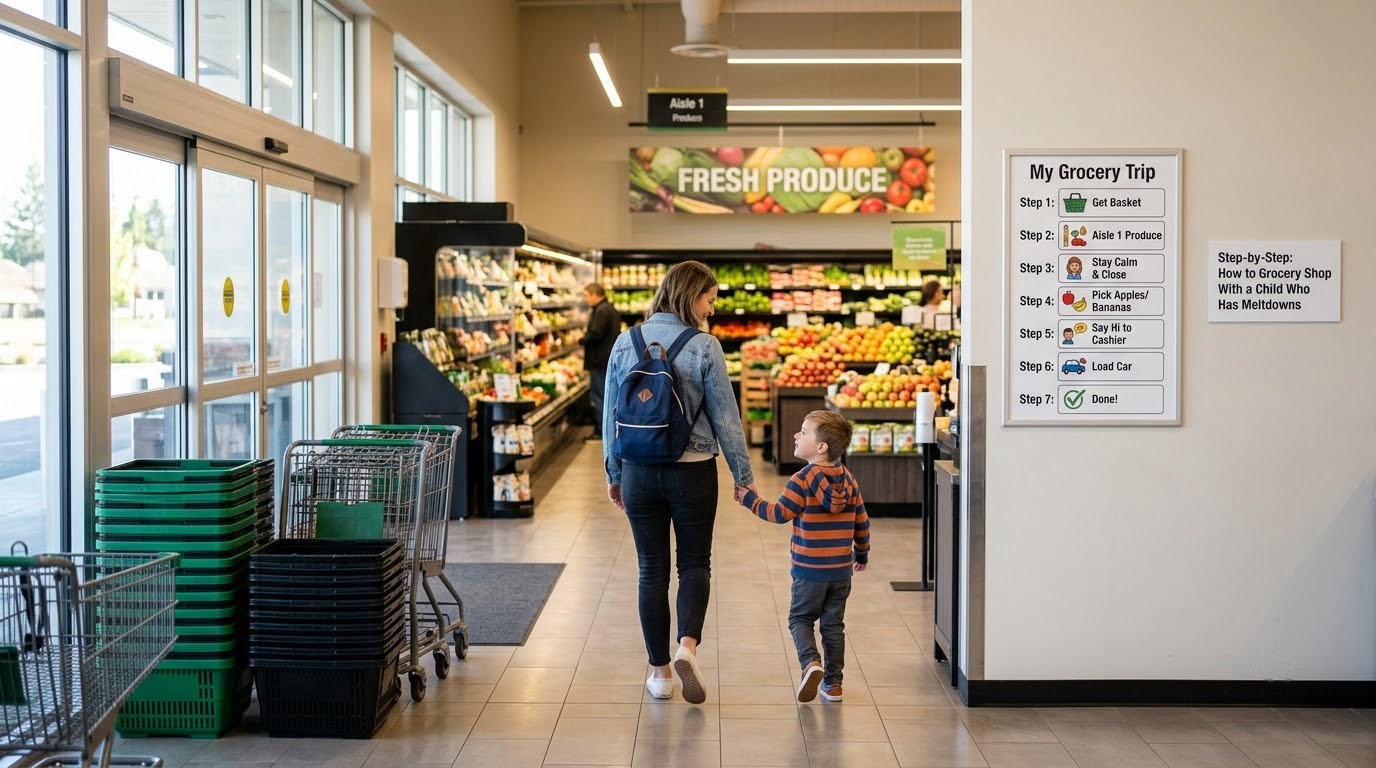
If a trip goes badly at home, the store is rarely the real problem. Working through it at home first usually makes a difference on the hard days. My general sequence runs prep, timing, movement, response, and recovery.
How to Prepare Before Leaving Home
Start with a quick read on your child rather than the list. Sleep last night, breakfast, and the general mood tell you more than the weather does. A hungry child plus a fluorescent grocery store is a meltdown with a delivery date.
Decide whether today is realistic. That sounds defeatist, and I used to fight it, but it is the opposite. Ten items instead of thirty, or the shop tomorrow, is a strategy, not a failure.
Pack the kit before you ask your child to put on shoes. List in hand, headphones in the pocket, snack accessible, timer set. Then tell them what happens next in concrete language: we are going into the shop, we are getting milk and bread, then we come home and have toast.
How to Choose a Better Shopping Time
The best time is when your child is most regulated, not when it suits you. For a lot of families that means mid-morning after a nap, or the hour before closing when trolleys are being stacked and the overhead music is quieter.
Check whether your usual store runs a sensory-friendly or quiet hour. Plenty of large chains now offer a window where the music comes down and the lighting softens, and the difference is usually a few minutes rather than a transformation. Little counts.
Keep trips short even when you need a full shop. Two calm trips beat one heroic one every time.
How to Make the Store Easier to Move Through
One adult with the child, or one child with the trolley. Trying to manage two children and a basket is how a hard trip becomes a meltdown trip.
Shop the route you already know, in the order you already use, and stick to the list. Novelty is wonderful in a park and expensive in an aisle. Let your child hold the item and bring it to the till if that is a job they can manage today, because the handover is a small win they can repeat.
Headphones on before you cross the threshold. Take a movement break in a quieter aisle or the car when you can, before the distress peaks rather than after.
How to Handle a Meltdown in the Store
When it starts, your job is to lower the demand, not to raise the volume of your instructions. Fewer words, lower voice, more space.
Move somewhere quieter if you can, even if that is the car with the engine off or a bench by the pharmacy counter. Keep your body between your child and the crowd if they are prone to bolting, and keep the trolley close so the space is a boundary rather than an invitation.
Then decide: a short list with three essentials, or the shop abandoned today. Both are fine. In my experience parents regret pushing to the full list far more than they regret stopping at three items.
How to Check Out and Transition Home
Warn before you reach the till, not while you are unloading the belt. Some children need the whole queue narrated; others need to be told absolutely nothing and simply held.
Pick the self-checkout or the quiet staffed lane deliberately. Choose the lane with no conversation required. Then have one predictable thing waiting at home, because a trip that ends well and then gets immediately rearranged is a trip that unravels in the car park.
Mistakes to Avoid While You Are Shopping
The most common failure is improvising. Talking a lot during the meltdown, explaining rules to a child who cannot process language mid-crisis, or bargaining over the item they want. A child in a grocery store meltdown is not bargaining; they are past language.
The second is treating every trip as a verdict on your parenting. The dread before the shop is the hardest part for most of us, and the trips that actually count are the ordinary ones that went fine.
How to Adjust the Plan as Your Child Grows
Add one step at a time. A trip that used to be milk and bread can eventually become milk, bread, and one item from an aisle the child picks.
Practice runs help more than you would expect. Walk the car park, walk the entrance, stop and leave. Nothing is bought, and the whole thing is a rehearsal, so the next real trip is a repeat rather than a first.
As communication grows, hand over parts of the plan. A child who can ask for the headphones, or tap a picture card for finished, is doing regulation work instead of receiving it.
Common Mistakes
Shopping at peak time. Saturday mid-morning is the busiest slot in almost every store, and it is the one most families default to. Shift it, even by an hour.
Bringing every child. The phrase is not “help your children” and it is not “be patient.” It is one adult, one child, the rest with someone who can back you up.
Giving a long explanation. “Today we need to get bread and milk and then we come home” is enough. A three-paragraph speech at the door is a demand dressed up as an explanation.
Requiring eye contact or apology. A child mid-meltdown cannot do either. Asking for it is like asking someone with a broken leg to run faster.
Negotiating in the middle of distress. Buying the demanded item can end a meltdown quickly, and plenty of parents do it deliberately. Know which you are doing and why, because the accidental version is the one that teaches your child that the louder they get, the more they get.
Calling every trip a failure. Track the calm ones. Most weeks have more of them than you remember.
Two habits help more than the rest. Put the same kit in the same bag by the door, and decide the backup plan before you leave, not in the queue.
Frequently Asked Questions
What should I do if my child has a meltdown while we are already in the grocery store?
Drop the demands first. Fewer instructions, lower voice, and move to a quieter spot near the front of the store or the car. Keep the trolley close if your child bolts, and keep everyone safe rather than keeping the trip on track. Once the crying slows, choose between three essentials and going home. Do not lecture during the meltdown or on the way home.
Should I leave the store as soon as my child starts melting down?
Not immediately, and not stubbornly. Give it a few minutes in a quieter location first, because many meltdowns soften once noise and crowd are removed. If your child is not coming down, or you are near your own limit, leave. Coming home with three items beats coming home with thirty and a week of dread about the next shop.
How can I grocery shop with a child who dislikes noise and bright lights?
Noise-reducing headphones go on before you enter, not after the first complaint. Check whether the store runs a sensory-friendly or quiet hour, since lighting and music are often reduced then. Shop early or late to lower the crowd, stick to the same route, and take a movement break in a quieter aisle before distress peaks.
How do I shop for a special diet without making every trip feel stressful?
Treat the safe foods as the trip, and everything else as the optional part. Build the list around a small number of reliable items, keep a second list for the next trip, and use pickup or delivery for the long shelf-life staples. Predictability helps more here than effort, because a missed ingredient is a crisis at 6pm, not a problem.
Can my child come along if they have communication delays or limited verbal skills?
Yes, and a plan matters more than a talking child. Build the visit around a visual schedule, a short list, and a clear exit you can use without explaining. Bring a first-responder card so staff and shoppers know not to approach, and practice the trip at the car park before you need it on a busy day.
How can I tell whether my child needs a break or needs to leave the store?
A break is usually enough when the distress is loud but physical, the child still responds to their name, and they recover when noise drops. It is time to go when there is no response, they are heading for the door or the car park, their breathing or movement is escalating, or you are close to your own limit. Leaving early is a plan working.
Start tomorrow morning: pack the headphones, the snack and the list in the same bag, and pick a quieter hour for the shop. Everything else on this page builds on that one change. If a trip goes wrong, the recovery at home matters as much as the aisle did, and there is a full walkthrough of that in how to handle autism meltdowns at home.