Elopement means leaving a safe area or your caregiver without permission, and it happens to roughly half of autistic children at some point in their lives. To choose a hotel room for a child who elopes, you pick the fewest possible exits, the lowest practical floor, a door with a working deadbolt, a bathroom you can supervise, and a sleep setup that puts an adult closest to the door.
I know the specific dread here. Home has a rhythm your child can read in the dark: the same hallway, the same creak on the third stair, the dog who barks at the neighbor’s gate. A hotel has none of that. Your child cannot lean on a familiar landmark because there are no familiar landmarks, which means the room you book becomes the entire safety system you have for the length of the stay.
So this is a field guide, not a warning. Work through it before you book, not the night you arrive, and it takes about twenty minutes of phone calls and one honest look at your child’s patterns. Here is how to choose a hotel room for a child who elopes, step by step, plus the mistakes I watched other families make and the plan to have in place before check-in. Updated for 2026.
Table of Contents
- What You Need
- Step-by-Step: How to Choose a Hotel Room for a Child Who Elopes
- Step 1: Ask the Hotel About Eloping Risks
- Step 2: Check the Door and Window Security
- Step 3: Choose a Room That Makes Supervision Easier
- Step 4: Plan for the Bathroom and Changing Time
- Step 5: Pack and Set Up a Response Plan
- Step 6: Recheck the Room at Every Change
- Common Mistakes
- Frequently Asked Questions
- Should I tell the hotel that my child has autism and elopes?
- What floor is safest for a child who elopes?
- Is an interior room safer than an exterior room?
- Is a connecting room safer or more dangerous?
- What alarm works best on a hotel room door?
- What do I do if my child elopes from the hotel?
- Start With the First Night
What You Need
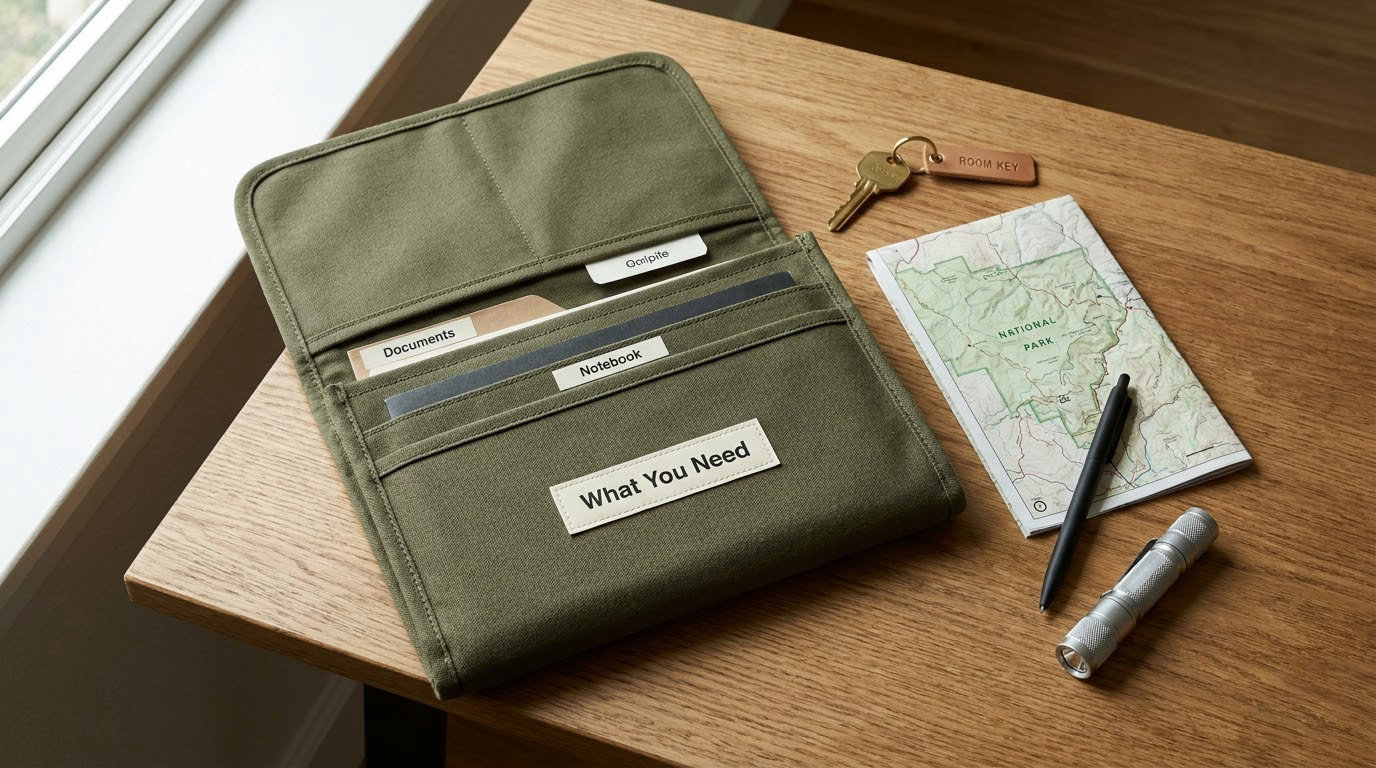
Before you call any hotel, you need four things written down. Without them you will answer the front desk’s questions with “whatever is fine,” and that gets you a random room on a random floor.
Their elopement pattern. When does it happen: overnight, during transitions, when the hallway is loud, when something is taken away? A child who leaves at 6am in a quiet hallway needs a different room than a child who bolts at 8pm when a group passes the door.
Communication and sensory profile. Write down what your child can and cannot say to a stranger, and what overload looks like for them. A non-verbal child cannot give a hotel guest their name, so identification depends entirely on what is on their body and in your pocket.
Supervision needs. How many adults, for how many nights, and who covers 2am. Write the sleep rotation down before the trip, because nobody designs one for themselves at midnight on night two.
The response method. How does your child respond to an alarm, to a voice in the hallway, to being blocked? A child who escalates at a locked door needs a different plan than a child who stops at a sound. Your child’s care team can help you write this, and their plan should override anything you read here.
Also have the front desk number, one photo of your child in that night’s clothing, and a printed card with their name, your phone number, and a contact who can confirm who to call. The card is the part you will hand to a stranger at 7am, so write it before you are tired.
Step-by-Step: How to Choose a Hotel Room for a Child Who Elopes
Step 1: Ask the Hotel About Eloping Risks
Call the property directly, not the booking site. Third-party sites give you a room category and nothing else, and the front desk is the only person who can actually move you.
Ask five things: what floor is the room on and can you put me on the lowest practical floor, how far is it from the pool or any water feature, is there a balcony or patio door, are there connecting doors beside it, and what is near the end of that hallway. Then ask the two nobody thinks to ask: is this room close to a stairwell or a service door, and is it above the lobby.
Tell them why. “My child elopes” is a clearer sentence to a night manager than “I have a safety concern,” and it is the sentence that gets a room moved. Ask them to note it on the reservation so the note survives your arrival at 11pm with a different person at the desk.
How you will know it worked: the front desk repeats a specific floor and room number back to you, and the room is not directly beside the elevator, the ice machine, or the vending alcove.
Step 2: Check the Door and Window Security
Most hotel room doors swing inward into the room, so furniture pushed against the outside of the door accomplishes very little. Parents on r/Autism_Parenting describe booking rooms with a sofa and any movable furniture available, then pulling it across the interior side of the door after check-in.
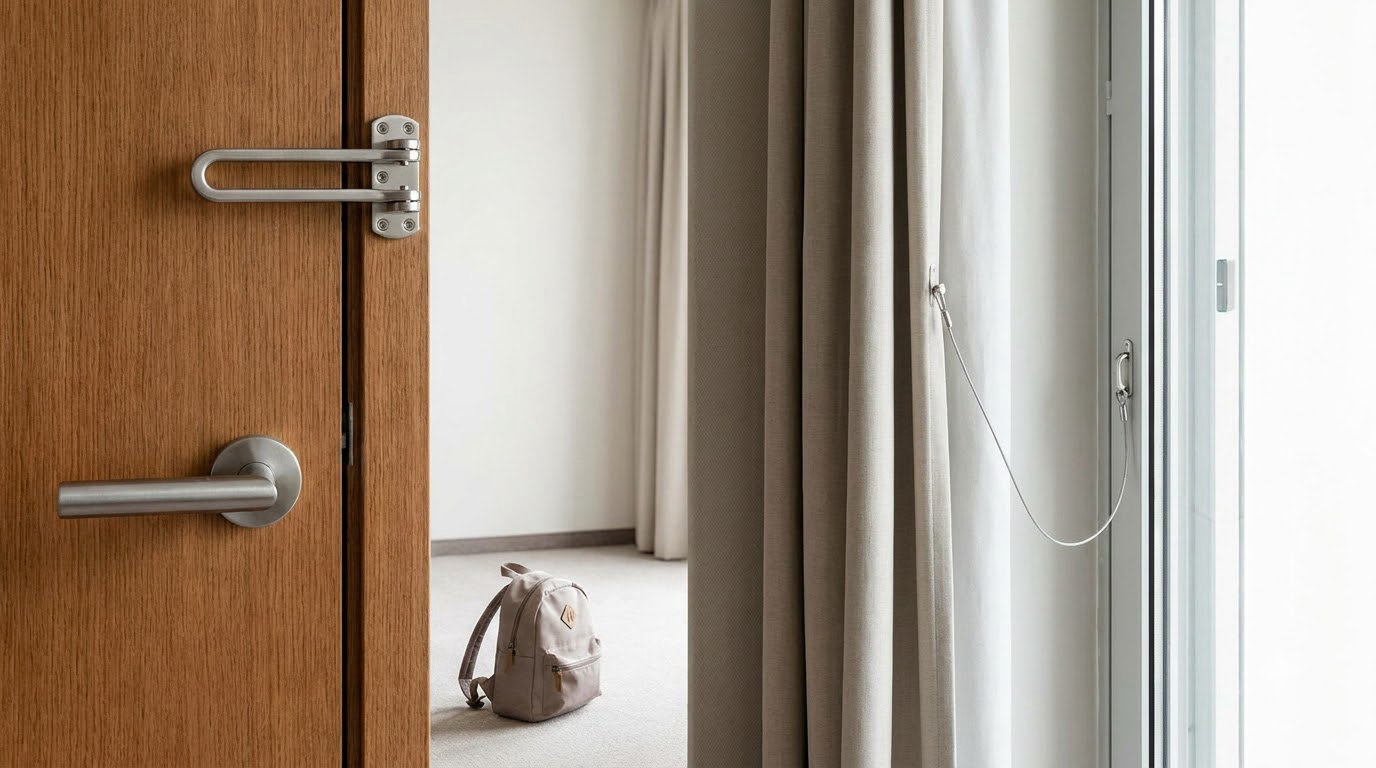
What actually matters is the hardware. Test the deadbolt by throwing it and then pulling the handle hard. Test the chain by sliding it and pushing the door. A chain that slides back without resistance is decoration. If the room has a lever handle that a child can push down with a palm, ask the front desk whether another room has a knob.
For windows, check two things: how high the sill is, and whether the latch is a real latch or a decorative handle. A window that a ten-year-old cannot reach is a different conversation from a window a five-year-old can climb. For a sliding balcony door, a broom laid across the track is an older DisBoards suggestion, and a door stop alarm on the slider gives you a warning you can hear from bed.
Do not tamper with fire equipment, block a fire door in the hallway, or wedge a door in a way that hides a fire exit. If your plan needs something that feels borderline, call the front desk and ask. They have seen every version of this and most have a better idea than the one you invented at midnight.
How you will know it worked: you can leave your child in the room for a bathroom trip with the door closed and know the door stays shut.
Step 3: Choose a Room That Makes Supervision Easier
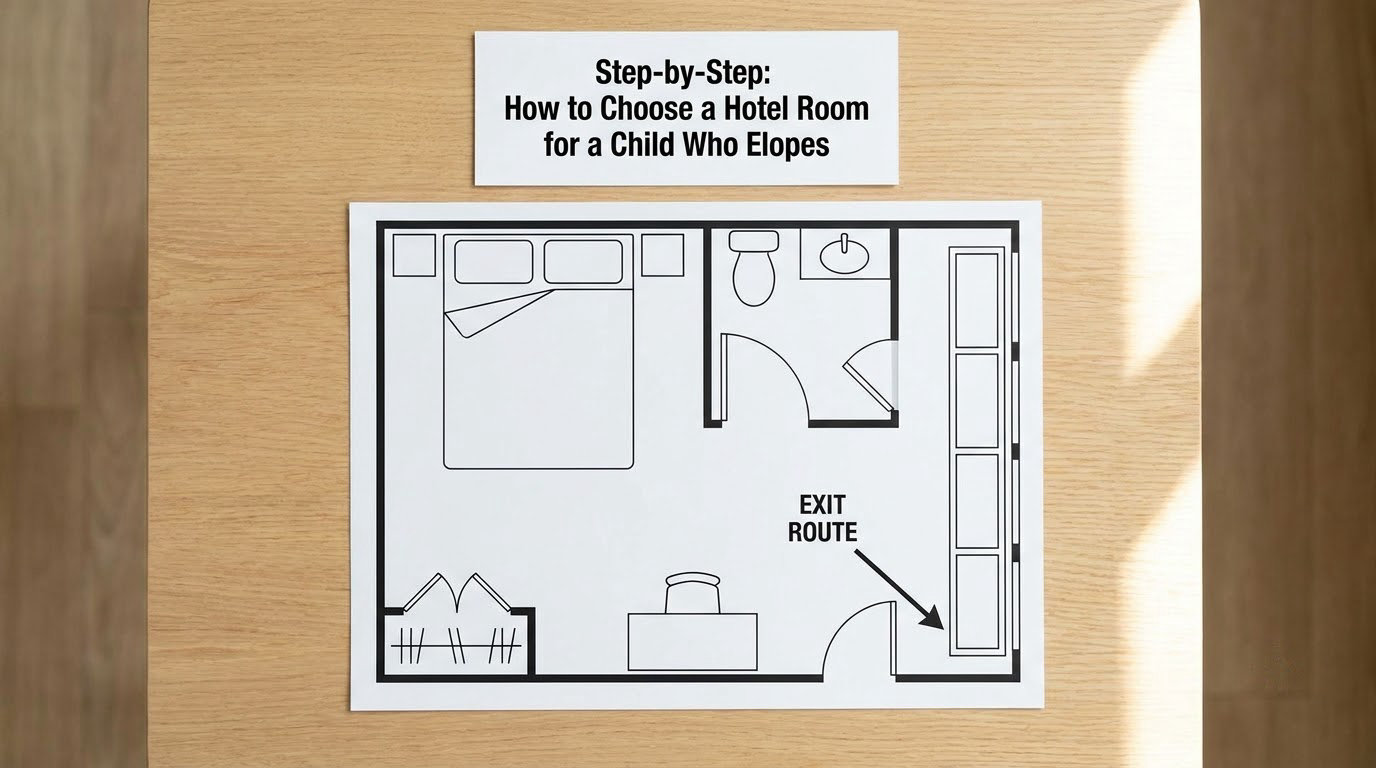
Layout decides how many seconds you have. A room where the bathroom doorway is visible from the bed gives you a head start. A room where the bathroom is around a corner or down a short hallway gives you none.
An interior room, with no exterior wall and no window, is usually the easiest room to secure and often the easiest rate to get. An exterior-wall room gives you natural light, which helps some children settle, but it also gives you a second opening to check. Either can work; what matters is that you know which one you booked and why.
Watch what is in reach. A desk chair, a small table, an ice bucket, a luggage rack, and a closet with a sliding door are all part of the climbing route. Push the heavy pieces under the window and away from the closet. A closet with a hinged door is worth checking; some parents find the latch is a hook that lifts out.
Two more things to count: the hallway traffic, and the noise. A room near the elevator gets doors slamming and people talking at all hours, and for a child whose elopement function is escape from something overwhelming, that noise is a trigger that never switches off. Ask for a room at the far end of a quiet hallway.
Support level matters more than most families expect. A Level 3 non-verbal child generally needs the most room control, which means the fewest exits and the most direct sightline. A Level 1 child who stays close under normal conditions may need a different balance, one that protects the routine instead of the walls. Match the room to the pattern you actually have, not to the diagnosis label alone.
How you will know it worked: you can stand in the bathroom doorway and see your child, and open the door without moving furniture.
Step 4: Plan for the Bathroom and Changing Time
Bathrooms are where most hotel mishaps happen, because that is the one part of the room your child uses alone, usually with the door partly shut and water running.
Decide before arrival how much privacy you will give. Many families keep the door open a hand’s width, which lets your child keep their privacy while you keep a hand on the frame. Some parents tape the door open at the top and explain it as a family rule, so it does not become a battle at 7am.
Check the surfaces. A slick tub with no non-slip mat is a real risk for a child who bolts out of a meltdown and lands wrong. Keep the mat out, not in the closet. Count the steps down into a sunken tub or up into a raised tub, and know whether there is a grab bar.
Move what does not belong. Cleaning products, glass items, small toiletries, and the hotel’s sewing kit go into a drawer or up onto a high shelf. Keep all medication in your bag in a place your child cannot reach, not on the counter. Cover the mirror if reflective surfaces reliably trigger something for your child, and put the toilet lid down when nobody is using it.
How you will know it worked: you can hear and see your child through a partly open door, and nothing they can reach in that room could land them in an emergency room.
Step 5: Pack and Set Up a Response Plan
The plan is a small bag that stays with the adult nearest the door. Most parents on these threads carry the same core items, and it costs less than one night of the trip to pack.
A door stop alarm that slides under the door and sounds a loud alarm when the door opens is the single most recommended item across parent threads and clinical guidance, because hotel doors open inward and give no other warning. Add a folding gate if your doorway takes one, a second alarm for the balcony slider, peel-and-stick stop signs explained to your child as a ritual before arrival, a flashlight, the ID card, a spare shirt, and the charger for any GPS tracker you rely on.
On a tracker, set the geofence before you leave home and check the battery, not just the signal. If your child wears one, agree on who watches it during the night and how you will be woken. A tracker that nobody watches is a false sense of coverage.
Write the response plan on one page: what to do in the first ten seconds, who calls 911, who calls the front desk and what number, where the nearest water feature is, and the safe meeting point if your child leaves the property. A parent on r/Autism_Parenting suggested an airbed across the doorway so a body blocks the exit; if you use that, tell the front desk, because housekeepers and fire code have opinions.
How you will know it worked: any adult in the room can pick up the page and say the first two steps out loud without hesitating.
Step 6: Recheck the Room at Every Change
A room that was safe at 4pm is not automatically safe at 9pm. Hallways change, staff enter for housekeeping, and your child’s tolerance drops when they are tired.
Walk the room again right after check-in and before you leave for dinner. Do it again before the nap and again before bedtime. Check the deadbolt, the chain, the window latch, the balcony slider, the closet, and anything you moved. When housekeeping comes in, stay in the room; the door was open while you were not looking, and a child who was calm twenty minutes ago may not be calm now.
Run the same check again whenever you change hotels, change rooms, or get bumped to a different floor. Every change resets the whole assessment, because the room you assessed is no longer the room you have.
Pay attention to the early warning signs, not just the door. Rising arousal, repetitive pacing toward the door, sudden silence after noise, or a child who stops doing whatever they were doing are all worth a check on the hardware before you need a search.
How you will know it worked: rechecking takes under a minute and is part of your bedtime routine, not a special event.
Common Mistakes
Booking on rate or bed type. A family picks the cheapest room with two beds and inherits an eighth-floor exterior room with a balcony. The room assignment is a safety decision; treat it like one.
Not seeing the connecting door. Adjoining rooms share an interior door, and that door is an exit the reservation never mentioned. If you book a pair, secure or disable it according to the hotel’s instructions, and know that noise passes between the rooms at night, which cuts both ways: you hear more, and your child hears more.
Expecting one-to-one staff supervision. Front desks and night staff are not sitters. They will note a concern in the log and move a room if they can, but nobody is watching your child at 3am. Families on parenting forums ask whether staff will take it seriously, and the honest answer is that the written reservation note is what makes it real.
Relying on an alarm without a plan. A door stop alarm that wakes you at 3am accomplishes very little if nobody knows where to look first. Pair every device with the written plan and the shift roster.
Ignoring water, stairs, and service doors. The pool deck, a lake, a fountain in the courtyard, an open stairwell at the end of the hall, and a service door that props open are each a separate route. A search for a missing child in a hotel starts with water. Know your nearest water feature and how far it is in the dark.
Feeling guilty about the barricade. Parents often hesitate to tape or move things in a room they paid for. You are not damaging property, you are using a room as intended, and you are doing it to keep your child in it. Tell the front desk what you did so nobody discovers it and reacts badly.
Frequently Asked Questions
Should I tell the hotel that my child has autism and elopes?
Yes, and say it plainly. Call the property directly, before you book, and ask the front desk to note it on the reservation. A night manager can move you away from the pool, the elevator, or a room with a balcony door, and that note is what makes the concern visible to the person on the desk when you arrive late. Ask politely what staff should do if they see your child in the hallway unaccompanied, and give them your phone number. Some parents hesitate because it feels like too much information, but the request is narrow and staff handle it routinely.
What floor is safest for a child who elopes?
The lowest floor the hotel offers, with no stairs involved. An elevator lobby adds doors, noise, and a crowd every few minutes, and a stairwell at the end of the hall is an unattended route. If the lowest floor is all pool view, pool deck, or restaurant access, take the second-lowest instead and ask for a room that faces a parking area rather than a street. Request the far end of a quiet hallway, away from the ice machine and vending alcove, and away from service doors.
Is an interior room safer than an exterior room?
Usually, yes, for one reason: an interior room has no window and no balcony or patio door, so it has fewer openings. The tradeoff is light and view. Some children settle better with daylight and can see a parking area from the window, which helps you spot them if they get out. If you book an exterior room, check the window sill height and the latch hardware yourself on arrival, keep the curtain closed at night if reflections are a trigger, and treat the sliding door as a separate exit to secure with its own alarm.
Is a connecting room safer or more dangerous?
It cuts both ways. Two adults with a shared door means more coverage overnight, and an adult can be closer to the exit. But the connecting door is itself an opening nobody sees in online photos, and sound passes through it in both directions, so a conversation in one room reaches the other. If you book the pair, check the connecting door during check-in, ask the front desk whether it can be secured according to their policy, and agree on which door stays the route for the adult on duty. Never assume the reservation told the hotel about it.
What alarm works best on a hotel room door?
A door stop alarm that slides under the door and sounds when the door opens, because most hotel doors swing inward into the room and give no other warning. Add a second one on any sliding balcony door. A folding baby gate just inside the doorway is another barrier parents use, though it may not fit every frame. Test the deadbolt and the chain on every door each evening, and treat any device as a backup layer rather than a guarantee. Your child’s care team should confirm that alarms will not escalate a meltdown for them specifically.
What do I do if my child elopes from the hotel?
Call 911 and the front desk in the first minute, and say the words non-verbal and autism so responders know what they are looking for. Water first, always: the pool, the pond, the fountain, the lake. Give responders a photo of what your child is wearing that day, a recent picture, and the ID card with your contact details. Have the front desk pull the room assignment and hand it to police, and ask for the child’s name entered into the NCIC missing person file, which is the database police check before activating an Amber Alert. Then search the hotel, the parking area, and any wooded or fenced space on the property systematically.
Start With the First Night
If you only do one thing from this guide, make the call before you book. A room on the lowest floor, at the quiet end of a hallway, with no balcony door, changes the odds more than any device you can pack.
Then on arrival, in this order: test the deadbolt and the chain, check the window and any slider, put the alarm in place, move the furniture, and set the adult on duty nearest the door. Five minutes, once, and then you can settle into the trip instead of guarding it.
No room makes elopement impossible. A good room buys you the seconds you need, and a written plan tells you what to do with them. If your child has a care team, check this plan with them, since their advice about your child outranks any general guide, including this one.